
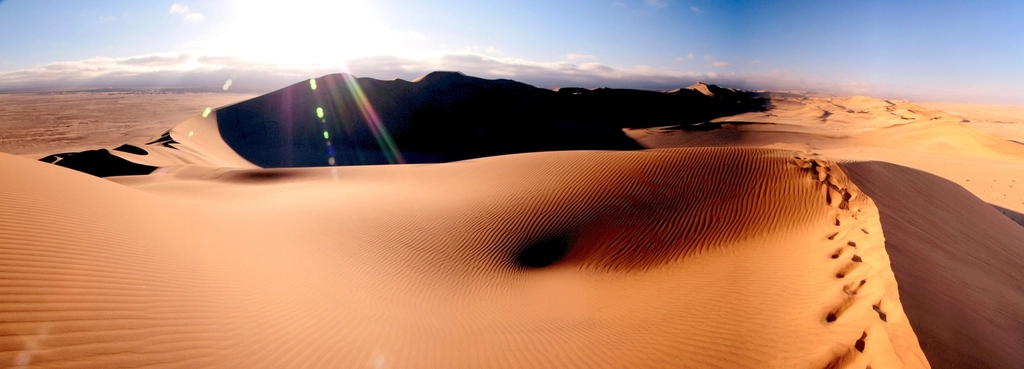

There’s a kind of travel that changes your sense of scale. Not in a figurative way, but literally: you stand somewhere so vast and so quiet that your own presence feels almost accidental. Namibia does that to people. It’s a country where the land itself seems indifferent to tourism, and that indifference is precisely what makes it magnetic.
Namibia is, among other things, about open spaces, captivating landscapes, close contact with nature, and the absence of mass tourism. It’s an expedition for anyone seeking solitude in vast terrain, beautiful views, and the chance to observe wild animals on their own terms. Three experiences in particular cut to the heart of what this country offers. Each one could stand alone as a reason to book the flight.
Experience One: Standing Inside the World’s Oldest Desert
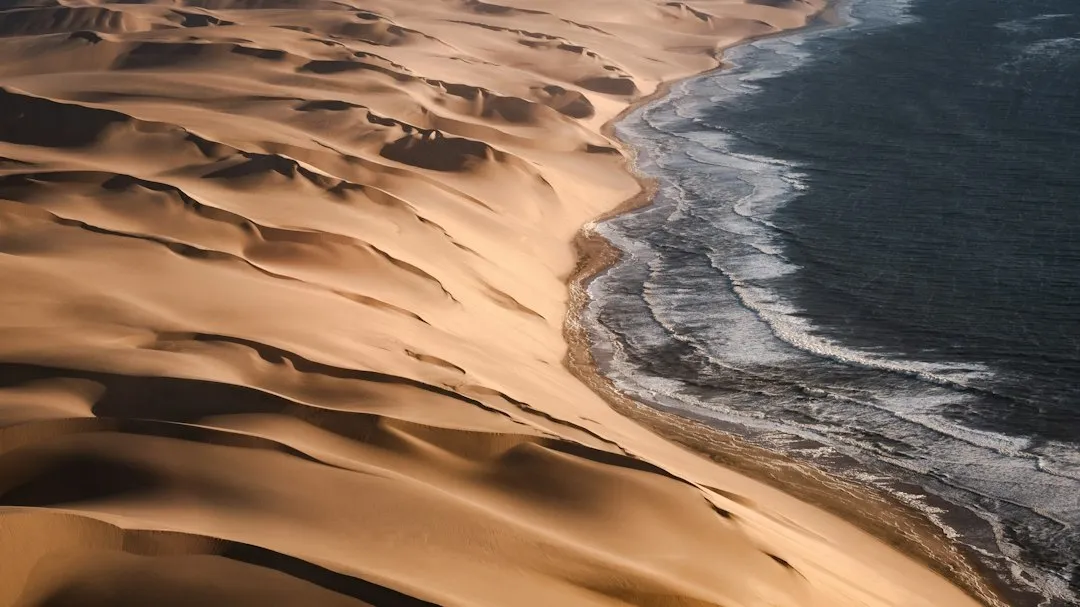
By local tongue, Namib means “big empty space.” This roughly 1,900-kilometre sea of sand sprawling along the Atlantic coastline is the world’s oldest living desert, existing for at least 55 million years. That number is almost too large to hold in the mind.
Sossusvlei is a salt and clay pan in the heart of Namibia’s Namib Desert, considered to be one of the most iconic and beautiful desert landscapes in all of Africa, with giant sand dunes that rank among the tallest in the world. Walking among them at sunrise, when the light turns the crests into lines of fire, is the kind of scene that no photograph ever quite captures.
Red sand dunes rise up to 300 metres into the sky and rank among the biggest in the world. Deadvlei, just a short walk from Sossusvlei, holds dead trees that are believed to be more than 1,000 years old. The trees are not a metaphor, they’re a geological record you can walk among.
The Haunting Beauty of Deadvlei
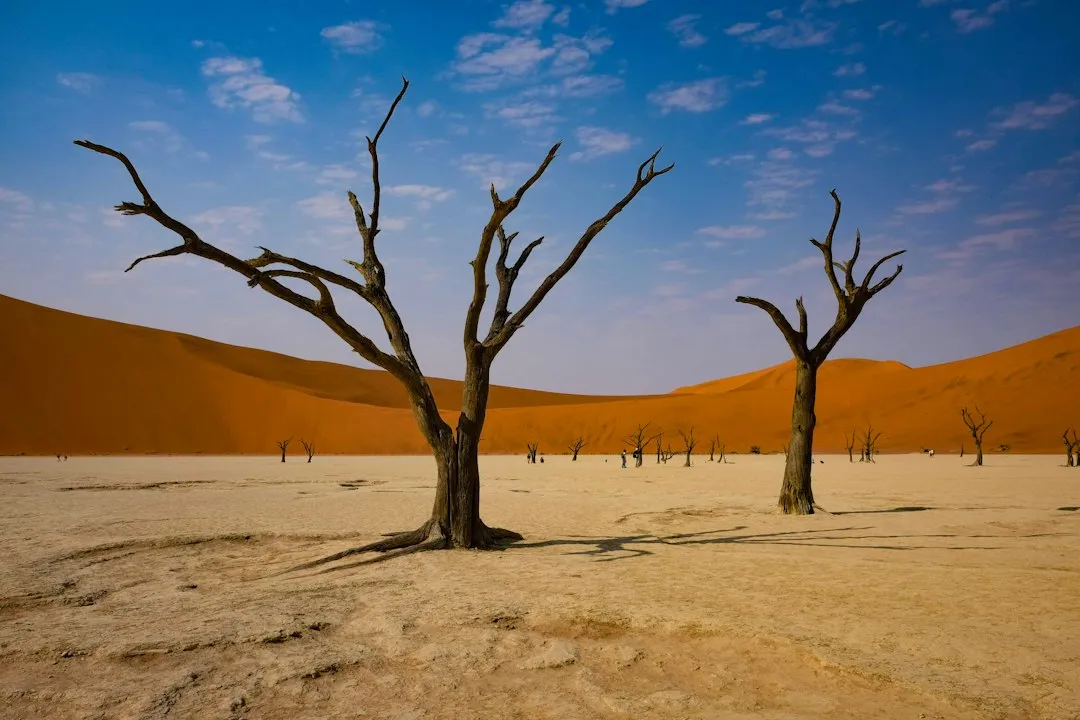
Deadvlei includes the ancient remains of acacia trees that have been dead for over 600 years, yet remain mostly undisturbed and well preserved due to the extremely dry climate. A white clay pan surrounded by dunes on all sides, the pan is home to around 50 or so tree skeletons, some still standing while others fell centuries ago.
In the distant past, this area was flooded when the nearby Tsauchab River carried water, allowing acacia and camel thorn trees to grow. Around 700 years ago, a drought occurred, followed by shifting sands that formed a new dune, blocking water flow from the river forever. The trees eventually died, providing what visitors encounter today at this extraordinary location.
It became too dry for the trees to even decompose. Some of these trees are believed to be over 1,000 years old, forming a barren forest, now black and scorched by the intense heat. It’s an image that belongs to the deep past, yet it remains as immediate as the morning air around you.
Climbing the Dunes at Dawn
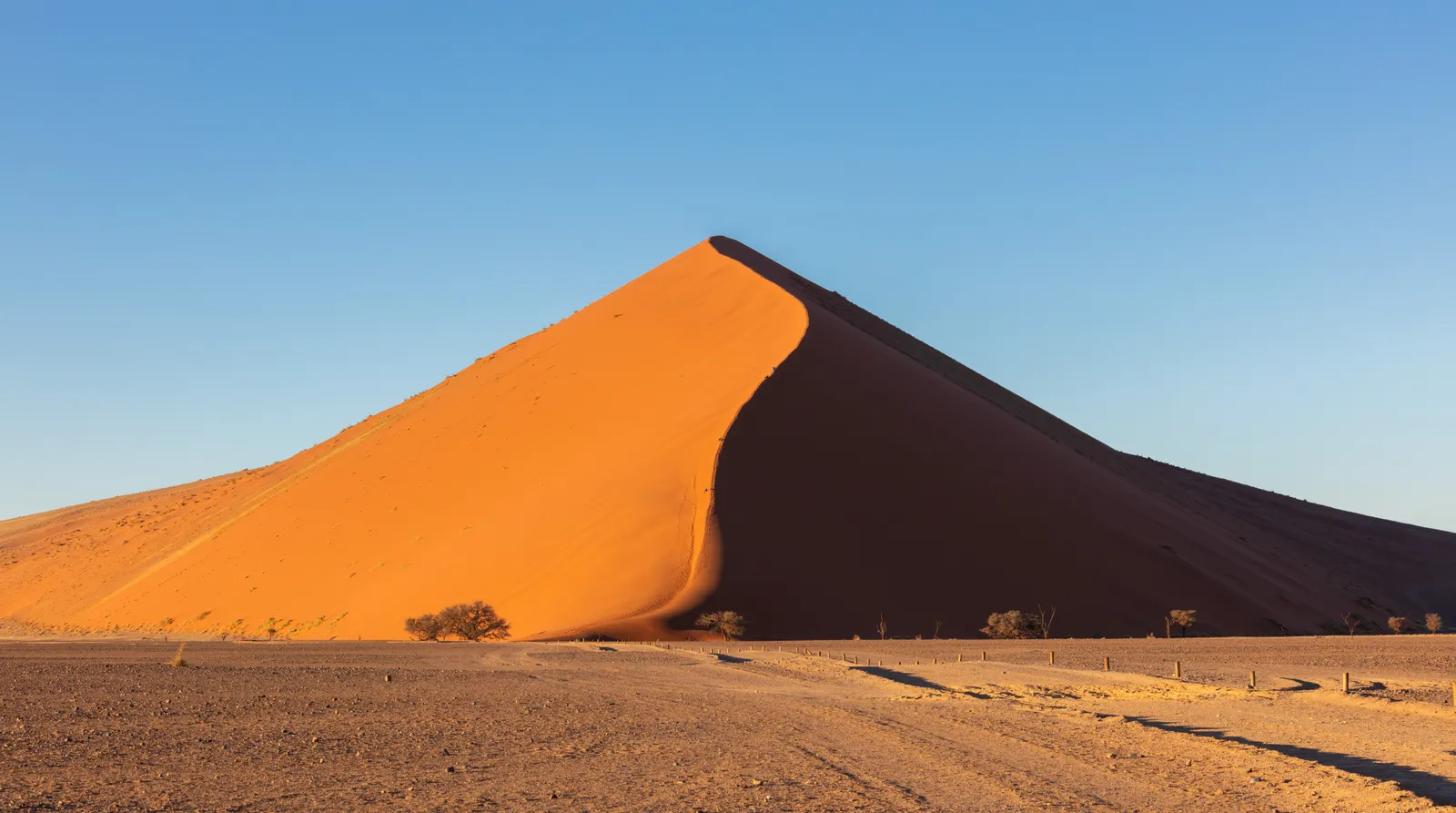
Walking through the forest of dead trees and then continuing toward the highest dune in Sossusvlei is one of the great physical experiences the region offers. Visitors are allowed to climb to the top of Big Daddy at 325 metres and then slide or run down the steep side into Deadvlei.
There’s something genuinely humbling about reaching the crest of a dune that took half an hour to climb, then looking out over a landscape that hasn’t changed in any meaningful way for tens of thousands of years. Planning to start the journey in the early morning hours helps escape the heat, and it means arriving when the light is at its most dramatic and the crowds are thinnest.
Experience Two: Safari in Etosha, Africa’s Great Wildlife Basin
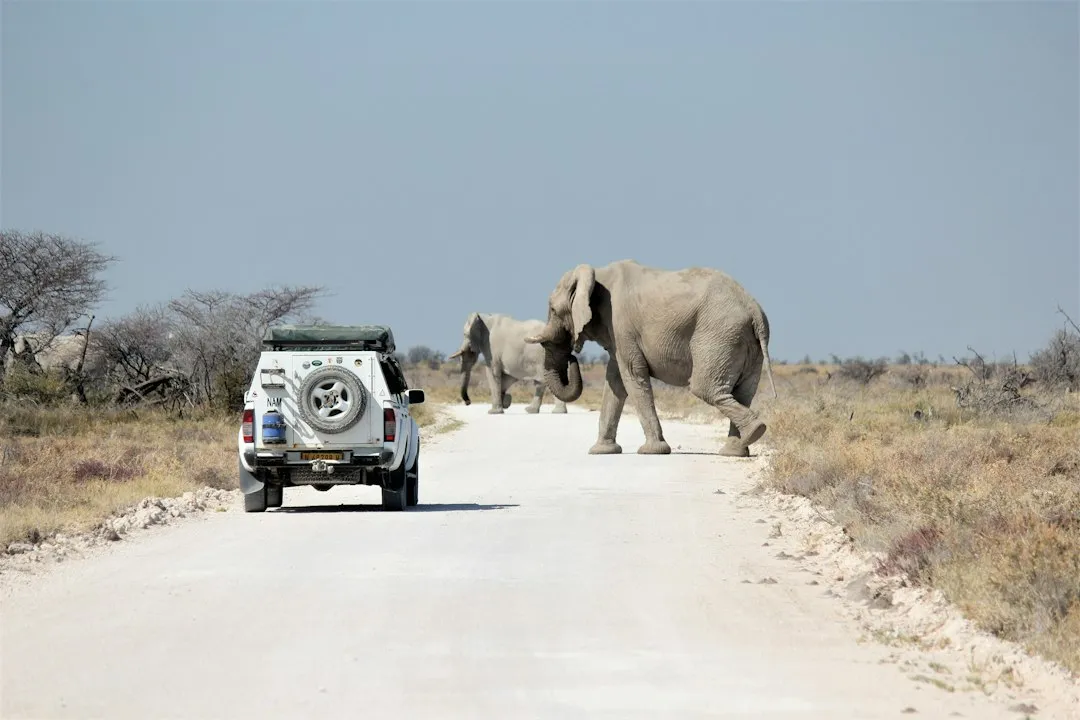
Etosha National Park supports 114 mammal species, 340 bird species, 110 reptile species, and 16 amphibian species across a mosaic of saline pan, mopane woodland, acacia savannah, and dwarf-shrub plains. That breadth of habitat is what drives the extraordinary wildlife density here.
Four of Africa’s traditional “Big Five” are resident: lion, elephant, leopard, and black rhino. Cape buffalo are deliberately absent, kept out by strict veterinary policy to protect Namibia’s foot-and-mouth-disease-free livestock export status. So the list reads differently from other parks, but the encounters are no less remarkable.
Etosha National Park stands out for its combination of abundant wildlife and relatively low visitor numbers, providing a less crowded safari experience. That matters more than most travel writers acknowledge: when you’re the only vehicle at a waterhole watching a breeding herd of elephants arrive at dusk, the experience belongs entirely to you.
The Black Rhino: Etosha’s Most Remarkable Resident
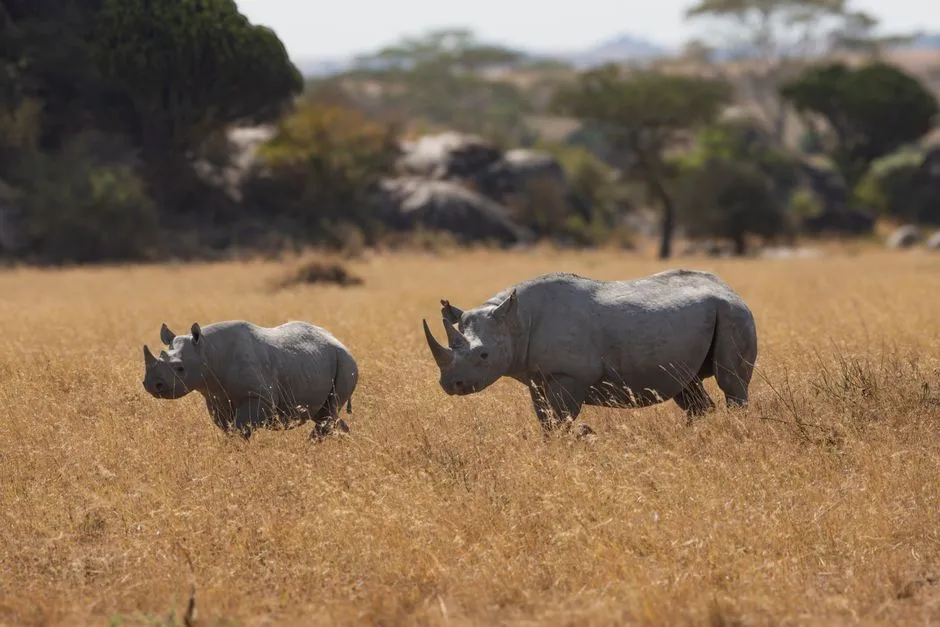
Etosha holds one of the world’s most important populations of south-western black rhinoceros. Exact numbers are kept deliberately imprecise to frustrate poaching intelligence, but peer-reviewed estimates since 2020 place the figure at over 500 individuals, the largest single-reserve population of black rhino on Earth.
Namibia has one of the largest black rhino populations in the world, with a majority found in Etosha National Park. Although their numbers are increasing, the black rhino is still under threat, particularly as its horn remains in demand on illegal markets. Conservation here is not an abstraction. It’s active, daily, and urgently consequential.
The Blue Rhino Task Force, a joint unit of the Ministry of Environment, Forestry and Tourism and the Namibian Police, provides around-the-clock anti-poaching coverage. Dedicated rhino custodianship programmes also extend black rhino range beyond the park fence into surrounding conservancies, where community game guards provide on-ground monitoring in exchange for tourism revenue. Visiting Etosha, in a very direct sense, contributes to this work.
The Waterholes: Where Wildlife Gathers on Its Own Schedule
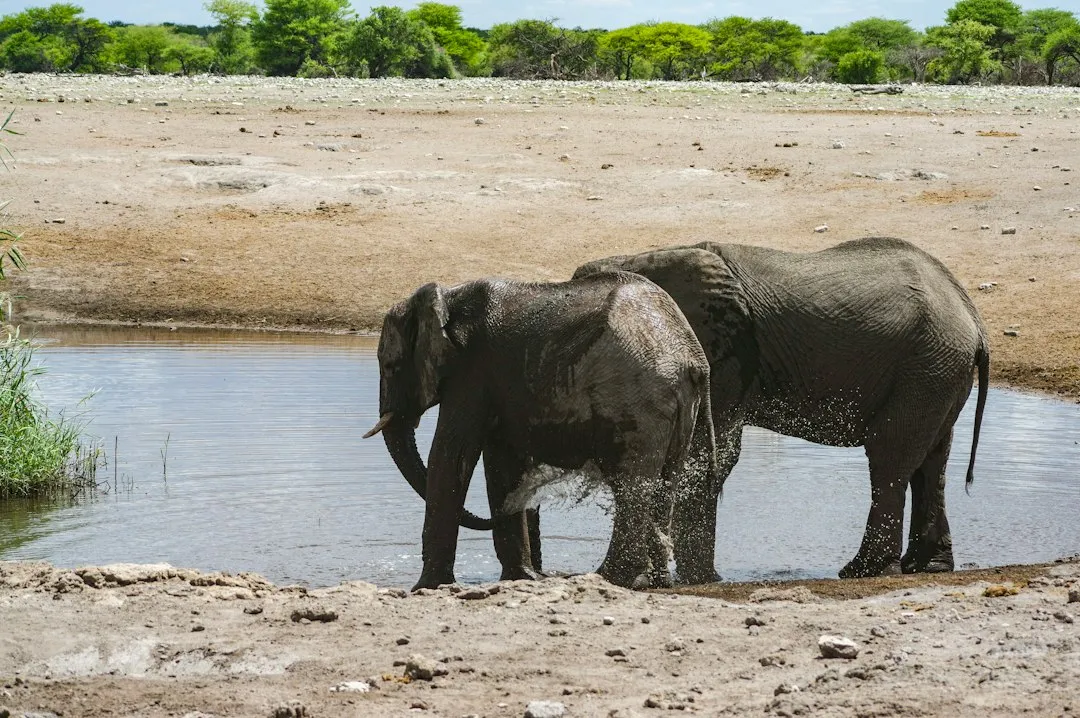
Etosha National Park competes with other top safari destinations, offering great wildlife viewing opportunities especially at its waterholes. It’s also home to four of the Big Five: elephants, lions, leopards, and rhinos. The waterholes are genuinely the park’s secret weapon.
Many camps inside Etosha are positioned beside floodlit waterholes that visitors can observe through the night, watching a rotating cast of species arrive and depart on their own terms. Lions drinking. Giraffes splaying awkwardly to reach the water. Zebra herds arriving in columns. Etosha also offers three species found in very few other big-game parks, including the endemic black-faced impala, the Damara dik-dik, and the only free-ranging population of southern black rhino exceeding 500 individuals.
Experience Three: Sleeping Under the World’s Darkest Sky
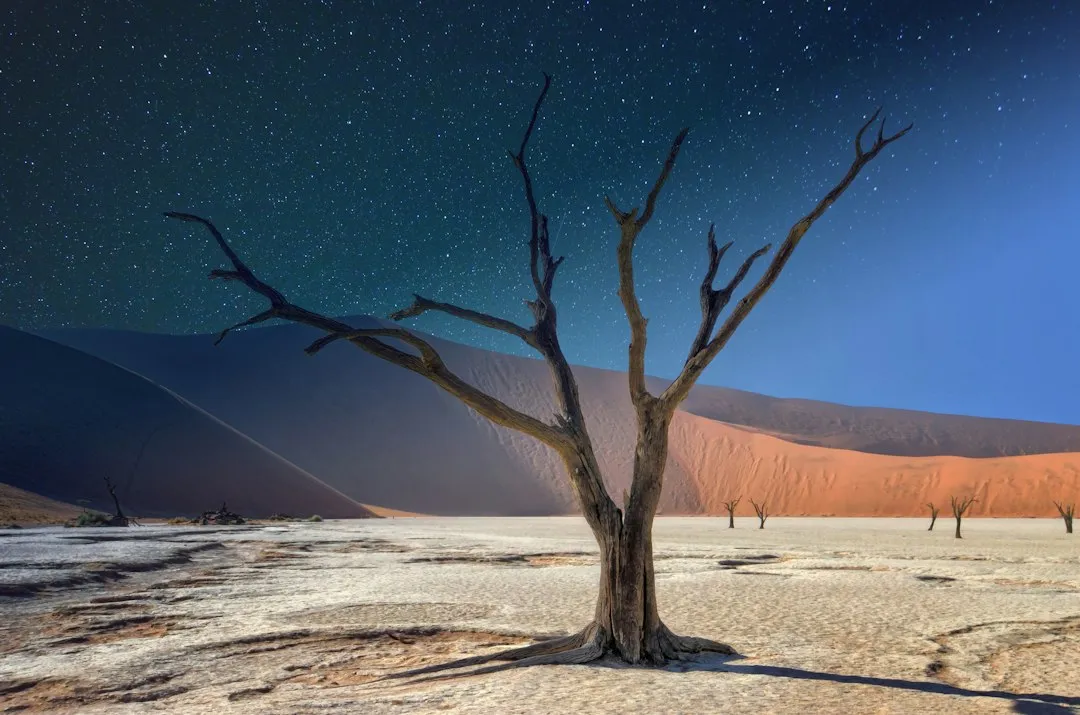
In 2012, the NamibRand Nature Reserve in southern Namibia became the first place in Africa to earn Gold Tier certification as an International Dark Sky Reserve. That title is recognition by the International Dark-Sky Association that the reserve protects one of the last truly pristine night skies on Earth.
The NamibRand Nature Reserve has been designated a Gold Tier International Dark Sky Reserve by the International Dark Sky Association, only the second place on Earth designated with Gold Tier status because of its exceptionally dark skies. It was also the first International Dark Sky Reserve in the developing world and in Africa.
Covering more than 200,000 hectares of private wilderness on the eastern flank of the Namib Desert, the NamibRand has no towns, no roads, and almost no artificial light. The nearest settlement lies 60 kilometres away. The result is a sky so dark, so clear, that the Milky Way casts shadows.
What You Actually See Above Namibia
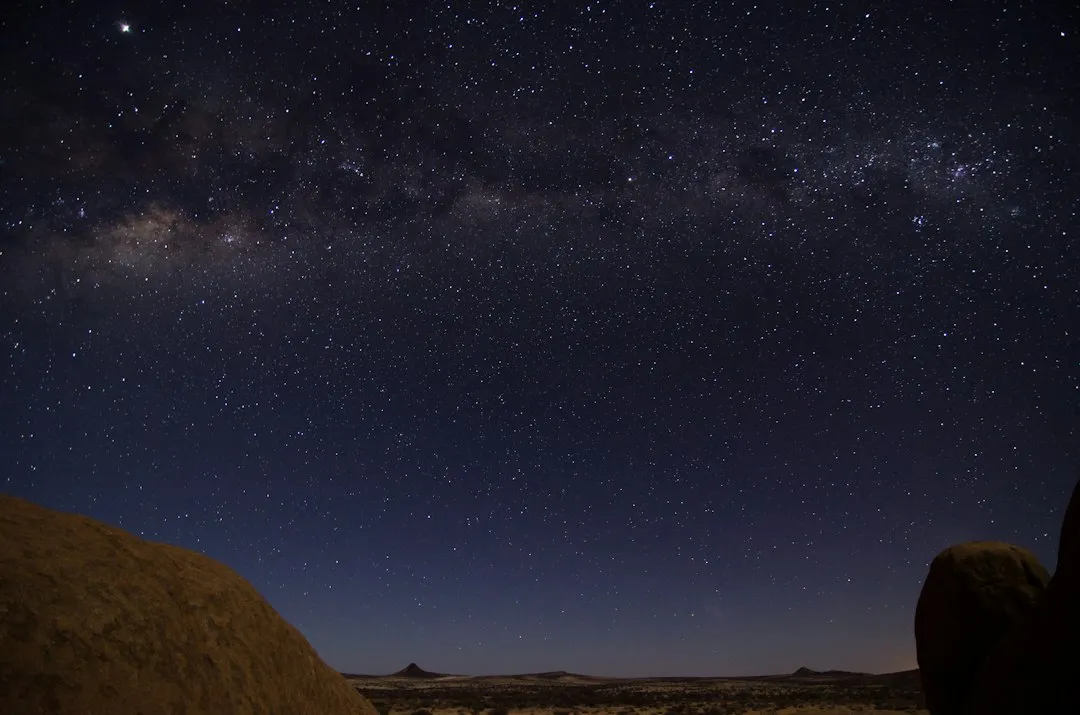
Across as much as half the Earth, the starry sky is obscured by an orange glow of man-made light pollution. The NamibRand is one of the few places on the planet where that glow simply doesn’t exist.
A timelapse from NamibRand Nature Reserve in 2023 showcases the Milky Way stretching from the Southern Cross to the Northern Cross. The Small Magellanic Cloud and Large Magellanic Cloud are visible on the southern horizon. Faint zodiacal light and the planet Jupiter are also visible at dawn.
The reserve is large and very sparsely populated, which helps preserve truly dark skies. Camps inside and on the edges of the reserve make the most of that remoteness with nighttime activities and even sleep-out options. Waking at 3 a.m. to a sky that looks painted is not a cliché in the NamibRand. It’s just what happens.
Stargazing Infrastructure: Where Science Meets Hospitality
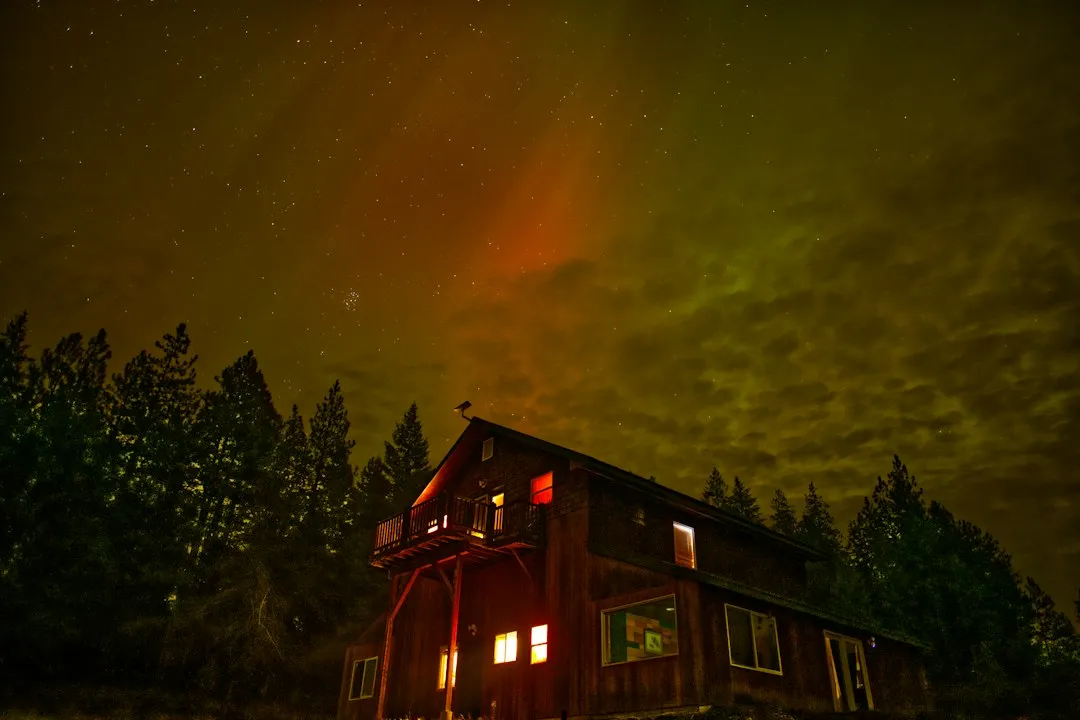
At Kwessi Dunes Lodge, each bedroom has a separate star-gazer room, completely open to the sky and the perfect spot from which to watch the celestial theatre show above. That kind of design signals how seriously lodges here take the nocturnal experience.
Guides from the Wolwedans Collection and Tok-Tokkie Trails are trained in aspects of astronomy and spend time with guests sharing stories about the constellations, as well as views of the moon and planets such as Jupiter or Saturn. This is not a brief “look up” moment. It’s a structured, genuinely educational encounter with the southern sky.
The rules of the Reserve prescribe that the total number of guest beds is restricted to one bed per 1,000 hectares and a maximum of 25 guest beds in any one location. That cap is deliberate. It ensures the reserve never tips into the kind of crowded tourism that would undermine the very darkness it protects.
The Skeleton Coast: A Fourth Dimension for Those Who Want More

Extending south from Namibia’s Angolan border, the Skeleton Coast stretches across 300 miles of coastline and has swallowed over 1,000 ships. With its treacherous currents, strong winds, and heavy surf, it’s a notorious shipwreck graveyard.
The coastline earns its name honestly. Whale bones once bleached on the beaches here for kilometres. Ship hulls still rest half-buried in sand. Yet life persists here: desert elephants, black rhinos, brown fur seals, and Welwitschia plants that can live more than 1,000 years. Death and biological tenacity sit side by side in a way that feels almost philosophical.
Swakopmund, located in the Erongo Region of Namibia, offers a unique atmosphere for outdoor vacation experiences. With its desert landscapes, historical monuments, guided tours, and thrilling adventure opportunities, there’s something for every traveller. The town is also known for its beautiful coastline, perfect for biking and beach activities. It works as both a base and a destination in its own right.
The Practical Case: Why Namibia Rewards the Effort
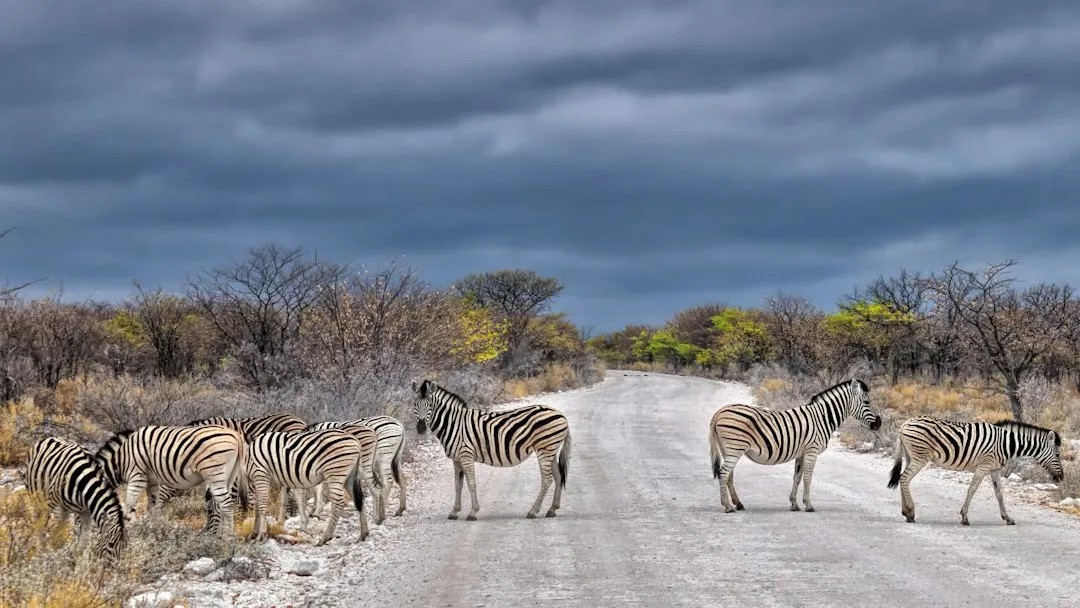
Namibia has a well-developed tourist infrastructure with decent roads that are often quiet due to the country’s sparse population. Travellers can reach far-flung destinations by small planes, which help cover vast distances efficiently. The country is large, roughly twice the size of California, but genuinely navigable for independent travellers.
Namibia’s blend of tranquility, adventure, wildlife, and untouched landscapes makes it ideal for travellers seeking unique destinations beyond common choices. The absence of large crowds allows journeys to unfold slowly, offering deeper connection with the places visited.
The country also runs one of Africa’s most admired community conservancy systems, where rural communities receive a direct share of wildlife tourism revenue. Visiting ethically here means choosing lodges and operators who support those programmes, which in turn fund both conservation and local livelihoods. That loop is working, and it shows in the health of the landscape.
The Takeaway
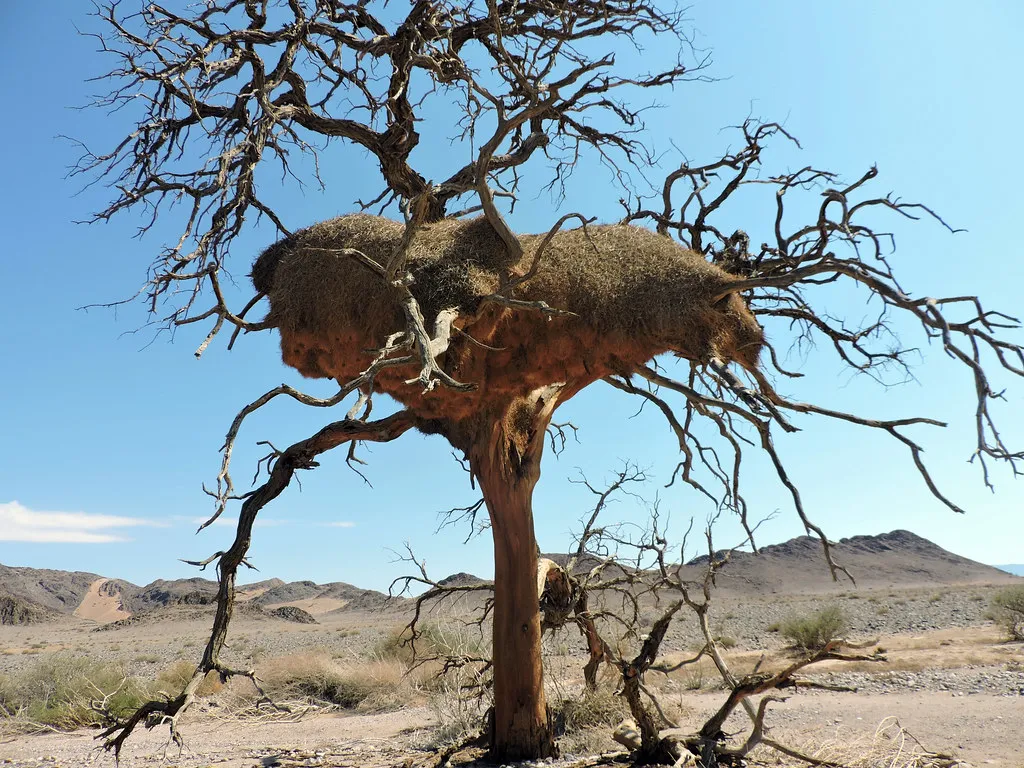
Namibia doesn’t promise convenience or comfort in the conventional sense. What it offers instead is rarer: genuine remoteness, ecosystems that still function on their own logic, and skies and landscapes that carry a sense of geological time you simply cannot access in most of the world.
The three experiences described here, the ancient dunes and Deadvlei, the wildlife of Etosha, and the dark sky of the NamibRand, are not interchangeable with experiences elsewhere. They are specific to this particular stretch of southern Africa, shaped by 55 million years of desert, by conservation policy that puts ecological integrity first, and by a sparsity of human presence that still feels, improbably, like a gift.
The flight is long. The distances inside the country are longer. The trip justifies itself before you’re halfway through it.
AI Disclaimer: This article was created with the assistance of AI tools and reviewed by a human editor.