
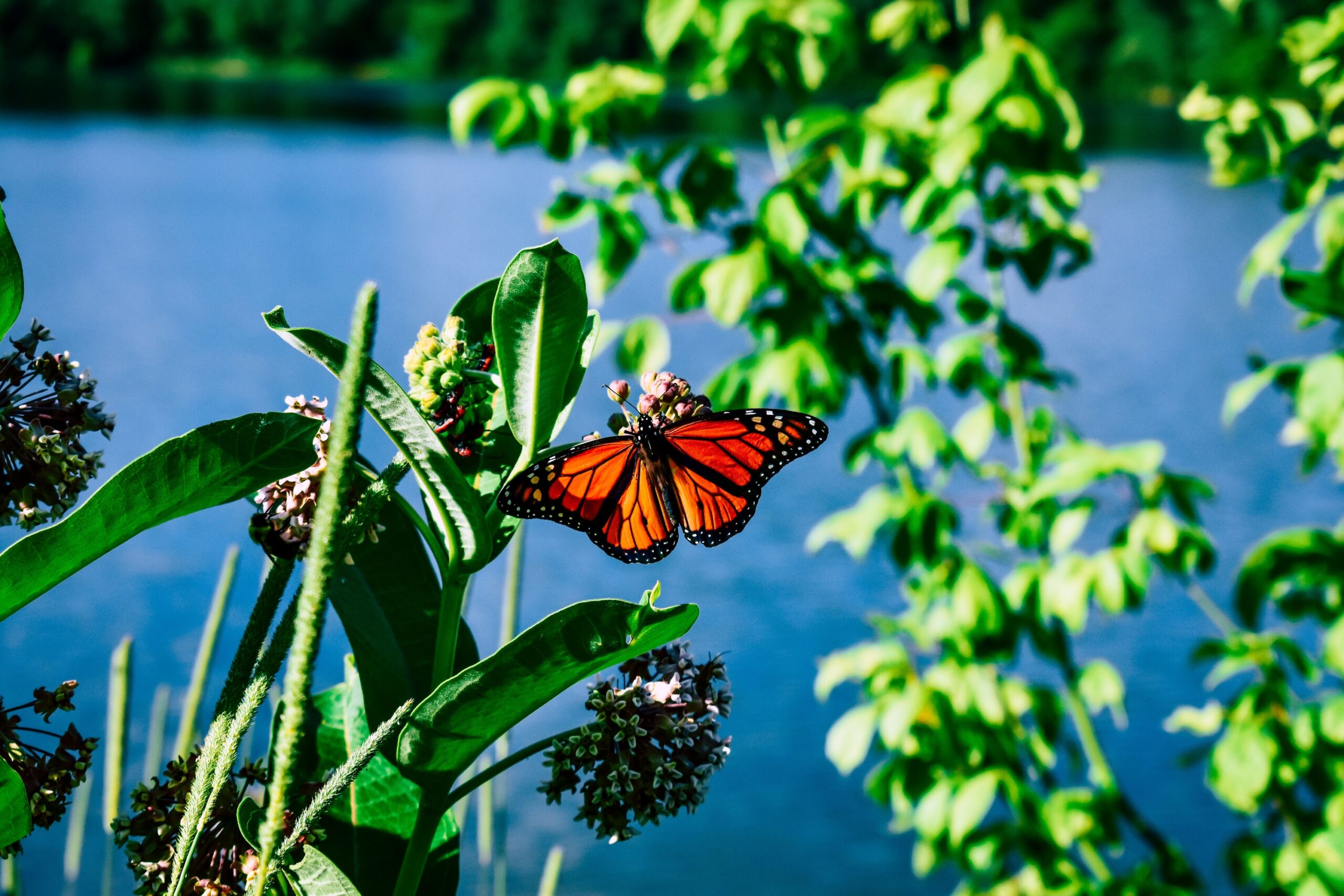
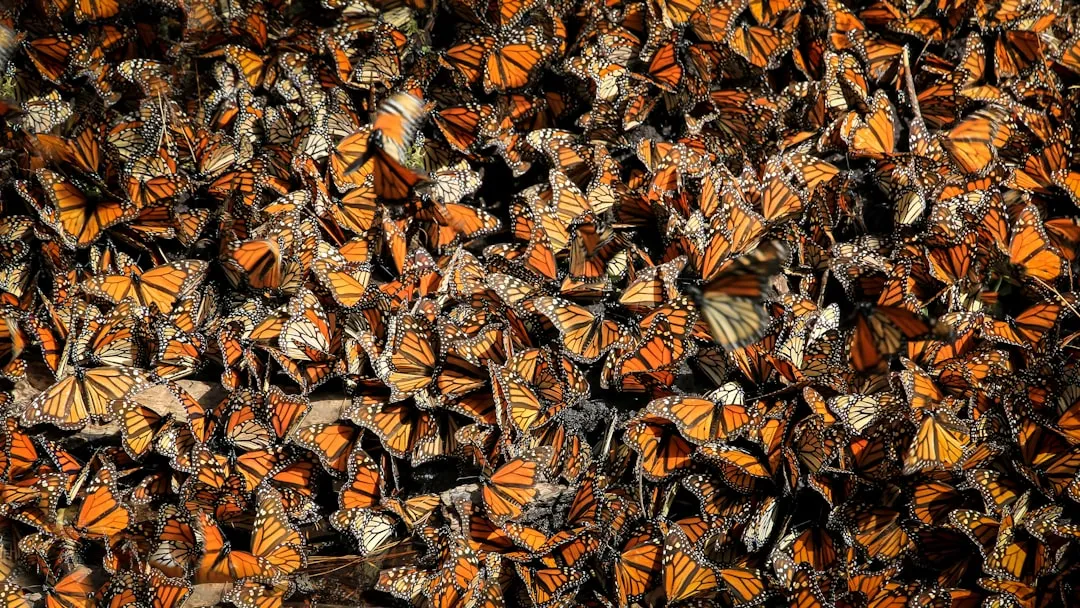
There is something that stops you completely in your tracks the first time you see it: an entire tree draped in living orange and black, its branches trembling not from wind but from wings. Monarch butterflies clustering on overwintering trees is one of the most extraordinary wildlife spectacles in North America, and yet most people have no idea it’s happening just a few hours from a major city.
Every year, after a multi-generational journey that spans thousands of miles, monarchs converge on a handful of specific sites and quite literally cover the trees. The experience is quiet, warm, and strangely humbling. These four places are where that scene plays out most dramatically.
1. The Monarch Butterfly Biosphere Reserve, Michoacán and State of Mexico, Mexico
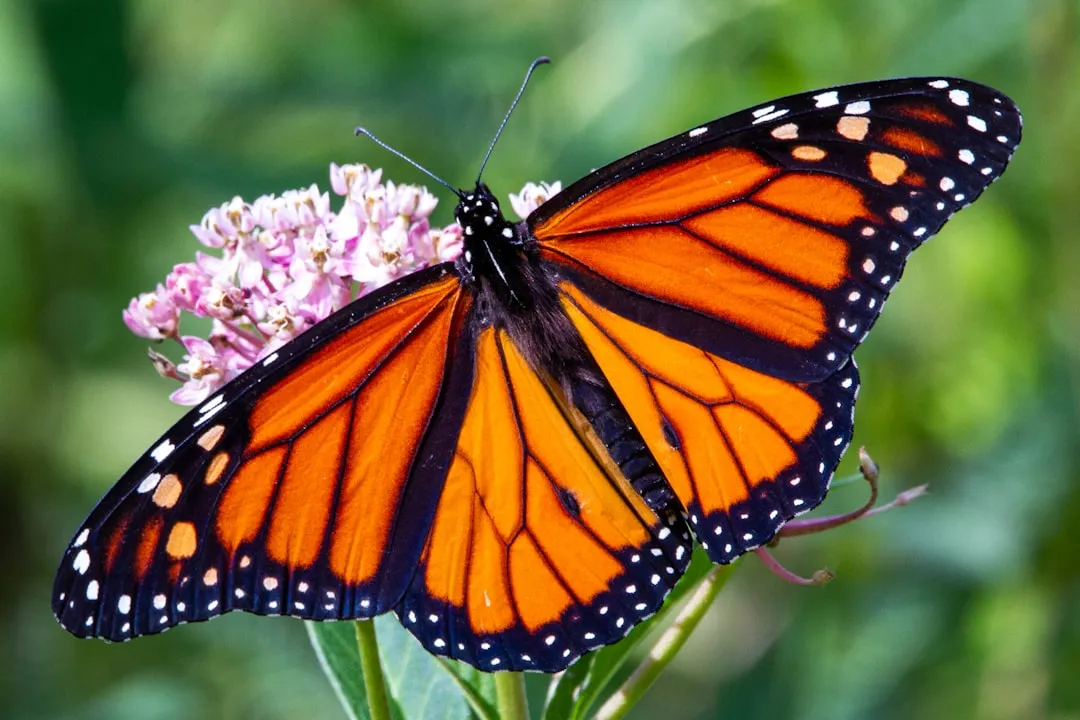
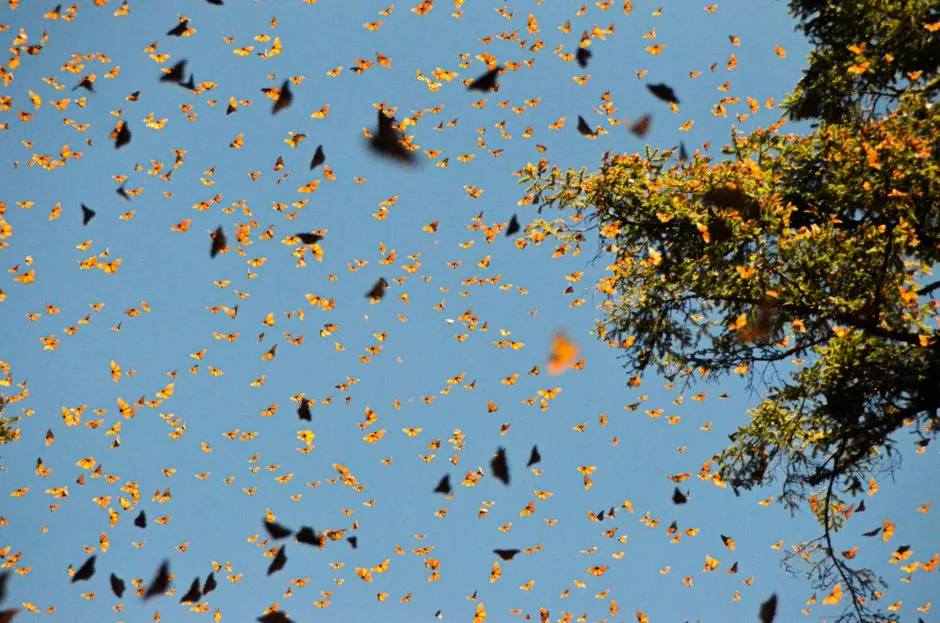
No place on Earth concentrates monarch butterflies the way the forests of central Mexico do. The Monarch Butterfly Biosphere Reserve covers 56,259 hectares of rugged mountain terrain about 100 kilometers northwest of Mexico City, and every autumn, millions of butterflies arrive to cluster on small areas of the forest reserve, coloring trees orange and literally bending their branches under their collective weight. Up to a billion monarch butterflies return annually, from breeding areas as far away as Canada, to land in close-packed clusters within 14 overwintering colonies in the oyamel fir forests of central Mexico.
Scientists don’t count individual butterflies here. Instead, they estimate the population by measuring the area of forest the butterflies are occupying in hectares, and estimates suggest there are between 20 to 30 million monarchs per hectare. According to data released on March 17, 2026 by WWF and Mexico’s CONANP, monarchs occupied 2.93 hectares in December 2025, compared to 1.79 hectares the previous year. This represents a recovery trend continuing for a second consecutive year and significant short-term growth.
The reserve currently includes nine major butterfly colonies, and the five sanctuaries generally open to the public are Sierra Chincua, El Rosario, La Mesa, Piedra Herrada, and El Capulín. El Rosario, at roughly 3,000 meters elevation, is widely regarded as the most accessible and visually overwhelming of the five. For context on how dramatic the long-term decline has been, nearly 45 acres of forest were covered with monarchs in the winter of 1995 to 1996.
2. Natural Bridges State Beach, Santa Cruz, California
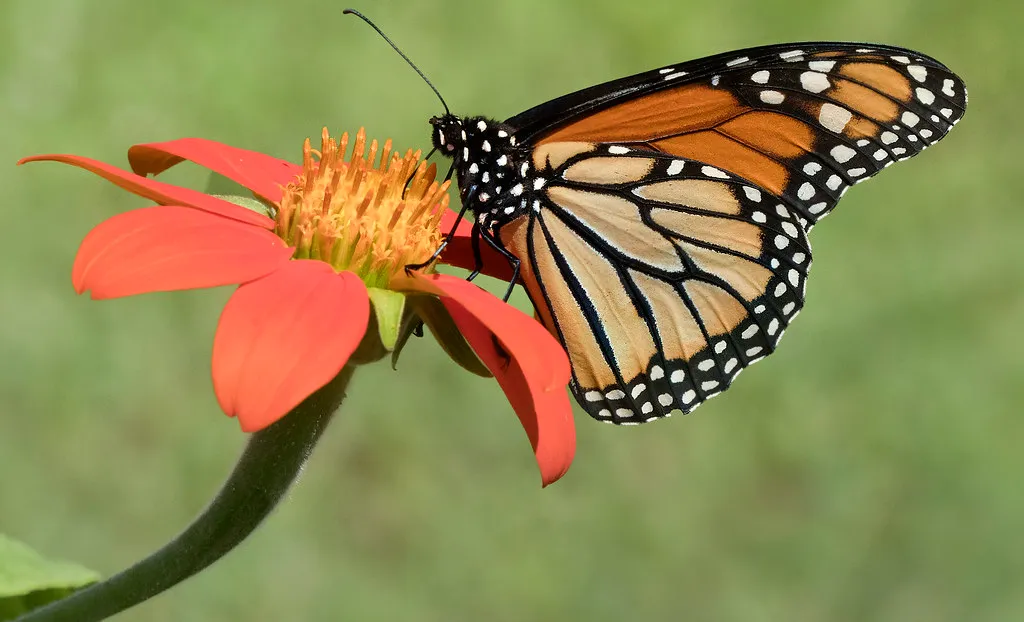
The monarch butterfly window opens each autumn at Natural Bridges State Beach in Santa Cruz, which through January becomes the only state-run monarch preserve in California and a magical stop for western monarchs, where the striking orange-and-black clusters form on eucalyptus trees. The site features interpretive programs for the public and can be accessed via the Monarch Trail, a shaded wooden boardwalk with a gentle grade that leads to an observation deck.
In the most recent winter season, the largest overwintering clusters were observed in Santa Cruz County, with top mid-season counts at Lighthouse Field State Park reaching 1,406 monarchs and Natural Bridges State Park hosting 1,400 monarchs. Natural Bridges is consistently ranked among the top four western monarch migration sites out of approximately 250 sites where monarchs are usually found. In good years, the eucalyptus grove fills with thousands of butterflies draped like living garlands.
Visitors walking the short Monarch Grove Trail may not immediately recognize the brownish bunches high in the trees as butterflies clustered together, and binoculars are genuinely helpful for appreciating the full scale of a large cluster. The best viewing window tends to fall between November and January, when afternoon warmth encourages the butterflies to open their wings and the grove glows with color.
3. Pismo State Beach Butterfly Grove, Pismo Beach, California
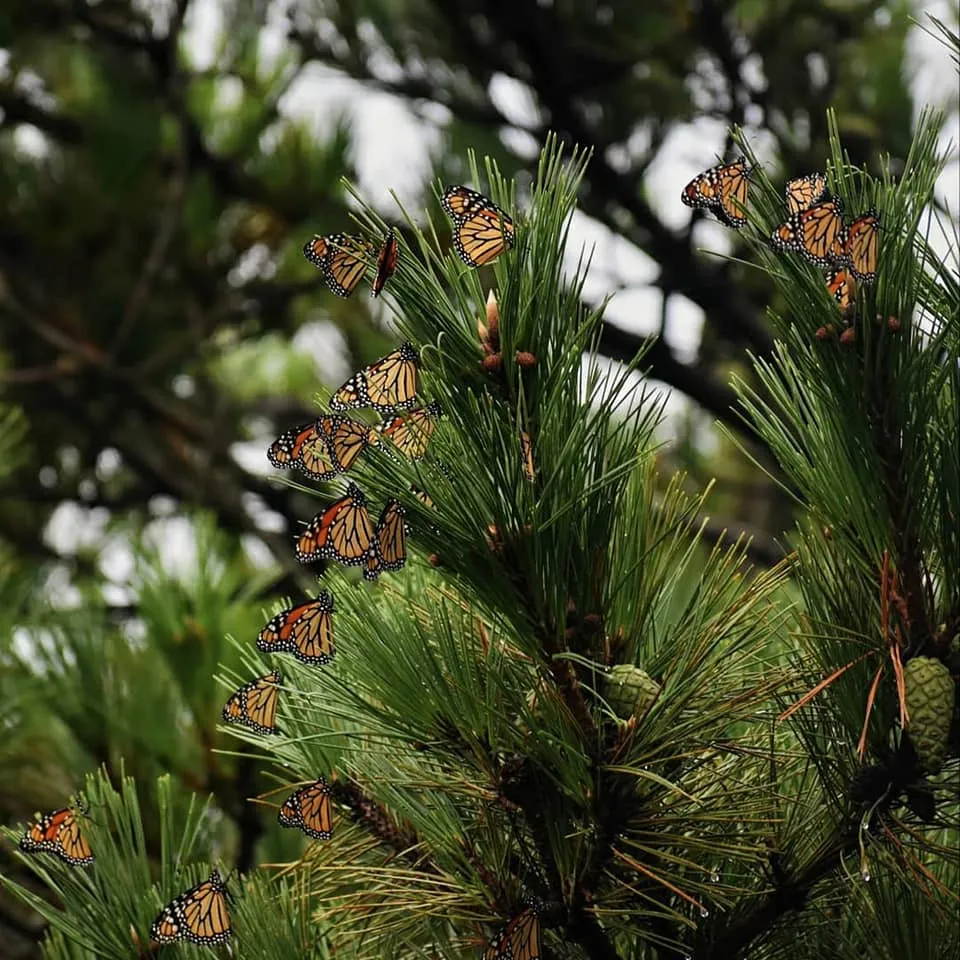
Each fall, monarch butterflies migrate thousands of miles to California’s Central Coast, and Pismo Beach has long been one of their most reliable wintering destinations. Pismo State Beach is home to one of the largest overwintering western monarch populations of any California state park. On peak years, visitors walking through the grove of eucalyptus and Monterey pines find clusters so dense that tree branches seem to shift from brown to orange depending on the light.
In 2022, the Pismo Beach butterfly grove hosted the highest percentage of overwintering monarchs in any California state park, accounting for roughly 7.2% of the total western monarch population that season. Numbers have fluctuated sharply since then. The peak count in the 2022 to 2023 season reached 24,128 butterflies, while the 2023 to 2024 season peaked at 16,347 in December 2023, followed by a dramatic drop to just 556 in 2024 to 2025 and 471 as of late November 2025.
Researchers attribute the sharp 2024 to 2025 decline partly to extreme heat and historic drought conditions. Though the site has experienced a severe reduction in its monarch population in recent years, it has been ranked as one of the most important sites for conservation priority on the California coast. Even in lower-count years, the grove itself remains a beautiful and contemplative place to visit.
4. Pacific Grove Monarch Sanctuary, Monterey Peninsula, California
Pacific Grove, a quiet coastal town on the Monterey Peninsula, has been hosting monarch butterflies for so long that locals simply call it Butterfly Town USA. The grove along Ridge Road has been an active overwintering site for well over a century, and the city has municipal ordinances protecting the butterflies. The western monarch population tracks butterflies migrating from the western United States and Canada to coastal California and northern Baja, Mexico, with Pacific Grove sitting squarely along that corridor.
In January 2024, hundreds of monarchs at the Pacific Grove Monarch Sanctuary in Monterey County were found dead or convulsing from pesticides, which drew urgent attention from conservation biologists. This incident underscored how vulnerable even well-known and loved sites remain without active habitat stewardship and landscape-level protections. The sanctuary continues to operate, with docents present on weekends to help visitors find and identify clusters.
Overwintering at sites like Pacific Grove provides rest and energy conservation for the butterflies before their spring mating and migration, and these groves offer a necessary microclimate that includes protection from wind and cold, adequate sunlight, and access to nectar sources. When conditions align, the Monterey pines and eucalyptus in the sanctuary carry clusters of thousands of butterflies, each one the size of a hand and folded into a resting posture that mimics a dead leaf.
Why These Trees and Not Others
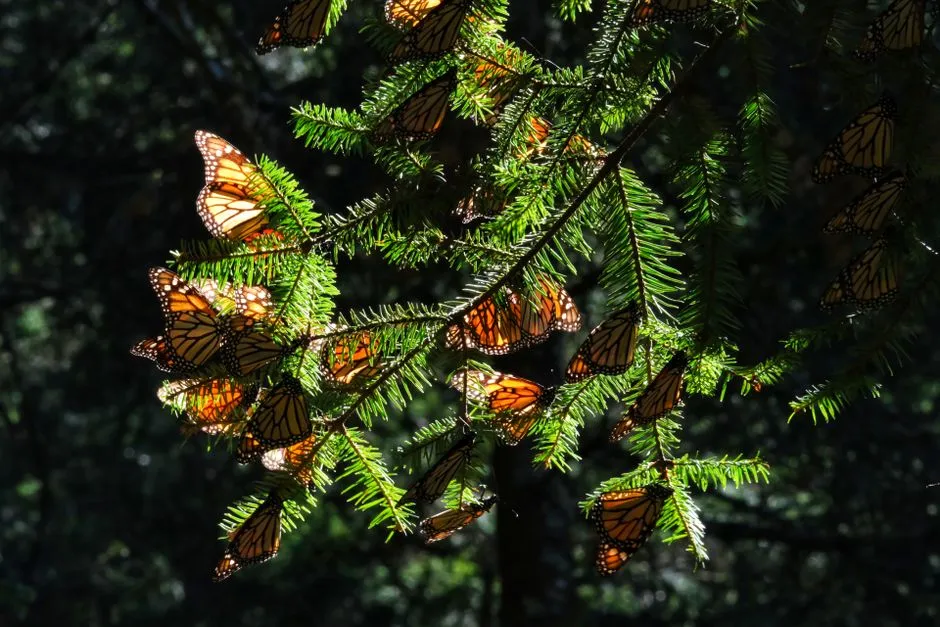
Monarchs need large, healthy forests to protect them from winds, rain, and low temperatures common at night in their overwintering sites. The specific trees chosen tend to share certain qualities: dense canopy that moderates temperature swings, proximity to water and nectar sources, and enough sunlight to warm the roosting clusters during the day. In Mexico, oyamel firs do this work at high altitude; in California, eucalyptus and Monterey pines along the coast serve the same function.
The western monarch migration takes place over multiple generations of butterflies, with the final generation overwintering in large clusters sheltered in groves of trees. That final generation is often called the “supergeneration” because it lives far longer than summer generations, surviving the full winter before returning north in spring. The trees these butterflies choose are not random. They are selected with remarkable consistency, generation after generation, through mechanisms researchers still don’t fully understand.
The Condition of the Population Right Now
As of the most recent western count released in January 2025, just 9,119 western monarch butterflies were recorded across California, which is the second lowest overwintering population ever recorded since tracking began in 1997. This marked a sharp decline compared to the previous three years, which had each recorded over 200,000 monarchs.
Researchers believe that in the 1980s, more than 4.5 million monarch butterflies spent the winter in California. According to published research, a threshold of at least 6 hectares of overwintering monarchs is recommended to support a sustainable eastern migratory population, and the current population remains below this target. The eastern population in Mexico is showing two consecutive years of recovery, which is encouraging, but specialists remain cautious about calling it a trend.
The Conservation Work Happening on the Ground
By the end of 2024, more than 21 million oyamel and pine trees had been produced in a network of 13 community-based nurseries, and more than 53 acres of forest had been reforested inside the Monarch Butterfly Reserve and surrounding protected areas. Improved forest protections in the core zone of Mexico’s Monarch Butterfly Biosphere Reserve have also been credited as a contributing factor to recent population gains.
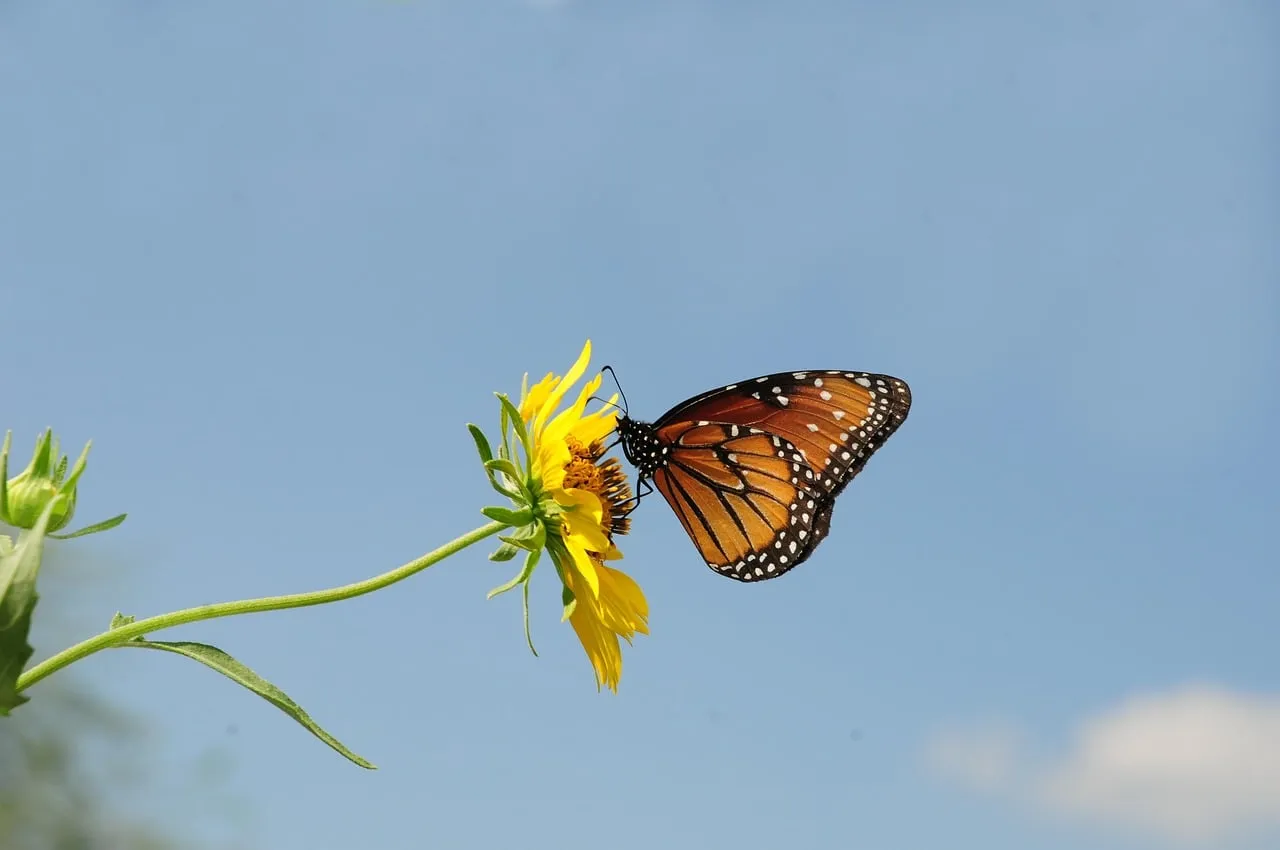
Conservation efforts in the Midwest are focused on planting milkweed and nectar-rich flowers to help build up the breeding population in advance of the southward journey. The 2025 to 2026 recovery was attributed in part to a spring and summer that were less dry than in 2024, which allowed for more egg and larvae survival, and to less drought during migration, which led to a higher presence of flowering plants providing nectar along the route.
How to Visit Responsibly
At all four sites, the guiding principle is the same: observe quietly, stay on designated trails, and give the clusters distance. Monarchs in a roosting state are in an energy-conserving mode, and sudden disturbances can cause mass flight events that exhaust the butterflies at precisely the moment they need to conserve fat reserves for spring migration. Most sites have docents or rangers on-site during peak season, and their guidance is worth following.
Several overwintering sites offer public access, but clusters of monarchs may be less common in years when overall monarch populations are particularly low. Checking current counts through Journey North or the Xerces Society’s Western Monarch Count website before visiting helps calibrate expectations and makes the trip more rewarding. Reporting sightings through citizen science platforms is also actively encouraged, as Lighthouse Field State Beach, Natural Bridges State Beach, and Pismo State Beach are among the monitored sites where data from the public contributes to population tracking.
A Note on Timing
The window for seeing monarchs blanket trees is narrow. In California, the primary season runs from late October through January, with November and December typically offering the densest clusters. In Mexico, the colonies are most accessible and most spectacular between late November and early March, when the butterflies are settled in but the forests remain accessible before spring departure begins.
Monarchs typically begin to depart from their overwintering sites in Mexico in the last week of February through the first week of March. That departure is gradual at first, then almost sudden. One week the trees are full; the next, they’re bare. Visiting during the heart of the season rather than at the edges gives the most reliable experience.
The Bigger Picture Worth Holding Onto
What makes standing beneath a tree full of monarchs genuinely moving is not just the spectacle. It’s the knowledge that every butterfly clinging to that branch has already traveled hundreds of miles on wings the thickness of a tissue, following a route encoded in biology rather than memory. In spring, these butterflies begin an eight-month migration that takes them all the way to eastern Canada and back, during which four successive generations are born and die.
The eastern monarch butterfly population overwintering in Mexico’s oyamel fir forests occupied 2.93 hectares during the 2025 to 2026 overwintering season, according to the latest survey released by CONANP and WWF, representing the second consecutive year of increase. It’s cautious good news, and the people doing the conservation work are measured in how they talk about it. The butterflies themselves, for now, keep returning to the same trees. That, on its own, is worth making the trip to witness.
AI Disclaimer: This article was created with the assistance of AI tools and reviewed by a human editor.