
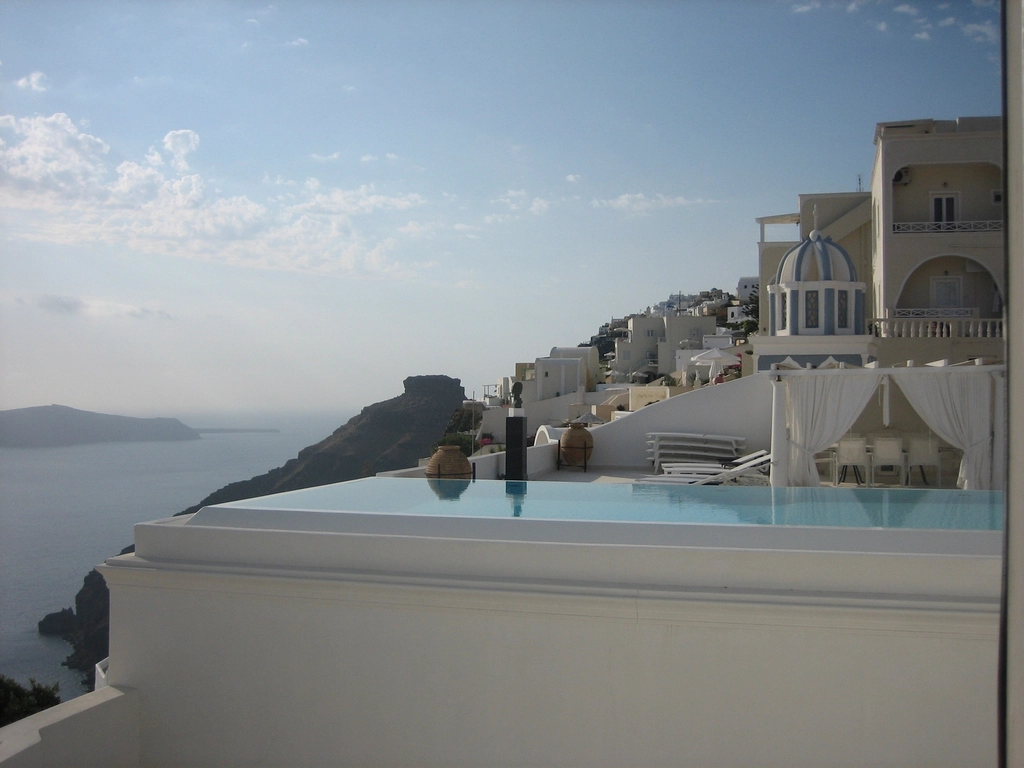

Oia: The Legend That Still Earns Its Reputation
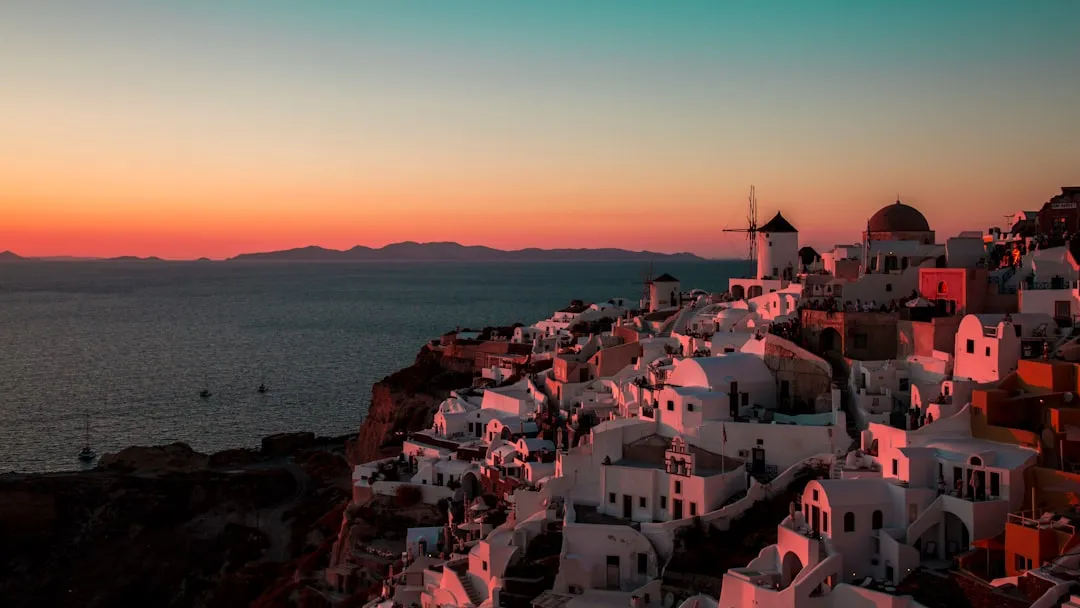
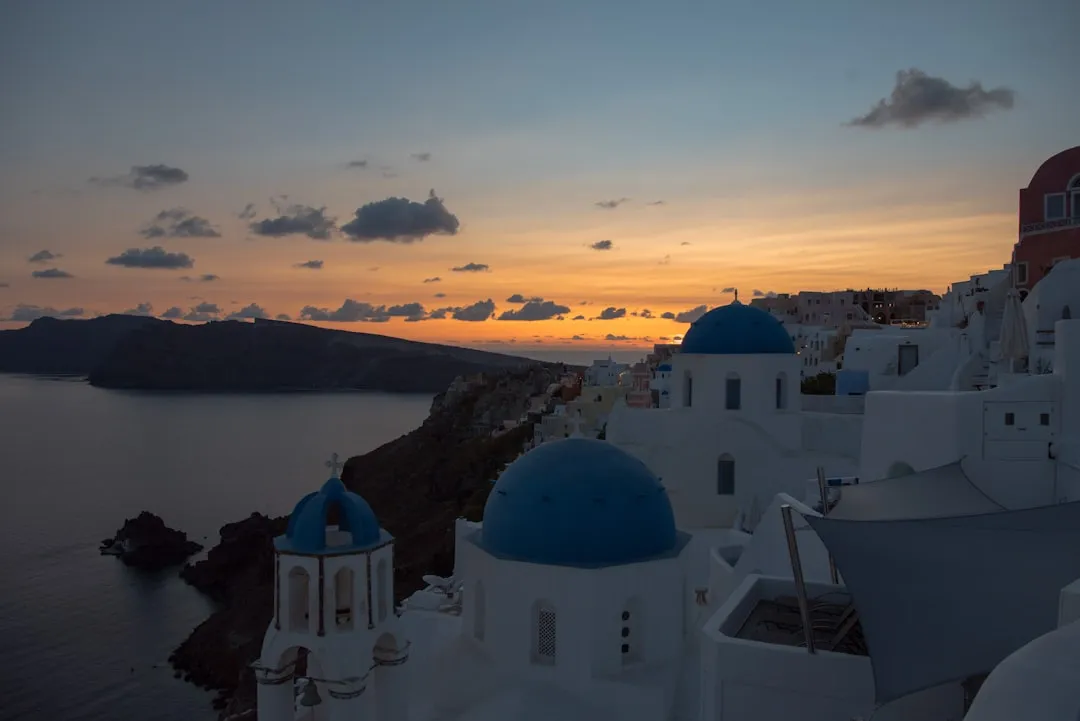
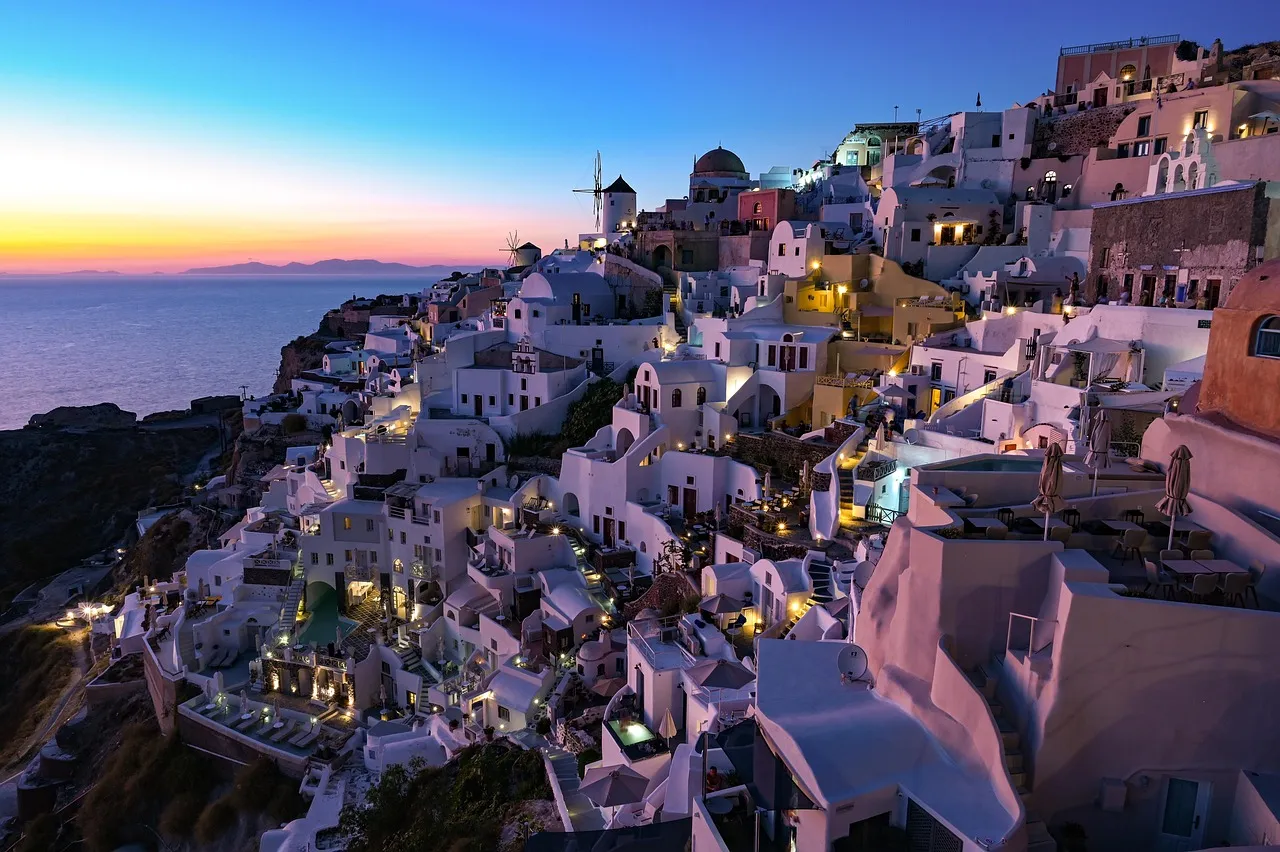
Oia sits at the northernmost tip of the island, and its relationship with the setting sun is almost cartoonishly perfect. Perched on the northern tip of the island, Oia offers breathtaking views of the caldera and the endless Aegean Sea. As the sun dips below the horizon, the entire village is bathed in hues of pink, orange, and purple, creating a magical and romantic atmosphere that draws visitors from around the world.
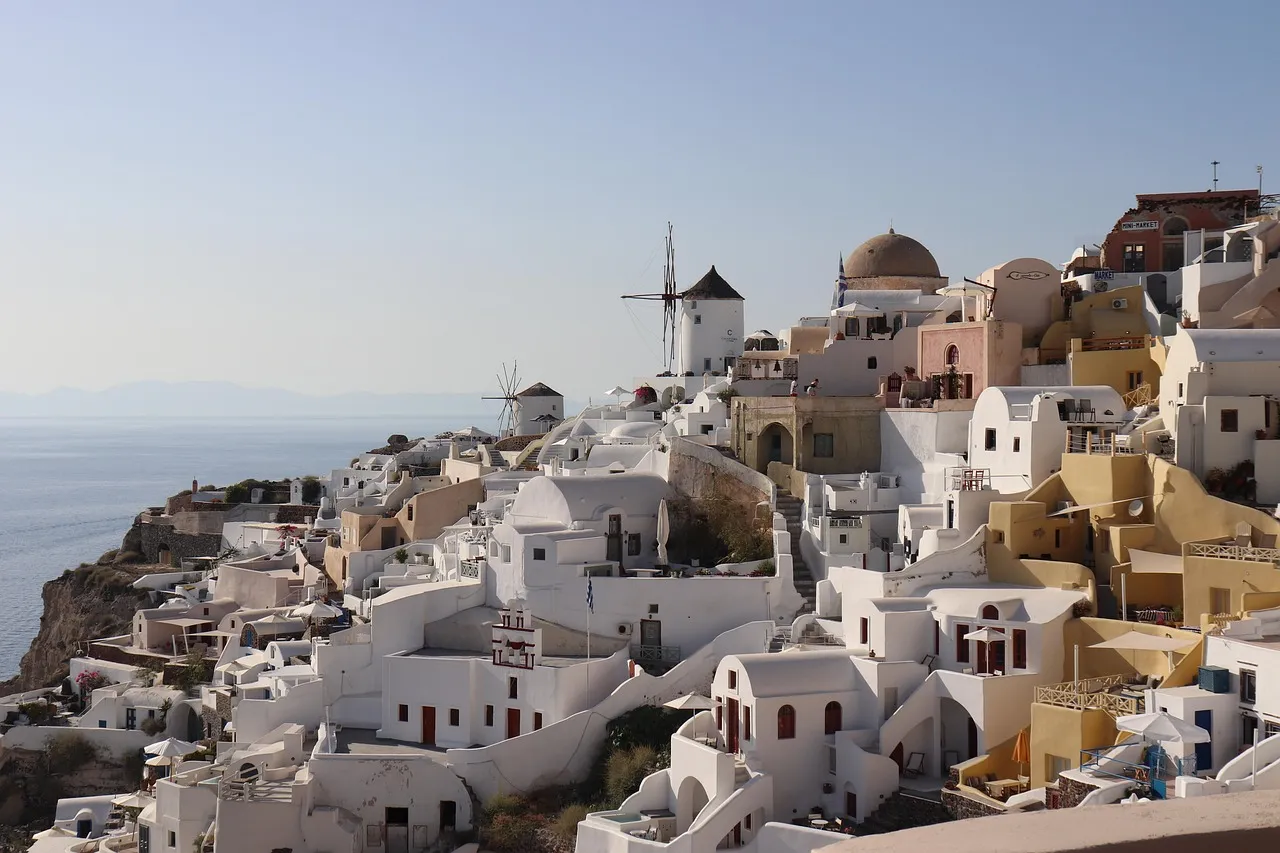
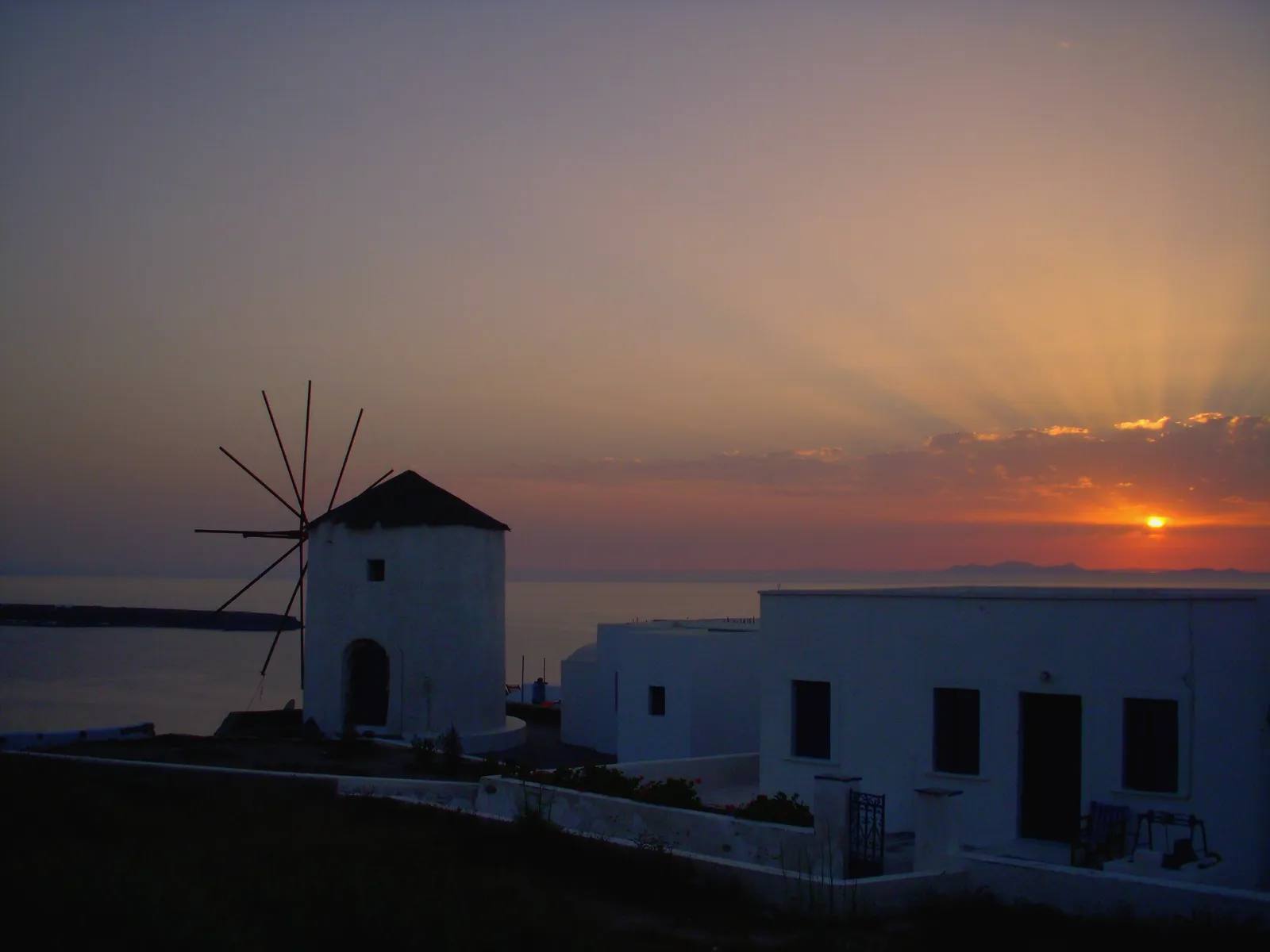
The iconic framing is real. One of the most iconic images of Santorini is the view from Oia, with its whitewashed buildings, blue-domed churches, and windmills silhouetted against the vibrant sunset sky. That image has circulated so widely that arriving here can feel oddly familiar, even on a first visit.
Just off the main street, an alleyway leads down the hill to the Byzantine Castle, which commands a superb view over the curved rooftops of the village and its two windmills, which are among the best known. Sunsets in Oia are not for the faint-hearted as the village floods with tourists. The coveted spot around the Castle of St Nicholas becomes a sea of spectators with cameras and tripods. Arriving early, or walking ten minutes past the main crowd, changes everything.
Why the Crowds Tell Only Part of the Story
It’s worth understanding the context before arriving at any viewpoint. Historically, Santorini has struggled with overtourism, with peak days seeing up to 17,000 cruise visitors flooding the narrow streets of Fira and Oia. That pressure has shaped how travelers experience every sunset spot on the island.
More recently, the picture has shifted noticeably. Santorini Airport handled 2,418,219 passengers in 2025, a 16.0% decline from 2024, driven partly by a January through February earthquake swarm that produced approximately 28,000 tremors including 14 above magnitude 5.0. Seismic activity has since subsided, yet bookings for 2025 were still down over 20%, making the island more affordable and less crowded.
Despite the decline, 2025 traffic remained 5.1% above Santorini’s 2019 pre-pandemic total. The island, in other words, is quieter than it’s been in years but still very much alive. For travelers who’ve always wanted to see Santorini without the peak-season chaos, this is a meaningful window.
Imerovigli: The Caldera Ridge at Its Most Intimate
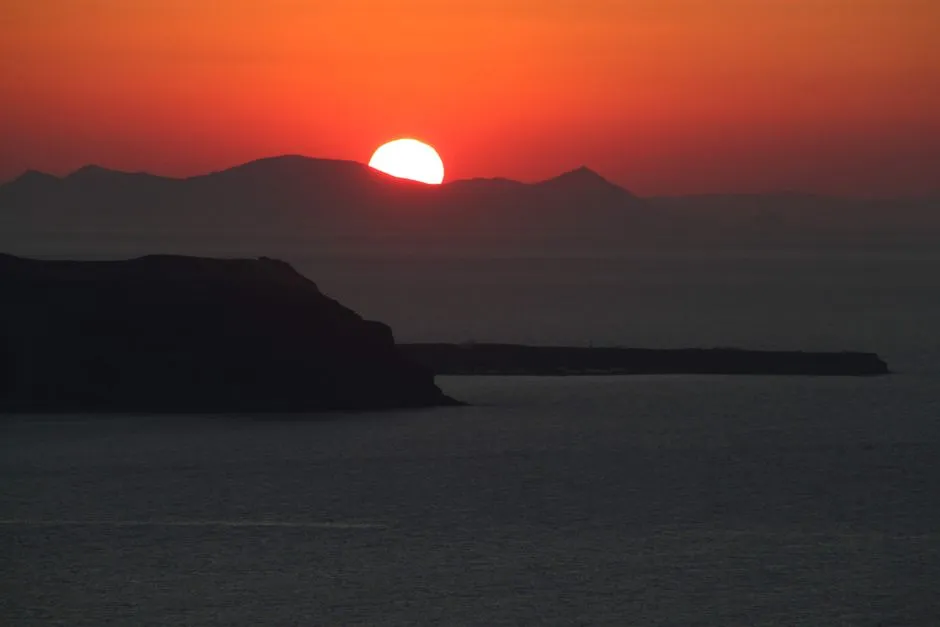
Imerovigli lies between its two bustling neighbors, Oia and Fira. This clifftop village is an underrated lookout point, more secluded, and offering an intimate sunset experience. It doesn’t announce itself loudly, which is precisely its appeal.
Imerovigli sits in the middle of the caldera ridge, meaning the sun perfectly splits the horizon as it sets. That central position is a genuine geographic advantage, not a marketing claim. The angle is cleaner here than at almost any other village.
Imerovigli has the best sunsets of any town on Santorini, according to well-traveled local experts who have compared them across all the caldera villages. You can find many hidden corners to take photos of the Santorini sunset without heads blocking your shots. That freedom is increasingly rare on this island.
Skaros Rock: Imerovigli’s Wild Promontory
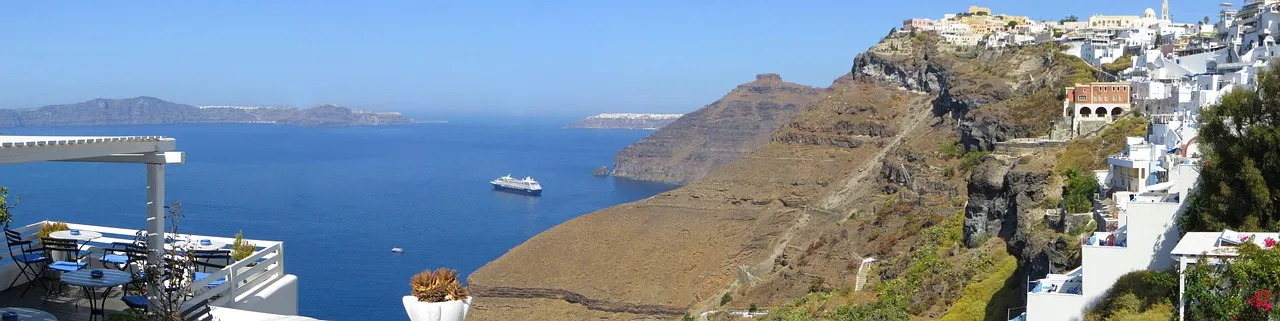
Just below Imerovigli’s main path, Skaros Rock demands a closer look. A rocky promontory jutting into the caldera, Skaros Rock soars roughly 20 meters into the sky, cutting a striking silhouette visible as far as Fira and Oia. This black lava-rock cliff is an ideal vantage point for admiring the sunset over the Aegean Sea and Kameni islands.
Skaros is a rocky cape just outside the village of Imerovigli. It is difficult to imagine by looking at it, but the rock was once the site of a 13th-century fortress and village which was, at one point, the largest settlement on the island. That history sits quietly beneath your feet as you watch the light change.
Timing your hike to Skaros Rock for the late afternoon means a front-row seat to the island’s best show. The sun sets pretty much directly in front of you, while the views over Oia and the rest of the island are basically unmatched. Sturdy footwear matters here, and arriving around 45 minutes before sunset gives you enough time to settle in without rushing.
Pyrgos: The Highest Village and Its 360-Degree Reward
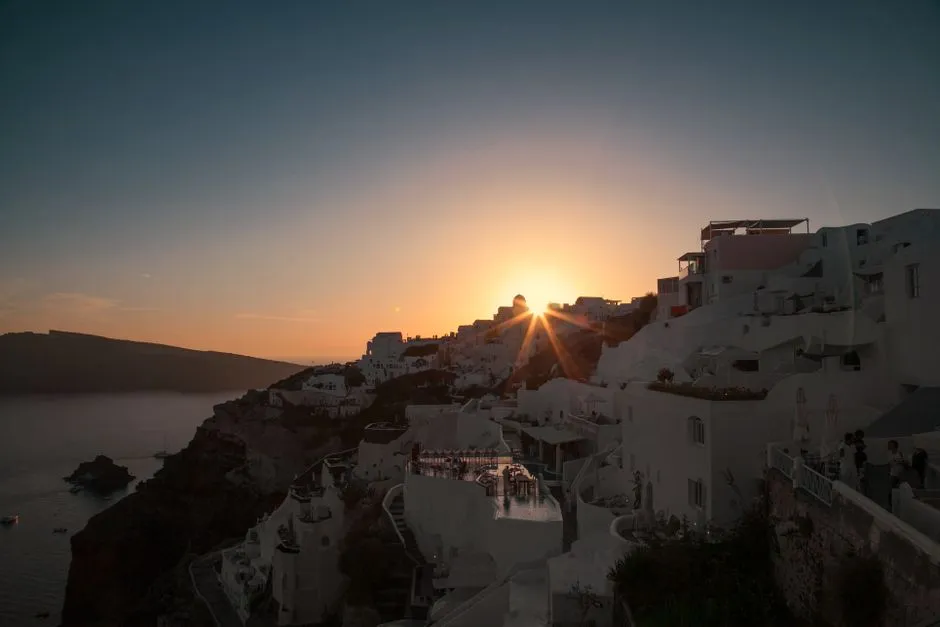
Pyrgos is a traditional village located inland on Santorini, offering a unique sunset experience with panoramic views of the entire island. It’s a different kind of elevation than the caldera cliffs, and the result is a completely different kind of sunset.
Pyrgos is the highest village on Santorini, and its medieval kastelli offers something no other sunset spot can: a full 360-degree panorama of the entire island. From the cafes at the top of its Venetian castle, you watch the sun set over the entire island, with both the caldera and the eastern plains spread out at your feet.
The quiet village of Pyrgos has special protection from the local authorities to prevent it from being overwhelmed by the tourism industry, so it still has a great local vibe. That institutional care shows in the streets. Pyrgos feels like the Santorini that existed before mass tourism. At sunset, you’ll share the viewpoint with a handful of visitors, not hundreds.
Franco’s Café and the Art of the Unhurried Evening
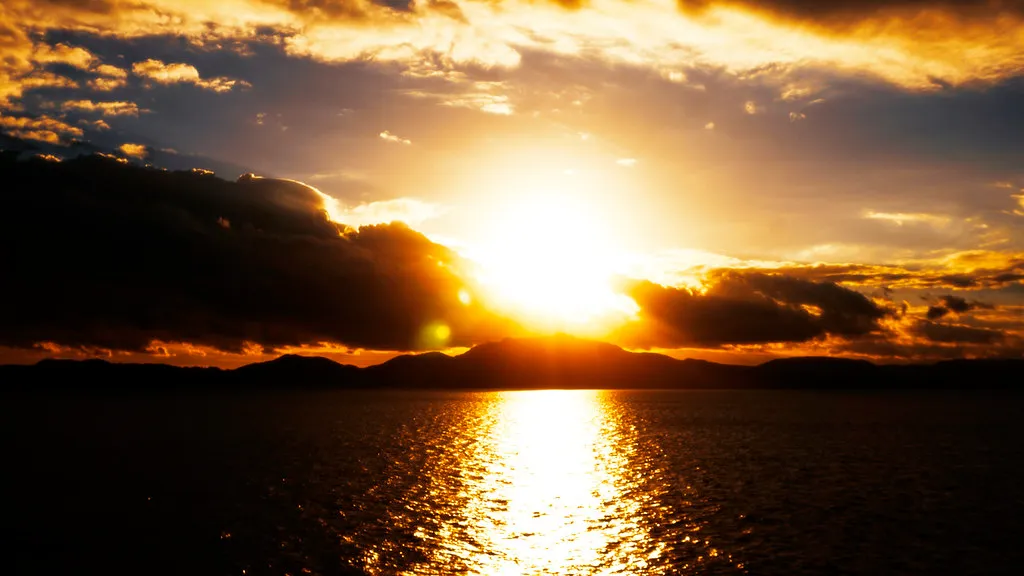
Pyrgos has a fantastic view for sunset, and the best place to enjoy that is Franco’s Café, which is up near the beautiful St George Church and the ruins of Pyrgos Castle. The café has become something of a quiet institution for travelers who prefer atmosphere over spectacle.
Explore Pyrgos Castle and its ruins and stay for a quiet sunset. A variety of vineyards is found in this area, and Santo Winery offers the chance to sample local wine while viewing the sunset. The combination of altitude, wine, and a near-empty viewpoint is difficult to improve on.
At sunset, you’ll share the viewpoint with a handful of visitors, not hundreds. Franco’s Cafe at the top has been serving sunset drinks for decades. Booking a table during summer months is sensible, given that word about Pyrgos has spread steadily among those who prefer their evenings unhurried.
Firostefani: The Quiet Chapter Between Fira and Imerovigli
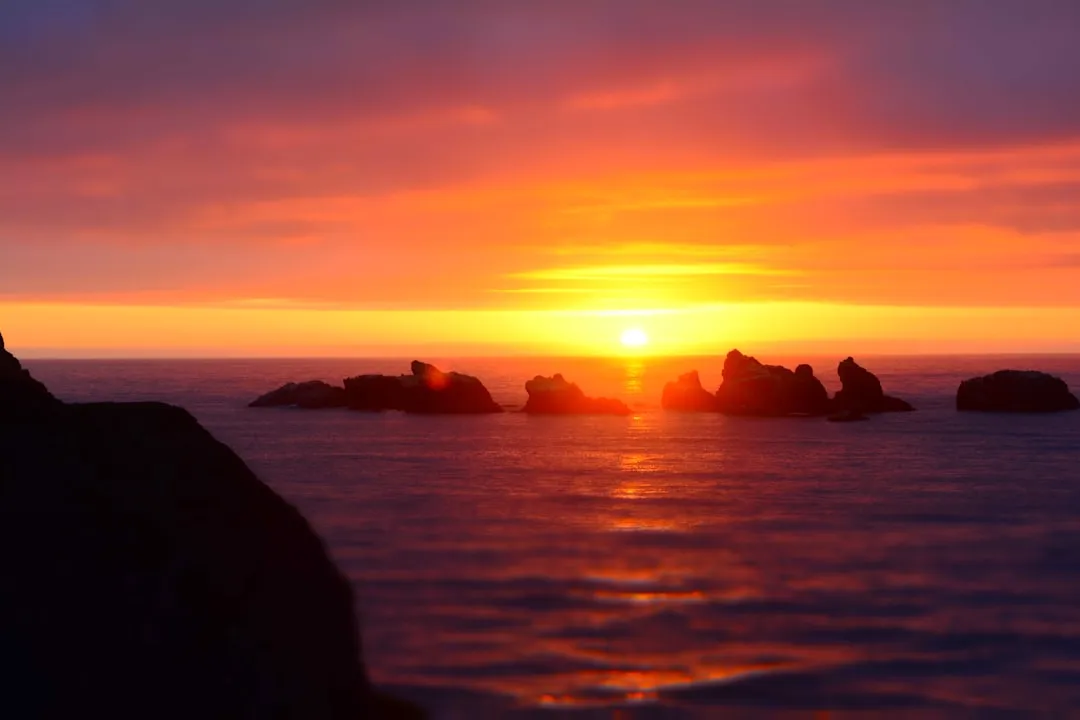
The caldera path in Fira and neighboring Firostefani delivers beautiful sunset views within walking distance of restaurants and hotels. Firostefani sits between the island’s capital and Imerovigli, and its position on the caldera rim is often underestimated by visitors who rush straight past toward more famous names.
These central villages have lovely sunset views over the western horizon. The sun’s final dip into the sea can be partially obscured, but the colors that fill the sky and reflect onto the caldera cliffs are magnificent, especially with the village lights twinkling to life. The effect, particularly in autumn, is genuinely spectacular.
The caldera path traces the cliff edge northward toward Firostefani. The viewing angles catch the sun beautifully, and the walkway is wide enough that the crowd never feels oppressive. It is one of the most pleasant evening walks on the island, manageable for most fitness levels and consistently rewarding.
How the Sun’s Path Changes the Best Spot by Season
One detail many visitors miss is that where the sun actually sets depends significantly on the time of year. The sun sets in Santorini between 17:05 in late December and 20:40 at the summer solstice. That window changes both the quality of light and which village offers the cleanest view.
At the summer solstice in June, the sun reaches its northernmost setting point, and Oia gets its iconic open-Aegean drop. In winter, the sun sets deep to the south of west, meaning Oia loses its sea view behind the Fira and Imerovigli ridgeline, while Fira and Akrotiri get unobstructed maritime horizons. Knowing this before you plan your evenings is genuinely useful.
At the spring and autumn equinox, the sun aligns with true west and drops directly behind the volcanic crater islands from Fira, while Skaros and Oia get clean caldera-water sunsets. Shoulder season, for this reason alone, is often the most rewarding time to be here.
The Akrotiri Lighthouse: Santorini’s Southern Anchor
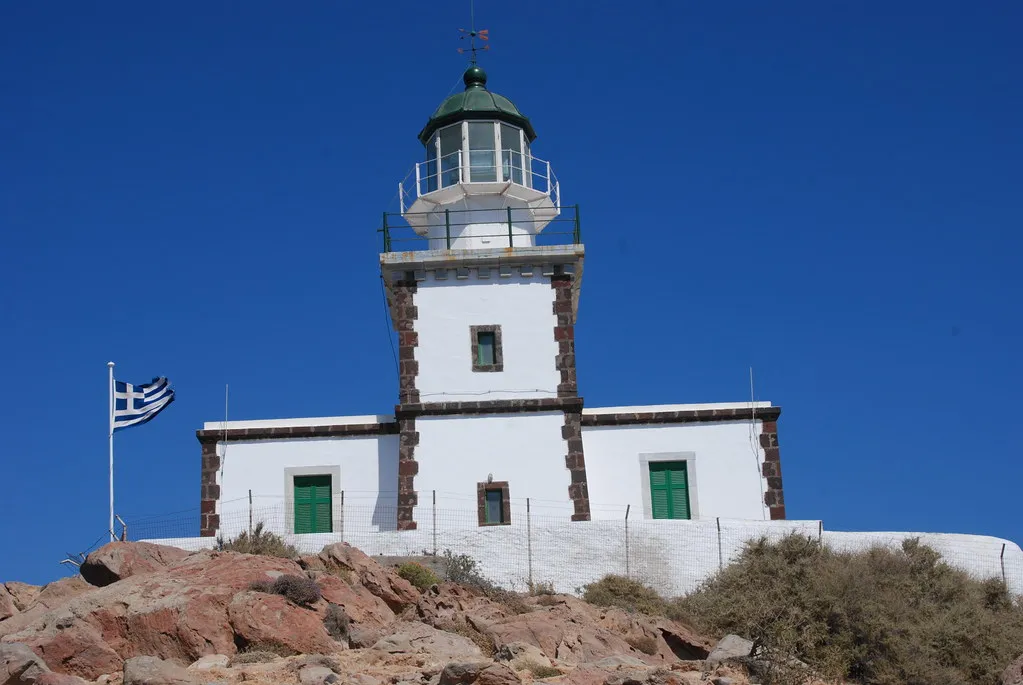
Technically outside the four main villages but close enough to Akrotiri to be part of any itinerary anchored in the south, the lighthouse offers something unique. The Akrotiri Lighthouse is a 19th-century landmark on Santorini, built by a French company in 1892, making it one of the oldest lighthouses in Greece.
The Lighthouse of Akrotiri is a prominent location where you can admire the captivating sunset. When sitting on its exterior wall or on the rocks around, you see the magnificent view of the red sun diving into the Aegean Sea. The view is beautiful enough to keep quite large numbers of people coming every evening. The lighthouse is at the end of a very narrow and fairly rough road, with only a tiny parking lot right by the building. Going early or on foot from the village solves both problems.
From this vantage point, you have the islands in the caldera ahead of you, the villages of Fira and Oia to your right, the Akrotiri Lighthouse to your left, and the port below you. The breadth of that view is something most visitors never find because they’re concentrated miles away to the north.
Practical Notes for Getting the Most Out of Each Evening
Good planning makes a real difference on Santorini. The sun’s setting point shifts roughly 50 degrees between solstices, so Fira loses its open-water view behind Thirassia from May through August, and Oia loses its view behind the Imerovigli ridgeline in December. Checking a reliable sunset tracker before arriving at any spot is time well spent.
For Skaros Rock, arriving 45 minutes ahead of sunset is the general rule, with sturdy footwear essential. Carrying a flashlight is advisable if you plan to stay for the full sunset, because the trail is dark on the way back. It is a small logistical detail that saves a genuinely uncomfortable walk home.
For Pyrgos, Franco’s is quite popular, so booking a table for sunset is wise if you want to guarantee a spot, especially during peak season. For Imerovigli and Firostefani, the caldera path itself requires nothing more than an early start and comfortable shoes. The best views here are free, open, and consistent.
The Takeaway
Santorini’s sunsets are real. The reputation is not invented, and no amount of crowds or Instagram saturation has made the light any less extraordinary. What changes, depending on where you stand, is how personal that experience feels.
Pyrgos gives you altitude and solitude. Imerovigli and Skaros give you the caldera up close and a horizon that feels unobstructed. Firostefani gives you the caldera walk without the congestion. Oia gives you the iconic framing, if you’re willing to work around the crowd.
Each of these villages offers a genuinely different way of watching the same sun disappear behind the same sea. The island is more accessible now than it has been in several years, and there’s something quietly right about letting that openness slow you down, find a good perch, and simply watch the light do what it does here better than almost anywhere else on Earth.
AI Disclaimer: This article was created with the assistance of AI tools and reviewed by a human editor.