
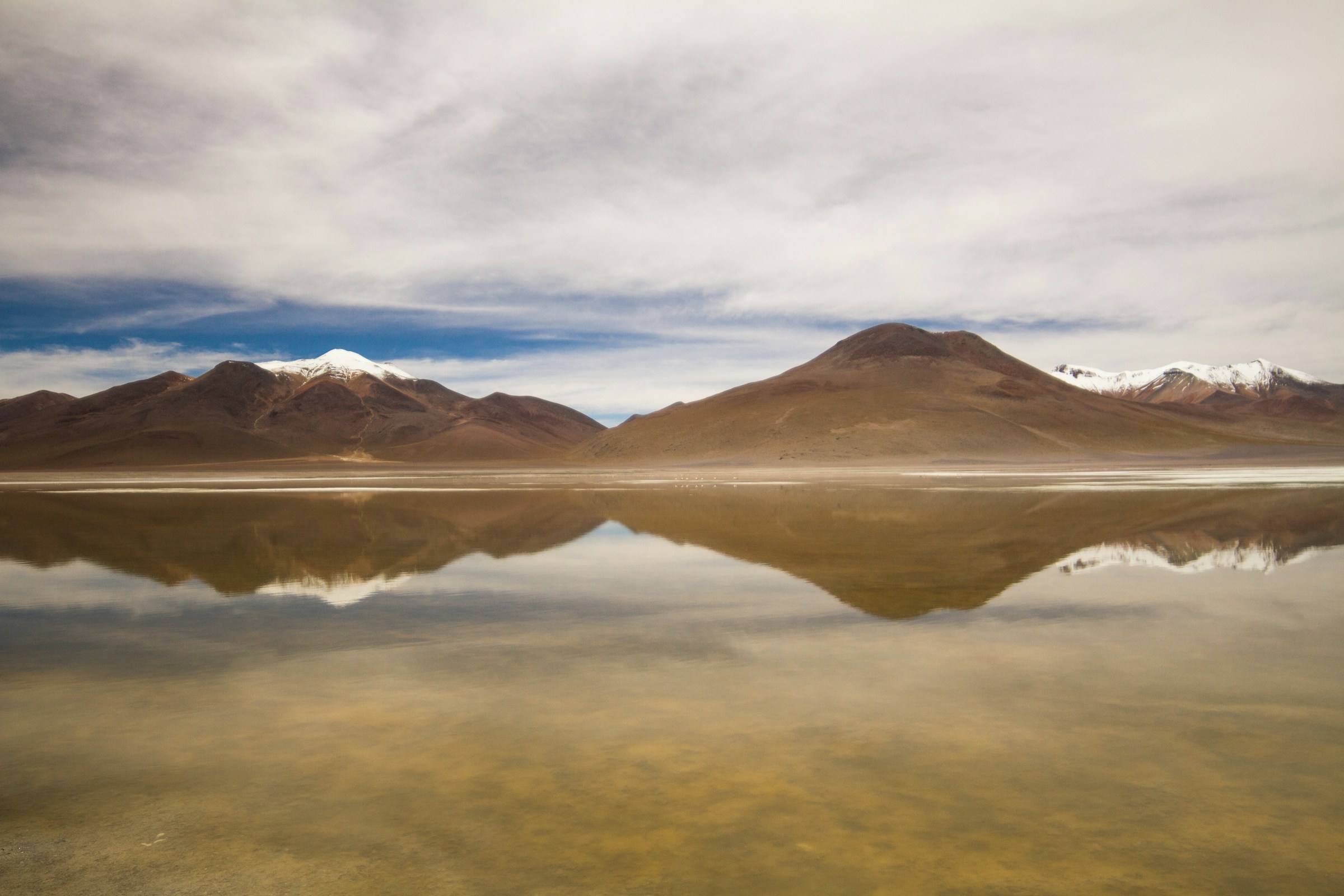

1. The Salar de Uyuni: A Landscape That Defies Explanation
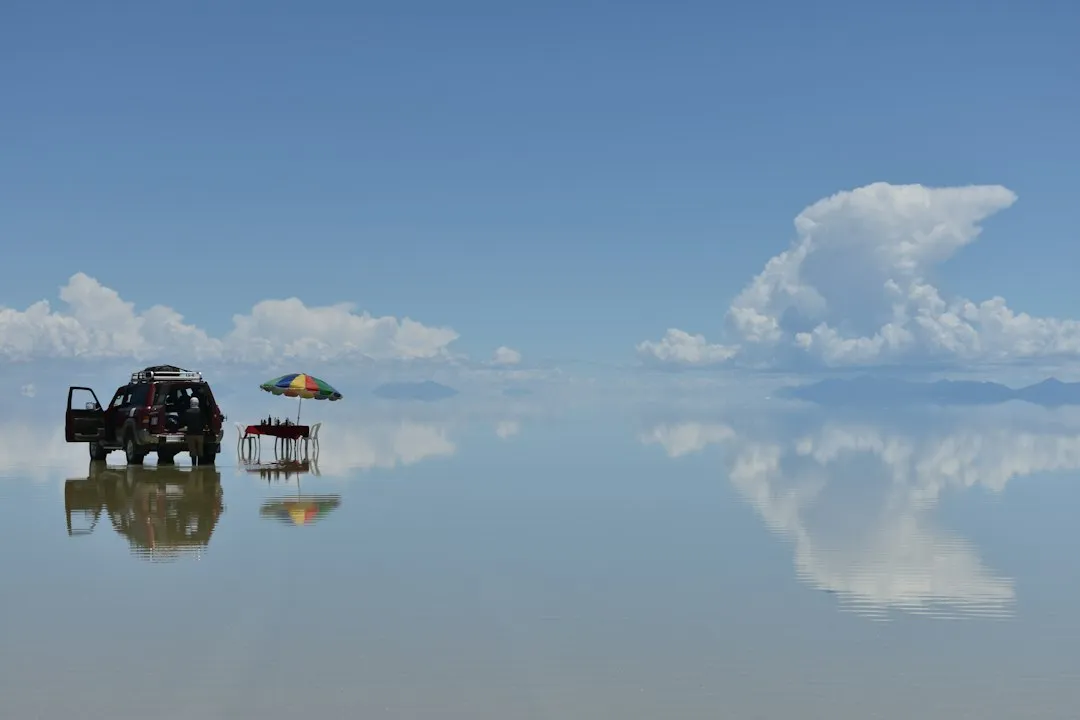
Some places exist in photographs long before you ever see them in person. The Salar de Uyuni is one of them. It is the largest salt flat in the world, covering an area of 10,582 km², located in the Daniel Campos Province in Potosí, Bolivia. That number is hard to picture until you’re standing in the middle of it and the horizon disappears in every direction.
The bright-white landscape stretches for more than 4,000 square miles and is so vast that it can be seen from space. In fact, NASA uses the Salar de Uyuni’s highly reflective, flat surface as a target for satellite calibration. The surface is so precisely flat that it serves a scientific purpose most visitors know nothing about.
During the rainy season, which runs from December through April, a thin water layer transforms the flats into a giant mirror, creating stunning reflective photography opportunities. The dry season, from May through November, is ideal for 4×4 exploration, optical illusion photos, and visiting Isla Incahuasi with its ancient cacti. Both seasons offer something genuinely different, which makes the Salar worth more than one visit if you’re willing.
2. Madidi National Park: One of Earth’s Most Biodiverse Places
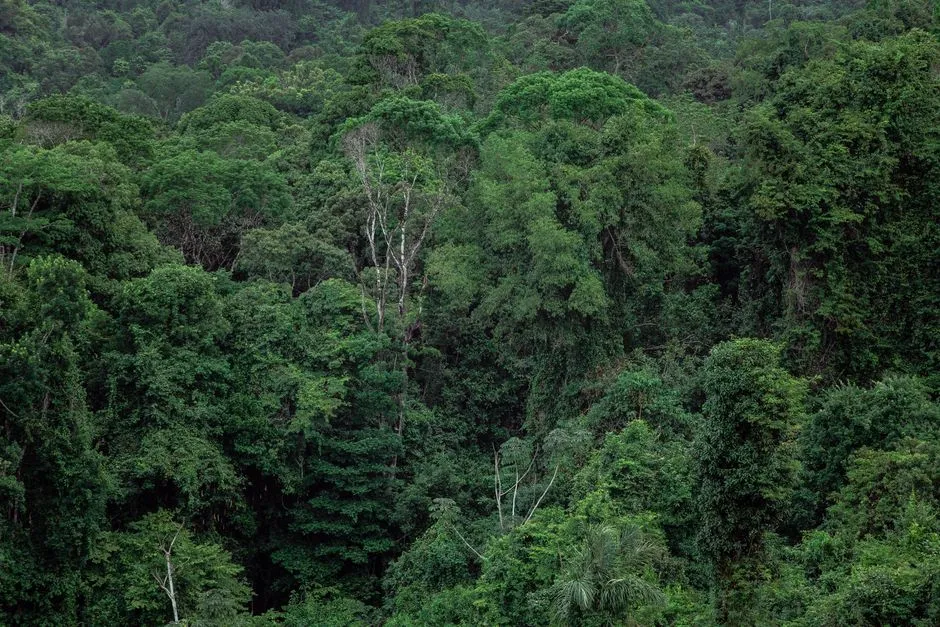
Madidi National Park and Natural Area of Integrated Management is one of the world’s most biodiverse protected areas, covering approximately 1,895,750 hectares in the La Paz department of northwestern Bolivia. The park encompasses a remarkable altitudinal range from snow-capped Andean peaks at 5,760 meters to lowland Amazon rainforest at 180 meters, creating what many scientists consider the most biologically diverse protected area on Earth.
The park hosts the greatest diversity of bird species of any protected area on Earth, with over 1,250 confirmed species representing approximately fourteen percent of all bird species worldwide. With at least 272 species of mammal recorded living in Madidi, it’s a genuine wildlife hotspot. The jungle is home to big-ticket animals like jaguars, pumas, sloths, and spectacled bears.
A 2024 study in Madidi National Park showed that the diversity of amphibians found in the protected area exceeds the diversity reported for other megadiverse protected areas in the tropical Andes, such as Manu in Peru or Yasuní in Ecuador. Fieldwork documented 64 species recorded in one study period alone, increasing the total number of confirmed records for the park to 127 amphibian species. This is a park that is still revealing itself to science.
3. An Indigenous Culture That Is Still Fully Alive
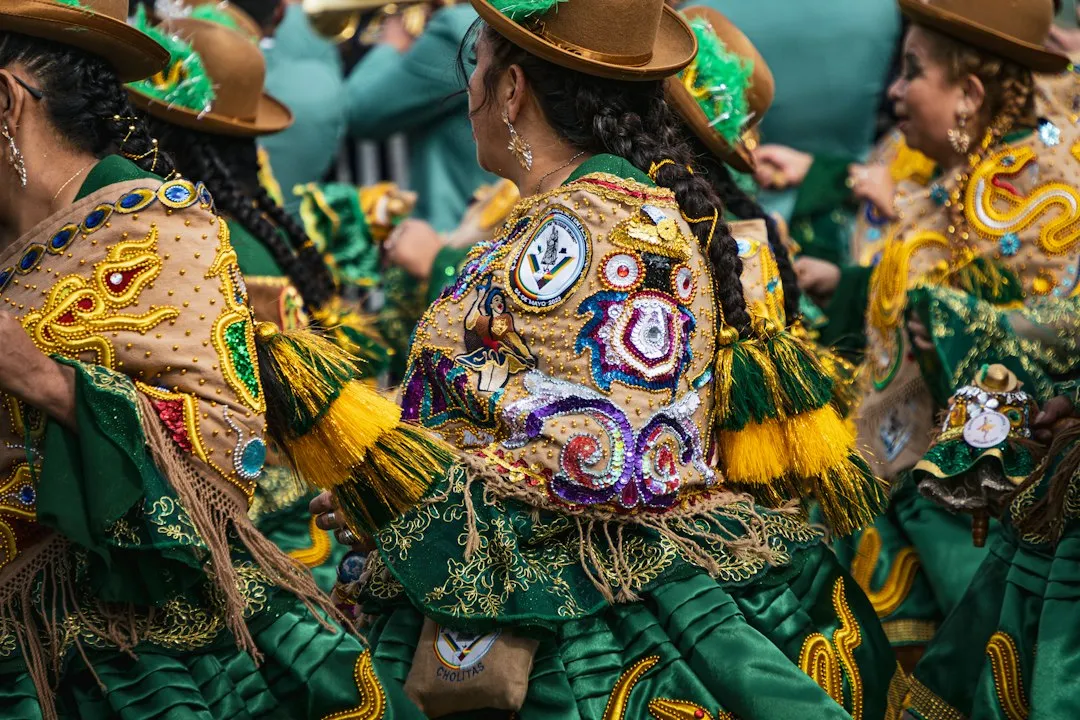
Bolivia is one of the few countries in the Americas where Indigenous identity isn’t a relic or a performance staged for tourists. It’s woven into daily life, language, and governance. Unlike in some neighboring countries, the ethnic makeup of Bolivia is still roughly sixty percent indigenous. That is a remarkable demographic reality in the twenty-first century.
Over thirty recognized indigenous nations, including Aymara, Quechua, and Guaraní, keep Bolivia’s traditions alive through language, music, and daily life. In the Andean highlands around La Paz, Oruro, and Potosí, Aymara and Quechua are commonly heard in markets and villages. In the lowland regions of Santa Cruz, Beni, and Pando, Guaraní and other Amazonian languages are spoken among local communities.
Fieldwork in a little-studied corner of the Bolivian Amazon has revealed that Indigenous communities shaped and sustained complex, productive wetland landscapes for more than a millennium. The Cayubaba and Movima communities continue to live in these landscapes today, where rich biodiversity is deeply connected to cultural heritage. Their long-standing presence and environmental knowledge help maintain a unique form of biocultural heritage in which ecological and cultural diversity have developed side by side over many generations.
4. A Geography So Extreme It Borders on the Absurd
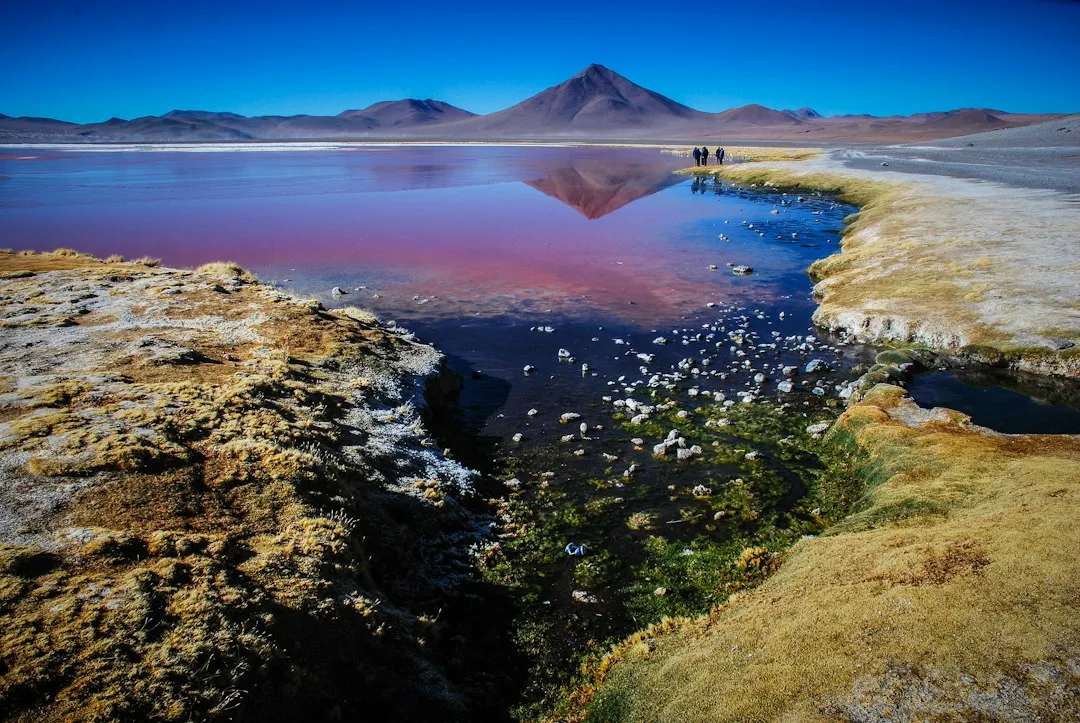
Bolivia is the kind of country where the geography itself becomes the adventure. The altitude range runs from 90 meters in the Amazon basin to over 6,500 meters in the Andes. Traveling across Bolivia can feel less like crossing a country and more like crossing an entire continent.
A major part of Bolivia’s landmass is part of the Amazon. To be precise, sixty-six percent of Bolivia’s territory is attributed to the Amazon Basin, covering 724,000 square kilometers. Travelers reach the Amazon from Rurrenabaque, the gateway to Madidi National Park, where jaguars, monkeys, macaws, and pink river dolphins thrive. The contrast between that world and the high-altitude Altiplano is difficult to believe until you experience both.
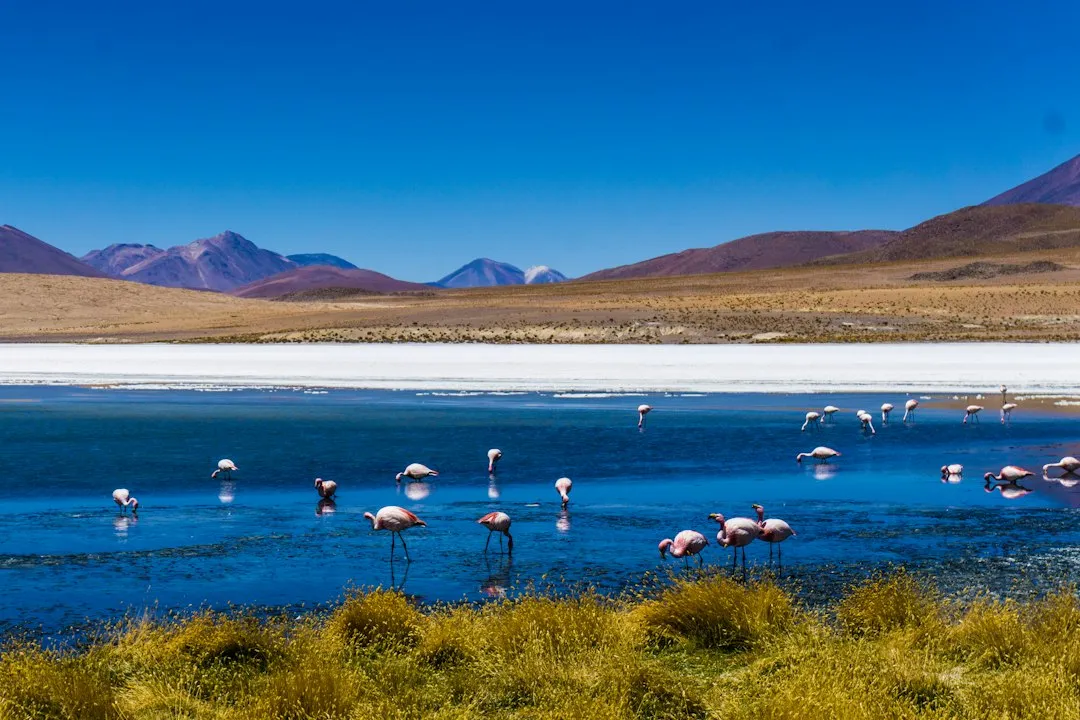
Bolivia holds seven UNESCO World Heritage Sites in total, including Tiwanaku, Sucre, Potosí, and the Oruro Carnival. The surrounding areas of the Salar also host diverse wildlife, including pink flamingos, llamas, and Andean foxes, alongside vivid colored lagoons like Laguna Colorada and Laguna Verde. There’s a feeling in Bolivia that around every corner something genuinely unexpected is waiting, and that turns out to be mostly true.
The Takeaway
Bolivian tourist arrivals are projected to climb to approximately 1.76 million by 2028, up from about 1.44 million in 2023, marking an average annual growth rate of 3.2%. Since the turn of the millennium, Bolivia has seen demand increase by an average of 4.7 percent each year. The world is catching on slowly, which might be exactly the right pace.
Bolivia rewards travelers who come with patience and genuine curiosity. It’s a country that operates on its own terms, at its own altitude, and it doesn’t particularly care if you’re in a hurry. That’s not a flaw. For travelers who travel to actually feel something, it might be the whole point.
AI Disclaimer: This article was created with the assistance of AI tools and reviewed by a human editor.