
1. Tran Phu Street: The Heritage Corridor
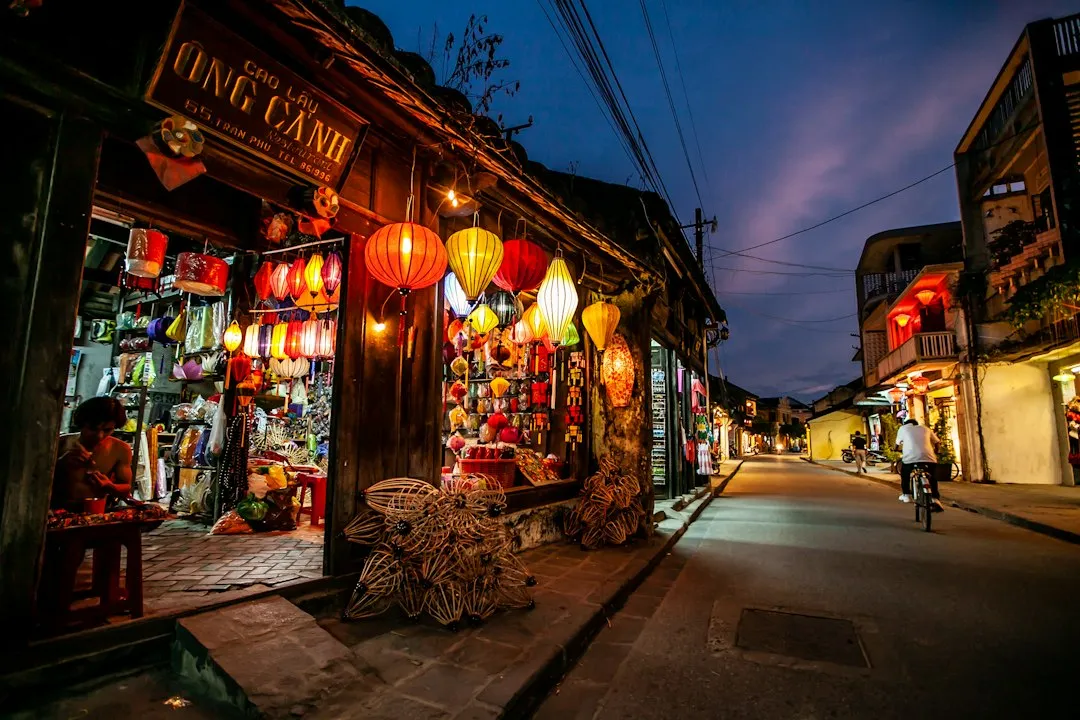
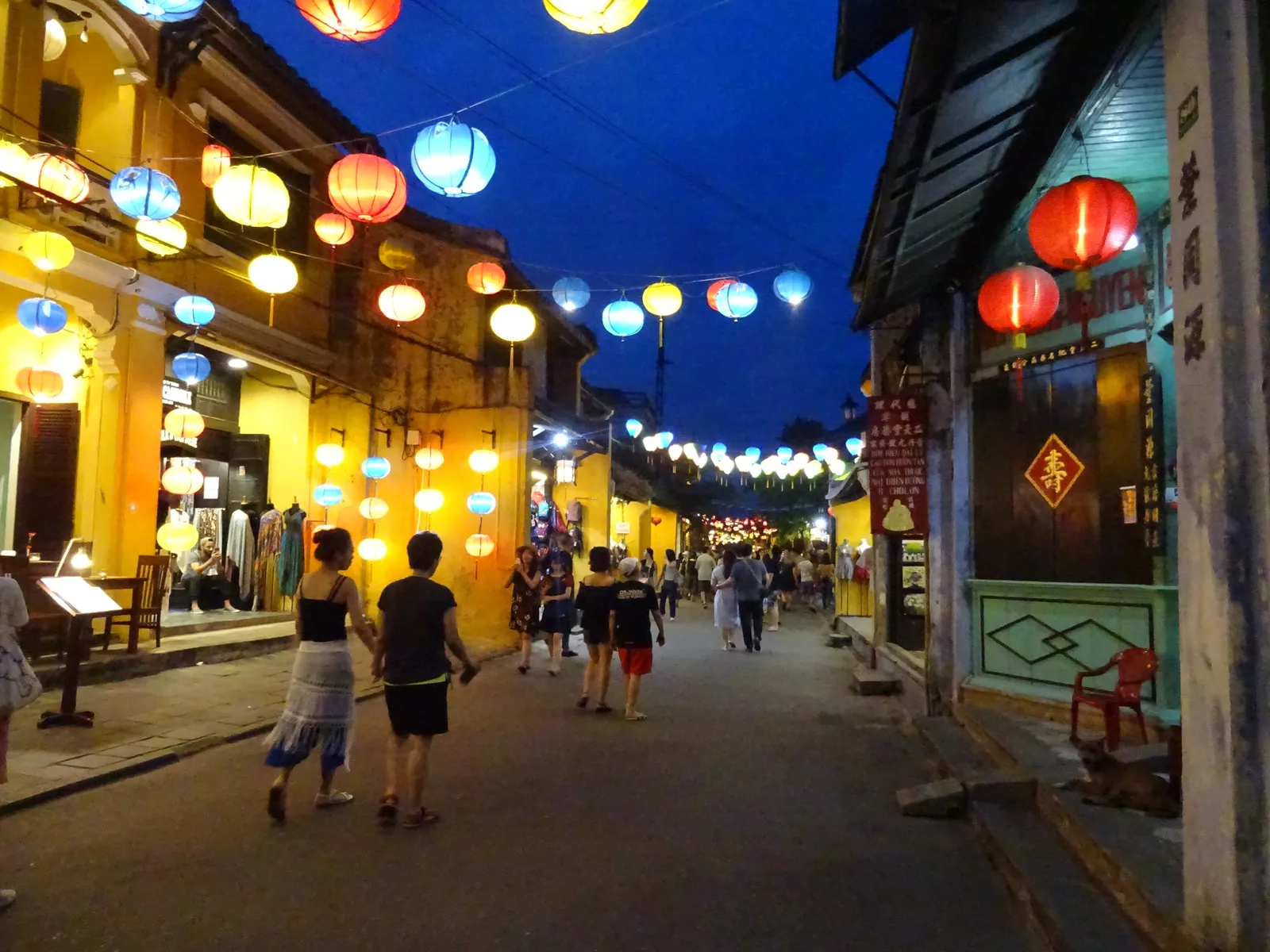
Tran Phu Street, often referred to as the “heritage street,” is lined with ancient houses adorned with countless colorful lanterns. Strolling along this street in the evening, visitors are immersed in the nostalgic charm of old Hoi An. Traditional shops, restaurants, and cafés are all decorated with lanterns, creating a warm and romantic atmosphere that captures the essence of the town’s historic beauty.
At 6:00 PM on every full moon night, electricity across Hoi An Ancient Town shuts off entirely, replacing electric light with over 1,000 silk lanterns hung across shophouse facades, temple gates, and street-crossing wires on Nguyen Thai Hoc Street and Tran Phu Street.
If you want to step away from the busiest clusters, wandering into the smaller lanes off Tran Phu Street still delivers the full lantern atmosphere, just without the shoulder-to-shoulder visitors. This is a street best taken slowly, pausing at doorways and looking up.
2. Nguyen Thai Hoc Street: Creative Soul Under Colored Light
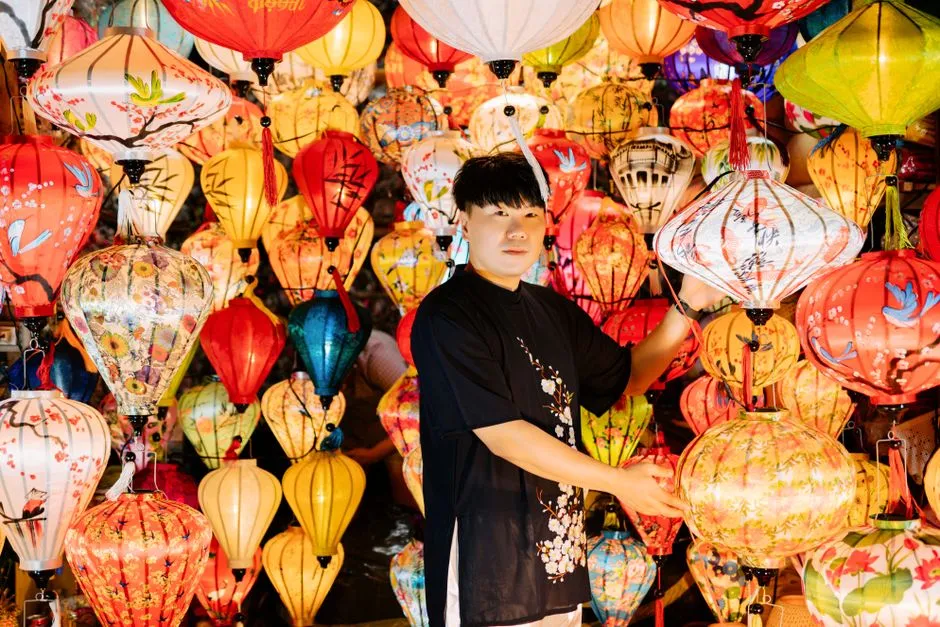
Running parallel to Tran Phu, Nguyen Thai Hoc blends vintage charm with a modern creative energy. Tailor shops, silk boutiques, art galleries, and cafés line both sides of the street, all glowing under strings of lanterns. It is perfect for a slow evening stroll, souvenir shopping, and vibrant photos without the density of the night market crowd.
Starting around 5:30 PM on Nguyen Thai Hoc, the silk lanterns begin to glow and the shopfronts turn golden. The narrow connecting alleys become tunnels of colored light as hundreds of silk lanterns illuminate overhead.
To experience Hoi An’s lanterns at their most vivid, plan your visit during the hours after sunset, typically between 6 PM and 9 PM. This is when the town comes alive with the warm glow of lanterns reflecting off the streets and the Thu Bon River.
3. Bach Dang Street: The Riverside Spectacle
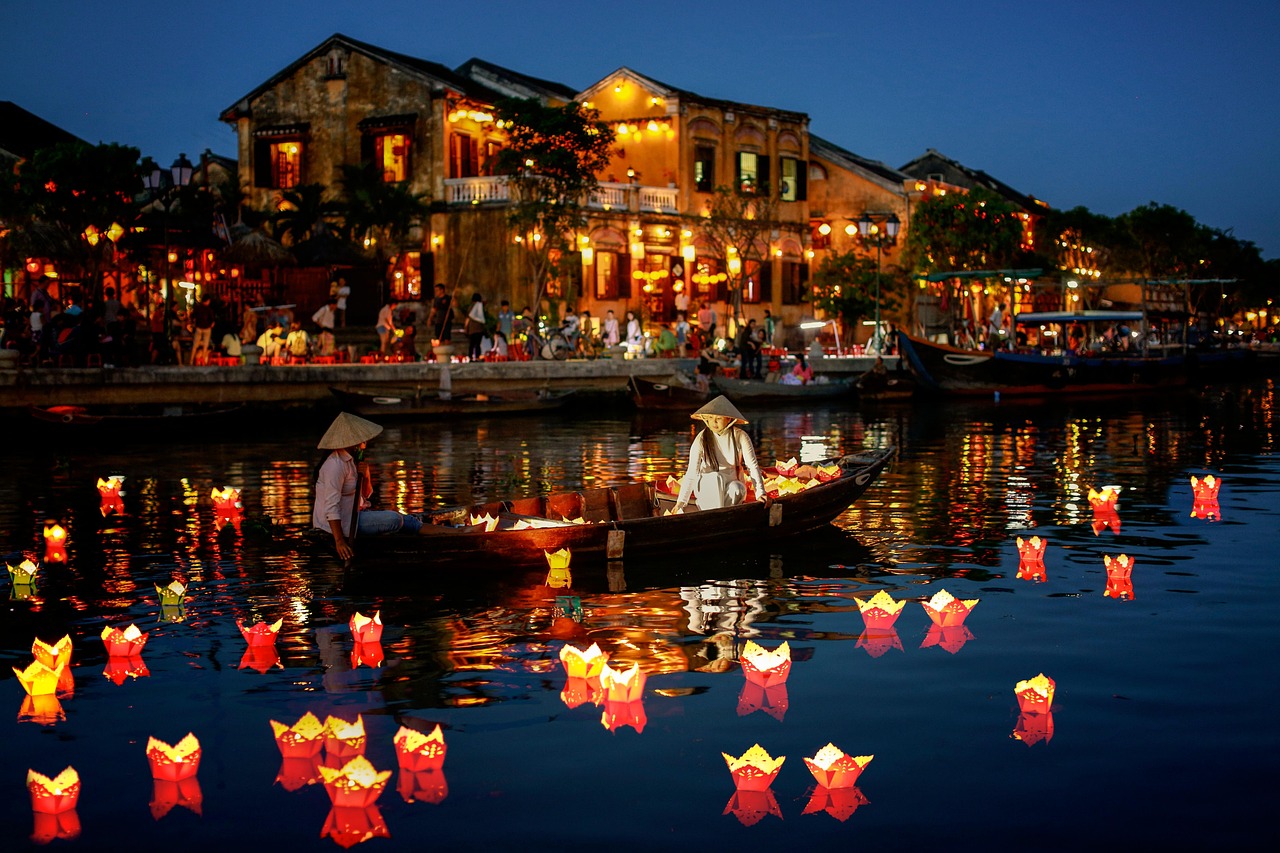
Bach Dang Street is the scenic riverside road of Hoi An, offering unparalleled views of the Hoai River. With historic houses on its north side and the river to the south, this street serves as the main wharf where traditional sampan boats dock, waiting to take visitors on a memorable journey.
Candle-lit shophouses along Bach Dang Riverside reflect onto the Thu Bon River, producing the mirror-image lantern reflections that define Hoi An’s most recognizable imagery. It is the kind of scene that stops people mid-step.
Bach Dang is the most romantic of the lantern streets. Here the lanterns of the wooden boats reflect on the water while music drifts across from An Hoi. You can rent a small rowing boat, float a paper lantern, or simply sit on the low wall and watch the Hoai River shimmer.
4. Nguyen Phuc Chu Street: Lanterns and the River at Eye Level
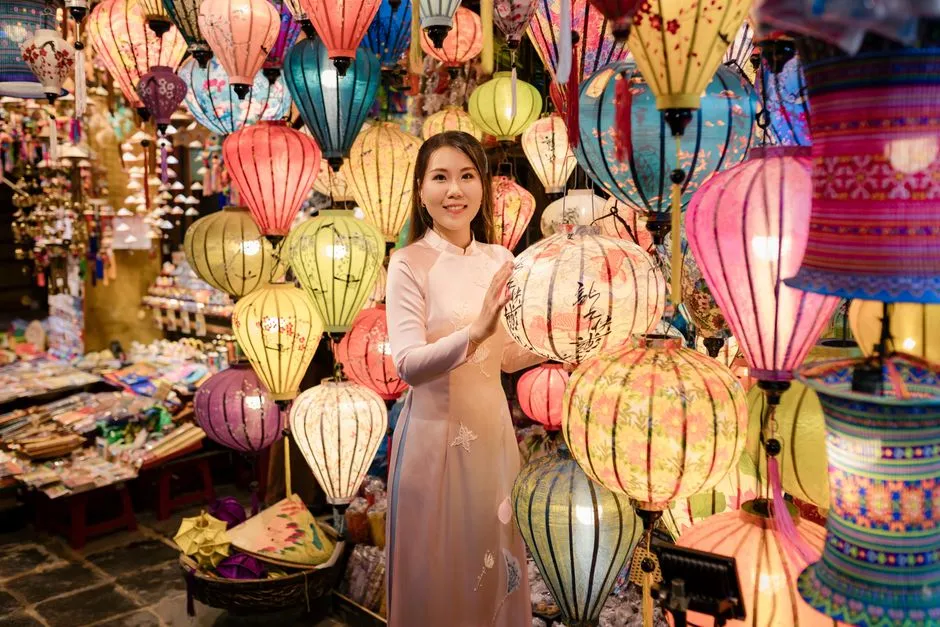
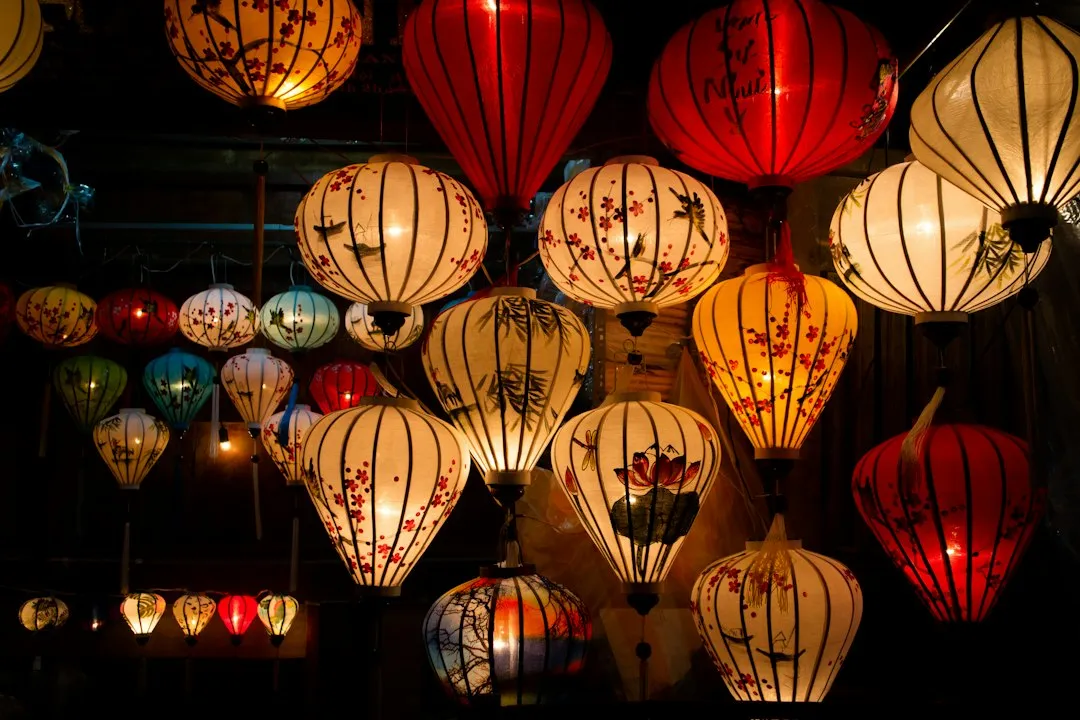
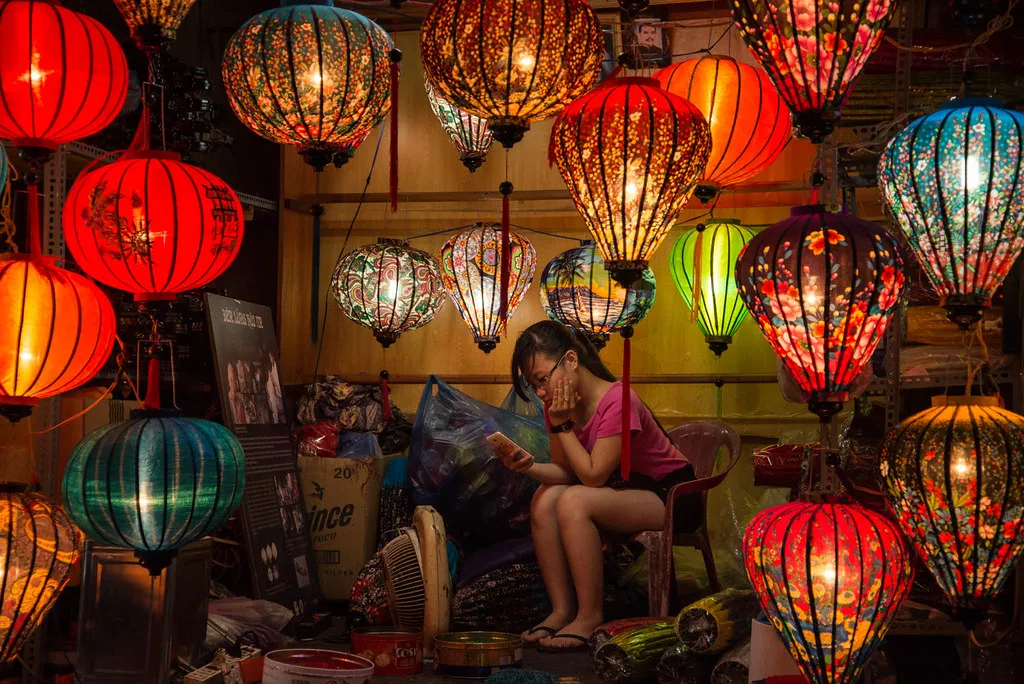
Nguyen Phuc Chu Street, along the Hoai River, is one of the best spots to admire Hoi An’s lanterns. This area is home to numerous shops selling and displaying lanterns in a variety of vibrant colors. Combined with the scenic riverside setting, especially when floating paper lanterns are released, the view becomes truly mesmerizing.
The biggest crowds gather along Nguyen Phuc Chu Street right by the river, along with Bach Dang Street and around the Japanese Covered Bridge, which are the main spots for lantern views and boat rides.
Visitors gather along the riverbanks and bridges to release small candle-lit lanterns onto the water. Each lantern represents a wish for happiness, health, or prosperity. As hundreds of lanterns drift downstream, the river transforms into a shimmering stream of light. Standing here, it is easy to understand why people return to Hoi An again and again.
5. Nguyen Hoang Street (An Hoi Night Market): Where the Town Breathes at Night
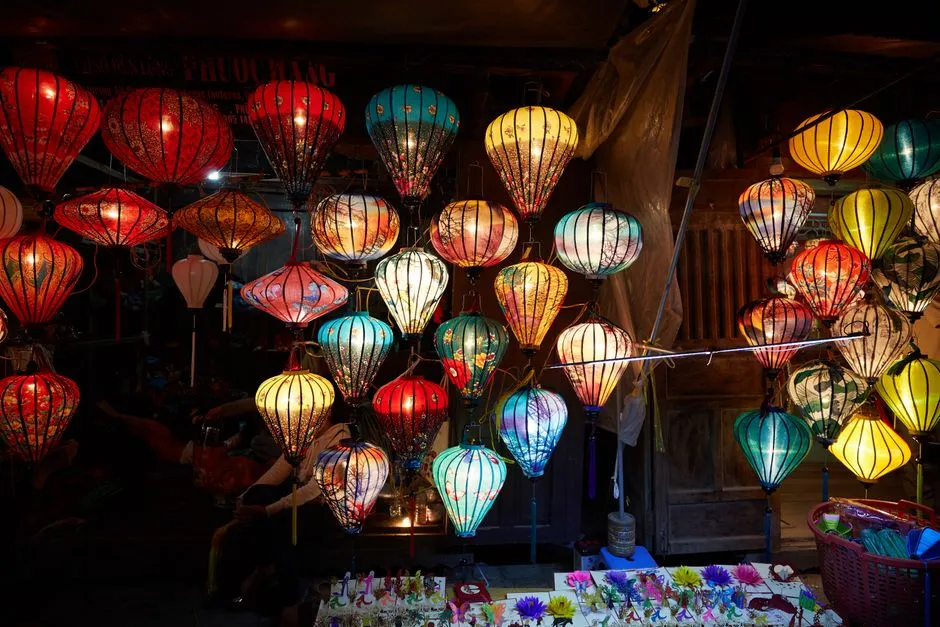
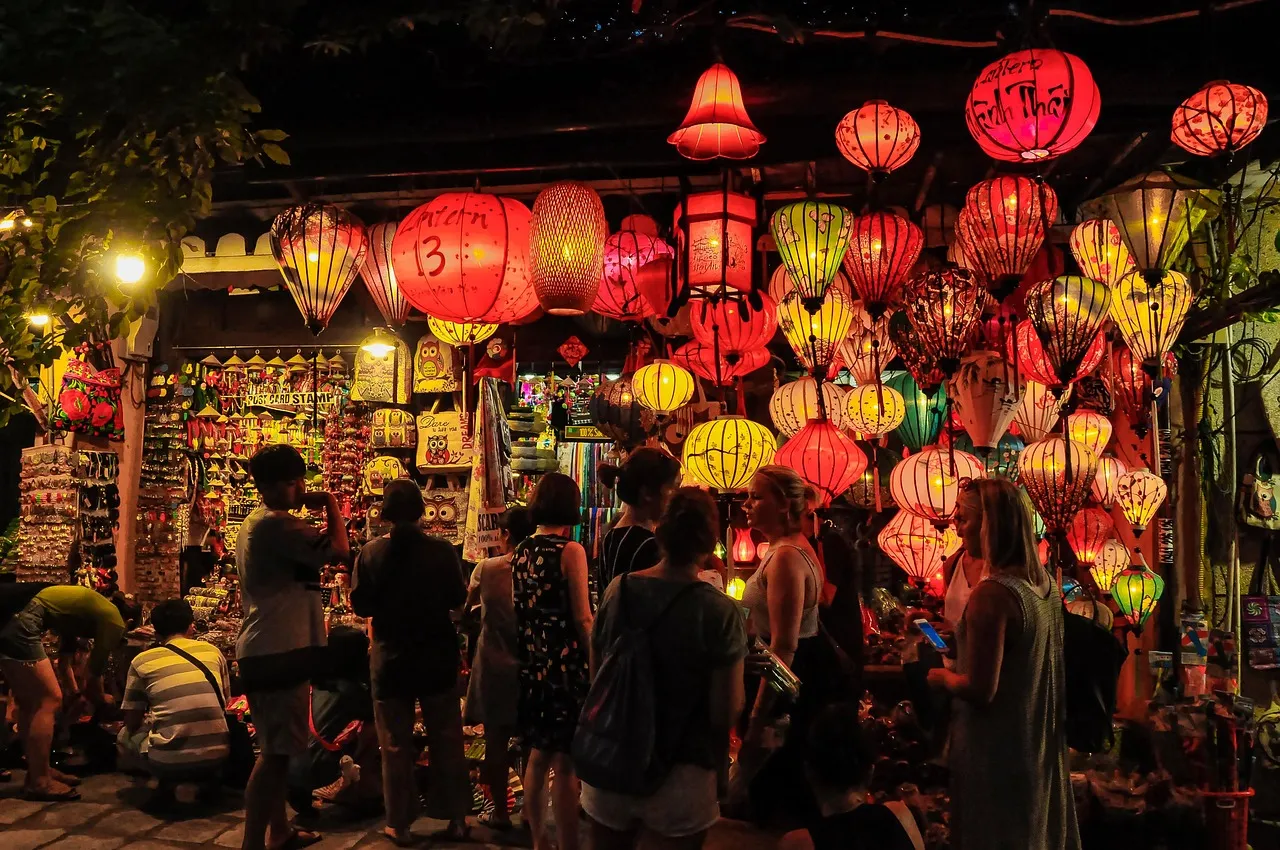
Located on Nguyen Hoang Street on An Hoi Islet, just across the pedestrian bridge from Hoi An Ancient Town, this lively evening market is one of the top attractions in Hoi An, offering a mix of street food, handmade lanterns, souvenirs, and a warm, festive atmosphere.
The Hoi An Night Market stretches for about 300 meters along Nguyen Hoang Street, making it easy to explore on foot. Its location, just across the An Hoi Bridge from the historic Old Town, makes it especially popular among tourists looking for evening entertainment. The largest and oldest market here has been open since 1999, when the town was declared a UNESCO World Heritage Site, and today roughly 150 to 200 stalls fill the street with food and souvenirs.
Hoi An Night Market is free to enter and is open daily from 5:00 PM to 11:00 PM. Set along the lantern-lit riverside within the UNESCO-listed area, it blends shopping with a rich slice of local life. As night settles in, the market’s glowing lanterns and bustling walkways create a signature Hoi An atmosphere that’s hard to find anywhere else.
The Japanese Covered Bridge at Night: A Brief Detour Worth Every Step
The Japanese Covered Bridge, built in 1593, becomes the most photographed single structure of the night, framed by dozens of silk lanterns in red, gold, and yellow. It sits where Tran Phu meets the canal, and no evening walk through the Old Town is really complete without it.
The 18th-century Japanese Covered Bridge is the symbol of Hoi An. The best photographs capture the bridge from the south side of the canal, framing the curved wooden structure with its small temple in the center. At night the bridge is illuminated, and reflections in the water below create a symmetrical composition.
Inside the covered bridge is a tiny temple where a small shrine is dedicated to the God of weather, a detail that most visitors rushing for a photograph miss entirely. Slow down and step inside.
The Full Moon Festival: When the Lights Go Out and the Lanterns Take Over
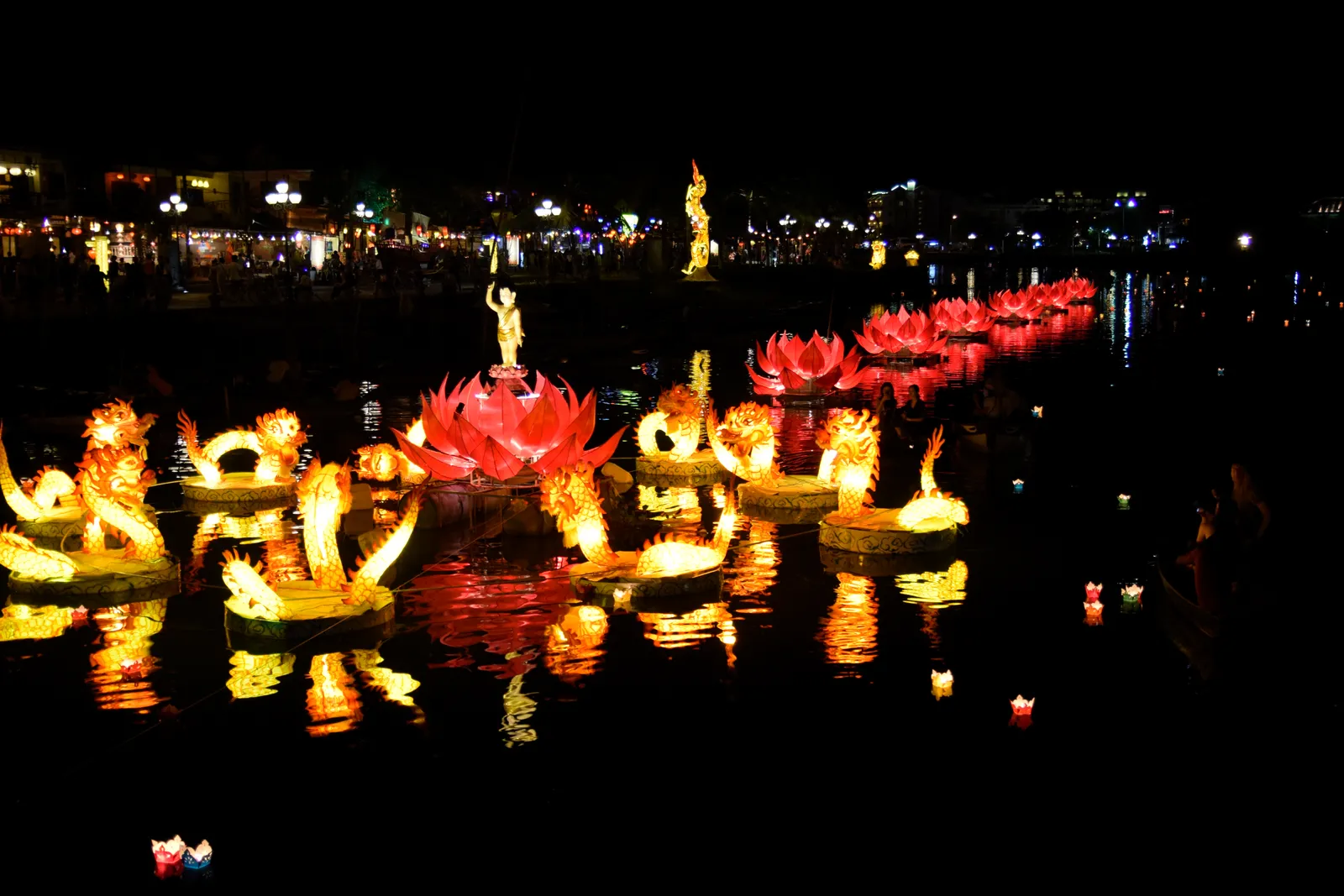
The Hoi An Lantern Festival takes place on the 14th day of each lunar month, when the moon is at its fullest. During this night, Hoi An’s Ancient Town turns off its electric lights and relies solely on lanterns to create an atmosphere that feels like stepping back in time.
Activities usually begin around sunset from 6:00 PM onwards, but the main event, including the turning off of electric lights, happens from 8:00 PM until around 9:30 PM or 10:00 PM.
The release of lanterns on the rivers is said to bring good fortune and love, as well as health and happiness. Lanterns in Hoi An are more than just decorations; they hold deep cultural and spiritual significance. Locals believe that lanterns bring good fortune, ward off negativity, and symbolize prosperity. Hanging lanterns in front of homes and shops is a long-standing tradition, making them an essential part of daily life in the ancient town.
Bai Choi Performances: The Sound That Fills the Lantern-Lit Air
Simple outdoor stages are set up across the Old Town where visitors can enjoy Bai Choi singing, a very typical folk art form of the Central Vietnam region. Both a folk game and a singing performance, Bai Choi brings a strangely familiar feeling even for foreign tourists.
From around 8:00 PM, Bai Choi performances take place at the Hoi An Cultural Center and open-air stages on Nguyen Hoang Street. The music carries across the warm night air and anchors the experience in something genuinely local, not staged for tourists.
Participating in the lantern festival in Hoi An, visitors not only immerse themselves in the brilliant light of lanterns, but also have the opportunity to enjoy unique art performances. The combination of light, music, and the river makes this one of the most culturally layered evening experiences in all of Southeast Asia.
What to Eat While You Walk
When exploring the festival streets, do not forget to enjoy the famous specialties of Hoi An. From chicken rice, Quang noodles, banh xeo, and Phuong bread to a glass of fresh sugarcane juice, all bring unforgettable flavors. Sitting and enjoying street food under the gentle light of lanterns, you will fully feel the special flavors and atmosphere of Hoi An.
Walking around the old town, you can easily come across carts selling grilled rice paper, grilled skewers, mango cakes, and sweet corn and mung bean desserts. These small food carts are scattered throughout the lantern streets, and eating while wandering is entirely the local way.
Planning Your Evening: Practical Notes
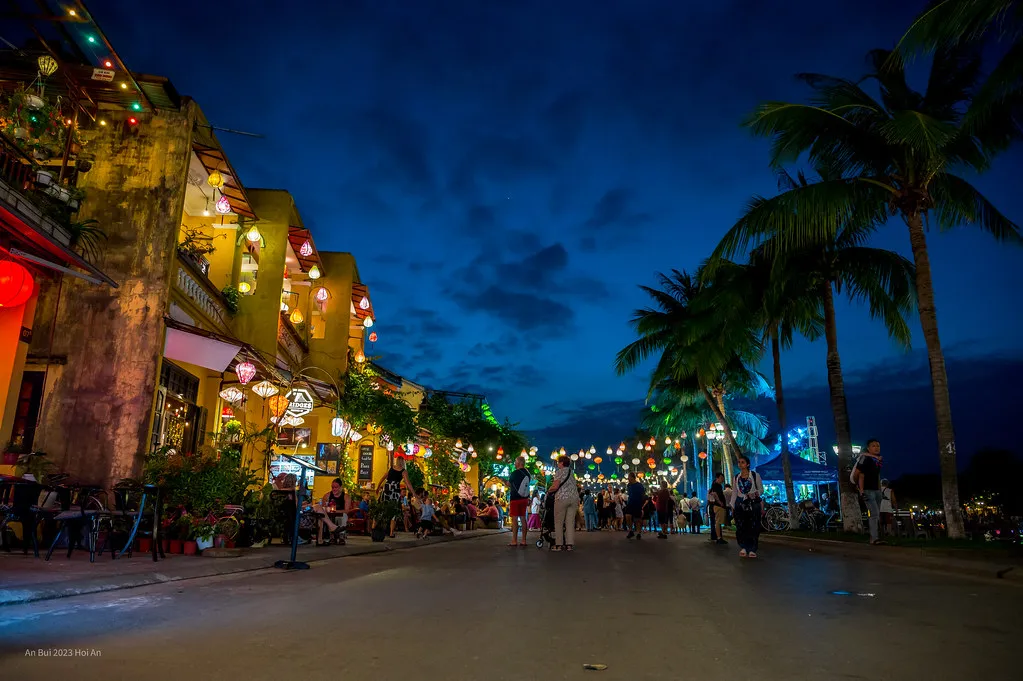
In the center of the Hoi An Ancient Town, vehicles and bicycles are prohibited during festival evenings, which allows you to roam the streets and alleyways whilst soaking up the atmosphere. The best window is after sunset, typically between 6 PM and 9 PM.
Boat rides on the river cost around 170,000 to 220,000 Vietnamese dong for a roughly 20-minute ride, while floating paper flower lanterns are sold for around 5,000 to 10,000 dong each. Walking the streets themselves is free, and the Old Town entry ticket is only required to enter the heritage houses and assembly halls.
The Ancient Town gets very crowded on festival nights, so arriving before sunset to enjoy dinner and secure a good spot, especially near the river, is strongly advisable. A little early planning, and the evening unfolds at its own beautiful pace.
The Light That Stays with You
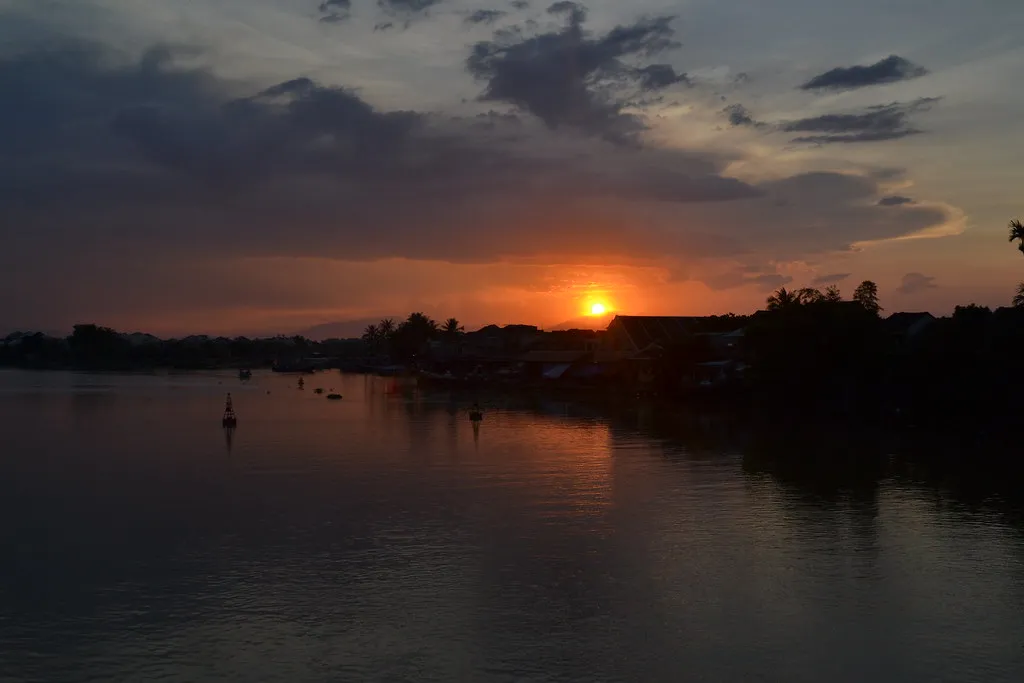
Hoi An after sunset is one of those rare travel experiences that doesn’t require much explanation once you’ve been there. The lanterns do the talking. Hoi An lanterns are more than decorations. They are symbols of history, craftsmanship, and a slower rhythm of life, one that has endured for centuries along the Thu Bon River.
With over 4.4 million visitors welcomed in 2024, the city continues moving toward sustainable tourism development, and the lantern streets themselves remain the living heart of that effort. They are not recreated for tourism. They simply are, every evening, exactly as they have been for generations.
Walk slowly. Let the light lead. The streets will take care of the rest.
AI Disclaimer: This article was created with the assistance of AI tools and reviewed by a human editor.