
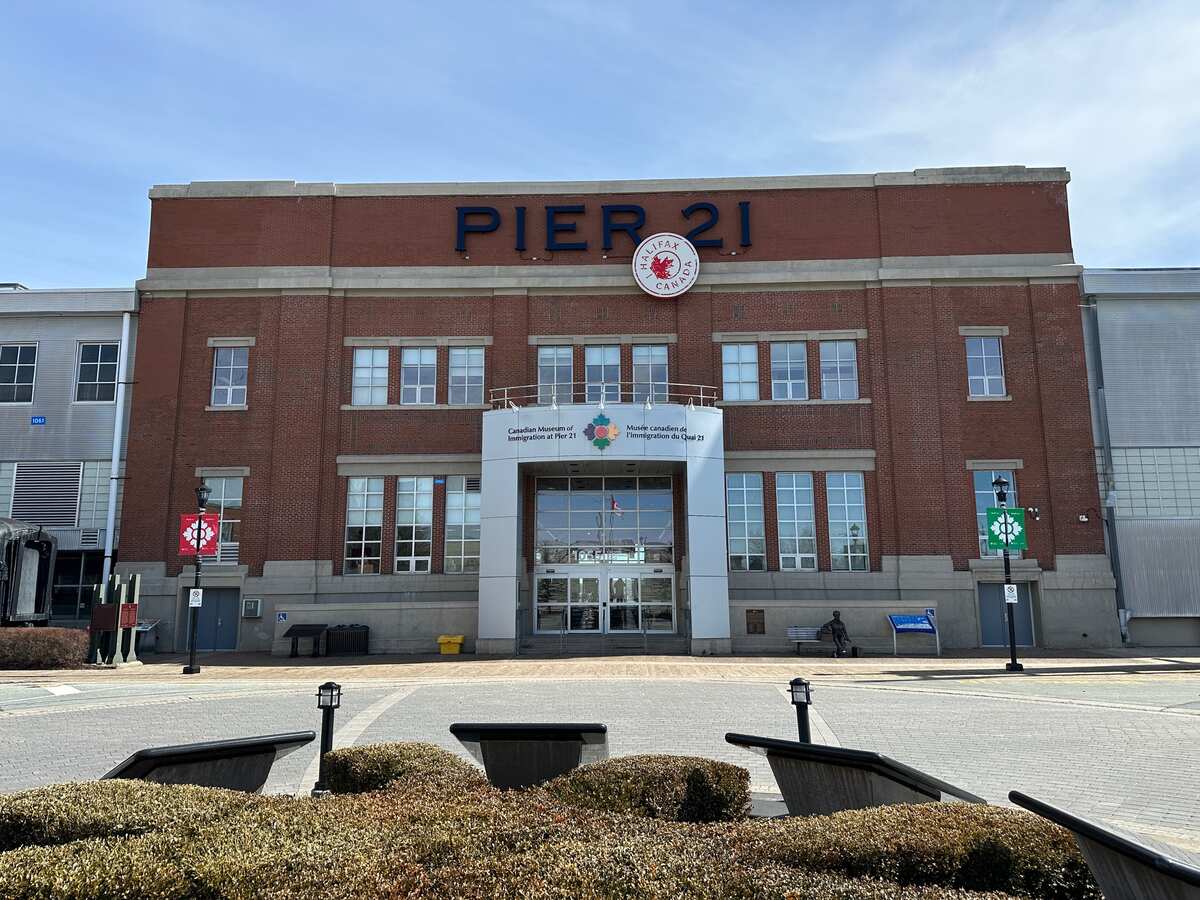

There are places in Canada that inform you, and there are places that undo you a little. The Canadian Museum of Immigration at Pier 21 in Halifax did both for me.
Facing History, A Hall of Arrival, a Room of Reckoning
Some places teach you history. Others reach into your chest and rearrange how you understand the people you love. That is what happened to me at the Canadian Museum of Immigration at Pier 21 in Halifax. I arrived expecting to learn. I did not expect to be overcome. At Pier 21, I saw my mother’s journey to Canada from Greece in a new light.
Before I could fully make my way through the exhibits, I felt emotion rising in my throat. The museum does not simply tell the story of immigration in Canada. It places you inside its thresholds: the arrival halls, the processing rooms, the gangways, the waiting areas, the train connections, and the systems that determined who was welcomed and who was refused.
My mother came to Canada through Pier 21 in August 1963. She was just 17 years old, arriving from a small village in northern Greece, near Thessaloniki. I had always known the broad strokes of that story. I knew she came by ship. I knew she was young. I knew she was brave. But standing inside the museum, looking at the benches, the photographs, the text panels, and the reconstructed spaces, I began to understand that bravery in a different way. And when I called her from the museum and walked her through the experience on FaceTime, more of the truth came forward. Some of it, she had never told me before.
The Gateway and the Weight It Carried
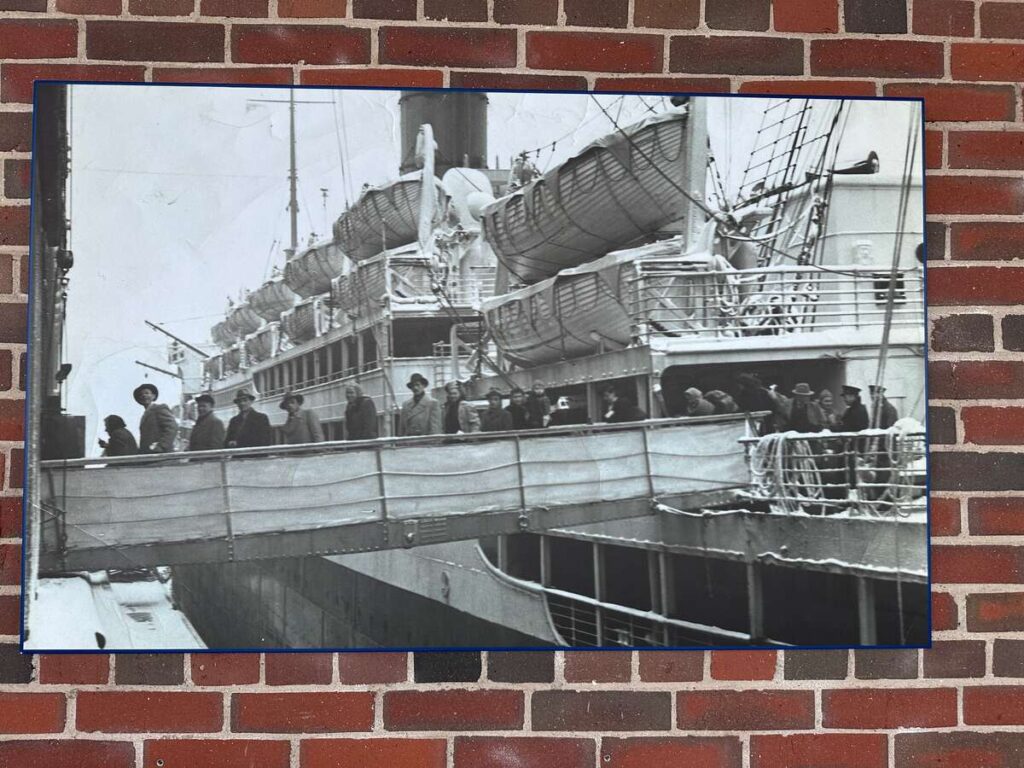
Pier 21 opened on March 8, 1928, and the first ship to dock there, the Nieuw Amsterdam, brought 54 disembarking passengers, including travellers from Greece. Over the decades that followed, Pier 21 became the point of entry for nearly one million immigrants and refugees, along with wartime evacuees, displaced persons, and returning Canadians. Halifax mattered because its harbour was deep, ice-free, and open year-round, with rail connections linking the port to the rest of Canada and the United States.
That practical efficiency shaped countless lives. Ships arrived. Passengers disembarked. Medical inspections and civil interviews followed. Customs checks came next. Then many newcomers were directed almost immediately onto trains bound for other parts of the country. The process could be swift, but that does not mean it was easy. The museum makes that distinction powerfully. Efficiency is not the same thing as comfort. Order is not the same thing as care. That was one of the most striking things I carried away from my visit. Pier 21 was an entry point, but it was also a filtering point. It was where hope met bureaucracy.
What I Learned About My Mother’s Crossing
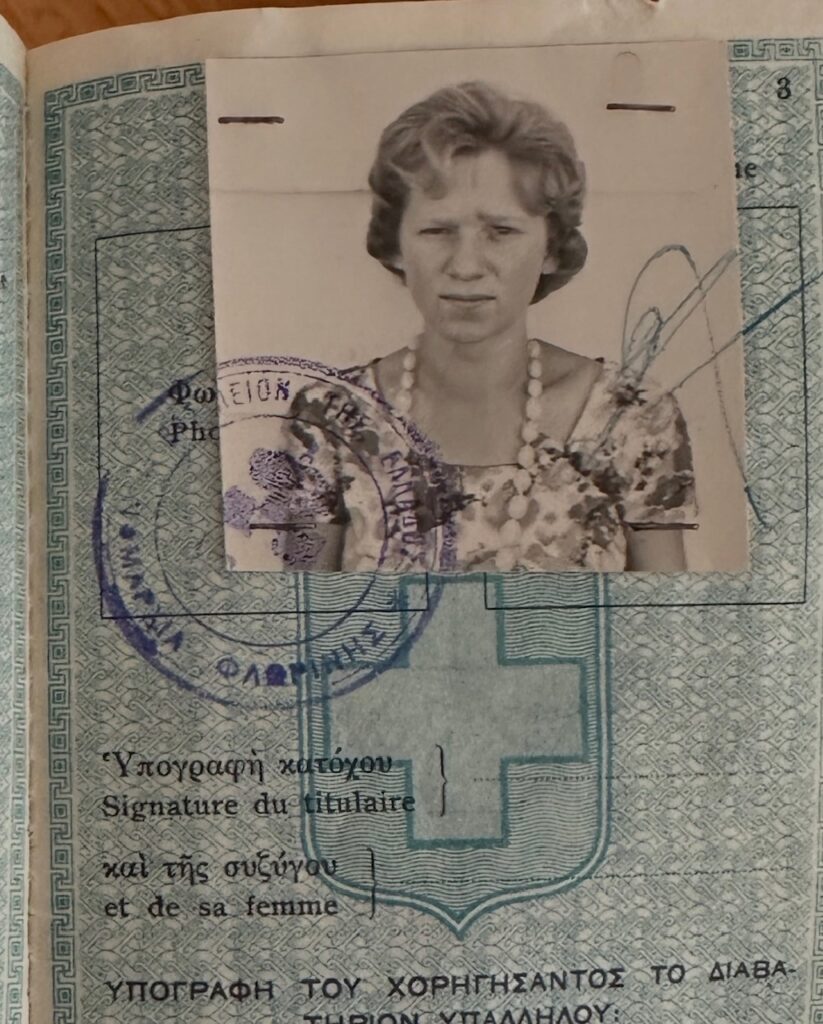
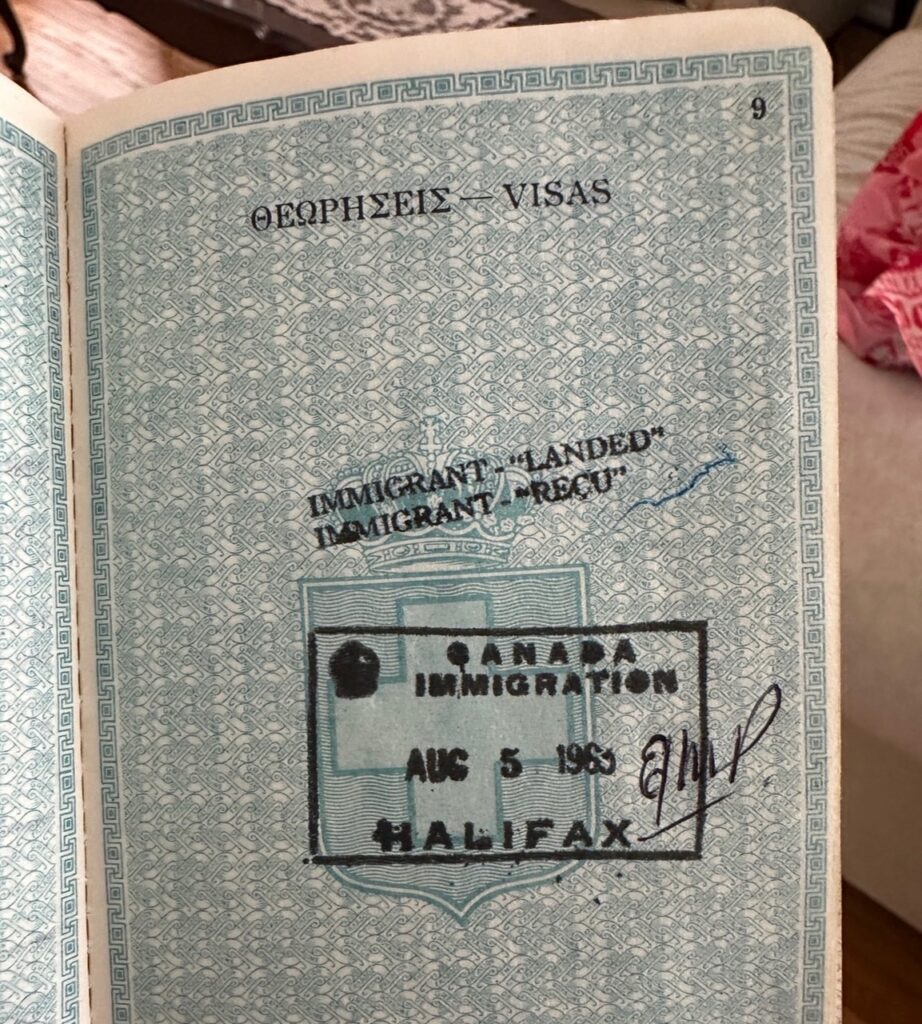
My mother had always spoken of coming to Canada with a kind of lightness, as though it were simply a big adventure. There was excitement in it, of course. She was young, and youth has a way of meeting the unknown with a kind of wild courage. But from the museum, as we spoke, other details emerged.
She told me again that she had been terribly seasick for part of the crossing, especially until the ship passed Spain and the waters calmed. That alone would have been difficult enough for a teenage girl crossing the Atlantic without her parents. But what stayed with me most was what came after.
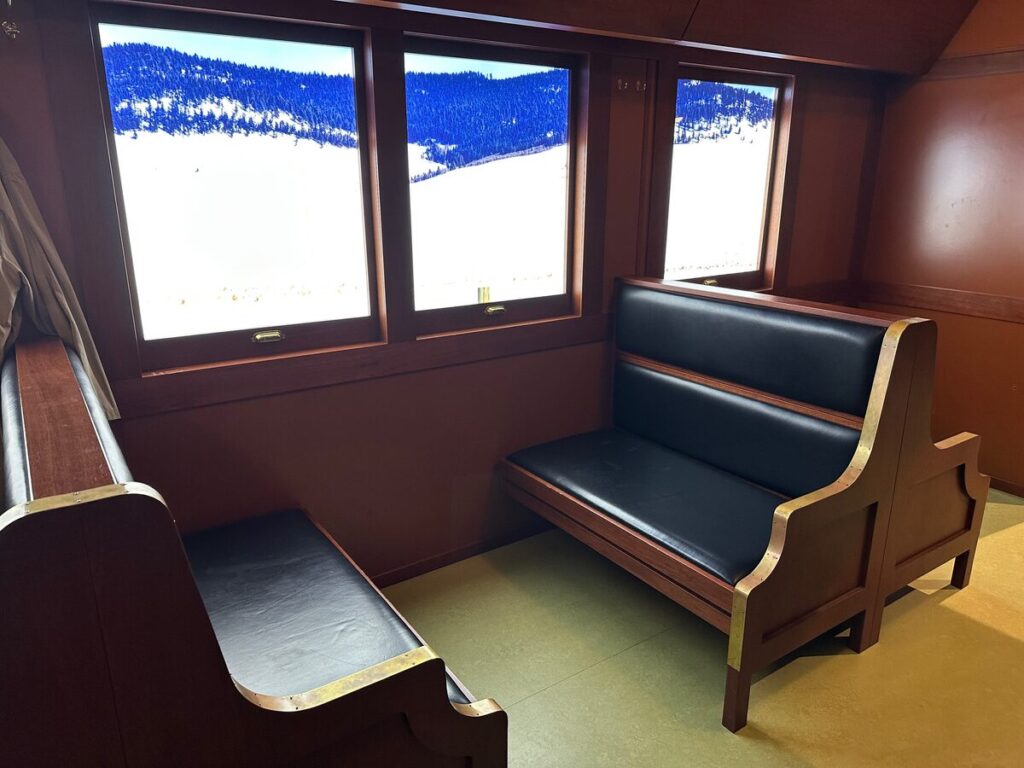
Once she arrived in Halifax, she was processed quickly because she had already completed a health check in Greece. Then she was placed almost immediately on a train. That train journey, she told me, was far harder than she had ever let on. For roughly three days, passengers sat upright on wooden benches. They were not permitted to bring food from the ship onto the train. Water was available, but food had to be bought, and many newcomers had little or no money to spare. I cannot stop thinking about that detail.
We often romanticize arrival. We picture the first step onto new soil, the sense of possibility, the relief of reaching land. But for so many immigrants, arrival was not the end of hardship. It was the beginning of another stretch of uncertainty, fatigue, hunger, and disorientation. At Pier 21, that truth becomes impossible to ignore.
The Greek Passage Through Halifax
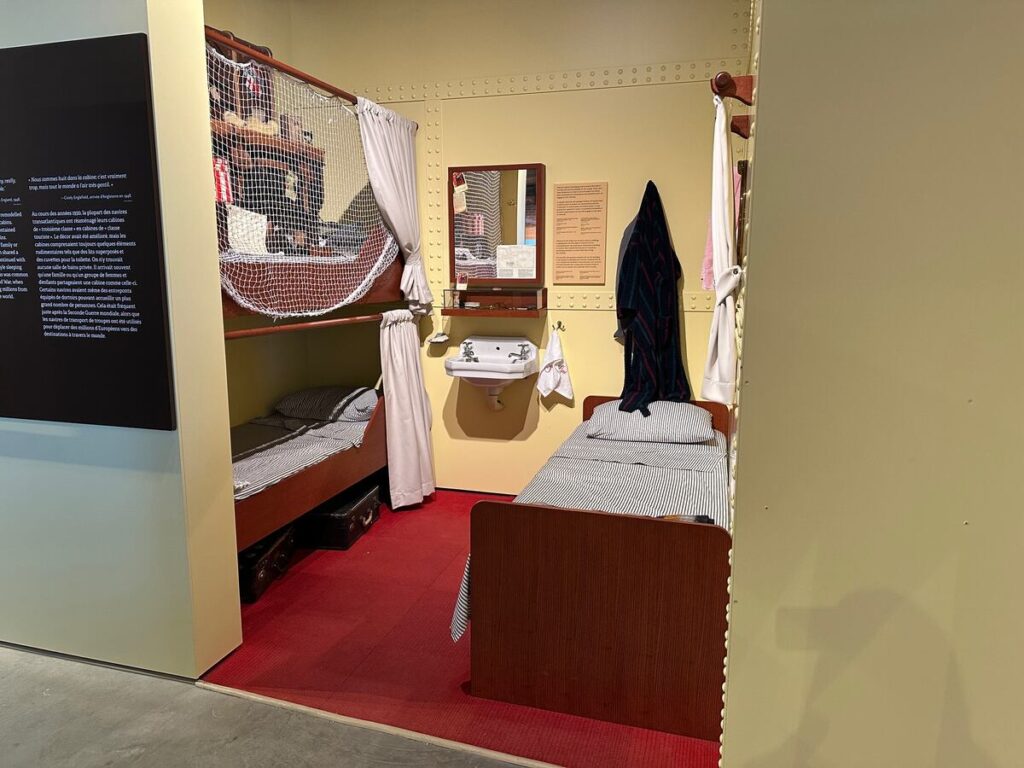
For Greek families, Halifax was not a symbolic doorway. It was a real one. Pier 21’s records and memorial stories preserve Greek arrivals aboard ships such as the Olympia and Queen Frederica, vessels that helped carry postwar migrants across the Atlantic toward a new life in Canada. The museum also notes that Greeks were among the very first passengers to disembark at Pier 21 in 1928.
The largest wave of Greek immigration to Canada came after the Second World War and the Greek Civil War. Community histories from Halifax record that the Greek population in Canada rose from 13,866 in 1951 to 124,475 in 1971, part of a much larger movement of people leaving economic hardship and political instability behind. In Halifax, Argyris Lacas became a beloved figure during the 1950s and 1960s because he met, translated for, and befriended many Greek immigrants arriving at Pier 21, offering something as essential as language and something even more valuable: recognition.
That detail moved me deeply. So many newcomers arrived without English, without certainty, and without any clear sense of what awaited them inland. To be greeted by someone who understood your language and your fear must have felt like finding a small patch of ground beneath your feet.
Inside the Assembly Hall
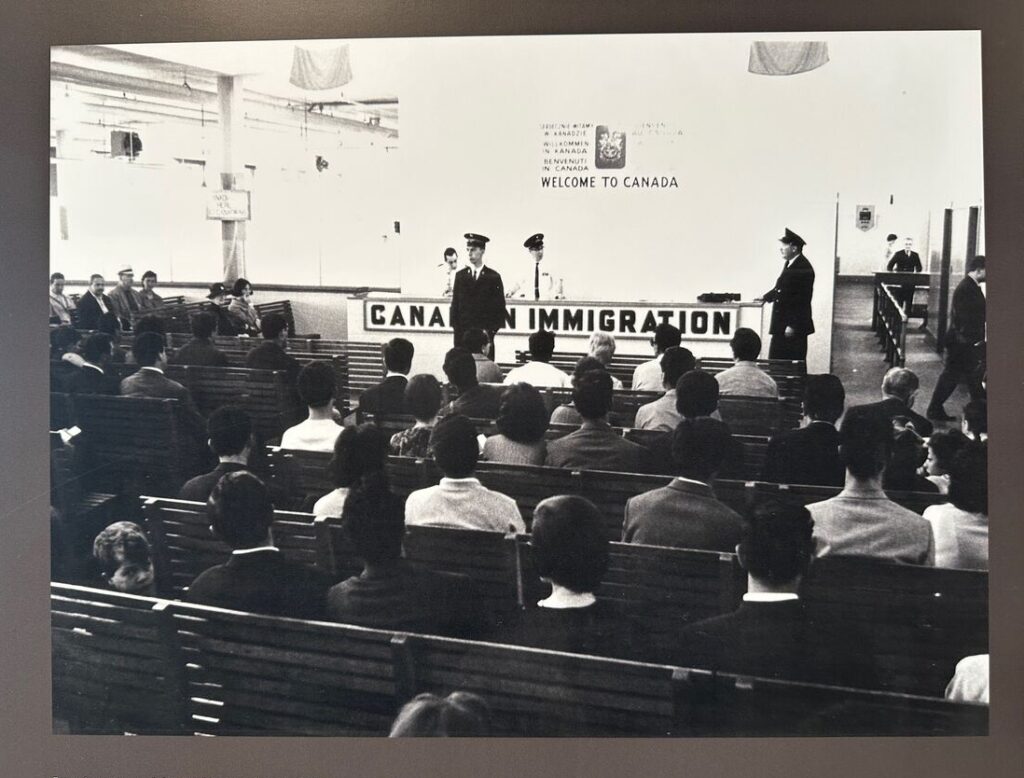
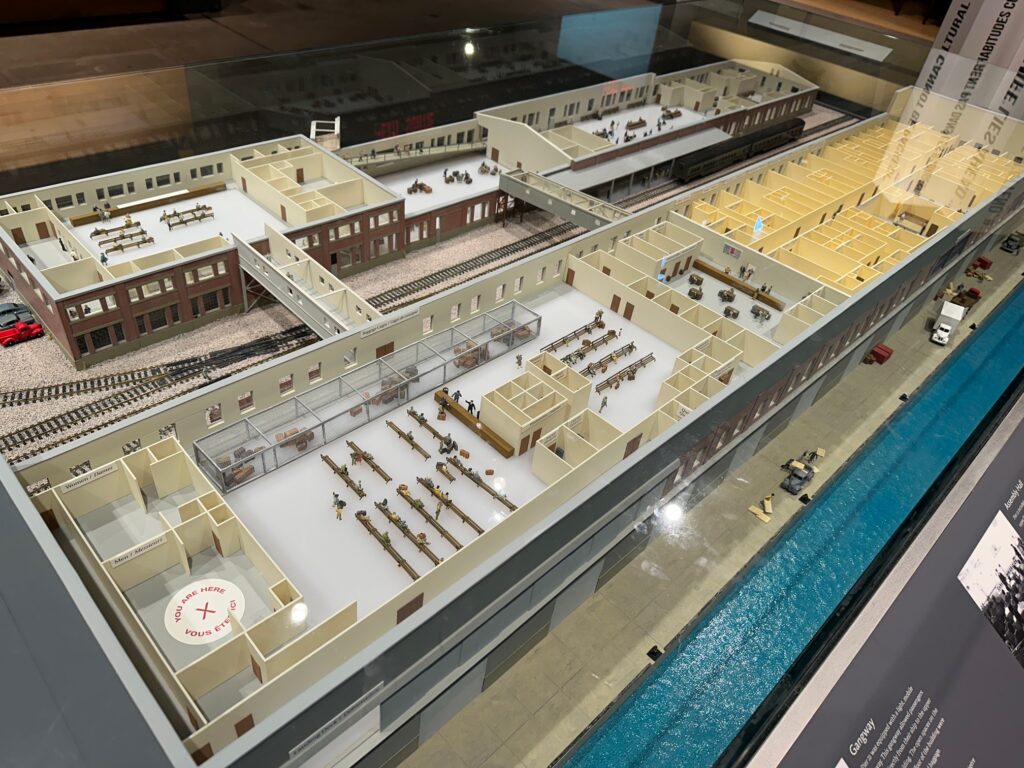
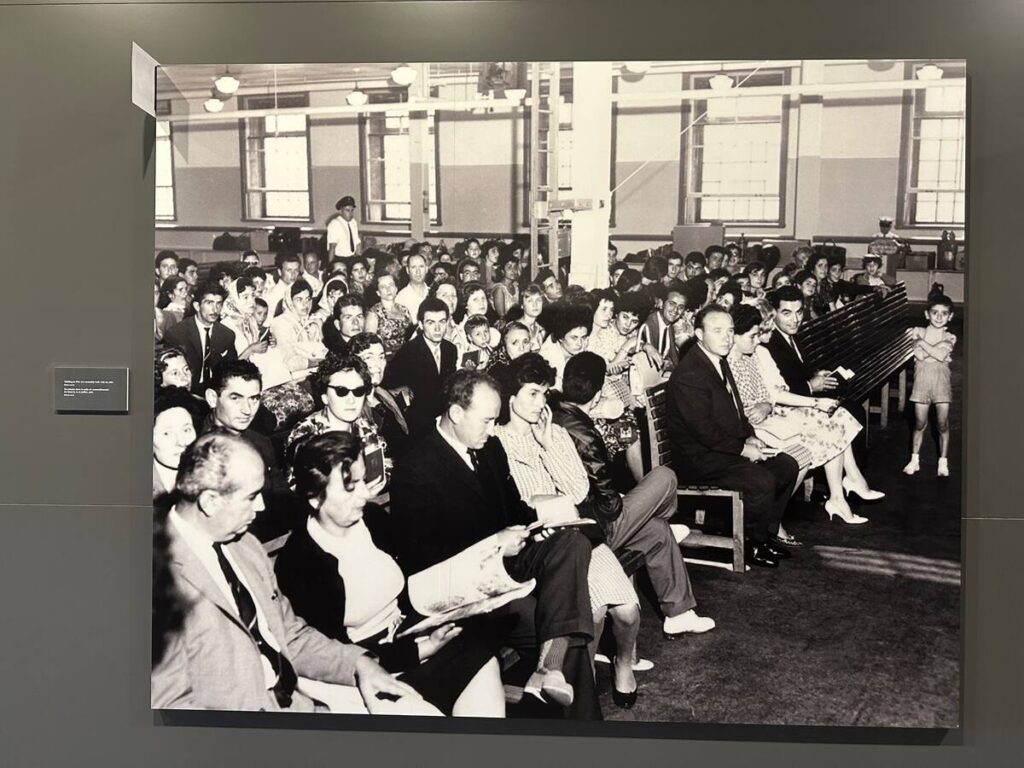
One of the most affecting spaces in the museum is the recreation of the assembly hall, where passengers waited to be examined and processed. Wooden benches fill the room. Large archival photographs line the walls. The atmosphere is restrained, almost spare, and that restraint says everything. People sat there with documents in hand, waiting for officials to determine the next phase of their lives.
The museum explains that many passengers had already been screened overseas, which often made the civil and medical examinations in Halifax quicker, sometimes just a matter of minutes. But even a short inspection carries enormous emotional weight when you are 17 years old, far from home, exhausted from sea travel, and unable to predict what comes next. The assembly hall was not simply administrative. It was psychological.
Looking at those benches, I could suddenly picture my mother among them. Not as “my mother,” the woman I know now, but as a girl. A girl from a farm village in northern Greece. A girl with no parents beside her. A girl who had crossed an ocean and was now waiting for strangers in a foreign country to decide how her life would continue. That shift in perspective undid me.
Arrival Was Never Equal
One of the museum’s greatest strengths is that it refuses sentimentality. It does not present Pier 21 as a simple story of welcome. It makes clear that Canada’s immigration system, for much of Pier 21’s operating life, overwhelmingly favoured white Europeans and Americans while excluding or restricting many African, Asian, and other racialized people. The question was never just who arrived. It was who was considered admissible.
The exhibits are explicit about that history. They address exclusionary policies, anti-Black discrimination, the targeting of African-American settlers, the refusal of passengers aboard the Komagata Maru, deportations during the Great Depression, and the shifting definitions of “desirable” and “undesirable” immigrants. They also show how those definitions were bound up in race, nationality, class, ideology, and perceived economic usefulness. Pier 21 may be remembered as a gateway, but it was also a gatekeeper. That honesty matters. It makes the museum more than nostalgic. It makes it responsible.
And it sharpens the emotional truth of the place. Gratitude and critique can exist together. We can honour the courage of those who came through Pier 21 while also telling the truth about the system that received them.
From Ship to Shore to Rail
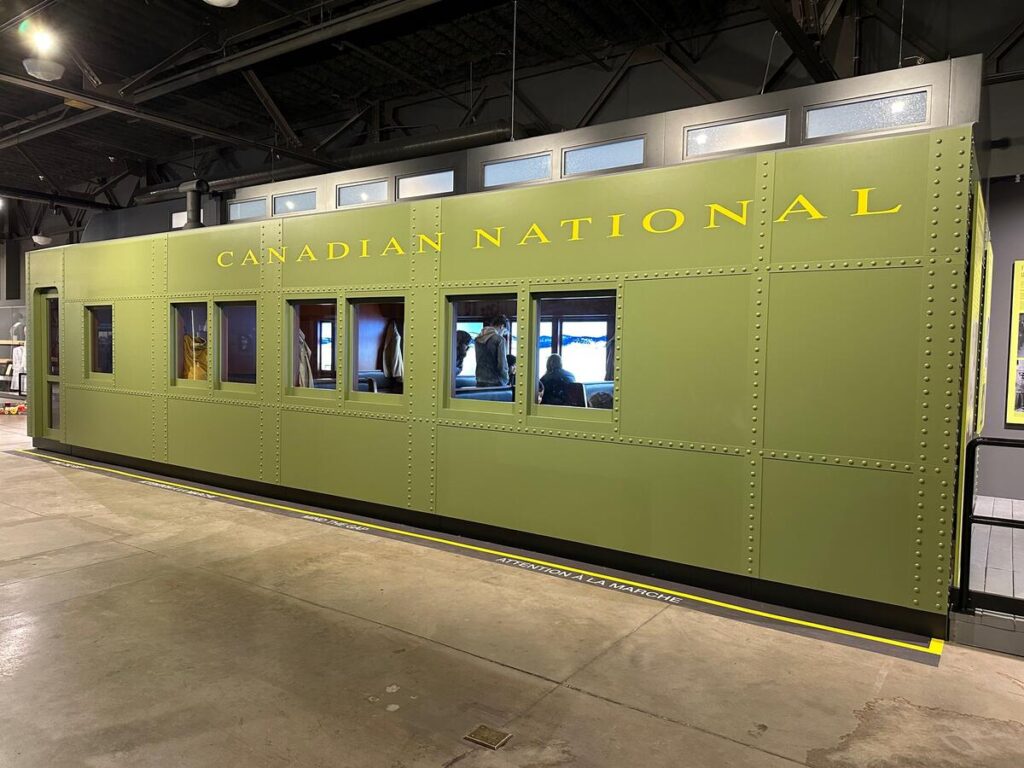
Another detail that stayed with me was how quickly movement continued after arrival. The museum outlines the physical journey through the facility: passengers crossed from ship to building by mobile gangway, entered the upper floor, underwent medical and civil checks, moved through the ramp to the annex, cleared customs, reclaimed baggage below, and then many boarded trains connected directly to the pier. Volunteers in the social services area helped with translation, travel arrangements, and basic necessities.
That choreography of movement is fascinating in logistical terms, but it is devastating in emotional ones. Imagine not knowing the language. Imagine being separated from the familiar world of your village, your routines, your family sounds, the air you knew, the food you knew, and the people who could explain things to you. Then imagine being moved from ship to bench to line to interview to train with hardly any time to absorb what has happened.
The museum helped me understand how disorienting that sequence must have been. It also helped me understand why so many immigrant stories are told in fragments. People survived by moving forward. Reflection often came later, if it came at all.
A Mother Reconsidered
When I called my mother from the museum, I thought I was sharing a meaningful afternoon with her. I did not realize I was also opening a door. As she saw the recreated spaces and the photographs, she began to remember differently. Or perhaps she began to reveal differently. There is a difference. Sometimes parents protect their children not by lying, but by editing pain into something manageable. What they call an adventure may have included suffering they did not want to pass on. We both cried.
Not because I was hearing a dramatic tale. In many ways, her story was painfully ordinary, and that is exactly why it matters. This is how thousands upon thousands of lives were changed: by quiet endurance, by hunger not mentioned, by fear tucked away, by discomfort normalized, by stamina that no one thought to praise because survival itself was the expectation. I left with even more respect for my mother than I had before, which I did not think was possible. The museum did not just help me see the immigrant experience more clearly. It helped me see her more clearly.
A Living Archive of Human Courage
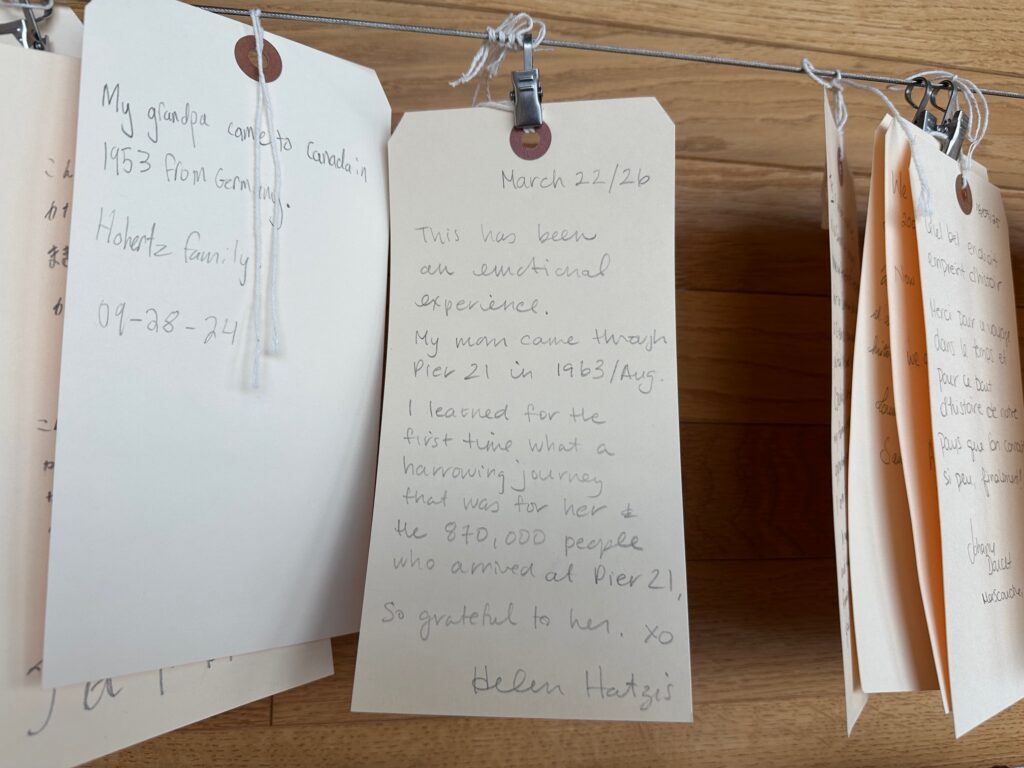
Toward the end of my visit, I came upon a space where visitors could leave handwritten notes about what Pier 21 meant to them. I added my own. It was one of those museum moments that could easily feel sentimental elsewhere, but here it felt earned. The room was filled with messages from people whose parents, grandparents, and great-grandparents had passed through the same threshold. Some came searching for names. Some came to honour family. Some came to understand Canada better. Some, like me, came away with more emotion than they expected.
That wall of handwritten reflections reminded me that history is never truly past when it lives in bodies, habits, silences, recipes, accents, and family stories. Pier 21 is a museum, yes. But it is also a mirror. It reflects not only who entered Canada, but what those journeys required of them.
Why This Place Matters Now
There is a temptation, in conversations about immigration, to speak only in numbers. Pier 21 resists that. It brings the subject back to scale: one person, one bag, one bench, one interview, one train seat, one uncertain future. It also reminds us that immigration policy is never neutral. The country decides, again and again, who belongs, who is useful, who is welcome, and on what terms. That is why this museum matters now as much as ever.
It asks visitors to hold two truths at once. Canada has been shaped by the courage of newcomers who arrived here carrying hope, grief, fatigue, and determination. Canada has also built and enforced systems that welcomed some while shutting out others. To understand Pier 21 honestly is to understand both.
Perhaps that is what moved me so deeply: not only the story of my mother, but the sheer scale of what immigration required, and still requires — the decision to leave, the physical crossing, the emotional cost, the reinvention, the hunger, the homesickness, the resilience, and the faith that life on the other side might be worth the loss of everything familiar.
The Takeaway
I walked into the Canadian Museum of Immigration at Pier 21 expecting a history lesson. I left with something closer to reverence.
For my mother. For the 17-year-old girl she once was. For the many others who sat on those benches, crossed those gangways, passed through those inspections, and boarded those trains toward lives they could not yet imagine. And for the difficult, imperfect, essential truth that Canada’s immigration story has always been both a story of arrival and a story of exclusion.
Pier 21 does not ask for easy pride, but for memory, honesty, and a willingness to look at what people endured to begin again; that may be the most respectful thing a museum can do.
Tips
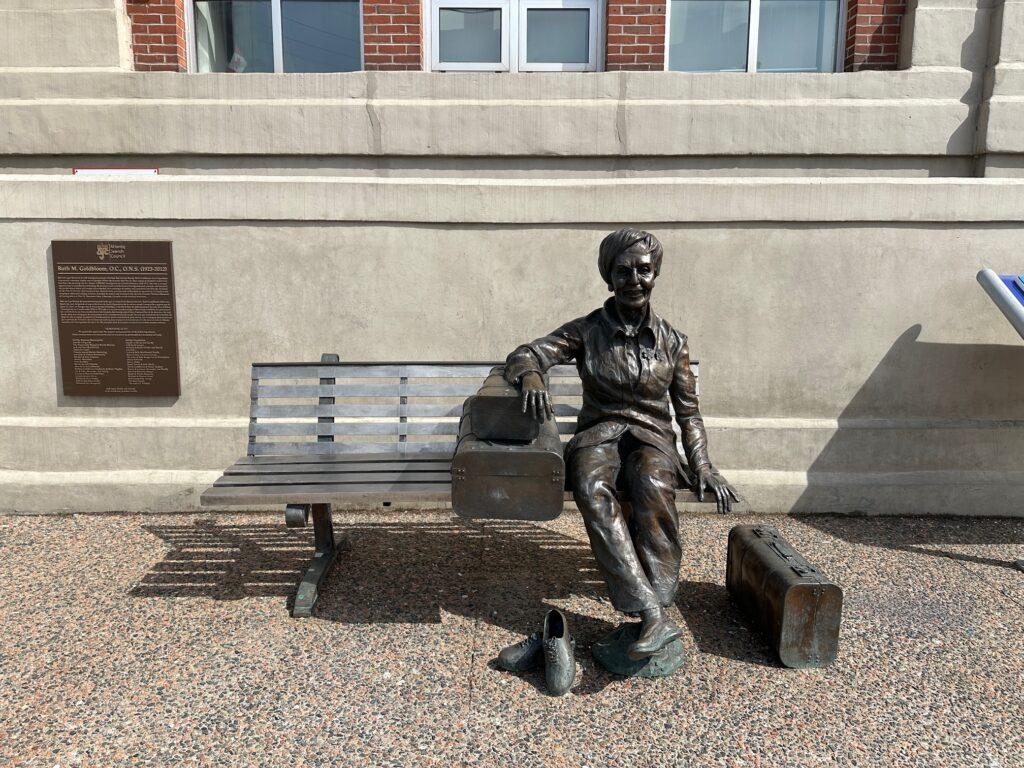
- If you have a family connection to Pier 21, set aside time for the Scotiabank Family History Centre and the Library and Archives Canada support area to learn the next steps for tracing your family history.
- Ask for the Personal Information Request Form if you want to begin retrieving official records connected to a family member who arrived through Pier 21.
- Bring whatever details you have, such as a full name, approximate arrival year, country of origin, or ship name. Even one small clue can help.
- Carve out enough time so you do not feel rushed. This is a museum best experienced slowly.
- Read the panels carefully. The historical context adds depth and weight to the emotional experience.
- Be prepared for the visit to stir more feeling than you expect, especially if your own family story includes immigration.
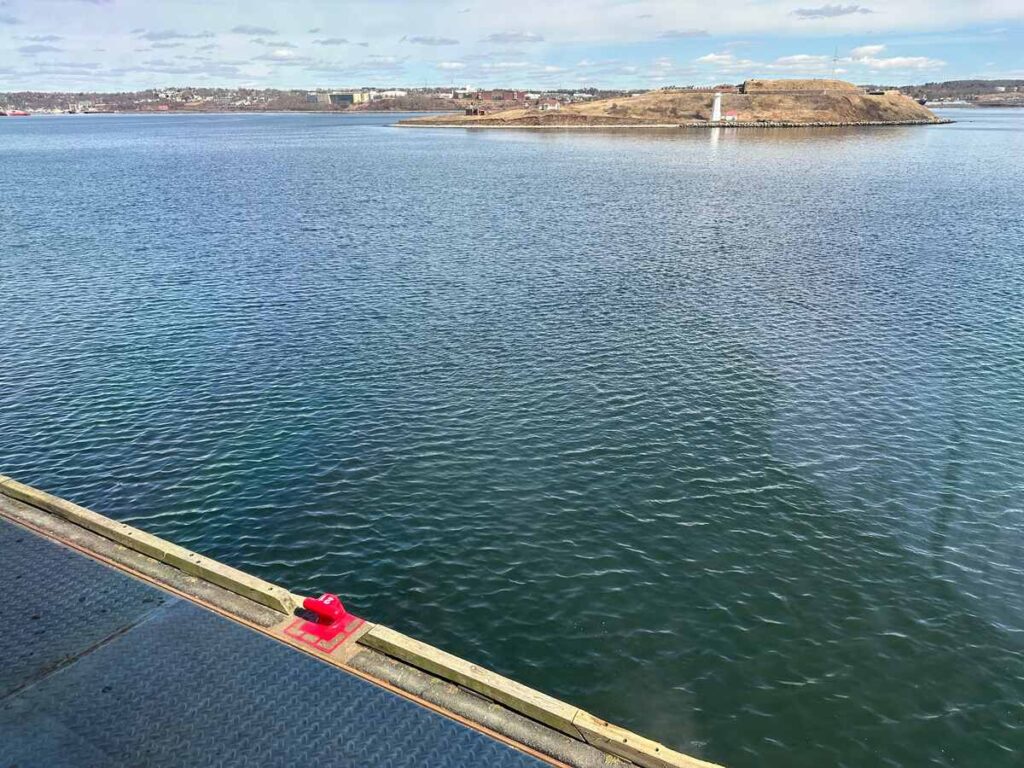
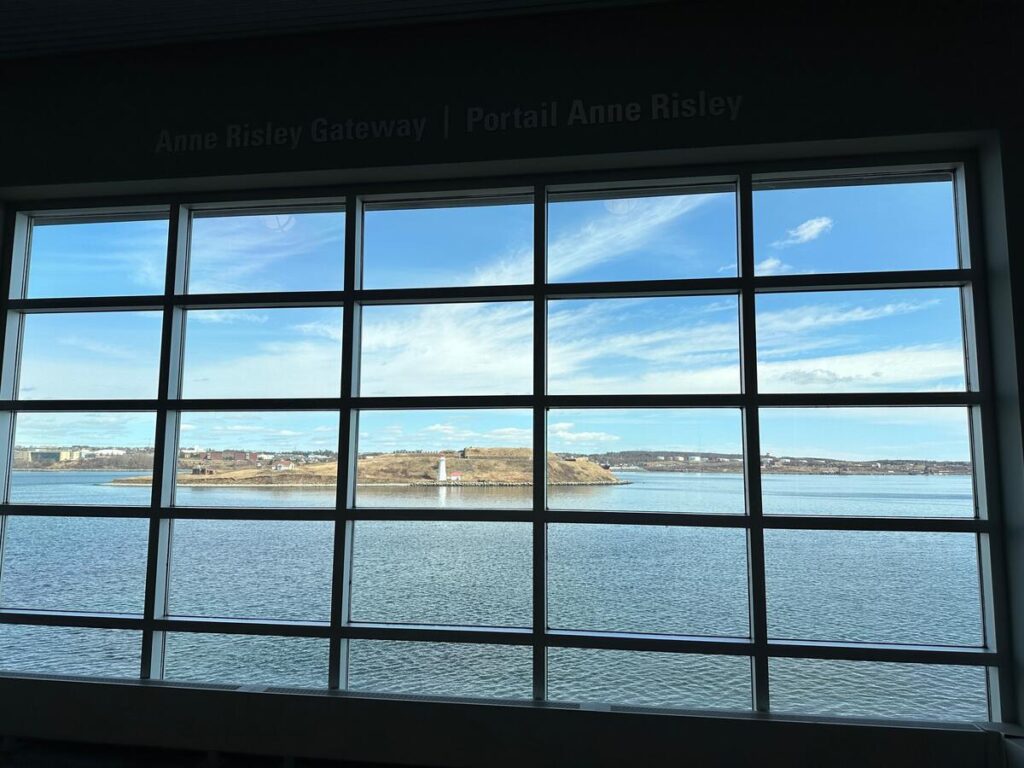
- Before you leave, take a moment to look out over the harbour. It is a powerful way to connect the exhibits to the real shoreline where so many journeys began again.
Every journey leaves a mark, and small choices can make a big difference. Choosing eco-friendly stays, supporting local communities, and being mindful of plastic use help preserve the beauty of the places we visit. Respecting wildlife, conserving resources, and travelling sustainably ensure future generations can experience the same wonders. By treading lightly and embracing responsible travel, we create meaningful connections and lasting memories. Here’s to adventures that inspire and footprints that honour our planet. Safe and mindful travels!
All photos by Helen Hatzis