

Two wineries, two very different expressions, and one memorable tasting journey through Nova Scotia wine country.
There is something deeply satisfying about discovering a wine region that still feels a little underappreciated by the wider world. Nova Scotia may not yet command the same instant recognition as Niagara or Napa for every traveller, but it should not be underestimated. Over two days, I experienced two wineries that made that case beautifully: Planters Ridge and Benjamin Bridge. Each offered something distinct, yet both were rooted in the same thing that matters most in wine: intention.
An Evening at Planters Ridge
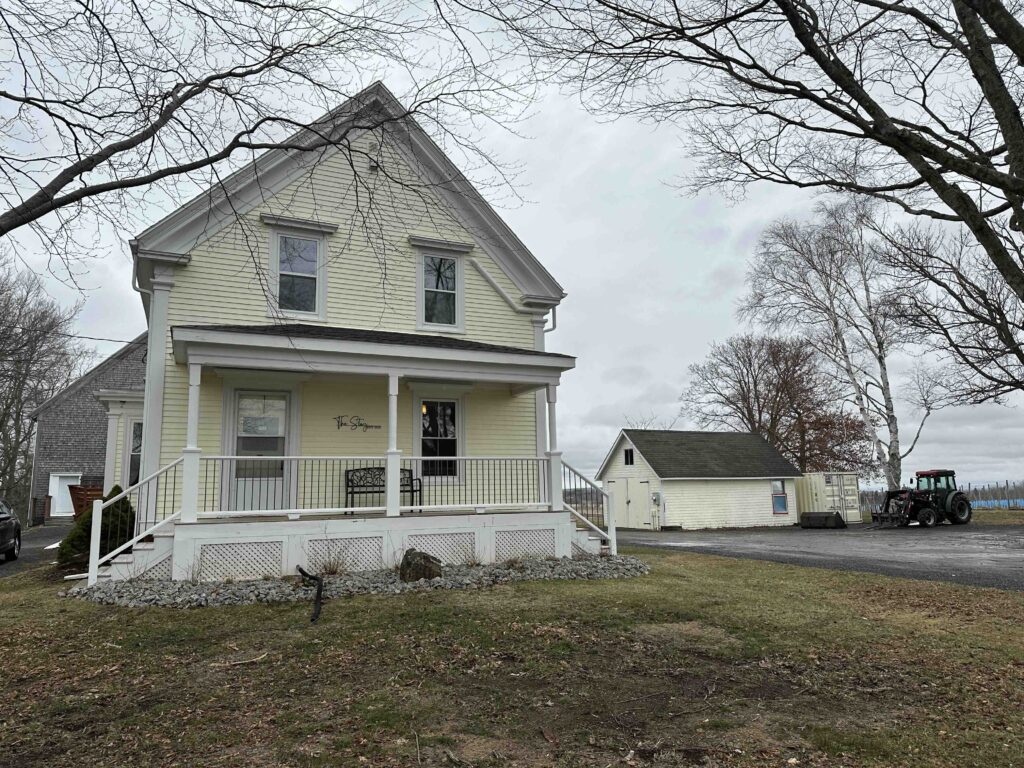
My time at Planters Ridge began not with a tasting bar, but with a stay.
That shift in pace mattered. Instead of arriving, tasting, and leaving, I had the chance to settle into the property and experience it over an evening and into the next morning. I checked in, opened a bottle of their Tidal Bay, and enjoyed it with a beautifully prepared charcuterie board. It was one of those simple but memorable travel moments: good wine, a thoughtful spread, and the kind of quiet that allows you to actually absorb where you are.
Planters Ridge Tidal Bay

The Tidal Bay was refreshing, bright, and easy to enjoy, but it also had real substance. It did not feel like an afterthought or a regional box being ticked. It felt carefully made, which, as I learned the next morning, is very much the point at Planters Ridge.
The Stay

The stay itself was warm and comfortable, and the next morning’s European-style breakfast added another lovely layer to the experience. There was hard-boiled egg, cold meat, toast, jam, yoghurt, fruit, juice, and coffee, all served with the kind of understated care that makes a guest feel genuinely looked after.
A Winery Built with Intention
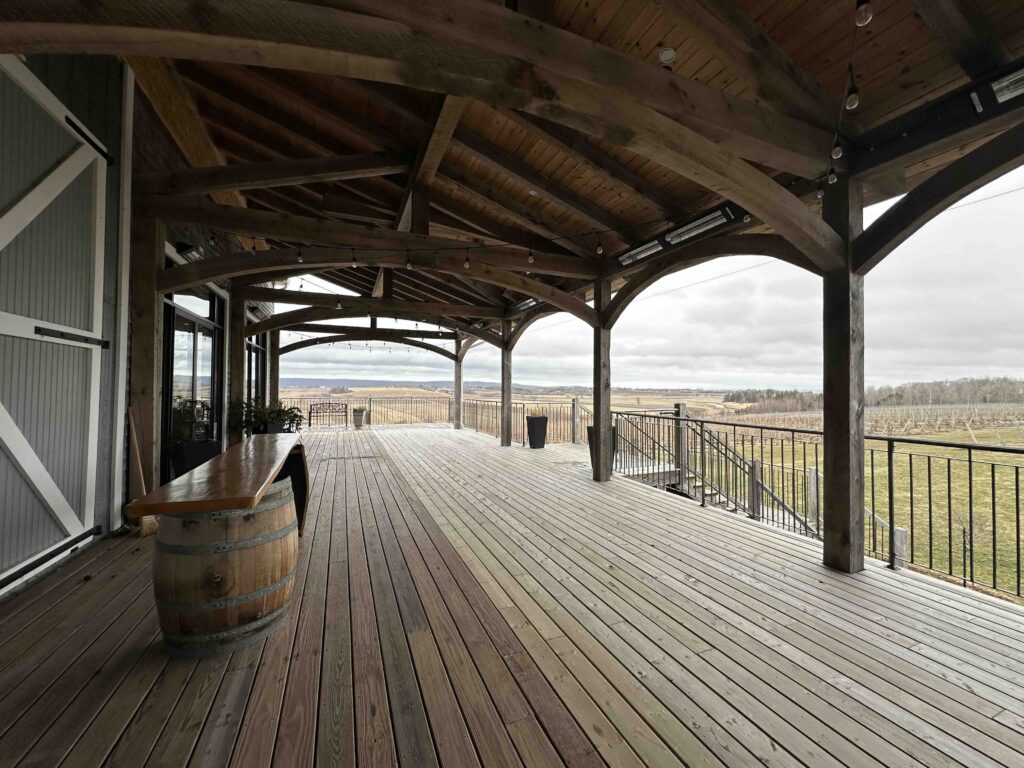
When co-owner Lisa welcomed me, and later took me on a tour, what came through clearly was just how much thought and discipline went into building this winery. She and her husband, John, have put enormous care into the property. They have not cut corners. They worked with experienced people, chose quality equipment, and made decisions that reflect a long view rather than a quick win. You can see that philosophy in the cellar and taste it in the glass.
Planters Ridge Cellar
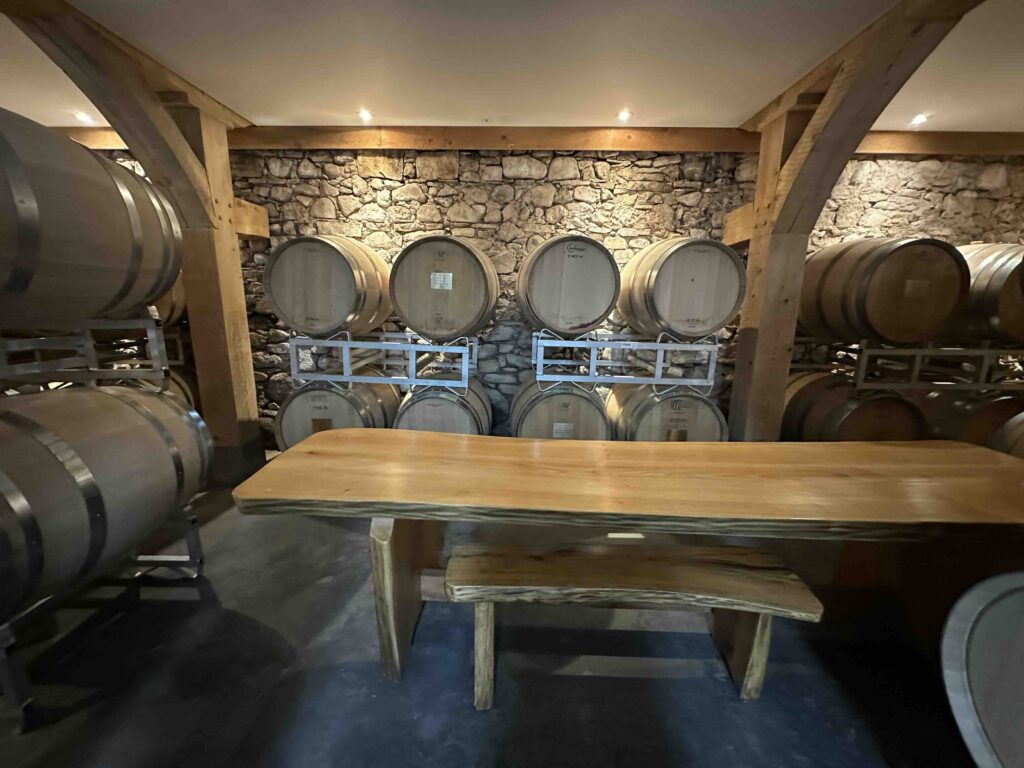
During my visit, winemaker Jorge Orozco explained some of the choices behind their wines. The winery uses argon rather than nitrogen to protect wine in tank, a more expensive option, but one they believe better preserves quality. White wines are cool-settled and fermented at low temperatures, around 12°C, to help retain aromatics and avoid unwanted flavours. Grapes are handled gently. Reds are destemmed without crushing, which helps avoid extracting harsher tannins and green characters. And downstairs, in a barrel cellar built into the original foundation of the old barn, French oak barrels line the room in a space that feels both practical and beautiful.
That barrel cellar stayed with me. It is not a decorative gesture designed to suggest seriousness. It is the real thing. Stone walls, timber beams, a natural cellar feel, and the quiet confidence of a winery that knows exactly why each choice matters.
Planters Ridge Feels Grounded in the Best Way
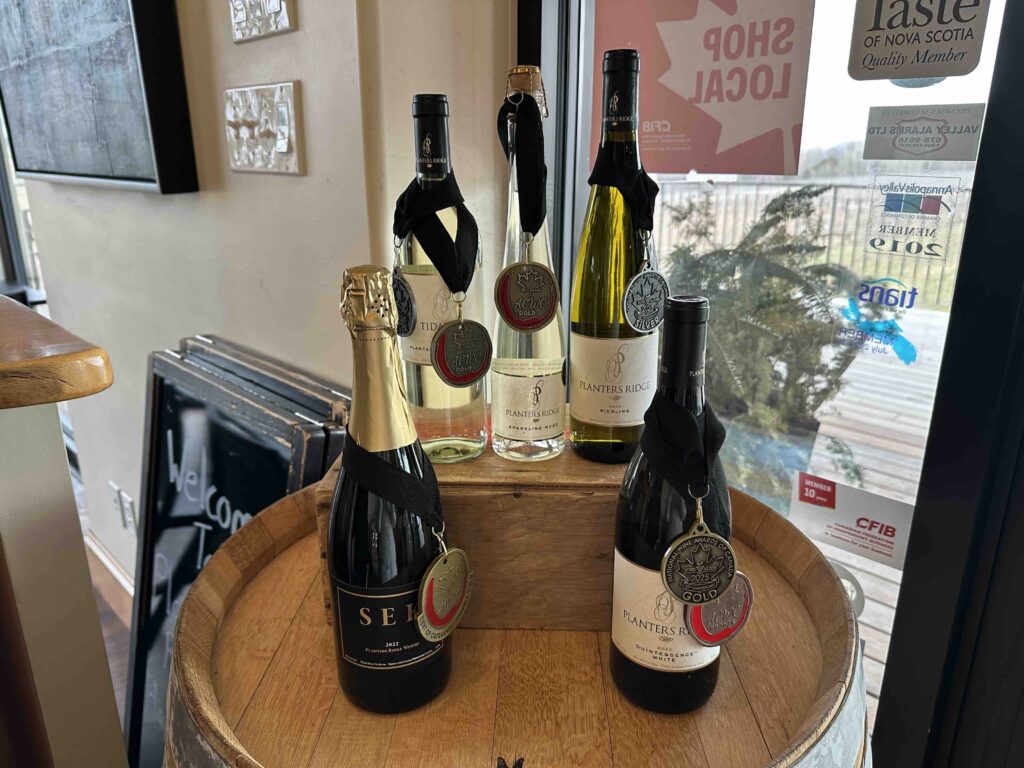
What impressed me most about Planters Ridge is how deeply hands-on it feels. Smaller in scope, yes, but guided with exceptional care. The tasting here did not rely on theatre. It relied on substance. I tasted their Pinot Noir and a fortified wine made from Lucie Kuhlmann, a red French-American hybrid grape bred for cold-climate viticulture and particularly at home in places like Nova Scotia and Quebec. It offered the richness and sweetness you hope for in that style without ever feeling heavy. It was clear that quality here is not accidental. It is shaped through many small, disciplined decisions, from vineyard care to fermentation temperature to barrel selection.
The Next Chapter for Planters Ridge
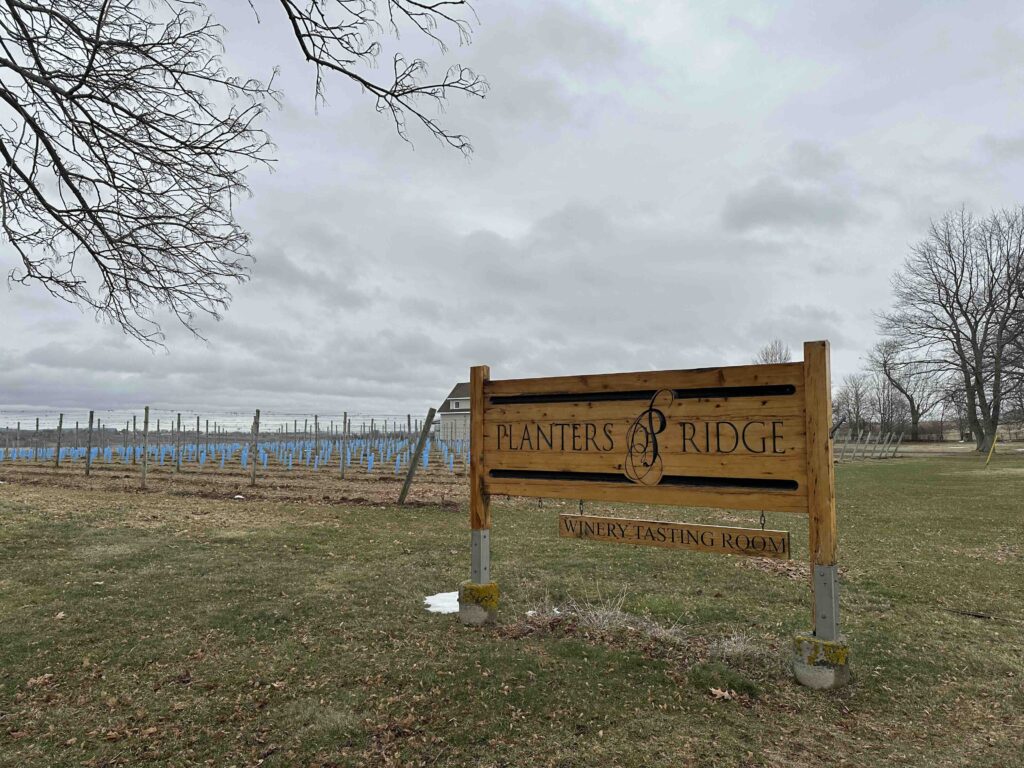
Lisa also shared that she and John are ready to retire and sell the winery. Knowing that added a layer of poignancy to the visit. They have built something with real integrity, and you can feel their pride in it. Whatever comes next, the standard they have set is unmistakable.
Benjamin Bridge and a Different Kind of Precision
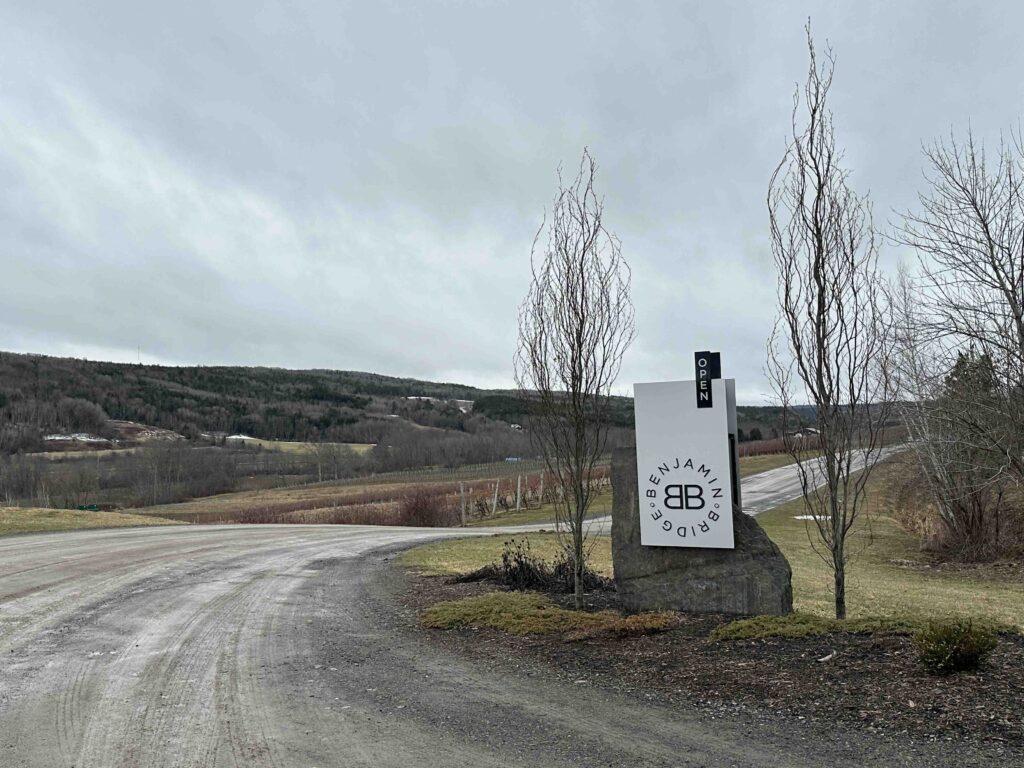
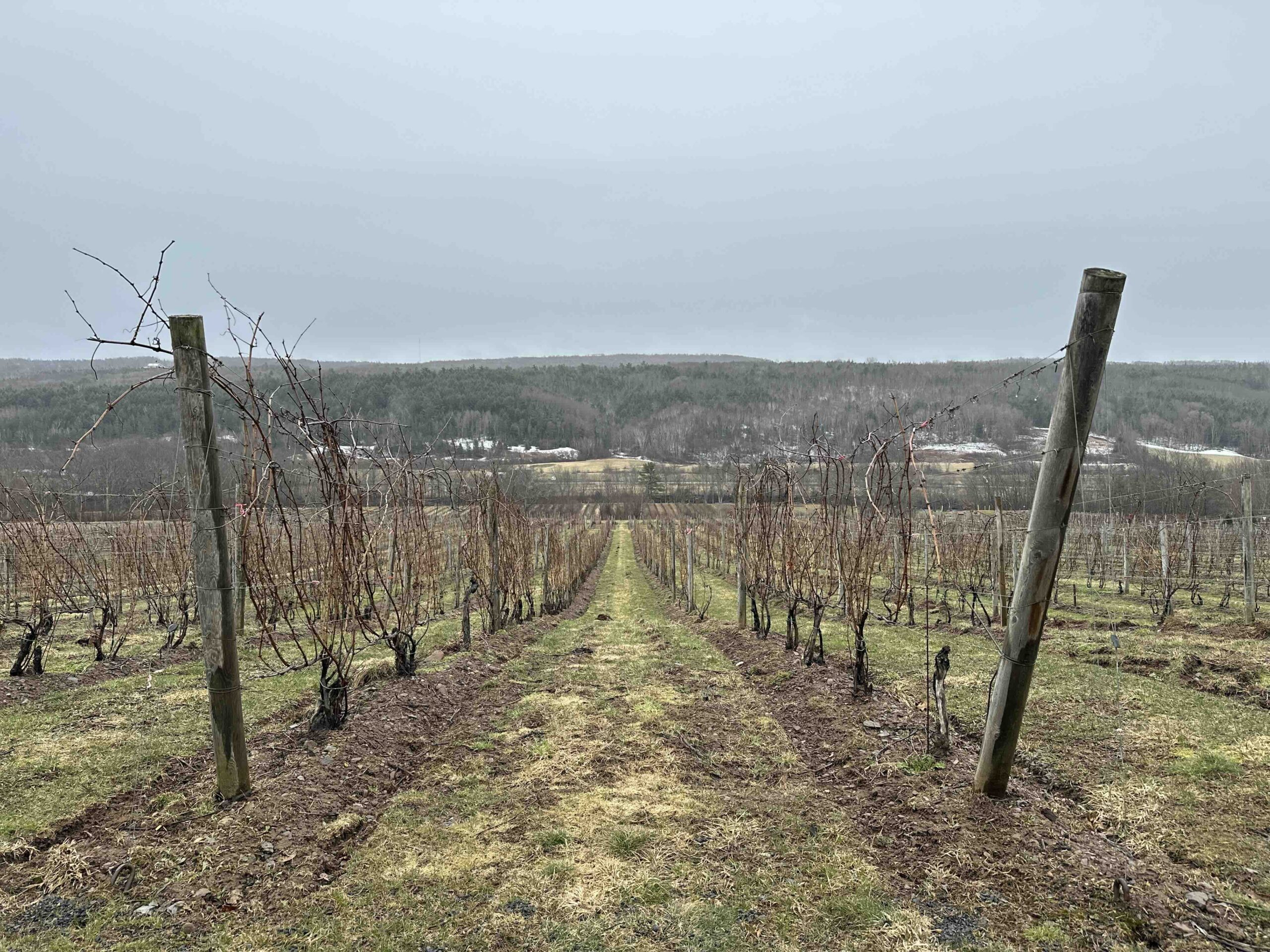
If Planters Ridge felt grounded and intimate, Benjamin Bridge felt polished and quietly luxurious. The drive in alone made an impression. Nova Scotia may not have the immediate wine-tourism profile of more established regions, but arriving at Benjamin Bridge is a reminder that it deserves serious attention. The rows of vines are striking, the setting is expansive, and the winery itself is impressive before you even sit down.
Bubbles & Bites

I was hosted by Ryan Isnor, an award-winning hospitality lead in a private tasting room on a rainy afternoon for just over an hour, and it was a lovely experience called Bubbles & Bites. The room was elegant, the service was attentive, and the tasting unfolded with the kind of measured confidence that signals a high-end winery without making the guest feel intimidated. He was knowledgeable and welcoming.
Traditional-Method
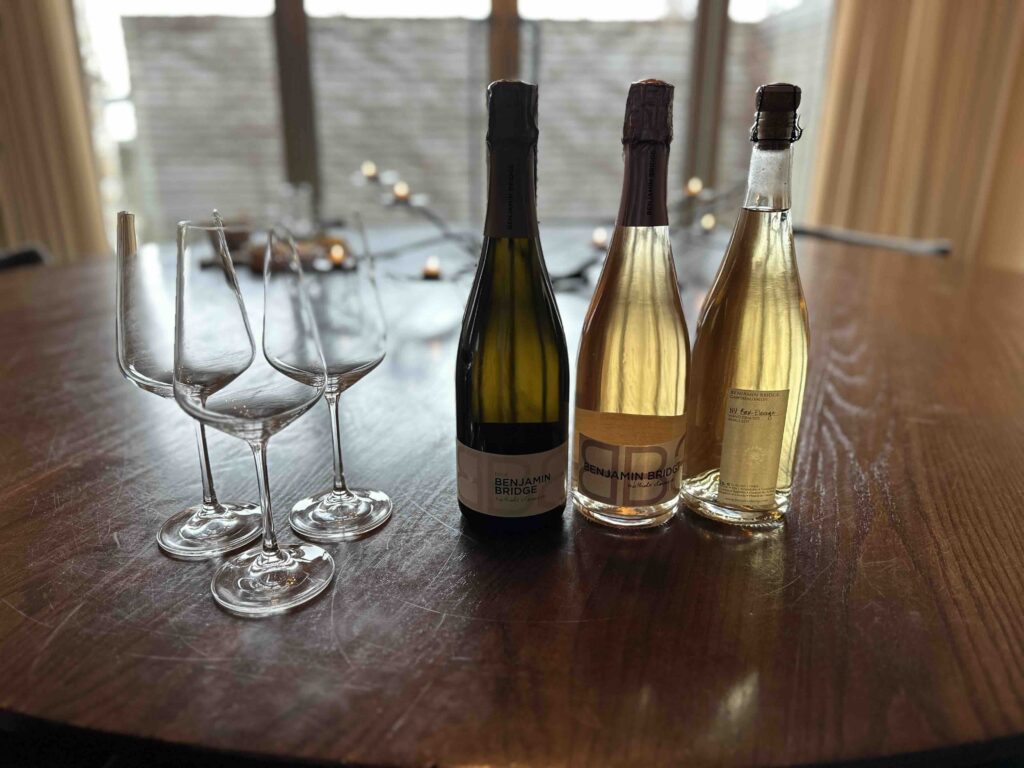
Benjamin Bridge is best known for its traditional-method sparkling wines, and that commitment to precision comes through in both the wines and the experience. There is a refinement to the house style, but there is also restraint. Nothing feels overworked. The tasting felt educational, elevated, and deeply considered.
Tasting Room and Gift Shop
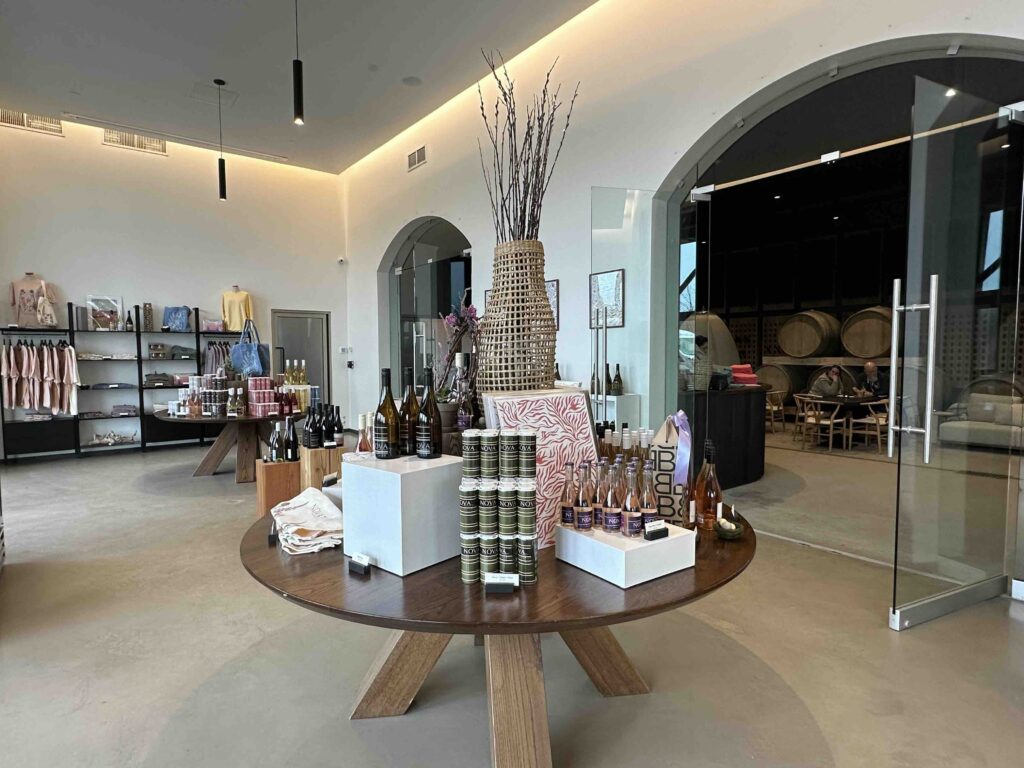
What also gives Benjamin Bridge extra resonance is that it remains a family story. The winery was founded in 1999 by Gerry McConnell and the late Dara Gordon, and it is now led by their twin daughters, Ashley and Devon McConnell-Gordon. That continuity adds something meaningful to the experience. You are not just tasting a successful Nova Scotia winery. You are tasting wines being carried forward by the next generation of the family that built it.
That sense of stewardship matters. It helps explain why the winery feels so complete. Benjamin Bridge has grown into one of Canada’s leading sparkling wine houses, with a focused portfolio built around traditional-method sparkling and premium still wines, but it still feels anchored in place and purpose.
Two Wineries, One Strong Impression

What stayed with me after these visits was not a sense of comparison, but of range.
Planters Ridge and Benjamin Bridge are very different expressions of Nova Scotia wine, and that is precisely why tasting both works so well. One is more grounded, intimate, and visibly hands-on. The other is more polished, elevated, and internationally minded in presentation. But neither feels careless, and neither feels hollow. The care in the winemaking is real at both. It is easy to be impressed by architecture, branding, or a beautiful tasting room. It is harder to feel that the wine itself is being made with seriousness and heart. At both of these wineries, I felt that.
The Takeaway
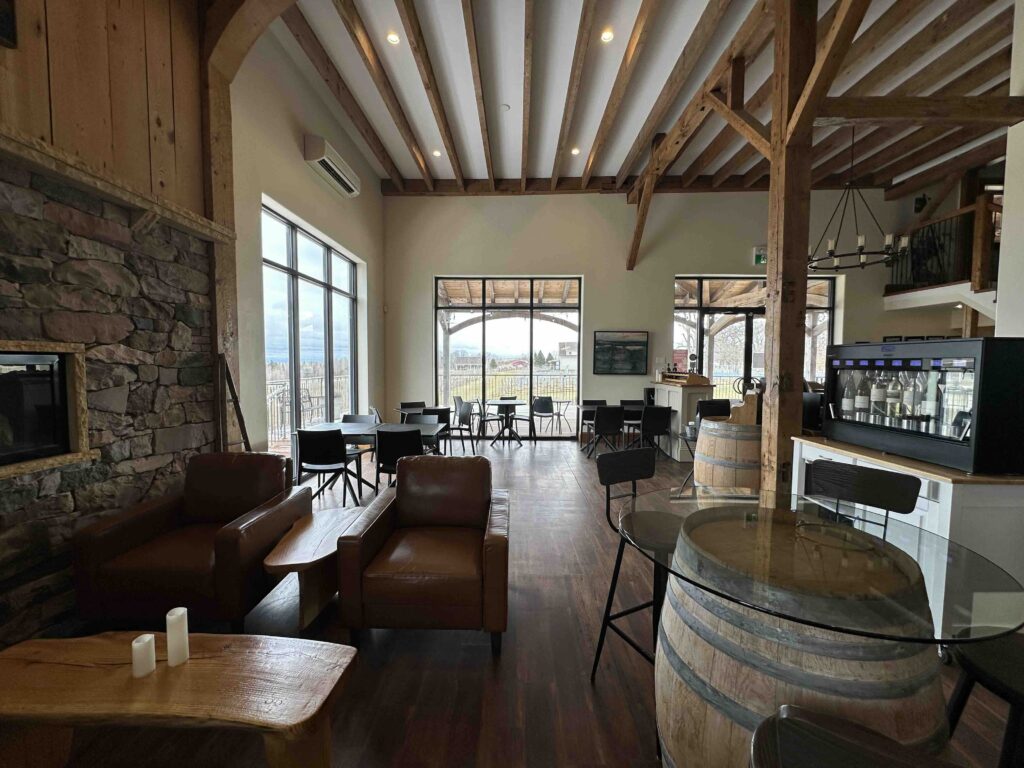
A wine-tasting escape in Nova Scotia can be far more compelling than many travellers might expect.
Planters Ridge offers warmth, hands-on care, and the pleasure of staying close enough to the vineyard to let the experience unfold over time. Benjamin Bridge brings precision, polish, and a sparkling wine program that shows just how far Nova Scotia has come as a serious wine region. Together, they reveal two distinct but equally worthwhile ways to experience Canadian wine. I left impressed by both, and grateful that Nova Scotia continues to tell its story through the land, the people, and the bottle.
I arrived curious and left impressed.
Every journey leaves a mark, and small choices can make a big difference. Choosing eco-friendly stays, supporting local communities, and being mindful of plastic use help preserve the beauty of the places we visit. Respecting wildlife, conserving resources, and travelling sustainably ensure future generations can experience the same wonders. By treading lightly and embracing responsible travel, we create meaningful connections and lasting memories. Here’s to adventures that inspire and footprints that honour our planet. Safe and mindful travels!
This Nova Scotia visit was hosted by Tourism Nova Scotia. As always, the editorial perspective is my own.