
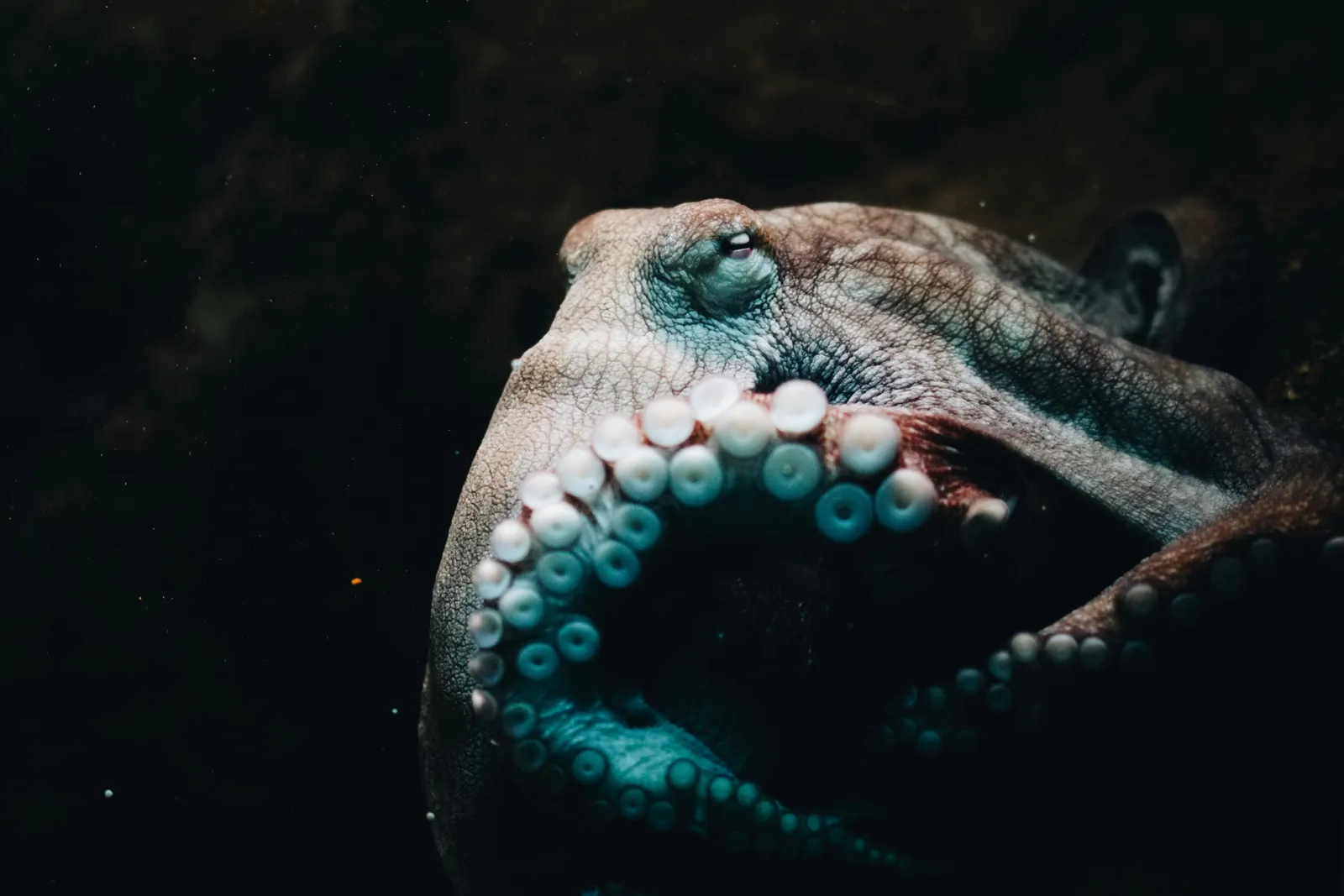

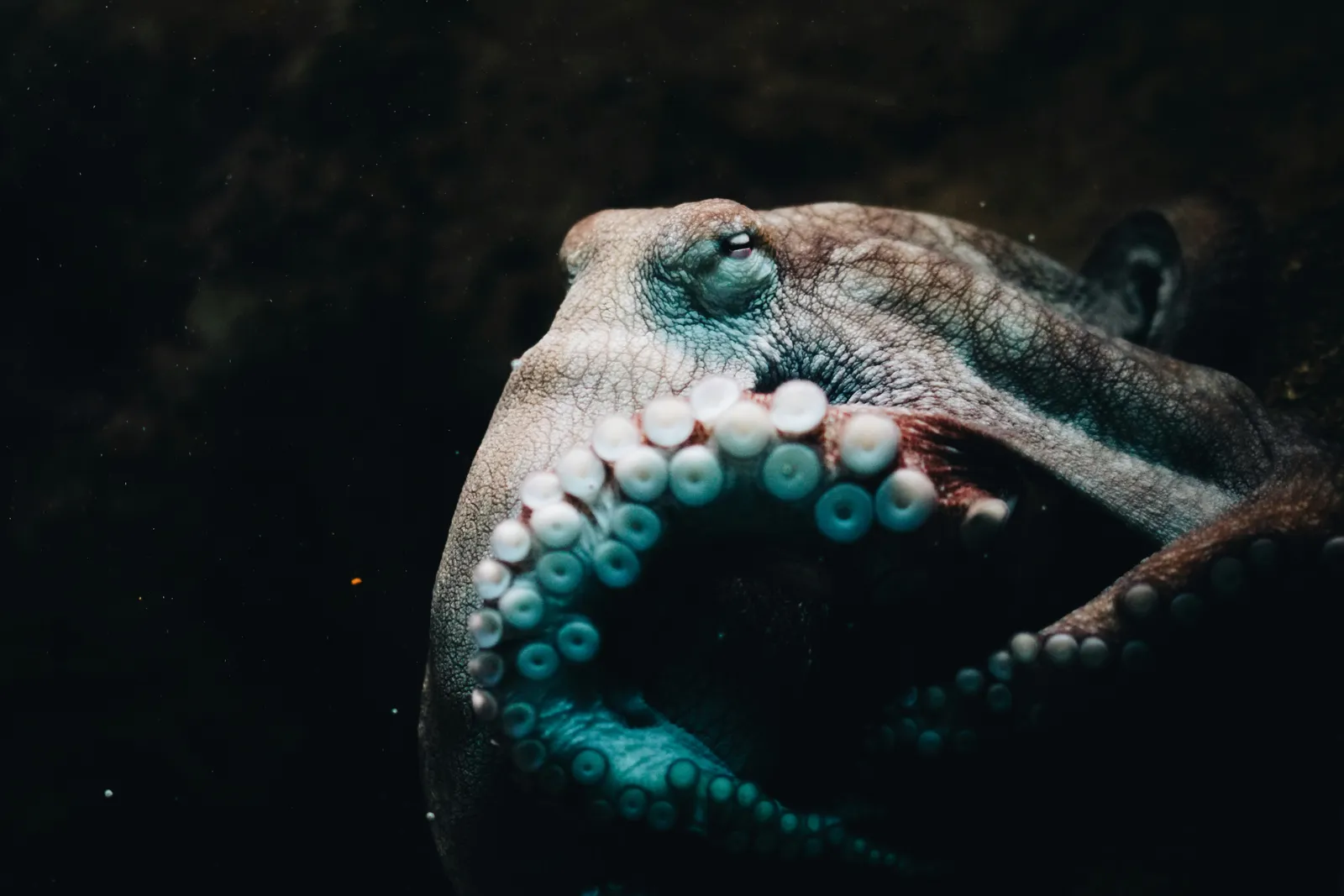
New species of blue octopus discovered 5,900 feet underwater – Image for illustrative purposes only (Image credits: Unsplash)
Researchers working in the waters around the Galápagos Islands have documented a previously unknown octopus species that stands out for its distinct blue coloration. The discovery occurred at a depth of 5,900 feet, a zone where light is scarce and life forms often remain hidden from routine observation. This find adds to the catalog of marine biodiversity in a region already recognized for its evolutionary significance, while underscoring how much of the ocean floor still awaits systematic study.
Details of the Identification
The new species carries the scientific name Microeledone galapagensis. It was located during targeted deep-sea surveys that rely on remotely operated vehicles and precise sampling techniques. Such expeditions must account for extreme pressure, cold temperatures, and complete darkness, conditions that limit the types of organisms able to survive.
Initial examinations focused on physical characteristics, including the animal’s overall form and pigmentation. The blue hue appears consistent across observed specimens, setting it apart from more commonly encountered octopus species that tend toward browns, reds, or grays. Further analysis will be needed to confirm whether this coloration serves a specific biological function or simply reflects genetic variation.
The Uncommon Nature of Blue Pigmentation
Blue ranks among the rarest colors observed in nature, appearing in only a limited number of animal species worldwide. In marine environments, true blue pigmentation is especially uncommon because most creatures rely on structural coloration or different chemical compounds to produce hues. The presence of this trait in a deep-sea octopus therefore draws particular attention from biologists tracking evolutionary patterns.
Scientists note that the belief in blue as the rarest natural color stems from extensive surveys across terrestrial and aquatic taxa. In the case of Microeledone galapagensis, the coloration may result from unique cellular structures or diet-related compounds absorbed at depth. Ongoing laboratory work aims to isolate the precise mechanisms responsible.
Implications for Marine Research
Each new species description refines understanding of how life adapts to the deep ocean. The Galápagos setting provides additional context because the archipelago’s isolation has fostered distinct evolutionary lineages over time. Discoveries at these depths can inform broader questions about resilience in changing ocean conditions.
Exploration of such remote habitats remains resource-intensive and logistically complex. Teams must balance the drive for new findings with the need to minimize disturbance to fragile ecosystems. Continued investment in deep-sea technology supports incremental progress in mapping biodiversity hotspots.
Looking Ahead
Further fieldwork will help determine the species’ range, population size, and ecological role. Genetic studies are expected to clarify its relationship to other known octopuses and to assess whether similar blue forms exist elsewhere. These steps form part of the standard process that turns an initial sighting into a fully characterized addition to the tree of life.
Findings like this one illustrate the value of sustained ocean observation programs. They also reinforce that even well-studied regions such as the Galápagos continue to yield surprises when researchers extend their reach into less accessible zones.
AI Disclaimer: This article was created with the assistance of AI tools and reviewed by a human editor.