
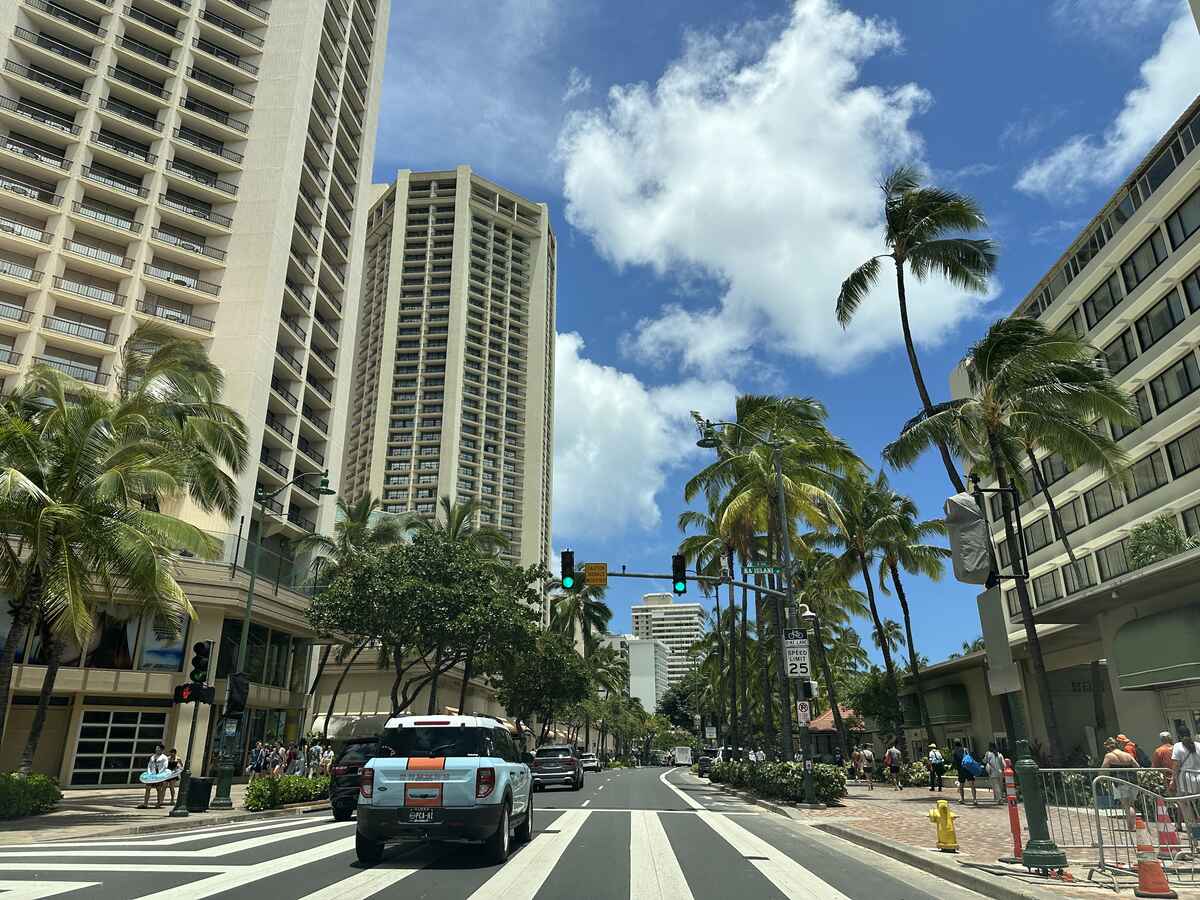

Oʻahu may first greet you with sunlight, surf, and that impossibly blue meeting place between sky and sea, but the island asks something deeper of travellers who are willing to listen. It asks us to look beyond the postcard, beyond the beach chair, and beyond the easy beauty that first captures the eye.
A meaningful visit to Hawaiʻi should include time spent learning what shaped these islands, who has carried their stories forward, and how culture, art, navigation, language, land, and ocean are all connected. On my recent visit to Oʻahu, four experiences helped bring that understanding into sharper focus: the Honolulu Museum of Art, Bishop Museum, the Polynesian Cultural Center, and Cirque du Soleil’s ʻAuana.
Together, they offered something beaches alone cannot: context.
Beginning With Art at the Honolulu Museum of Art
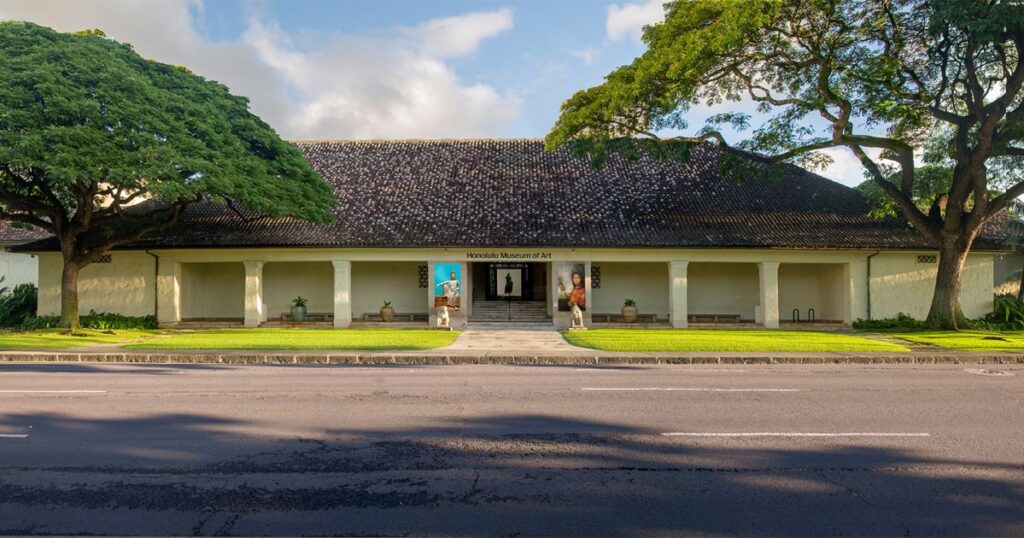
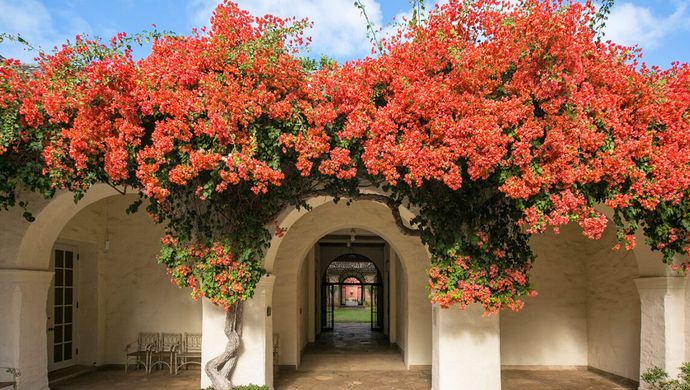
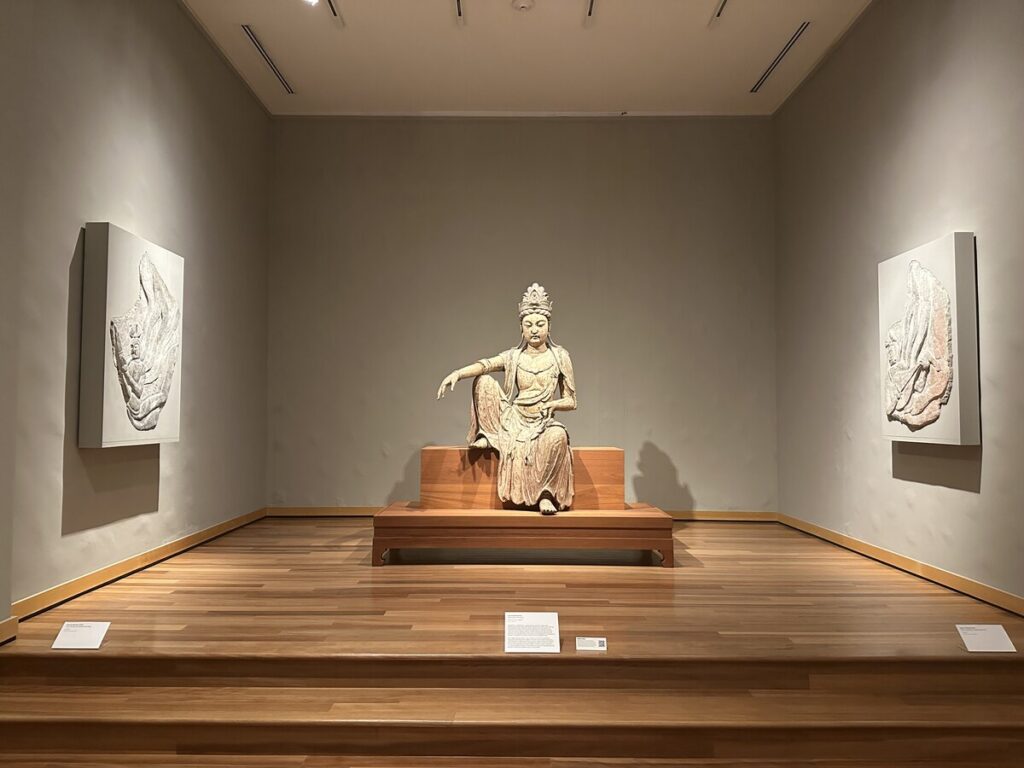
The Honolulu Museum of Art, often called HoMA, is more than a quiet place to admire beautiful works. It is a gathering place where art, education, and community come together in two iconic buildings in the heart of Honolulu, with a collection and programming that help reflect Hawaiʻi’s layered cultural landscape. HoMA describes itself as a place where “art, education and community converge,” and that is exactly how it felt while walking through its spaces with the guidance of Lesa Griffith, Chief Communications Officer.
For travellers, this matters. Art gives us a softer entry point into history because it allows us to feel before we fully understand. A landscape painting, a textile, a sculpture, or a contemporary work can reveal how people see themselves, how they honour place, and how memory is carried across generations.
During my visit, HoMA became a reminder that Hawaiʻi is not simply a destination to consume, but a place shaped by migration, exchange, creativity, resistance, and belonging. It is worth taking your time here, especially if your instinct is to move quickly from one stop to the next. Museums ask us to slow down, and that is often where the meaning begins.
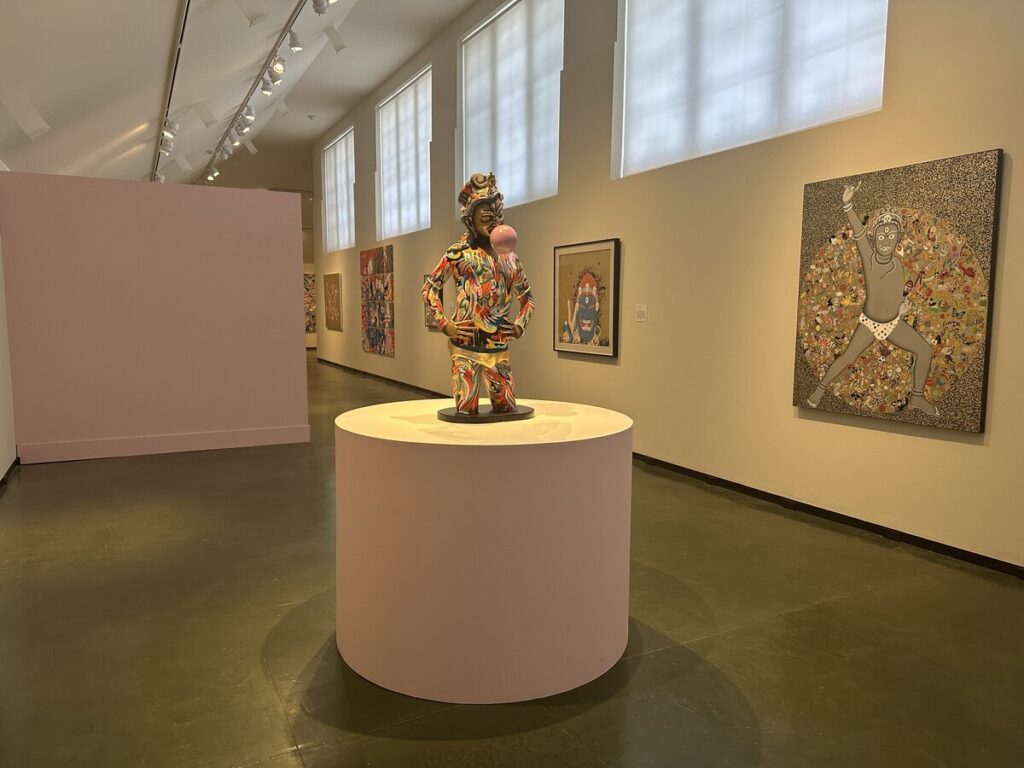
There is also plenty for visitors to look forward to in the galleries. Current exhibitions include Divine Disruption: The Art of Tsherin Sherpa, which explores migration, tradition, and the pressures and possibilities of a changing world; Toshiko Takaezu: Worlds Within, a major retrospective celebrating the Hawaiʻi-born artist’s work in ceramics, painting, textile, and bronze; and Past-Forward: Modern and Contemporary Art from HoMA’s Collection, which brings together more than seven decades of painting, sculpture, and photography, including works connected to Hawaiʻi and broader global conversations. Visitors can also find exhibitions such as Views of the Land: Modern Japanese Landscape Prints and their Literary Origins, Out of the Shadows, and Quiet Luxury: Subversive Fashion in the Edo Period, each offering a different doorway into how art reflects place, identity, beauty, rebellion, and memory. As always, it is worth checking HoMA’s current exhibition schedule before visiting, as the offerings change throughout the year.
Tip: Give yourself at least two hours at HoMA so you are not rushing through the galleries. There is also a place to eat on-site, and outdoor spaces which makes it easy to turn the visit into a calmer cultural pause. I visited on a Sunday and found free street parking, though visitors should always check current parking rules before relying on that.
Bishop Museum and the Depth Beneath the Beauty
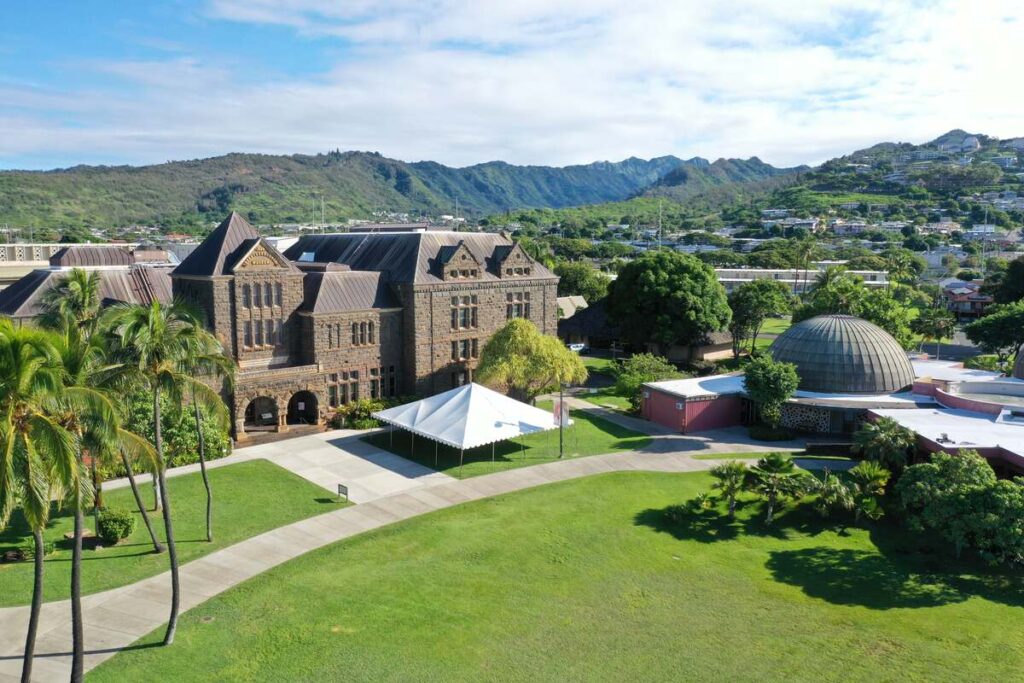
If HoMA opened the emotional doorway, Bishop Museum widened it. Known as Hawaiʻi’s premier natural and cultural history museum, Bishop Museum is one of the most important places a visitor can go to understand the deeper story of Hawaiʻi and the Pacific. The museum describes its purpose as immersing guests in Hawaiʻi’s rich culture and heritage, and that phrase stayed with me throughout the day.
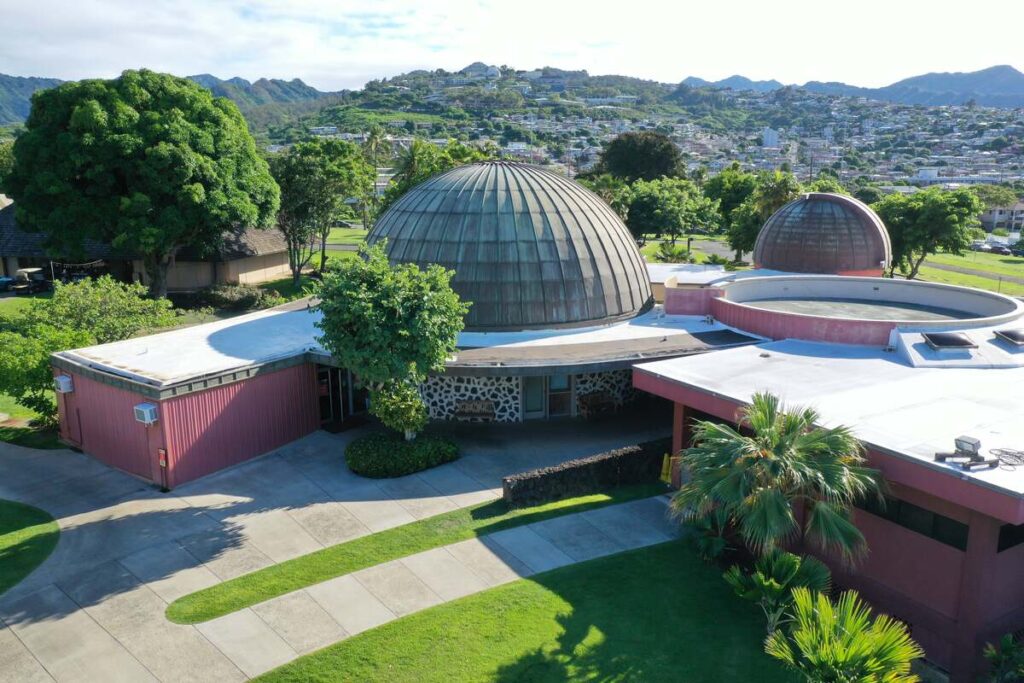
My visit began with Ken Yatomi, Director of Communications, who helped guide me through the museum’s many layers. The experience included the Science Adventure Center, Native Hawaiian Garden and aquaponics displays, Hawaiian Hall, Pacific Hall, the Kāhili Room, and the exhibition Ea Mai ʻEiwa: Patterns of Practice. Bishop Museum’s current signature galleries include Hawaiian Hall, Pacific Hall, the Kāhili Room, the Native Hawaiian Garden, and the Science Adventure Center, among other important spaces.
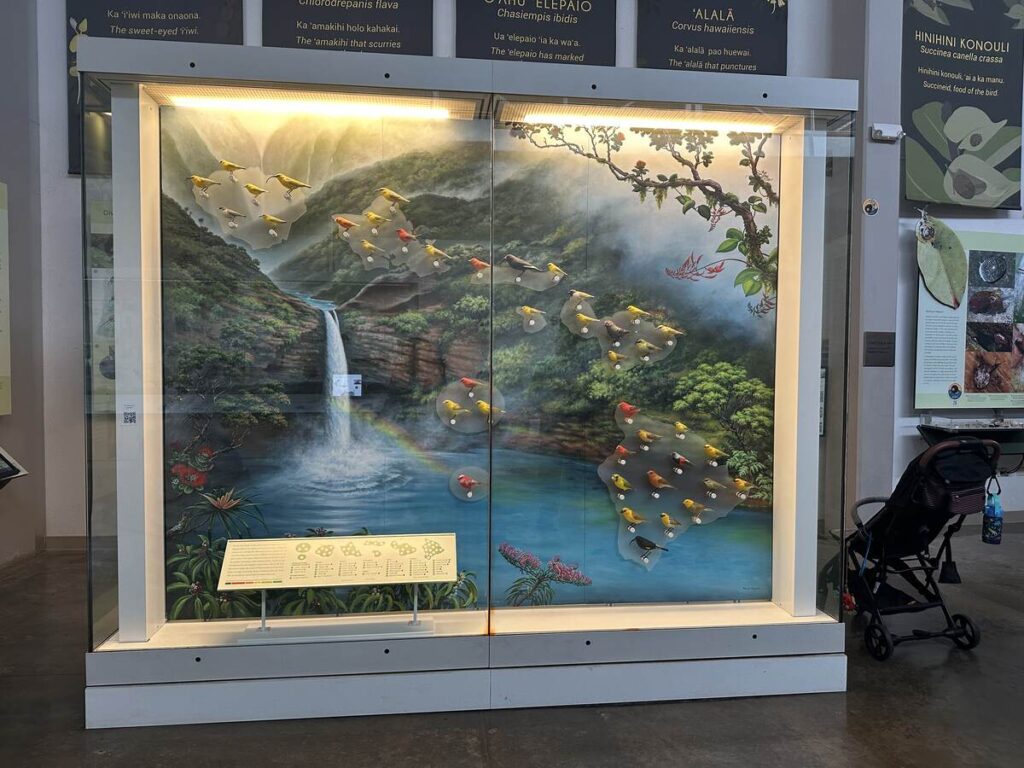
Inside the Science Adventure Center, Lele o Nā Manu: The Splendor and Loss of Hawaiʻi’s Birds offered a moving look at Hawaiʻi’s native forest birds through beautifully carved representations of endemic manu nahele, while also reminding visitors of the fragility of island ecosystems and what can be lost when biodiversity is not protected. Nearby, Bishop Museum’s Seed Bank added another layer to that message, showing how conservation is not an abstract idea here, but active work rooted in restoration, native plants, community partnerships, and care for future generations.
In Hawaiian Hall, Ea Mai ʻEiwa: Patterns of Practice brought together the work of Nālani Kanakaʻole, Sig Zane, and Kūhaʻoʻīmaikalani Zane, a Hilo-based family of artists and storytellers whose creative practices are deeply rooted in hula ʻaihaʻa. The exhibition weaves migration, resilience, environmental knowledge, and cultural practice into a visual and emotional experience that feels both ancestral and contemporary.
I also stopped to view the Aʻa, Prince Kūhiō’s storied koa racing canoe, which carries its own remarkable history of sport, sovereignty, pride, and preservation. Built in 1902 and later gifted to Bishop Museum as part of the Kapiʻolani-Kalanianaʻole Collection, the canoe continues to be cared for in relationship with the Dowsett ʻOhana.
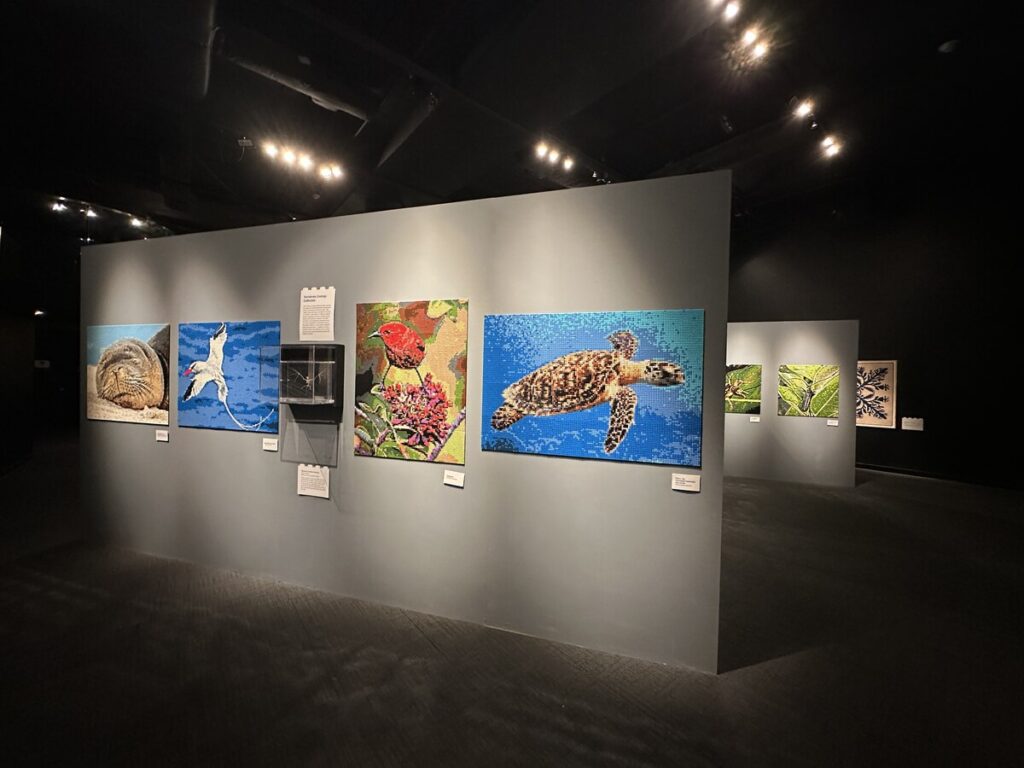
And then there was Aloha Bricks ʻ26: Stories of Hawaiʻi, which I thoroughly enjoyed. Playful on the surface, the exhibit uses LEGO® bricks to help tell stories of Hawaiʻi through landmarks, native species, hands-on creativity, and family-friendly imagination. The timing also feels especially fitting, as Jason Momoa has recently been championing the importance of play through his work with LEGO, a message that aligns beautifully with an exhibit that invites keiki and adults alike to learn through curiosity, creativity, and wonder. It is a reminder that learning does not always have to feel solemn to be meaningful; sometimes wonder is the doorway.
This is where the island begins to speak in a fuller voice. You start to understand that the ocean was not a barrier, but a pathway. You see how voyaging, astronomy, ecology, genealogy, ceremony, and responsibility are connected. As someone who has always felt deeply connected to water in all its forms — oceans, lakes, rivers, and every quiet shoreline in between — this was especially moving. It reframed the Pacific not as empty space between islands, but as a living map of knowledge, courage, and relationship.
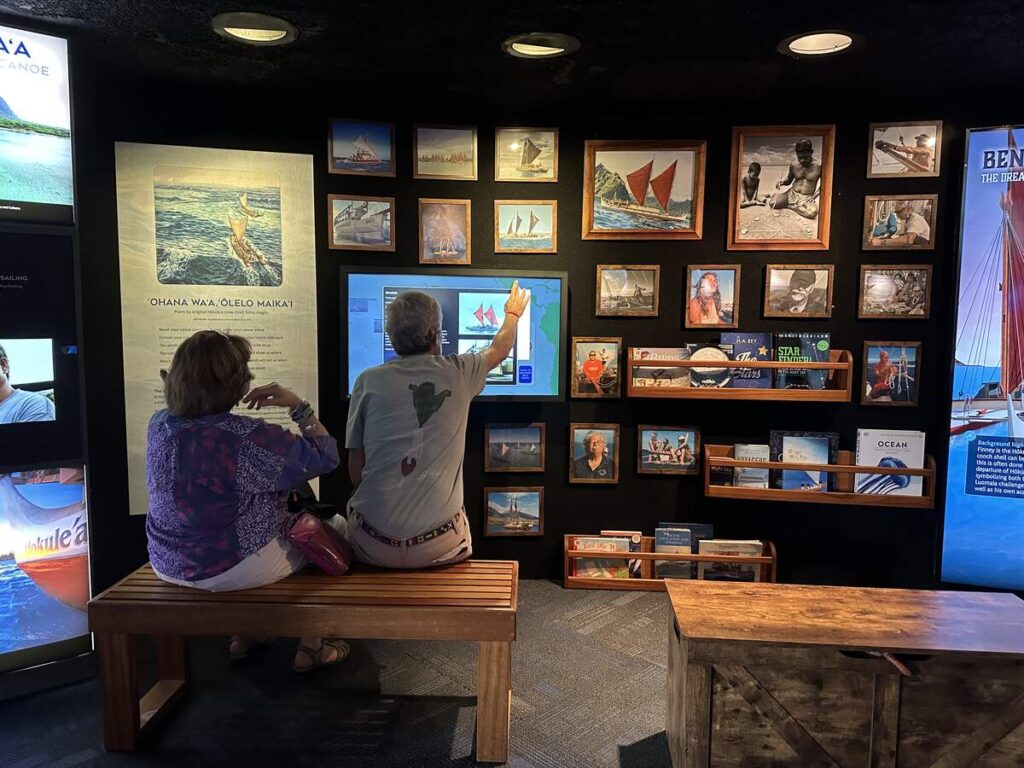
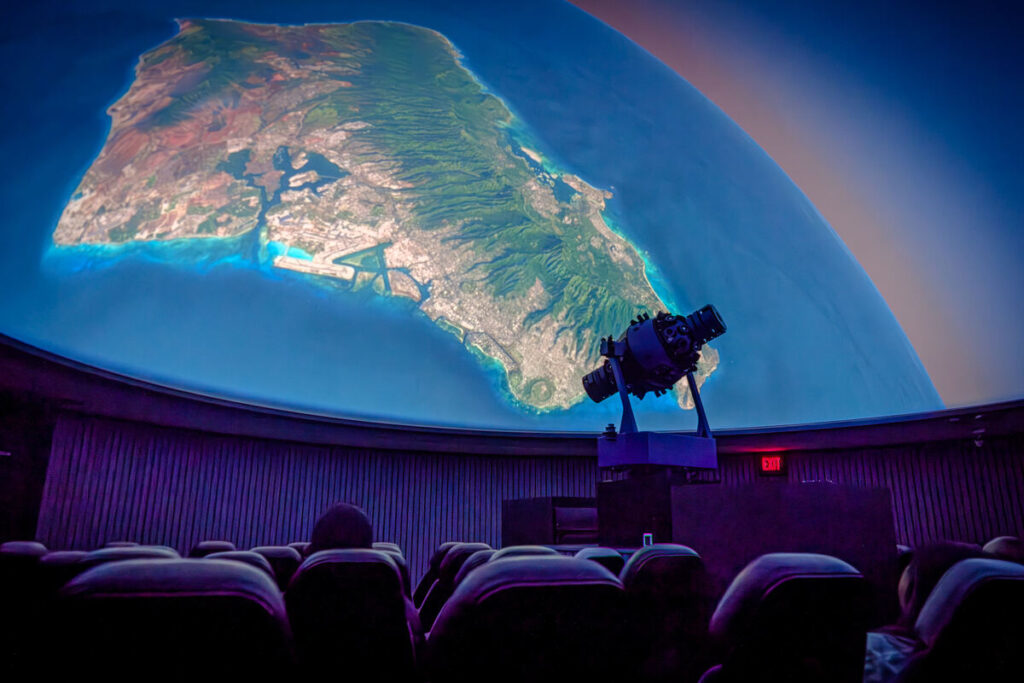
One of the most powerful parts of the visit was the J. Watumull Planetarium’s “Wayfinding” show, followed by time in the Wayfinders exhibit. Exhibit Designer Michael Wilson took me through the exhibit panel by panel, helping me understand the meaning behind what I was seeing rather than simply observing it from a distance. The exhibit, Wayfinders: He Waʻa He Moku, He Moku He Waʻa, We Are One and the Same, celebrates the resurgence of wayfinding across Hawaiʻi and the wider Moananuiākea, while reflecting on voyaging canoes, crew members, environmental stewardship, and cultural knowledge for future generations.
That context changed everything. It made the stars feel like teachers, the sea feel like memory, and the canoe feel like a vessel of survival, intelligence, and care.
A Lunch That Became Its Own Lesson
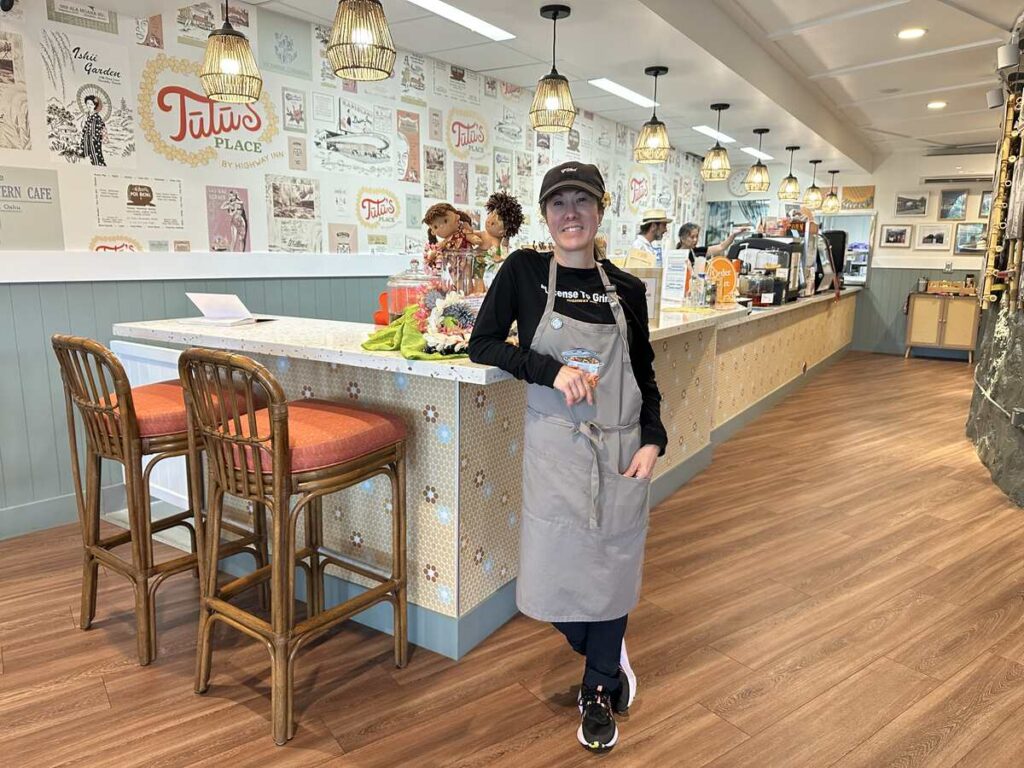
At Bishop Museum, learning did not stop in the galleries. I also had lunch at Tūtū’s Place by Highway Inn, where I met Monica Toguchi Ryan, the third-generation owner of Highway Inn. What could have simply been a hosted lunch became one of those travel moments that stays with you because of the person sitting across the table.
Monica spoke with generosity, insight, and warmth about her family’s restaurant history and the importance of food as a carrier of culture. Highway Inn was founded in 1947 in Waipahu by grandparents Seiichi and Nancy Toguchi, and the restaurant is now led by Monica, continuing a family tradition rooted in Hawaiian and local comfort food.
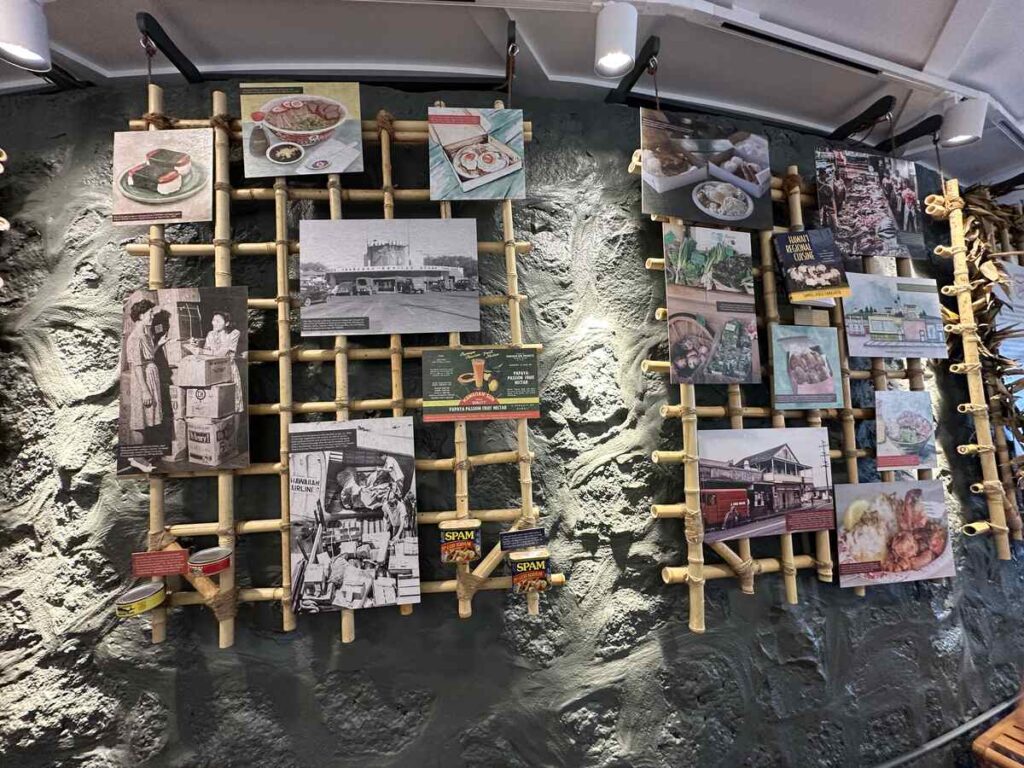
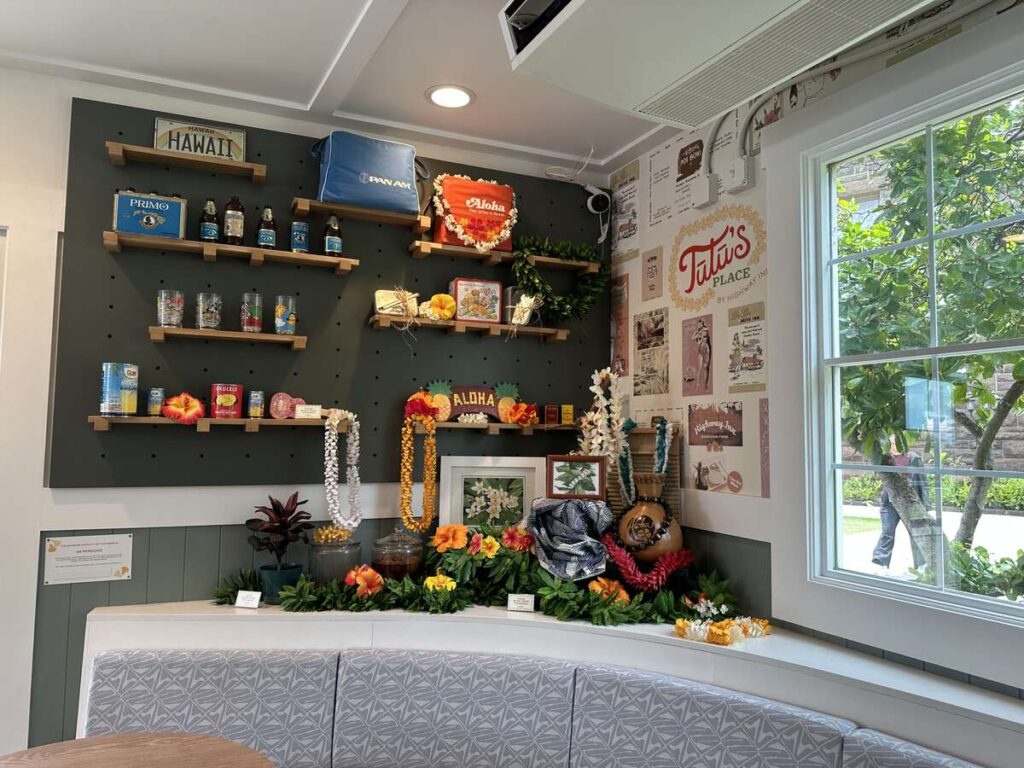
Inside Tūtū’s Place, there is a history wall that beautifully shares not only the story of her family’s restaurant, but also a broader sense of Hawaiʻi’s history and community life. It reminded me that culture is not only preserved behind glass. It is also preserved in recipes, hospitality, family stories, and the way someone welcomes a stranger and makes them feel invited to return.
Monica showed much aloha. She was generous, thoughtful, worldly, and deeply connected to the place she represents. In many ways, that lunch was an extension of the museum itself: another way of learning, another way of listening, another way of understanding Hawaiʻi through the people who carry its stories forward.
Tip: At Bishop Museum, do not skip the planetarium or the Wayfinders exhibit. Also make time for Hawaiian Hall, Pacific Hall, the Kāhili Room, the Science Adventure Center, the Native Hawaiian Garden, and any temporary exhibitions on view during your visit. If Tūtū’s Place is open, consider stopping for lunch because food can be one of the most meaningful ways to understand place.
The Polynesian Cultural Center as Living Culture
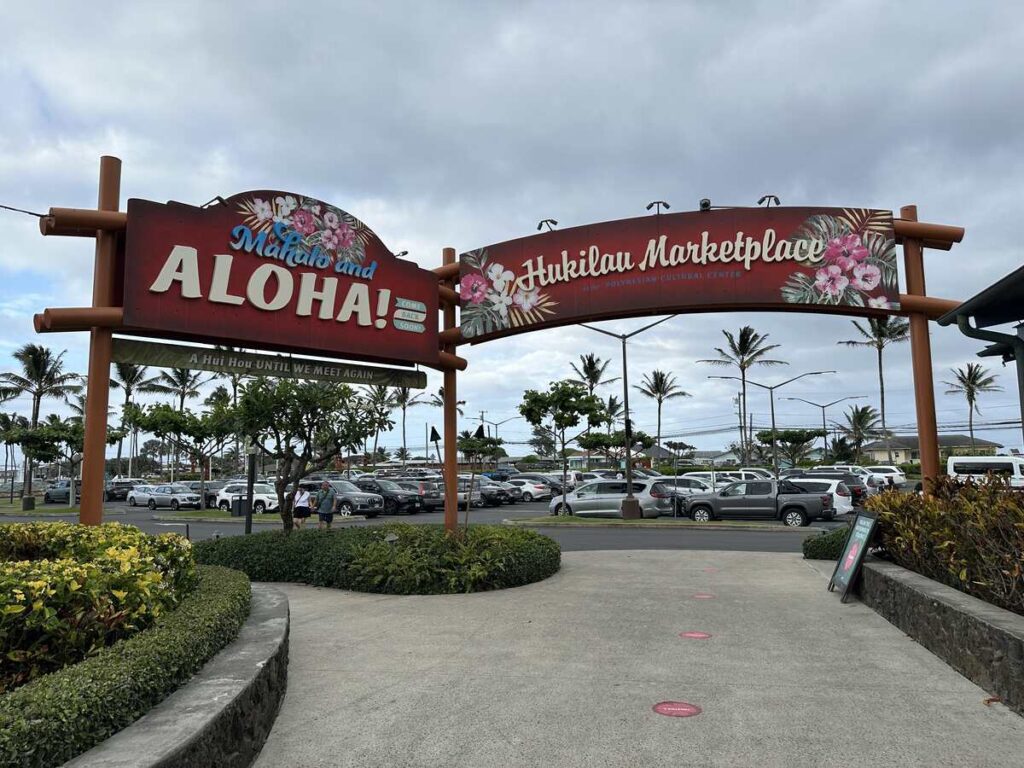
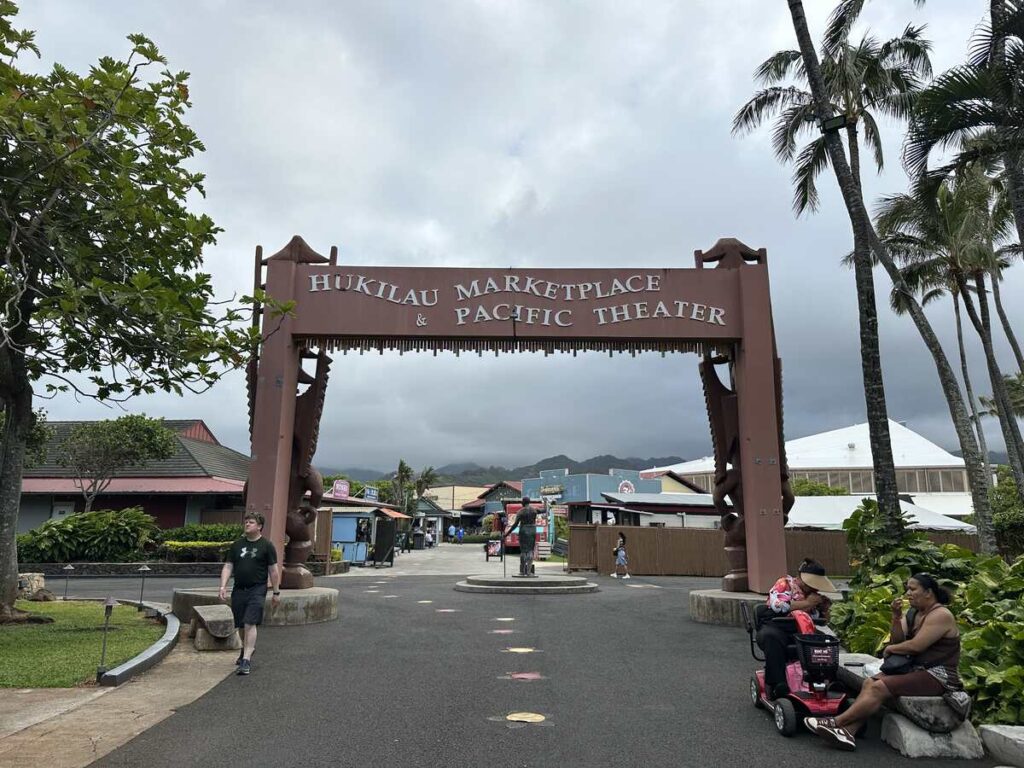
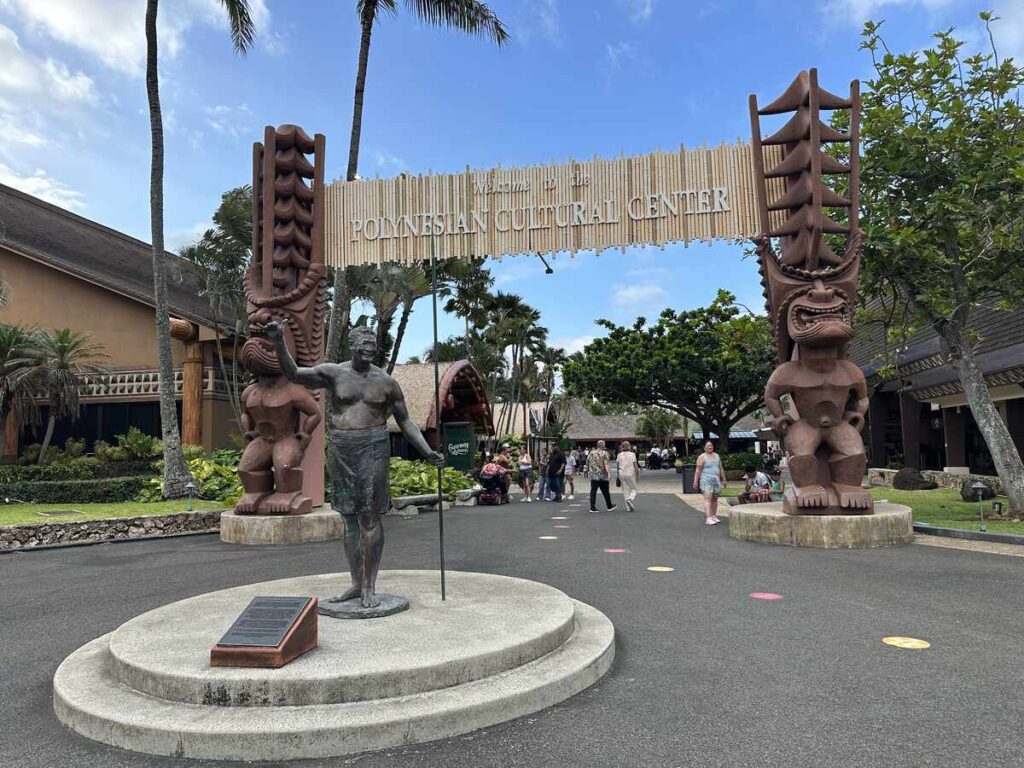
The Polynesian Cultural Center in Lāʻie added another layer to the experience. The centre features six island villages representing Hawaiʻi, Samoa, Tonga, Fiji, Aotearoa, and Tahiti, with cultural presentations, hands-on activities, dining, and the evening show Hā: Breath of Life.
What stood out to me was that, while there are performances, the experience did not feel like people pretending to be part of a culture. Many of the people sharing the dances, stories, language, games, and traditions are connected to the cultures being represented. Many are also students from nearby BYU–Hawaiʻi, which has a long relationship with the Polynesian Cultural Center as a place where students work while pursuing their education.
That distinction matters. There is a difference between culture being displayed for entertainment and culture being shared by people who carry it. At the Polynesian Cultural Center, I felt that difference.
Walking through the villages, I learned pieces of stories from across Polynesia and began to see how connected these island cultures are, while also appreciating how distinct each one remains. Tonga, Fiji, Samoa, Tahiti, Hawaiʻi, and Aotearoa each hold their own traditions, rhythms, language, humour, and beauty. Together, they also help visitors understand the wider Pacific family of cultures that shaped and continues to shape Hawaiʻi.
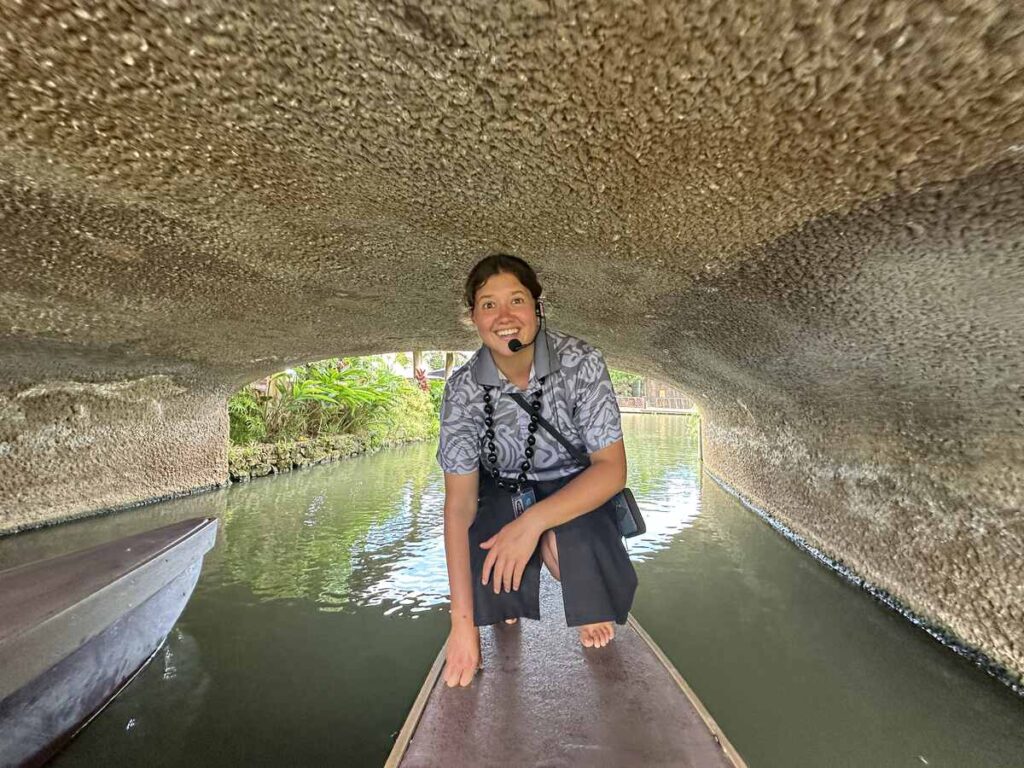
One of the loveliest parts of my visit was a canoe ride that became, in the best way, a kind of floating flashcard test. As we moved along the water, the canoe captain Annalise asked questions about what we had just learned, helping us remember the names, stories, and cultural details connected to the villages.
It was lighthearted, but it worked. Sometimes learning while travelling does not need to feel formal. It can happen during a canoe ride, in a shared laugh, or in the simple act of being asked to remember what you just learned.
Stay for Dinner
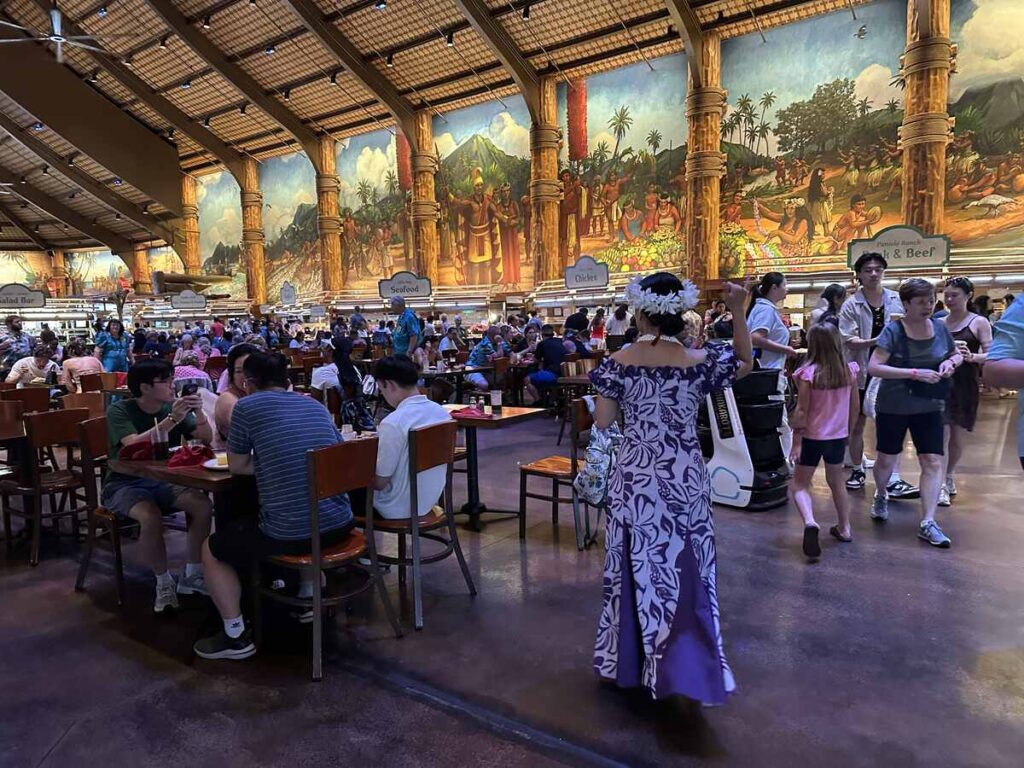
The Polynesian Cultural Center is not a quick stop if you want to experience it properly. After the villages, there are several ways to stay for dinner, including larger dining experiences such as a luau and more casual options in the marketplace. I dined at the Gateway Buffet. It all depends on the package you select.
After dinner, it is worth walking around the marketplace, whether you want to browse for souvenirs, stretch your legs, or simply let the day settle before the show. Travel days can become so scheduled that we forget to leave space for wandering, and the marketplace offers that little in-between moment before the evening performance begins.
The day ended with Hā: Breath of Life, a large-scale production with music, dance, storytelling, and theatrical staging. After spending the day learning in the villages, the show felt more grounded. The movement, music, and emotion had context. It was not just spectacle; it was connected to everything that came before it.
That is the larger lesson here. When travellers take time to learn before they watch, listen before they photograph, and understand before they simplify, the entire experience changes.
Tip: When you arrive, pick up the map (which includes the schedule) at the entrance. The village presentations repeat throughout the day, so you can move back and forth without feeling rushed. Visit each island village, take part in the games and hands-on activities, ask respectful questions, and give yourself time to absorb what is being shared. The villages are close enough to walk between comfortably, but the day is fuller when you plan it with intention.
Pro Tip: Most full-day packages and Islands of Polynesia admissions include a free three-day re-admission pass to the village exhibits, which is helpful if you miss a presentation or want to return at a slower pace. The pass allows re-entry to the Islands of Polynesia villages for up to three consecutive business days after your first visit, though dining, transportation, tour guides, and the Hā: Breath of Life evening show are not included. Bring your original ticket or proof of purchase and photo ID to the Ticket Office to redeem it.
Cirque du Soleil’s ʻAuana as a Contemporary Cultural Bridge

Cirque du Soleil’s ʻAuana in Waikīkī, at first glance, may seem like a different kind of cultural experience than a museum or cultural centre, and in many ways it is. It is theatrical, polished, immersive, and unmistakably Cirque du Soleil. But it also belongs in this conversation because it approaches Hawaiian storytelling through contemporary performance, using movement, music, colour, projection, texture, and sound to honour the spirit of the islands in a different form.
The essence of ʻAuana is deeply rooted in a Native Hawaiian appreciation of Hawaiʻi’s landscapes, where land, ocean, sky, and story are not separate from one another. That inspiration comes to life on stage through vibrant colours, layered textures, immersive projections, and a renowned ensemble of local and international talent, creating a tribute to the rich heritage of Hawaiʻi that feels both visually striking and emotionally connected.
ʻAuana unfolds across eight chapters inspired by the moʻolelo, or stories, of Hawaiʻi, moving from Polynesian migration to the golden age of tourism while honouring a connection to ʻāina, the land, and Hawaiʻi’s cultural traditions. Seen after time spent in museums and cultural spaces, ʻAuana felt like a modern bridge. It did not replace the need to learn history, but it offered another way to feel how stories continue to evolve.
Performance, when done with care, can help carry cultural memory into new forms. For me, ʻAuana was a reminder that culture is not frozen in the past. It is held, interpreted, protected, shared, questioned, and reimagined. It lives in galleries and gardens, in canoes and kitchens, in dance and drums, in quiet conversations over lunch, and sometimes under bright stage lights in the middle of Waikīkī.
Tip: Consider seeing ʻAuana after you have visited at least one cultural museum or centre. The show can be enjoyed on its own, but it becomes more meaningful when you already have some understanding of Hawaiian stories, voyaging, and the relationship between land, ocean, and people.
Pro Tip: Check Your Hotel Benefits Before You Go
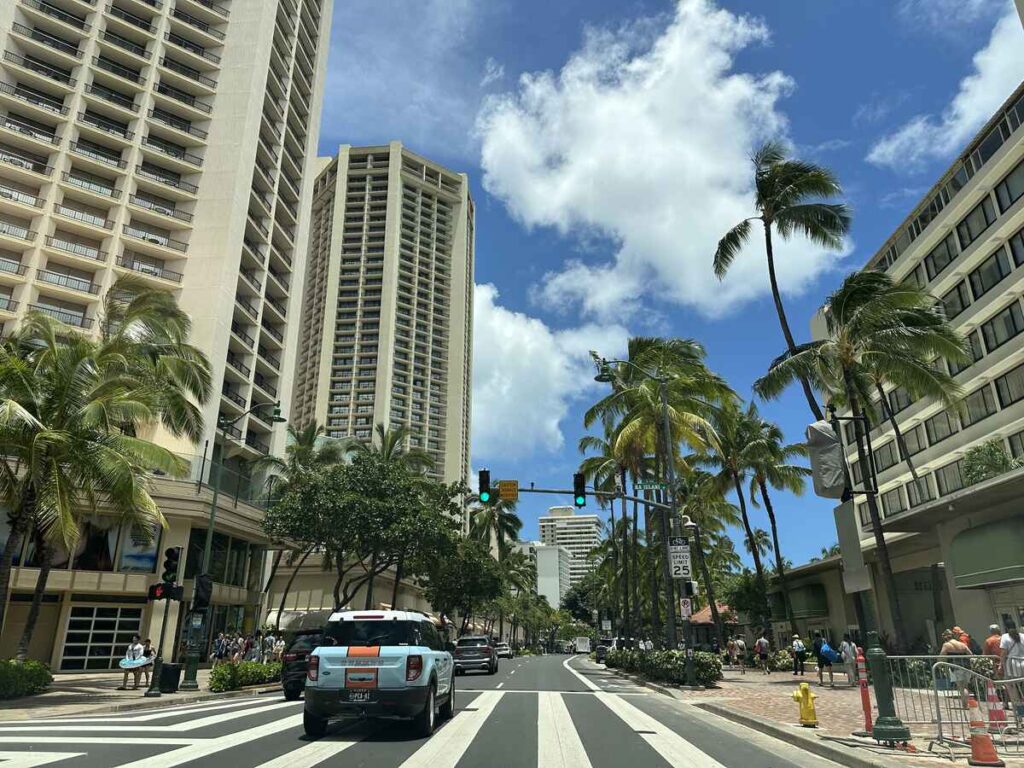
Here is a practical discovery that made my cultural exploring even easier. During this portion of my visit, I stayed at Aston Waikīkī Beach Tower, where valet was included in my room stay. Even better, admission to both Bishop Museum and the Honolulu Museum of Art was included with my stay as well. All you have to do is present your room key.
That kind of benefit is worth knowing before you start planning your days. It can encourage travellers to include cultural stops they might otherwise overlook, and it makes the experience feel more accessible and seamless. Always check directly with your hotel to confirm current inclusions, as benefits can change.
Why Cultural Stops Are a Must
It is easy to arrive in Oʻahu and be swept away by the obvious beauty. The beaches are spectacular, the sunsets are cinematic, and the mountains seem to rise with a kind of ancient confidence. But Hawaiʻi is not just scenery. It is homeland, history, language, culture, ecology, and living community.
Cultural museums and centres help visitors become better guests. They remind us that the places we visit existed long before we arrived and will continue long after we leave. They help us move from passive sightseeing to purposeful understanding.
For responsible travellers, that shift is essential. Visiting a museum may not offer the same instant gratification as a beach photo, but it gives the beach more meaning. It helps explain the land beneath your feet, the ocean in front of you, and the people whose stories are woven through it all.
The Takeaway
A trip to Oʻahu can absolutely include sun, sand, surf, and relaxation. Those pleasures are part of the island’s magic. But the most meaningful journeys also make room for learning.
The Honolulu Museum of Art, Bishop Museum, the Polynesian Cultural Center, and Cirque du Soleil’s ʻAuana each offered a different doorway into understanding Hawaiʻi and the wider Pacific. One used art, one used history and science, one used living cultural exchange, and one used contemporary performance. Together, they reminded me that travel is richer when we arrive curious, humble, and willing to be taught.
Hawaiʻi isn’t just a place you see—it’s a place you connect with, and every interaction, like my lunch with Monica, reminds us that the aloha spirit is alive. When you visit Oʻahu, don’t just lounge on the beach—immerse yourself, and you’ll leave with something far deeper than a tan.
As with every destination, I encourage travellers to tread lightly and leave places better than they found them. In Hawaiʻi, this philosophy is beautifully reflected in the concept of mālama ʻāina—caring for the land that cares for us. Respect cultural sites, support local businesses, stay on designated paths, observe wildlife from a distance, and remember that Hawaiʻi is not only a destination, but also home to vibrant communities, traditions, and stories that deserve our care and respect.
Follow us on Instagram at Trip_Jaunt
My visit to Hawaiʻi was hosted by the Hawaiʻi Tourism Authority through GoHawaii. While certain travel arrangements and experiences were provided, all opinions, reflections, and observations expressed in this article are entirely my own.
All photos by the author unless otherwise indicated.