
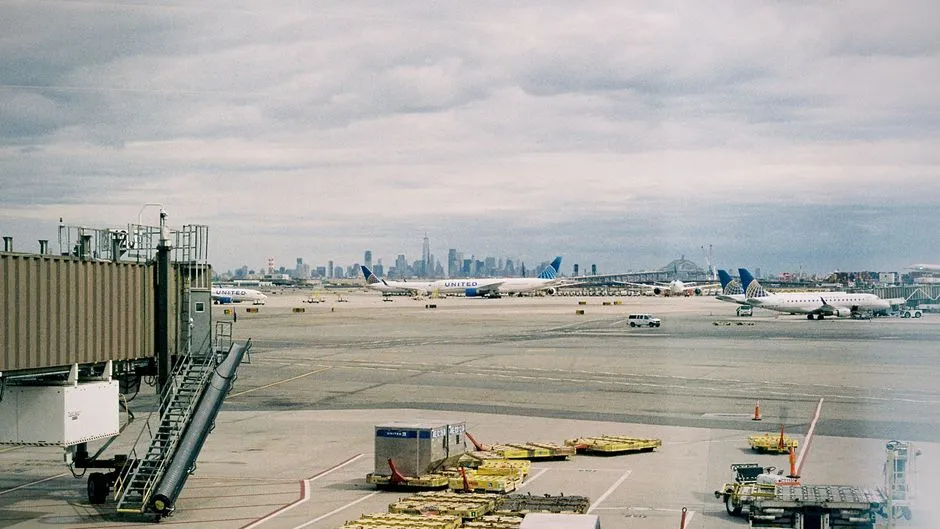

Not long ago, LaGuardia Airport was the kind of place travelers joked about. Cramped gates, aging facilities, and an overall experience that felt somewhere between a bus depot and a waiting room. For years, LaGuardia Airport was the punchline of New York travel, cramped and dated, with travelers dreading their time there. The idea of LaGuardia topping any “best of” list seemed almost impossible.
Then came one of the most ambitious airport rebuilds in U.S. history. Terminal B at LaGuardia has since become something genuinely surprising: a terminal that travelers, architects, and global rating organizations keep putting at the very top.
The Awards Keep Coming – and They’re From Multiple Sources

The recognition for LaGuardia Terminal B isn’t coming from just one organization. Recent accolades include the Skytrax World Airport Award for best airport in North America for domestic and short haul international travel for 2025, the Airport Service Quality Award for best North American airport in its size class for 2024, and the Forbes Travel Guide Verified Air Travel Awards naming it the nation’s best airport for both 2024 and 2025.
The Skytrax award reflects the success of LaGuardia Airport’s historic $8 billion transformation from worst to best in the nation. The World Airport Awards from Skytrax are the most prestigious accolades for the airport industry, voted by customers in the largest annual global airport customer satisfaction survey.
Data for the 2025 awards was collected from travelers representing over 100 nationalities between August 2024 and March 2025. That kind of broad international consensus is hard to dismiss.
The 5-Star Rating That Changed Everything
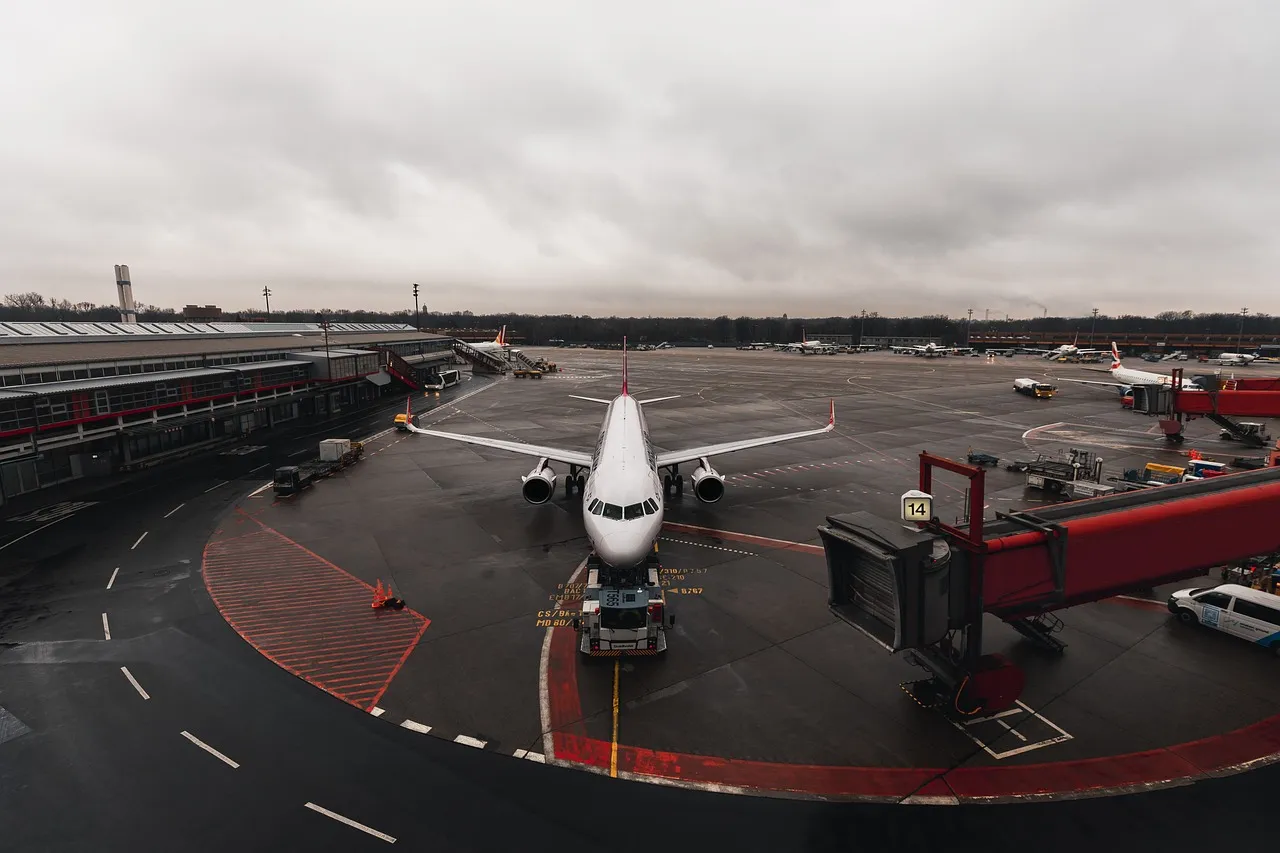
Terminal B is the first airline terminal in North America to achieve the highest global five-star airport terminal rating from Skytrax, the international airport rating firm. That milestone, when it first arrived, signaled something real had shifted in American airport design.
Terminal B received the Skytrax Best New Airport Terminal in the World in 2023, making it the first North American terminal to achieve this highest ranking. Terminal B has also maintained Skytrax’s coveted perfect 5 Star Terminal status since opening, from 2023 through 2025.
Representatives from the Port Authority and LaGuardia Gateway Partners were presented with a plaque for Terminal B, which received its second 5-star rating from Skytrax. LaGuardia Airport’s Terminal B and Newark Liberty International Airport’s new Terminal A are the only two airport terminals in North America to receive 5-star ratings from Skytrax.
An $8 Billion Rebuild That Started From Scratch

The $8 billion redevelopment was the first complete rebuild of a U.S. airport in over 25 years, delivering new, state-of-the-art terminals, modern roadways, and improved airside operations. The scale of that commitment is worth sitting with for a moment.
The $8 billion project, two-thirds of which was funded through private financing and existing passenger fees, included the replacement of terminals B and C, construction of a new 3,200-space parking garage, utility relocations, and an entirely new airport roadway network.
Following a nine-year, $8 billion campaign, the dark, cramped, and seemingly universally detested Central Terminal that once stood at the heart of LaGuardia Airport was replaced with Terminal B. The about-face is all the more remarkable considering the complexities of building in front of, behind, and over existing roadways as well as an active concourse that continued to serve roughly 45,000 daily passengers during the transformation.
The Skybridges That Made History
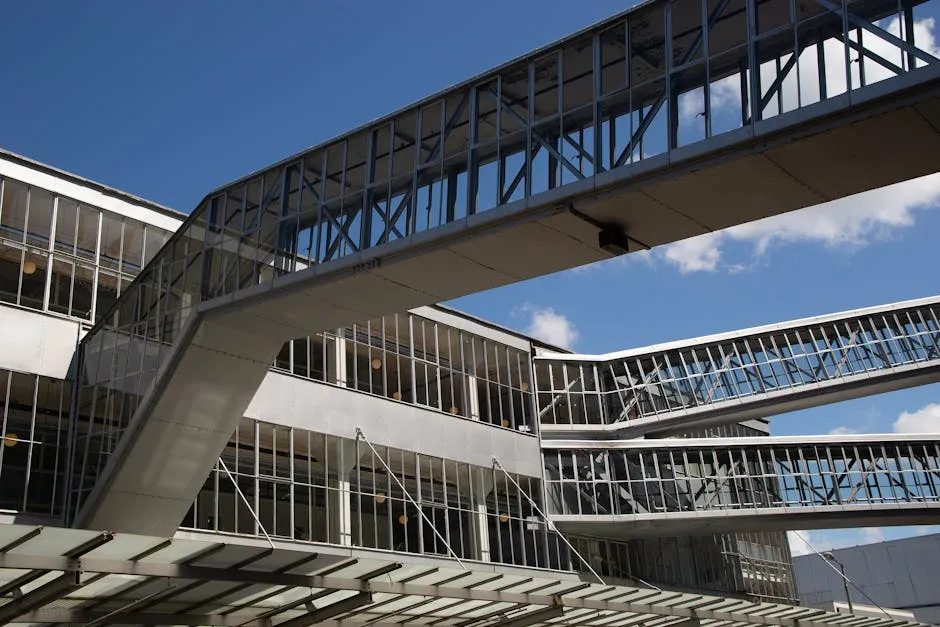
Terminal B’s unique design features two island concourses connected by dual pedestrian bridges that span active aircraft taxi lanes, making LaGuardia the first airport in the world with such a configuration. It’s both a practical engineering achievement and an architectural statement.
Measuring 482 feet long and 60 feet above the ground, the skybridges are a critical design feature. They also allowed more than two additional miles of taxiway space to be built, reducing delays for arrivals and departures and easing passengers’ ability to travel seamlessly to their gates.
For passengers, the bridges offer stunning panoramic views of Manhattan’s skyline and the surrounding boroughs. The form of the bridges embodies elegance within demanding constraints, giving travelers the feeling they’re part of the airport’s operations.
Light, Scale, and the Feeling of Space
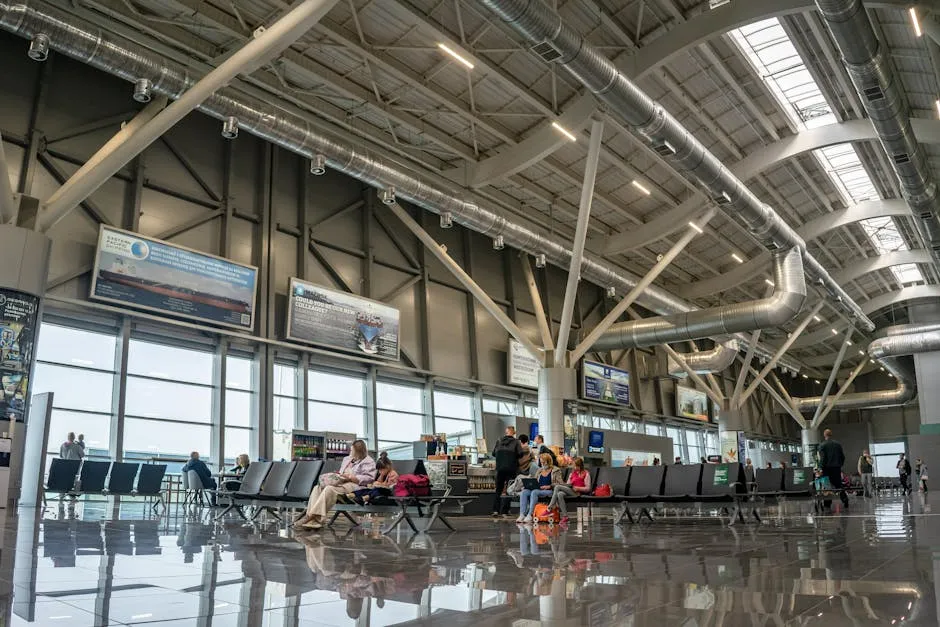
At LaGuardia Airport’s new terminal, incoming and outgoing passengers share soaring, airy, grand-scaled sequences punctuated by 60-foot-high ceilings and floor-to-ceiling windows that fill the space with natural light. The contrast with the old terminal is jarring in the best way.
The terminal’s centerpiece is an 850,000-square-foot arrivals and departures hall flooded with natural light from floor-to-ceiling windows and soaring ceilings. Departing passengers benefit from four check-in islands and numerous kiosks that expedite the journey to security, where state-of-the-art technology enhances screening.
Terminal B challenges the industry practice of reserving the most monumental spaces for departures while relegating arrivals to low-ceilinged, basement-like zones. Here, arriving passengers get the same architectural treatment as those departing.
A Dining Scene That Feels Like New York

Today, sunlight streams through floor-to-ceiling windows, food counters open onto wide pedestrian walkways, and park-style seating areas sit alongside sculptural lighting and public art. The central food hall overlooks Terminal B’s choreographed water feature, where travelers eat at café tables while watching the fountain’s timed arcs.
Retail offerings such as Shake Shack, FAO Schwarz, and McNally Jackson Books highlight New York originals. Indoor green space is modeled after New York City’s urban pocket parks and includes lush landscaping and sculptural benches.
LaGuardia’s lounge scene has also leveled up, and each space reflects the airport’s broader push toward well-known New York names. At the Chase Sapphire Lounge, the local influence shows up via cocktails developed with Apotheke Mixology, a wine list curated by Parcelle, food options from Fairfax, and an on-site barista station run by Joe Coffee Company.
Public Art as a Core Design Element

From a show-stopping water feature to a series of permanent installations, art is integral to Terminal B’s design. The public art installations were commissioned by Public Art Fund in partnership with LaGuardia Gateway Partners. Artists Jeppe Hein, Sabine Hornig, Laura Owens, and Sarah Sze have created pieces designed specifically for the new facility.
The completed Terminal B features an 850,000 sq ft Arrivals and Departures Hall, state-of-the-art centralized passenger screening, NYC-inspired shopping and dining, a collection of commissioned artwork, and two elevated glass passenger skybridges connecting to satellite concourses.
The result is a terminal that genuinely feels like it belongs to the city it serves, rather than being an interchangeable transit box dropped into a runway complex.
Sustainability Built Into the Structure
As the world’s first airport to earn LEED v4 Gold certification, LaGuardia’s new Terminal B has helped pioneer sustainability measures for civil infrastructure projects. With an Envision Platinum rating, the highest possible, it is the first project to earn recognition under v3 of the framework developed by the Institute for Sustainable Infrastructure.
In April 2022, 3,500 solar panels were installed at LaGuardia Airport’s parking garage as part of a solar energy initiative. These aren’t cosmetic additions; they reflect a broader operational commitment.
LaGuardia’s long-term operations plan calls for reducing the airport’s greenhouse gas emissions by 80% by 2050. For a major U.S. urban airport, that’s a significant stated goal.
What Travelers Actually Experience Through Security
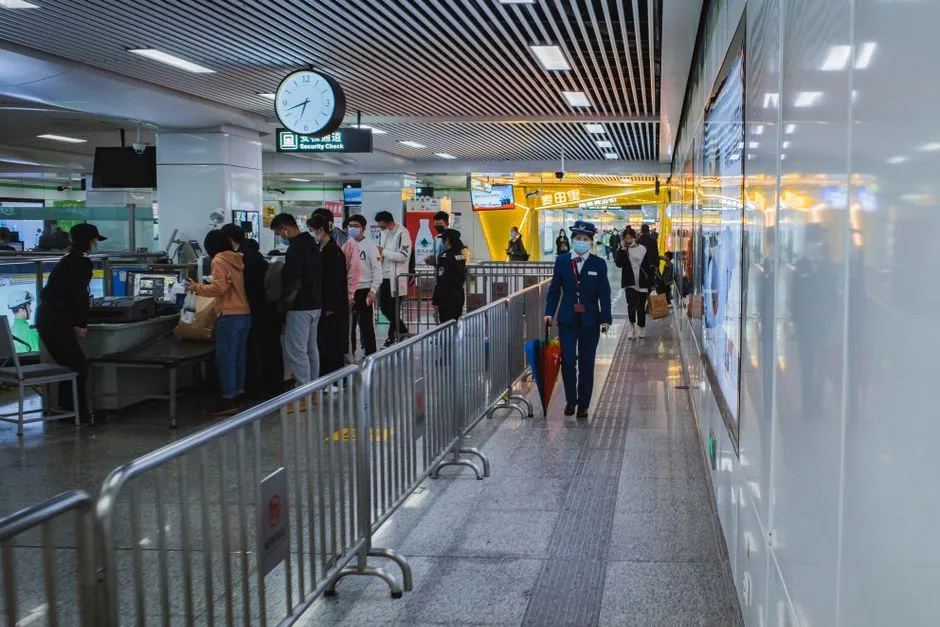
Terminal B offers designated security lines and triple the space for security checks compared to the previous terminal. New large baggage carousels offer more space at baggage pickup. These are the details that matter most to people on a tight schedule.
Locating all check-in and passenger screening areas on the third floor enables the terminal to continuously adapt to evolving technology. Instead of providing rigid parameters for each airline tenant, the design employs common-use technology that allows carriers to easily expand or shrink their footprints.
American Airlines, Southwest Airlines, United Airlines, and Air Canada share four check-in islands with staffed ticket counters, 105 self-service kiosks, a central bag drop, and nine baggage claim carousels. The shared-use model keeps things efficient even during peak times.
The Broader Transformation Still in Motion
Port Authority airports, including LaGuardia, Newark Liberty International, and John F. Kennedy International, are undergoing a historic $30 billion transformation with the goal of creating world-class and award-winning passenger facilities.
Overall, the airport overhaul is set to create 18,000 jobs and stimulate more than $6.5 billion in economic activity. The impact stretches well beyond the terminal itself.
A $160 million investment is advancing to deliver faster, more frequent, and more reliable service on the free Q70 LaGuardia Link bus line. The project will strengthen transit connections between LaGuardia Airport, the subway in Jackson Heights, and both the Long Island Rail Road and subway in Woodside. Better ground access remains the next chapter in the airport’s story.
A Model That Other Airports Are Watching Closely
Terminal B has received additional recognition from Fast Company, TIME, Forbes Travel Guide, the Urban Land Institute New York, the Chicago Athenaeum, several chapters of the American Institute of Architects, and the Design-Build Institute of America. Few airport terminals have assembled that range of recognition across architecture, design, and travel media simultaneously.
LaGuardia’s new Terminal B is now attracting interest from federal and state leaders seeking models for funding major infrastructure projects. The public-private structure that made it possible is being studied across the country.
LaGuardia Airport’s Terminal B has established new standards of excellence for U.S. airport transformations. Its many awards and accolades recognize every aspect of the transformation, from design and financing to customer experience and sustainability.
What Terminal B ultimately proves is that American airport infrastructure can compete with the best in the world, not by mimicking foreign models, but by building something unmistakably local. The story of LaGuardia’s reversal from the country’s most derided airport to its most awarded terminal is, in a quiet way, a story about what’s possible when the bar gets raised high enough and someone actually clears it.
AI Disclaimer: This article was created with the assistance of AI tools and reviewed by a human editor.