
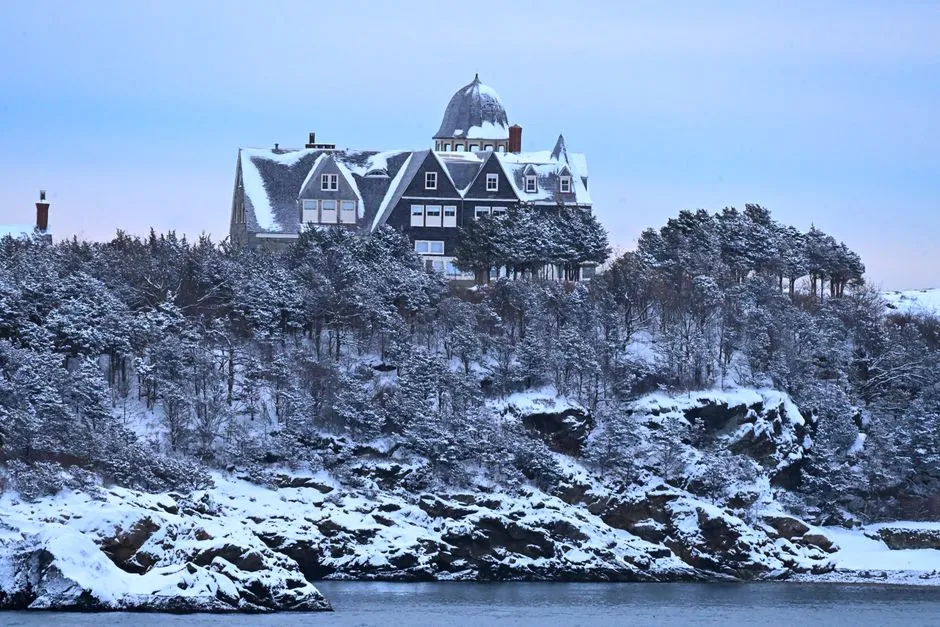

Few American landmarks wear their age as quietly as Jamestown, Virginia. Standing on a small peninsula along the James River, it looks peaceful now, almost ordinary. Yet beneath its soil, centuries of buried secrets are slowly, and sometimes shockingly, being pulled into the light.
Jamestown holds a special place in American history as North America’s first permanent English settlement, and the site has become a treasure trove for archaeologists uncovering the secrets of early colonial life. What researchers keep finding there, layer by layer, grave by grave, is consistently stranger and more dramatic than anyone expected.
The Landmark That Keeps Surprising Historians

The Jamestown settlement, established in 1607 in what is now Virginia, was the first permanent English colony in North America. It was founded by the Virginia Company of London, a joint-stock company that sought to profit from the New World’s resources, and its location was chosen largely for its defensible position against potential Spanish attacks.
However, the site proved problematic due to its swampy environment, which led to poor sanitation, contaminated water, and disease outbreaks, and the early years of Jamestown were marked by extreme hardships, including food shortages, conflicts with Indigenous peoples, and a high mortality rate among settlers. Those hardships left physical traces that researchers are still decoding today, more than four hundred years later.
DNA Cracks a 400-Year-Old Family Secret
Ancient DNA data have been reported for two human skeletons buried within the chancel of the 1608 to 1616 church at Jamestown, Virginia, with the men suspected to be kinsmen of the colony’s first governor, Thomas West, 3rd Baron De La Warr, based on archaeological, osteological, and documentary evidence.
Genomic analyses identified these men, Sir Ferdinando Wenman and Captain William West, as sharing a mitochondrial haplogroup known as H10e, inferring maternal relatedness. In this unusual case, ancient DNA prompted further historical research that led to the discovery of illegitimacy, an aspect of identity omitted, likely intentionally, from genealogical records.
The study unexpectedly revealed that the two men were related through the maternal line, and this surprising finding prompted additional documentary research and the discovery of a court case over Captain West’s holdings after he died. A four-century cover-up, hiding an illegitimate birth inside one of colonial America’s most powerful families, had quietly survived in the ground all along.
The First Time Ancient DNA Cracked a Jamestown Mystery
According to anthropologist Karin Bruwelheide from the Smithsonian Institution in Washington, DC, the 2024 study was “the first to successfully use aDNA as a tool of identification at the colonial site of Jamestown, Virginia.”
The mystery began with four aligned graves in the chancel area of the 1608 church, which deductively could only have belonged to four high-ranking men: Wenman and West, and two men named Reverend Robert Hunt and Captain Gabriel Archer. Sorting out which remains belonged to whom required technology that simply did not exist a generation ago.
In some cases, analysis of ancient DNA has helped fill knowledge gaps and change preconceived notions about who these colonial-era people actually were. At Jamestown specifically, the science has moved well beyond artifact hunting and into something far more personal.
The Knight’s Tombstone and the Unidentified Governor
It also appeared that one burial site was once marked by a tombstone. Jamestown archaeologists had long ago uncovered a Knight’s Tombstone believed to have belonged to Sir George Yeardley, who died in 1627, and given the location, the tombstone connection, and Yeardley’s prestige in the colony at the time, the Jamestown team believed the remains found nearby in the chancel could be his.
A facial reconstruction of the man whose skeletal remains were found in the church chancel grave at Jamestown was created, and as soon as investigators started searching for graves within the church site, Jamestown Rediscovery officials knew they wanted to collect DNA for genetic analysis. As of early 2025, that identity had still not been confirmed, meaning the mystery endures.
A 400-year-old black limestone tombstone found in the 1617 church at Jamestown features an outline of a person wearing armor, and probably a shield and sword, suggesting that the tombstone was carved for a knight. Who that knight actually was remains one of the site’s most compelling open questions.
The Starving Time and Evidence of Cannibalism
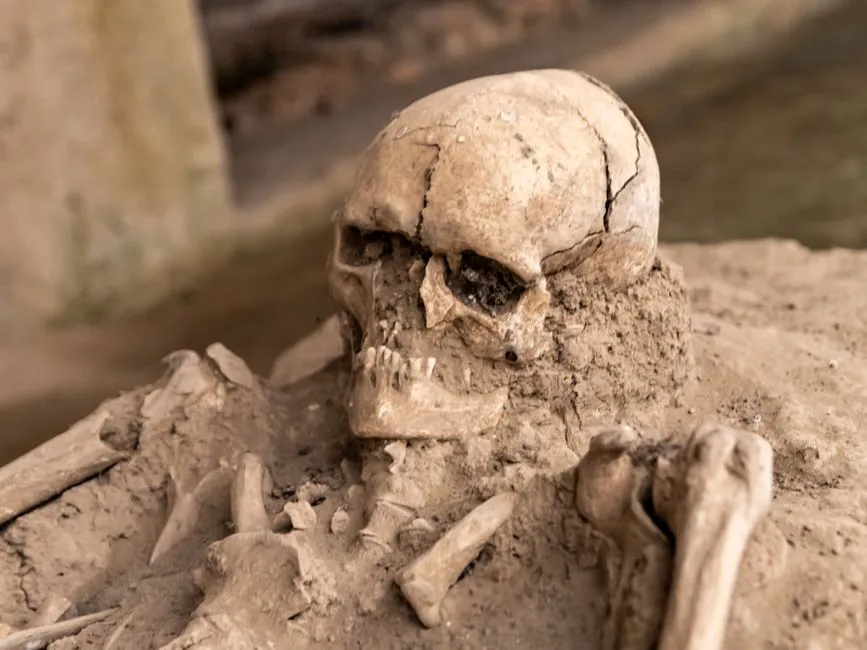
A forensic analysis of 17th-century human remains proved that survival cannibalism took place in historic Jamestown, with findings answering a long-standing question among historians about the occurrence of cannibalism during the deadly winter of 1609 to 1610 known as the “Starving Time,” a period during which roughly four out of every five colonists died.
In 2012, a mutilated human skull and severed leg bone were found in a trash deposit that partially filled an early 17th-century cellar at Jamestown. The physical evidence of cut marks consistent with butchering made the once-disputed accounts of extreme survival behavior impossible to dismiss. This was not legend. It was in the bones.
Colonists Who Ate Indigenous Dogs
A 2024 study made a striking claim about the early colonial settlement of Jamestown: that starving colonists killed and ate local dogs. The finding added yet another layer to the already grim picture of what colonists endured during the settlement’s earliest and most desperate years.
The dogs in question were not just any animals. Genetic analysis suggested they had Indigenous ancestry, meaning colonists had turned to animals that belonged to the very communities they were in conflict with. It is the kind of detail that textbooks rarely mention, yet it speaks volumes about the desperation of the moment.
A Roman Oil Lamp Found at an English Colony
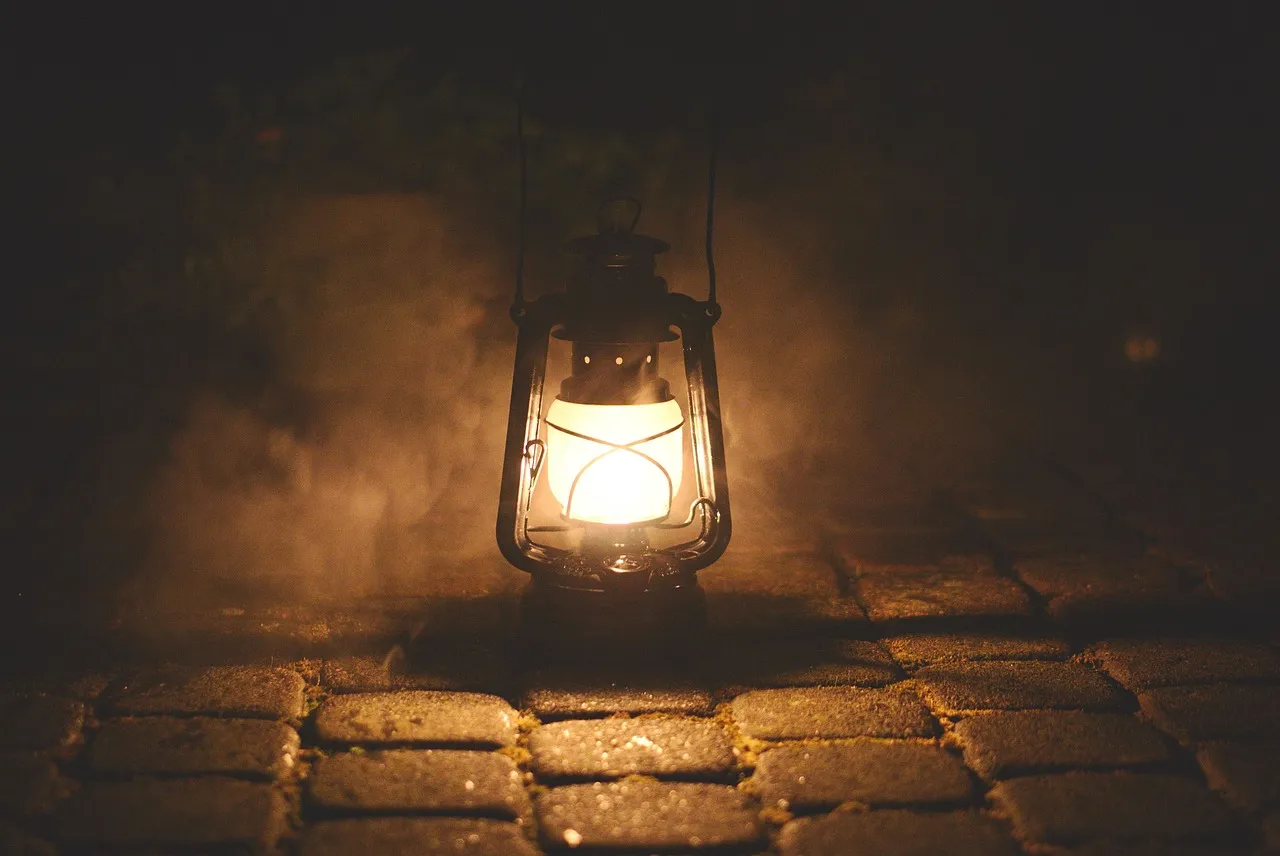
The origin of a Roman oil lamp found at Jamestown intrigued Senior Curator Merry Outlaw and archaeologist Dr. Eric Lapp, who specializes in ancient light use and technology, for quite some time. Dr. Lapp had a hunch that the lighting vessel was manufactured in Roman Cologne or Trier.
Dr. Lapp journeyed to Belgium and Germany, where he conducted a survey of regional museum collections in search of close parallels to the Jamestown lamp, and he was not disappointed. He discovered that the Jamestown lamp closely resembled Cologne-made factory lamps recovered from Roman burial mounds, sanctuaries, and villas in the region, so much so that he confirmed the Jamestown lamp also came from one of the many pottery workshops located in Cologne.
How a Roman lamp from what is now Germany ended up at a 17th-century English colonial settlement in Virginia is a question that cuts across centuries of trade, travel, and human movement. It is a small object that raises enormous questions.
Bermuda Stone and the Wreck That Shaped a Colony
In February 2024, geologists from William and Mary began analyzing stones found in the bottom of Jamestown’s Governor’s Well, dating to the late 1610s. Their preliminary findings indicate the stones originate from southern England, and researchers are working to narrow this down even further.
During their months-long stay in Bermuda, early colonists built two ships to continue their journey to Virginia, likely laden with Bermuda limestone as ship’s ballast. This was the first time colonists bound for Jamestown arrived via Bermuda first, so the presence of the stone in a sealed archaeological context provides a precise earliest possible date for that layer: May 1610, the month the shipwrecked colonists arrived in Virginia.
Bones Misidentified, Graves Still Being Sorted Out
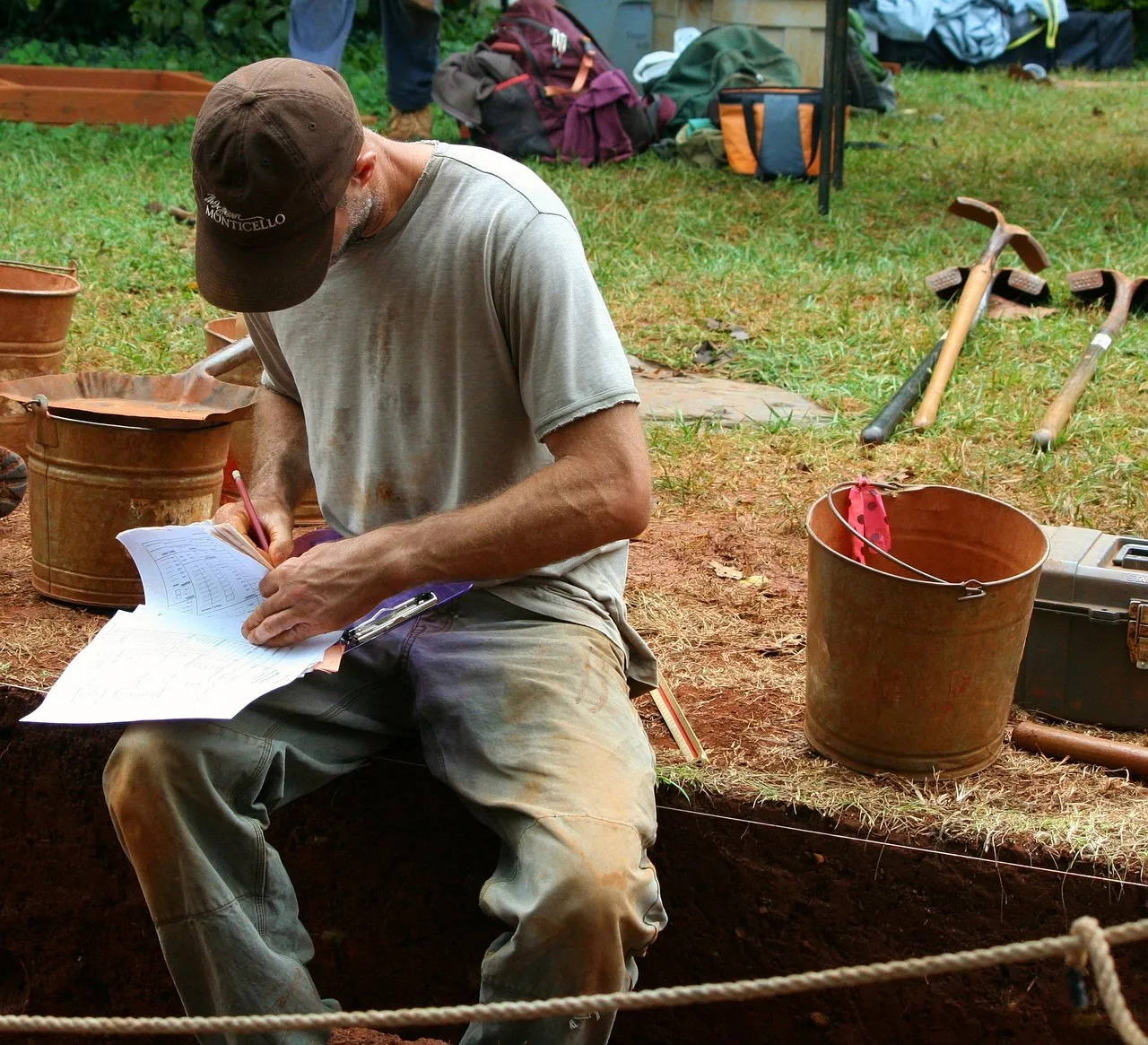
A colonist excavated from the Smithfield area in 2024 was in poor shape and was originally interpreted as a child. However, further analysis suggests this person was actually an adult. It is a small but telling reminder of how much even trained eyes can miss, and how easily history can be quietly misfiled.
The display of human remains is sensitive for many reasons, whether they are actual bones in a museum or photographs on a website. Part of Virginia’s Department of Historic Resources’ agreement with Jamestown regarding burial excavations mandates that they must be kept out of the public eye. The research continues behind closed doors, slowly and carefully, as it should.
What Modern Science Is Unlocking Now

Many of today’s most significant discoveries come from applying new techniques to artifacts and human remains already discovered, and in 2024, modern methods like DNA analysis and remote sensing technology revealed new evidence of past cultures, technologies, and social structures.
Among the open excavation goals at Jamestown is a proposed site following the “Zuñiga map” flag ditch, a 1608 feature present on the historic Zuñiga map of Jamestown represented by a flag-like drawing protruding from the fort’s northern bulwark. Using ground-penetrating radar and excavations, the team found much of the ditch, but as they followed its turn westward, it became harder to find.
The pace of discovery at Jamestown has genuinely accelerated in the past two years. Each dig season brings fresh surprises, from DNA that rewrites family lineages to artifacts that shouldn’t logically be there at all. The soil here has not finished talking, and researchers, it seems, have not finished listening.
Why This Mystery Matters Beyond the History Books
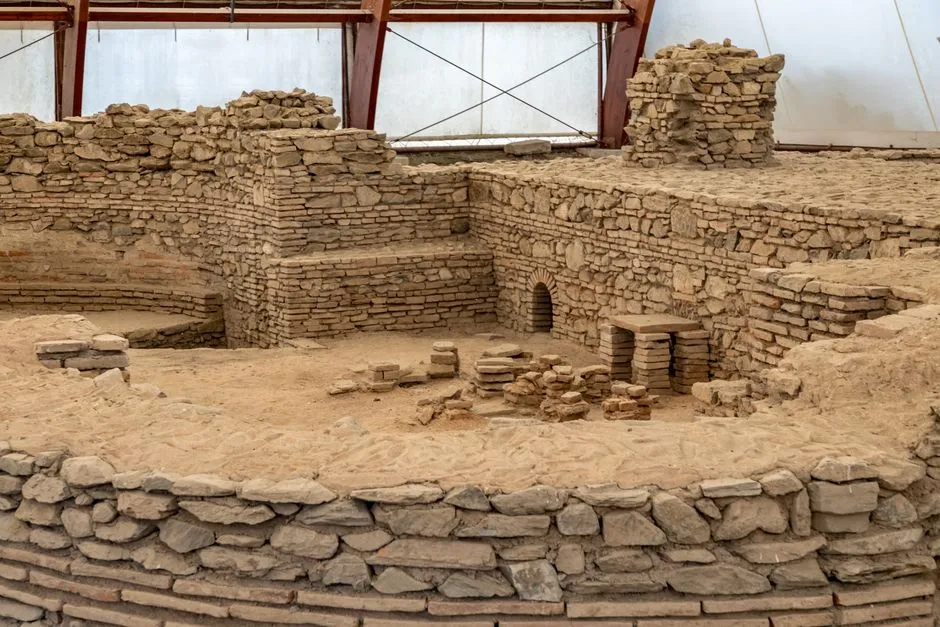
Jamestown is not just the story of a struggling English colony. It is the starting point for a nation, which means every secret unearthed there reframes something about the American origin story. The families who ran the colony, the people who died there, the desperate measures they took to survive: all of it feeds directly into how the country began.
These finds span continents, millennia, and cultures, offering fascinating windows into the lives, beliefs, and technologies of our ancestors, and they remind us that countless secrets still lie buried beneath our feet, waiting to tell their stories. At Jamestown specifically, that phrase is not a metaphor. It is a literal, ongoing archaeological reality.
The deeper truth is this: America’s most iconic founding site is still being discovered. Four centuries of silence are breaking, one lab result at a time, and what’s emerging is far more complicated, more human, and more honest than any version found in a school textbook.
AI Disclaimer: This article was created with the assistance of AI tools and reviewed by a human editor.