
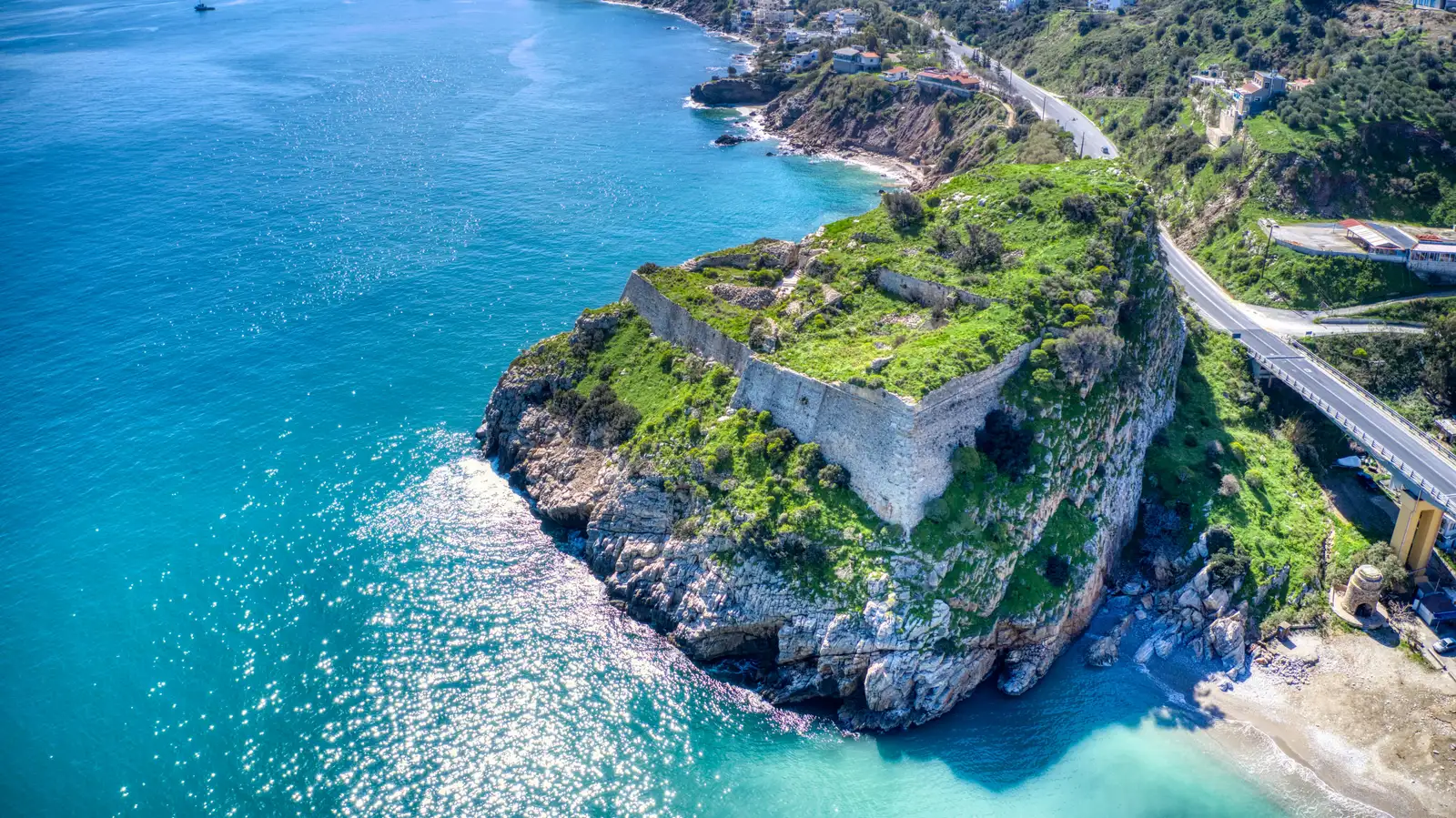

Travelers stepping off the plane in Heraklion often sense they have arrived somewhere older than memory itself. Crete’s largest city sits on an island long tied to the birth of Zeus and the rise of Europe’s earliest advanced society. The combination draws visitors who want more than beaches and tavernas.
A Myth That Still Shapes the Landscape
Local tradition places the birth of Zeus in a cave on Crete’s slopes, where his mother hid him from a father determined to swallow his children. That single story has colored how generations view the island. Walk the hills around Heraklion and the tale feels less like distant legend and more like an explanation for the dramatic terrain.
Guides still point out the same ridges and gorges that appear in ancient accounts. The persistence of the myth gives modern visitors a ready-made narrative for their own photographs and journals. It also explains why so many families plan their first Greek island stop here rather than on more famous Cycladic isles.
The Minoan World That Disappeared
Centuries before classical Greece, the Minoans built palaces, wrote in Linear A, and traded across the Mediterranean from bases near present-day Heraklion. Their capital at Knossos, just outside the city, remains the most visited archaeological site on the island. Frescoes of dolphins and bull-leapers still startle visitors with their color and movement.
Scholars continue to debate what caused the civilization’s sudden decline around 1450 BCE. Earthquakes, invasion, or volcanic fallout from Thera have all been proposed. Whatever the cause, the abrupt end left behind enough artifacts to keep researchers busy and enough mystery to keep travelers curious.
Why Heraklion Rewards a Longer Stay
The city itself functions as a practical base. Its airport connects directly to several European hubs, and ferries link it to other Greek ports. Within a short drive lie both the reconstructed palace at Knossos and quieter beaches that still feel undiscovered by mass tourism.
Evening walks along the Venetian harbor offer a different layer of history, one that sits comfortably beside the older Minoan story. Restaurants serve fresh seafood while the same sea that carried Minoan traders laps at the breakwater. The layering of eras becomes part of the daily rhythm rather than a separate lecture.
Planning a Visit That Feels Personal
Early morning tickets at Knossos help avoid the largest tour groups. Renting a car opens smaller Minoan sites and the cave traditionally linked to Zeus. Even a single extra day allows time to sit in a café and simply absorb the fact that this stretch of coast once hosted the earliest complex society in Europe.
Many travelers leave Heraklion already planning a return trip. The island’s combination of tangible ruins and living myth rarely feels finished after one visit. That lingering sense of discovery is what keeps Crete on so many repeat itineraries.
AI Disclaimer: This article was created with the assistance of AI tools and reviewed by a human editor.