
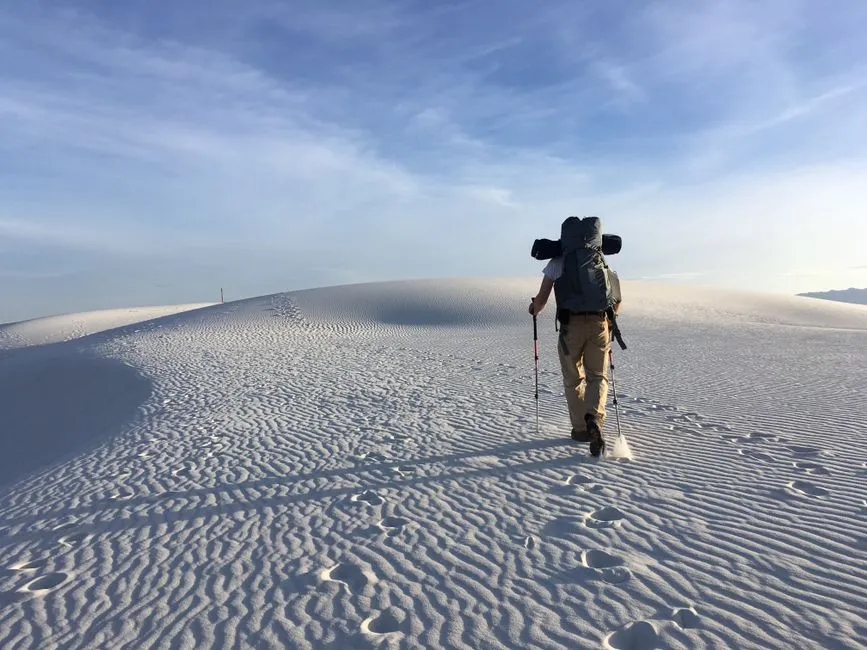

There’s a place in southern New Mexico that stops people in their tracks the first time they see it. Not because of canyon walls or towering peaks, but because of an ocean of gleaming white that shouldn’t exist in the middle of a desert. The dunes look like snow. They feel like powder. They are, in fact, something far rarer.
White Sands National Park sits in the Tularosa Basin, quietly holding one of the most geologically improbable landscapes on the planet. Most visitors come unprepared for how genuinely disorienting it is to stand inside it – wave after wave of white cresting in every direction, the horizon blurring into sky.
A Record-Breaking Landscape Unlike Anything Else on Earth
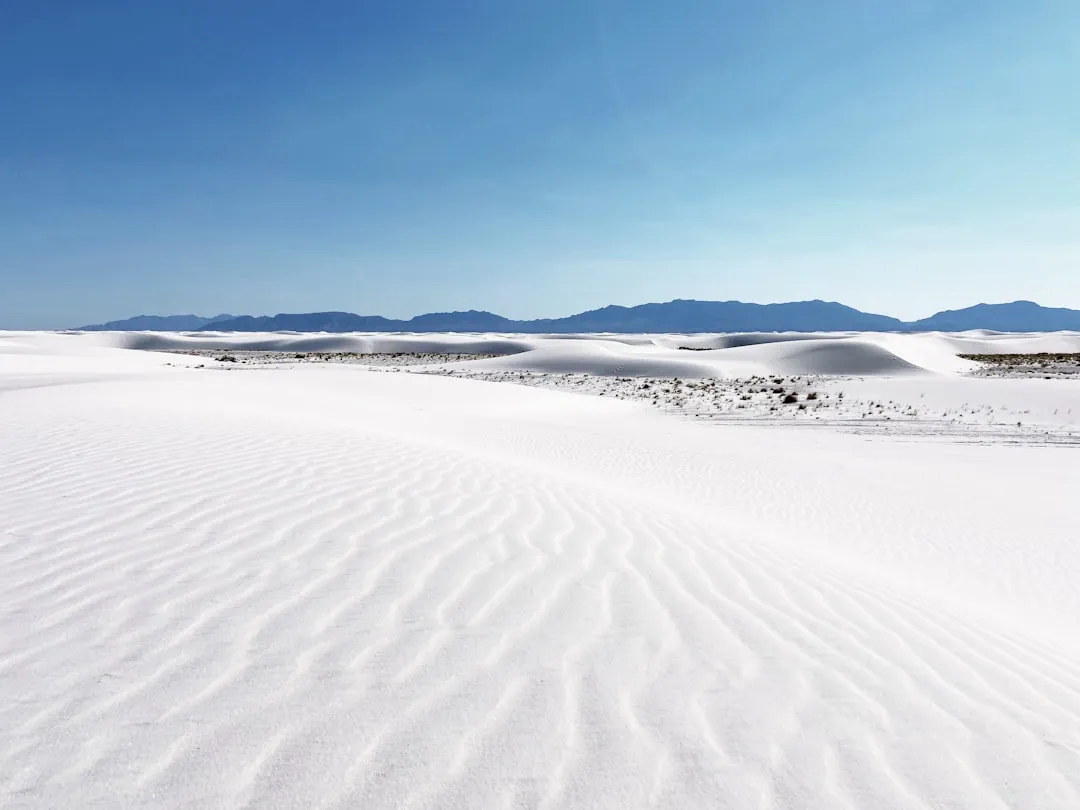
Great wave-like dunes of gypsum sand have engulfed 275 square miles of desert, creating the world’s largest gypsum dunefield. That scale is difficult to absorb until you’re standing inside it, watching the white dunes stretch further than your eyes can usefully work.
The entire dunefield measures a massive 275 square miles – by comparison, the second-largest gypsum dune field in the world, Cuatro Ciénegas in Mexico, is only 8 square miles. The gap between first and second place is not close. It isn’t even in the same league.
The park covers 145,762 acres in the Tularosa Basin, including the southern 41% of that 275-square-mile field of white sand dunes composed of gypsum crystals. The remaining portion sits on restricted military land and is not accessible to the public.
The Ancient Chemistry Behind the White Sand
The story of these dazzling and shifting dunes began 280 million years ago, when the Permian Sea covered the area and gypsum settled on the seafloor. What visitors walk across today is the very long-term result of that ancient marine chapter, translated across geological time into something almost surreal.
Because gypsum dissolves easily in water, rain would normally wash it away and carry it to the sea. In this part of the Chihuahuan Desert, however, the land forms a basin, trapping the mineral; water evaporates, leaving the gypsum behind, and wind and weather erode it over time into an ocean of glittering sand.
Gypsum is a common mineral found all over the world, but it is rarely found in sand form, making the 275-square-mile dunefield a profoundly unique natural wonder. Its presence here is less about abundance and more about a very specific set of conditions that happened to align in one enclosed basin in New Mexico.
Dunes That Are Literally on the Move
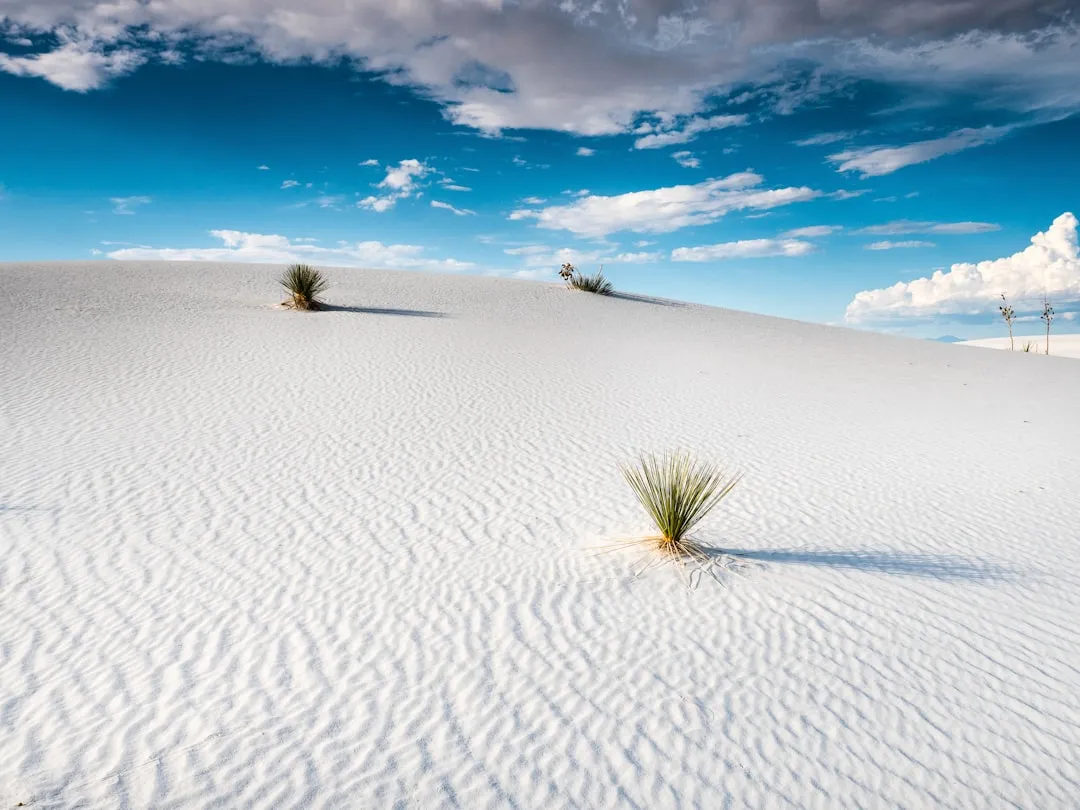
The dune field is very dynamic, with the most active dunes moving to the northeast at a rate of up to 30 feet per year, while the more stable areas of sand move very little. A dune that exists in one position today will be somewhere meaningfully different a decade from now.
The gypsum dunefield has a depth of about 30 feet, with dunes as tall as 60 feet, and contains about 4.5 billion short tons of gypsum sand. The sheer mass of material in motion is staggering when you consider that this sand never stops traveling.
Strong prevailing winds push the sand into dunes that constantly change shape as they move downwind. Vegetation and water stabilize the dunes in certain zones, creating a patchwork of moving and anchored landscape that gives the park its endlessly varied character.
From Monument to National Park: A Long-Overdue Designation
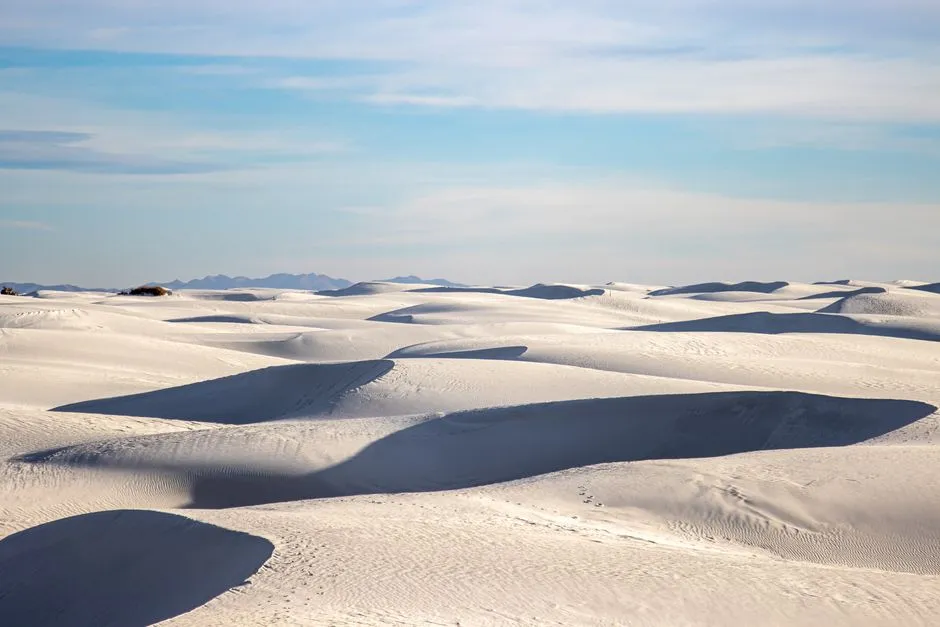
Established in 1933 as a national monument, it was redesignated a national park in 2019. The elevation to full national park status took decades of advocacy and was celebrated as a major recognition of the site’s irreplaceable ecological and geological value.
Originally established as a national monument by President Hoover in 1933, White Sands National Park was redesignated as a national park on December 20, 2019. This glistening landscape preserves 275 square miles of gypsum dunes in the Chihuahuan Desert of southern New Mexico, making it the largest gypsum dunefield in the world.
The new designation also brought economic weight. In one year alone, 729,000 visitors spent an estimated $44.5 million in local gateway regions while visiting the park, supporting nearly 600 local jobs and generating nearly $17 million in labor income. For the communities surrounding the park, the designation has been genuinely transformative.
Visitation Numbers Tell a Story of Growing Interest
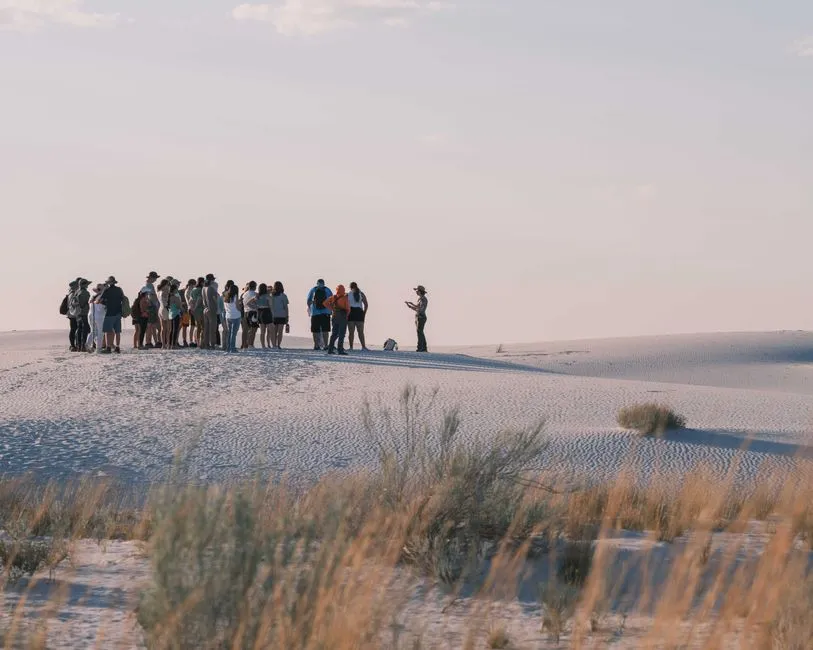
At White Sands National Park, visitation numbers increased nearly 23,000 or roughly three percent over 2022. The 729,096 visits recorded in 2023 mark the park’s second highest visitation on record. That momentum reflects the growing profile of the park since its redesignation.
The park’s highest visitation on record was in 2021, with 782,469 visits. White Sands is the most visited National Park Service site in New Mexico, and it ranked 33rd among the most visited parks in the entire country in 2023.
More recent figures show some variability. In March 2025, the park saw a total of 91,656 visitors, which was a 13% decrease from the same month the previous year. Seasonal shifts and broader travel trends continue to shape the annual rhythm of arrivals.
Footprints Frozen in Time: The Oldest Human Tracks in North America
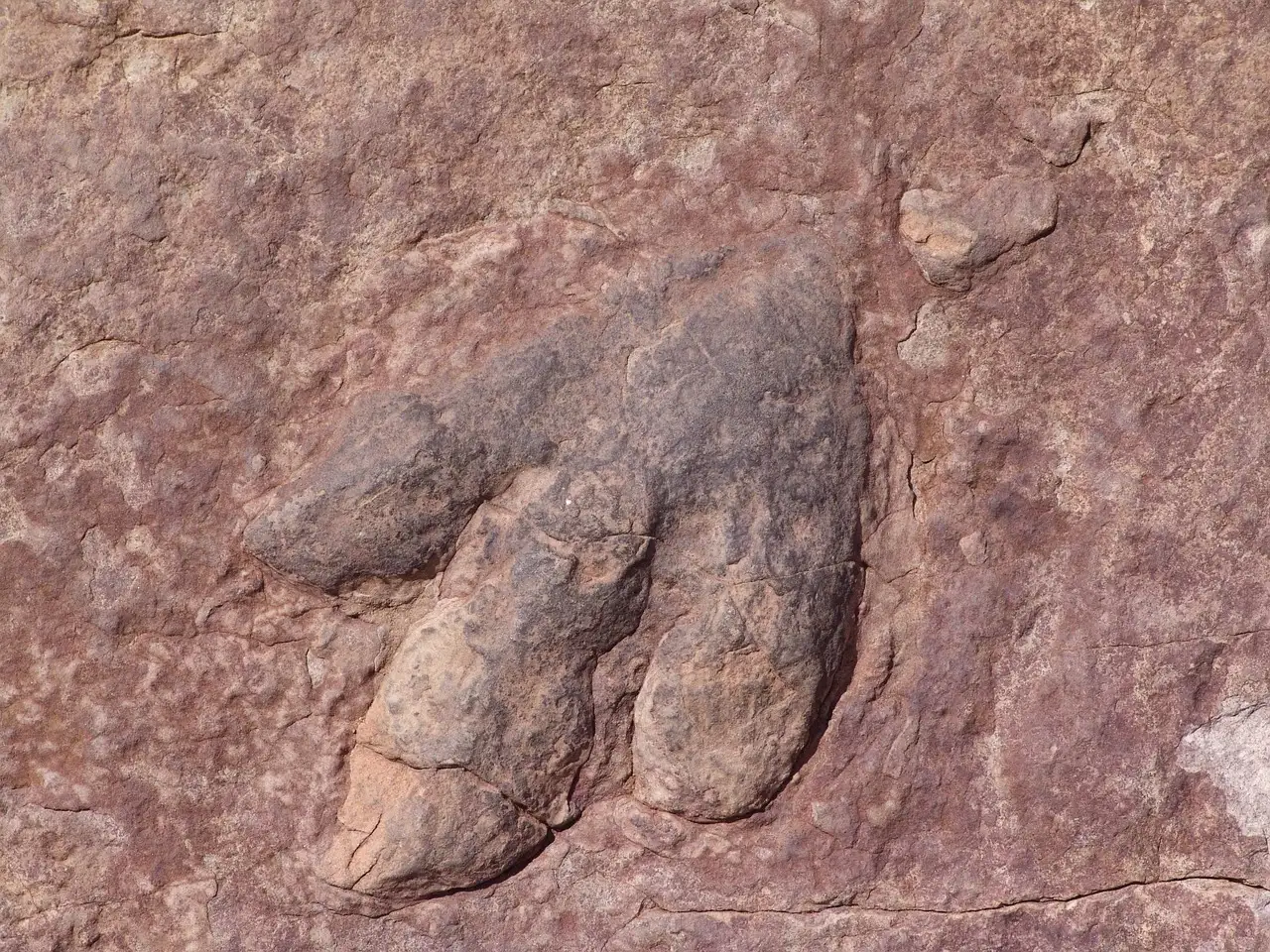
A newly published study in Science Advances provides the strongest evidence to date that ancient human tracks found at White Sands National Park are approximately 23,000 years old. That number alone is remarkable, but it’s the context that makes it genuinely world-altering.
In September 2021, U.S. Geological Survey researchers and an international team of scientists announced that ancient human footprints discovered in White Sands National Park were between 21,000 and 23,000 years old. This discovery pushed the known date of human presence in North America back by thousands of years and implied that early inhabitants and megafauna co-existed for several millennia before the terminal Pleistocene extinction event.
The roughly 60 footprints were located near the shore of ancient, mostly dried-up Lake Otero, with tracks from now-extinct megafauna herbivores such as Columbian mammoths and Harlan’s ground sloths, and Pleistocene predators like dire wolves and American lions. The scene preserved in the basin reads like a single, frozen afternoon from another world.
The Science Keeps Evolving
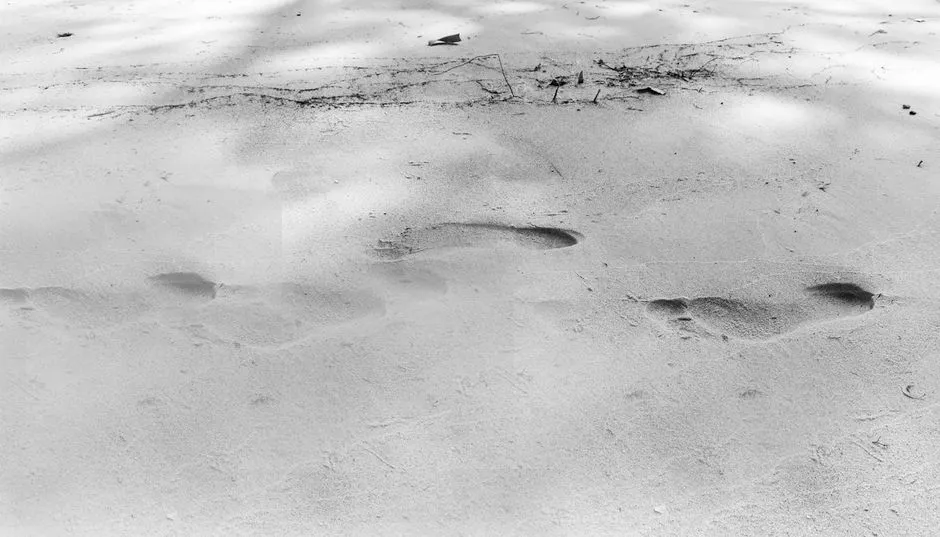
A study published in 2024 raised several concerns about the methodology used to obtain the earlier dates. A 2025 study based on radiocarbon dating of the mud in which the prints were set, performed by two independent labs, sought to address those questions.
New research confirmed the hotly contested age of fossilized human tracks found at White Sands. Stratigraphic records corroborate that the footprints range from 21,000 to 23,000 years old, dating to the Last Glacial Maximum, when a lake and wetlands were present at the site.
With multiple dating methods and separate lab confirmations now supporting the timeline, the White Sands footprints offer compelling evidence that humans came to the Americas far earlier than had been believed. The debate within the scientific community is ongoing, but the weight of evidence has been building steadily since 2021.
Wildlife That Evolved Specifically for This Place
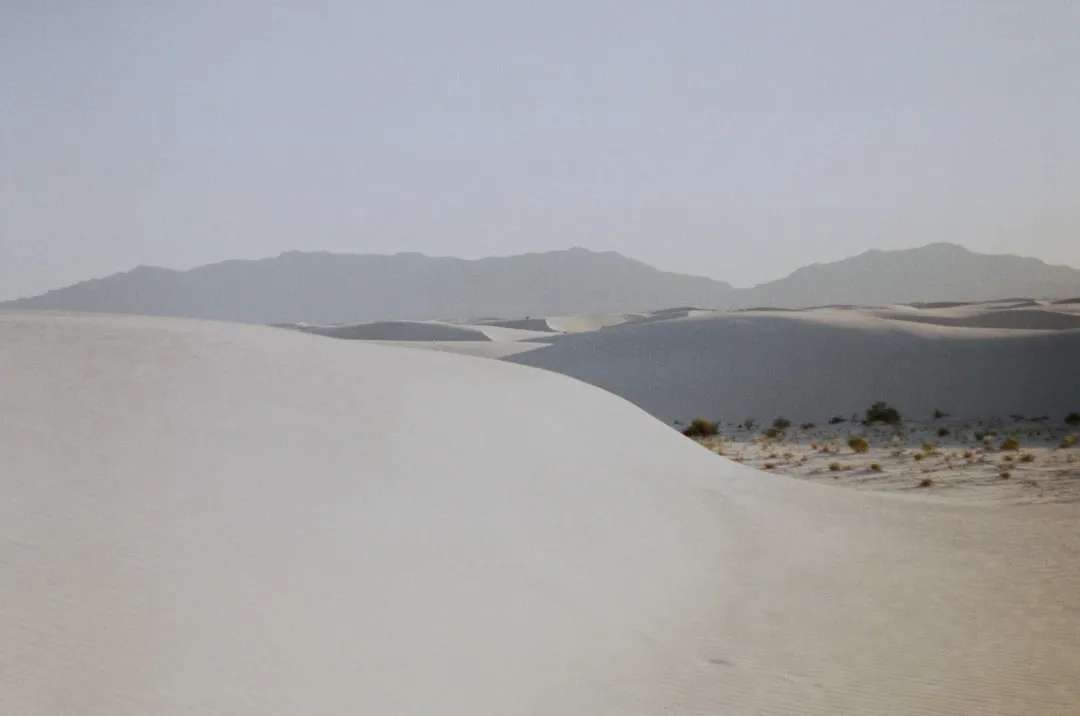
The dunes themselves are only about 10,000 years old, just a blink of an evolutionary eye, which makes the number of species adapted to this landscape astonishing. Of the 20 lizard species that live in the Chihuahuan Desert, three of them evolved at White Sands, becoming whiter to remain cool and as camouflage from predators.
The park’s wildlife is noticeably lighter in color, allowing for easier hiding from predators. Examples of such hyperlocal adaptation include the bleached earless lizard, the Apache pocket mouse, and the sand wolf spider. These are not just color variations – they represent measurable evolutionary change in a geologically brief period.
At least 45 species are endemic, living only in this park, with 40 of them being moth species, along with the Apache pocket mouse, White Sands woodrat, bleached earless lizard, and two camel crickets. Nowhere else on Earth will you find this precise community of creatures shaped by this precise landscape.
Plants That Hold On Against the Moving Sand
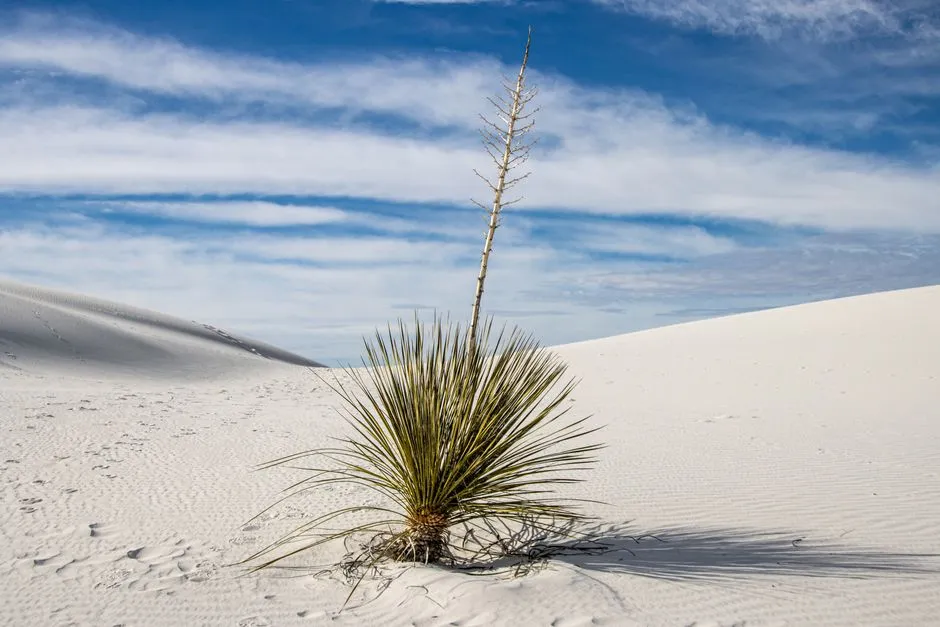
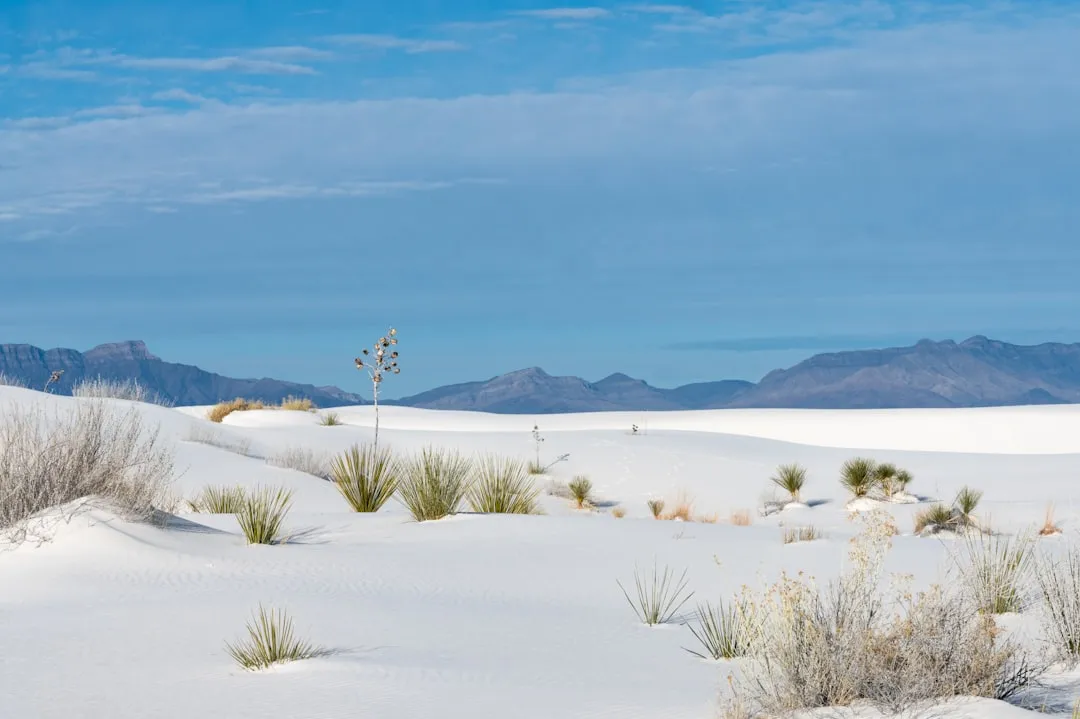
The plants at White Sands National Park stabilize the leading edges of the dunes, providing both food and shelter for wildlife. Without these anchoring species, the entire ecosystem dynamics of the dunefield would collapse into pure, shifting chaos.
Plants respond to the harsh conditions of shifting pure gypsum soils in several ways. They add stem length rapidly to accommodate encroaching dunes, send out rhizomes so new shoots can sprout up 60 feet away from the original plant, and bolster their root systems to avoid being overtaken by a passing dune.
In the southwest corner of the park is Lake Lucero, a usually dry marsh encrusted with selenite crystals created by the evaporation of gypsum-laden runoff water. This dry playa is, in practical terms, the factory floor where the dunefield’s raw material is made before the wind takes over.
Visiting the Dunes Responsibly Today
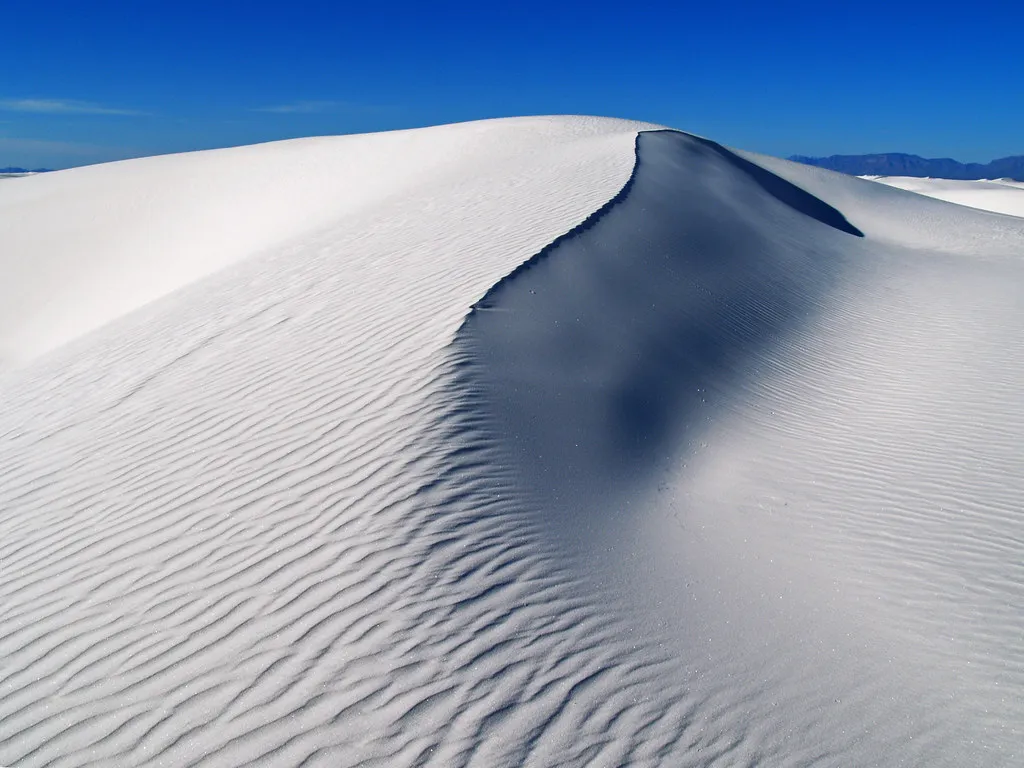
The best time to visit is spring, from March through May, with ideal temperatures around 75°F and good conditions for wildlife viewing as animals become more active. Autumn, from September to November, is also a strong choice due to pleasant daytime temperatures and fewer crowds.
Occasionally, the road into the park can close due to missile testing on the surrounding White Sands Missile Range, which still operates today. It’s worth checking current conditions before making the drive, as closures can happen without extended advance notice.
White Sands National Park will host a Full Moon Night event in late June 2026, in celebration of the 250th anniversary of the Declaration of Independence. In partnership with Western National Parks, the park offers moonlight hikes from March through November. These evening programs offer something the midday visit simply cannot – the dunes in cool silence, lit by a different kind of light entirely.
A Landscape That Rewrites What We Think We Know
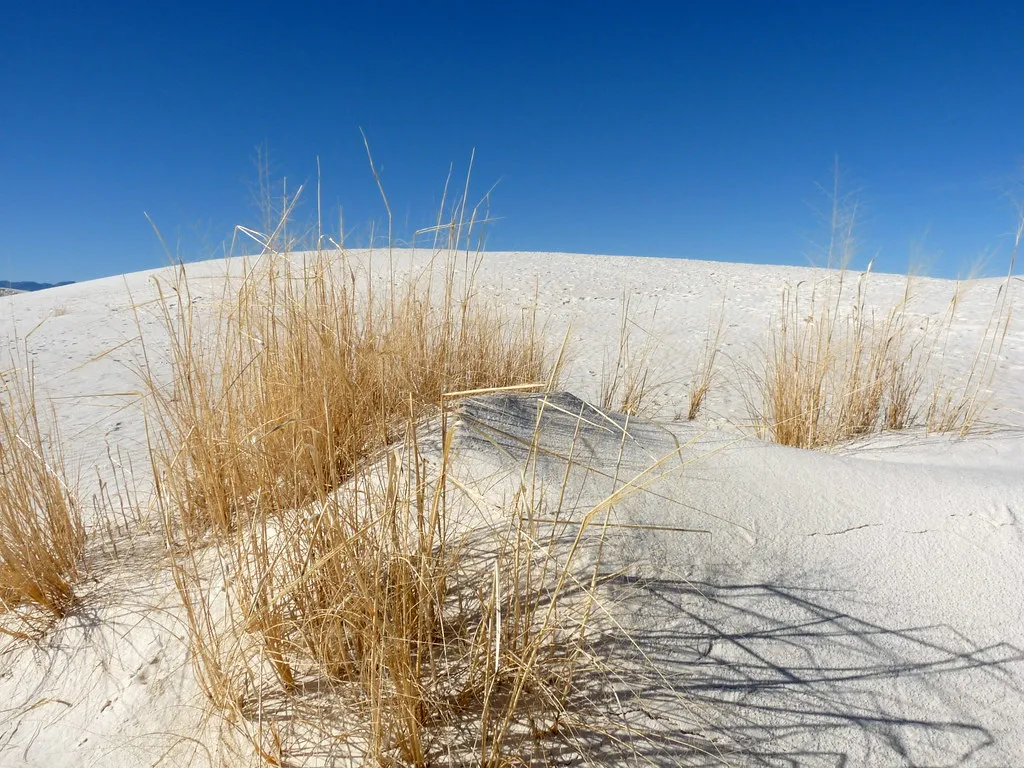
Despite the current aridity of White Sands, which evolved over eons, it is biologically rich and diverse, with endemic species of animals that afford exceptional opportunities for scientific research into evolution. The geology is considered an analog to that of Mars. That last comparison is not metaphorical – NASA researchers have studied the basin for what it reveals about the chemistry of other planetary surfaces.
White Sands is the world’s largest and best-protected surface deposit of gypsum sand, unlike the far more abundant lake and seashore quartz sand dunes. Elsewhere in the world, most large gypsum-sand deposits have been heavily mined. The fact that this one survived intact is largely an accident of geography and, eventually, the foresight to protect it.
What makes White Sands so quietly extraordinary is the way it keeps revealing more the longer you look. The dunes move. The animals evolve. The footprints beneath the surface push human history further back with every new study. It’s the kind of place where the ground itself is still speaking – and science is still learning to listen.
AI Disclaimer: This article was created with the assistance of AI tools and reviewed by a human editor.