

Travelers arriving at or departing from Puerto Princesa International Airport often pass within a short drive of a site that preserves one of the Philippines’ lesser-known chapters from the Second World War. The Palawan Special Battalion WW-II Memorial Museum sits along Rizal Avenue in Puerto Princesa City, offering a focused look at the island’s wartime resistance and the people who shaped it. The privately run institution opened in 2011 and continues to draw visitors interested in military history, local heritage, and the quiet stories behind larger events.
A Private Collection Rooted in Family Legacy
The museum owes its existence to Higinio “Buddy” Clark Mendoza, whose father served with the wartime guerrillas. Mendoza spent years gathering authentic items from the Philippines and overseas before opening the doors. The result is a compact yet substantial assembly of weapons, uniforms, vehicles, photographs, and personal effects that span both Allied and Axis forces. Because the space is privately managed, many displays sit close enough for careful viewing without the barriers common in larger public institutions. The collection reflects decades of dedicated effort rather than institutional acquisition. Items range from well-preserved firearms and field equipment to letters and medals that once belonged to individuals. This personal scale gives the museum a distinct character that rewards unhurried exploration.
The Palawan Special Battalion and Its Context
After Japanese forces occupied Palawan in 1942, scattered resistance groups formed across the island. These fighters gathered intelligence, disrupted supply lines, and sheltered Allied personnel. In 1943 the units were reorganized under General Douglas MacArthur’s direction into the Palawan Special Battalion, sometimes called the “Fighting 1,000.” Their reports supported later Allied operations, and members assisted in the rescue of survivors from the Palawan Massacre at Plaza Cuartel in December 1944. The museum dedicates a gallery to these men and women. Visitors encounter names, photographs, and records that document both the scale of the effort and the individual contributions. The exhibit underscores how local knowledge and courage intersected with broader strategic goals during the campaign to liberate the Philippines.
What Visitors Encounter Inside and Outside
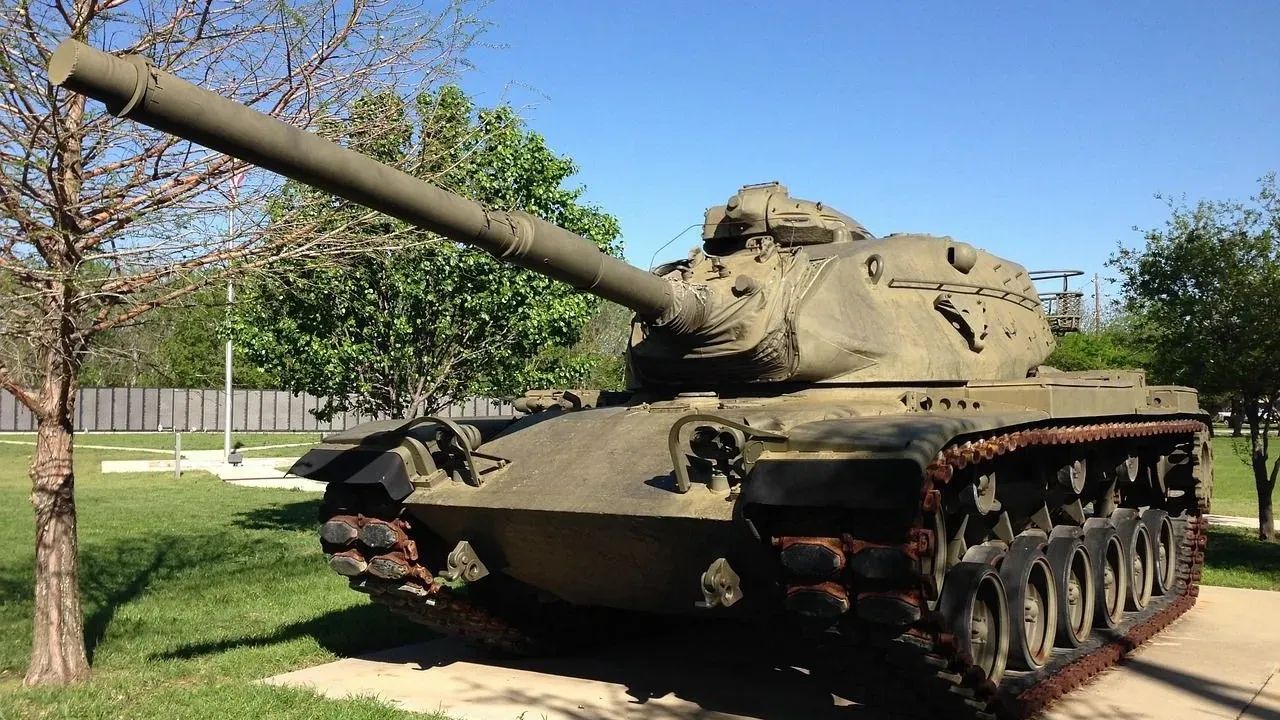
Exhibits cover military life across several nations. Uniforms worn by Filipino guerrillas, American soldiers, Japanese troops, and other Allied forces illustrate differences in equipment and appearance. Glass cases hold helmets, radios, maps, flags, and personal letters that convey the daily realities of service. Outside the main halls, restored jeeps and other wartime vehicles, including examples associated with the MacArthur era, stand ready for closer inspection. International sections extend the story beyond the Philippines. Displays representing Japan, the United States, Australia, Germany, the Soviet Union, and Nationalist China remind visitors of the global reach of the conflict. Most people spend one to two hours moving through the galleries, though those with deeper interest in any single collection may stay longer.
Practical Details for a Respectful Visit
The museum operates from 8:00 a.m. to 5:00 p.m. Monday through Saturday and until noon on Sunday. Admission remains modest: PHP 50 for adults, PHP 30 for senior citizens, and free for children. Fees are subject to change, so confirming directly remains advisable. Reaching the site is straightforward. Located at 506 Rizal Avenue in the San Miguel area, it lies roughly ten minutes from the airport by tricycle, taxi, ride-hailing service, or private vehicle. The address places it conveniently along a main road, allowing easy inclusion in a half-day city itinerary that might also encompass Plaza Cuartel or the Immaculate Conception Cathedral. Staff members are generally available to answer questions, and photography is permitted in most areas. Visitors are encouraged to read exhibit labels for fuller context and to approach the displays with the same care one would bring to any place of remembrance. The museum’s location near a busy airport means many travelers could pause here without altering their schedules. Those who do often leave with a clearer sense of the human dimensions behind the larger history of the Pacific theater and the particular role played by Palawan’s defenders.
AI Disclaimer: This article was created with the assistance of AI tools and reviewed by a human editor.