
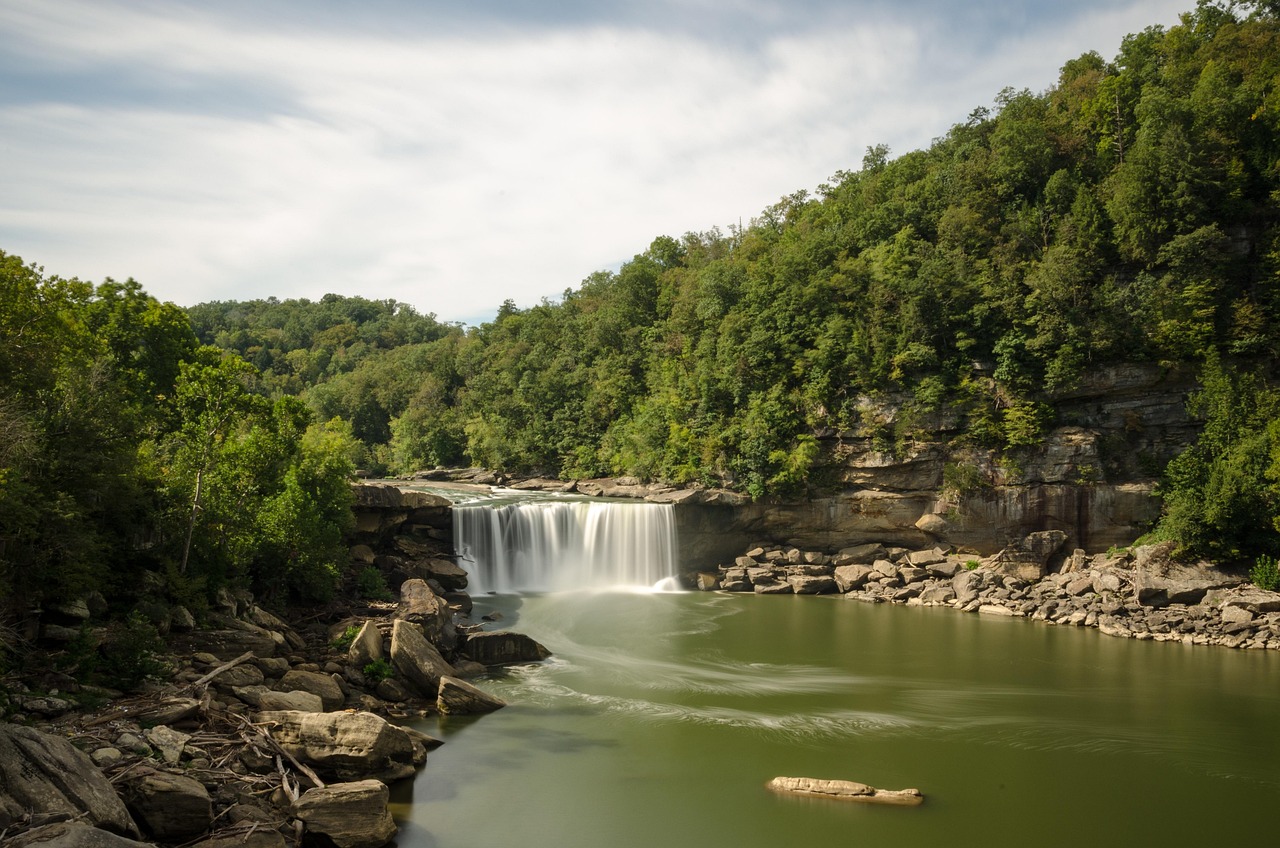

Up on the Cumberland Plateau, where the air runs several degrees cooler than it does down in Knoxville or Nashville, there’s a small county seat that most road trippers pass through on their way to somewhere else. It sits at roughly 1,600 feet above sea level, tucked between ridgelines and sandstone bluffs that have been quietly shaping this corner of Tennessee for millions of years.
What travelers often don’t realize is that just beyond the edge of town, a stretch of forest and rock formations has been protected as public land since the New Deal era, decades before most of the region’s other parks even existed.
A Town Shaped by the Cumberland Plateau
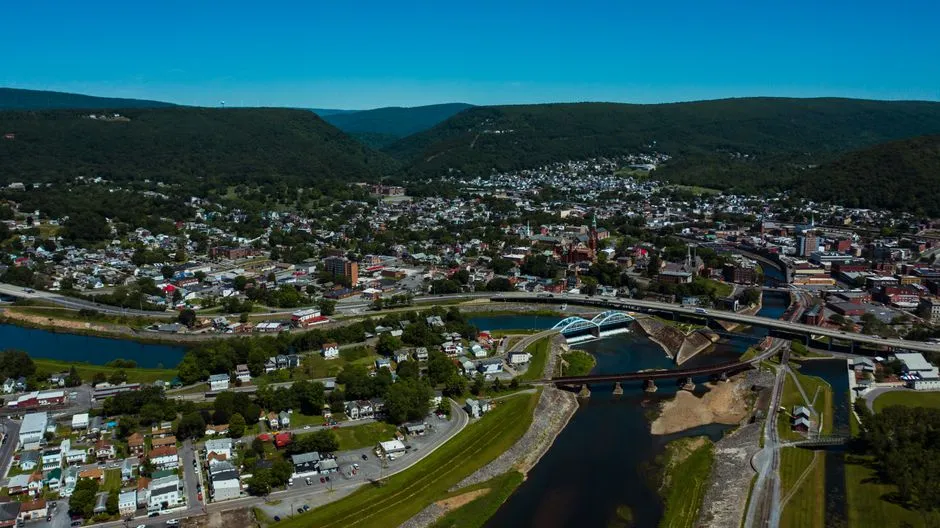
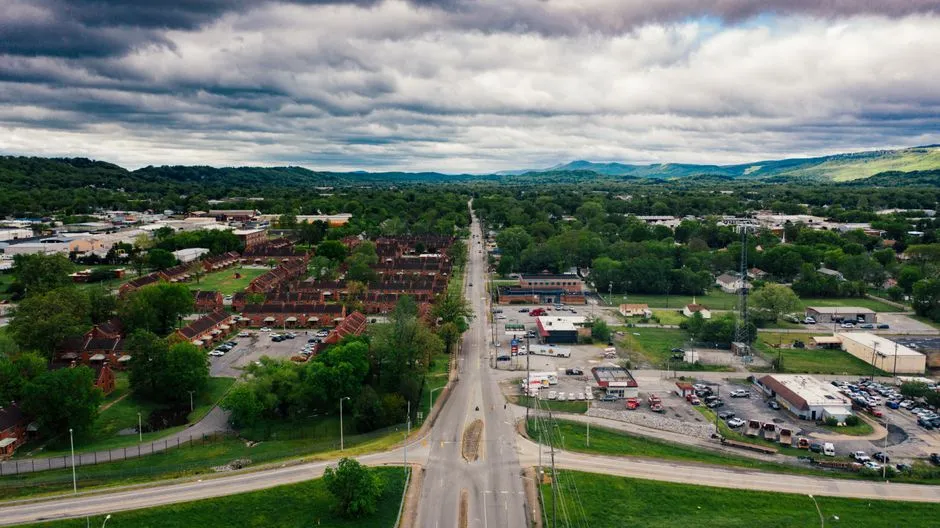
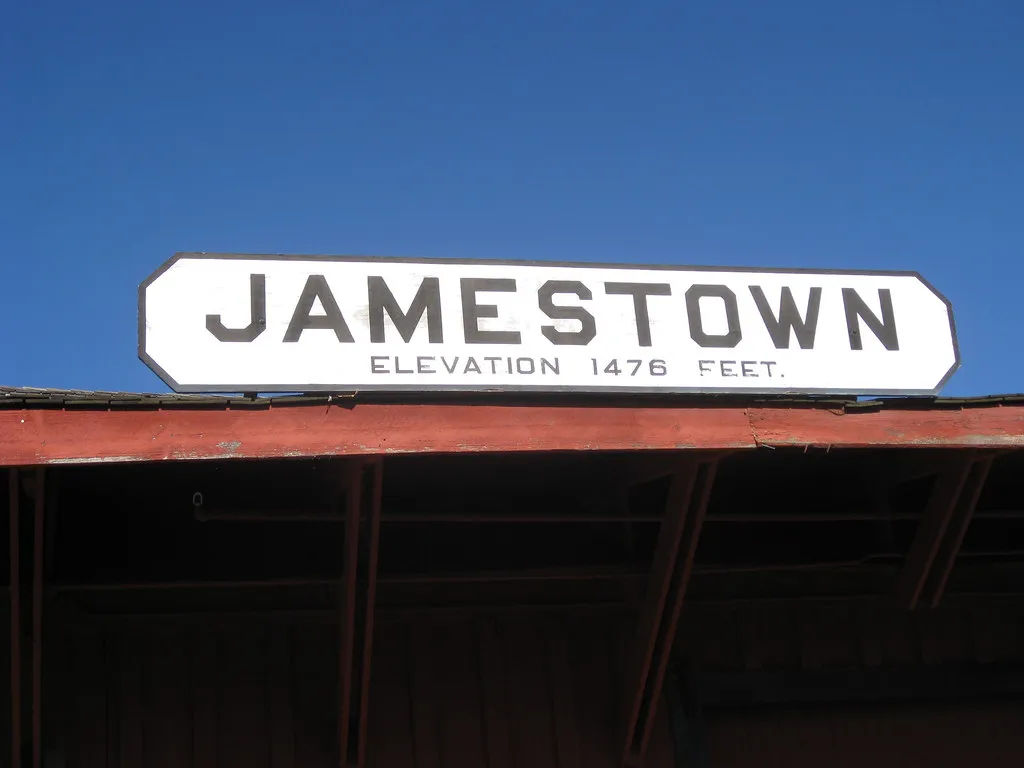
Jamestown, Tennessee, is the county seat of Fentress County, a small city where the 2020 census counted a population of 1,935 residents. It sits at the intersection of two well-traveled routes, and locals describe the setting as noticeably cooler than the lowlands, since Jamestown is up on the Cumberland Plateau, about 1,600 feet above sea level, usually 5 to 10 degrees cooler than Knoxville or Nashville. That elevation and rugged topography are exactly why this stretch of the plateau became a magnet for outdoor recreation and, eventually, conservation.
The town’s name and its county both trace back to a nineteenth century state legislator, James Fentress, and the settlement itself began under humbler circumstances. Before it had any formal name, the area was simply known for the springs bubbling out of the sandy soil, a detail that still shows up in the town’s small central park today.
Pickett CCC Memorial State Park: Tennessee’s First State Park
Northeast of Jamestown, on land that was once industrial timber holdings, sits Pickett CCC Memorial State Park, widely recognized as the state’s original state park. According to regional guides, the 11,752 acres of land turned over to Tennessee by the Kentucky-based Stearns Coal and Lumber Company in 1933 became a state forest, and in 1934 the Civilian Conservation Corps and National Park Service aided the state in developing the facilities to make it Tennessee’s first state park. That single transaction, from timber company to public trust, set the template for how much of Tennessee’s park system would eventually grow.
Today the developed core of the park covers roughly 922 acres, according to the state parks agency, while the park is located on 19,200 acres of wilderness including caves, natural bridges, and other rock formations, much of it shared with the surrounding Pickett State Forest. It’s a scale that feels almost surprising for a town of fewer than two thousand people to have as its backyard.
The Civilian Conservation Corps Legacy
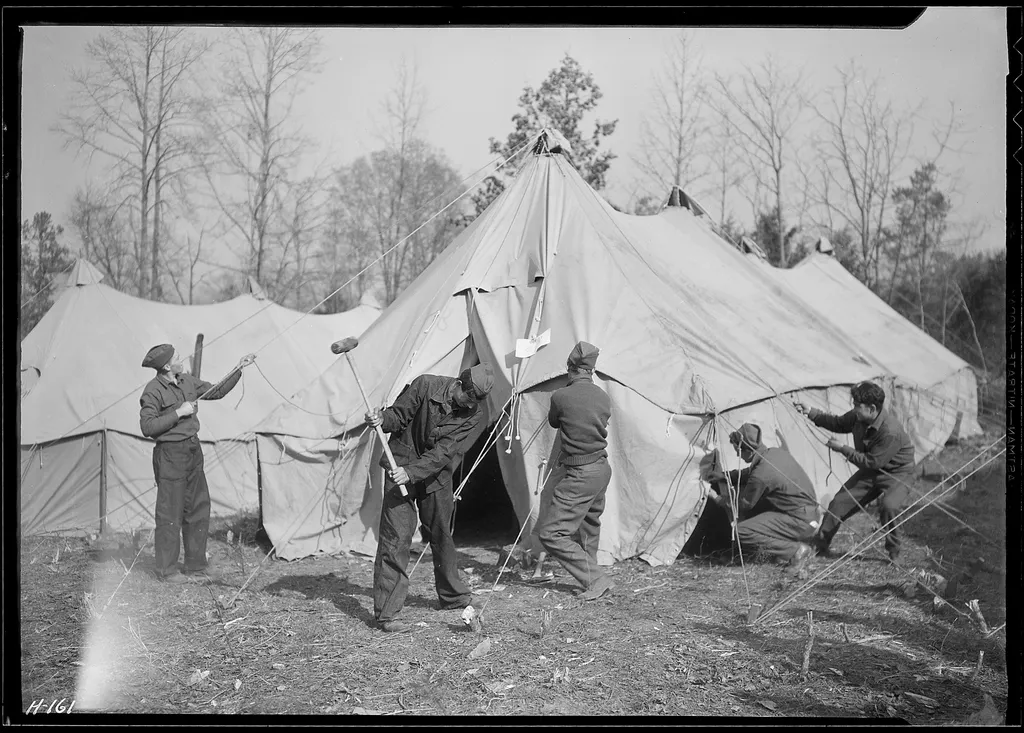
The park’s earliest infrastructure came directly from Depression era labor programs, and that history is still visible in the buildings that remain. During the construction years, initial development of the area by the Civilian Conservation Corps occurred between 1934 through 1942, and the CCC constructed hiking trails, five rustic cabins, a recreation lodge, a ranger station, and a 12-acre lake. Those cabins are not museum pieces behind glass. Visitors can still rent several of them today, sleeping under the same roofs young CCC workers helped raise nearly a century ago.
The scale of that federal program across the state was considerable. Tennessee hosted a network of camps to match the effort, since approximately 70,000 Tennesseans served in the CCC in various locations around the country, and there were 77 CCC camps located throughout Tennessee. A dedicated museum inside the park now walks visitors through that chapter of the state’s history in detail.
A Museum That Lets the Workers Speak for Themselves
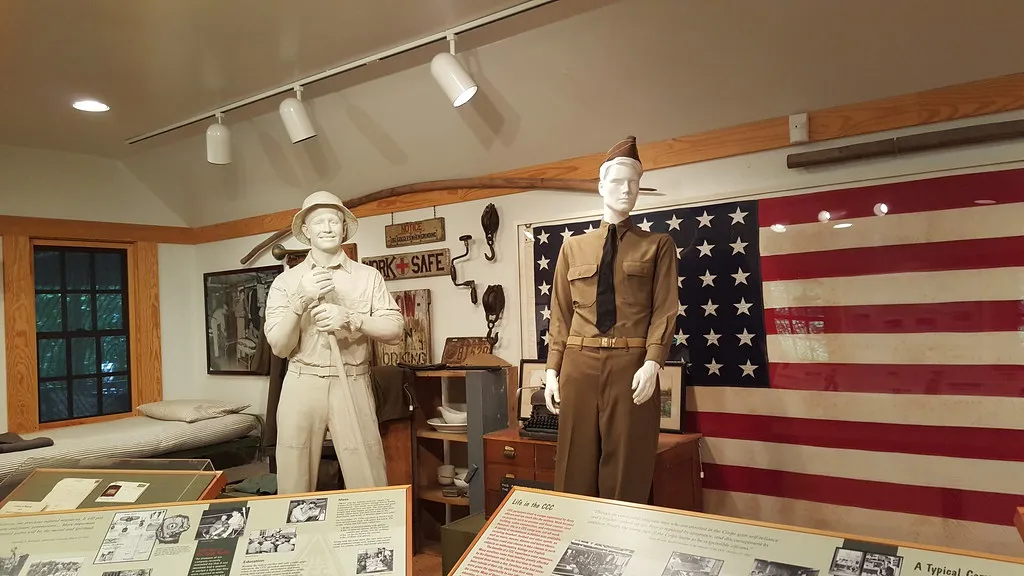
Rather than relying only on placards and photographs, the park’s CCC Museum takes a more personal approach to preserving this history. The museum houses interpretative exhibits and artifacts depicting the Civilian Conservation Corps’ contributions to Tennessee’s parks and natural areas, along with an interactive touch-screen exhibit that gives visitors an opportunity to hear directly from former CCC workers, sharing their stories about their time working to construct Pickett State Park. It’s a small building, but it does real work connecting a modern visitor to the men who built the trails they’re about to walk.
The museum sits, fittingly, where the original park office once stood, itself a CCC-era structure from the 1930s. For anyone curious about how so much of the American South’s public land infrastructure came together, this is one of the more intimate places to learn it.
Sandstone Arches, Caves and Natural Bridges

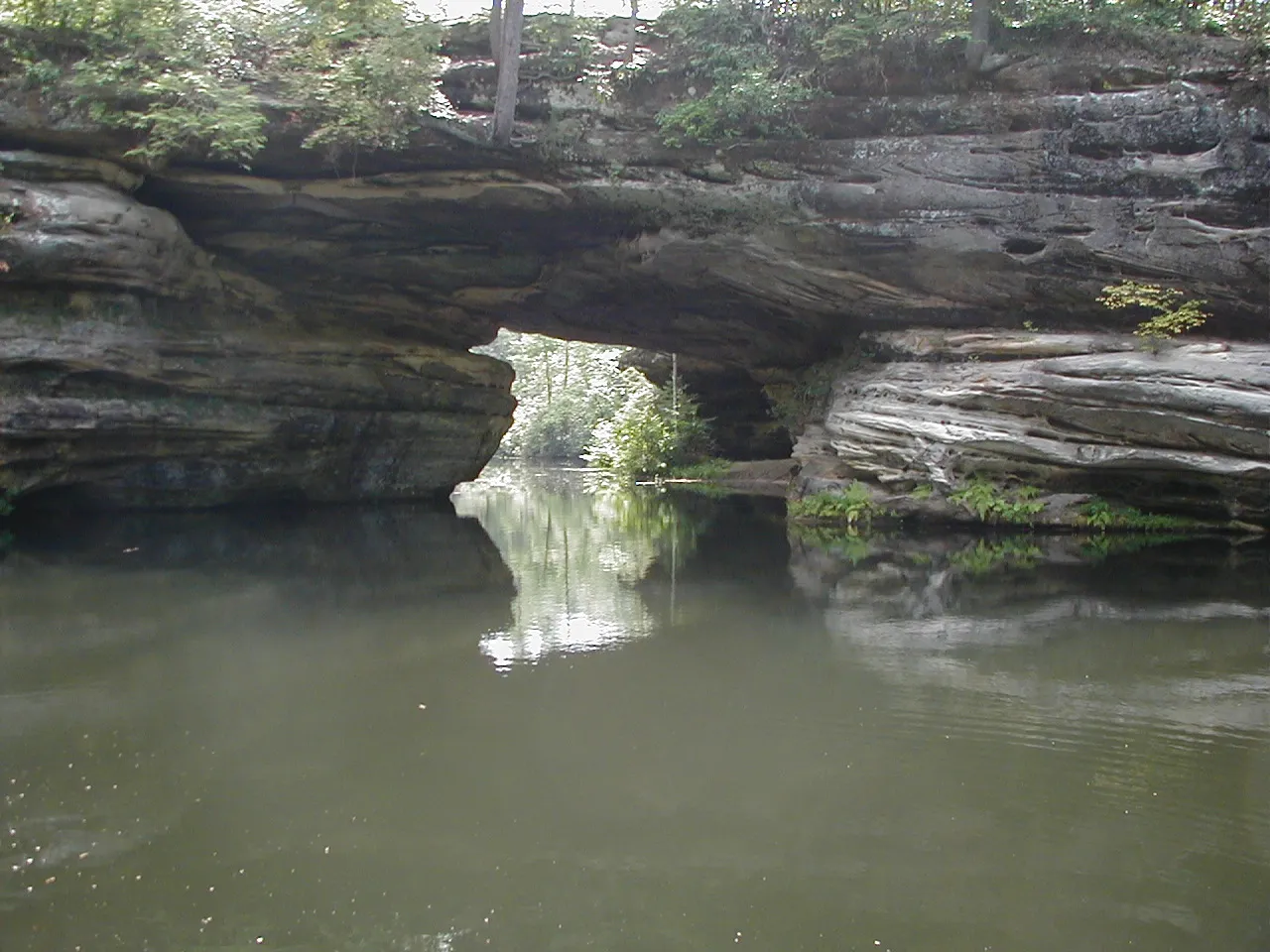
What makes Pickett distinctive isn’t just its age, but its geology. The Cumberland Plateau terrain here produces dramatic rock features, and the park is known for unique sandstone formations, including natural bridges and rock shelters, along with a Dark Sky Designated night sky. Fourteen interconnected trails wind through this landscape, and most are less than two miles in length and range from easy to moderately difficult, all accessible from near the park office.
Two trails in particular tend to draw the most attention from regular visitors. Hidden Passage Trail and Rock Creek Trail are especially popular, since Hidden Passage is popular year-round for its variety of scenic views and seasonal botanical delights, with a profusion of spring wildflowers that is particularly impressive. A sandstone tunnel cut through a bluff gives the trail its name, and it’s the kind of detail that photographs well in any season.
Arch Lake and Life Outdoors

At the heart of the park sits a modest, man-made lake that anchors most of the recreation happening here. The lake takes its name from a nearby feature, since it’s the 15-acre, man-made Arch Lake, lined with cliffs and named for the natural bridge located on one of the embayments. Paddlers and anglers use it as a calm counterpoint to the rougher terrain surrounding it.
Camping and cabin rentals round out the experience for overnight visitors. The park currently maintains 32 campsites and 20 rental cabins, with campsites that come with electric and water hookups and picnic tables and grills, plus a modern bathhouse and dump station. It’s straightforward, unfussy infrastructure, built for people who came for the woods rather than the amenities.
A Dark Sky Sanctuary

Pickett’s remote location on the plateau has turned out to be an asset for a very different reason: light pollution here is minimal. In 2015, Pickett State Park was classed as a Dark Sky Park by the International Dark-sky Association, an area generally free of artificial light pollution, making it optimal for stargazing. That distinction places it in a small club of protected night skies across the eastern United States, a recognition that took on new weight as light pollution has spread across much of the region in recent years.
Ranger led astronomy programs and simple, quiet nights by the lake have become part of the park’s identity because of this designation. For a park built in the 1930s primarily for hiking and camping, the dark sky status is a more recent addition, but one that fits naturally with how isolated the plateau still feels after dark.
Neighboring Big South Fork National River and Recreation Area

Pickett doesn’t sit in isolation. It borders one of the largest protected river corridors in the eastern United States, since Big South Fork National River and Recreation Area encompasses 125,000 acres of the Cumberland Plateau, protecting the free-flowing Big South Fork of the Cumberland River and its tributaries, with scenic gorges and sandstone bluffs rich in natural and historic features. The two properties share trail systems, geology, and in some cases the same sandstone arches, making it easy to spend several days moving between them without repeating a view.
For visitors staying in Jamestown, this pairing means a single mountain town gives access to two very different scales of wilderness: a compact, historically rich state park and a sprawling federal recreation area right next door.
Sgt. Alvin C. York State Historic Park

A short drive north of Jamestown, in the tiny community of Pall Mall, sits another kind of Tennessee history entirely. Sergeant Alvin C. York, one of the most decorated American soldiers of the First World War, spent nearly his entire life on this land, and the state established Sgt. Alvin C. York State Historic Park in 1967 after York’s wife, Gracie, donated their farm. During the war, York’s actions became legendary, as he is remembered for an attack that resulted in York single-handedly attacking a German machine gun nest, killing multiple soldiers and capturing 132 prisoners.
The farm itself carries federal recognition today, having been designated a National Historic Landmark on May 11, 1976. Visitors can walk through York’s two-story house, his general store, and the gristmill he operated for years along the Wolf River, a quieter counterpoint to the natural drama of Pickett’s rock formations just a few miles away.
Mark Twain’s Tennessee Roots
Long before Samuel Clemens became known to the world as Mark Twain, his family called this exact stretch of the Cumberland Plateau home. Historical markers in the area confirm that Mark Twain’s parents lived in Jamestown between 1827 and 1832 before moving to Missouri in 1835. His father, John Clemens, held local civic roles during that stretch, having served as an attorney, circuit court clerk, and county commissioner, and was postmaster at Pall Mall from April 1832 to May 1835 before moving to Missouri, where his son was born later in 1835.
A small park in downtown Jamestown preserves the memory of that connection today. The spring the Clemens family once relied on for drinking water still exists, protected within what’s now called Mark Twain City Park, a modest but meaningful literary footnote for a town this size.
Small-Town Charm: From the World’s Longest Yard Sale to Highland Manor Winery
Jamestown’s identity isn’t built entirely around history and hiking trails. Each August, the town becomes ground zero for a shopping event that draws visitors from across the country, since Jamestown serves as the headquarters for what’s known as the World’s Longest Yardsale, also called the 127 Corridor Sale. The route stretches for hundreds of miles along U.S. Highway 127, and Jamestown sits right at its northern anchor point.
The town also claims a quieter kind of distinction in the beverage world. Local tourism materials note that Jamestown is home to Highland Manor, Tennessee’s oldest winery, alongside the historic York Gristmill perched along the Wolf River. It’s the kind of low-key civic pride that fits a place more accustomed to hosting hikers and history buffs than headline attractions.
For a town of under two thousand people, Jamestown carries an outsized amount of American history within a few miles of its courthouse square. There’s a state park old enough to have been built by hands that no longer walk this earth, a war hero’s homestead preserved almost exactly as he left it, and a literary connection that predates the writer’s own birth by years. Visitors who come for Pickett’s arches and dark skies often leave having stumbled into far more than they expected, which might be the clearest sign that this particular corner of the Cumberland Plateau has earned its quiet reputation the honest way.
AI Disclaimer: This article was created with the assistance of AI tools and reviewed by a human editor.