
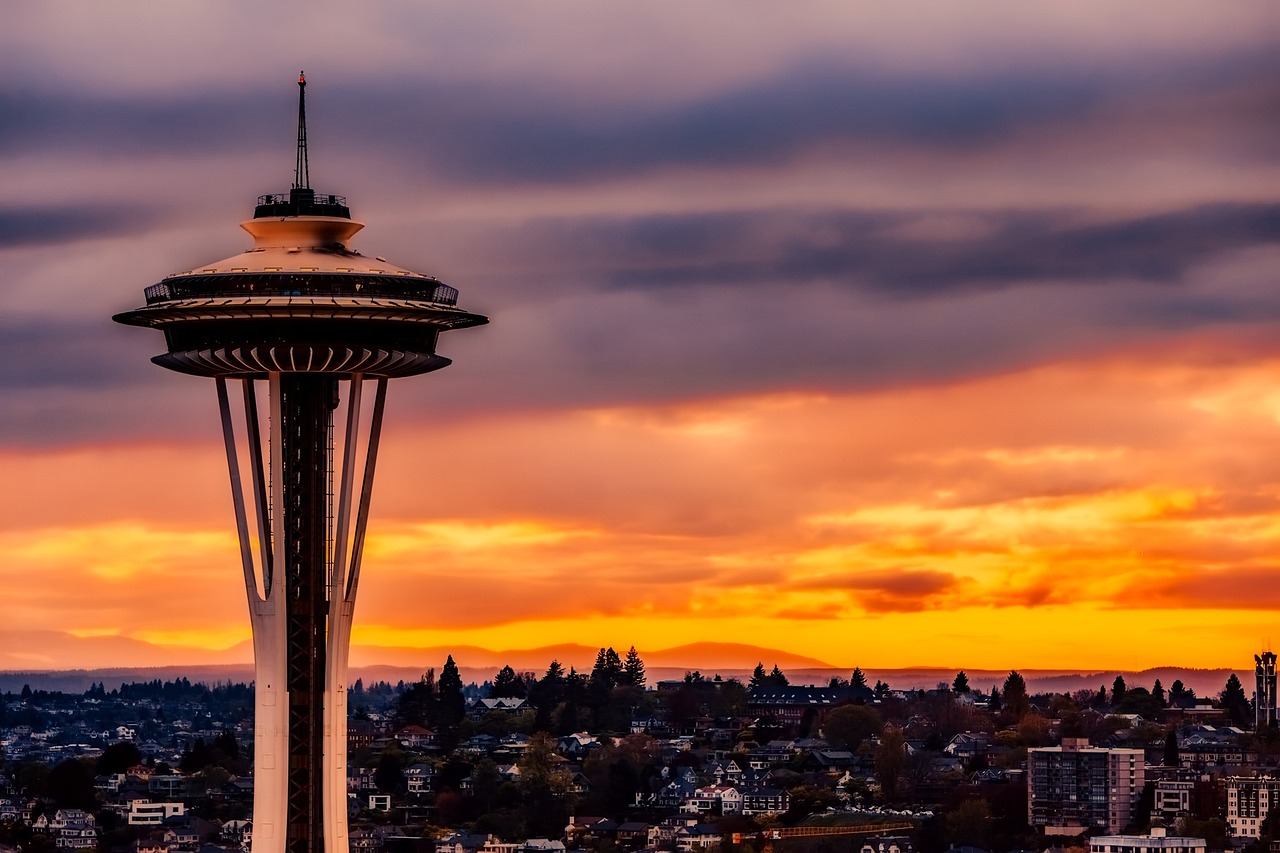

Most people who wander through Pioneer Square in Seattle are looking up, not down. They admire the ironwork facades, the pergola, the totem pole, and the century-old brick buildings that give this neighborhood its postcard charm. Few realize that directly beneath their feet lies an entire buried streetscape, a version of the city that stopped existing at ground level more than a hundred years ago but never actually went away.
A City Rebuilt on Top of Itself
Seattle’s underground exists because of a decision that, on paper, sounds almost absurd. After a catastrophic fire leveled the business district in 1889, city leaders chose not to simply clear the rubble and rebuild at the same elevation. The Seattle Underground is a network of underground passageways and basements in the Pioneer Square neighborhood of Seattle, Washington, and these spaces were located at ground level when the city was built in the mid-19th century but fell into disuse after the streets were elevated.
The result is a genuine architectural oddity. Old storefronts, sidewalks, and even street signs still sit intact, one to two stories below the modern pavement, essentially frozen at the moment the city moved on from them.
The Fire That Changed Everything
The Great Seattle Fire destroyed the entire central business district of Seattle, Washington, on June 6, 1889. On the afternoon of that day, an assistant in a woodworking shop was heating glue over a gasoline fire when it boiled over and caught the wood shavings on the floor, and his attempt to douse it with water only thinned the turpentine and spread the fire further. Within hours it had swept through the wooden downtown, fed by dry summer conditions and a fire department that was, at the time, still an all-volunteer operation.
By the morning of June 7, the fire had burned 25 city blocks, including the business district, four of the city’s wharves, and its railroad terminals, with total losses estimated at nearly 20 million dollars, worth roughly 717 million dollars in today’s money. Remarkably, despite the scale of destruction, the human toll was limited. Only one person died, which considering the scale of the destruction is almost miraculous.
Raising the Streets, Burying the Past
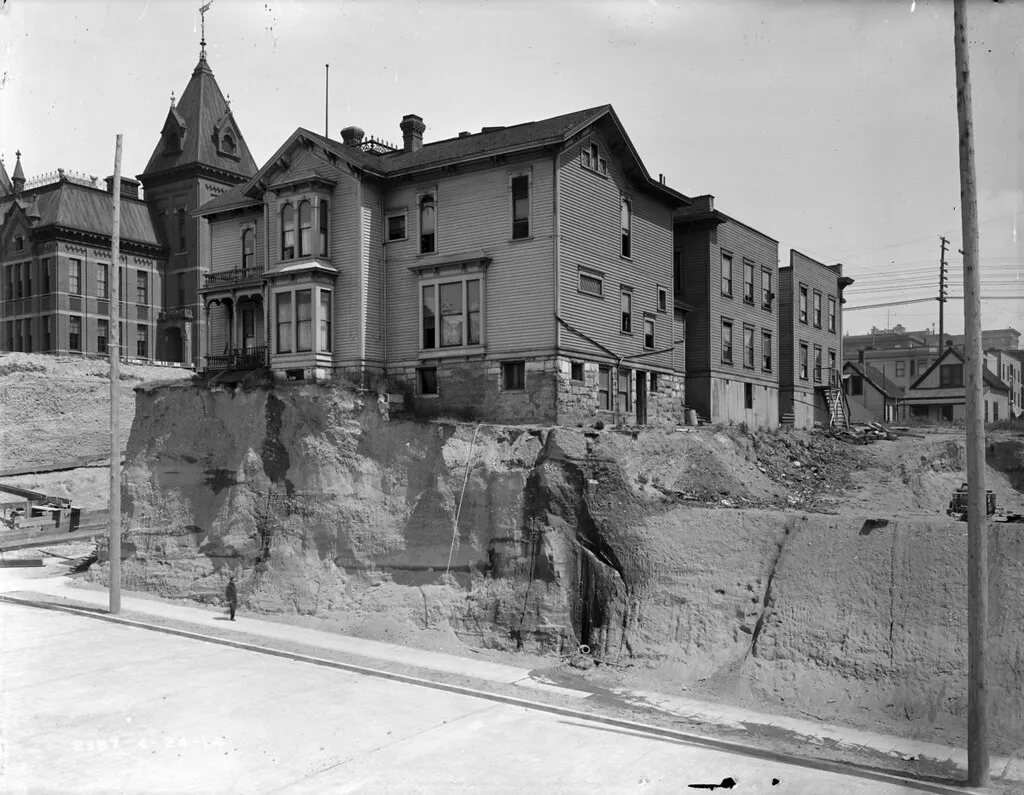
Rebuilding a burned city is one thing. Rebuilding it a full story higher, while people were still living and working there, is something else entirely. Seattle’s engineers used the naturally steep hillsides and, through a series of sluices, washed material into wide alleys to raise the streets to a new level, generally 12 feet higher than before, and in some places nearly 30 feet higher.
This wasn’t a quick fix finished over a season. Business owners started rebuilding immediately at the original 1889 street level, opening their shops and operating normally, only to discover as the regrading progressed around them that the new street level would end up at what used to be their second floor. For a strange in-between period, Seattle was a city of two elevations at once.
Ladders, Sidewalks, and a City in Limbo
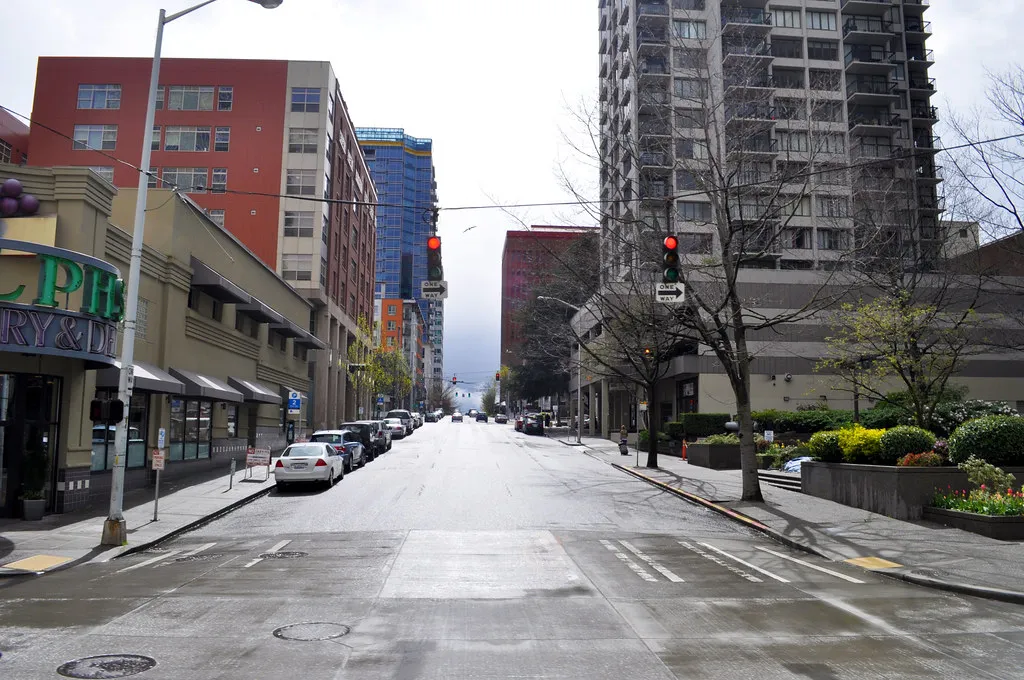
Before the transition was complete, getting around downtown Seattle required a bit of nerve. At first, pedestrians climbed ladders to go between street level and the sidewalks in front of building entrances, while brick archways were constructed next to the road surface, above the submerged sidewalks. Imagine stepping out of a shop and needing a ladder just to reach the new road.
For a transitional period estimated at somewhere between one and several years, residents and business customers would step off the newly raised sidewalks and descend ladders to reach shops still operating at the old ground level. It’s a detail that tends to surprise visitors more than almost anything else on the tour, simply because it is hard to picture a modern American downtown functioning this way, even briefly.
Vault Lights and the Glass That Still Glows
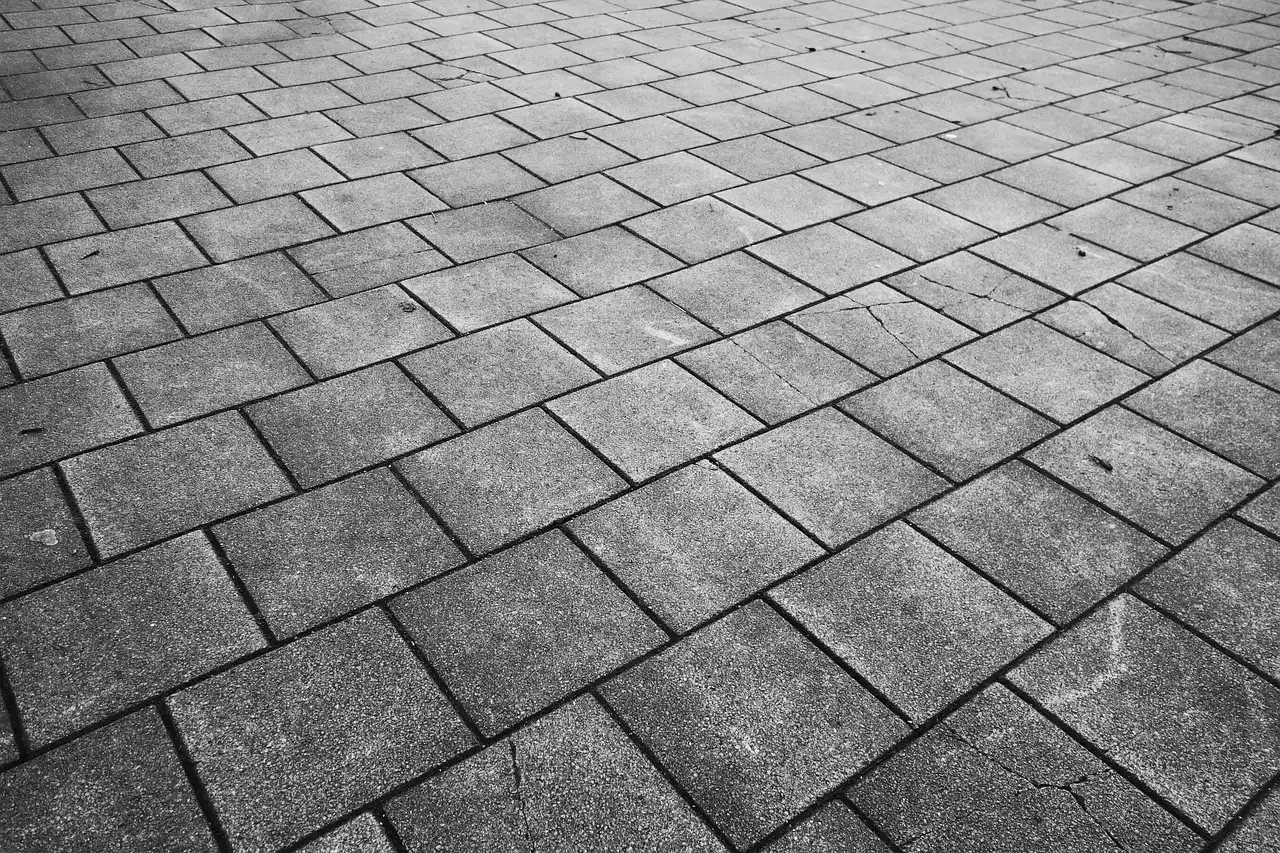
One of the most tangible, walkable clues to this history sits in plain sight on Pioneer Square’s sidewalks today. Vault lights, a form of walk-on skylight with small panes of clear glass which later became amethyst-colored, were installed over the gap from the raised street and the building, creating the area now called the Seattle Underground. These little glass squares once let daylight filter down into the buried storefronts below.
If you know to look for them, you’ll spot patches of purplish glass embedded in certain sidewalks around the neighborhood even now. Prism glass is the clearest above-ground clue to the underground’s existence, especially around Pioneer Square. It’s a small detail, but a genuinely satisfying one to notice once you understand what it represents.
From Storefronts to Sealed Basements
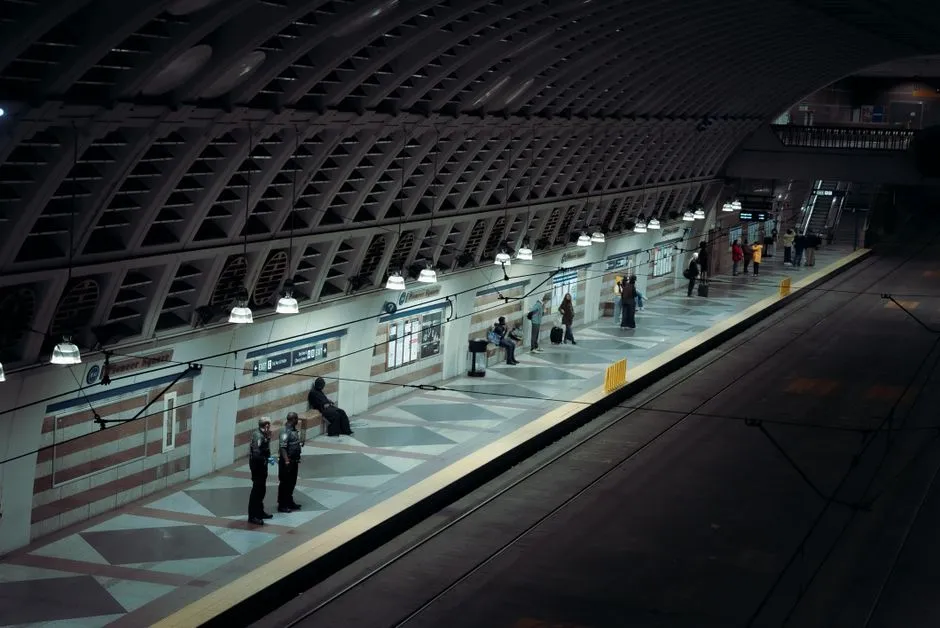
Once the new, higher street level was finished, business owners largely moved their operations upward to match it. Once the new sidewalks were complete, building owners moved their businesses to the new ground floor, although merchants carried on business in the lowest floors of buildings that survived the fire, and pedestrians continued to use the underground sidewalks lit by the vault lights embedded in the grade-level vaulted sidewalk above. For a while, the old level kept a kind of second life as an unofficial underground marketplace.
That life didn’t last. In 1907, the city condemned the Underground for fear of bubonic plague, two years before the 1909 World’s Fair in Seattle, and the basements were left to deteriorate or used as storage, with some becoming illegal flophouses, gambling halls, speakeasies, and opium dens. The buried city, once bustling, settled into decades of near total silence.
Rediscovery Through One Curious Local
The Underground might have stayed forgotten indefinitely if not for a newspaperman with a strong sense of local history. In the 1960s, a Seattle Times columnist named Bill Speidel reignited interest in the area after receiving a reader question about the underground ruins of Pioneer Square, and began guiding people through the tunnels himself. According to Speidel’s own account, he first heard rumors of tunnels while researching the city’s history for biographies and books, which led him and a group of researchers to rediscover the underground.
The response was immediate and enthusiastic. He hosted informal tours in the early 1960s, with his first one drawing 500 attendees, and within a year of formally launching his tour company in 1965, roughly 15,000 people had explored the underground city with him. What began as a local history project became one of the city’s defining attractions almost by accident.
What the Tunnels Look Like Today
Visitors on a modern tour don’t get access to the entire buried network, and that’s by design. Only a small portion of the Seattle Underground has been restored and made safe and accessible to the public on guided tours. Even so, what remains is remarkably evocative: worn wooden counters, old bank teller cages, faded signage, and uneven brick flooring that hasn’t been touched in generations.
If you venture beneath the streets on a tour, expect to see decaying signs, an old bank teller’s cage, aged window frames, and uneven flooring. Today, the buildings in Pioneer Square sit roughly 20 feet above the 1880s underground city of Seattle, a gap that becomes strikingly easy to feel once you’re standing in it.
More Than One Way Down
Speidel’s company was, for decades, the only way to see this history in person, but it isn’t the only option anymore. A second tour company, Beneath the Streets, was created in 2013 and explores different sections of Seattle’s Underground network. In addition to its standard tour, Beneath the Streets offers specialized experiences, including a Queer History Tour highlighting the LGBTQ+ community’s impact on the city’s development, and a Red Light District Tour delving into the district’s vibrant and complex past.
Both operators lead small groups through narrow passages and down several flights of stairs, so comfortable shoes matter more than most visitors expect. These underground walking tours cover uneven terrain and involve ascending and descending about six flights of stairs. The differences between the two companies are mostly in emphasis and route, but either one offers a genuine, guided look at history that simply isn’t visible from the street.
A Neighborhood Still Shaped by Its Buried Half
Sixty years after Speidel first led visitors underground, the tours are still running, still popular, and still treated by locals as a point of civic pride rather than a novelty. Showmanship has kept Speidel’s tour in business for 60 years, and for six decades it has taken tourists and locals into the underbelly of Seattle’s oldest neighborhood. The tours have also helped build support for preserving Pioneer Square itself, tying the underground’s survival directly to the historic district above it.
What makes the Seattle Underground worth seeking out isn’t just the novelty of walking through a buried streetscape, though that alone is memorable. It’s the way the experience reframes an entire neighborhood, turning ordinary sidewalks and building facades into clues about a city that quite literally built itself twice. Few American downtowns carry their history this close to the surface, and fewer still let you walk straight into it.
AI Disclaimer: This article was created with the assistance of AI tools and reviewed by a human editor.