
There’s a moment, usually somewhere along a shaded gorge trail with mist already dampening your shirt, when the sound arrives before the sight does. A low rumble builds into something closer to a roar, and then the trail bends and there it is: water falling through 400 million year old rock like it’s been doing this forever, because it basically has. The Finger Lakes region of central New York holds one of the densest concentrations of waterfalls in the eastern United States, carved by glaciers that retreated roughly 10,000 to 14,000 years ago and left behind steep, shale walled gorges that streams have been cutting through ever since.
What follows isn’t a ranked countdown or a “best of” list designed to make nine waterfalls feel like runners up. It’s a gallery, a set of ten distinct cascades worth knowing before you plan a trip through Ithaca, Watkins Glen, and the surrounding countryside, each with its own geology, its own trail, and its own reason for existing on a traveler’s map.
Taughannock Falls: The Tallest Drop East of the Rockies
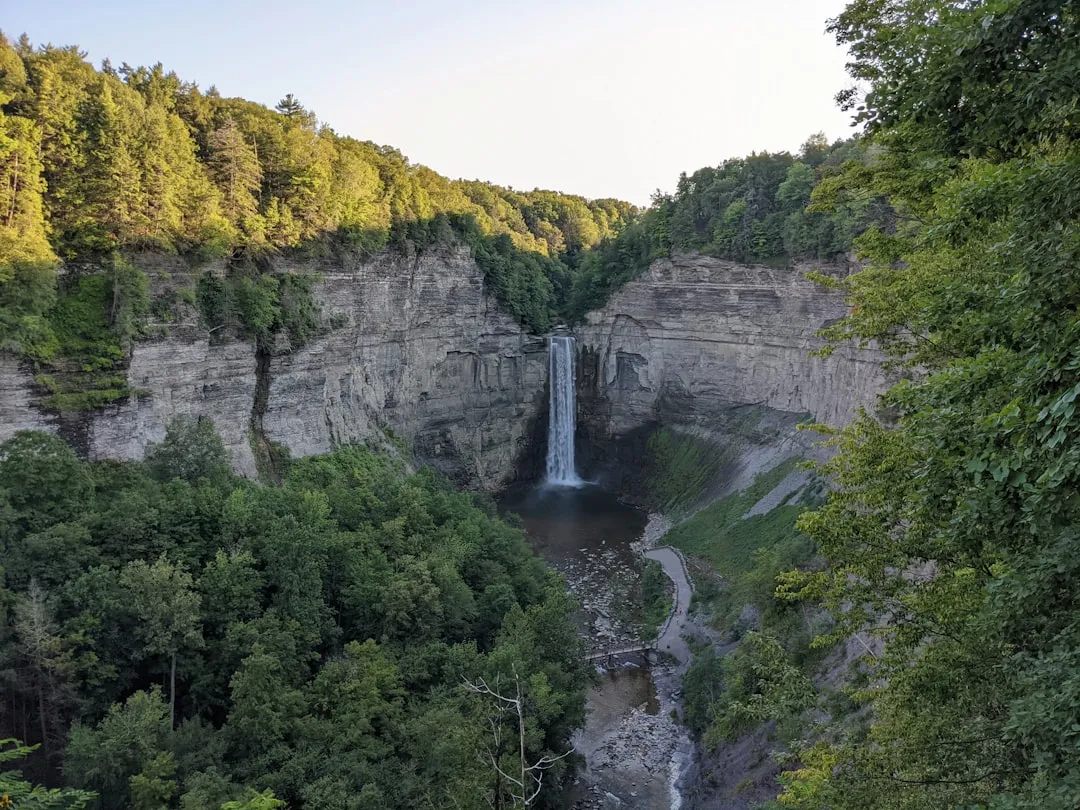
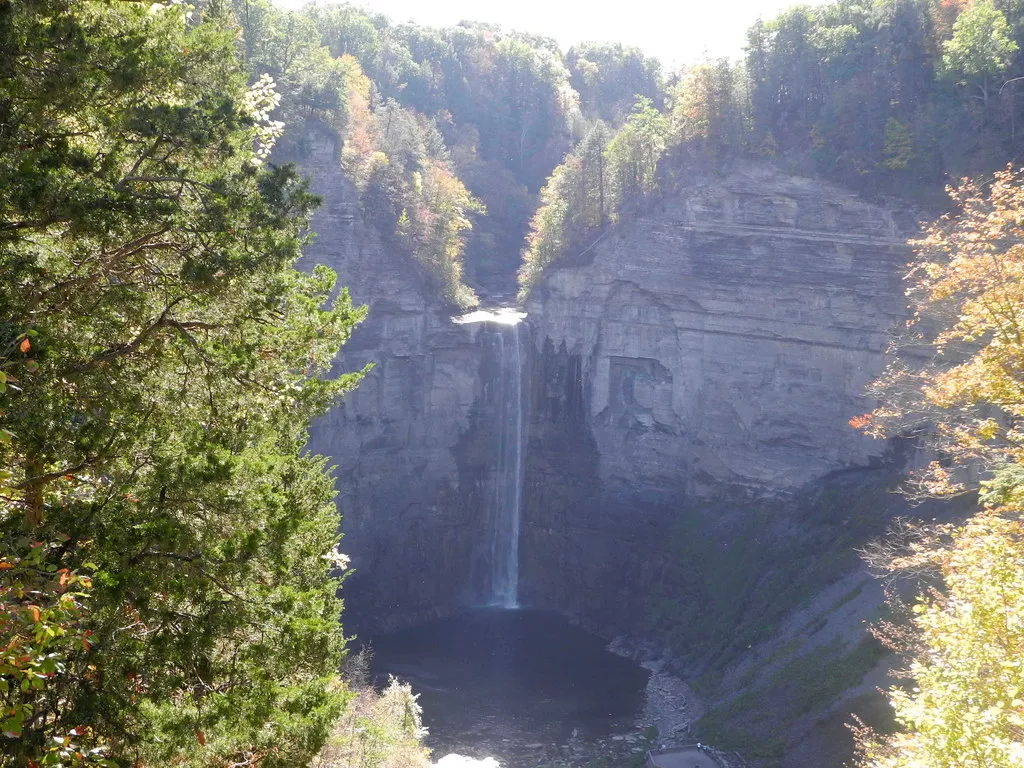
Taughannock Falls anchors any conversation about Finger Lakes waterfalls, and for good reason. The park’s namesake, Taughannock Falls, is a 215-foot plunge waterfall. As the tallest free-falling waterfall in the northeastern United States, Taughannock rises 215 feet, making it 33 feet taller than Niagara Falls.
The setting matches the statistic. Taughannock Falls plunges 215 feet over a sheer rock face into a deep plunge pool surrounded by a natural amphitheater of shale and sandstone walls rising 400 feet on either side. The approach is surprisingly gentle for something this dramatic. The 0.75-mile-long Gorge Trail leads to a viewing area at the base of the falls and also passes by Lower Falls.
Water volume shifts noticeably with the seasons, so no two visits look quite alike. Spring snowmelt and heavy rains create a thundering cascade that sends mist billowing hundreds of feet into the air, while late summer may reduce the falls to a delicate bridal-veil ribbon. Just know that swimming here is off the table entirely, no matter how tempting the pool looks from the trail.
Watkins Glen State Park: Nineteen Falls in Two Miles
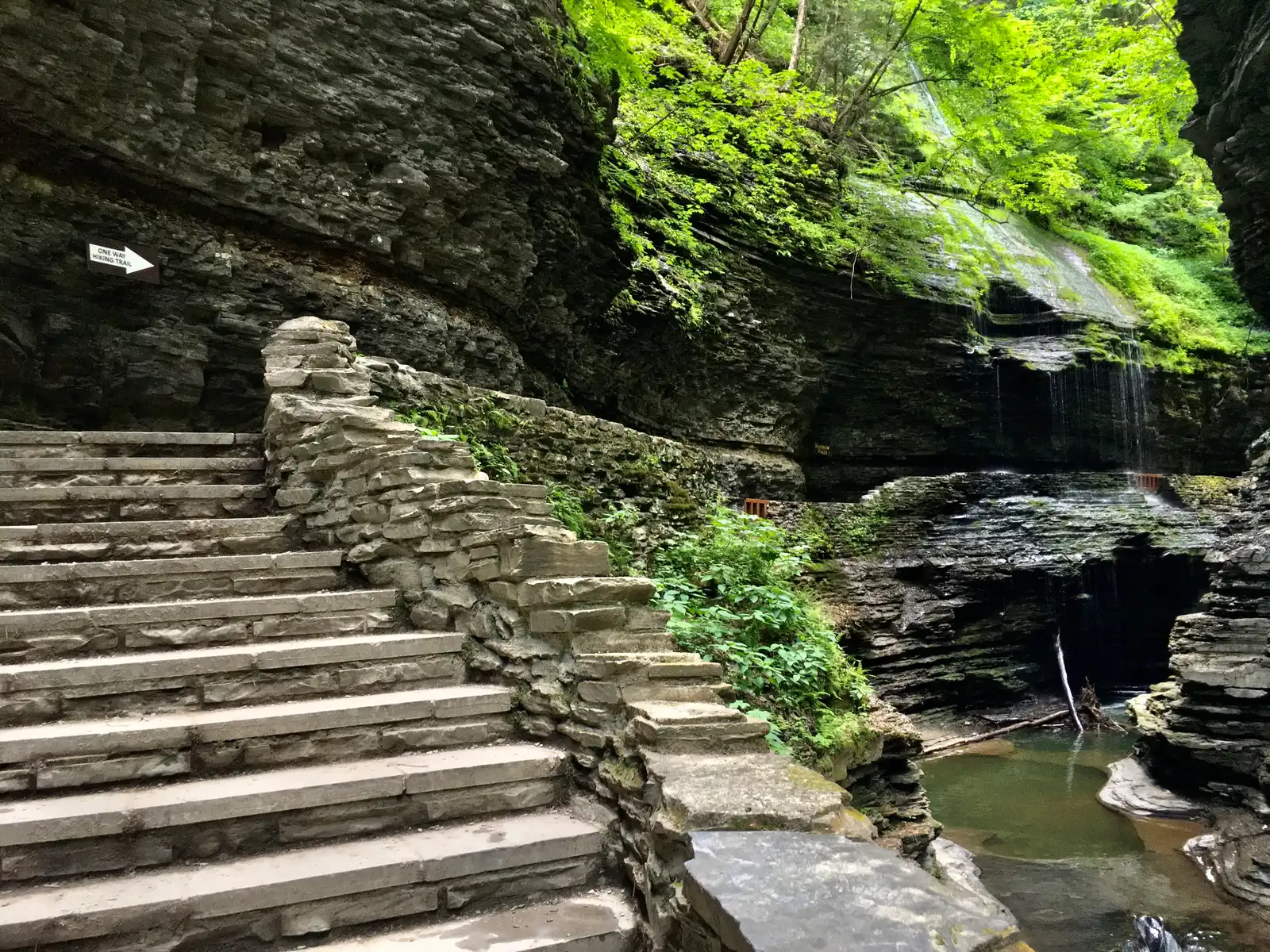
If Taughannock is about a single dramatic drop, Watkins Glen is about volume and variety. If you want to see a lot of waterfalls in one place, Watkins Glen near Seneca Lake has 19 waterfalls along its gorge trail. Within two miles, the glen’s stream descends 400 feet past 200-foot cliffs, generating 19 waterfalls along its course.
The trail itself is part of the attraction, an engineering feat as much as a nature walk. Over the 1.5-mile trail through the Watkins Glen Gorge, visitors will climb 832 steps. Stone staircases, arched bridges, and tunnels weave you directly beside, and occasionally beneath, the water.
Two named falls tend to stick in visitors’ memories longest. The highlight of the park is the 1.5-mile Gorge Trail, which passes several incredible waterfalls including Rainbow Falls, Central Cascade, and Cavern Cascade. At both, expect to walk directly behind the curtain of falling water and to get genuinely, happily soaked.
Robert H. Treman State Park: Lucifer Falls and Enfield Glen
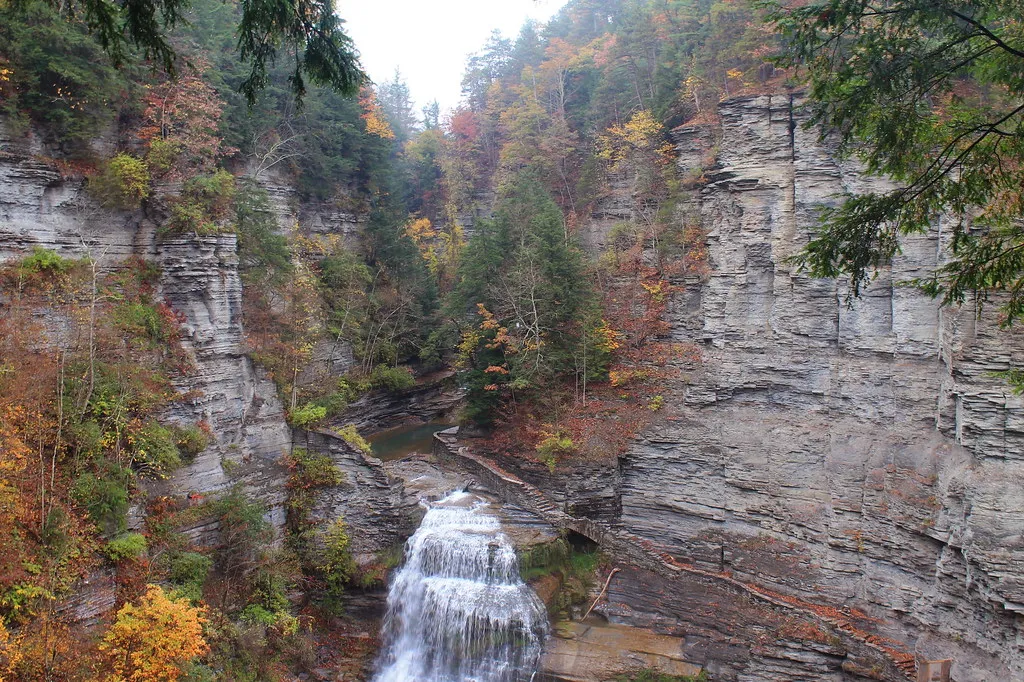
Named for the rugged terrain it carves through, Enfield Glen inside Robert H. Treman State Park builds anticipation slowly before delivering its payoff. While other gorge parks hit you with some of their most dramatic views right from the start, at Robert H. Treman, also known as Enfield Glen, you have to work just a little bit harder to get to the wow factor, as the initial part of the gorge trail is relatively flat and meandering for a mile and three quarters, but as you begin to hear thundering falls and see the route out of the gorge, it’s easy to see why wow might not be sufficient to describe the scene.
The centerpiece is Lucifer Falls, and it earns its ominous name through sheer scale. The 115-foot Lucifer Falls is clearly central, and the handsome stonework winding up along the sheer cliff is equally remarkable. Winding trails follow the gorge past 12 waterfalls, including the Lucifer Falls, to where visitors can see a mile-and-a-half down the wooded gorge as it winds its way to the lower park.
Unlike some of its neighbors, this park rewards patience with a payoff you can actually swim in. The Lower Falls at Robert H Treman State Park were an easy walk from the Campground, and the pool at the base of these falls is one of the few sanctioned swimming spots in the Finger Lakes region. Arrive early on a summer weekend if you want that swimming hole to yourself for even a few minutes.
Buttermilk Falls: A Gorge Made for Swimming
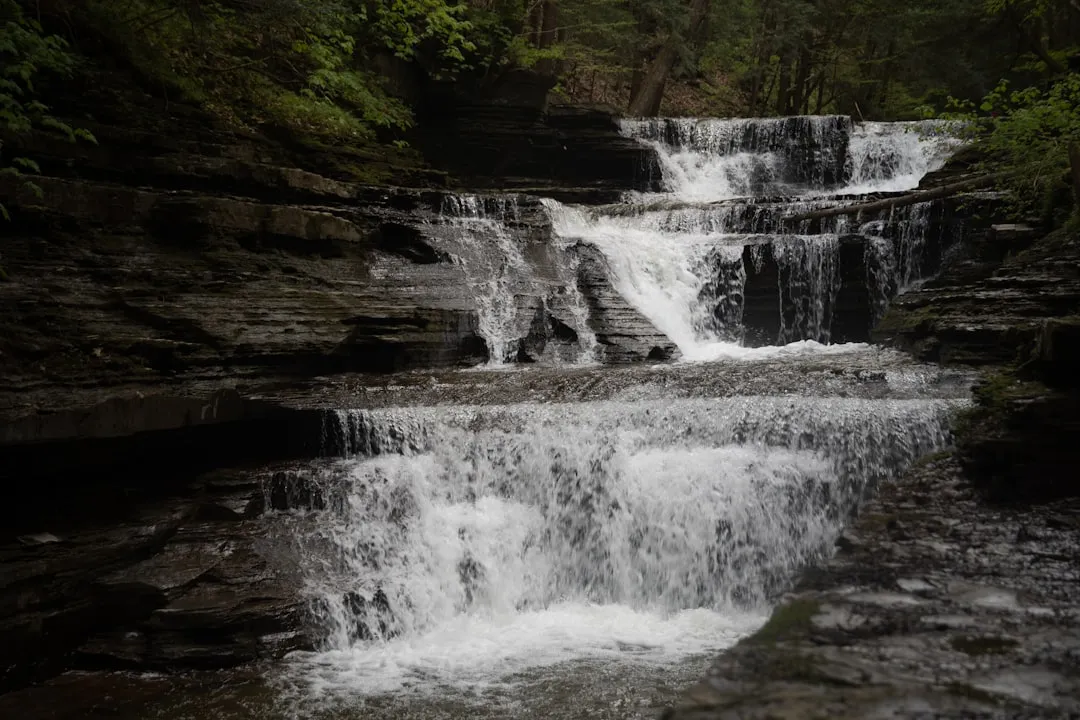
Just south of Ithaca, Buttermilk Falls State Park takes its name from the frothy, foam flecked look of its main cascade. Buttermilk Falls State Park is a Finger Lakes treasure just southwest of Ithaca, home to the spectacular 165-foot Buttermilk Falls and one of the most dramatic gorge hikes in New York. The falls aren’t a single drop but a whole system working together.
As the creek descends toward Cayuga Lake, it doesn’t just make one waterfall, it makes a whole staircase of them. As Buttermilk Creek cascades 600 feet through towering cliffs toward Cayuga Lake, it creates a series of 10 stunning waterfalls and natural swimming holes. Much of the stonework you’ll walk on dates back nearly a century.
This is one of the more historically layered parks in the region, thanks to Depression era labor crews. Hike the historic Gorge Trail, with CCC-built stone staircases from the 1930s, cool off in the natural swimming pool at the base of the falls, and stay overnight in cabins or campsites surrounded by woodland beauty. Note that the gorge trail here closes for annual spring safety maintenance, so it’s worth checking current conditions before a spring trip.
Ithaca Falls: A City Waterfall Two Blocks From Downtown
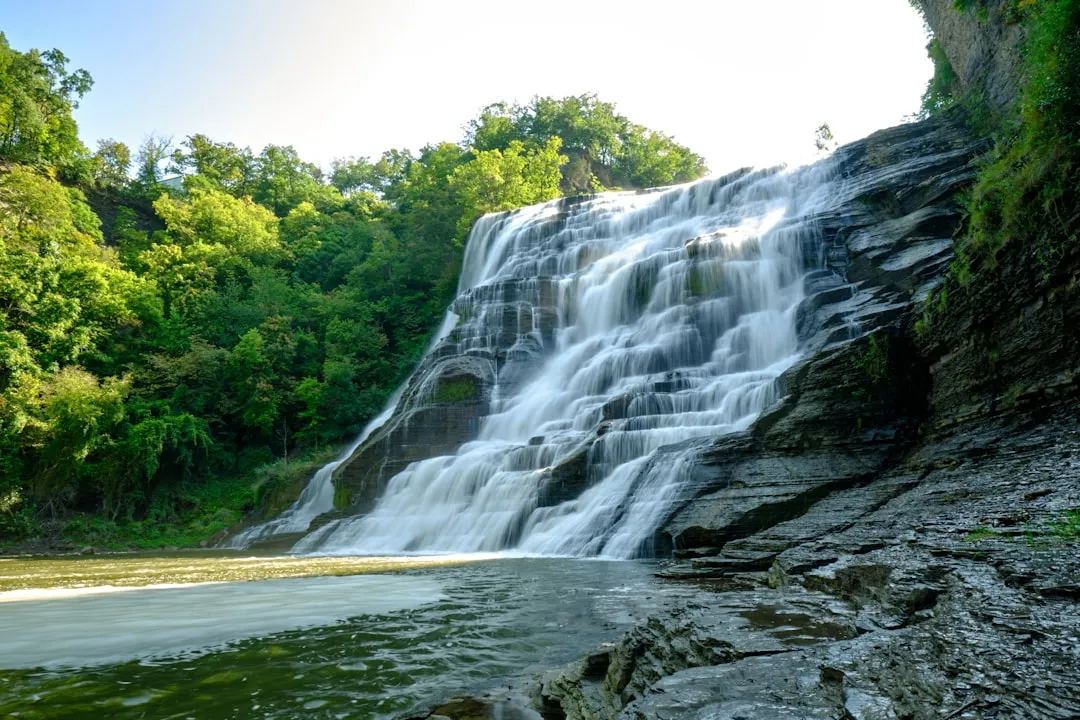
Not every waterfall on this list requires a state park entrance fee or a long drive. Ithaca Falls sits practically inside the city itself, a genuine surprise for first time visitors expecting to trek into the woods. Experience one of Ithaca’s secret waterfalls close to downtown and near Stewart Park, with a 150ft cascading fall, watching Fall Creek’s final plunge to Cayuga Lake.
Getting there requires almost no effort at all, which is part of its charm. The Ithaca Falls Trail is a super short walk through the woods leading to a gorgeous waterfall. There’s no admission fee and no gate to pass through, just a short residential stroll ending at a genuinely impressive wall of falling water.
A few practical notes matter here since it sits so close to town. Swimming is prohibited, dogs are allowed on leash, and there is no fee. It’s an easy stop to fold into an afternoon that also includes coffee on the Ithaca Commons or a walk around the Cornell campus.
Chittenango Falls: A Quieter Gem on the Region’s Edge
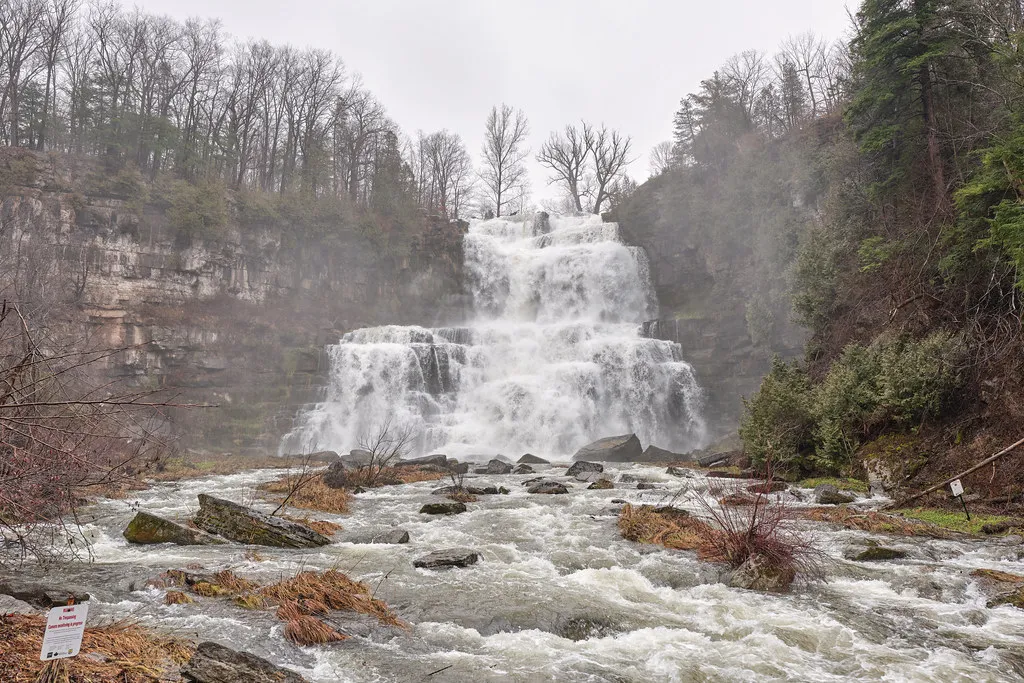
On the northeastern edge of the Finger Lakes, near Cazenovia, Chittenango Falls State Park offers a waterfall experience with a bit less foot traffic than the Ithaca area parks. A picturesque 167-foot waterfall is the main attraction of Chittenango Falls State Park, with glacial sculpting over 400 million-year-old bedrock responsible for this scenic feature.
Multiple vantage points let you build your own version of the visit. Visitors can view the falls from the top, walk the winding trail into the gorge, view the falls from the footbridge, and return to the top along the small trail on the opposite side of the gorge. The footbridge crossing is generally considered the best vantage point, close enough to feel the spray without the crowds you’d find at Watkins Glen.
Accessibility here is better than many gorge parks manage. The falls can be viewed from the top of the gorge without needing to descend any stairs at all, which makes this a good option for visitors who want the view without the full hike. Water flow does depend heavily on recent rainfall, so a visit after a rainy stretch tends to be far more rewarding than one during a dry summer week.
Cascadilla Gorge: Eight Falls Woven Into Campus Life
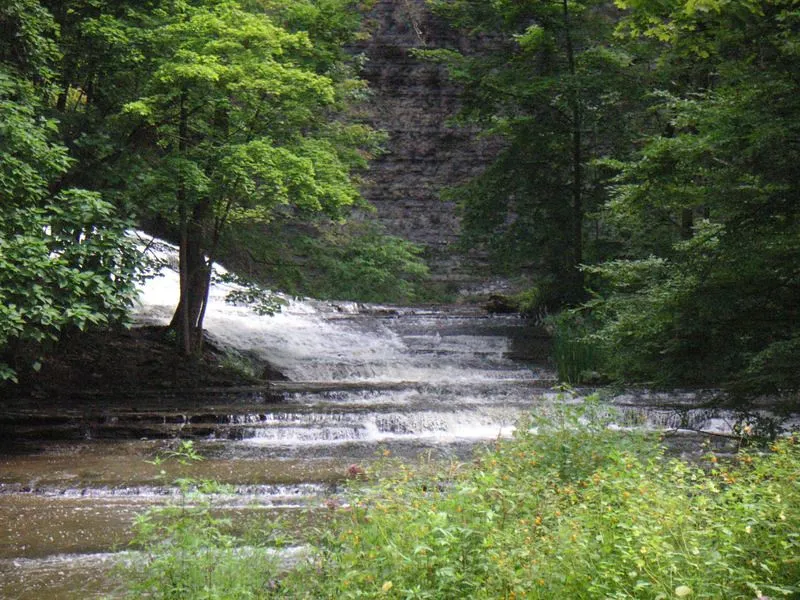
Cascadilla Gorge sits so close to Cornell University and downtown Ithaca that it’s easy to forget you’re standing in a genuine natural gorge rather than a landscaped campus feature. The Cascadilla Gorge is made up of eight Finger Lakes waterfalls, six of which are quite sizable, with shale and limestone cliffs creating wide stair-like surfaces for the waters of Cascadilla Creek to flow down.
The gorge feels almost secretive given its location. Located in a botanically rich, narrow gorge, it’s hard to believe that you’re just minutes from Cornell College and downtown Ithaca. Students walk through it as a shortcut, which is a fairly remarkable everyday commute by most standards.
The stonework and design echo the more famous Watkins Glen trail, just on a smaller, more intimate scale. Similar to the very popular Watkins Glen State Park, you’ll find stone pathways and bridges that wind through the gorge, crossing the creek when necessary and ascending the towering waterfalls. Small pools along the route make it a favorite lunch spot for anyone who wants their sandwich with a side of running water.
Grimes Glen: Wading Required
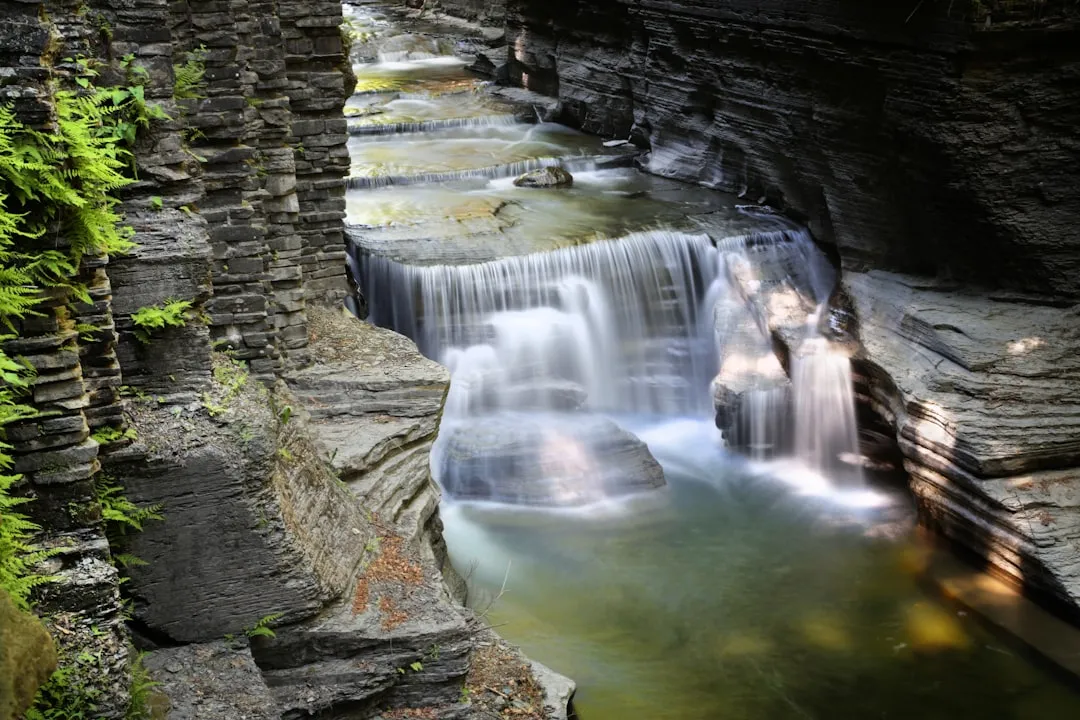
Near the town of Naples, on the western edge of the Finger Lakes, Grimes Glen offers something a bit different from the paved and staircased gorges closer to Ithaca. Formed by gushing meltwaters at the end of the last ice age, Grimes Glen is typical of many Finger Lakes gorges that still carry runoff from uplands down into the ice-carved valleys below, and two stunning 60-foot falls are accessible today by wandering upstream about a half mile from the parking area.
This is not a boardwalk experience, and that’s exactly the appeal for some visitors. Waterfall sightseers should expect to get their feet wet, since the gorge narrows upstream to a point where there is no bank to speak of, forcing hikers into the rocky streambed, though for much of the summer and fall the creekbed is easily navigable. Water shoes or old sneakers are the practical choice here, not hiking boots.
The site benefits from a bit of conservation oversight that keeps it in good shape for future visitors. The Finger Lakes Land Trust holds an easement on the property, and so has a responsibility to look out for the future of this remarkable gorge. It’s a fitting reminder that these landscapes, however wild they feel underfoot, depend on active stewardship to stay open and healthy for the next generation of hikers.
Carpenter Falls: A Reward at the Top of a Hill
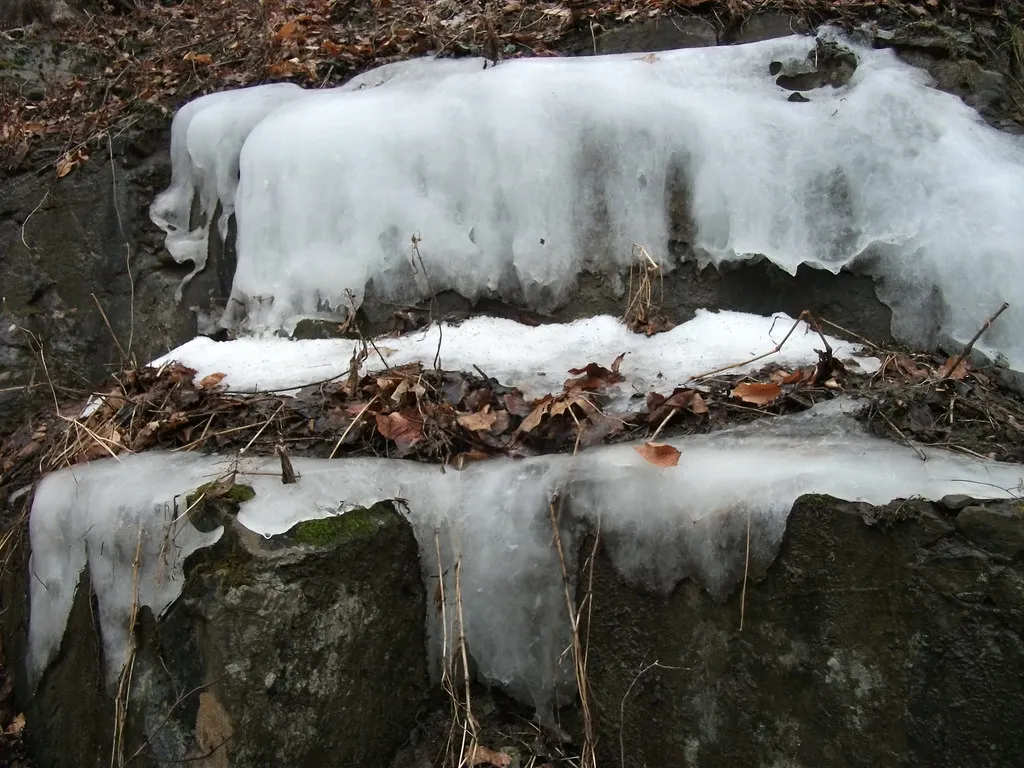
Tucked into farmland near Skaneateles Lake, Carpenter Falls asks a little more of visitors before it shows its full hand. Within the folds of farmland next to Skaneateles Lake lies a beautiful forest surrounding Bear Swamp Creek, and from the top of the hill, hikers are rewarded with a startling view of Carpenter Falls, where the water drops nearly 90 feet into a deep ravine.
Compared to the heavily trafficked parks near Ithaca and Watkins Glen, Carpenter Falls draws a much smaller crowd, largely because it isn’t sitting inside a marquee state park with a visitor center and gift shop. That relative obscurity is part of the appeal for hikers who prefer quiet trails over crowded overlooks. The surrounding farmland setting also gives it a very different visual character than the deep, shale walled gorges further south.
Because access runs through private and easement land in places, it’s worth checking current trail conditions and any posted access notes before setting out, particularly outside peak summer months. The payoff for that bit of homework is a waterfall that feels genuinely discovered rather than simply visited.
Shequaga Falls: A Waterfall in the Middle of Town
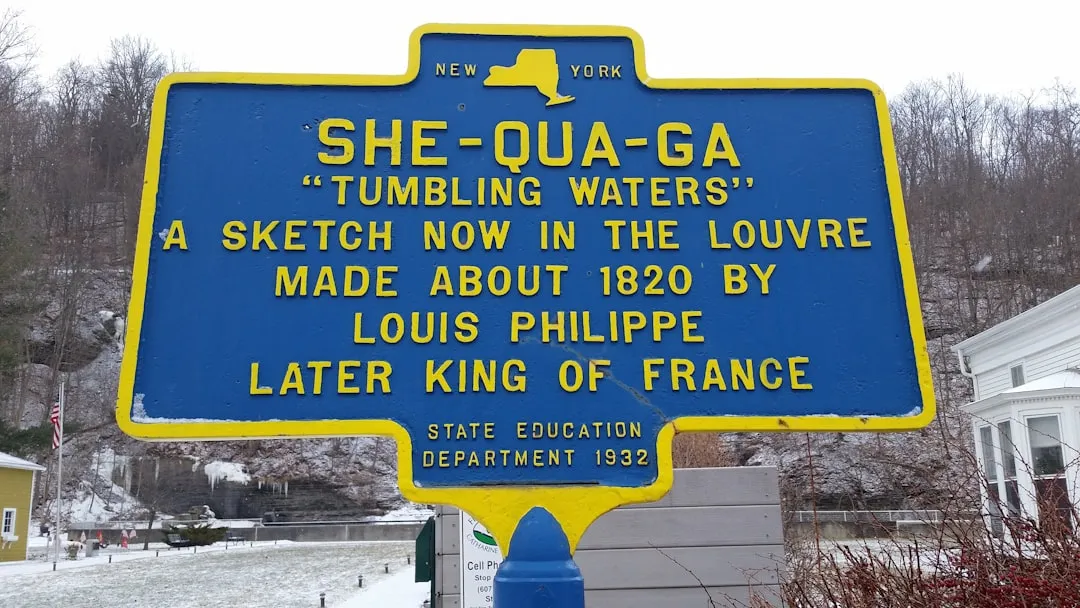
Few waterfalls anywhere manage to feel both monumental and utterly ordinary at the same time, but Shequaga Falls in the village of Montour Falls pulls it off. This is a stunning 156-foot waterfall located in the heart of the village of Montour Falls, just south of Seneca Lake, and its name comes from a Seneca word meaning tumbling waters.
What makes it remarkable is how little effort it takes to see. From the parking area on South Genesee Street, it’s only a couple hundred feet along a totally flat sidewalk to the best viewing area for the falls, making Shequaga Falls one of the most accessible waterfalls in the Finger Lakes. Houses sit on either side of the small park, so the falls seem to appear almost mid neighborhood.
The village leans into this oddity rather than downplaying it. Shequaga Falls is one of the few waterfalls in New York that is lit up after dark, creating an interesting experience that’s worth seeing if you love waterfalls. It’s a five minute detour from Watkins Glen, and honestly one of the easiest “wow, I didn’t expect that” moments the entire region has to offer.
Planning Your Own Waterfall Circuit
With this many falls spread across a fairly compact region, the real planning question isn’t which one to see but how many you can reasonably fit into a trip. If you are planning a multi-day trip to the Finger Lakes to visit the waterfalls, you should plan your trip from late spring to early fall, since most of the gorge trails at these New York State Parks are closed in the winter. Taughannock is the exception worth remembering if a winter visit is unavoidable.
Basing yourself centrally makes the whole circuit far easier to manage day to day. If your main goal when visiting the Finger Lakes is to see the waterfalls, staying in either Ithaca or Watkins Glen makes sense, since these are two of the most central towns in the Finger Lakes and closest to the majority of the waterfalls. From either base, most of the falls described here sit within an hour’s drive.
Come prepared for wet trails and shifting light rather than a groomed, predictable path. Sturdy shoes that can handle mist and occasional puddles matter more than fashion here, and cameras benefit from an early morning or late afternoon visit when the sun isn’t fighting directly against the spray. These gorges have been forming for roughly ten thousand years and will keep changing long after any single visit, which is part of what makes returning to them, season after season, feel worthwhile rather than repetitive.
AI Disclaimer: This article was created with the assistance of AI tools and reviewed by a human editor.