
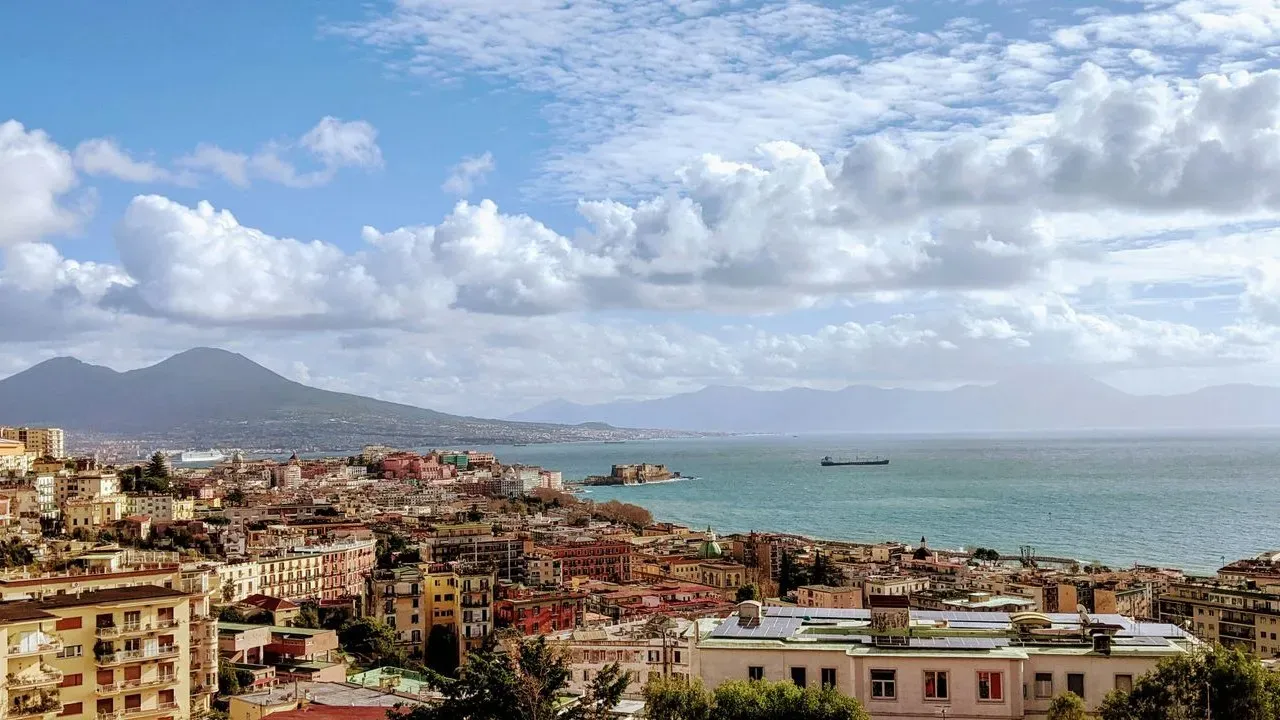

For more than thirty years I had crossed Italy in every direction, yet Naples remained a station platform or a portside espresso before the next train. The city’s reputation for intensity kept me moving on. Then a four-night stay with Jess altered that pattern entirely.
The Quiet Shift in Habit
Each previous visit had followed the same efficient line: arrive, transfer, depart. The station concourse and the harbor view became familiar in passing, never in residence. Four nights removed that distance and placed the city’s daily cadence within reach.
Time allowed the streets to unfold without the pressure of a schedule. Mornings began with the same espresso ritual, yet the cup now sat at a table rather than a counter. Evenings stretched into conversations that had no connection to departure times.
Via dei Tribunali at Its Own Pace
The street runs straight through the historic center, lined with pizzerias, bakeries, and small shops that open and close according to local rhythm rather than tourist clocks. Walking its length once felt like transit. Four nights turned it into a repeated route where details accumulated.
One afternoon the scent of fried dough led to a small stand serving sfogliatelle still warm from the oven. Another evening the same stretch offered a quiet table under strings of lights where the conversation lasted past the usual hour. The street rewarded repetition.
Food as Daily Practice
Meals in Naples carry the weight of generations of preparation. Pizza arrives with a thin, blistered crust and toppings that reflect the season rather than a fixed menu. Pasta dishes emphasize simple combinations that let each ingredient speak clearly.
Four nights permitted visits to both long-established spots and newer counters recommended by residents. The difference between a quick slice and a seated meal became part of the experience rather than a choice forced by time. Each plate added to a growing sense of the city’s food culture as lived practice.
City Rhythm Beyond the Plate
Naples moves with a density that rewards observation. Markets open early and close when the produce is gone. Churches stand open for quiet visits between services. Side streets reveal workshops where artisans continue trades that predate modern tourism.
The four nights created space to notice these patterns without rushing to the next landmark. A morning walk along the waterfront showed fishing boats returning with the day’s catch. An afternoon pause in a small square revealed neighbors greeting one another in the shade. The city revealed itself through these ordinary intervals.
What Four Nights Made Clear
Extended time in any place changes the nature of the encounter. Naples, after decades of brief passages, became a city of repeated streets, familiar faces behind counters, and meals that carried memory from one day to the next. The four nights did not rewrite earlier impressions so much as add depth to them.
Travel often improves when the calendar loosens its grip. Naples offered that loosening in the most direct way possible: by remaining itself while the visitor stayed long enough to notice.
AI Disclaimer: This article was created with the assistance of AI tools and reviewed by a human editor.