
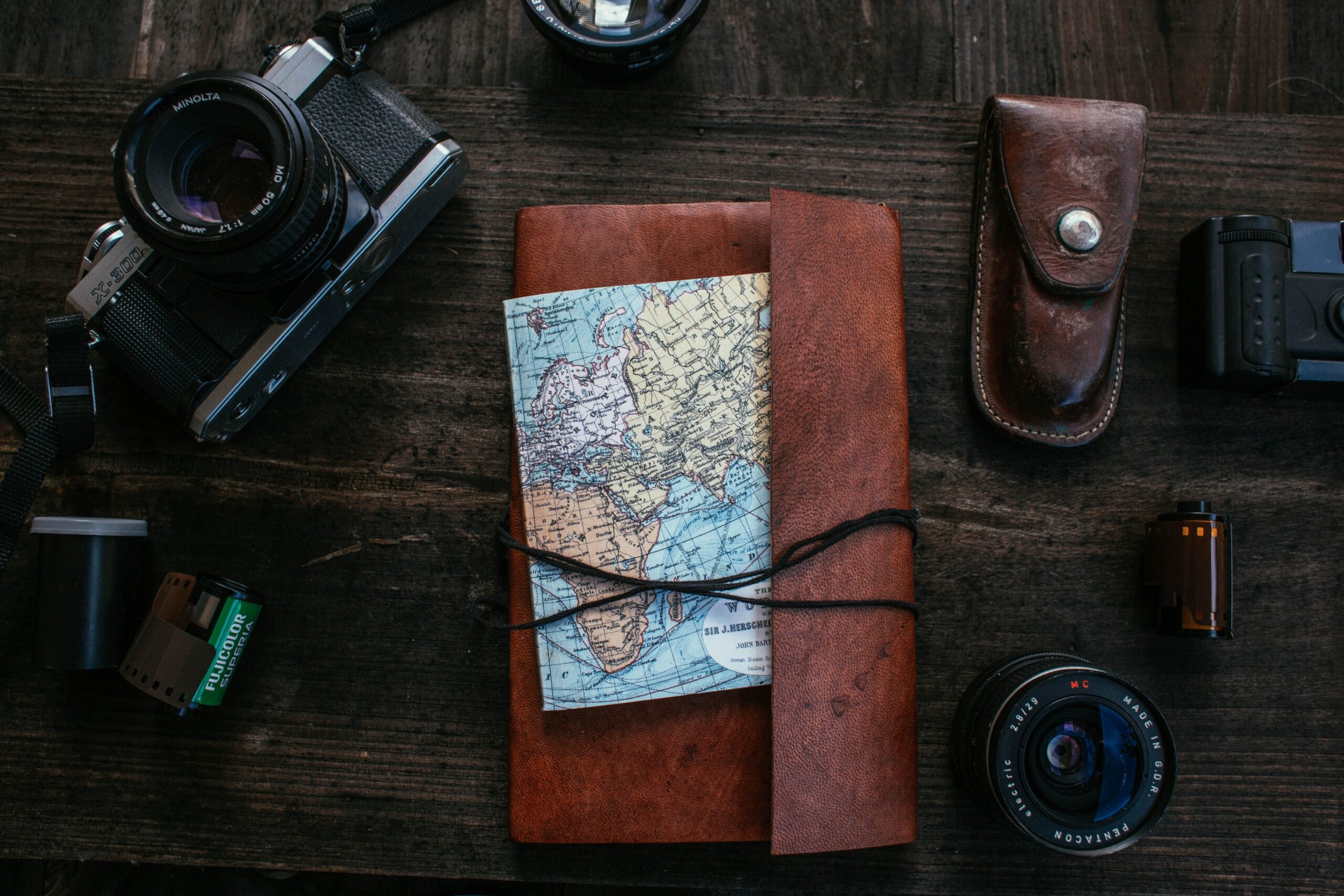

There’s something quietly melancholy about flipping through an old travel journal from a decade ago, one where coffee rings stain the corners and a faded metro ticket from Rome has been taped to page twelve. The handwriting is hurried, the sentences are imperfect, and it captures something that no camera roll ever quite manages. It captures how something felt.
In the age of the curated travel post and the thirty-second Reel, it’s worth asking an honest question: did we trade in depth for reach? Road trips are booming, global travel has fully recovered, and yet the quiet act of sitting with a notebook and a pen has never felt more countercultural. What happened to documenting the open road, and does it still matter?
The Road Is More Crowded Than Ever, But the Journal Has Gone Quiet
Road trips were the most popular form of travel in 2024, accounting for roughly two in five trips taken by Americans, alongside slow travel and multi-generational family trips. In November 2024 alone, a record 80 million Americans traveled for the Thanksgiving holiday, with the vast majority choosing to drive, marking the highest road travel volume ever recorded. People are moving, covering ground, and collecting experiences at scale.
Yet the ritual of documenting those journeys in a personal, reflective way has largely migrated to a phone screen. The volume of travel is at historic highs, but the inner record, the one written by hand in a notebook, has quietly faded from common practice. That’s not a small loss. It’s worth understanding how it happened.
Social Media Became the Default Diary
In 2024, each online user around the world spent roughly 870 hours on social media, with videos and pictures of travel destinations and holiday activities representing a significant share of the content keeping users engaged. Nearly half of all travelers engage with travel content on social media, and roughly one in three use it heavily when planning their trips. The feed replaced the journal, almost without anyone noticing.
Our online profiles showcase our best sides, and, intentionally or not, we usually tailor posts to what we think other people want to see. In a personal travel journal, a traveler records a more authentic version of events without catering to an external audience. That distinction matters more than it might seem at first.
Even though the Internet is forever, a posting on Instagram barely scratches the surface of the sensations of real travel, including how being somewhere new makes you feel, the scent in the air, the taste of food, the laughter in the café, the echo in the canyon. The social post documents that you were there. The journal documents that you noticed something.
What Handwriting Actually Does to Memory
A 2020 study from the Norwegian University of Science and Technology found that handwriting activates broad neural networks across the motor cortex, parietal lobe, and frontal language regions, while typing produces significantly less brain activation. This isn’t a minor footnote. It speaks directly to why a handwritten travel journal embeds memories more deeply than a typed note or a tagged photo.
When you pick up a pen and write a sentence by hand, you activate more than 25 distinct brain regions simultaneously, including areas governing motor skills, sensory processing, language production, and memory encoding. When you type the same sentence on a keyboard, you activate only a fraction of those regions. There’s a real, measurable difference in how the brain processes the experience.
The greater brain activity from handwriting compared to typing is thought to explain why handwritten notes are linked to increased learning, as demonstrated in research by Van der Weel and Van der Meer, published in Frontiers in Psychology in 2024. What’s true for students in a classroom is equally true for a traveler sitting in a café in Oaxaca, trying to hold onto an afternoon before it dissolves.
The Emotional Dimension of Writing on the Road
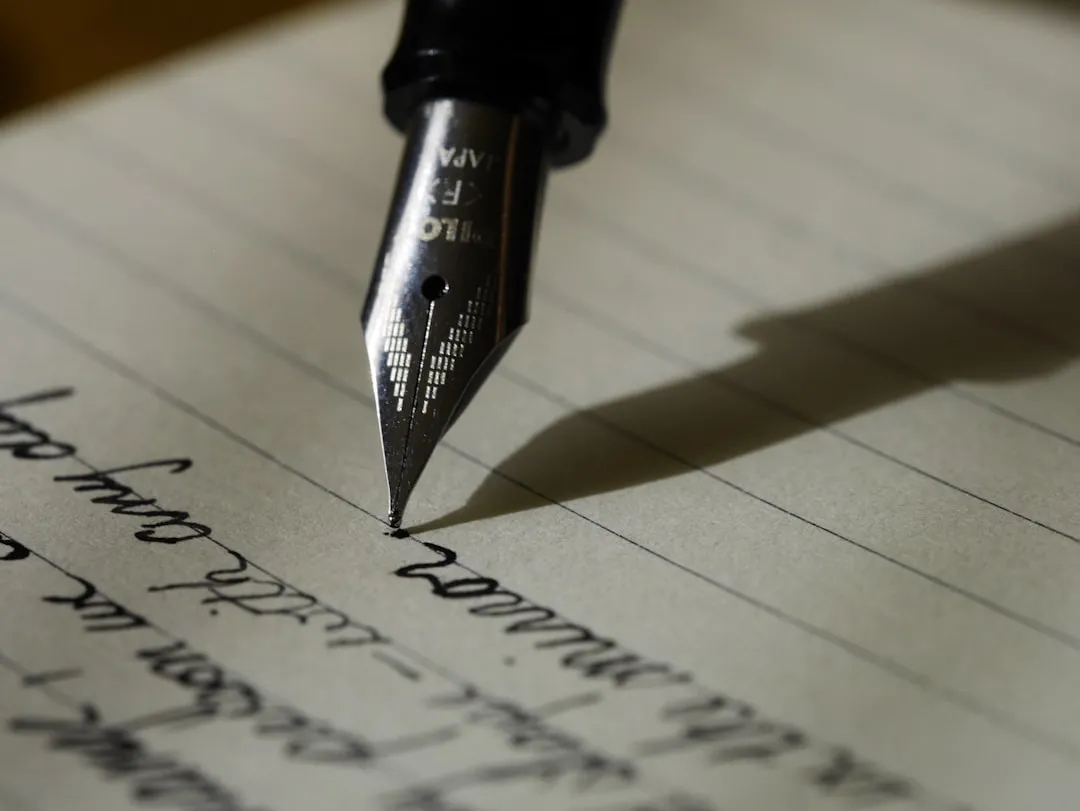
Over 200 peer-reviewed studies have replicated James Pennebaker’s expressive writing protocol, consistently showing that writing about thoughts and feelings for fifteen to twenty minutes over several days reduces psychological distress, lowers cortisol levels, and improves mood. Travelers deal with disorientation, wonder, overstimulation, and longing. Writing into those feelings rather than photographing past them has a measurably different effect on how we process an experience.
Psychologist James Pennebaker, whose decades-long research into expressive writing has become foundational in the field, found that writing about emotional experiences helps people process stress and even strengthen immune function. The physical slowness of handwriting forces thoughts to queue, one after another, in an order that typing shortcuts. You cannot outpace yourself on paper.
The Analog Wellness Movement Is Bringing the Journal Back

The “analog wellness” trend, recently highlighted as 2025’s top wellness trend by the Global Wellness Summit, represents a collective yearning for tangible, sensory experiences that reconnect people with themselves and the physical world. The statistics behind this shift are striking: the average person now processes approximately 74 gigabytes of information daily, equivalent to what an educated person in the 1500s would have consumed in their entire lifetime.
Within the larger analog trend, searches for analog hobbies such as knitting, crocheting, embroidery, journaling, and painting surged 136% over a recent six-month period, according to data from craft retailer Michaels. The travel journal is riding this current. Analog travel journals are making a strong comeback, and this is part of a wider trend where people are seeking more mindfulness, living more in the moment, and creating tangible keepsakes.
Travel Notebooks Are Finding a New Generation
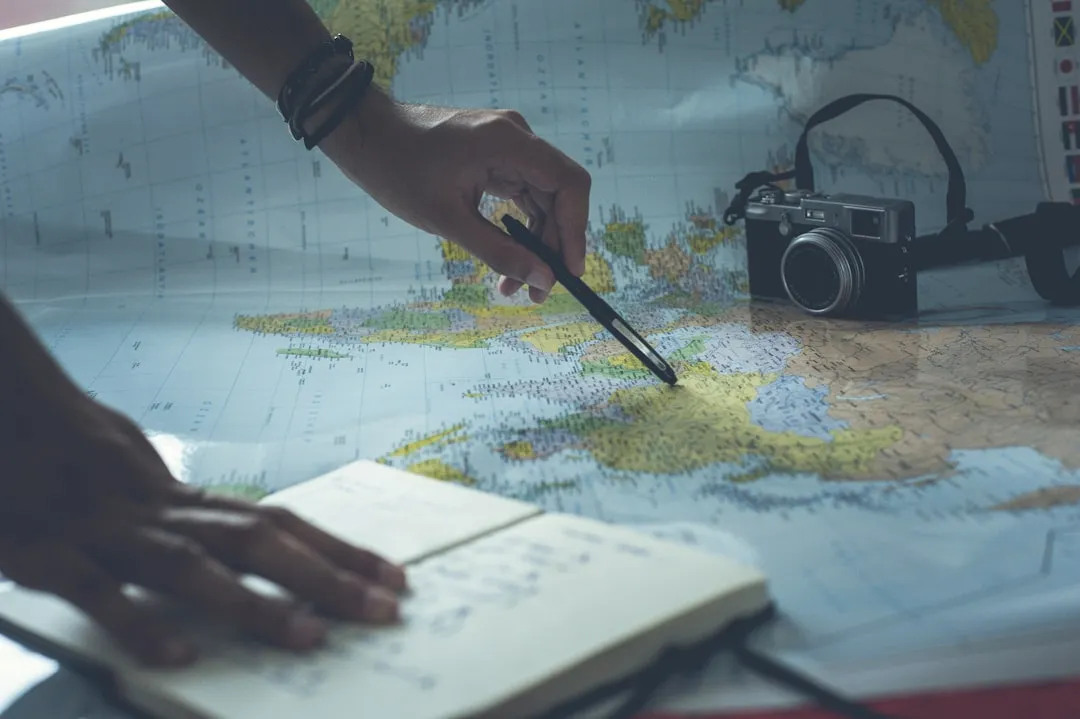
On TikTok, Instagram, and Pinterest, there is now a large and active community built around travel notebooks. People aren’t just posting pictures of beautiful places; they’re sharing carefully styled videos of themselves drawing in a journal, writing with a favorite fountain pen, or arranging a ticket stub next to their handwriting. The format has found an unexpected home on the very platforms that once seemed to replace it.
The bullet journaling community is maturing, with many people moving away from Instagram-perfect spreads and back toward the original intention: simplicity and productivity, with a side of creativity. The Traveler’s Notebook system, popularized by Traveler’s Company in Japan, uses a refillable leather cover with interchangeable inserts, so instead of filling up one notebook and moving on, you can swap inserts in and out as your needs change. It’s a practical, adaptable format well suited to people who travel frequently.
Slow Travel and the Journal as a Natural Pairing

In 2024, more frequent travelers than ever got drawn into overland travel, driven by a desire to inject the journey back into the experience. Roughly two in five Byway customers swapped planes for trains, compared to closer to one in four the year before. Slower journeys, by their nature, create more space for reflection.
The average length of trip booked through Byway’s concierge team grew from 9 days in 2022 to 14 days in 2024, a trend expected to continue. Longer trips require more than a camera roll. They require a structure for meaning-making, and the journal has always been that structure. When you spend two weeks moving through a country overland, there’s simply more to record, and more reason to record it.
Travelers are no longer just checking off destinations; they’re looking for the feelings and experiences that come with each place, creating their own story of exploration and learning. The travel journal is, at its most essential, exactly that: a personal story, told honestly.
The Wellness Resort World Has Noticed
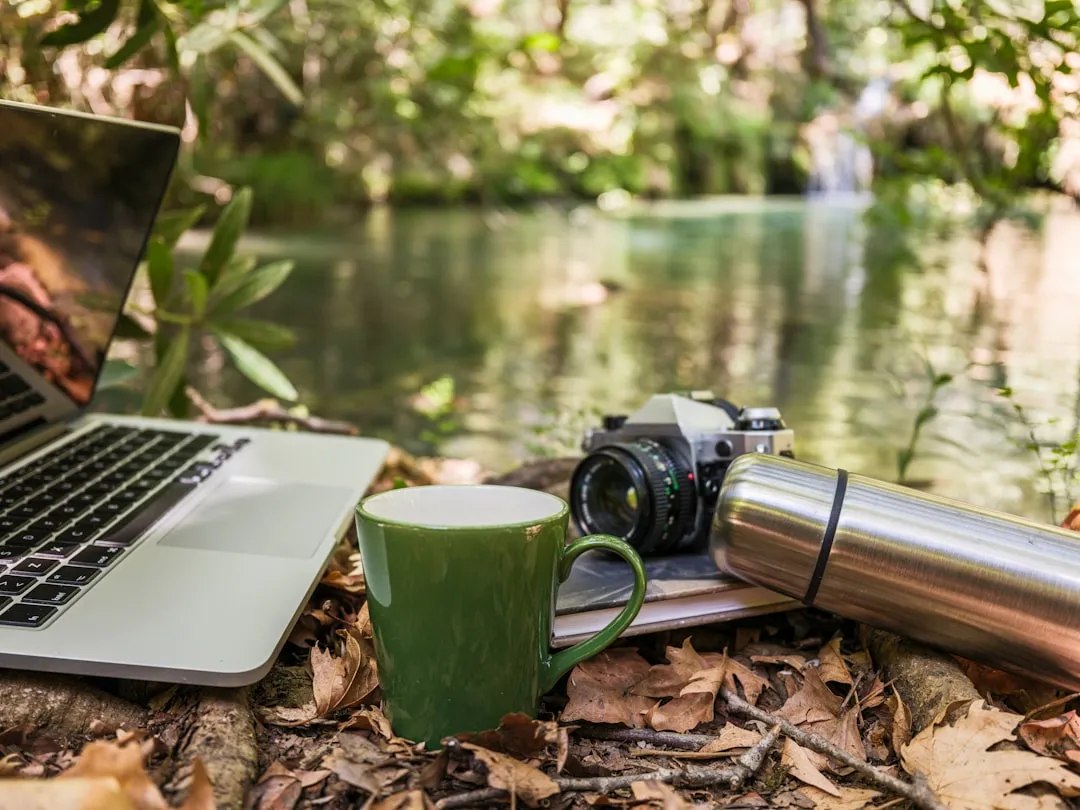
The Global Wellness Summit’s 2025 trend “Analog Wellness” argues that the online world’s relentless stimulation has gone too far, and that 2025 would be the year more people got serious about logging off, both in life and in travel. More destinations are now offering painting, ceramics, embroidery, calligraphy, and writing workshops, including programs dedicated specifically to journaling.
Those who step away from technology while traveling often feel a stronger pull toward journaling and reflective writing, with one traveler describing it as feeling like the brain came back to life, even in a short amount of time. That language, “came back to life,” says something about what’s actually at stake when we document travel thoughtfully versus performing it for an audience.
What Gets Lost When We Stop Writing It Down

Memory degrades faster than we imagine. Handwriting changes how information moves from short-term to long-term memory. The brain initiates a process called memory encoding when we write by hand, which strengthens neural pathways and helps us remember better. A photo reminds you that you were somewhere. A journal entry can restore the full texture of a moment: the unexpected rain, the wrong turn that led somewhere better, the feeling of arriving.
With a physical record, you keep much more than a photo and a few words. You record things that feel significant to you. When thumbing through a journal or printed photos, you share a moment with your past self, revisiting what you were thinking and feeling during your travels. That exchange across time is something no social media archive can replicate.
Reclaiming the Notebook: Practical and Real

Many people say that by turning to nondigital activities for entertainment, they are trying to unplug, reclaim their attention spans, and find renewed fulfillment in real-life experiences. Travel is one of the richest contexts for doing exactly that, because travel already takes you out of the familiar. The journal takes you out of performance mode.
Some travelers tuck a train ticket next to a few lines about the conversation they had with a stranger. Others leave a whole page for a café napkin where they scribbled a thought they didn’t want to forget. Some add quick sketches of clouds or streetlights because drawing helps them remember. Others focus on words, not what they did, but how it felt. None of that requires talent. It only requires time and a willingness to pay attention.
Recording an experience is always secondary to being present and mindfully participating in your travels. When a feeling of enchantment or wonder arrives, the goal is to experience that feeling. You can’t capture every detail of a trip, so you notice the moments that actually affect you. That kind of honest selectivity is, quietly, the real art of the travel journal.
The Takeaway
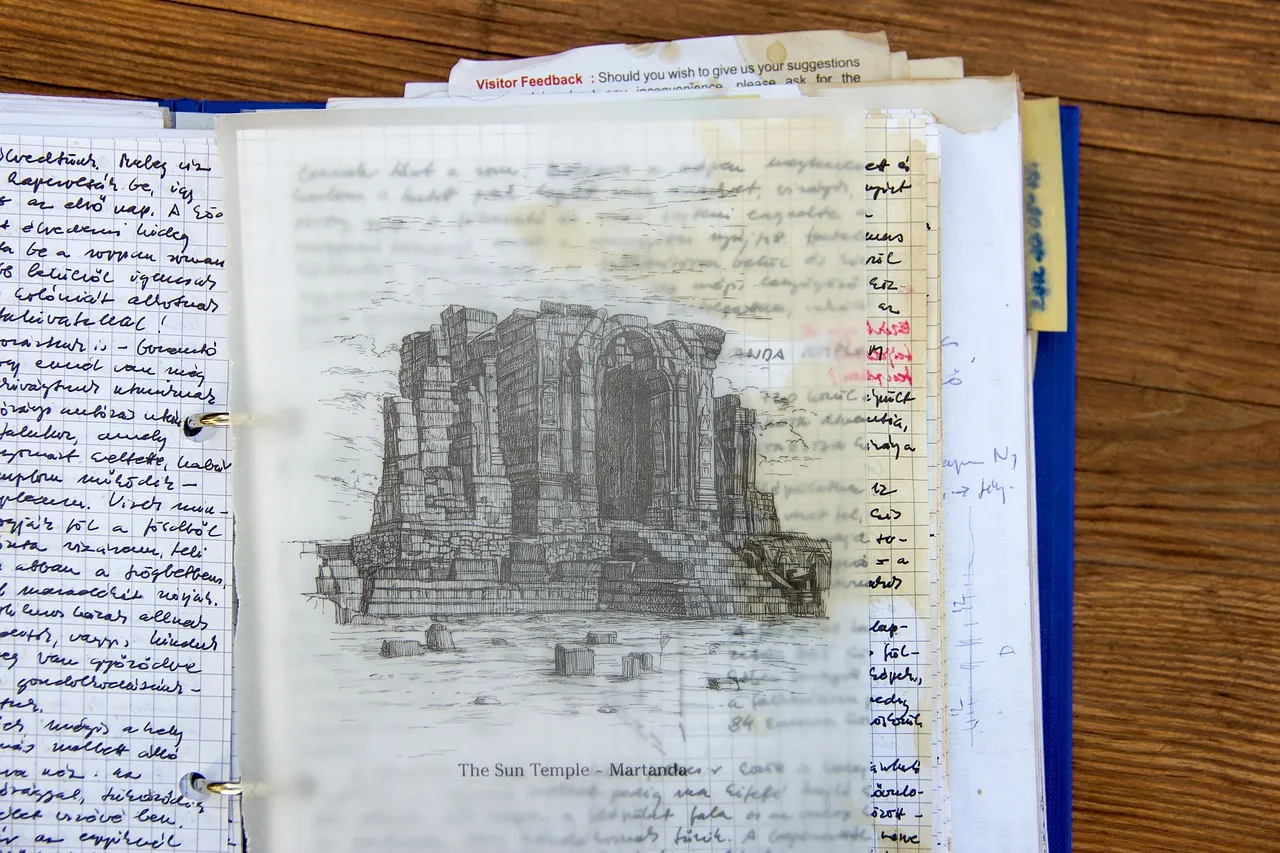
The travel journal didn’t disappear. It got crowded out by the urgency of sharing, the speed of the scroll, and the quiet pressure to document for others rather than for yourself. Journaling is experiencing a genuine revival in 2025, driven in part by the fact that burnout, anxiety, and overwhelm are widespread, and screens dominate so much of daily life. More and more people are craving tactile ways to process their emotions and their thoughts.
Travel amplifies everything: the beauty, the disorientation, the unexpected kindness of strangers, the meals you’d never have ordered at home. All of that deserves more than a caption. The common thread across decades of writing research is the same: writing by hand forces the brain to slow down, organize, and make meaning out of raw experience. That’s precisely what the open road demands of us, if we’re willing to meet it honestly.
The notebook is still there. It’s just waiting to be picked up again.
AI Disclaimer: This article was created with the assistance of AI tools and reviewed by a human editor.