


There’s a moment most long-term backpackers know well. You step off a bus in a new town, the afternoon light is fading, and something about the street feels off. You can’t name it. Nobody warned you about it. There’s no review that quite captures it. You just feel it, and you act on it.
That feeling isn’t mysticism. It’s not paranoia. It’s something far more interesting, and understanding it can genuinely make you a safer, more perceptive traveler.
The Brain Has a Built-In Travel Advisor
Long before we had review platforms and interactive maps, humans navigated unknown environments using the oldest decision-making tool available: their body’s own signals. Neuroscientist Antonio Damasio’s somatic marker hypothesis states that by creating physiological responses, emotions can influence future decision-making processes. In plain terms, the body is constantly running a quiet background assessment of your surroundings, informed by everything you’ve ever experienced.
Damasio’s hypothesis holds that we use somatic markers, essentially gut feelings, to guide decisions when cognitive faculties are busy or when we lack resources or information. These gut feelings may act subconsciously, steering us towards advantageous options even in the absence of a conscious understanding of the benefits or consequences of a choice.
For a backpacker who has slept in dozens of hostels, navigated countless bus stations, and read the energy of unfamiliar streets at all hours, this system has been trained by real experience. It fires quickly and it fires for a reason.
Gut Feeling Is Really Pattern Recognition in Disguise

Intuition is pattern recognition that plays out in a person’s subconscious mind. This pattern recognition is shaped by data available to the individual, and it is as unique as each person who experiences a gut feeling. The data we draw on is our lived experience.
The more experience a person has in a particular domain, the greater their potential for intuitively making good decisions. Decision scholar Herbert Simon described this precisely: a situation provides a cue, that cue gives the expert access to information stored in memory, and that information provides the answer. Intuition is nothing more and nothing less than recognition.
A first-time traveler might look at a guesthouse doorway and see nothing remarkable. A seasoned backpacker might notice that the lock is wrong, the proprietor’s body language is tense, or the lighting pattern suggests the building has a different layout than advertised. None of that is magic. It’s accumulated data, processed fast.
The Neuroscience Behind “Something Feels Off”
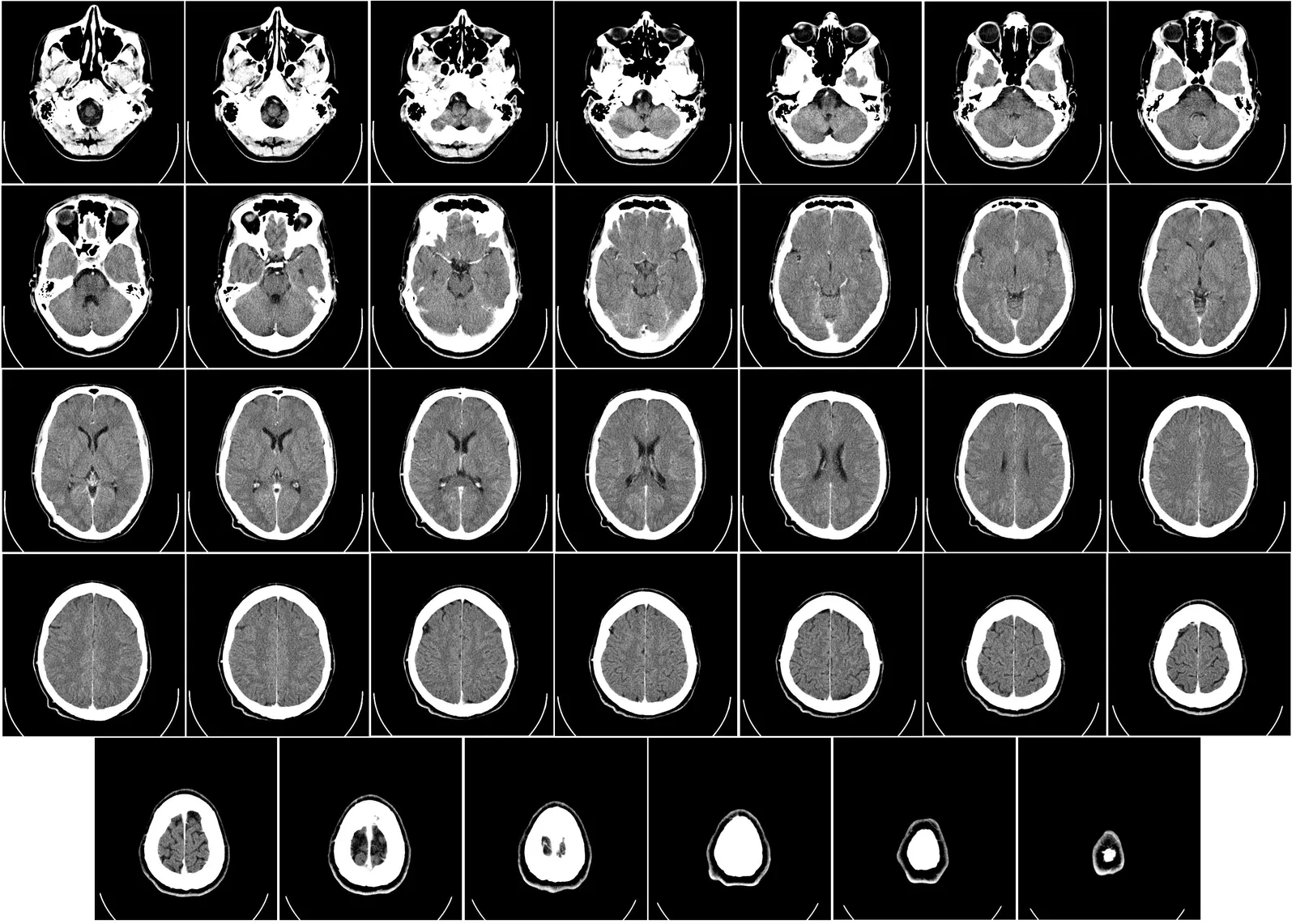
The somatic marker hypothesis aligns closely with Dual-Process Theory, which posits that human thought operates via two distinct systems: System 1, which is fast, automatic, intuitive, and emotional, and System 2, which is slow, effortful, logical, and conscious. Damasio’s markers act as the critical input for System 1, allowing it to quickly triage choices before the laborious System 2 is engaged, ensuring efficiency in high-stakes or time-constrained situations.
The core brain regions of the somatic marker system are believed to be located in the ventromedial prefrontal cortex and orbitofrontal cortex, which integrate bodily signals from the peripheral to the central nervous system to create a response such as subjective feeling, and can also modulate and monitor decision-making. That tight knot in your stomach when you enter a particular alley at night? That’s not imagination. That’s your brain’s safety circuitry doing its job.
Experience Sharpens Instinct, Not Just Skill
Research has found a correlation between travelers’ experiences and their perception of risk, which influenced their choice of location and manner of traveling. This is a consistent finding across travel research: the more time you spend on the road, the more refined your internal alarm system becomes. Not because you become fearless, but because you become more calibrated.
The rapid expansion of the tourism industry has widened and deepened tourists’ personal experiences, which means they may have a higher degree of sensitivity to the possibility of encountering problems in subsequent travels. In other words, every challenging journey adds resolution to your internal picture of the world. Seasoned backpackers don’t just carry more gear. They carry more finely tuned perception.
Intentional Travel and the Rise of Gut-Led Decisions

If anything is crystal clear about travel behavior in recent years, it continues to be much more intentional. Travelers want to fully immerse themselves in the experiences they’ve booked and are actively going offline to do so. That growing intentionality matters here. When you’re present rather than distracted, you’re actually able to hear what your instincts are telling you.
Screens and constant connectivity can dull the very senses that keep you safe. A backpacker who looks up from their phone in an unfamiliar neighborhood, takes in the details of the street, the behavior of people nearby, the rhythm of the place, is operating at full human perceptual capacity. That capacity is worth more than any algorithm.
When Gut Feeling Signals Community Welcome or Tension

The impact of overtourism hasn’t gone unnoticed by travelers. People want to travel somewhere where they feel welcome, not somewhere they risk negative reactions from locals. At the same time, the problems created by overtourism have fueled travelers’ growing sense of consciousness and the interest in destinations and experiences that prioritize environmental conservation, cultural preservation, and social responsibility.
Beyond physical safety, a traveler’s gut often picks up on social atmosphere too. A place where locals avert their eyes, where market stalls close early without explanation, or where the energy carries a tight, guarded quality can communicate something important about the current state of a community. Experienced backpackers read these signals and respond with respect, not suspicion.
Gut Instinct Isn’t Infallible, but It Deserves a Seat at the Table

Research on intuition often produces conflicting results and suffers from reliability issues due to the lack of tools that can conclusively evaluate a person’s latent intuitive position. That’s an honest limitation worth acknowledging. Gut instinct can be colored by unfamiliarity, cultural bias, or simple fatigue. A place that feels strange might just be genuinely unfamiliar, not dangerous.
The skill isn’t in following every anxious feeling blindly. It’s in learning the difference between discomfort born from novelty and discomfort born from genuine risk. That distinction comes with miles, with exposure, and with honest self-reflection after each journey.
Preparation and Instinct Work Together, Not Against Each Other

Moving into 2026, feeling safe while traveling increasingly reflects confidence in preparation and access to information, rather than a belief that risks no longer exist. Good preparation and a well-tuned gut aren’t opposites. They reinforce each other. Knowing the general safety profile of a region, understanding local norms, and researching current conditions all give your instincts better material to work with.
Ongoing tensions in various regions have led to airspace closures, shifting visa rules, and short-notice advisories. For most travelers, the key impact is increased uncertainty, making it important to monitor official guidance, remain flexible with plans, and prepare for potential delays or changes. In environments that shift quickly, no app replaces the clarity that comes from paying close attention on the ground.
The Trail Is a Teacher Too
Humans are the most dangerous animal in both the back and front country. Luckily, most of the people you will meet while hiking and backpacking are fellow travelers out enjoying nature just like you. If they aren’t, remember one important thing: trust your gut. That guidance, offered by experienced trail community voices, echoes exactly what neuroscience supports.
Our instincts saved our ancestors from predators and danger. They can save you from humans and other animals too. There’s something grounding in that continuity. The same wiring that helped people navigate a dense forest thousands of years ago is the same system that flags a suspicious hostel manager or an unsafe shortcut today.
Curiosity and Caution Can Coexist
The absolute majority of people travel very safely and without incident, and the statistics for becoming the victim of crime when traveling are actually extremely low. This is worth holding onto. Trusting your gut isn’t about moving through the world in a state of low-grade fear. It’s about moving through it with full awareness.
Cognition involves the reception, processing, and understanding of information, helping tourists evaluate and choose travel destinations. Emotional experiences refer to individuals’ subjective feelings and evaluations of a destination, which can spark desire and interest, thereby influencing their cognition and evaluation of that destination. Both strands matter. Wonder and watchfulness are not mutually exclusive. The best backpackers carry both in equal measure.
The Quiet Confidence of the Long-Term Traveler

What separates a seasoned backpacker from a nervous first-timer isn’t usually courage. It’s calibration. Years of arrival days, unexpected detours, odd interactions, and memorable generosity have built an internal landscape that the brain navigates more fluidly than any travel app could.
When intuitions are analyzed from the neuroscience lens, Damasio’s somatic marker hypothesis suggests that emotions are essential for guiding any decision as an individual perceives the bodily-based signals or somatic markers, in other words, how their body feels toward that particular decision. These somatic markers are automatically generated by the body based on past experiences and positive and negative responses toward them.
Every trip you take is, in a quiet way, training your next trip. The more honestly you pay attention, the more reliable that inner voice becomes. Not loud, not dramatic. Just present.
A Final Note on Listening

Trusting your gut while traveling is not a rejection of research, preparation, or local knowledge. It’s the integration of all of it. The body synthesizes what the mind has gathered and offers it back in a language that is immediate and felt rather than analytical and slow.
The world is genuinely worth exploring with openness and curiosity. Most places are safer than headlines suggest, most people are kinder than fear assumes, and most gut feelings, when they do fire, are worth pausing to hear. The seasoned backpacker knows this. They’ve learned that the voice isn’t one to override without reason, because over many roads and many arrivals, it has proven itself worth the quiet attention it asks for.
AI Disclaimer: This article was created with the assistance of AI tools and reviewed by a human editor.