
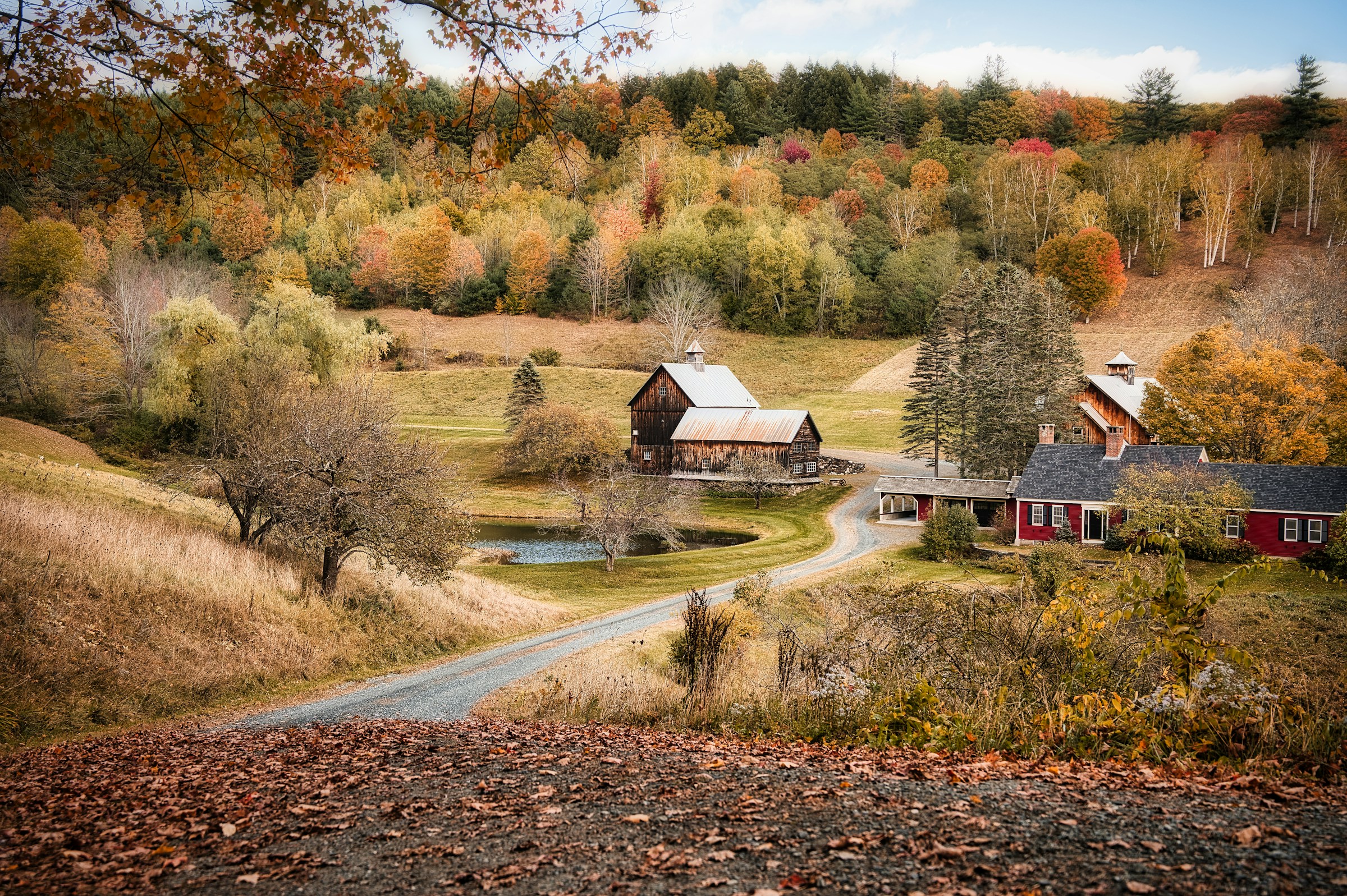

There’s a particular stretch of central Vermont where the road narrows, the tree canopy closes over you like a slow exhale, and then, without much warning, a weathered red wooden bridge appears out of the mist. It doesn’t announce itself. It just sits there, spanning a cold river, looking like it has been doing so for a very long time – because it has.
Woodstock, Vermont carries that quality in abundance. So does the quieter, less-photographed town of Northfield. Both places belong to a tradition that is genuinely rare in the modern world: a landscape where covered bridges are not museum pieces but living, functional crossings that locals and visitors still drive through today. To understand why these towns feel so startlingly unchanged, it helps to know a little about what Vermont has held onto.
Vermont’s Remarkable Covered Bridge Legacy
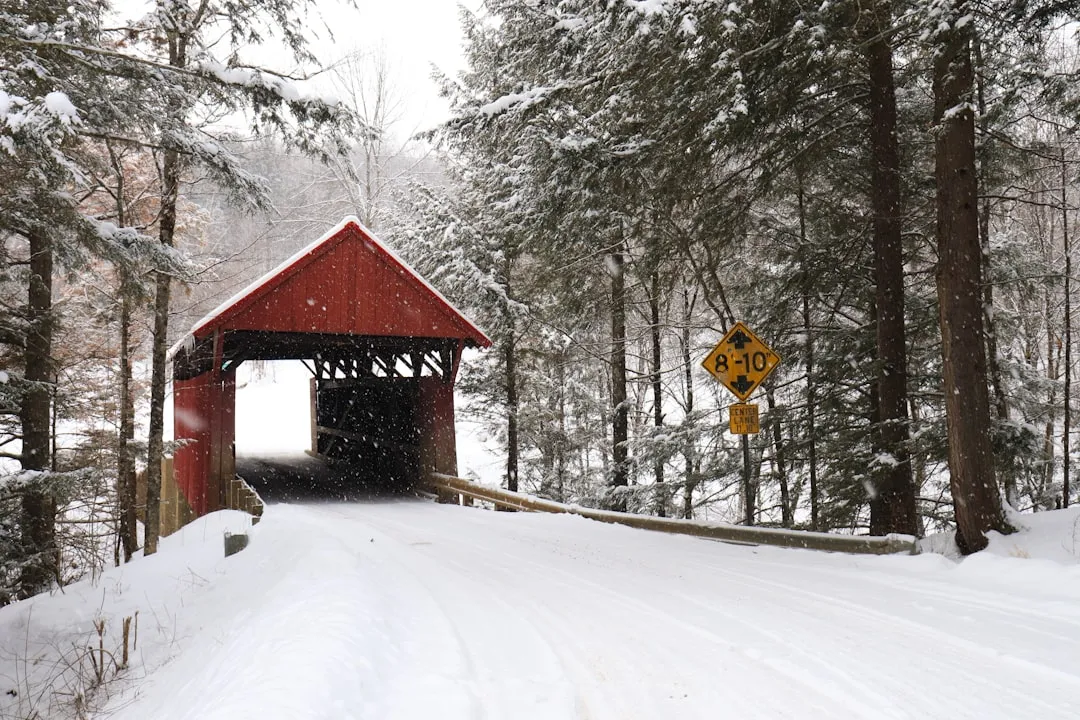
Vermont has just over 100 authentic covered bridges, giving it both the highest number of covered bridges per square mile and per capita in the United States, as well as in North America overall. That density is striking for a state this size, and it’s part of what makes driving through Vermont feel categorically different from other rural New England states.
Covered bridges in Vermont date from 1820, when the original Pulp Mill Bridge across Otter Creek in Middlebury was built, with most constructed during the mid to late 19th century. The roof wasn’t decoration. The primary purpose of the roof was to protect the structural timbers from the ravages of weather, preserving the supporting trusses, which without covering would fail in a few years because of rot and deterioration.
During the 19th century the number of covered bridges in Vermont reached over 700. The horrendous flooding of 1927 destroyed approximately 100 covered bridges. What survived reflects both good fortune and deliberate community care – and the remaining structures carry that weight gracefully.
Woodstock: The Quintessential Vermont Village
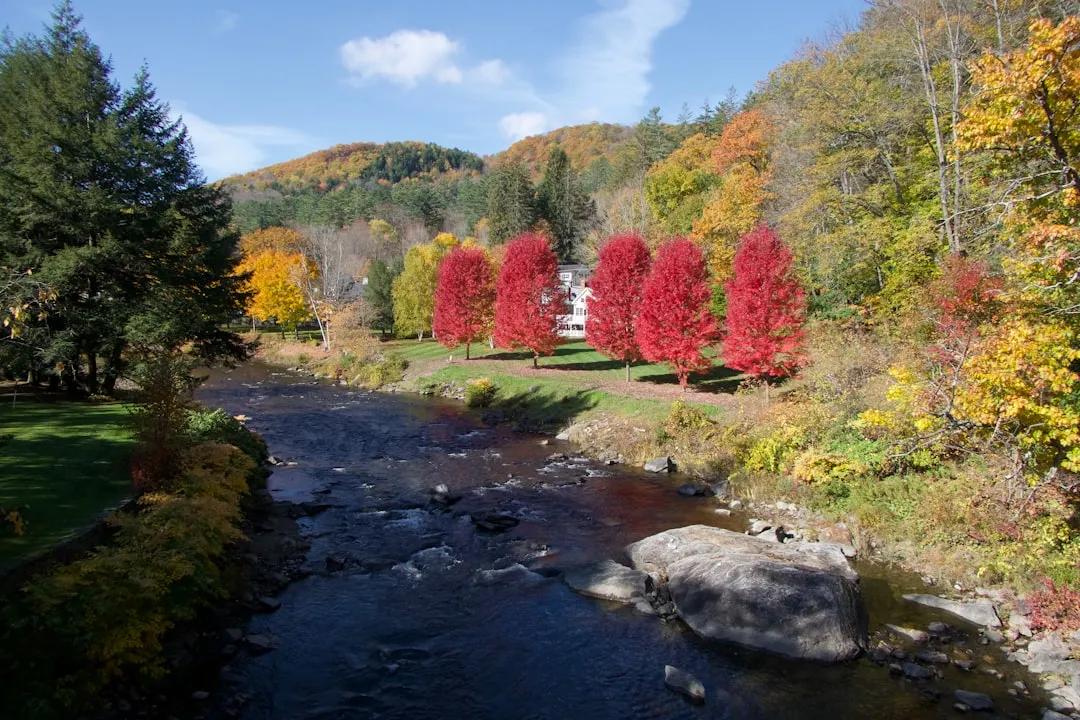
Nestled in the scenic Green Mountains, Woodstock is known for its beautifully preserved 18th and 19th-century architecture, tree-lined streets, and classic covered bridges that span the gentle flow of the Ottauquechee River. The town was chartered in 1761, and its careful preservation over the centuries shows in every corner.
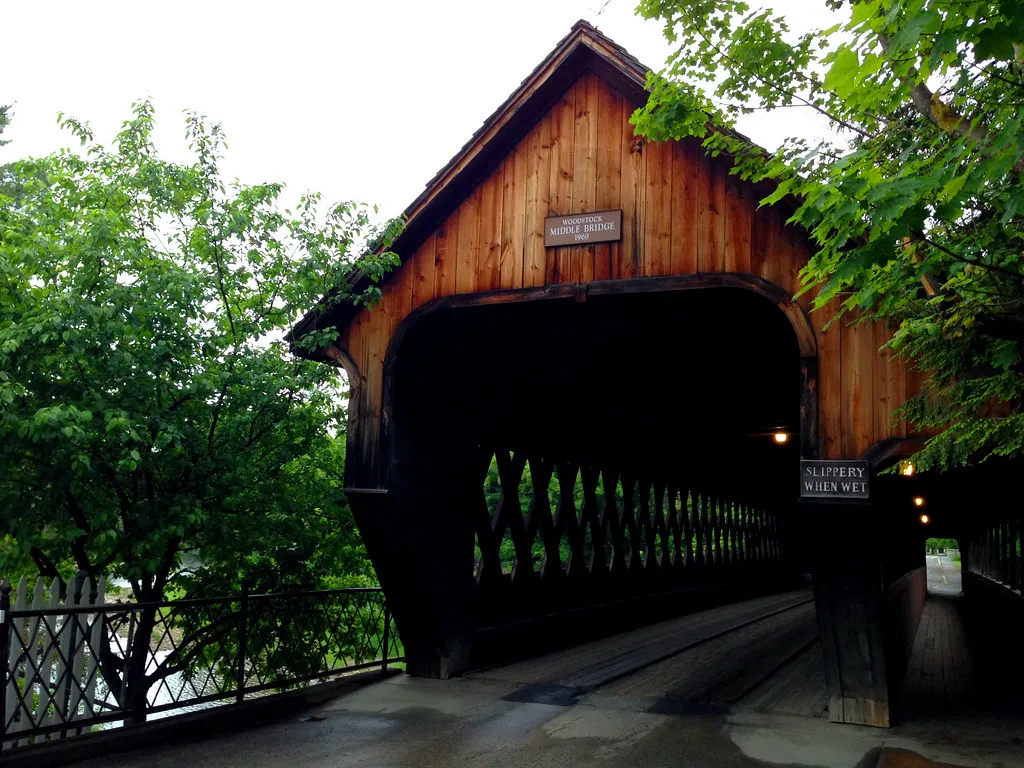
Woodstock is as quaint and iconic as a Vermont town could get and is a popular destination in all seasons. Four covered bridges are nearby, including the Lincoln Covered Bridge on Route 4 near the Lincoln Inn and Restaurant in West Woodstock and the Middle Bridge on Mountain Avenue. Each one is distinct in character, age, and setting, making a self-guided tour through the area genuinely rewarding rather than repetitive.
Through its art-focused festivals, galleries, historic sites, and preserved rural scenes, Woodstock’s spirit of creativity and artistry has never been livelier. The town has cultivated cultural depth alongside its natural scenery, which keeps it from feeling like a single-note destination.
The Taftsville Covered Bridge: One of Vermont’s Oldest
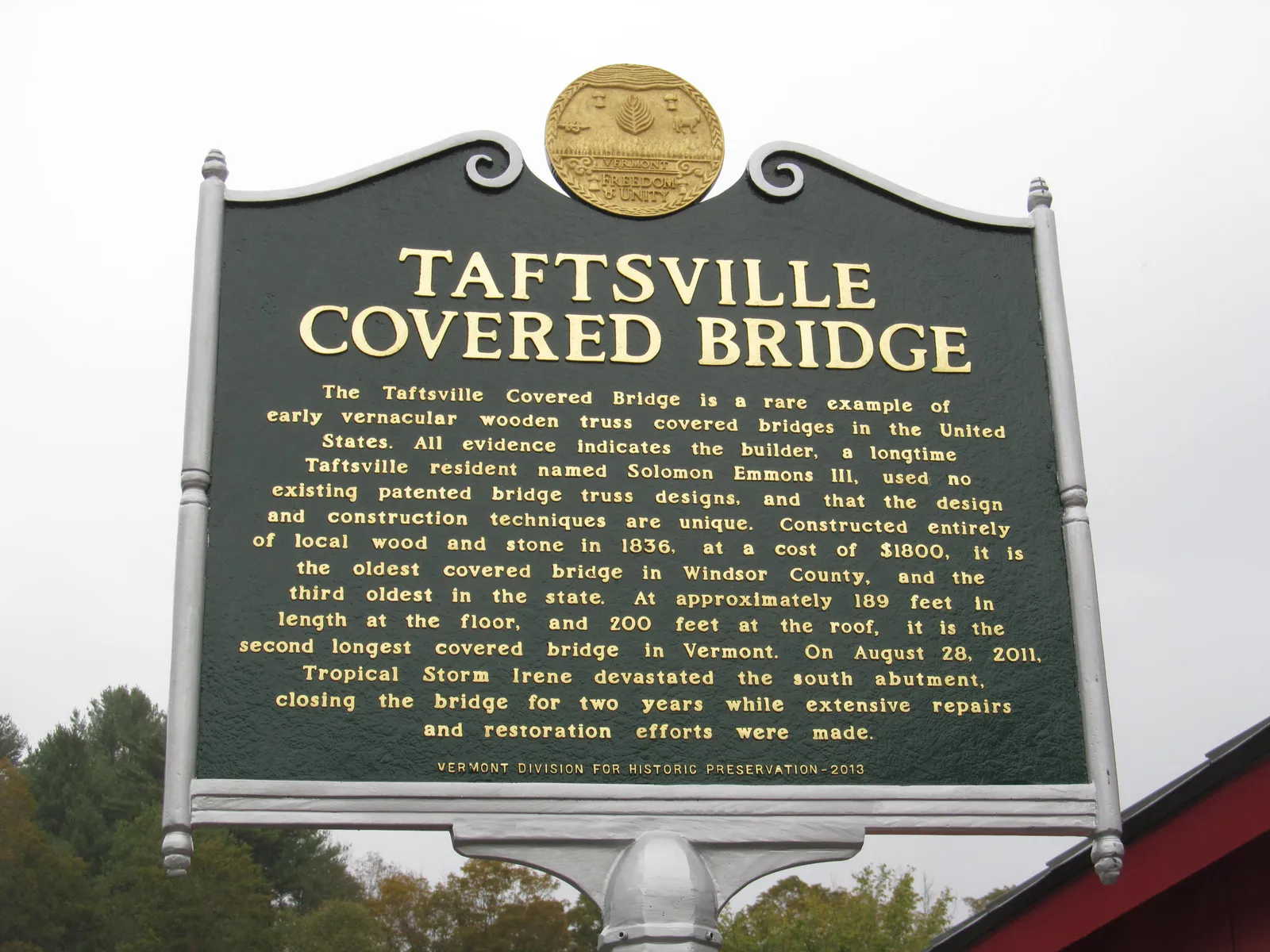
The Taftsville Covered Bridge near Woodstock is a picturesque, bright red covered bridge that many visitors consider a quintessential New England sight. Many appreciate its historical significance as one of Vermont’s oldest covered bridges, originally built in 1836, and its well-maintained condition. Nearly two centuries old, it remains open to traffic.
The Taftsville Covered Bridge spans approximately 190 feet across the Ottauquechee River, just downstream from Woodstock, Vermont. Its red color stands out, offering great photo opportunities, especially with the nearby dam and waterfall. The combination of the river, the falls, and the old timber frame is genuinely arresting.
The bridge withstood Hurricane Irene, countless ice dams on the river below, and more throughout the years. That resilience, earned through repeated floods and New England winters, is part of what makes standing beside it feel meaningful rather than merely scenic.
Northfield: Vermont’s Quietly Exceptional Covered Bridge Town
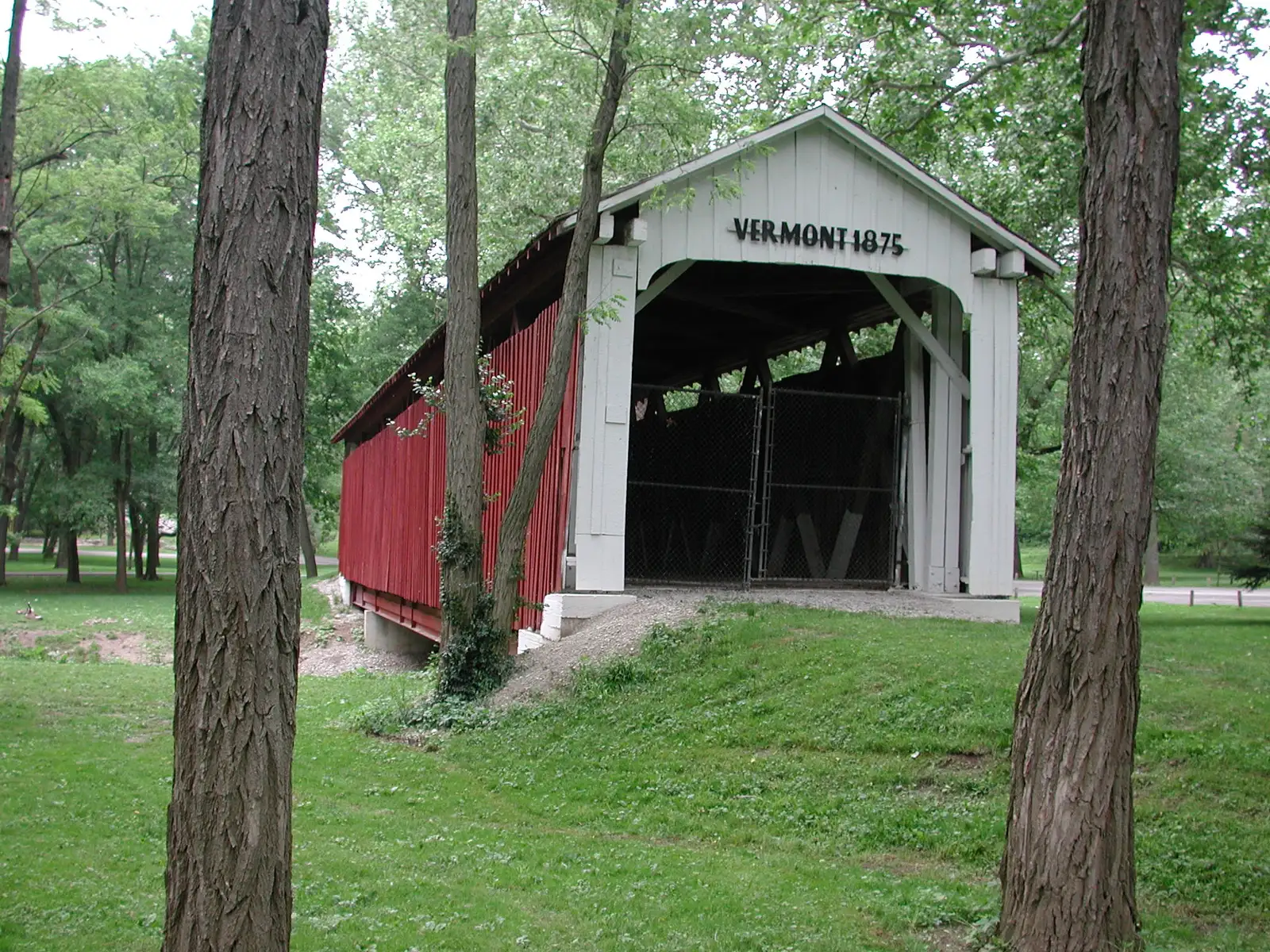
Northfield, Vermont is a community of 5,918 people located in the heart of Vermont’s Green Mountains. It is home to Norwich University, the oldest private military college in the United States, and sits just ten miles from Montpelier, the state’s capital, and roughly three hours from either Boston or Montreal. Its proximity to the capital makes it easy to reach, yet it retains a genuinely unhurried quality.
Northfield is home to six covered bridges, four of which are located in Northfield Falls in the northern part of town. On Cox Brook Road, three of these bridges sit in close proximity to one another. The Stony Brook Covered Bridge, also known as the Moseley Covered Bridge, is in the south-western section of Northfield off Vermont Route 12A.
The Town of Northfield was chartered in 1781 and consists of 38.3 square miles. Within that modest footprint, the concentration of historic bridges is genuinely rare. It’s a town where the roads themselves serve as a working museum.
Montgomery: The Covered Bridge Capital of America
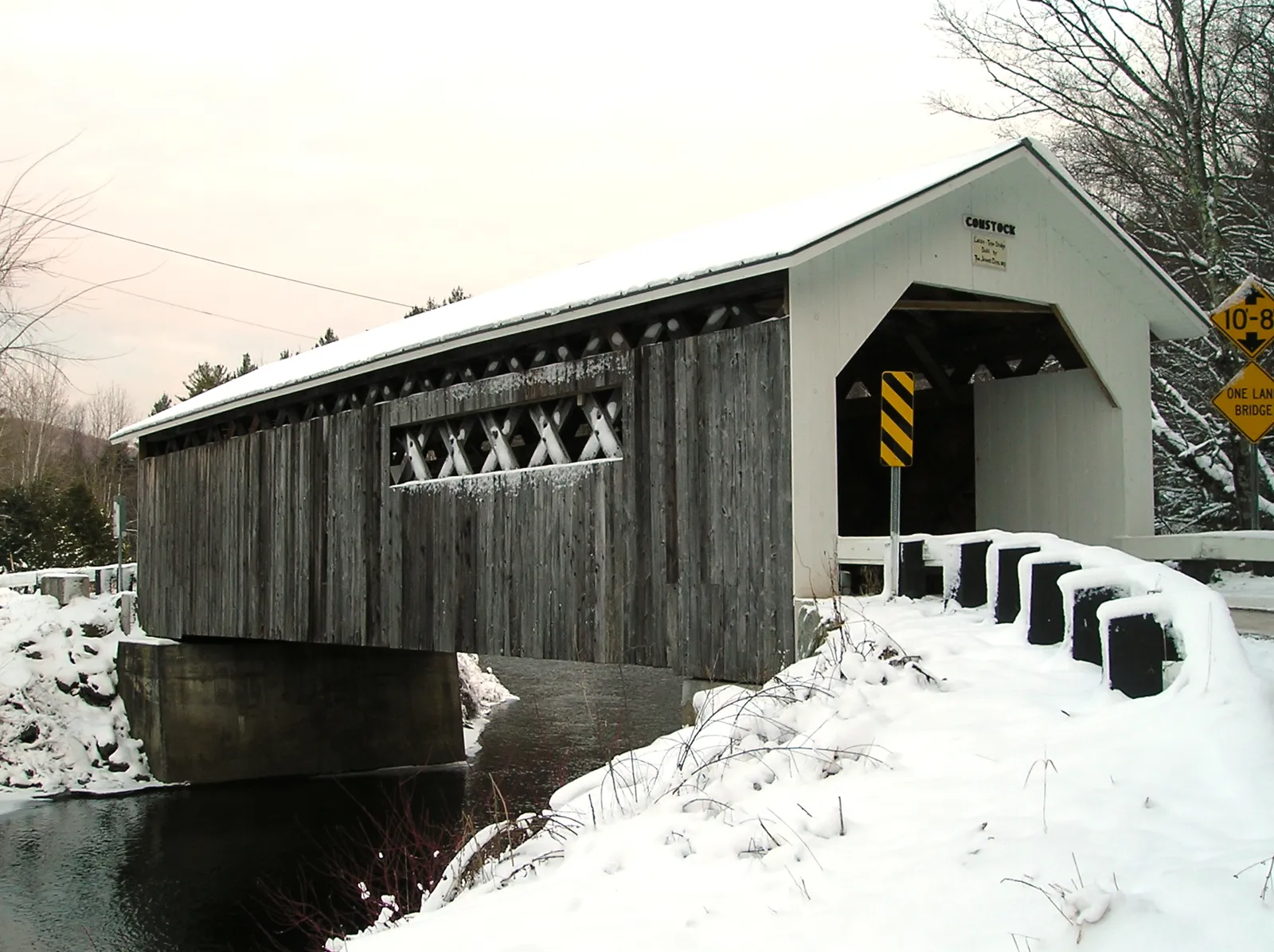
Perhaps the best place to start when exploring Vermont’s bridges is the state’s “covered bridge capital,” Montgomery. The small northern Vermont town champions its bridges. It sits in the far northeastern corner of the state, where the geography carved by the Trout River and its tributaries made multiple crossings an absolute necessity for early settlers.
As recently as the 1940s there were 13 covered bridges within Montgomery’s limits. Today there are six covered bridges within town limits, and one which straddles the town line with Enosburg – the most of any town in the country. That title carries real meaning: no other municipality in the United States preserves this many original covered bridges within such a small area.
Montgomery possesses the most covered bridges of any municipality in Vermont, with seven. For visitors who want to walk, cycle, or drive the full loop between bridges in a single morning, Montgomery is the place to do it.
The Engineering Behind the Beauty
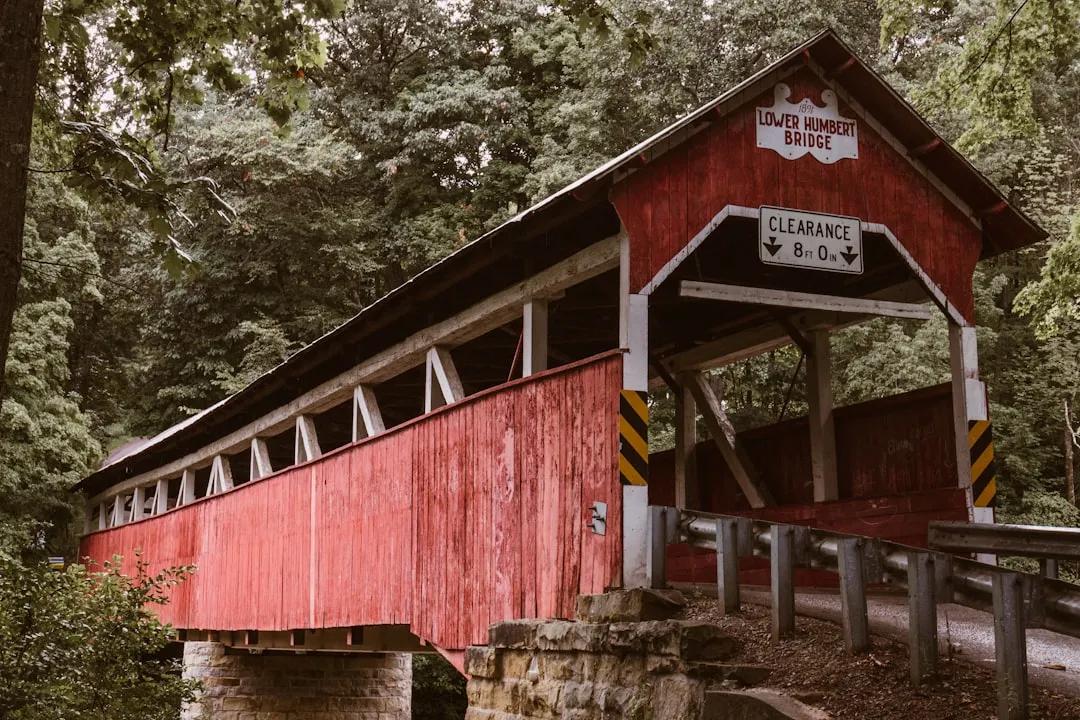
Longer bridges typically used the “town lattice truss” style, a series of crisscrossing wooden braces pegged together, while shorter spans made use of the Howe truss, involving vertical iron rods as well as wooden components. The differences are visible to the trained eye and rewarding to look for as you move from bridge to bridge.
The designs vary, from the classic Town Lattice and Burr Arch to the more intricate Paddleford Truss, showcasing a range of engineering approaches. Most covered bridges in Vermont are made with local timber and adhere to vernacular adaptations of historically popular construction practices, so no two of them are exactly alike.
Originally constructed to protect the wooden structures from the elements, these bridges have become iconic symbols of New England. Each bridge tells a story, reflecting the local history and the evolution of transportation in the region. That story is still told in wood and iron, weathered but intact.
Historic Designation and Preservation Efforts
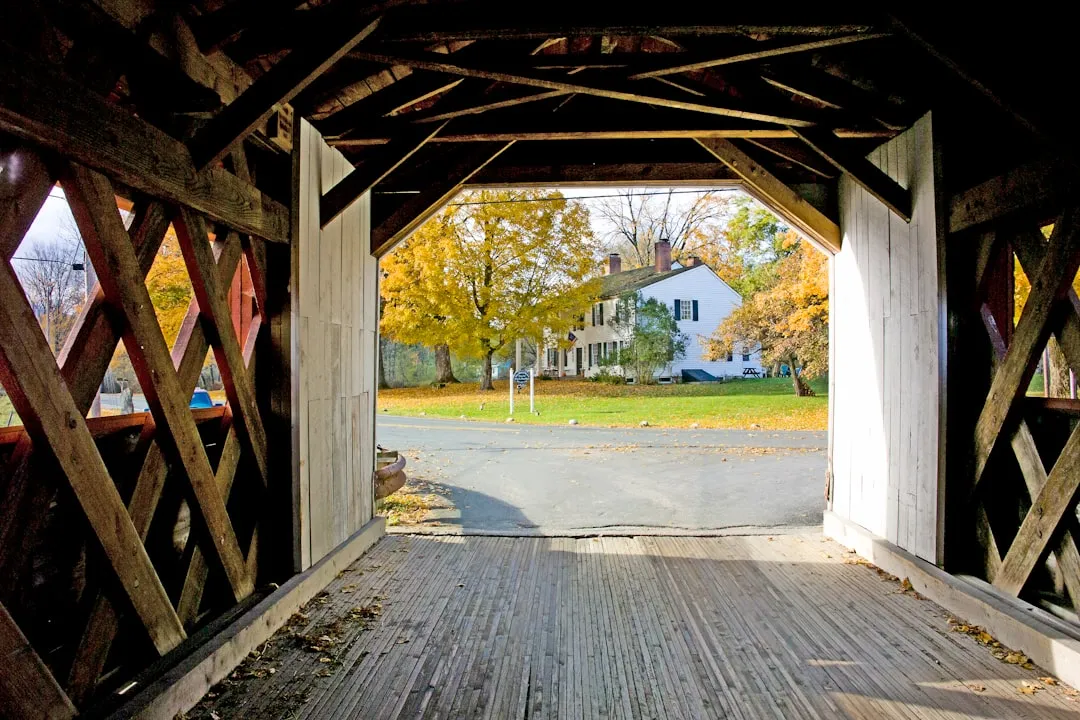
Ninety of Vermont’s covered bridges have been listed in the National Register of Historic Places. That figure reflects decades of sustained effort by local communities, state agencies, and preservation advocates to keep these structures standing and functioning.
Vermont is home to 100 covered bridges, and most are owned by towns and continue to be part of road systems. As bridges are maintained, the Vermont Agency of Transportation oversees all work to ensure maintenance is in keeping with the bridges’ historic status. The oversight prevents well-meaning repairs from accidentally erasing the original character of a bridge.
In 2014, the Brown Bridge from 1880 in Shrewsbury was recognized as a National Historic Landmark because it is an outstanding example of Town lattice truss construction and was the last bridge built by preeminent bridge builder Nichols Powers. Individual craftsmen, long gone, still leave their mark on the landscape through these structures.
What Four Seasons Look Like Here
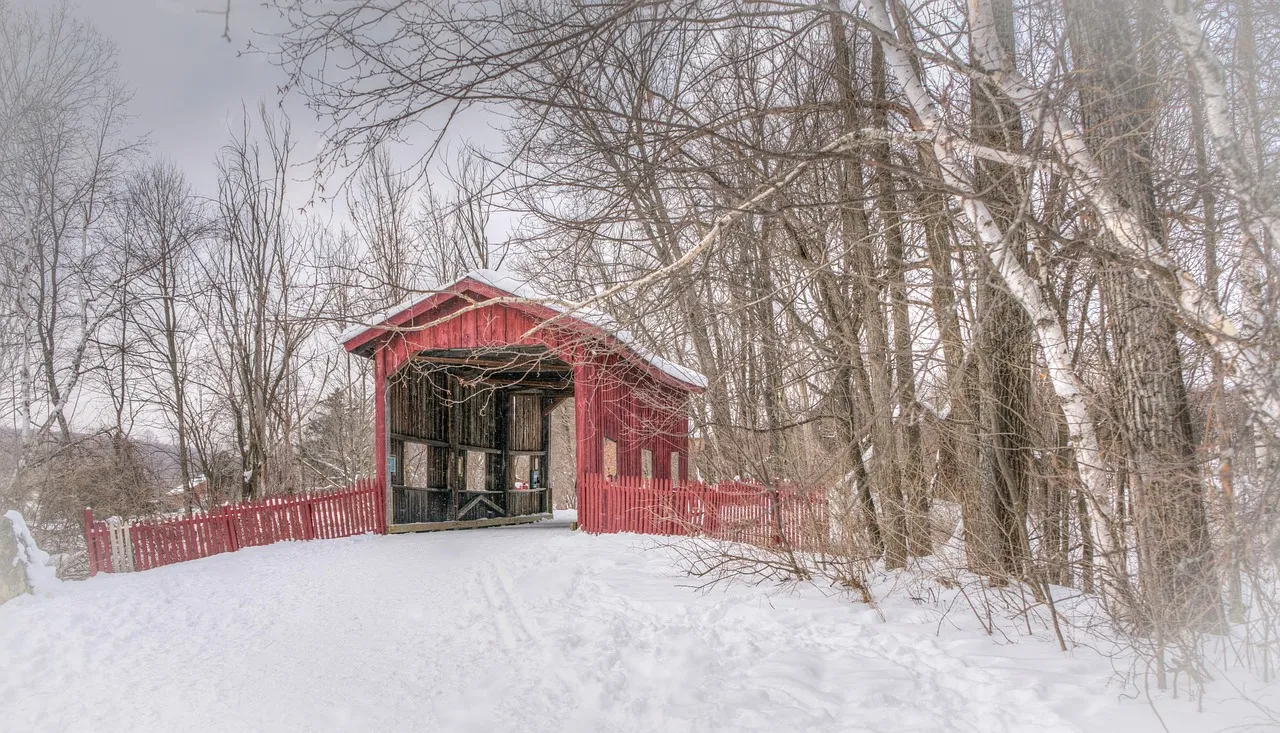
With a carpet of golden red leaves adorning the roads in the fall and a bed of snow reflecting the beautiful night lights in the winter, Woodstock is a place of year-round natural beauty, with each season painting the landscape in new colors and textures. The covered bridges shift character with the light and the season in ways that photographs rarely capture fully.
Visiting in early October offers stunning fall colors by the river. Even in December, the bridge offers a charming, snowy Vermont scene that most visitors don’t think to seek out. Winter is genuinely underrated here.
The bridges are often set against a backdrop of rolling hills, lush forests, and rushing rivers, offering countless opportunities for photography and quiet contemplation. What changes is the palette – deep green in summer, vivid amber in October, blue-white in January. The structure itself remains the constant.
The Cultural Life Around the Bridges
In 2025, Woodstock hosted its 51st Annual Apples and Crafts Fair and Food Truck Festival in October. The tradition pays tribute to autumn, perfectly timed with Woodstock’s famous leaf-peeping season, which peaks in early to mid-October. The two-day event showcased over 100 artisans and craftspeople, along with a range of unique food trucks.
Over the years, “The Green,” as locals call it, has become a gathering place for musicians, artists, and other creative souls, hosting many of the town’s best events. The cultural calendar is consistent and community-rooted rather than imported for tourism.
A must-visit is the Marsh-Billings-Rockefeller National Historical Park, with picturesque trails that wind through the property while overlooking breathtaking views of the surrounding Green Mountains. Countless events, including festivals, musical performances, and the historic mansion at the heart of the park surrounded by beautifully landscaped gardens, contribute to Woodstock’s charm and inviting atmosphere.
A Nickname Worth Knowing
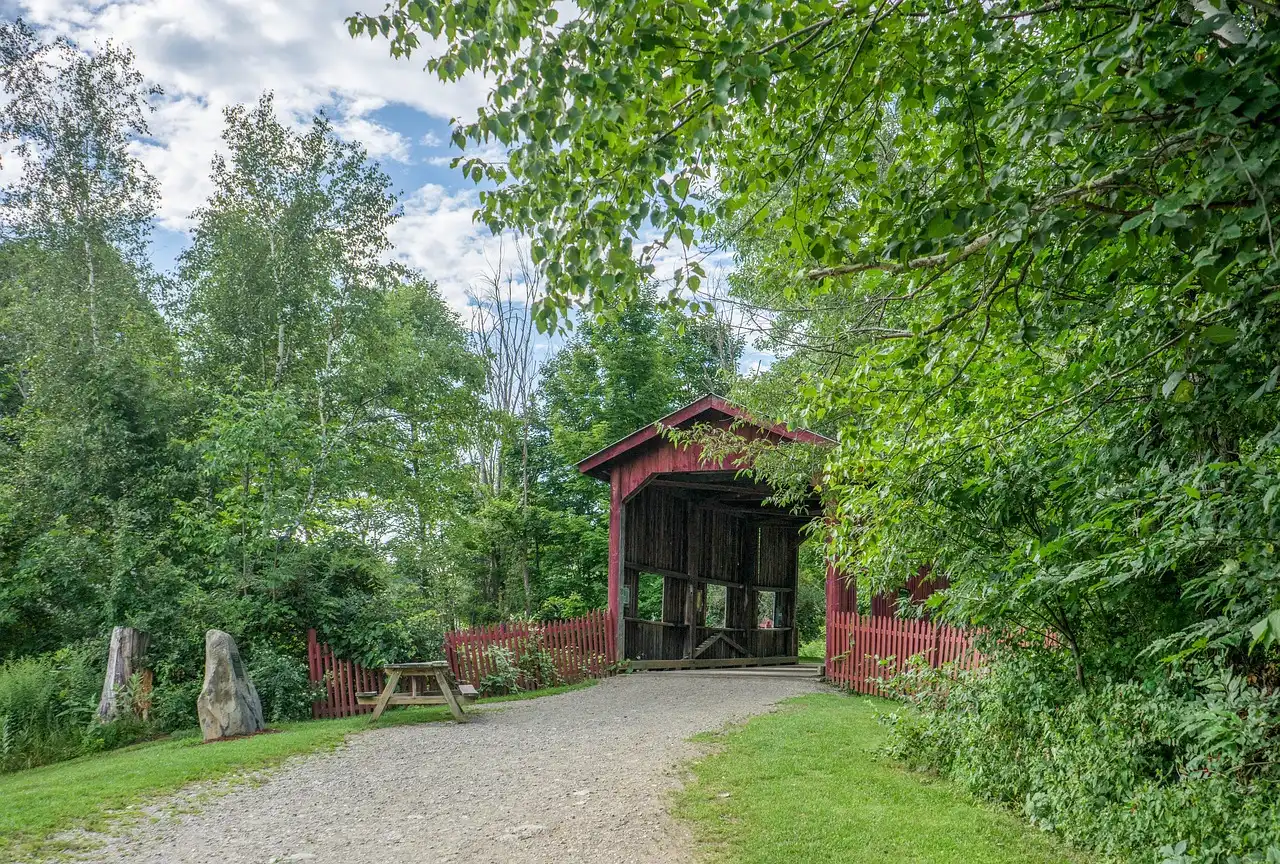
Vermont’s covered bridges used to be known as “kissing bridges” due to the moments of privacy they afforded courting couples riding through in a horse-drawn carriage. The nickname is charming, and it speaks to something real: the interior of a covered bridge creates a brief, enclosed moment away from the open road, a pause between one place and the next.
The old bridges built of timbers from long-gone forests, fashioned by long-gone craftsmen, are standing testaments of Vermont’s history – links to the past and to a simpler way of life. That phrase is not hyperbole. The builders who pegged these trusses together have been gone for over a century, but their work still holds the weight of daily traffic.
Almost all of the remaining bridges are treated as protected landmarks in their respective communities, tended to by local and state preservation organizations. The care is deliberate and ongoing, not accidental. Vermont takes these structures seriously in a way that feels quietly admirable.
A Place That Earns the Postcard Comparison
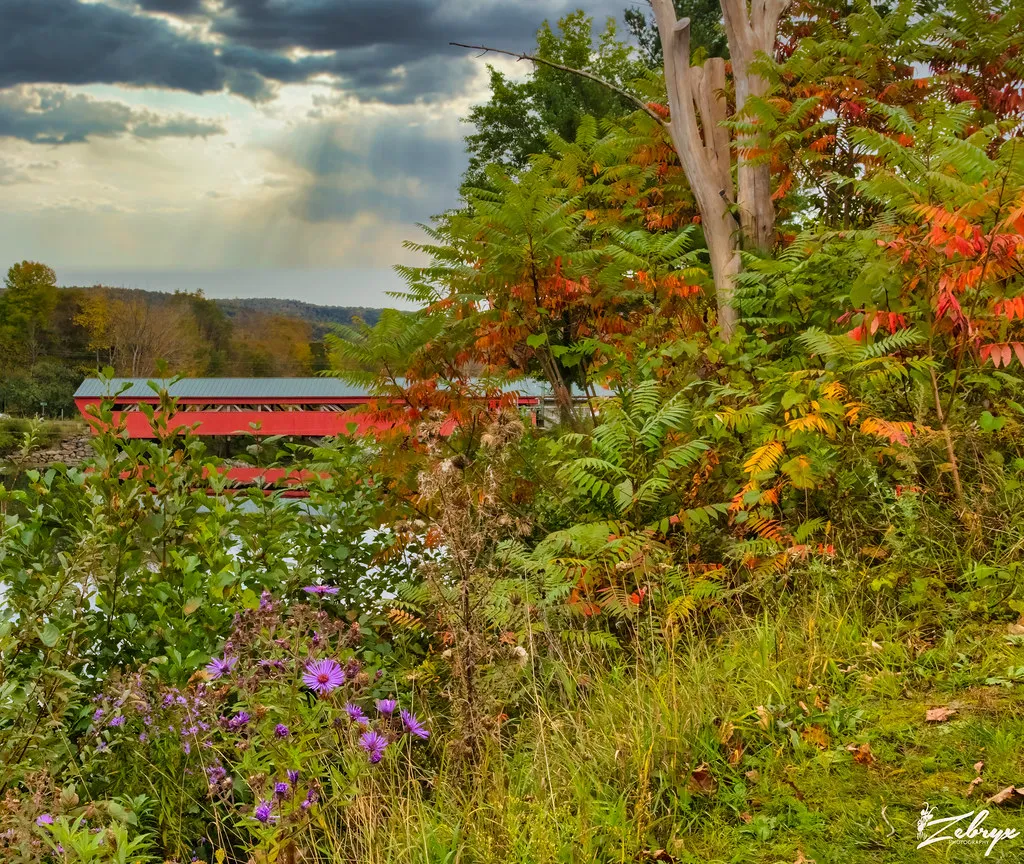
The phrase “postcard come to life” gets overused, but Vermont’s covered-bridge towns genuinely earn it – not because they’re staged or preserved under glass, but because the conditions that made them beautiful in the 19th century are largely still present. The rivers still run cold and fast. The hills still roll. The timber still frames the light in that particular way only old wood can.
There are still more than 100 historic Vermont covered bridges dotting the landscape of the Green Mountain State. These bridges, some dating back to the 19th century, showcase history, innovative architecture, and striking scenic beauty. They are a testament to the ingenuity and craftsmanship of their builders. Seeing them for the first time doesn’t feel like a discovery so much as a recognition – a sense that this is what a place looks like when it has been genuinely tended to across generations. That’s rarer than any postcard.
AI Disclaimer: This article was created with the assistance of AI tools and reviewed by a human editor.