
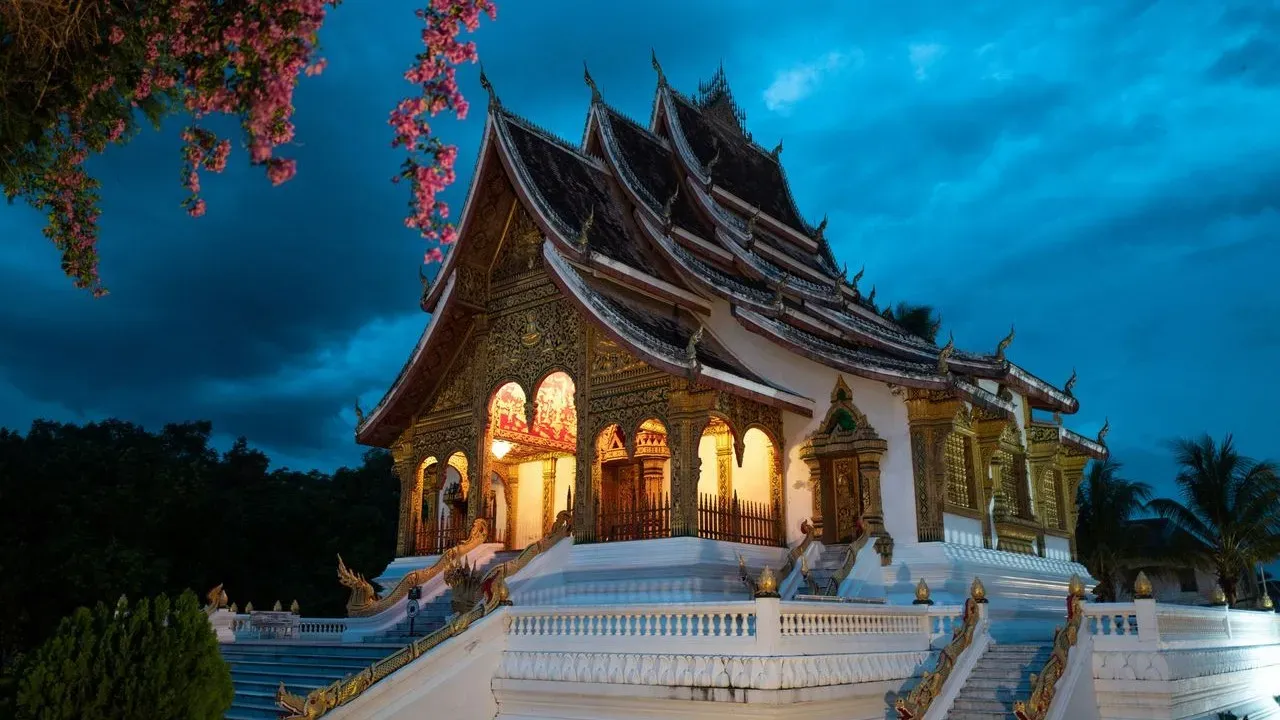

Luang Prabang sits at the confluence of the Mekong and Nam Khan rivers in northern Laos, where centuries-old temples rise above wooden houses and the daily rhythm of monastic life unfolds against a backdrop of forested hills. The town’s UNESCO-listed old quarter preserves a rare balance of lived heritage and quiet streets, drawing visitors who seek more than surface-level sightseeing. Here the pace slows naturally, shaped by the river’s steady flow and the presence of Buddhist monasteries that anchor community life.
Heritage Streets and Sacred Architecture
Wandering the compact grid of the old town reveals French colonial villas alongside traditional Lao homes, many now carefully restored as small guesthouses or cafes. Golden stupas and ornate temple roofs punctuate the skyline, their details catching the light at different hours of the day. Preservation efforts have kept modern development at bay, allowing the historic fabric to remain intact while supporting local livelihoods through thoughtful tourism. Residents and monks move through these lanes with a calm that visitors quickly absorb. Morning light filters through teak shutters, and the scent of incense drifts from open temple doors. This setting encourages unhurried exploration, where each turn offers a new perspective on the town’s layered history.
River Life and Natural Proximity
The Mekong defines the western edge of the old town, its broad waters reflecting the changing sky and carrying boats that connect communities along its banks. Just across the river lie quieter villages and trails that lead into surrounding countryside within minutes of leaving the central streets. The contrast between the compact urban core and the immediate green hills creates a distinctive sense of scale. Travelers often find that time spent along the riverbanks offers a different rhythm from temple visits. Fishermen cast nets at dawn, and the mist that sometimes lingers over the water adds a layer of stillness. This easy access to both town and nature supports short stays that feel restorative rather than rushed.
Monastic Traditions in Daily View
Buddhist monasteries remain active centers of practice rather than mere attractions. Monks in saffron robes walk the streets each morning to receive alms, a ritual that continues with quiet dignity. Visitors who observe respectfully gain insight into the spiritual continuity that shapes local identity. Several temples welcome guests for meditation sessions or cultural talks led by resident monks, fostering direct exchange. These encounters highlight the living role of Buddhism in the community and underscore the value of approaching such spaces with humility and preparation. The presence of these traditions contributes to the town’s enduring atmosphere of reflection.
A Place That Rewards Presence
Luang Prabang’s appeal lies in its ability to hold multiple qualities at once: the energy of a working provincial center, the depth of spiritual practice, and the closeness of wild landscapes. Short visits here often leave a lasting impression precisely because the town invites slowing down rather than checking boxes. Those who return speak of the cumulative effect of small moments, from watching river traffic at sunset to hearing temple bells at first light. Responsible travel here means supporting local guides, staying in family-run accommodations, and moving with awareness of the community’s rhythms. In this way the town continues to offer sanctuary to those who arrive ready to listen.
AI Disclaimer: This article was created with the assistance of AI tools and reviewed by a human editor.