
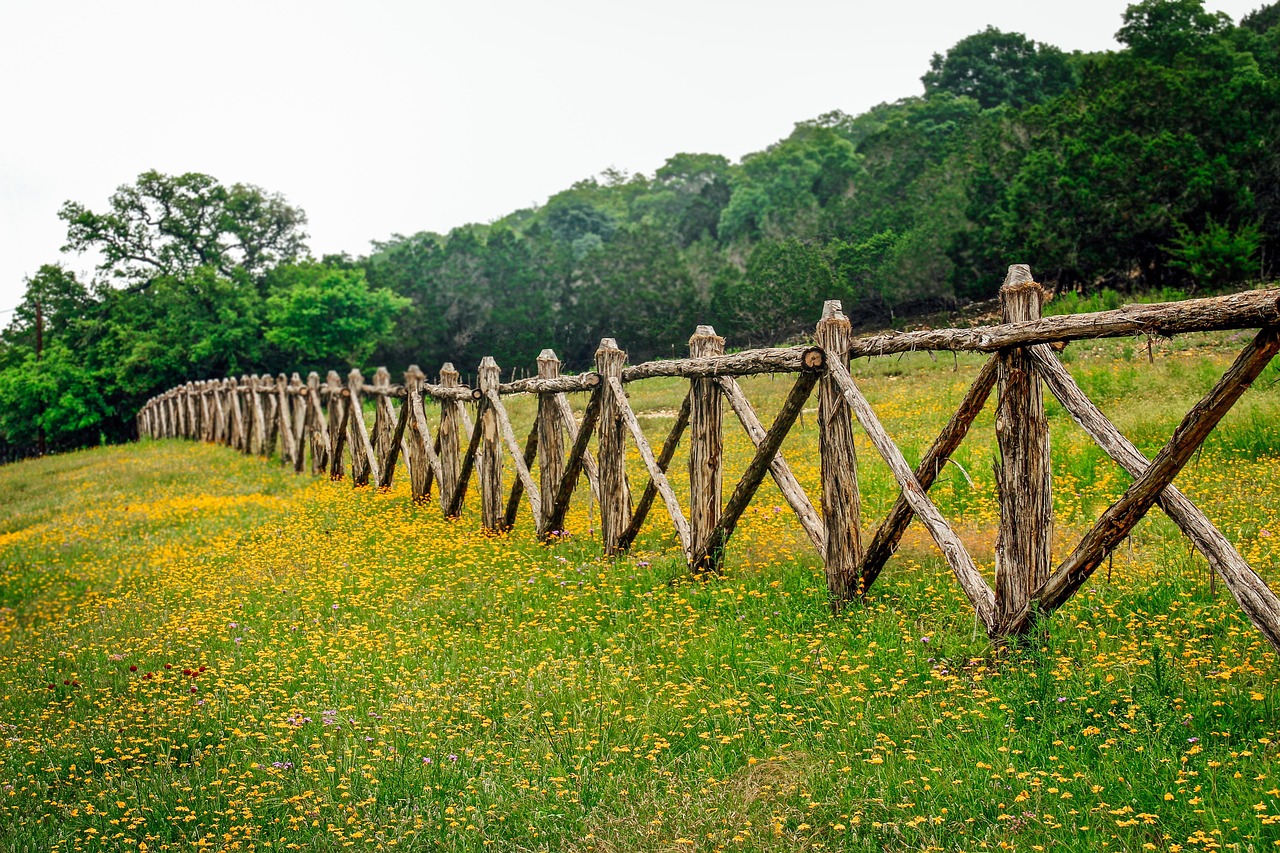

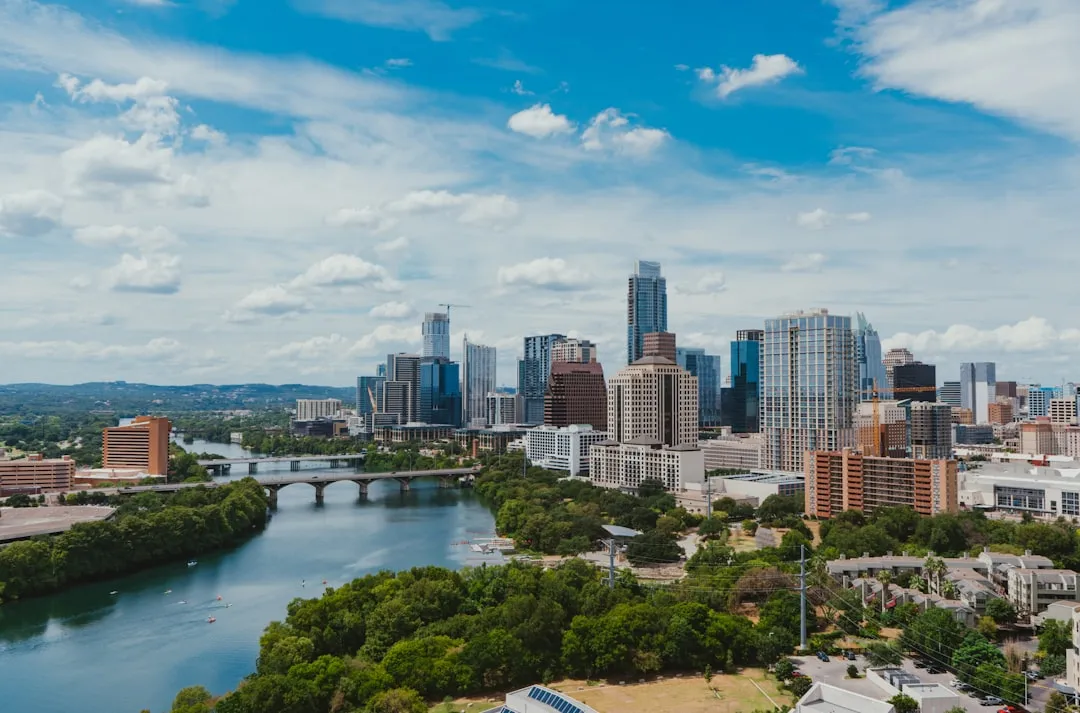
There’s a point each June in Austin when the thermometer climbs past 100°F and the city’s usual rhythms quietly shift. Barton Springs gets crowded by nine in the morning. Patios empty by noon. And a certain kind of Austinite starts pointing their car west, toward the limestone hills and spring-fed creeks of Wimberley.
For a first weekend trip, Wimberley is the most well-rounded option from Austin. The combination of Blue Hole swimming, good restaurants, gallery and market culture, and the Blanco River provides a complete Hill Country experience in a town that still feels genuinely local. That’s the quiet truth that keeps drawing people back. This isn’t a destination you stumble upon. It’s one you return to, summer after summer.
The Spring-Fed Water Is Genuinely, Remarkably Cold
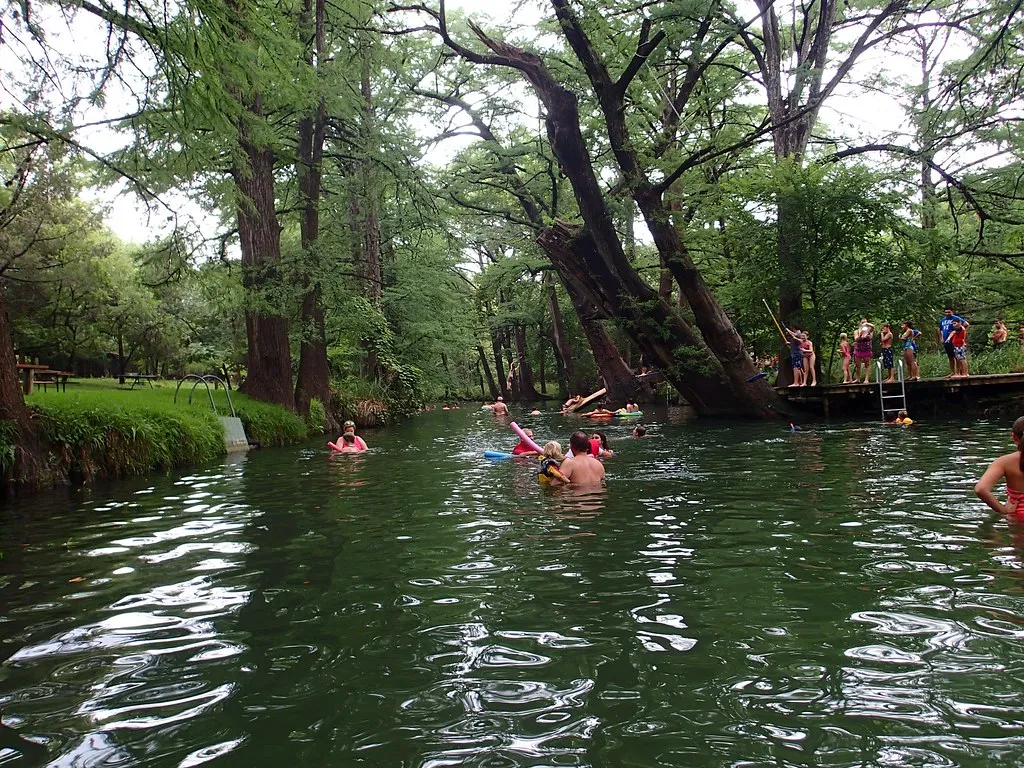
There’s a reason Blue Hole Regional Park has become synonymous with Texas Hill Country swimming. Fed by natural springs that keep temperatures refreshingly cool even during the hottest July afternoons, this legendary swimming hole offers the kind of escape that air conditioning simply can’t replicate.
The water holds at a cool 68 to 72°F throughout the year, offering the ideal temperature to escape Texas heat during summer afternoons. That gap between air temperature and water temperature, sometimes a difference of 30 degrees or more, is an immediate physical relief that’s hard to overstate.
The Blue Hole features shallow wading pools that are kid and family friendly, but also has deeper swimming sections ranging from 16 to 20 feet. The depth is perfect for a rope swing and diving, as well as a place to cool off in the sweltering Texas summer.
It’s Just 45 Minutes from Austin
Blue Hole Wimberley is located in the heart of the Texas Hill Country, about 45 minutes southwest of Austin and one hour north of San Antonio, in the town of Wimberley. That proximity is a significant part of its appeal. You don’t need a flight or a hotel booking to make it happen on a Saturday morning.
Blue Hole Regional Park is located at 100 Blue Hole Lane, Wimberley, TX 78676, about 45 minutes southwest of Austin via TX-12. The drive itself winds through rolling limestone terrain and cedar-covered hills that feel nothing like the city you just left.
Wimberley sits about 45 minutes southwest of Austin and offers art galleries, Blue Hole swimming, Wimberley Square, and Jacob’s Well. It carries a reputation as the creative soul of the Hill Country. Whether you’re going for a few hours or a full weekend, the distance is close enough to be spontaneous.
The Setting Itself Is Genuinely Beautiful
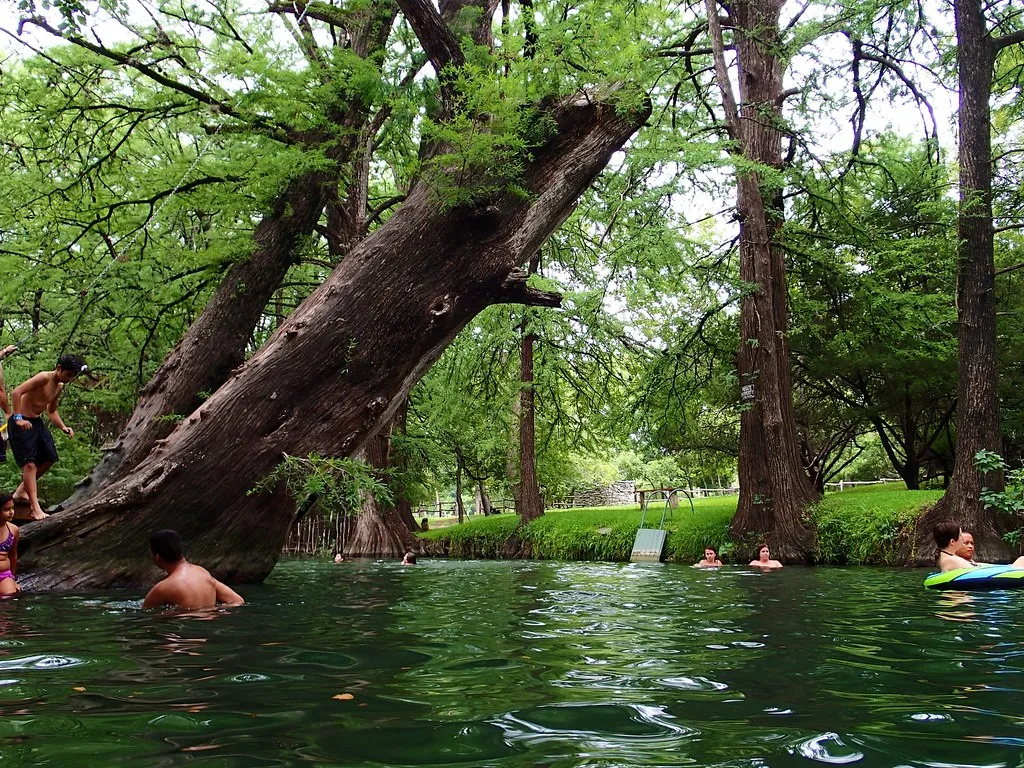
The swimming area sits beneath a dramatic canopy of bald cypress trees, some estimated to be hundreds of years old. Their gnarled roots create natural lounging spots along the banks, while their branches filter the Texas sun into dappled patterns across the water.
Blue Hole Regional Park covers an area of 126 acres of natural forests and grass fields. The park offers plenty of space for running, biking, walking, picnics, and more, making it an ideal space to discover nature during all seasons.
Unlike crowded public pools or over-commercialized water parks, Blue Hole Regional Park preserves something increasingly rare: an authentic Texas swimming experience. The landscape is what makes that statement true. Towering ancient cypresses, clear moving water, and birdsong tend to do what no amenity list can fully capture.
The Town Around It Is Worth Your Time
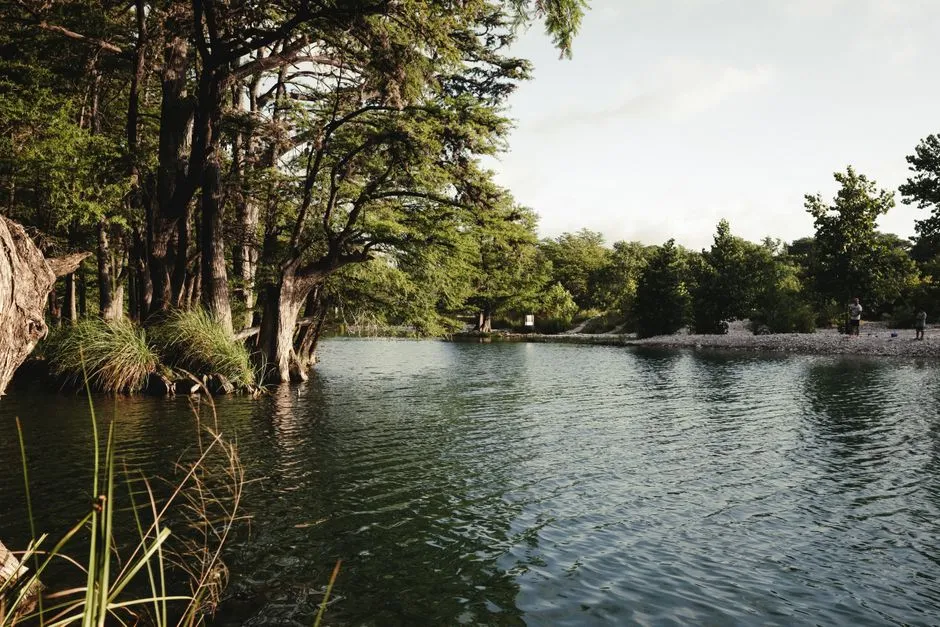
Wimberley’s small downtown is worth a wander before or after your swim. The town square has local shops, galleries, and restaurants about five minutes from the park. That combination, a swim and then a slow afternoon in a walkable town, is the thing locals have quietly been doing for years.
The Saturday market, which runs from March through December, is considered one of the best in Texas. It draws local artists, food vendors, and craftspeople, and it has a genuinely community feel rather than a staged-for-tourists one.
Many visitors flock to the smaller Hill Country towns with big reputations, like Wimberley and Fredericksburg. Wimberley earns that reputation not through marketing but through the kind of authentic character that builds over time. Local restaurants, a historic square, and independent art galleries all contribute to a town that rewards slow exploration.
The Conservation Model Keeps It Worth Visiting
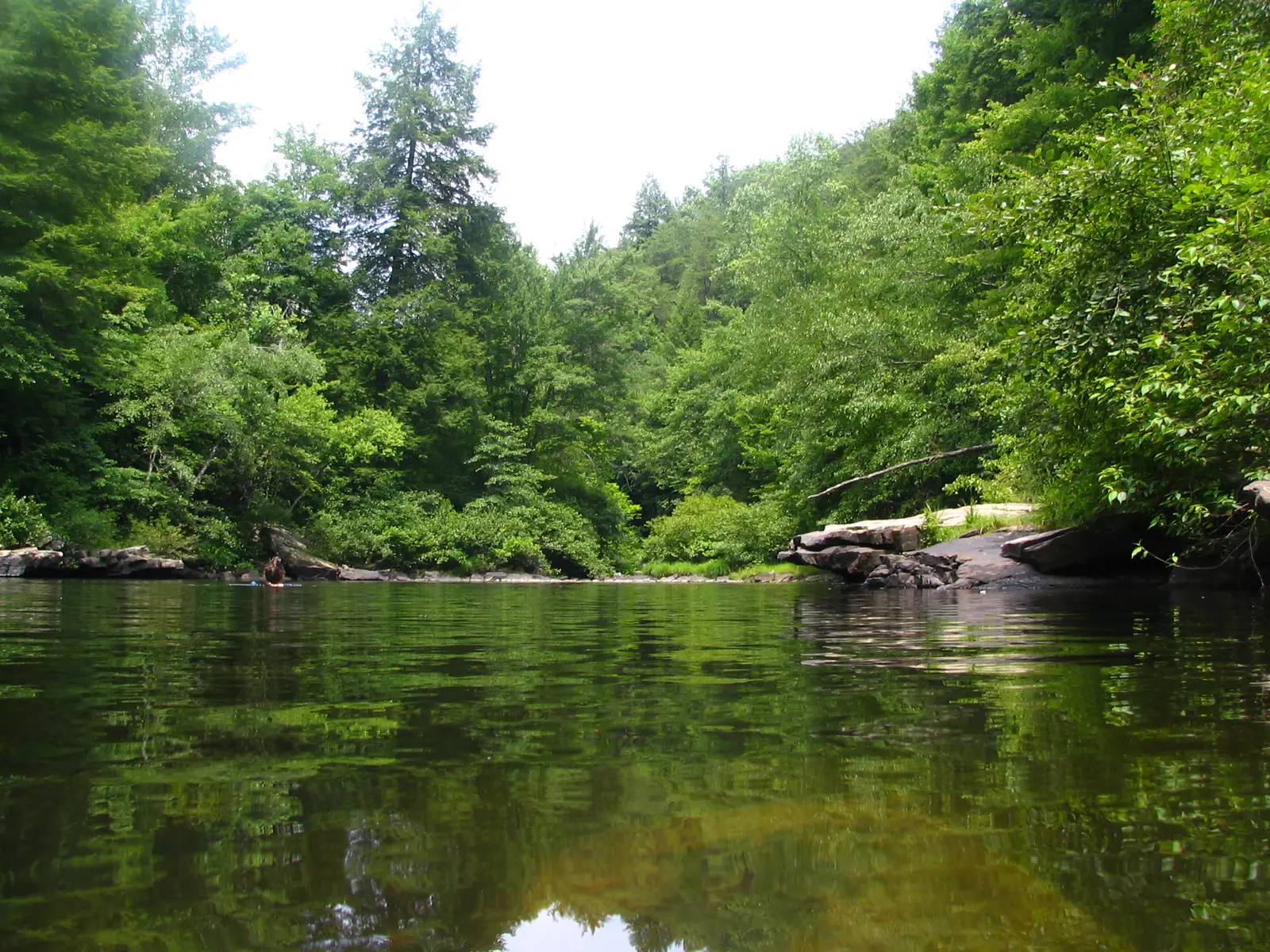
In 2005, with the assistance of conservation grants and the help of local citizens, the city of Wimberley purchased the land and transformed it into Blue Hole Regional Park. The park, officially opened in 2011, has been established as a national model of sustainability.
Reservations are strongly recommended during peak season to ensure entry, as daily capacity is limited to preserve the natural environment. That limit is a feature, not a flaw. It means you’re not sharing the water with thousands of people, and the ecosystem stays intact for the next visit.
Blue Hole is the perfect retreat for anyone wanting a breath of fresh air. It has a long heritage of conservation and friendly ties to the surrounding community. That community ownership is part of what makes the experience feel different from a commercial attraction.
Wine Country Is Right There Too

Situated west of Austin and north of San Antonio, the Texas Hill Country AVA, established in 1991, now boasts more than 100 wineries and welcomes roughly one million visitors each year, making it one of the most visited wine regions in the United States.
The Texas Hill Country has more than 100 wineries and tasting rooms spread across Fredericksburg, Hye, Stonewall, Johnson City, and surrounding areas. The Highway 290 wine trail is the most popular wine tasting route in Texas. It connects Fredericksburg, Hye, and Johnson City and includes many of the region’s most visited wineries.
Tempranillo and Tannat are emerging flagship reds, while Viognier delivers award-winning whites. Limestone and granite soils give Texas Hill Country wines their trademark earthy spice and bright acidity. For an Austin local, pairing a morning swim at Blue Hole with an afternoon tasting on the Highway 290 corridor makes for a genuinely full and satisfying day.
The Live Music Is Still Going Strong

Gruene Hall, Texas’ oldest dance hall, draws visitors for live music and good times, with live shows daily, and most are free. Gruene sits about 50 minutes south of Austin and pairs naturally with a Hill Country day that started in Wimberley.
Gruene Hall has been operating since 1878, making it one of the few authentic gathering places left in the region that hasn’t been repackaged for a different audience. The wooden floors, corrugated metal roof, and open-air walls have stayed largely as they were. The music has always been the point.
Luckenbach, Texas, established as a trading post in 1849, has an old dance hall still in use every weekend with live music daily, a General Store and a bar. It’s a great place to sit under the old 500-year-old oak trees, relax and listen to live music. Both Gruene and Luckenbach offer the kind of easy, unhurried evening that pairs well with a cool day by the water.
Natural Wonders Are Still Accessible and Awe-Inspiring
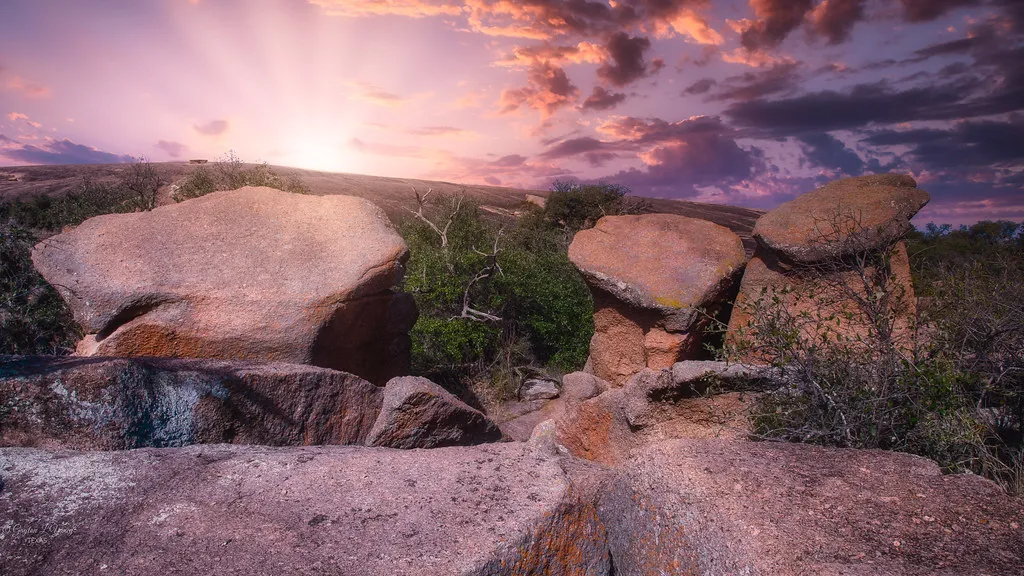
Enchanted Rock State Natural Area, a massive pink granite dome rising above Central Texas, has drawn people for thousands of years. Beyond the dome, the scenery, rock formations, and legends are magical too.
Enchanted Rock holds an impressive place in history, beginning millions of years ago and continuing through the years of the earliest known Native Americans to the settlement of Texas and the American West. The dome rises dramatically from the surrounding plains, and the summit views on a clear morning are genuinely memorable.
Before heading out to Enchanted Rock, it’s advisable to reserve a Save the Day Pass up to 30 days before arrival, so that you can avoid lines and be guaranteed a spot in the park. Planning ahead is simply part of the visit these days, and it’s well worth the small effort.
The Hill Country Runs Cooler Than the Rest of Texas

The key elements that make the Hill Country work in summer are the spring-fed swimming holes and rivers, the elevation (slightly cooler than the surrounding plains), the rhythm of early morning and evening activity with midday shade breaks, and the general character of the region, which is better suited to relaxed exploration than intense sightseeing.
Hill Country locals consider summer one of the best times to enjoy the area precisely because the day-tripper crowds are smaller than in spring. That counterintuitive logic holds up. Spring is beautiful but packed. Summer, if you time it right and book your swimming reservation in advance, is often more peaceful.
Summer brings long, hot days with plenty of sunshine, but the creeks and swimming holes balance it out. The Hill Country doesn’t pretend summer isn’t hot. It just offers the right tools for handling it.
Getting There and What to Plan Ahead
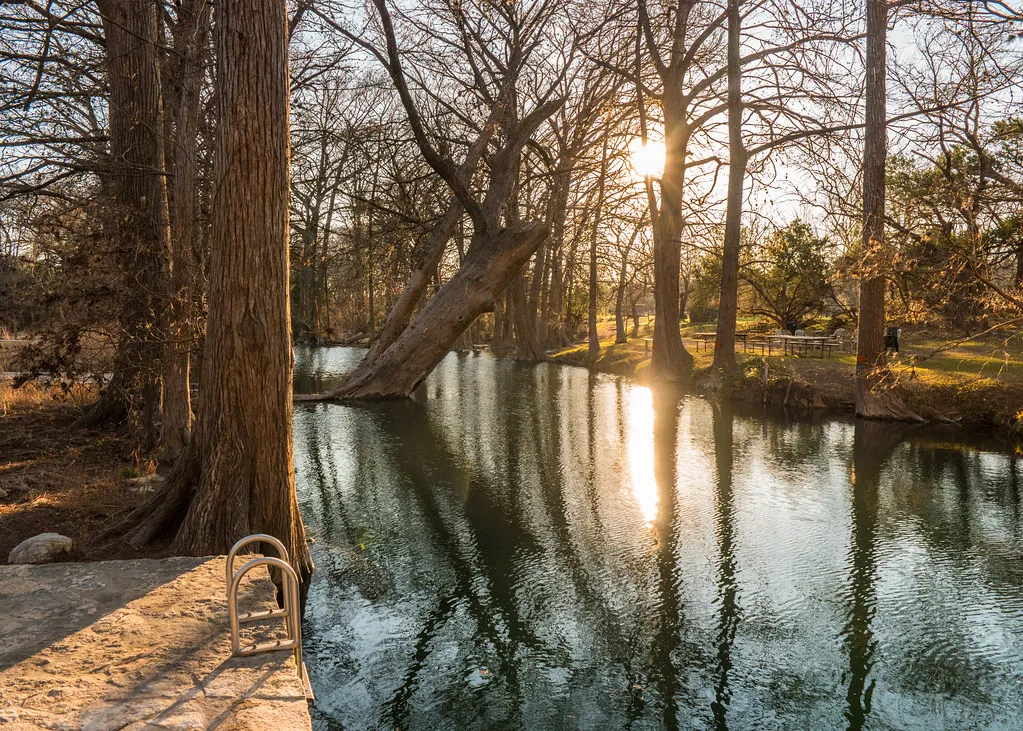
Swimming season at Blue Hole typically runs from May to September, with hours from 8 a.m. to dusk. Park hours may vary by season, so it’s best to check the official schedule before visiting.
Tickets cost twelve dollars for adults and eight dollars for children aged four to twelve. There are morning and afternoon slots available, and reservations regularly sell out. Booking a few days in advance is wise, especially on summer weekends when demand peaks.
Timed reservations are common at popular spots. Arriving early at Blue Hole in Wimberley when available gives you the best experience. Start the day before nine, claim a cypress-shaded bank, and let the rest of the afternoon unfold slowly. That’s the Wimberley way.
The Takeaway
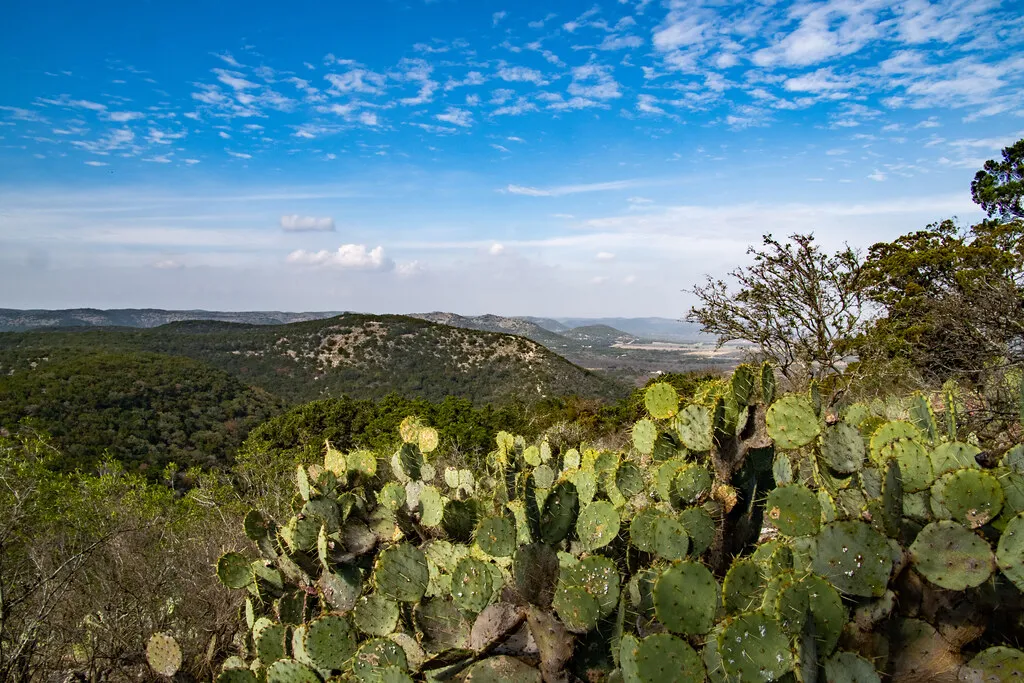
Wimberley doesn’t announce itself loudly, and that’s largely the point. The surrounding 14,000 square miles of Texas Hill Country, where historic towns and more than 50 vineyards meet a laid-back and soulful lifestyle, serve as the foil to Austin’s chic city energy. Wimberley sits at the quieter heart of all of that.
When Austin gets hot, and it does, reliably and intensely, the answer isn’t always to stay inside. Sometimes it’s a 45-minute drive, a plunge into 70-degree spring water, and a slow walk through a town that’s been doing things its own way for a long time. That’s not an escape so much as a recalibration, and it tends to work remarkably well.
AI Disclaimer: This article was created with the assistance of AI tools and reviewed by a human editor.