
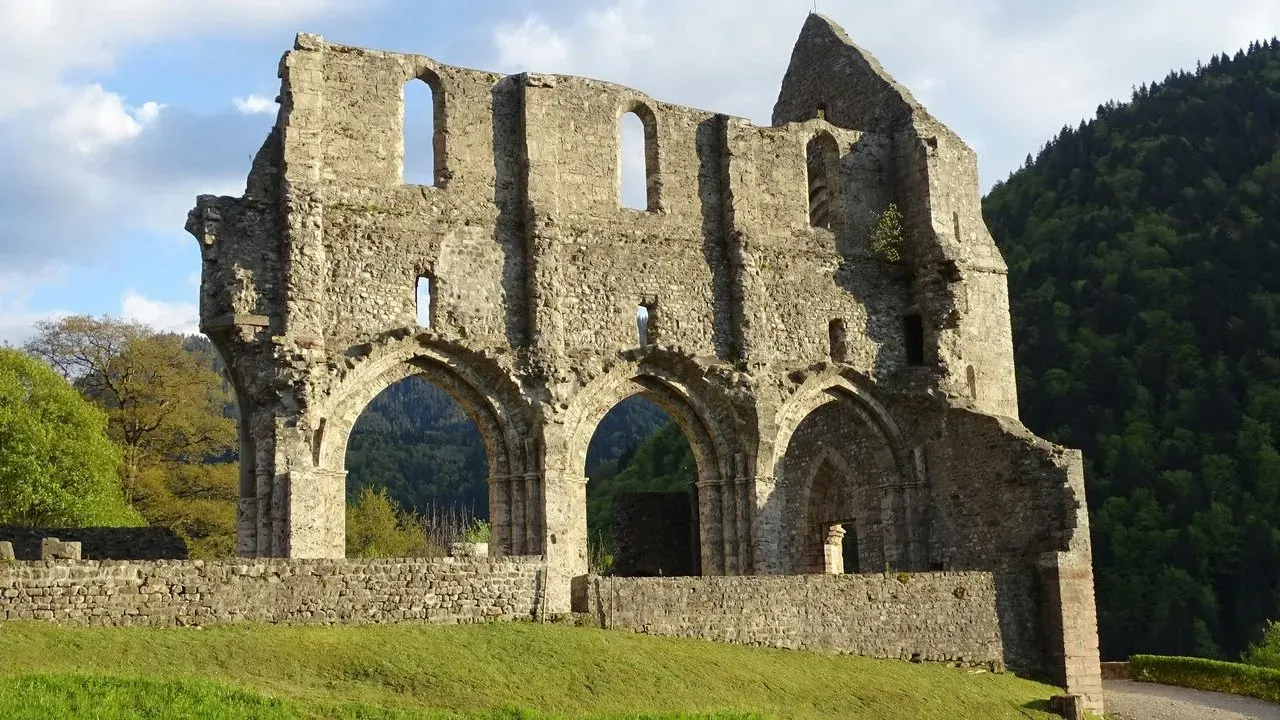

Cerne Abbas sits quietly among the rolling hills of Dorset, its narrow lanes and stone cottages forming one of England’s most photographed villages. Within this setting stands Cerne Abbey, a medieval site that continues to surprise visitors who arrive expecting only the famous chalk figure on the hillside. The abbey’s surviving fragments offer a direct connection to centuries of monastic life that once shaped the surrounding countryside.
The Village That Frames the Abbey
Cerne Abbas draws people for many reasons, yet the abbey remains a secondary discovery for most. Its streets wind past thatched roofs and small shops, creating an atmosphere of calm that has long appealed to those seeking respite from busier parts of England. The village’s compact scale makes it easy to reach the abbey grounds on foot, turning a simple stroll into an encounter with layered history.
Local traditions add texture to any visit. Cricket matches on the village green echo the rhythms of English summer, while the surrounding landscape invites longer walks that reveal the abbey’s place within a wider pattern of fields and hedgerows. This combination of everyday life and ancient stone creates a setting where the past feels present rather than preserved behind glass.
Traces of Monastic Life
The abbey was founded in the tenth century and grew into a significant Benedictine house before the Dissolution of the Monasteries in the sixteenth century. What remains today includes sections of the gatehouse, parts of the church walls, and the outline of cloister buildings that once housed the community. These fragments stand as quiet testimony to the daily routines of prayer, study, and work that defined monastic existence for hundreds of years.
Walking among the ruins, visitors can trace the original layout through low walls and grassy platforms. The site’s modest scale compared with larger cathedrals elsewhere in England allows for a more intimate appreciation of how such institutions fitted into rural landscapes. Information panels on the grounds provide context without overwhelming the experience of simply being among the stones.
Why the Abbey Rewards a Visit
Many travelers pass through Cerne Abbas focused on the hillside giant, yet those who pause at the abbey discover a different kind of encounter with Dorset’s past. The ruins invite reflection on continuity and change, showing how a place can hold multiple layers of meaning across generations. The surrounding village continues to offer the same sense of welcome that has drawn people for decades.
A visit works best when combined with time to explore the lanes and perhaps linger over a meal made from local produce. This measured pace respects both the site and the community that maintains it, turning a quick stop into a more meaningful pause. The abbey’s understated presence encourages exactly that slower approach.
The abbey and its village together remind travelers that England’s most compelling historic places often lie just beyond the most obvious landmarks. A few unhurried hours spent among the stones and cottages can shift the way one sees the wider county.
AI Disclaimer: This article was created with the assistance of AI tools and reviewed by a human editor.