
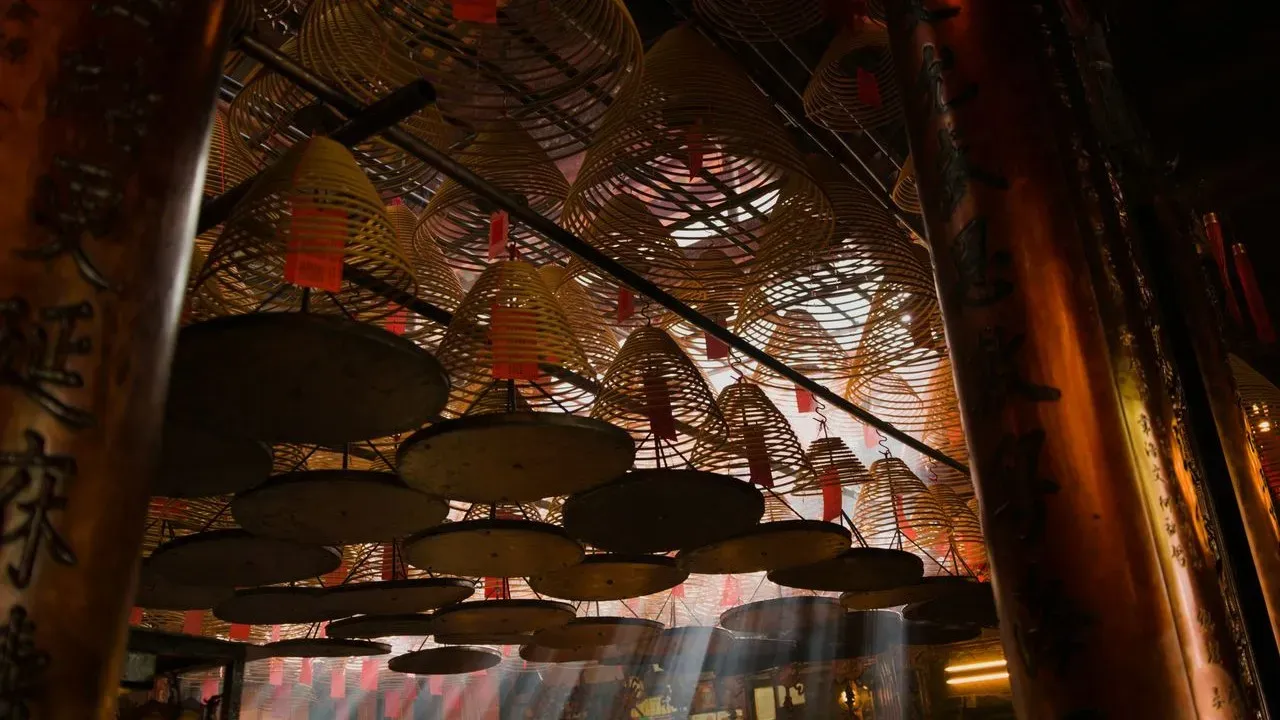

In the heart of Sheung Wan, where Hollywood Road winds past antique shops and modern storefronts, Man Mo Temple stands as a steady presence amid Hong Kong’s constant motion. Built between 1847 and 1862, the temple continues to serve as an active place of worship rather than a preserved relic. Visitors who step inside often notice the shift first through scent and sound, as the air carries the steady burn of incense and the quiet rhythm of daily prayers.
Foundations Laid in a Changing City
Local Chinese merchants established the temple during the early years of British colonial rule, creating a dedicated space for community worship and gathering. The structure has endured more than 170 years of transformation in Hong Kong, from colonial expansion to rapid postwar growth and the rise of the contemporary skyline. Its survival reflects the determination of residents to maintain cultural continuity even as the surrounding district evolved. The temple honors two central figures in Taoist tradition. Man Cheong, also known as Man Tai, represents literature, education, and wisdom. Mo Tai, recognized as Kwan Tai or Guan Yu, embodies martial virtue, loyalty, and justice. Generations of students have visited before examinations, while families and merchants have sought guidance on matters of prosperity and protection. In earlier eras the temple also functioned as a meeting hall where community disputes found resolution through discussion rather than formal courts.
The Name and Its Enduring Message
The compound name Man Mo captures a deliberate pairing of qualities long valued in Chinese culture. Man points toward knowledge and thoughtful reflection, while Mo emphasizes courage and moral steadiness. Together the words suggest that genuine achievement requires both intellectual clarity and personal integrity, an idea that still resonates with those who visit today. This balance appears throughout the temple’s design. Carved wooden beams, stone guardian lions, and traditional green-tiled roofs create an atmosphere that invites quiet attention. Calligraphy panels and lanterns add layers of detail that reward slower observation, each element shaped by the craftsmanship of earlier generations.
The Incense That Marks Time
The most striking feature remains the large spiral coils suspended from the ceiling. Each coil burns for several weeks, releasing a continuous thread of fragrance that carries individual prayers upward. The effect produces a soft haze that softens the light and creates one of the temple’s most recognizable images. Worshippers light fresh coils regularly, so the practice stays alive rather than becoming a static display. The coils serve a practical as well as symbolic role. They represent ongoing devotion that extends beyond a single visit, linking the present moment to earlier generations who performed the same ritual. The resulting atmosphere encourages visitors to pause and notice the contrast between the temple’s measured pace and the faster rhythm of the streets outside.
Visiting with Care and Purpose
Travelers reach the temple most easily by taking the Island Line to Sheung Wan Station and exiting at A2, followed by a short uphill walk along Hollywood Road. Trams, buses, and taxis also stop nearby. Admission remains free, allowing anyone to enter respectfully during opening hours. Early weekday mornings between 8 and 10 o’clock often provide the calmest conditions, when fewer people are present and the light highlights architectural details without distraction. Late afternoon offers another quiet window before evening activities begin. Those interested in festivals may time a visit for Chinese New Year or observances honoring the temple’s deities, though larger crowds accompany these events. A short list of nearby sites helps extend a visit into a fuller cultural walk:
– Antique shops and galleries along Hollywood Road
– The creative studios at PMQ
– The heritage complex at Tai Kwun
– Cat Street market for vintage finds
Why the Temple Continues to Matter
Man Mo Temple functions today as both a heritage landmark and a living site of devotion. Local residents still arrive daily to offer incense and seek guidance, preserving practices that predate Hong Kong’s modern institutions. The temple therefore offers more than architectural interest; it provides a direct connection to the values and routines that have shaped the city’s Chinese community across centuries. Travelers who approach the site with patience often leave with a clearer sense of how tradition and contemporary life coexist in one of Asia’s most dynamic cities. The experience underscores the value of slowing down long enough to notice what remains constant amid visible change.
AI Disclaimer: This article was created with the assistance of AI tools and reviewed by a human editor.