
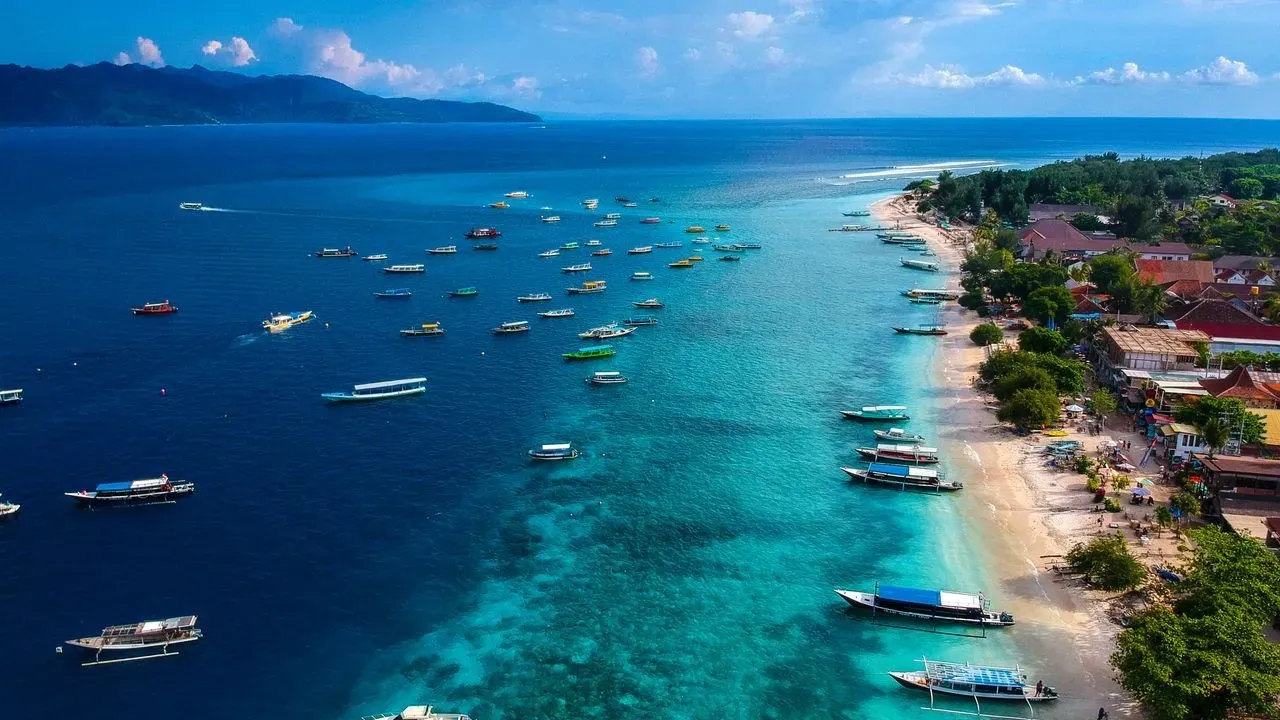

Off the coast of Lombok, Indonesia, a cluster of small islands known as the Gilis offers travelers a rare chance to slow down. These compact landmasses, connected by short boat rides from the mainland, operate without cars or motorbikes. The result is an environment shaped by the rhythm of waves, the clip-clop of horse-drawn carts, and the quiet turn of bicycle wheels.
Arrival by Sea
Boats from Lombok reach the Gilis after a brief crossing, often depositing visitors directly onto sandy shores. On Gili Trawangan, the largest of the group, the transition feels immediate. The absence of engine sounds creates space for other details to emerge, from the rustle of palm fronds to conversations carried on the breeze.
Local transport waits at the water’s edge. Horse carts, locally called cidomos, stand ready with drivers who know every path across the island. Bicycles line up nearby for those who prefer to pedal at their own pace. Both options keep movement gentle and visible, allowing riders to notice the coral reefs visible just offshore and the low-lying vegetation that defines the landscape.
Daily Movement on the Islands
Without motorized traffic, the Gilis maintain a scale that feels manageable on foot, by bike, or via cart. Paths wind between simple guesthouses, small warungs, and stretches of beach. A ride across Gili Trawangan takes only minutes, yet it passes through varied scenes of coconut palms, open fields, and clusters of homes.
Residents and visitors share these routes throughout the day. Children often play near the water, while carts carry supplies or passengers between the three main islands. The system encourages awareness of surroundings and reduces the pace to one that matches the tropical setting. Many travelers find that this simplicity shapes their entire visit, turning ordinary errands into opportunities to observe the islands’ natural and human rhythms.
Coastal Landscapes and Marine Life
Each Gili island sits low in the water, ringed by reefs that support colorful fish and sea turtles. Snorkeling from shore reveals coral gardens close enough to reach without a boat. The shallow waters stay warm year-round, inviting extended time in the sea.
Palm trees line much of the coastline, providing shade for walkers and cyclists. Inland, small gardens and open spaces break up the greenery. The compact size of the islands means that a single day can include time on multiple beaches, each with its own character shaped by currents and the angle of the sun. This proximity encourages unhurried exploration rather than rushed itineraries.
Respectful Ways to Experience the Gilis
Travelers who choose the Gilis often value the chance to support local livelihoods directly. Hiring a cidomo or renting a bicycle channels resources to island families. Staying in smaller accommodations and eating at family-run spots further strengthens those connections.
Simple practices help preserve the setting. Keeping noise low, avoiding single-use plastics, and respecting private spaces near homes all contribute to the islands’ continued appeal. Many visitors leave with a clearer sense of how limited infrastructure can foster both community ties and environmental care.
Returning with a Different Perspective
Time spent on the Gilis tends to linger after departure. The quiet movement, the visible reefs, and the shared paths create memories rooted in presence rather than speed. For those seeking a measured encounter with Indonesia’s coastal environments, these islands provide a grounded example of travel that aligns with the place itself.
AI Disclaimer: This article was created with the assistance of AI tools and reviewed by a human editor.