
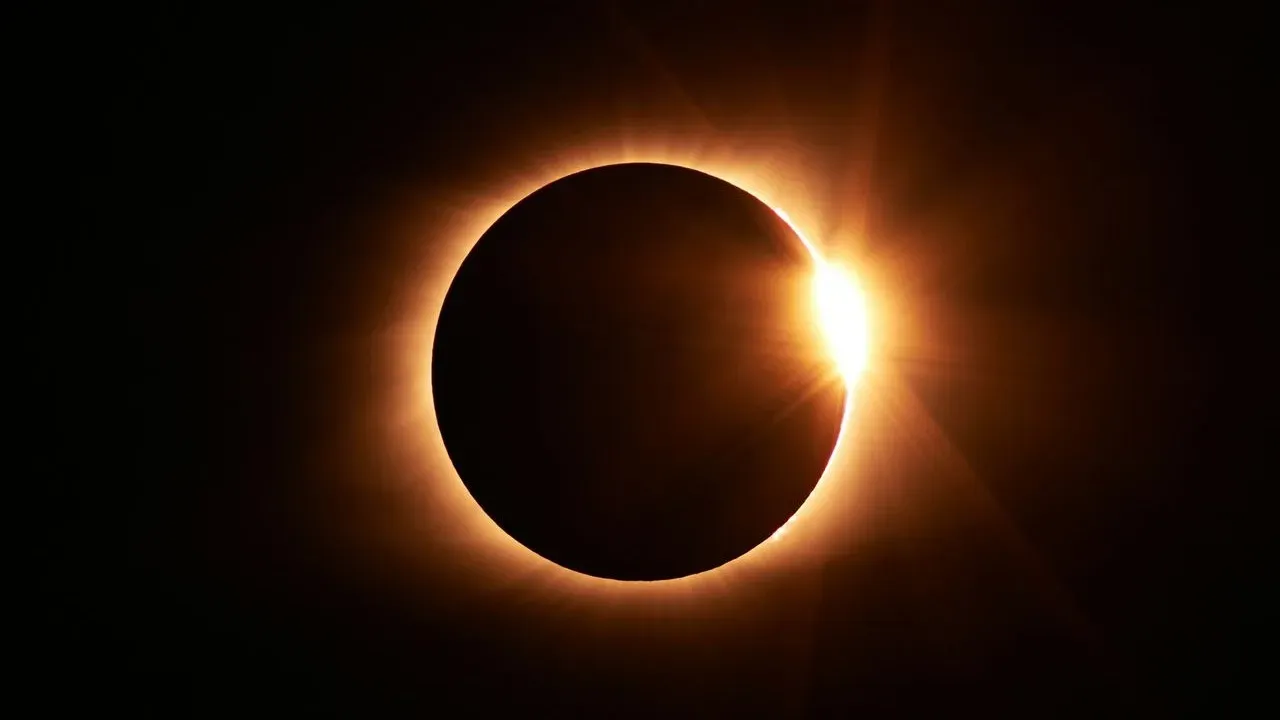
Wednesday brings a rare alignment of daytime and nighttime sky events that invites travelers to consider where they might pause and look upward. A total solar eclipse crosses a narrow path through Greenland, Iceland, northern Russia, the Atlantic Ocean, Spain, and part of Portugal, while the Perseid meteor shower reaches its annual peak after dark. For many in the United States, the day offers a partial eclipse followed by the chance to watch meteors under suitable conditions.
The Eclipse Path and Partial Views
The total phase of the eclipse remains visible only along that slender corridor, drawing dedicated observers to cruise ships and land-based tours in those regions. Outside the path of totality, a partial eclipse appears across a much wider area, including the mid-Atlantic. In the Washington, D.C., region the moon will cover roughly four percent of the sun between 1:17 p.m. and 2:27 p.m.
Those seeking the full experience may find value in following live coverage rather than relying on local conditions. NASA plans to begin its broadcast at 1:15 p.m., with totality beginning in Iceland at 1:45 p.m. and in Spain at 2:28 p.m. Viewers elsewhere can still appreciate the geometry of the alignment through reliable streams.
Safety Considerations for Daytime Viewing
Proper eye protection remains essential whenever any portion of the sun stays visible. Solar eclipse glasses, camera filters, and optical aids must meet current ISO standards to avoid harm. Products that failed those standards appeared during earlier eclipses, underscoring the need to purchase from established suppliers.
Smartphone users can explore dedicated accessories designed for safe solar imaging. Preparation also includes planning for children and group settings so everyone follows the same protective steps. Clear guidance on reputable sources helps ensure the experience stays both memorable and safe.
The Perseid Meteor Shower at Its Peak
After sunset the Perseids reach maximum activity, with the moon absent from the sky. Under ideal dark-sky conditions an observer may count between sixty and one hundred meteors per hour. The display results from Earth passing through dust left by Comet Swift-Tuttle; the particles, often no larger than grains of sand, strike the atmosphere at roughly 37 miles per second and create brief, bright streaks.
NASA observations have shown that the Perseids consistently produce more fireballs – meteors as bright as or brighter than Venus – than most other annual showers. The radiant point lies near the border of Perseus and Cassiopeia, though meteors can appear anywhere in the sky once the shower is underway. Activity tends to increase after midnight as the radiant rises higher.
Thoughtful Places to Watch
Shenandoah National Park offers one accessible option for those in the mid-Atlantic. The park concessionaire has scheduled two evening programs on Wednesday: a presentation on the Milky Way at 9 p.m. and a Night Skies Program hosted by the Charlottesville Astronomical Society at 10 p.m., weather permitting. Overnight stays allow visitors to combine daytime exploration with nighttime viewing while supporting the park’s operations.
Travelers seeking darker horizons can look for open areas free of trees, buildings, and artificial light. Even suburban locations can reveal the brighter meteors when streetlights and tall structures are minimized. A reclining chair or blanket helps maintain comfort during extended sessions, and layers plus insect repellent add to the practicality of an evening outdoors.
What matters now
- Check local forecasts for both daytime cloud cover and nighttime clarity.
- Confirm eclipse glasses or filters come from verified suppliers.
- Identify a viewing site in advance and allow time to reach it before the events begin.
- Consider supporting protected lands or local astronomy groups when planning an overnight trip.
Whether the day leads to a national park, a quiet rural field, or simply a comfortable spot away from city lights, the combination of eclipse and meteors encourages deliberate travel choices. Such moments reward those who plan with care and respect for both the skies and the places that offer clear views of them.
AI Disclaimer: This article was created with the assistance of AI tools and reviewed by a human editor.