
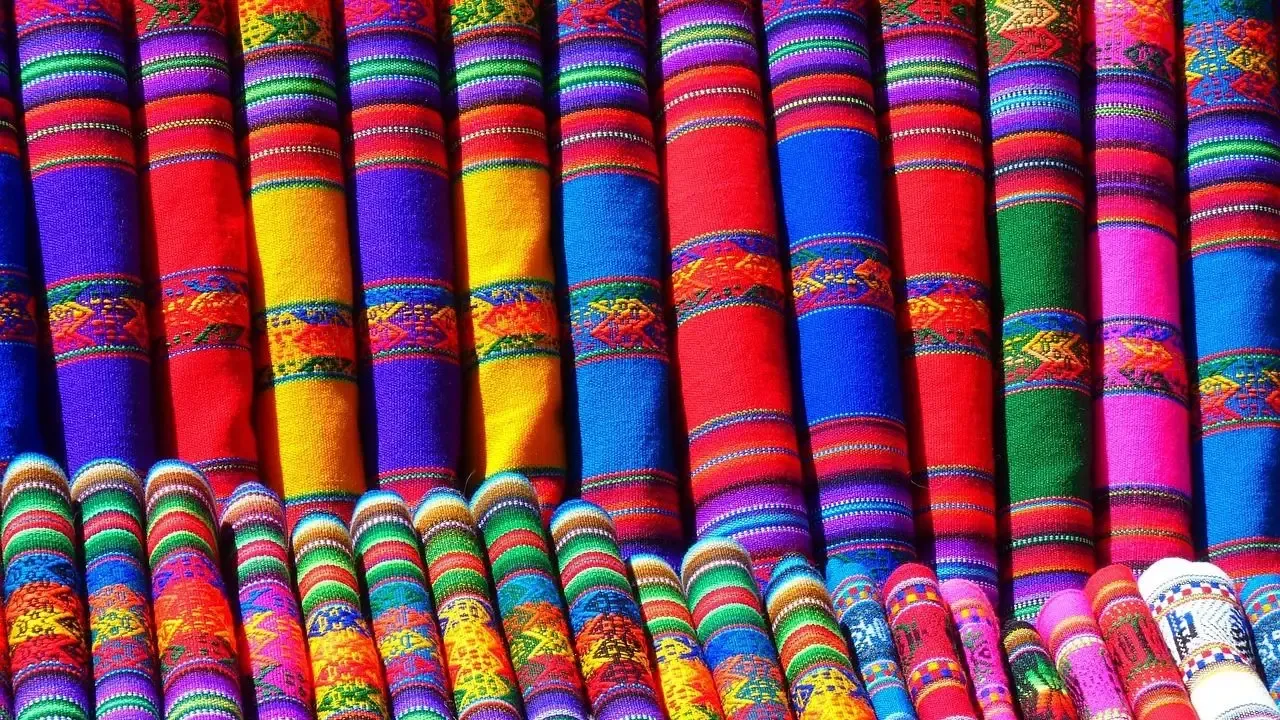

In the highlands of Davao Oriental, one weaver continues a practice that transforms abaca fibers into textiles carrying generations of Mandaya knowledge. Samporonia Madanlo stands at the center of this work, recognized nationally for her command of techniques that few now master. Her story illustrates how a single craft can hold an entire community’s understanding of materials, patterns, and identity.
A Weaver of Many Traditions
Madanlo comes from Dangilas in P.M. Sobrecarey, Caraga. She is known not only for Dagmay but also for embroidery, beadwork, basketry, traditional dance, and chanting. Within her community she serves as a Baylan, a role that connects these practices into a single body of cultural knowledge.
Skills like hers develop through observation and repetition rather than formal instruction. Elders demonstrate the work, and younger practitioners refine their movements over years until the patterns and tensions become second nature. Madanlo embodies this transmission of expertise.
What Sets Dagmay Apart
Dagmay is the distinctive woven textile of the Mandaya people. It begins with abaca, a plant whose strong, flexible fibers suit traditional looms particularly well. The process turns raw stalks into dyed threads that are then arranged and interlaced according to designs developed over generations.
Geometric shapes appear alongside motifs drawn from people, animals, plants, and the surrounding landscape. These elements are not chosen for decoration alone. They reflect Mandaya understandings of the world and the relationships that sustain it.
The Demands of Backstrap Weaving and Ikat
Traditional Dagmay production relies on a backstrap loom. The weaver positions the loom against her body, using her own posture to maintain tension while guiding each thread. Every placement must be precise, because the final design emerges only as the cloth grows.
Many pieces also use ikat, a resist-dyeing method. Sections of yarn are prepared so that dye reaches only certain areas. The weaver must therefore plan the entire pattern before any thread reaches the loom. Small variations that appear in the finished textile often signal the hand of an individual artisan rather than machine repetition.
National Recognition and Its Reach
In 2023 Madanlo received the Gawad sa Manlilikha ng Bayan, the National Living Treasures Award. The honor highlights artists who sustain intangible cultural heritage through exceptional skill. For the Mandaya weaving tradition, the recognition draws wider attention to practices that might otherwise remain known mainly within the communities where they continue.
At a time when younger people face many career options, such awards underscore the value of long apprenticeships. They also signal that traditional knowledge deserves support if it is to remain part of contemporary life rather than museum display alone.
Why These Textiles Still Matter
Travelers interested in Philippine crafts increasingly encounter indigenous textiles in markets and exhibitions. Dagmay offers a distinct example of how one community has shaped its own materials and meanings. When visitors purchase such work, questions about origin, makers, and fair return become practical rather than abstract.
Supporting artisans directly helps sustain both the technical skills and the broader cultural context in which they exist. Madanlo’s example shows that the textile is never separate from the dances, chants, and stories that accompany it.
Each new piece she completes carries forward knowledge accumulated over time. In that continuity lies the quiet strength of a tradition that adapts while remaining rooted in its origins.
AI Disclaimer: This article was created with the assistance of AI tools and reviewed by a human editor.