
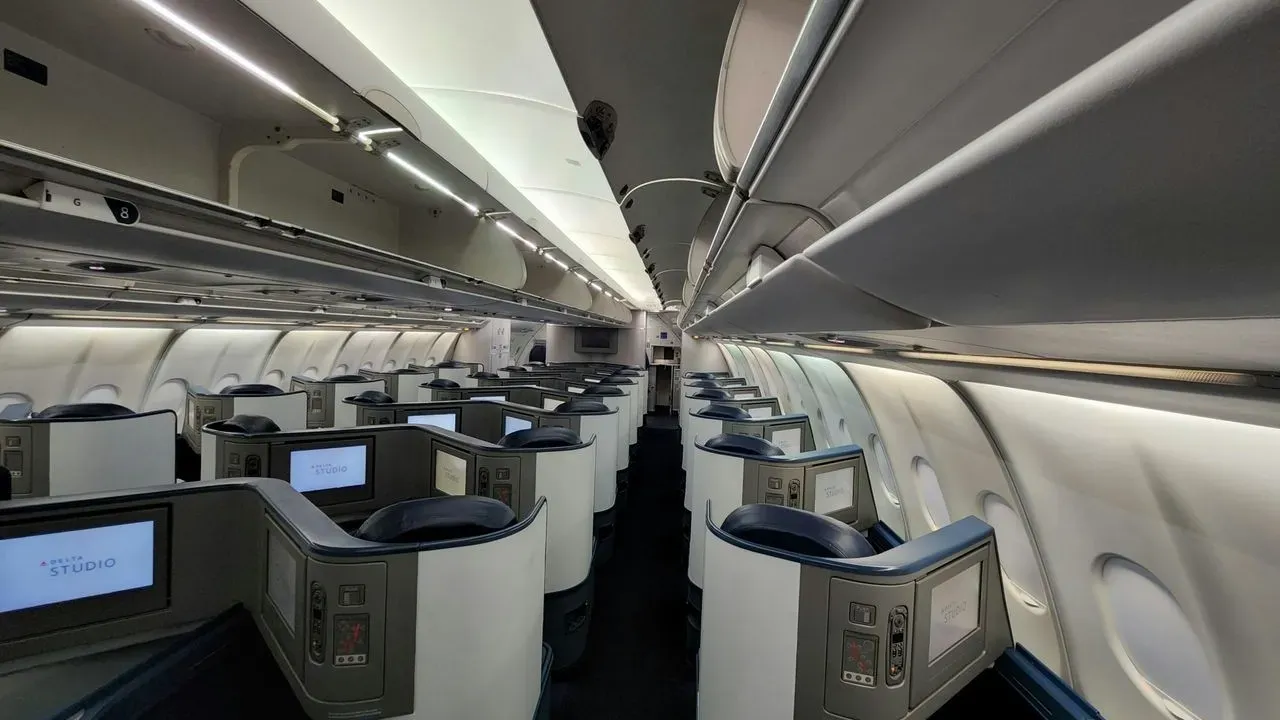

Delta Air Lines is adjusting the balance of cabin space on several of its newest aircraft types. The carrier has introduced an Airbus A321neo configured with 44 domestic first-class seats, a notable increase over the 20 seats typical on most of its single-aisle planes. This configuration occupies nearly half the aircraft and serves as a live test of how much premium capacity the market will support.
The A321neo Configuration
The 44-seat first-class cabin spans 11 rows and was installed while regulatory approvals for lie-flat Delta One suites remain pending. Rather than leave the aircraft underutilized, Delta chose to deploy already-certified recliner seats in greater numbers. Early results show average load factors near 80 percent in those seats, indicating sustained passenger interest.
This setup was never intended as a permanent layout. It functions instead as a practical bridge until the carrier can install its long-haul business-class product. The experience has supplied useful data on how travelers respond when more premium seats are available on shorter domestic routes.
Rising Demand for Premium Space
Delta has observed a clear shift in booking patterns, with more passengers purchasing premium seats outright rather than relying solely on elite upgrades. The airline expects to offer nearly 8 percent more premium seats system-wide compared with 2025 levels, while reducing the total number of economy seats. This rebalancing reflects both revenue performance and changing customer preferences.
Chief commercial officer Joe Esposito noted that the carrier needs additional first-class inventory over the longer term. The A321neo trial has helped quantify that need without requiring speculation about future demand.
Plans for the 737 MAX 10 and Beyond
Looking ahead, Delta intends to equip its incoming Boeing 737 MAX 10 aircraft with 24 first-class recliners, an increase of 20 percent over the current standard on most narrow-body jets. The move signals that larger premium cabins are likely to become a standard feature rather than an exception. The airline is also preparing to introduce its Airbus A350-1000, which will feature an updated Delta One business-class product on long-haul routes.
While no specific “business-class plus” offering has been announced, the carrier continues to evaluate cabin innovations with its seat supplier.
What Travelers Can Expect
For passengers, the changes point to more opportunities to select premium seating on a wider range of flights. At the same time, the reduction in economy seats may affect availability for those traveling in the back of the aircraft. Elite members who have historically relied on complimentary upgrades will encounter a different upgrade landscape as paid premium sales grow.
Delta has stated it will continue to monitor performance and adjust configurations accordingly. The current experiments provide a clearer picture of how premium demand is evolving across both short-haul and long-haul operations.
• 44 first-class seats on the A321neo test aircraft
• 24 first-class seats planned for the 737 MAX 10
• Nearly 8 percent more premium seats fleet-wide versus 2025
• Fewer economy seats as premium capacity grows
AI Disclaimer: This article was created with the assistance of AI tools and reviewed by a human editor.