
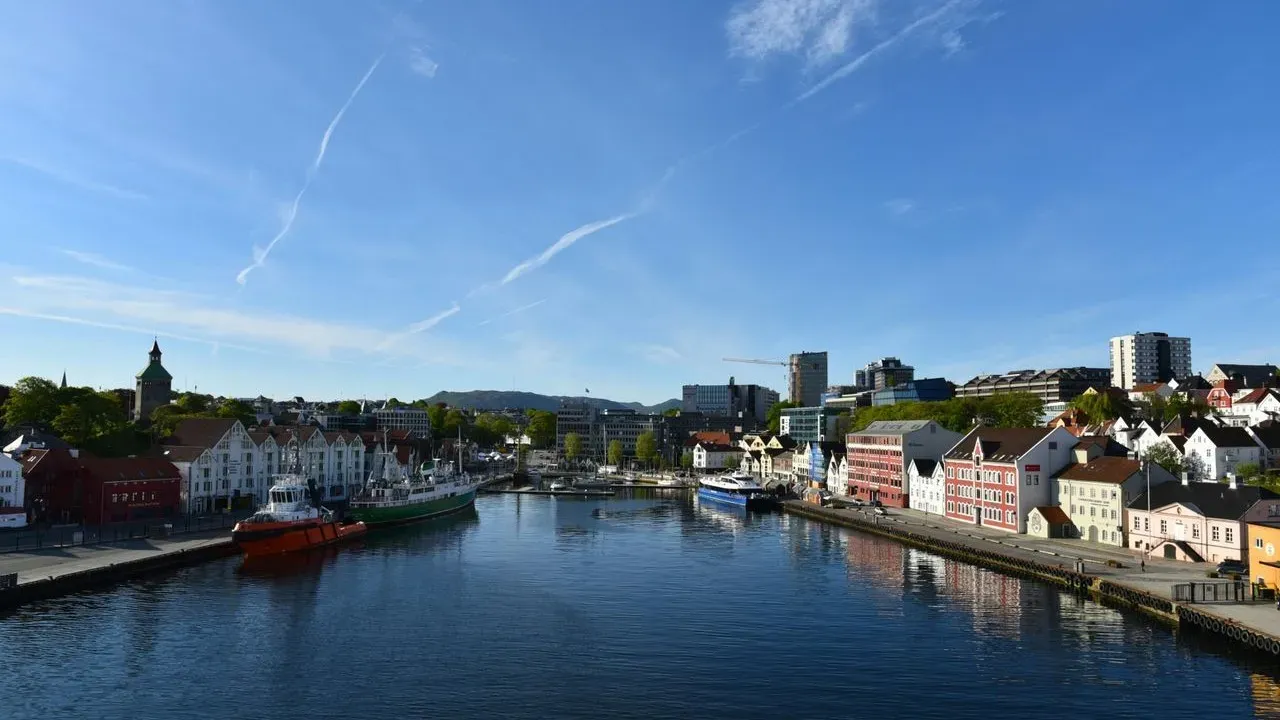

Stavanger sits on Norway’s southwestern coast as a place where everyday city life flows naturally into some of the country’s most striking natural scenery. Within minutes of walking past rows of white wooden houses or pausing at a waterfront café, travelers can find themselves on trails that climb toward sheer cliffs above the Lysefjord. The city’s compact scale makes it possible to move between historic neighborhoods and open fjord landscapes without long transfers or complicated planning.
Walking the Quiet Streets of Gamle Stavanger
The historic district known as Gamle Stavanger preserves one of Europe’s largest collections of wooden houses, with roughly 173 structures still standing along narrow lanes. Most remain painted white and fronted by small gardens that bloom in summer, creating a calm atmosphere that feels removed from modern traffic. These homes once belonged to families tied to fishing, shipping, and the canning industry that shaped the local economy long before petroleum arrived.
Strolling without a fixed route reveals small details: carved doorways, window boxes, and the gentle slope of cobblestone paths. The neighborhood sits close to the Norwegian Canning Museum, where exhibits inside a former factory explain how sardines and other seafood were processed for export. Together, the houses and the museum give a tangible sense of the working communities that built Stavanger’s early prosperity.
Reaching Preikestolen Above the Lysefjord
Preikestolen, often called Pulpit Rock, rises about 604 meters above the Lysefjord and remains the landmark most closely linked with Stavanger. The trail to the summit passes through woodland and rocky terrain before opening onto a flat cliff edge with sweeping views of the water and surrounding peaks. The hike is not technical, yet it rewards preparation with proper footwear, water, and layers for changing mountain weather.
Many visitors describe the moment the trail crests as unforgettable, with the fjord stretching far below between steep mountainsides. The same viewpoint has appeared in films, though the natural drama stands on its own. For those who prefer a gentler approach, boat tours travel the 42-kilometer fjord and offer views of the cliff from the water, providing scale that photographs rarely capture.
Discovering Color, History, and Industry
Stavanger balances its older wooden architecture with brighter contemporary touches, most visibly along Øvre Holmegate, known locally as Fargegaten. The street’s painted façades house cafés, shops, and small creative businesses that invite lingering rather than quick snapshots. The contrast between these vivid buildings and the white houses of Gamle Stavanger illustrates how the city respects its past while welcoming newer expressions of its identity.
Museums deepen that understanding. The Norwegian Petroleum Museum, designed to echo an offshore platform, traces the industry’s role in transforming the region and addresses broader questions of energy and climate. Nearby, the Stavanger Maritime Museum and the Iron Age Farm at Jernaldergården extend the timeline backward, showing seafaring traditions and earlier settlement patterns. Each site sits within easy walking distance of the center, allowing visitors to move between periods of history in a single day.
Settling Into the Harbor and Surrounding Waters
Vågen harbor forms the natural heart of daily life in Stavanger, with historic buildings lining the waterfront and boats coming and going throughout the day. Restaurants and cafés offer places to sit and watch the rhythm of arrivals and departures without a strict schedule. The location also serves as a convenient departure point for fjord cruises or short trips to nearby islands such as Sør-Hidle, home to the gardens of Flor & Fjære.
Evenings around the harbor often bring a relaxed pace after daytime excursions. Locals meet for meals while visitors plan the next day’s outing, and the surrounding streets lead back toward the cathedral or the colorful lanes of Fargegaten. This central spot anchors the city’s blend of maritime heritage and present-day ease.
Stavanger rewards travelers who value both purposeful exploration and unhurried moments. Its wooden streets and waterfront provide a welcoming base, while the nearby fjord landscapes offer the kind of scale that lingers in memory long after the return home. The combination invites visitors to move at their own rhythm, whether that means a full day on the trail or an afternoon simply watching the water.
AI Disclaimer: This article was created with the assistance of AI tools and reviewed by a human editor.