
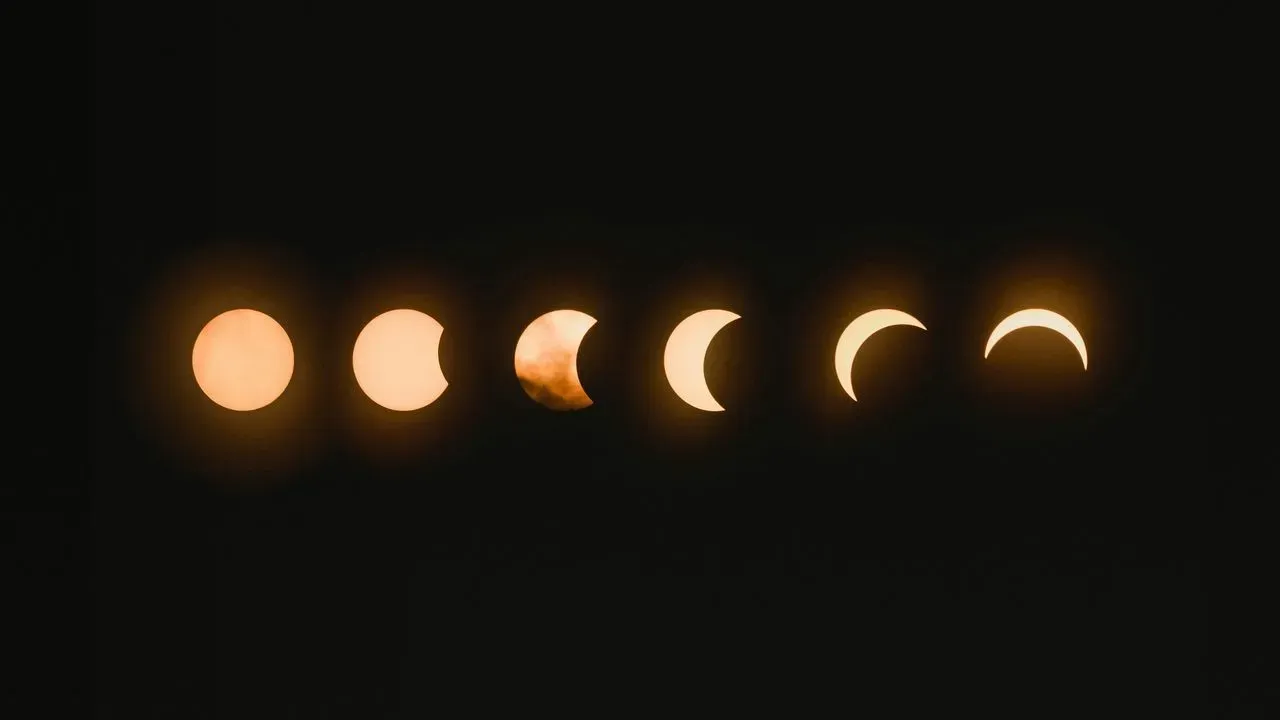

Skywatchers in much of the country have a compelling reason to step outside in the coming days. On the night of August 27 into the early hours of August 28, Earth’s shadow will sweep across more than 96 percent of the full moon, creating a deep partial lunar eclipse that comes remarkably close to totality. The event offers a quiet invitation to pause and witness a celestial alignment that unfolds only once in this particular cycle.
Why This Eclipse Stands Apart
Partial lunar eclipses happen with some regularity, yet those that reach this depth remain uncommon. At maximum, 96.3 percent of the moon’s visible face will lie inside Earth’s central shadow, leaving only a narrow sliver in sunlight. The shadowed portion often takes on subtle copper or reddish tones as sunlight filters through Earth’s atmosphere, a gentle reminder of the same process that paints our sunsets. This particular eclipse belongs to Saros series 138, a sequence that repeats roughly every 18 years. The last comparable event occurred in 2008, and the next will not arrive until 2044. For many observers, the coming night therefore represents a once-in-a-generation opportunity to see the moon transformed without traveling far from home.
What Viewers Can Expect to See
The progression begins with a gradual dimming as the moon enters Earth’s outer penumbral shadow. As the darker umbral shadow advances, a distinct “bite” appears to move across the lunar disk. Near peak, the remaining bright crescent shrinks noticeably, and the rest of the surface may glow with warm hues that become more apparent once eyes adjust to the darkness. No special equipment is required. The entire display remains safe to watch with the naked eye, though binoculars or a small telescope can reveal finer details on the moon’s craters and plains. Clear skies and a location away from bright city lights will enhance the experience, yet even urban viewers with an unobstructed eastern or southern horizon should catch the main phases.
Timing Across U.S. Time Zones
The moment of greatest eclipse occurs at 4:13 a.m. UTC on August 28. That translates to the following local times: – 12:13 a.m. EDT on August 28 for the East Coast – 11:13 p.m. CDT on August 27 for the central region – 10:13 p.m. MDT on August 27 for the Mountain states – 9:13 p.m. PDT on August 27 for the West Coast Western observers will see the event unfold in the evening hours, while those farther east will watch the peak around or shortly after midnight. The eclipse remains visible across nearly all of North America, with favorable conditions reported for cities from Los Angeles to New York.
Approaching the Night with Intention
A lunar eclipse rewards patience and presence more than elaborate preparation. Finding a comfortable spot with a clear view of the sky, perhaps a quiet park bench or a familiar backyard, allows the gradual changes to unfold at their own pace. Bringing a blanket or chair encourages lingering through the different stages rather than rushing the moment. Those who prefer company might gather with family or neighbors, turning the evening into a shared, low-impact outing. For anyone unable to step outside, several astronomy organizations plan live webcasts that capture the event from multiple locations. Either way, the experience centers on slowing down long enough to notice how Earth’s own shadow can alter the appearance of our nearest celestial neighbor.
A Quiet Reminder of Larger Cycles
Celestial events like this one invite reflection on the steady rhythms that continue regardless of daily routines. The moon’s passage through Earth’s shadow lasts only a few hours, yet it connects observers to a lineage of skywatchers who have paused for the same sight across centuries. Stepping outside this week offers a simple, accessible way to mark that continuity while remaining grounded in the present moment. Whether the sky stays perfectly clear or scattered clouds drift by, the opportunity itself remains worth noticing.
AI Disclaimer: This article was created with the assistance of AI tools and reviewed by a human editor.