
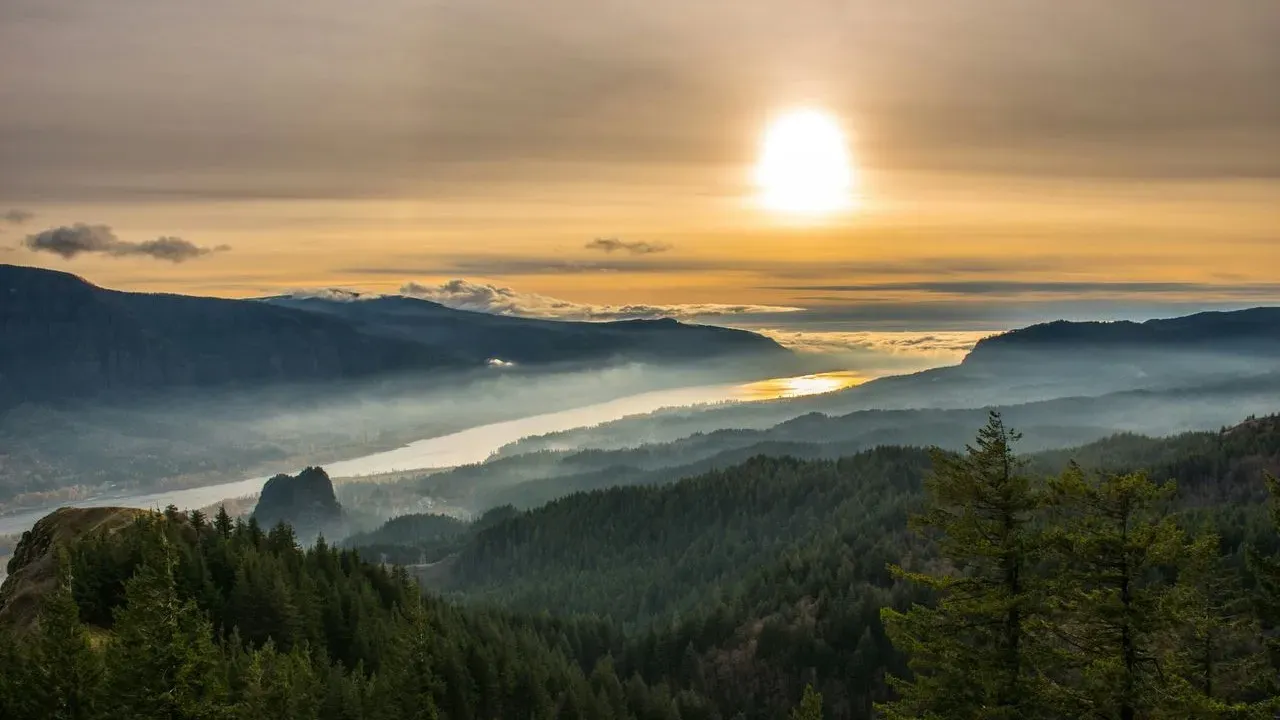

The Columbia River Gorge stretches roughly eighty miles as a dramatic river canyon that slices through the Cascade Range at sea level. What begins as a plan for scenic views and a handful of waterfalls often becomes something more layered once the drive unfolds. Travelers who approach it with an open schedule discover a living corridor where geology, communities, and weather patterns shift in ways that reward patience and presence.
The Corridor That Shapes Every Mile
The Gorge functions less as a single destination and more as a continuous passage. Its walls rise as high as four thousand feet in places, creating a natural corridor that has long served as the only sea-level route across the mountains. This setting produces striking contrasts: dense evergreen forests dominate the western reaches, while open grasslands appear farther east as the rain shadow takes effect.
The result is a landscape that changes character within a single afternoon. More than ninety waterfalls are counted within the broader area, fed by underground springs and seasonal flows that peak in cooler months. The river itself supports windsurfing communities, particularly around Hood River, where consistent breezes draw enthusiasts year after year. These elements combine to make the drive itself the central experience rather than a means to isolated stops.
Towns That Reward a Slower Pace
Many visitors focus primarily on natural features and treat settlements along the route as brief pauses for fuel or supplies. Yet each community carries its own distinct rhythm. Hood River offers a walkable downtown with a lively outdoor culture centered on the water. Cascade Locks and Stevenson, just across the river in Washington, present quieter, more residential atmospheres shaped by their positions along the historic highway.
The Dalles marks the drier eastern transition, where the climate feels noticeably different from the misty western sections. Allowing time to pause in two or three of these places transforms the outing from a rushed itinerary into a fuller exploration of the region’s human scale. The Forest Service notes that around seventy-five thousand residents live within the Gorge itself, underscoring that this is a working landscape as much as a scenic one.
Waterfalls and the Value of Preparation
Multnomah Falls stands as the most visited natural site in the Pacific Northwest, with its two-tiered drop of 620 feet drawing millions of visitors annually. During peak summer periods, timed permits are required for the main parking area along Interstate 84. Alternatives such as shuttles or public transit remove that requirement and often prove more convenient.
A series of additional falls lies along the historic highway between Corbett and Dodson, including Latourell, Shepperd’s Dell, Bridal Veil, and Wahkeena. These sites sit close enough together to allow unhurried visits, and some offer closer access to the base where the surrounding basalt and lichen create striking visual textures. Planning ahead for permits and timing helps preserve the sense of discovery that makes each stop memorable.
Practical Details That Enhance the Journey
Constant mist near larger falls can affect clothing, hair, and any makeup worn for the day. Waterproof products and a simple approach tend to hold up better than more elaborate preparations. Strong winds at overlooks call for secure hair management, while the shift from cool, damp western sections to warmer, sunnier eastern ones makes layered clothing and sun protection useful throughout. Comfortable walking shoes support exploration beyond viewpoints, and an early start leaves room for the slower pace the route deserves. The historic highway sections provide a more intimate experience than the interstate where possible.
What matters now is approaching the Gorge with time and flexibility. The drive rewards those who let the landscape and its communities unfold at their own rhythm rather than rushing toward a fixed list of sights. ([1])
A single day spent traveling this corridor can quietly expand a traveler’s sense of what a road trip offers. The combination of dramatic geology, accessible waterfalls, and distinct riverside towns creates an experience that lingers well beyond the final mile. Those near Portland or planning routes through the Pacific Northwest will find the Gorge well worth a full day’s attention, approached with respect for its scale and the people who call it home.
AI Disclaimer: This article was created with the assistance of AI tools and reviewed by a human editor.