
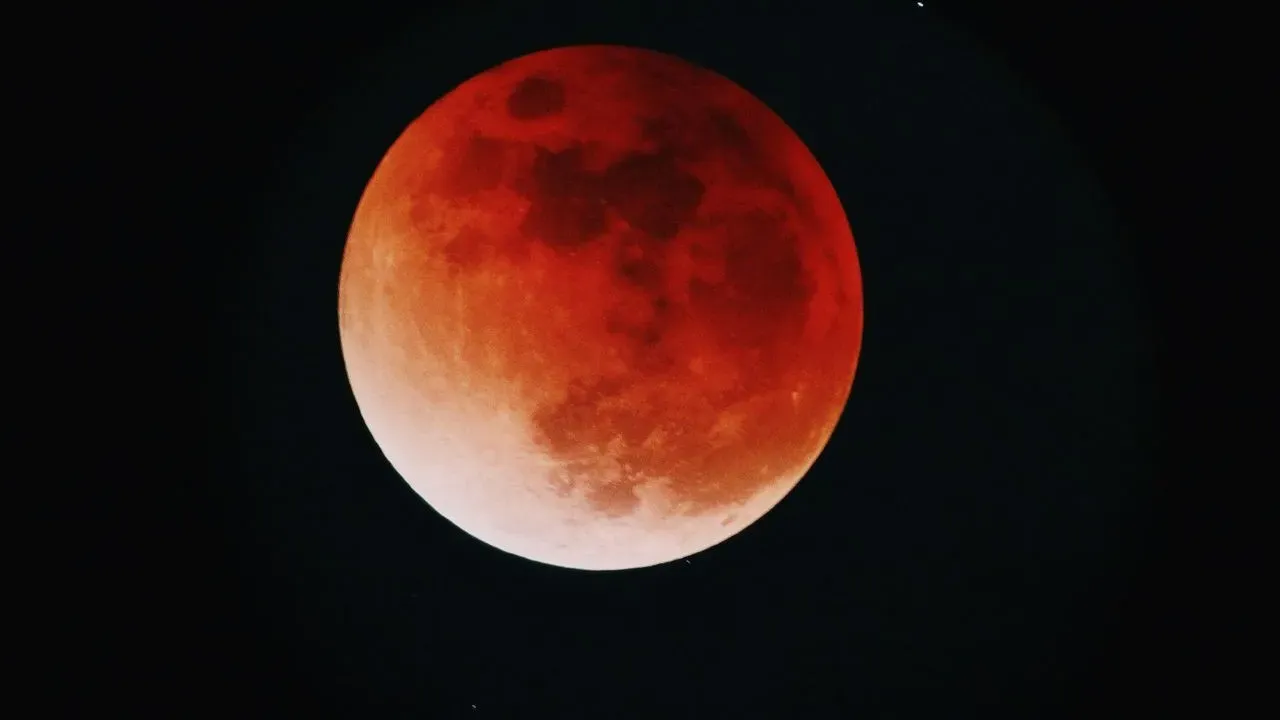

Across the United States, a partial lunar eclipse will unfold late on Thursday, August 27, and into the early hours of Friday, August 28. Earth’s shadow will sweep across nearly all of the moon’s face, reaching about 96 percent coverage at its peak. The event offers a clear, safe spectacle for observers in every time zone, with the moon high enough for comfortable viewing from many locations. ([1])
Precise Timing by Time Zone
The eclipse unfolds over several hours, though the most noticeable partial phase lasts roughly three hours. Observers in the eastern states will see the moon already climbing when the penumbral shading begins around 9:23 p.m. EDT on Thursday. Maximum coverage arrives just after midnight on Friday in the East, while western viewers catch the deepest stage earlier in their evening.
- Eastern Time: Penumbral start 9:23 p.m. Thursday; partial begins 10:33 p.m.; maximum 12:12 a.m. Friday.
- Central Time: Penumbral start 8:23 p.m. Thursday; partial begins 9:33 p.m.; maximum 11:12 p.m. Thursday.
- Mountain Time: Penumbral start 7:23 p.m. Thursday; partial begins 8:33 p.m.; maximum 10:12 p.m. Thursday.
- Pacific Time: Penumbral start 6:23 p.m. Thursday; partial begins 7:33 p.m.; maximum 9:12 p.m. Thursday.
Western locations may miss the very earliest penumbral stages if the moon has not yet risen, yet the partial phase remains fully visible once the moon clears the horizon.
What Observers Will See
The moon will gradually darken along one edge as Earth’s umbra advances. At greatest eclipse the shadowed portion takes on a copper or reddish tone caused by sunlight filtering through Earth’s atmosphere. A narrow bright crescent will remain along the opposite limb, giving the moon a distinctive, almost lantern-like appearance against the night sky.
Cloud cover remains the main variable. Forecasts for late August often show scattered clouds in many regions, yet breaks frequently allow good views during key moments. No special equipment is required; the eclipse is safe to watch with the naked eye, though binoculars or a small telescope can reveal finer shading details.
Planning a Night Under the Stars
Many travelers already plan trips around celestial events, and this eclipse aligns well with visits to darker-sky areas. National parks and rural stretches in the central and western states frequently offer clearer horizons and less light pollution than urban centers. Arriving early in the evening lets observers settle in and watch the full progression without rushing.
Local astronomy clubs and public parks sometimes host informal gatherings with telescopes available for shared use. Checking weather updates the day before helps refine the best viewing window. The experience rewards patience and a comfortable spot away from bright lights.
A Shared Celestial Moment
Events like this remind travelers of the rhythms that connect distant places. Whether viewed from a city balcony, a quiet beach, or a high-desert overlook, the same shadowed moon appears overhead. Marking the date on a calendar turns an ordinary Thursday night into an opportunity for quiet wonder and shared observation.
AI Disclaimer: This article was created with the assistance of AI tools and reviewed by a human editor.