

There’s one ritual that marks the start of every cruise vacation, no matter the ship, the itinerary, or the ocean. Before the sail-away party begins and the first cocktail gets poured, every passenger must complete the muster drill. It’s non-negotiable, it’s written into international maritime law, and yet one particular passenger habit surrounding it has become a persistent source of frustration for cruise crews around the world.
That habit is simple, deeply common, and entirely avoidable: not paying attention. Whether passengers are scrolling their phones, chatting loudly, or visibly treating the briefing as an inconvenience, crew members experience it every single sailing. Here’s a closer look at ten dimensions of this problem, why it matters more than most passengers realize, and what’s changed in recent years.
It’s Legally Mandatory, Not a Polite Suggestion
From January 2015, passengers must undergo safety drills, including mustering at the lifeboat stations, before the ship departs or immediately on departure. This rule comes directly from SOLAS, the International Convention for the Safety of Life at Sea, which sets global maritime safety standards. The amended regulation was adopted in the wake of the Costa Concordia incident, to ensure that passengers undergo safety drills before the ship departs or immediately on departure.
Every cruise passenger on every voyage, regardless of age, cruise line, cabin class, travel delays, or prior cruising experience, is required to complete the safety exercise before the ship sets sail. Crew members are duty-bound to enforce this. When passengers treat it as optional background noise, they’re placing that legal burden squarely on the shoulders of staff who have no real choice in the matter.
Scrolling Phones During the Briefing Is the Number One Complaint

The safety briefing feels like the least exciting part of boarding day, and plenty of guests treat it that way, sighing through it or scrolling their phones instead of paying attention. From the crew’s perspective, this is both disrespectful and genuinely dangerous. The information being delivered isn’t filler content. It covers life jacket use, emergency signals, and muster station locations.
It’s anything but optional from the crew’s side of things. Cabin stewards are often pulled into muster drill duty on top of their regular room turnover schedule, and a guest treating the drill as background noise adds real risk to an already brutal workload. Crew members are managing multiple responsibilities simultaneously on embarkation day. A distracted or disruptive passenger makes an already demanding shift harder for everyone around them.
The “I’ve Done This Before” Attitude Doesn’t Hold Water
Emergencies at sea are rare, but all passengers are required to complete the muster drill to become familiar with their assigned assembly station and other protocols. It’s mandatory for all guests, even those who are part of the line’s top-tier loyalty tiers, because the assigned assembly station will likely be different on each voyage. This is a critical point that experienced cruisers frequently miss. Your muster station changes from ship to ship and sometimes even voyage to voyage.
Many miscues involve passengers who prefer to ignore the drills altogether, don’t pay attention to the crew at the muster stations, and sometimes make it difficult for other passengers to listen to the crew emergency briefing during the drill. Seasoned cruisers who disengage tend to disrupt the passengers around them, creating a ripple effect of inattention at exactly the wrong moment.
Crew Members Are Accountable in Ways Passengers Aren’t
It is the responsibility of the crew to ensure that a muster drill is held and that every passenger and crew member is aware that it is being held. If something goes wrong during a drill, the accountability lands on crew, not passengers. Laws in some places hold crew members liable to face civil charges if they voluntarily do not attend the muster drill.
Cruise lines are required to record every passenger’s participation in the muster drill, creating an official log that demonstrates compliance with international safety standards. Every time a passenger wanders off, hides in their cabin, or stands at their station without actually engaging, crew members are the ones scrambling to close that compliance gap before departure.
The Stakes Are Real, Even When the Odds Are Low

Studies show that panic can significantly hinder evacuation efficiency, potentially reducing it by as much as 50%. That statistic puts the purpose of muster drills in sharp relief. The drill exists precisely to reduce panic, and passengers who tune out are undermining that objective for everyone onboard. As a result, many cruise lines have incorporated psychological training for crew members to help them manage passenger behavior under stress.
Noting the fastest route from your cabin to your muster station, including alternative routes in case your primary path is blocked, is genuinely useful. Counting the number of cabin doors between your cabin and the nearest stairwell matters too, because in a smoke-filled corridor you may need to navigate by touch. These are not abstract safety concepts. They’re practical details that a distracted passenger at muster will simply never absorb.
The E-Muster Revolution Changed the Format but Not the Problem
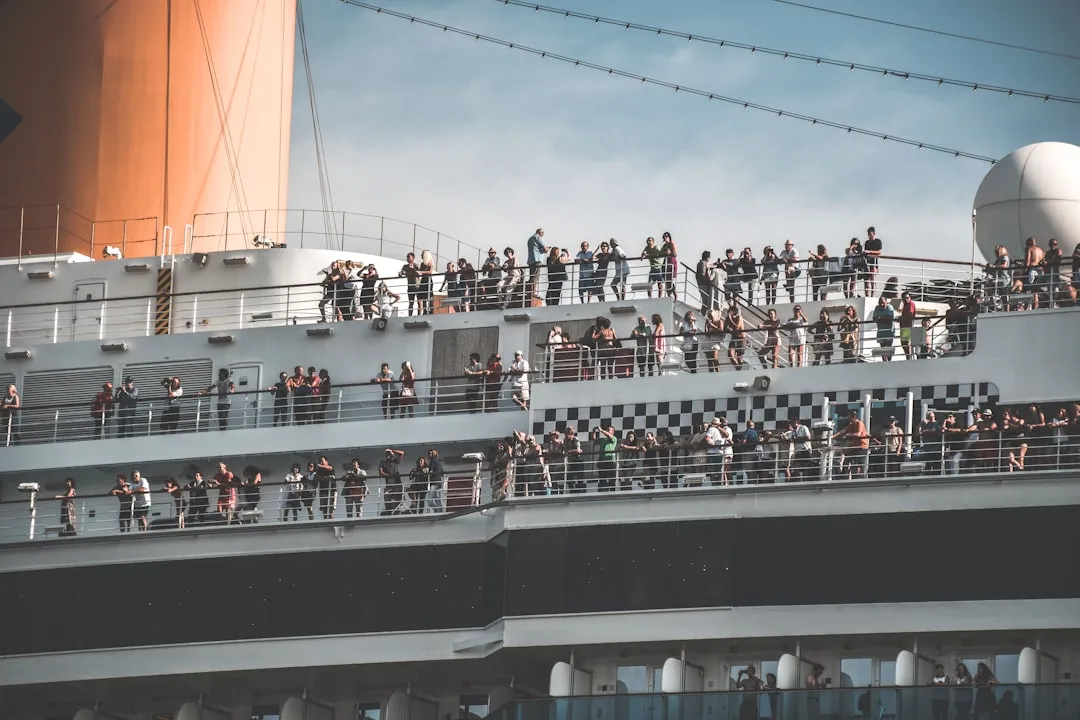
Many cruise lines have converted to a virtual muster process that allows guests to watch safety briefings from their smartphones or stateroom TV prior to visiting their muster station on their own within a specified window of time. The e-muster system was designed to make compliance easier and less physically uncomfortable. During the early days of the COVID-19 pandemic, Royal Caribbean Group developed a virtual muster drill that streamlined the process. The rest of the cruise industry quickly followed suit. While a handful of cruise providers returned to standard procedures when the pandemic ended, most lines permanently adopted the convenient e-muster system.
Despite the flexibility, the distraction problem didn’t disappear. Passengers still find ways to rush through videos without watching them, or check into their station without absorbing a single piece of information. A significant portion of cruise passengers remain largely unaware of safety protocols before boarding, suggesting that while innovations in drills are valuable, pre-cruise education and the overall effectiveness of current methods need continued scrutiny.
Passengers Who Skip Can Be Named, Removed, or Both
Cruisers who do not complete the drill will be confronted by staff to fulfill a mandatory make-up briefing. Worse yet, noncompliant guests may be subject to shipwide announcements requesting their attention by name, or they might be removed from the sailing entirely without a refund. Being announced over the ship’s PA system by name is not a comfortable experience, and most passengers don’t realize it’s a real possibility until it happens.
If you miss the initial drill, you may be given a second opportunity to complete the safety briefing. If you fail to attend it again, you face getting forced off of the ship at the next port of call without receiving a refund. In some instances, you may be removed before the ship even sets sail. Crew members who have to track down noncompliant passengers are pulled away from other duties at one of the busiest, most time-pressured moments of the entire voyage.
The Numbers on Passenger Awareness Are Sobering
Roughly 70% of passengers fail to recall their designated muster station before the drill commences. This statistic reveals a continuing challenge in getting passengers to pay close attention to pre-cruise safety instructions. That figure puts the problem in concrete terms. When the majority of passengers arrive at a muster station without even knowing where it is, crew members are starting from a much lower baseline than they should be.
On Reddit threads, multiple cruisers have talked about how frustrating it is that some passengers do not take the safety drill and informational videos seriously. It’s worth noting that the frustration isn’t only coming from crew. Fellow passengers who do engage with the drill find themselves standing next to people who are visibly not present in the moment, which affects the collective tone and pace of the entire station.
Passengers Overwhelmingly Prefer E-Muster, but Lines Sometimes Revert
Carnival’s Brand Ambassador posted a poll in 2023 asking passengers their preference on the e-muster drill. Out of over 35,600 respondents, an astonishing 98% indicated they were happy with the e-muster drill, while only 2% said they’d prefer to return to the old drill. That’s about as clear a preference signal as you’ll find in any passenger survey. The appetite for flexibility is enormous.
That option isn’t always on offer, though. Passengers on select Carnival sailings in early 2025 were required to complete a traditional in-person muster drill rather than the e-muster version. When lines do revert to in-person formats, the engagement problem becomes immediately visible again, with larger crowds making it easier for disengaged passengers to blend in and zone out.
Technology Is Trying to Close the Gap

Research indicates that incorporating augmented reality into muster drills can increase passenger knowledge retention of safety procedures by up to 80%. This improvement compared to traditional methods makes AR a promising approach to enhancing passenger preparedness. That’s a meaningful jump, and several lines are actively exploring it. Several cruise lines are also investigating the use of biometric technologies, such as facial recognition, to enhance muster drill accountability. These systems aim to make roll calls during emergencies more efficient by generating real-time passenger counts.
In addition to the muster drill for guests, officers and crew conduct weekly, monthly, and annual drills on every ship, and complete extensive training, certification, and scenarios in preparation for the very unlikely event of an emergency, including training on ship evacuation procedures. The crew is genuinely prepared. The weakest link in emergency readiness, consistently, is the passenger who didn’t pay attention during the one briefing they were asked to sit through.
A Small Shift in Mindset Makes a Real Difference
The muster drill isn’t the highlight of embarkation day, and nobody pretends it is. Ten or fifteen minutes of genuine attention is all that’s being asked, and it’s being asked because the people delivering that briefing are accountable for your safety in a way that extends far beyond good service.
Cruise ships are remarkable environments, and the crews that operate them carry an enormous weight of responsibility. Giving the muster drill the basic respect it deserves costs nothing. In a real emergency at sea, it could mean everything.
AI Disclaimer: This article was created with the assistance of AI tools and reviewed by a human editor.