
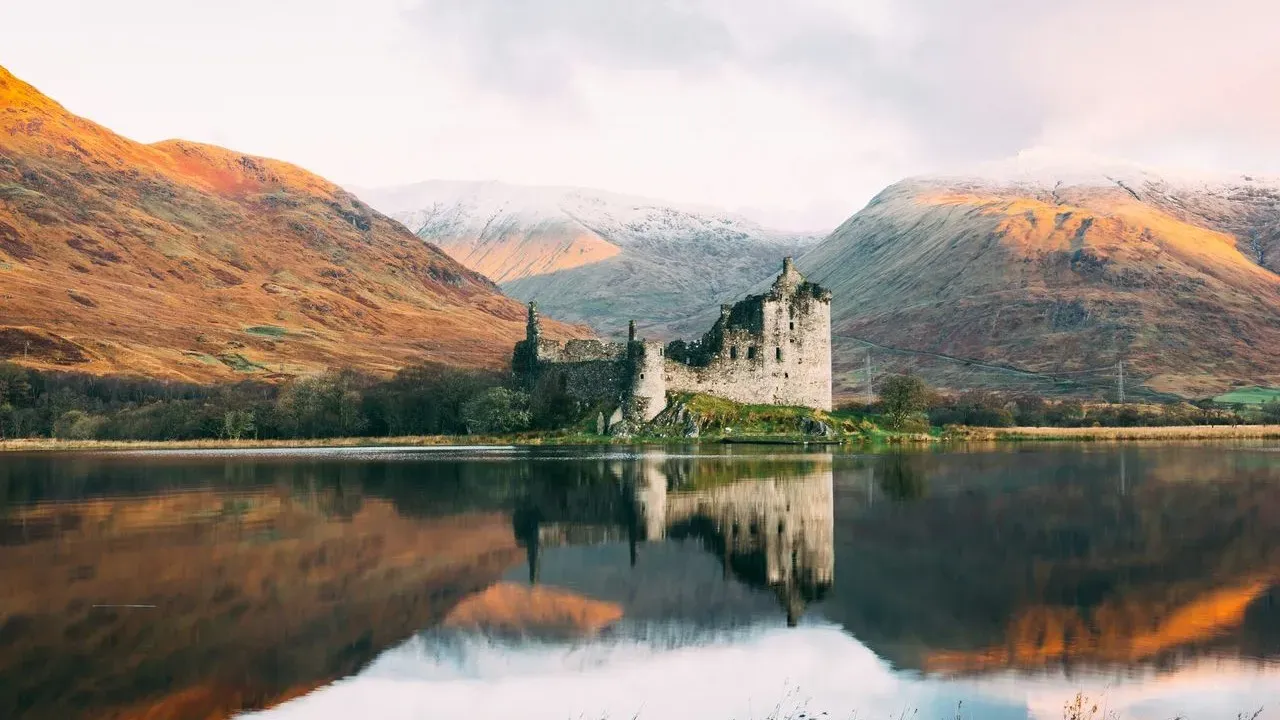

Edinburgh held us for four years, long enough for the city’s own fortress to become a familiar neighbor rather than a headline attraction. During that time the surrounding Highlands and islands revealed their own strongholds, some still lived in, others reduced to walls and sky. One in particular lingers in memory for the simple reason that reaching it feels like stepping off the usual map.
A Ruin That Rewards the Detour
Ardvreck Castle sits on a narrow promontory in Assynt, its remaining walls rising straight from the water’s edge. The structure is modest, little more than a fragment of a seventeenth-century tower house, yet its isolation gives it presence. On a clear day the surrounding mountains and the long reach of Loch Assynt create a setting that needs no embellishment. Visitors who make the journey north on the A837 often arrive to find the site empty. There is no ticket office, no interpretive center, and no charge. The experience is simply the walk across short grass to the water and the quiet examination of what remains. That spareness is part of the appeal.
Four Years of Firsthand Discovery
Living in Edinburgh gave daily access to one of Scotland’s busiest castles, yet the most lasting impressions came from the quieter places reached on weekends and longer drives. Each site on the longer list was visited in person and photographed in changing light. The pattern that emerged was consistent: the castles that stay with you are those where setting and history meet without crowds or staging. Ardvreck fits that description exactly. Its remote location in the northwest Highlands means most travelers on the North Coast 500 or the route to Cape Wrath pass it by. Those who stop find a landscape that has changed little in centuries, with the castle serving as a modest marker of earlier power and eventual decline.
Practical Details for a Thoughtful Visit
The castle is an open ruin managed informally, so preparation centers on weather and timing rather than bookings. Summer light lasts late, allowing evening visits when the loch surface is still. Winter brings shorter days and stronger winds, yet the absence of facilities means the site remains accessible year-round for those equipped for variable conditions. Nearby parking is limited and informal. A respectful approach includes leaving no trace and giving the small local community the same consideration extended to any rural place. The reward is time spent in a setting that feels genuinely apart from the better-known strongholds farther south.
Why Remote Places Matter
Scotland’s castle heritage spans royal fortresses, clan seats, and simple defensive towers. The most photographed examples draw steady streams of visitors, yet the quieter ruins preserve a different kind of encounter. Standing at Ardvreck, with only the sound of water and wind, offers a direct connection to the landscape that shaped these buildings. Travelers who build such places into an itinerary often return with a deeper sense of the country’s scale and variety. The four years spent exploring from Edinburgh confirmed that the most memorable visits are those that balance the famous with the overlooked. Ardvreck remains one of the clearest examples of that balance.
AI Disclaimer: This article was created with the assistance of AI tools and reviewed by a human editor.