
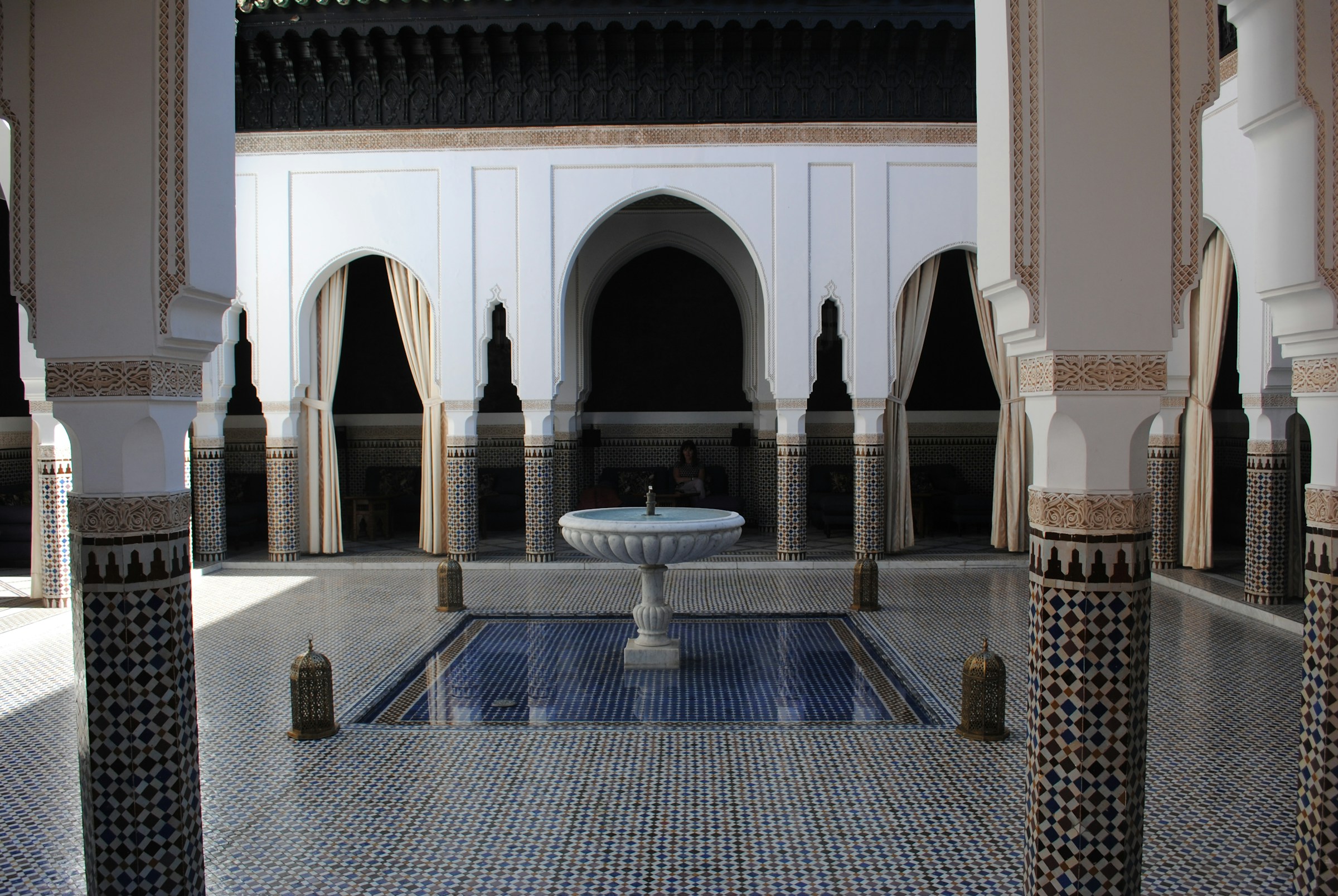
Marrakech has always been a city that performs. The call to prayer, the smell of cumin drifting from a souk, the flash of a hand-woven textile in afternoon light – it all arrives at once, and without warning. Marrakech set a historic record in 2024 by attracting nearly 4 million visitors, a number that signals something beyond mere tourism. People come here chasing a particular quality of color that is genuinely difficult to find elsewhere on earth.
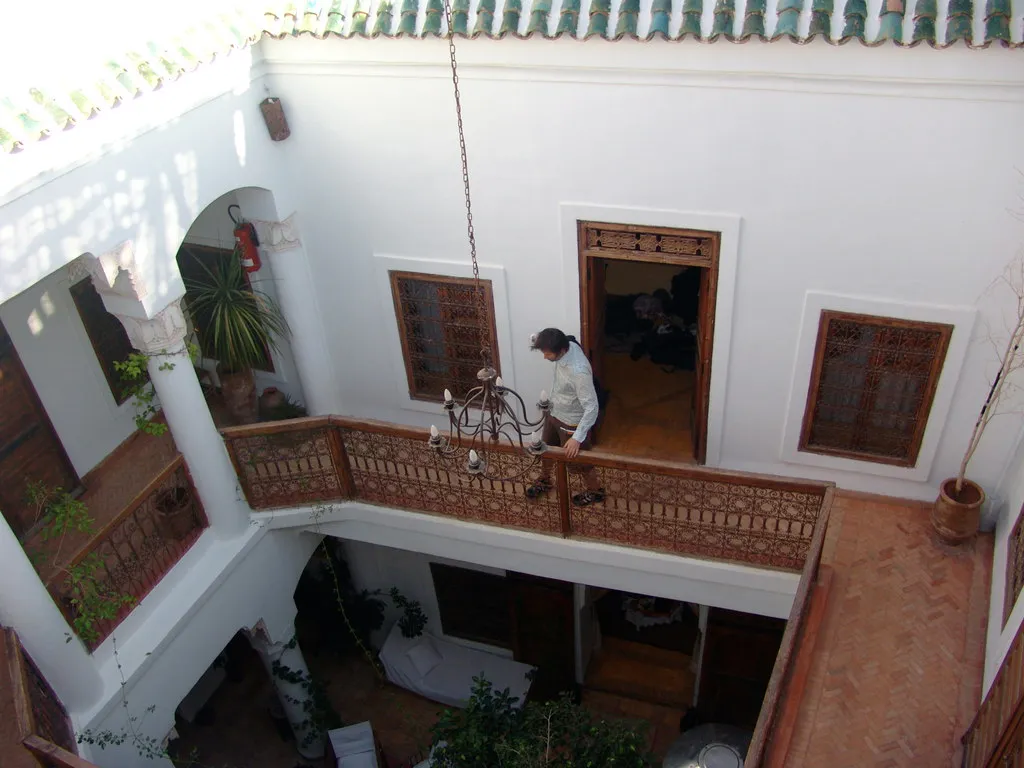
Marrakech’s riads – traditional Moroccan homes built around a central courtyard – are an essential part of its architectural and cultural identity. From the outside, most give nothing away. Heavy wooden doors open onto plain walls, and then suddenly you step into a space where everything shifts. These seven courtyards represent some of the most visually vivid, historically grounded, and culturally meaningful spaces the city has to offer.
1. Jardin Majorelle: The Blue That Changed Everything
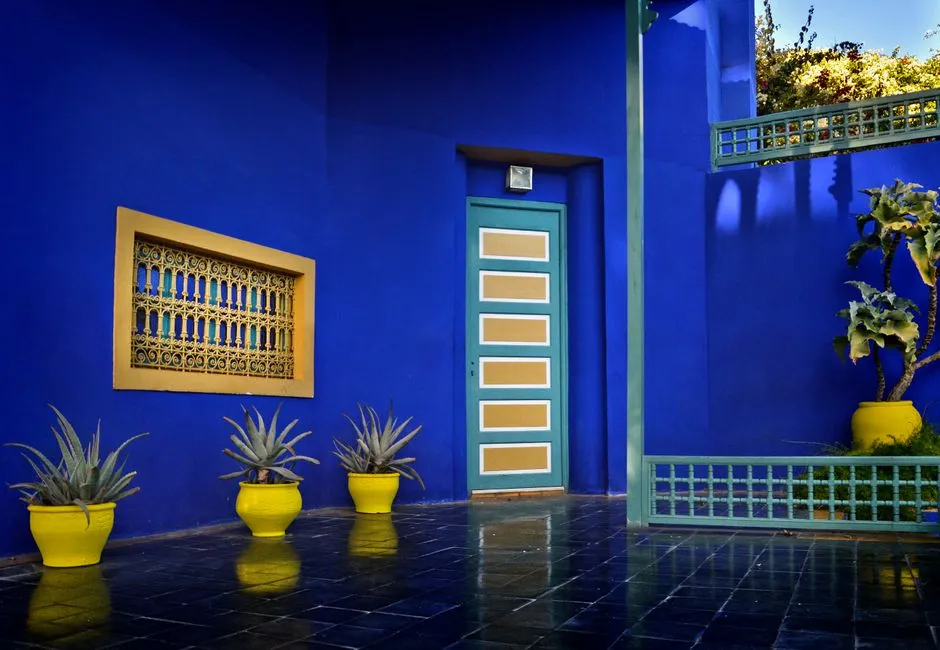
The Jardin Majorelle is a 2.5 acre botanical and artist’s garden in Marrakech, Morocco, famously associated with the designer Yves Saint-Laurent. In 1917, Jacques Majorelle arrived in Marrakech to convalesce from a period of ill health, and like so many others, he was enamoured with the city. In 1923, he bought a plot of land and built a Moorish style house on it.
The bold cobalt color you see on walls, pots, and structures throughout the garden was inspired by tiles and textiles Majorelle encountered in Marrakech and in Berber homes. He used it so extensively that it became known as bleu Majorelle, and he even patented the shade before his death.
After Jacques Majorelle’s death in 1962, his garden fell into disuse and was threatened by real estate developers. For years this green haven remained in the shadows, until Yves Saint Laurent and Pierre Bergé entered the scene. When Saint Laurent learned in 1980 that the place was threatened with destruction, he decided with Bergé to buy it and completely restore it. The courtyard spaces you walk through today carry the full weight of that rescue.
2. Bahia Palace: A Courtyard Built for Splendor
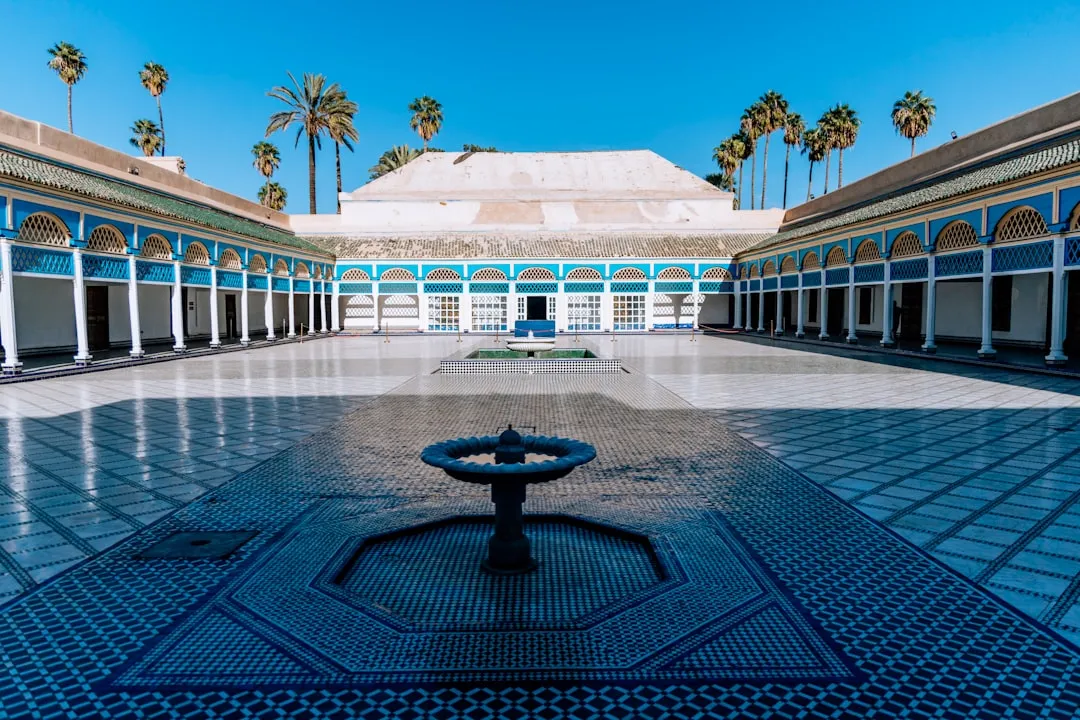
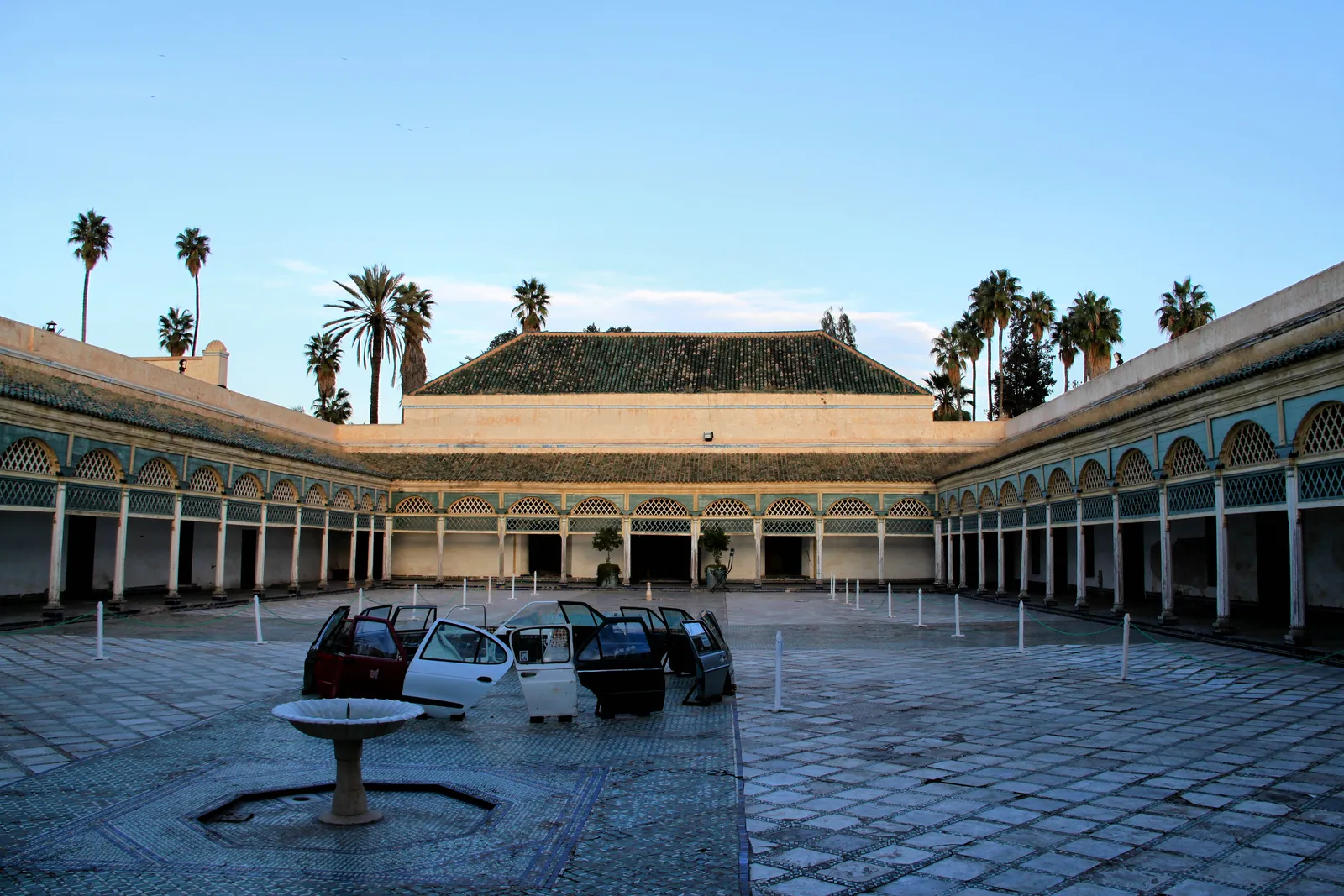
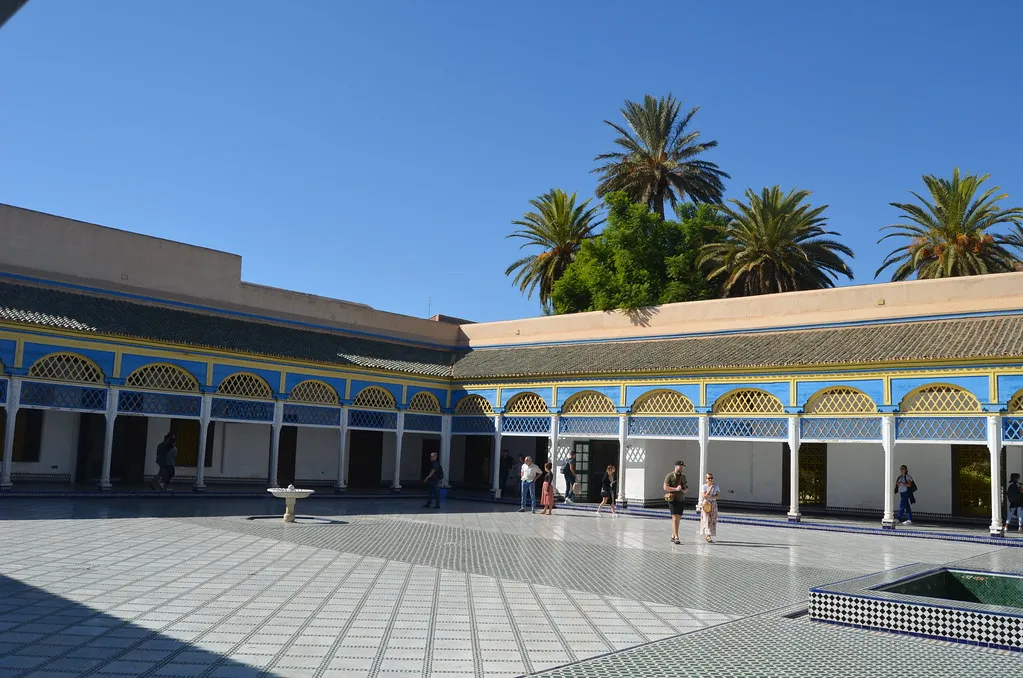
The Bahia Palace sits in the southern medina and remains one of the most layered architectural achievements in all of Morocco. Built in the late nineteenth century, it was conceived as an expression of the best that Moroccan craftsmanship could produce at the time. The name itself translates roughly as “brilliance,” and the central courtyard does not disappoint that ambition.
The main courtyard is paved in polished Carrara marble and intricate zellige tilework, framed by carved cedarwood galleries painted in saffron, turquoise, and deep green. Orange trees grow in each corner of the garden, their canopies creating a lived-in quality that keeps the space from feeling like a museum set piece. The color comes not just from the tiles but from the painted plaster ceilings above the galleries, where geometric patterns in ochre, red, and cobalt repeat across a surface that took craftsmen years to complete.
3. El Fenn: Bold, Contemporary, Unmistakably Moroccan
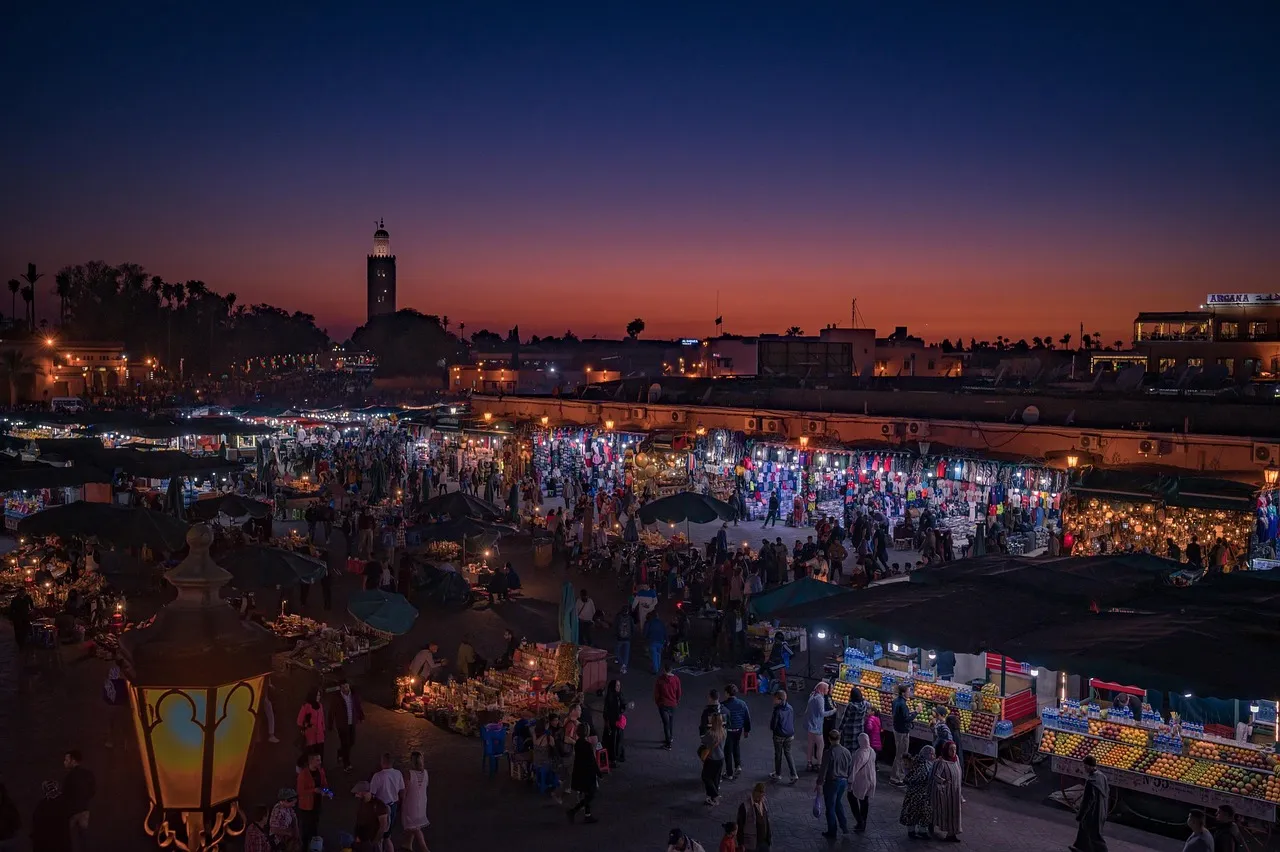
El Fenn is a vibrant, artistic haven that stands out as one of the most unique riads in Marrakech. Located just a few minutes’ walk from Jamaâ El Fna Square, this expansive riad blends traditional Moroccan architecture with contemporary art and modern design. Known for its bold color schemes, lush courtyards, and stunning rooftop terrace, El Fenn offers a boutique hotel experience like no other.
Co-owned by Vanessa Branson, El Fenn has grown from a modest guesthouse to a full creative compound with over 40 rooms and suites, a boutique, three courtyards, a rooftop bar, a restaurant, and a resident tortoise. The three courtyards move through different color registers, from deep terracotta to pale rose, each one anchored by a pool that reflects the tiles and sky in equal measure.
The rooms and suites are individually decorated with handcrafted Moroccan textiles, vintage furnishings, and original artwork, creating a cozy yet stylish ambiance. The courtyards follow the same editorial logic: nothing is accidental, every shade has been considered. It’s the kind of place where the colors feel curated rather than inherited, which is either a strength or a limitation depending on your taste.
4. Riad Yasmine: Turquoise at the Heart of the Labyrinth
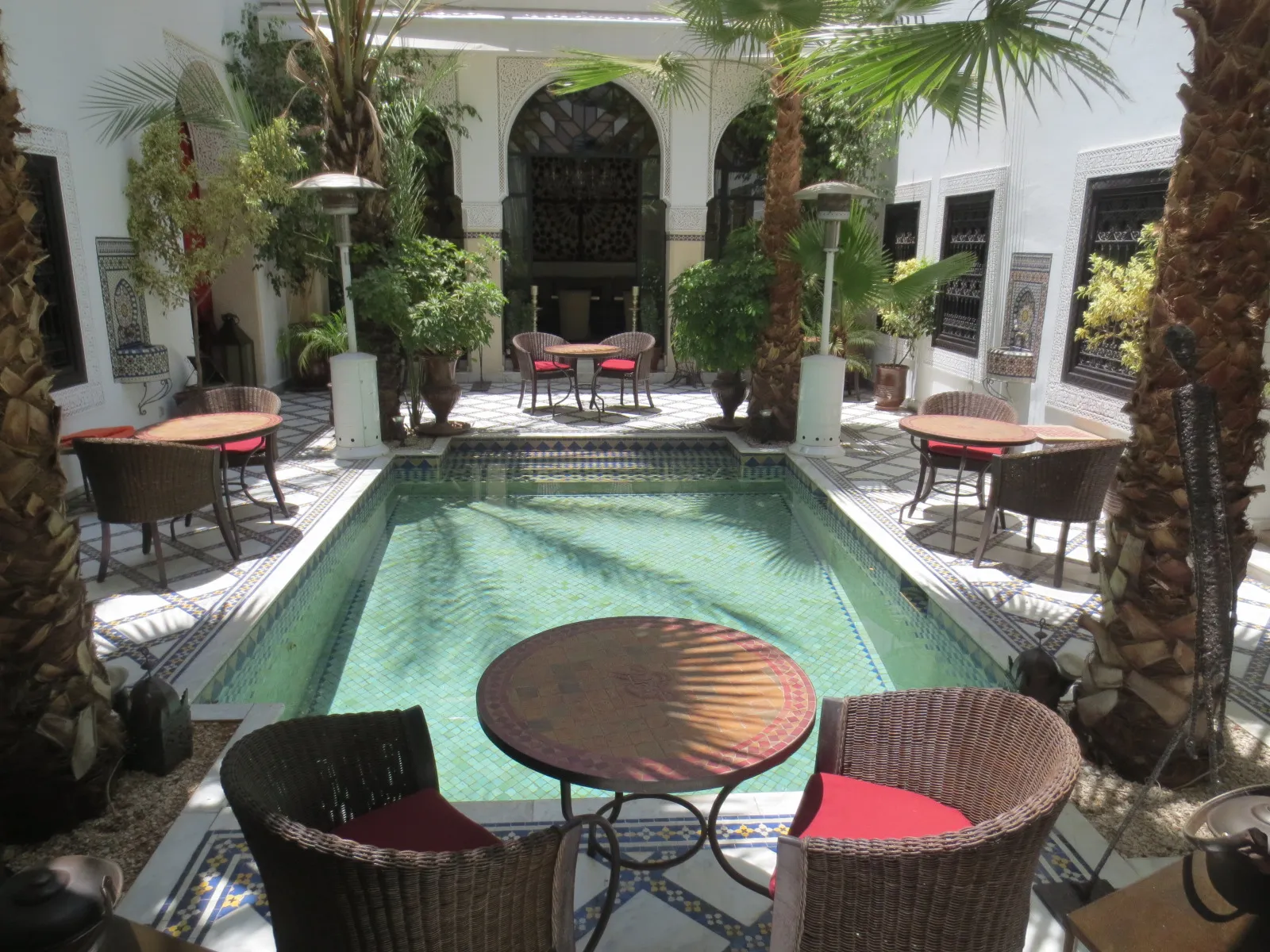
Hidden away in Marrakech’s labyrinthine alleys, Riad Yasmine is a haven of peace and tranquility. Its verdant courtyard, adorned with turquoise tiles and lush foliage, provides a welcome respite from the city’s hustle and bustle. The central pool, tiled in that same turquoise, has become one of the most photographed courtyard images in the entire medina.
What distinguishes Riad Yasmine from the general category of “photogenic riads” is how well the color scheme holds together across different times of day. In the morning, the tiles catch early light and look almost mint green. By midday, they deepen into something closer to teal. The bougainvillea climbing the walls adds splashes of vivid pink that break the cool palette in a way that feels entirely natural rather than arranged.
5. IZZA Marrakech: Seven Riads, Three Courtyards
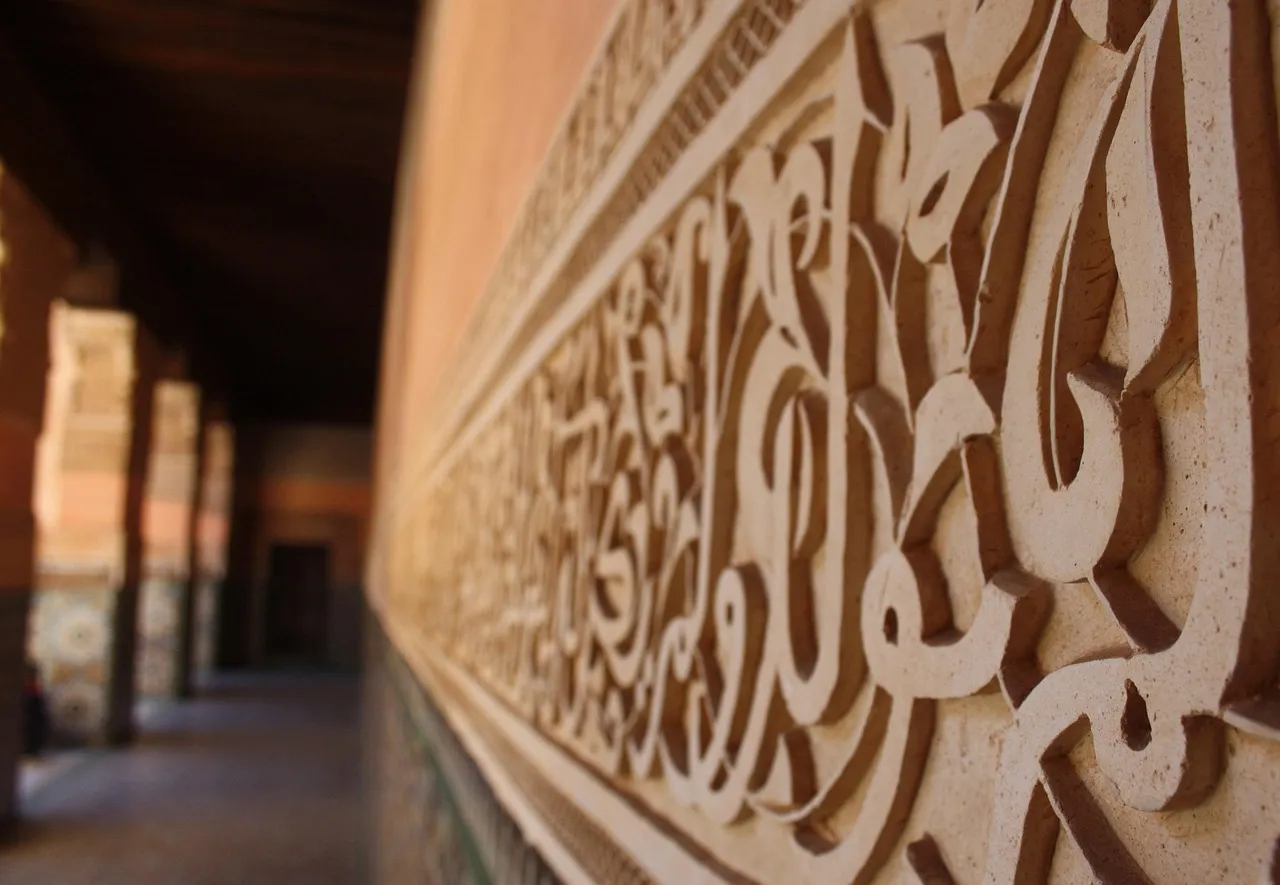
IZZA is a 14-room riad in a quiet part of the medina, and it has all the charm of a traditional riad. This includes a lot of space thanks to it actually being seven riads connected by three courtyards. The scale of it is surprising even when you know it’s coming. Walking through from one courtyard to the next feels like moving through a sequence of very different color moods.
While you won’t lack traditional Moroccan design, the whole concept of “House of Friends” is an homage to interior designer Bill Willis and his Marrakech entourage. History lives around every corner, with Berber rugs and an impressive modern art collection within the riad. The collection holds over 300 pieces including significant contemporary works. The courtyards act as breathing room between these interiors, each planted with species that cast patterned shadows onto hand-painted walls.
6. Riad Les Yeux Bleus: Blue Tiles and Citrus Trees
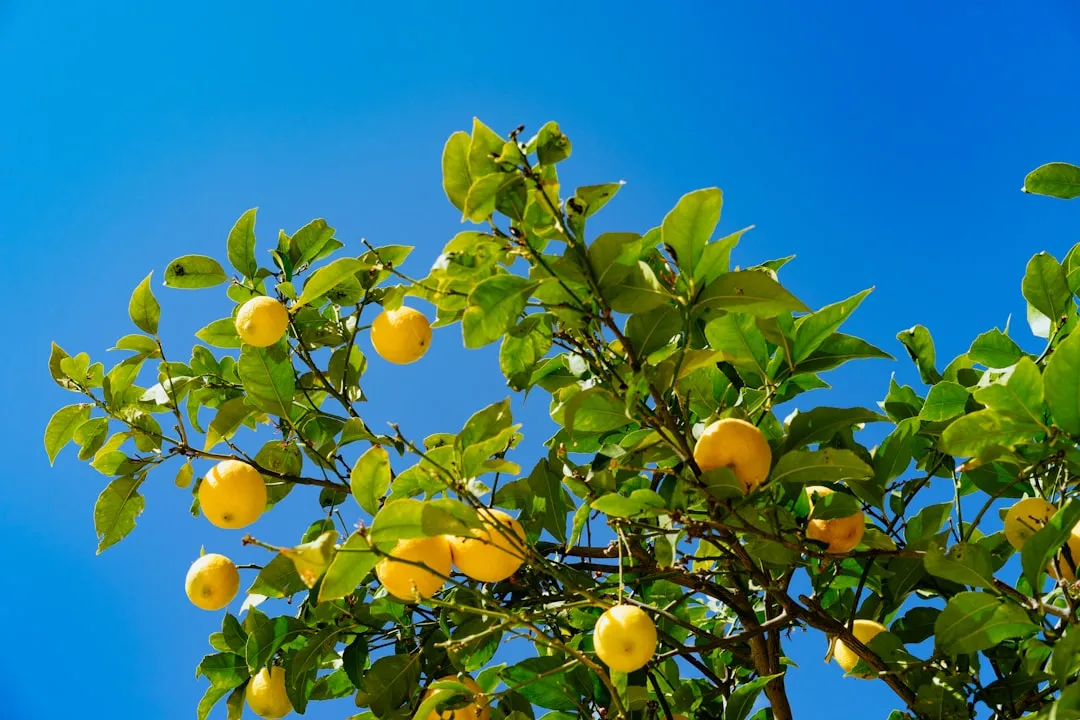
In the heart of Marrakech’s bustling medina, Riad Les Yeux Bleus offers a tranquil retreat from the city’s frenetic pace. Its serene courtyard, adorned with vibrant blue tiles and fragrant citrus trees, provides a peaceful sanctuary. The name means “blue eyes” in French, and the courtyard’s dominant hue delivers on that promise with genuine conviction.
The tiles here are hand-cut zellige, which means no two surfaces are identical. Close up, the slight variations in glaze, depth, and angle catch light differently throughout the day, giving the courtyard a living quality that photographed surfaces rarely capture. A small central fountain runs continuously, and the sound of water bouncing off blue tile is genuinely one of the more calming sensory combinations Marrakech has to offer.
Riad Les Yeux Bleus is smaller and less well-known than some of the courtyards on this list, which makes it worth seeking out for that reason alone. The medina rewards patience, and this courtyard is exactly the kind of discovery that makes a long, winding walk through narrow alleyways feel entirely worthwhile.
7. Riad Monceau: Where Craftsmanship Meets Color
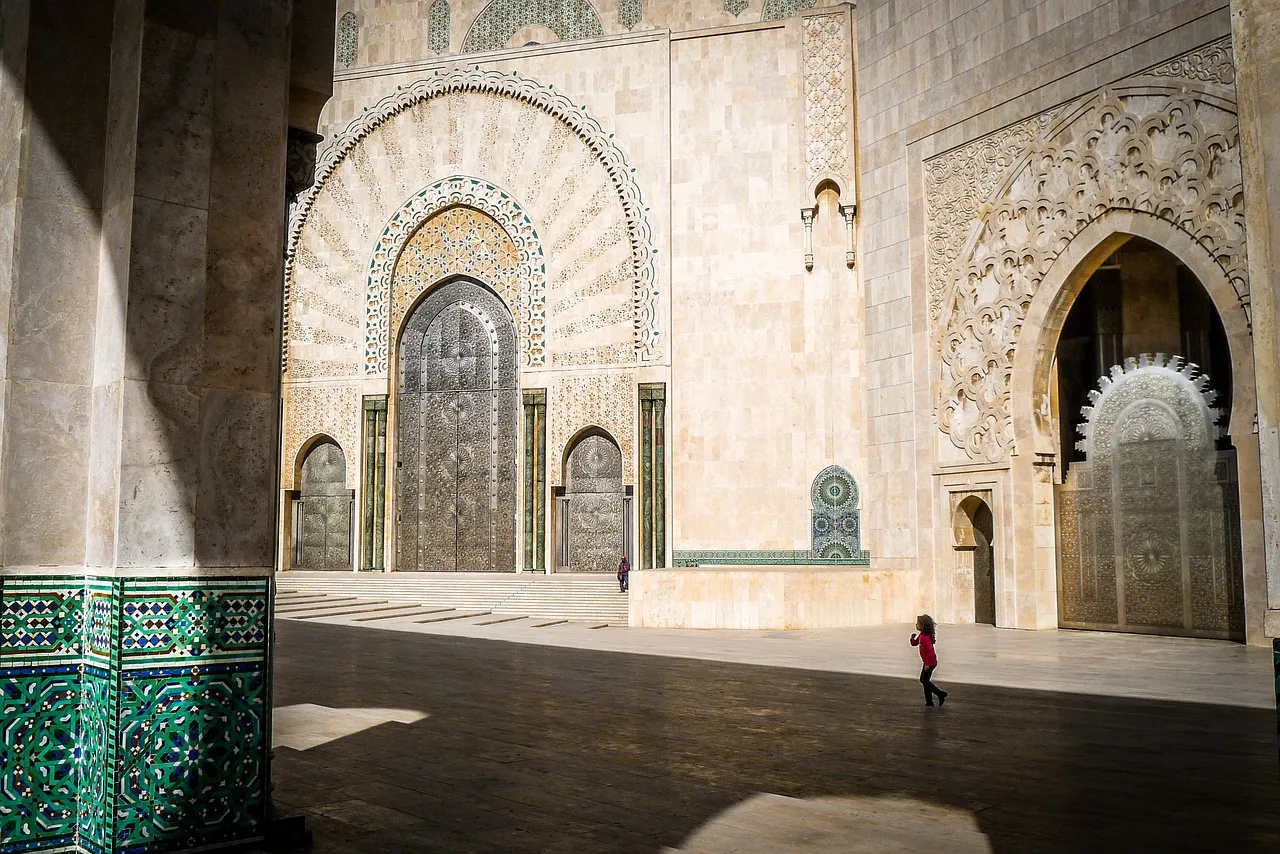
Riad Monceau is nestled in the heart of the ancient medina, blending timeless Moroccan elegance with contemporary comfort and sitting just a short walk from the buzzing Jamaâ El Fna Square. Its courtyard is quieter in tone than some of the bolder riads in the medina, but the restraint is itself a design choice.
Each room at Riad Monceau is a masterpiece of Moroccan artistry, featuring intricate zellige tilework, hand-carved cedar wood, and plush furnishings. The courtyard reflects the same craft sensibility: zellige borders run along the base of every arch, and the carved plasterwork above them is painted in soft ochre tones that warm dramatically in late afternoon sun.
The courtyard pool is a refreshing haven surrounded by fragrant orange trees and colorful bougainvillea. The bougainvillea here is an almost theatrical shade of magenta, which against the pale walls and sand-colored stone reads like a very deliberate editorial decision. It probably was. Color in Marrakech is rarely accidental.
The Bigger Picture: Why These Courtyards Matter
Marrakech recorded nearly four million visitors in 2024, with the region logging over 12 million overnight stays and an average occupancy rate surpassing 72%. In 2025, Marrakech-Safi continued to dominate Morocco’s tourism sector with more than 16.5 million overnight stays, accounting for approximately 38% of all tourist nights recorded nationwide. Much of what draws people here still passes through the medina’s courtyard culture.
Morocco’s riads are typically defined as traditional houses built around an interior garden or courtyard. Over the years, many have been transformed into guest house stays, with private rooms and wonderfully serene shared common areas. Riad stays are in such high demand that Airbnb recently added them to their search categories, making it even easier to discover these often hidden gems. That shift in visibility has benefits and trade-offs that locals are still working through.
TripAdvisor ranked Marrakech as the 8th best destination in the world for 2025, describing the city as a “magical place,” with its feature zooming in on local markets, gardens, palaces, and mosques. The courtyard tradition sits at the center of all of it, functioning as the city’s real cultural currency.
How to Visit Responsibly
The surging visitor numbers mean that some courtyards, particularly at Jardin Majorelle, now require advance booking. Jardin Majorelle has become one of Marrakech’s most popular tourist destinations, with queues that are infamous. The introduction of a new online booking system helps ease the worst of it. Booking ahead is now straightforwardly the right approach for any of these spaces during peak season.
For riad courtyards that serve as private hotels, the most respectful approach is to stay there, or to visit as a genuine guest rather than as a photography stop. Many small riads in the medina have seen their courtyard spaces overwhelmed by foot traffic in recent years, and owners have responded by limiting outside access. Traveling with that awareness, and spending money locally through meals, stays, and craft purchases, is the more meaningful way to engage with these spaces.
Dawn visits, where possible, reward patience with dramatically different light and near-empty spaces. The color temperature of Marrakech in early morning is quite different from midday, and the courtyards respond accordingly. Tiles that look electric blue at noon often shift toward indigo before eight in the morning.
Final Thoughts
What makes Marrakech’s courtyards genuinely special is not any single color or tile pattern. It’s the principle behind the design: that beauty should be turned inward, protected from the street, offered to those who cross the threshold. It always starts the same way: the chaos of the medina, the motorbikes, the energy, the call to prayer. Then, a wooden door you nearly walk past swings open, and suddenly you’re somewhere else.
Cooler. Quieter. More resolved. The courtyards of Marrakech operate on that logic, and they’ve been doing it for centuries. The colors are the most visible part of that equation, but the deeper offering is structural: a deliberate architecture of arrival, of contrast, of shelter from a city that never quite stops moving.
AI Disclaimer: This article was created with the assistance of AI tools and reviewed by a human editor.