
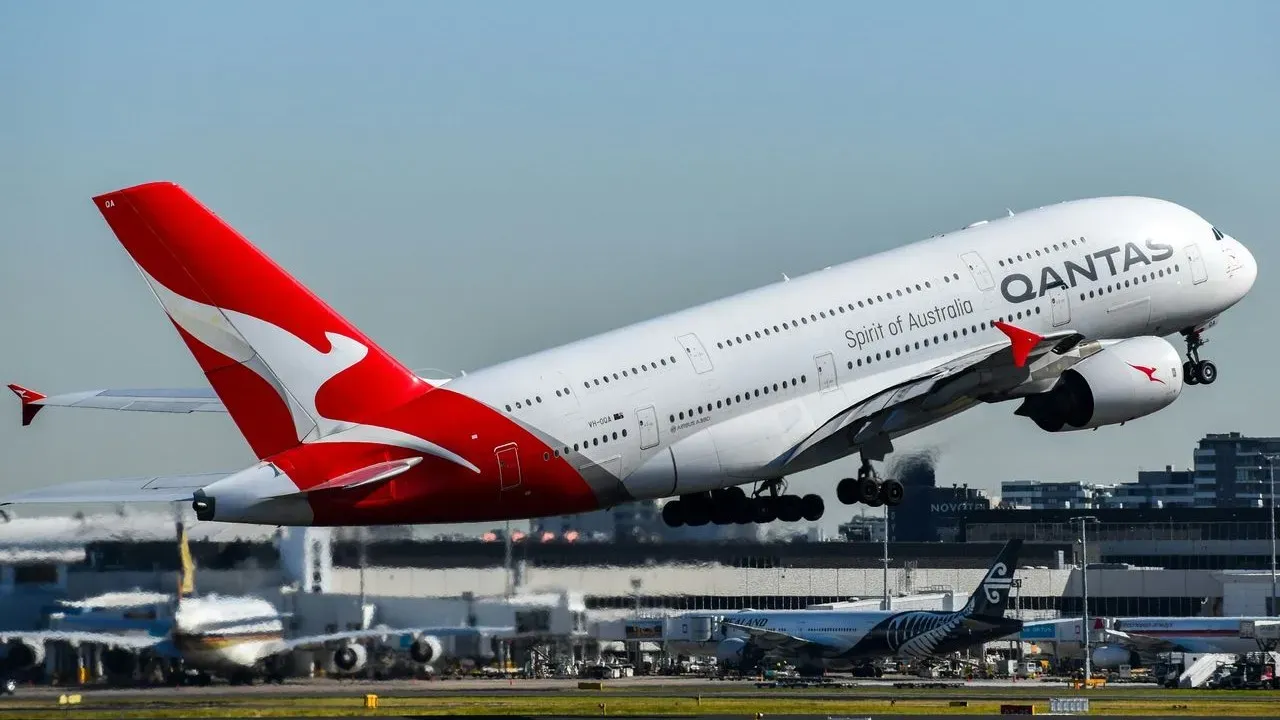

Qantas has moved up the retirement of its Airbus A380 fleet by four years, with the first aircraft expected to leave service in 2028 rather than the previously planned 2032. The decision aligns with a broader fleet renewal that brings more efficient twin-engine aircraft into the Australian carrier’s long-haul operations. Travelers who value the superjumbo’s distinctive cabin layout will have a shorter window to experience it on routes to Australia. ([1])
Timeline and Fleet Context
The airline’s order for 12 Airbus A350s and 12 Boeing 787 Dreamliners, placed in 2023, forms the backbone of the replacement strategy. Seventeen of these new aircraft are scheduled for delivery in 2026, with another 31 arriving in 2027. Executives confirmed this week that the accelerated pace allows the carrier to begin phasing out its ten remaining A380s earlier than anticipated.
Each A380 carries 485 passengers across four classes, including a dedicated first-class cabin that has become increasingly uncommon on long-haul routes. The aircraft will continue operating until individual airframes reach the end of their service lives, a process expected to unfold gradually over several years after 2028.
Operational and Economic Drivers
Four-engine aircraft like the A380 incur higher fuel and maintenance costs than modern twin-engine jets, particularly when load factors fall short of capacity. Rising fuel prices in 2026 have added pressure on legacy wide-body types across the industry. Qantas joins other carriers that have already reduced or eliminated A380 operations in favor of more flexible, fuel-efficient alternatives.
The shift also reflects changes in long-haul demand patterns since the aircraft entered service nearly two decades ago. Airlines now prioritize aircraft that can serve a wider range of city pairs without requiring the high passenger volumes the superjumbo was designed to carry.
New Business-Class Product on the 787-9
Alongside the retirement announcement, Qantas revealed details of its next-generation business-class suite for incoming Boeing 787-9 aircraft. The design introduces sliding privacy doors for the first time on the carrier’s 787 fleet, along with 80-inch lie-flat beds and wider footwells. A 19-inch entertainment screen completes the updated offering.
The color scheme draws inspiration from Western Australia’s Pilbara region, creating a distinct visual identity for the product. Qantas describes the suite as an evolution of its current business-class seat, with improvements focused on privacy, comfort, and personal space. The new configuration will equip all future 787-9 deliveries.
Key features of the new suite
- Sliding privacy doors
- 80-inch lie-flat beds
- Wider footwells
- 19-inch entertainment screens
- Pilbara-inspired color palette
Routes and Booking Options
Passengers can still fly Qantas A380s on three routes from the United States: Los Angeles to Sydney, Los Angeles to Melbourne, and Dallas Fort Worth to Sydney. These services provide the remaining opportunities to experience the aircraft’s full cabin configuration before the retirement process begins.
Those preferring to book with points can access Qantas flights through Oneworld alliance partners, including American Airlines AAdvantage and the loyalty program of Alaska Airlines and Hawaiian Airlines. Several U.S. transferable rewards programs also allow direct transfers to Qantas Frequent Flyer at a 1:1 ratio.
The combination of an earlier A380 exit and upgraded business-class seating on new aircraft signals a measured transition rather than an abrupt change. Travelers planning long-haul journeys to Australia now have clearer visibility into both the final years of the superjumbo and the product that will succeed it.
AI Disclaimer: This article was created with the assistance of AI tools and reviewed by a human editor.