
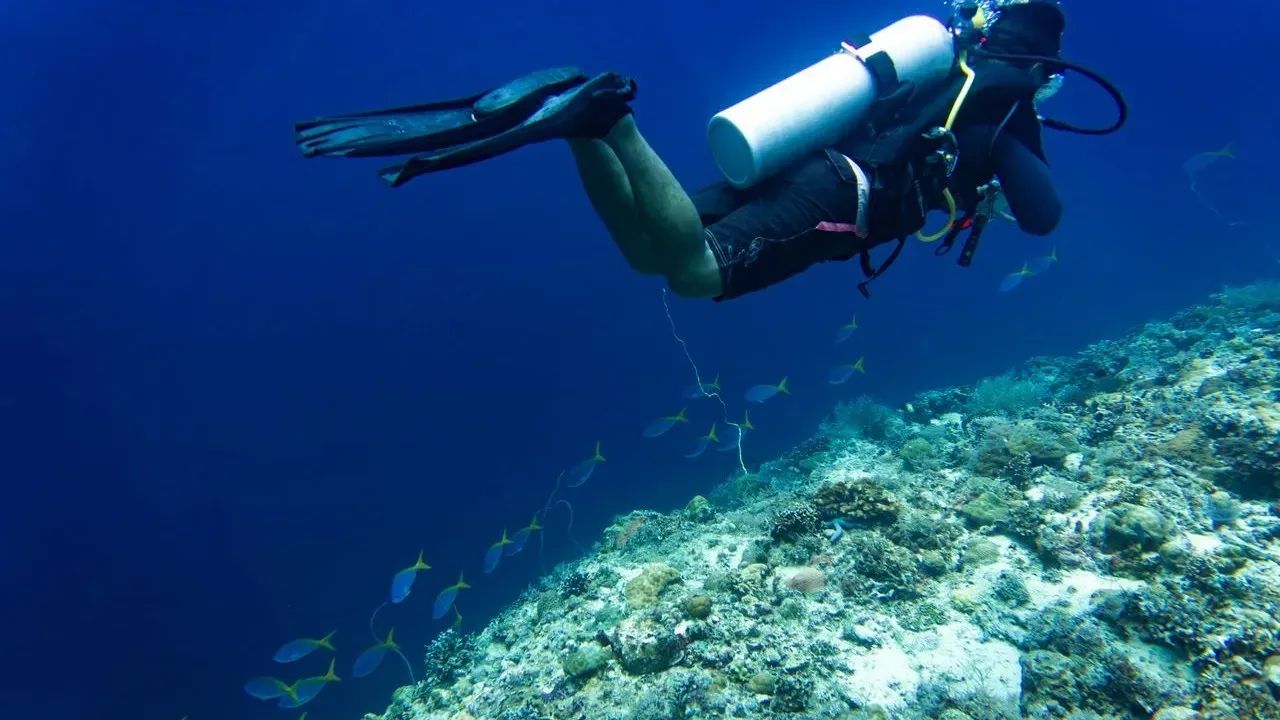

Palau – In the western Pacific, where turquoise shallows give way to darker blue, a team of scientists has spent years retrieving structures left on the seafloor to capture the first detailed picture of reefs that sit well beyond the reach of most divers. These mesophotic ecosystems, found roughly 30 to 150 meters down, occupy a middle ground between sunlit coral gardens and the true deep sea. Their residents remain largely undocumented, even as researchers work to understand how the communities function and whether they might buffer shallower reefs against stress. The effort, documented in reporting from Palau last year, underscores how much of the ocean still resists easy observation.
Why the Twilight Zone Stays Largely Unknown
Light fades quickly with depth, and so do the conditions that support familiar reef life. Hard corals in shallower water rely on symbiotic algae for much of their energy. Below roughly 30 meters, photosynthesis becomes limited, temperatures drop, and different organisms take hold.
Many of these species appear unique to the mesophotic zone, yet basic questions about energy sources, food webs, and resilience to warming waters remain open. Exploration itself adds another layer of difficulty. Technical dives at these depths allow only a few minutes on the bottom before divers must begin a slow ascent to avoid decompression sickness.
Remote vehicles and cameras help, but they often miss small or cryptic animals that hide among the structures. The result is a persistent gap in knowledge that standard survey methods have not closed.
A Decade of Patient Sampling with Standardized Structures
Rather than rely solely on brief visits, researchers turned to autonomous reef monitoring structures, or ARMS. Each unit consists of stacked PVC plates that create uniform crevices for larvae to settle. Once placed on the reef and left undisturbed, the plates become miniature habitats colonized by sponges, corals, shrimp, mollusks, and other invertebrates. Because every structure is identical, comparisons across sites and depths become far more reliable than sampling random rocks or outcrops.
Teams deployed the units around Palau, as well as in Guam, the Marshall Islands, and French Polynesia, at depths near 10, 50, and 100 meters. Retrieval required additional funding and careful planning, yet the approach offered a rare, extended view of succession and biodiversity that short dives cannot provide. The structures essentially function as standardized housing, allowing scientists to examine who moves in and how communities develop over time.
Early Findings from the Retrieved Plates
When the ARMS were brought to the surface, many carried vibrant encrustations of red, orange, green, and pink organisms. Sponges of varying textures, delicate octocorals, sea squirts, bryozoans, and tiny crustaceans appeared among the plates. Researchers photographed each surface, then sorted specimens for genetic analysis. Only a small fraction have so far been identified to species level, with many remaining at broader taxonomic categories pending further sequencing.
One striking observation involved relationships rather than isolated species. A tiny pompom crab clutching anemones, skeleton shrimp camouflaged on hydroids, and bright red snails living on matching octocorals all pointed to intricate associations that single samples rarely capture together. These interactions help explain how energy moves through the system and how species partition space in low-light conditions.
Building a Baseline for Future Protection
The work remains early. Luiz Rocha, a zoologist involved in the project, has noted that researchers are still learning what questions to ask because a baseline understanding of these ecosystems is only now emerging. Genetic libraries are incomplete, and many specimens will require additional study before their roles become clear. Still, the standardized data already allow comparisons between depths and locations that were previously difficult to make.
For travelers drawn to Palau’s renowned reefs, the deeper zones add another dimension to the destination’s marine richness. Responsible operators emphasize low-impact diving practices and support for local research centers, helping ensure that curiosity about these hidden communities translates into stronger conservation outcomes. The structures left on the seafloor continue to offer clues, and each new sample brings the larger picture into slightly sharper focus.
AI Disclaimer: This article was created with the assistance of AI tools and reviewed by a human editor.