

Why Yellowstone Holds the Strongest Documented Claim
The question of which park holds the most waterfalls is genuinely complicated. Even the National Park Service cannot definitively crown Yellowstone the waterfall capital of America’s 63 national parks, because there is no systemwide census, and counting waterfalls is far messier than it sounds. Some waterfalls only appear during snowmelt, others tumble through remote wilderness without official names, and parks do not catalogue all of them the same way. Mount Rainier describes its total simply as an “untold number,” while Yosemite calls its waterfalls “countless” and acknowledges that its published list is incomplete.
That makes Yellowstone the strongest documented answer rather than an undisputed record holder, with its roughly 290 recorded falls ranging from remote cascades to the 308-foot Lower Falls of the Yellowstone River. The important distinction here is verification. Yellowstone has a number. Other parks have adjectives.
The Geology Behind All That Falling Water
Roughly 1,000 rivers and streams run for about 2,500 miles through the park, according to the National Park Service. What happens when all that moving water meets Yellowstone’s volcanic landscape helps explain some of its most dramatic falls. The USGS notes that hotspot volcanism built the Yellowstone Plateau from rhyolitic lava flows and volcanic tuffs, and streams cutting back into that plateau have created waterfalls and canyons.
The plateau’s varied elevations give streams plenty of vertical distance to work with. Soft volcanic rock erodes faster than the harder rock below, and the resulting ledges are what form waterfalls over geological time. It’s a process that’s been running for millions of years and is still actively shaping the landscape today.
The Lower Falls of the Yellowstone River
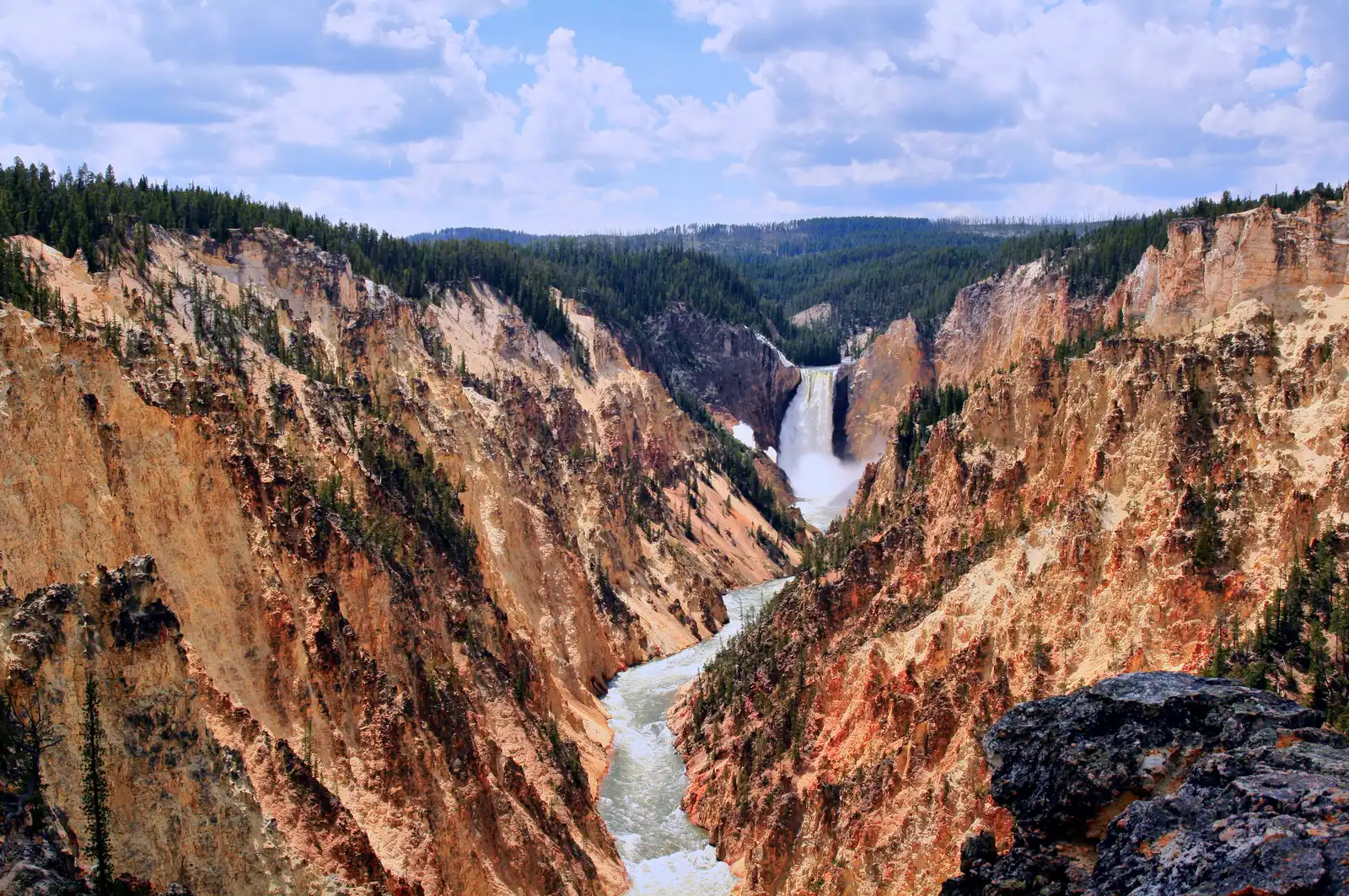
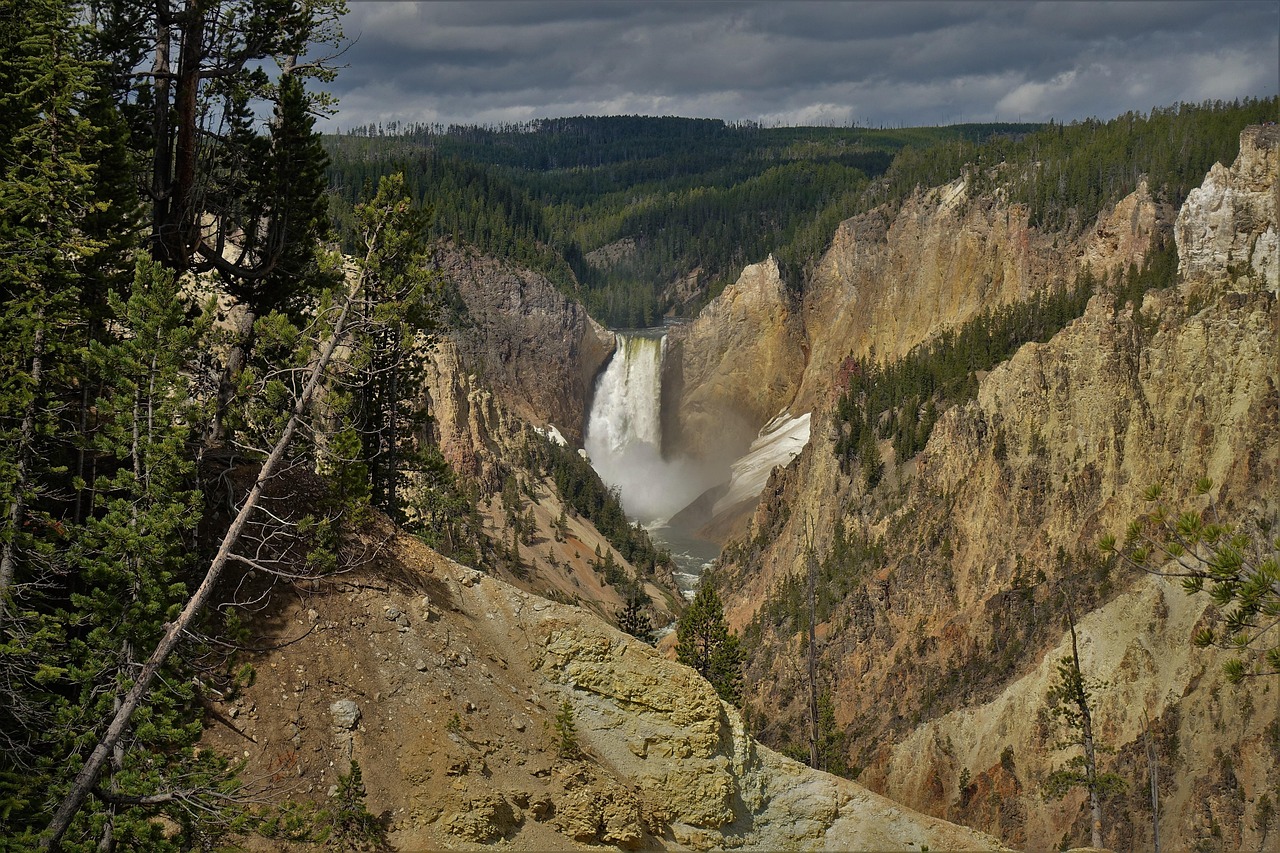
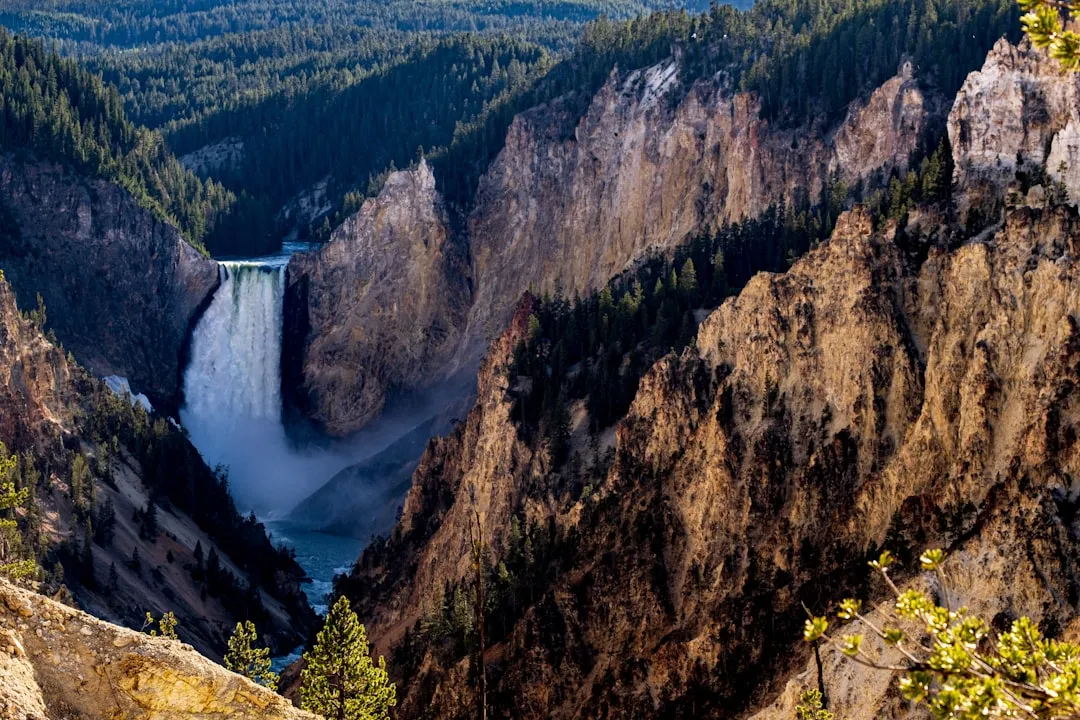
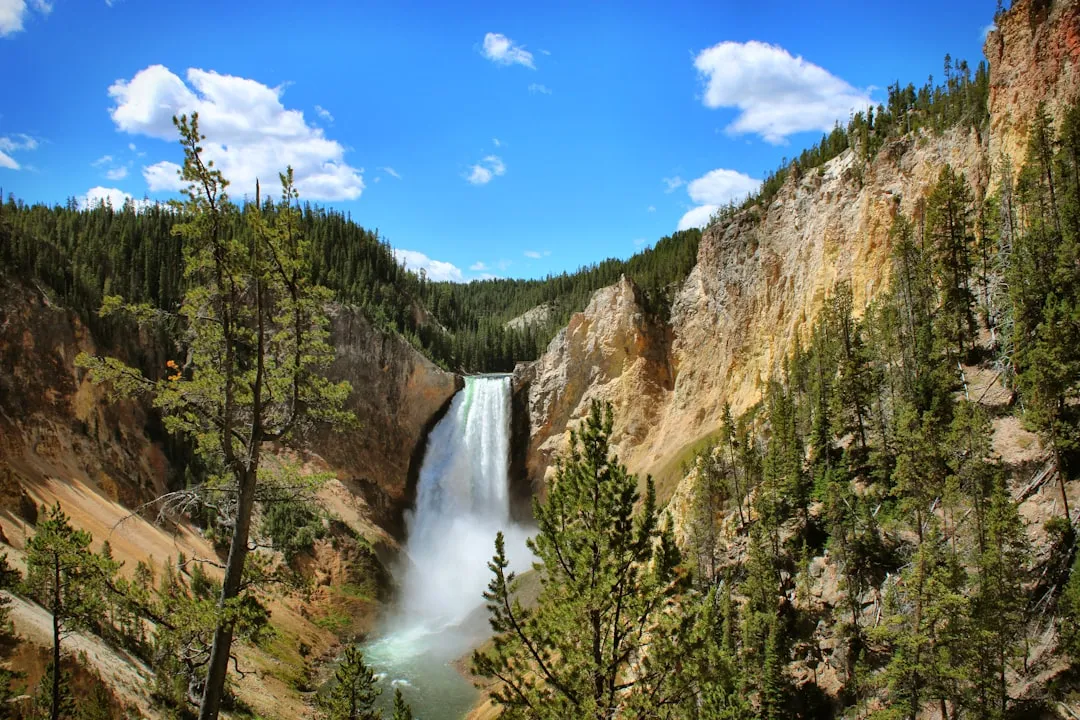
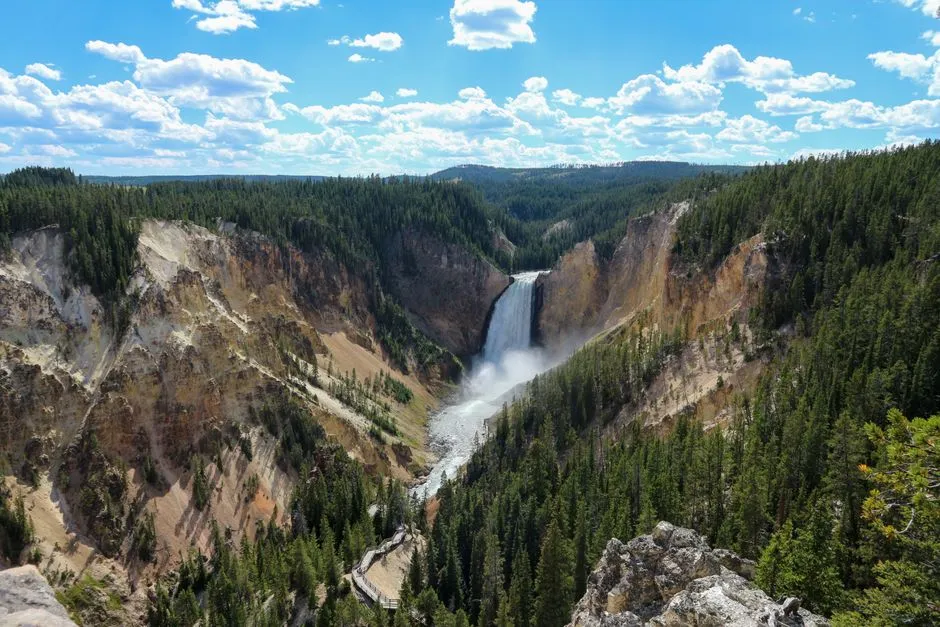
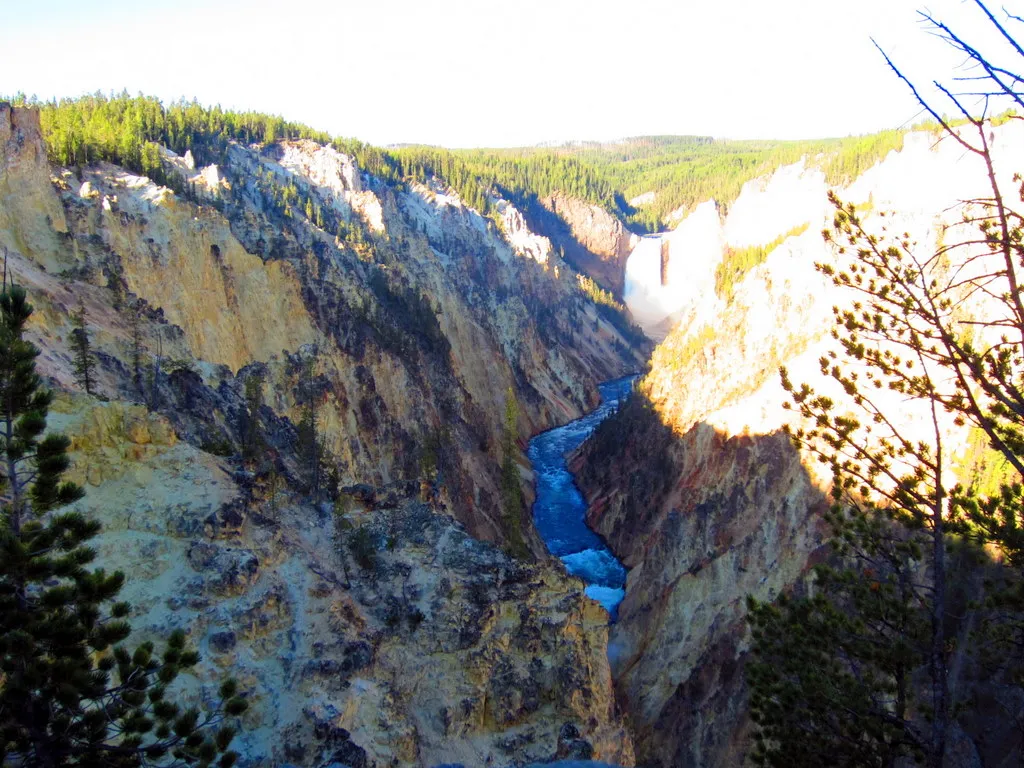
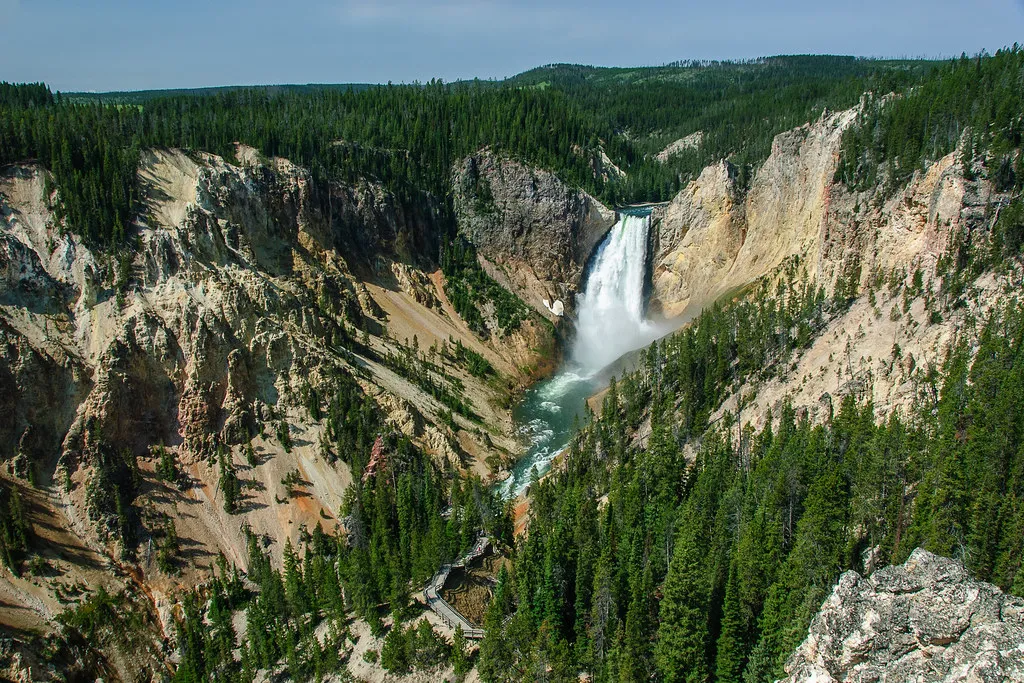
Yellowstone has approximately 290 waterfalls that are 15 feet or higher, and they flow year-round. The tallest waterfall in the front country is the Lower Falls of the Yellowstone River, measuring 308 feet. That single drop is more than twice the height of Niagara Falls, a comparison that tends to land with some force when visitors first stand at the canyon rim.
Only a fraction of the park’s waterfalls actually appear on the average trip through Yellowstone. Some waterfalls drop beside the Grand Loop Road, others require miles of hiking, and many are buried much deeper in Yellowstone’s backcountry. The Lower Falls, fortunately, falls firmly in the accessible category.
Fairy Falls and the Backcountry Rewards
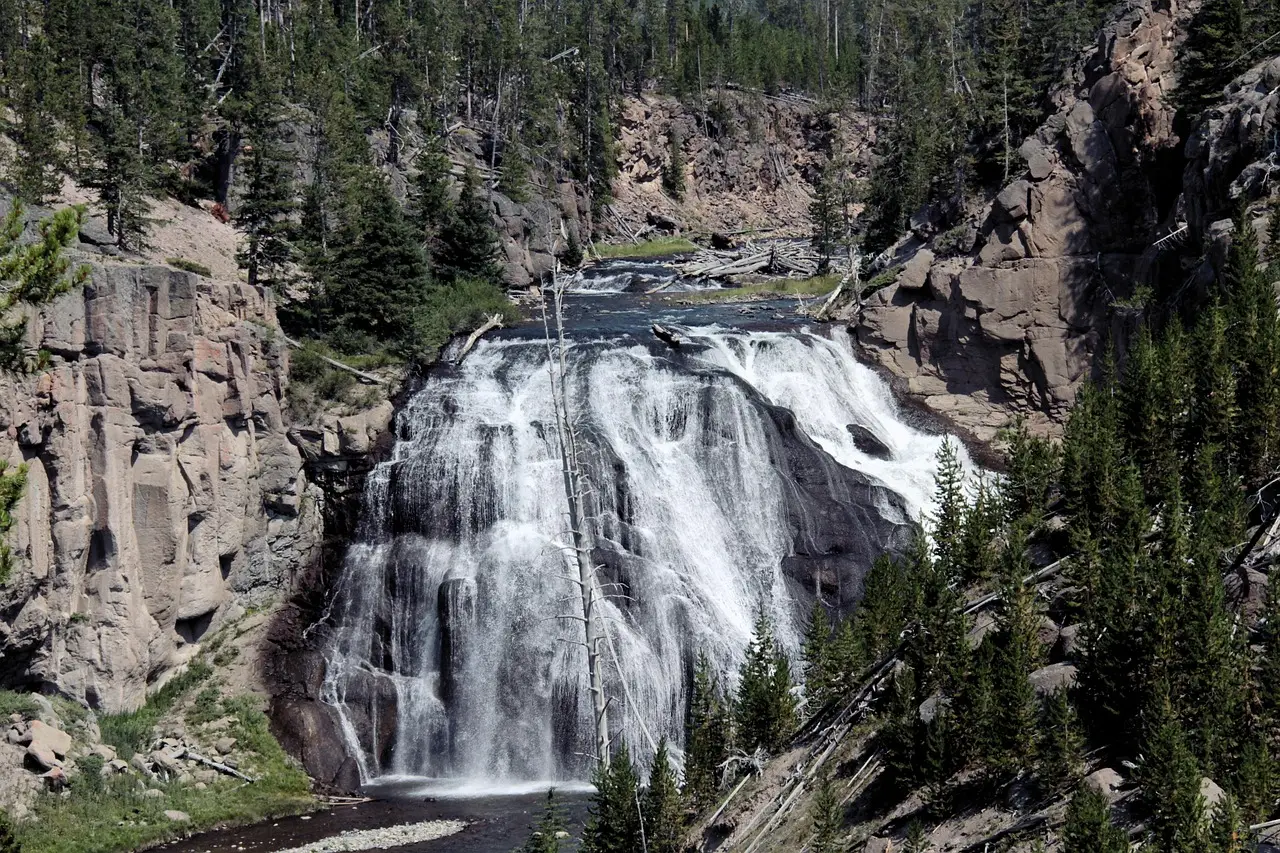
Yellowstone’s roughly 290 documented waterfalls include the 308-foot Lower Falls, 200-foot Fairy Falls, and roadside cascades like Gibbon and Undine. Fairy Falls is particularly beloved among hikers, partly because the trail to it also passes through the Midway Geyser Basin, giving visitors two extraordinary experiences on a single route.
The backcountry holds waterfalls that few visitors ever see, and that’s somewhat the point. A park this large, spanning more than two million acres, has space to keep secrets. Some of those unnamed cascades exist in deep wilderness corridors where the only witnesses are elk and ravens. That kind of wildness is genuinely rare in a park system as well-visited as this one.
Gibbon Falls and the Roadside Gems
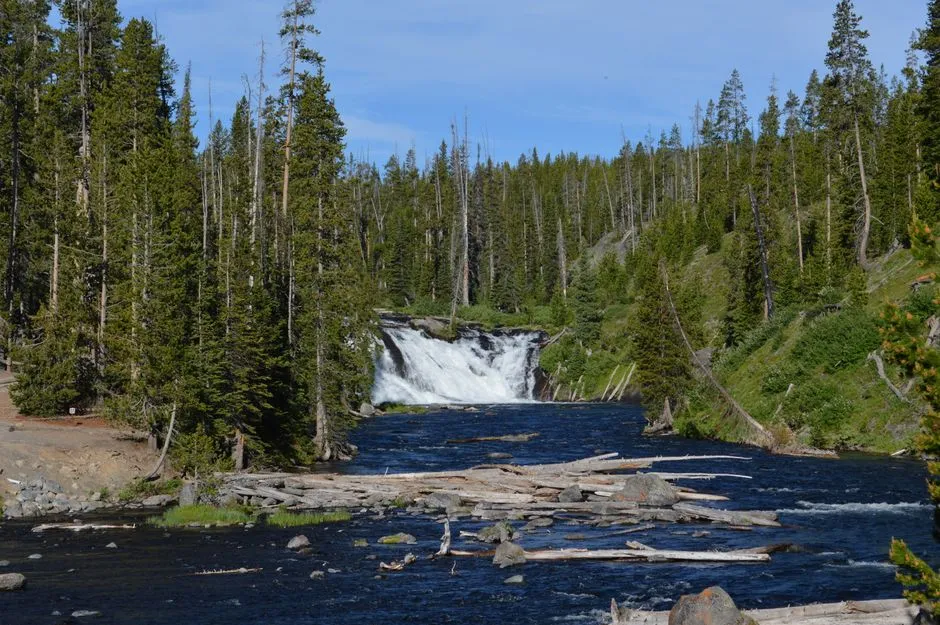
Not every great waterfall in Yellowstone requires a long hike or backcountry permit. Gibbon Falls, dropping roughly 84 feet into the Gibbon River canyon, is visible from a short roadside pull-off along Grand Loop Road. Undine Falls, another roadside waterfall in the Mammoth area, drops in two tiers over dark basaltic columns, creating a visual contrast that photographs rarely do justice.
These accessible falls matter enormously from a travel perspective. They ensure that visitors with limited mobility, young children, or tight schedules can still experience something genuinely spectacular without a strenuous commitment. Yellowstone’s waterfall geography, in that sense, is unusually democratic. There’s something for nearly every kind of visitor.
Seasonal Flow and the Best Time to Visit
Some waterfalls only appear during snowmelt, others tumble through remote wilderness without official names, and parks do not catalogue all of them in the same way. The practical implication for travelers is that late spring, particularly May and June, tends to produce the most dramatic flow across the park. Snowmelt from Yellowstone’s high elevations pushes enormous volumes of water through the drainage system simultaneously.
Summer remains the peak season overall. Yellowstone is both the oldest national park in the country and one of the most crowded during the summer months. Arriving early in the morning, especially to popular canyon viewpoints, helps visitors find quieter moments with the falls. Autumn visits, meanwhile, offer golden foliage framing the water with reduced crowds and genuinely crisp air.
Visiting Responsibly in a Park This Dynamic
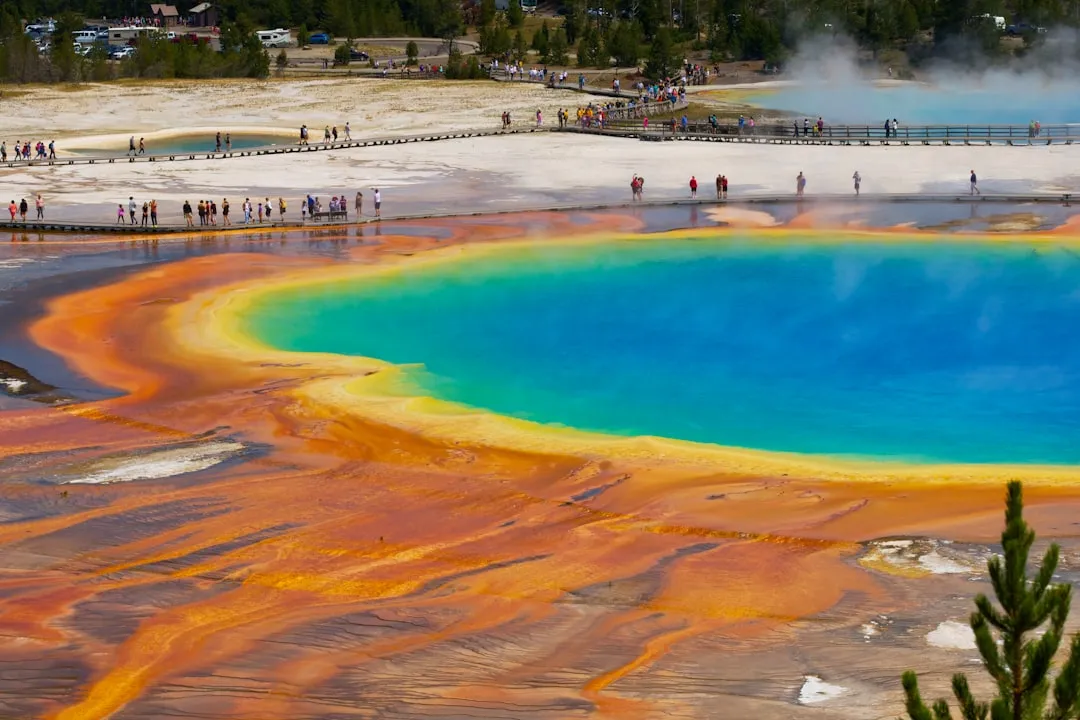
Yellowstone’s geology is not static. A hydrothermal explosion at Biscuit Basin on June 13, 2026 carved new vents and a boiling pool into the landscape. Biscuit Basin remains closed to visitors following the explosion, so checking current park conditions before visiting is essential. This is a living, geologically active system, and trail and area closures can happen without much warning.
Staying on marked boardwalks and designated trails near thermal features is not just a rule; it’s a genuine safety measure. The ground around many of Yellowstone’s features can be dangerously thin. Visitors who respect those boundaries protect both themselves and the ecosystem they came to experience. The park’s appeal is inseparable from its power.
How Yellowstone’s Waterfall Count Compares to Other Parks
The National Park Service says that Glacier National Park in Montana has more than 200 waterfalls. Mount Rainier National Park, home to no fewer than 25 active glaciers, has more than 150 documented waterfalls, many of them cascading from glacial meltwater. Great Smoky Mountains National Park has more than a hundred prominent waterfalls and cascades, making it one of the best waterfall destinations in the eastern United States.
Yellowstone’s approximate count of 290 stands above all of those documented figures. The caveat worth repeating is that no universal audit exists across the national park system, so the true champion could theoretically be a park whose falls simply haven’t been counted yet. Based on what is currently documented and verifiable, though, Yellowstone leads the field with considerable margin.
Visitation Trends and What They Mean for Planning
Yellowstone National Park welcomed 4,762,988 recreation visits in 2025, according to a National Park Service news release dated March 17, 2026. That figure made 2025 the park’s second-highest year on record. Crowds at the most iconic viewpoints, including Artists Point above the Lower Falls, have grown noticeably in recent years, making early-morning timing increasingly important.
Planning visits to the less-trafficked waterfalls, such as Colonnade Falls or Terraced Falls in the backcountry, rewards those willing to put in the miles. Trail lovers can choose from more than 15 miles of boardwalk and roughly 1,000 miles of backcountry trails, with 92 trailheads and 301 backcountry campsites. That infrastructure makes spreading out across the park far more practical than most visitors realize.
What Makes the Experience Feel Rare
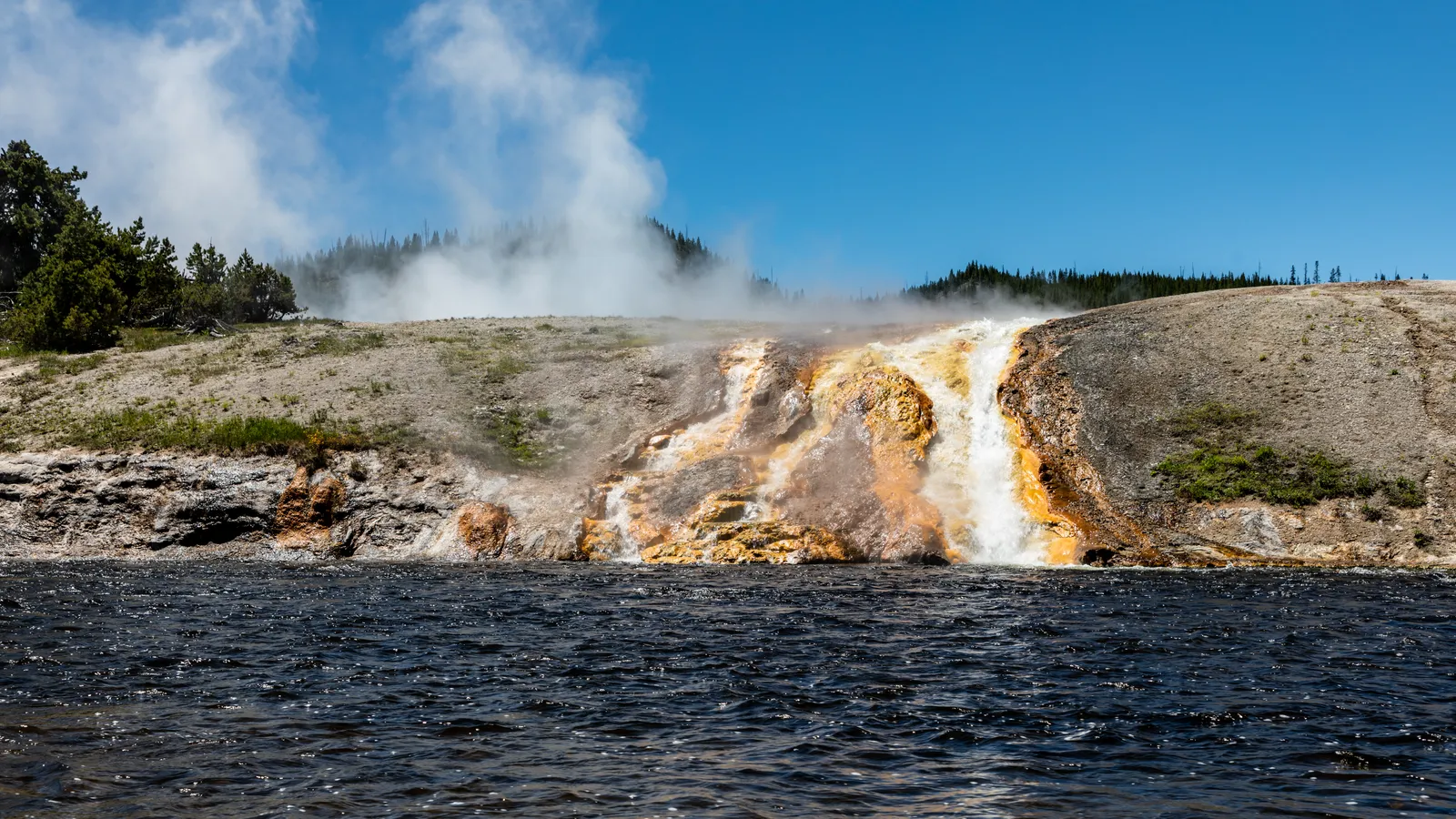
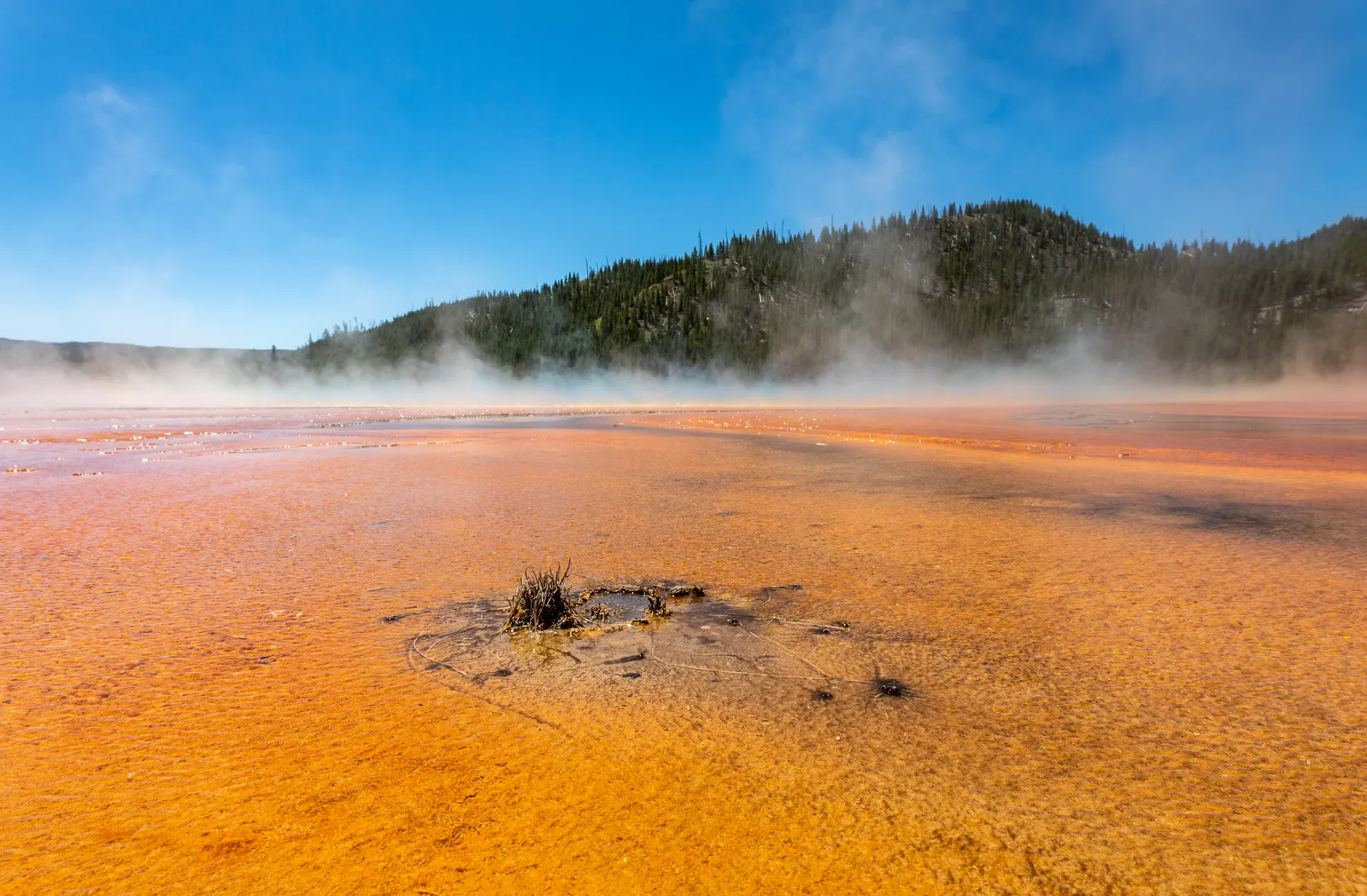
Waterfall destinations are common enough in the American West and East alike. What makes Yellowstone’s version of this experience different is the layering. You can watch a waterfall plunge into a canyon stained brilliant yellow and orange by hydrothermal minerals. You can hear a cascade from a boardwalk surrounded by steaming vents. The water and the geology refuse to exist separately here; they’re always in conversation with each other.
What sets Yellowstone apart is the unusually concrete National Park Service count and the sheer variety of waterfalls visitors can actually reach. From a roaring 308-foot canyon plunge to an unnamed silver thread dropping silently into a backcountry meadow, the range is as extraordinary as the total number. Few wild places offer that kind of breadth.
The Takeaway
Yellowstone earned its reputation through volcanoes, wildlife, and geysers. The waterfall story is quieter, less marketed, and in some ways more surprising for exactly that reason. With roughly 290 documented falls verified by the National Park Service, it holds the strongest count of any park in the country. Some of those falls are easy. Some are remote. Many have no name at all.
That combination of scale, variety, and geological drama is hard to find anywhere else in the national park system. Yellowstone’s waterfalls don’t compete with its other wonders. They complete them.
AI Disclaimer: This article was created with the assistance of AI tools and reviewed by a human editor.