
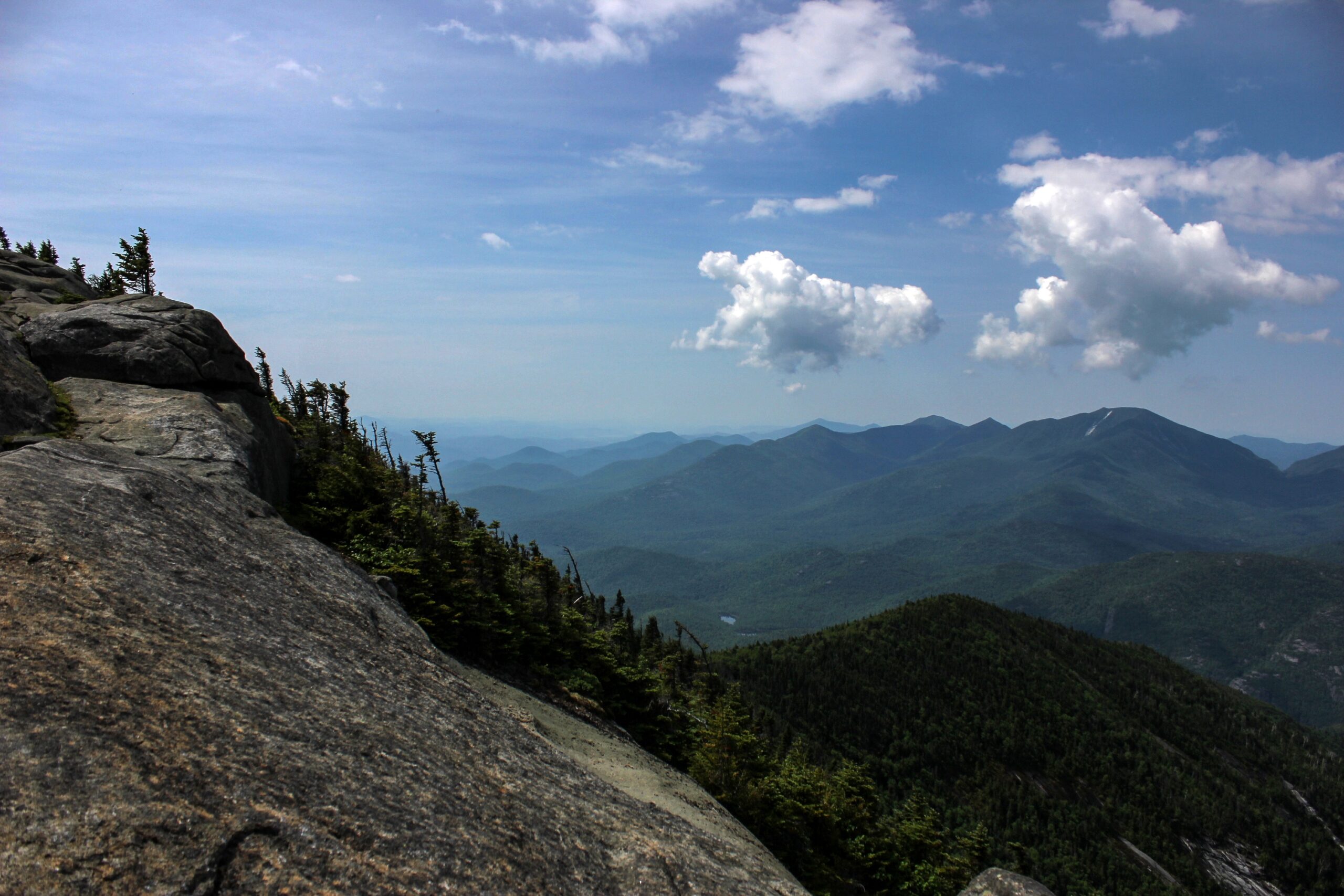
A Size That Defies Easy Comparison
Adirondack Park is greater in size than Yellowstone, Everglades, Glacier, and Grand Canyon National Parks combined. That single fact tends to stop people mid-sentence when they first hear it. It’s the kind of statistic that genuinely reshapes how you picture the American landscape.
The park covers six million acres and encompasses one-fifth of New York State, is almost three times the size of Yellowstone, and is roughly comparable in area to neighboring Vermont. For geographic context, there are 86 countries with less land area than the Adirondacks, including Luxembourg, Jamaica, Belize, El Salvador, Kuwait, and Puerto Rico.
Not Quite a National Park, Not Quite a State Park
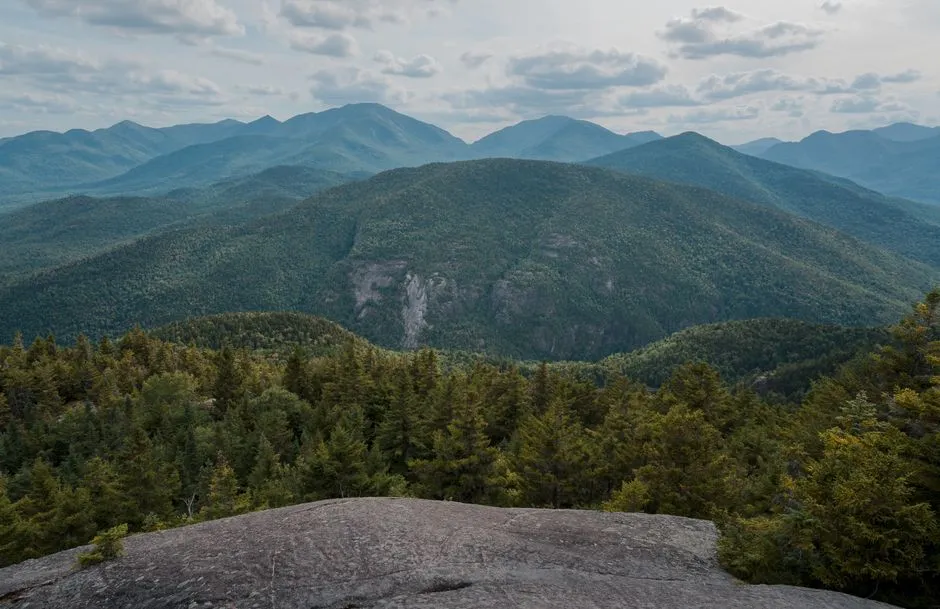
Adirondack Park is not a National Park. There’s no fee to enter and the park doesn’t close at night. Nor is it technically a state park, a common misconception. Its classification is genuinely unusual, which contributes to the confusion.
The Adirondack Forest Preserve was designated a National Historic Landmark in 1963. The Adirondacks do not necessarily fit the criteria for a national park designation. Since much of the land is privately owned, it doesn’t require direct National Park Service management. The public land is managed by state agencies, including the New York State Department of Environmental Conservation.
The “Forever Wild” Constitutional Guarantee

The boundary of the park encompasses approximately six million acres, nearly half of which belongs to all the people of New York State and is constitutionally protected to remain “forever wild” forest preserve. This is not just a policy decision. It is written into the state constitution itself, which makes it remarkably durable.
The remaining 45 percent of the land is publicly owned forest preserve, protected as “Forever Wild” by the New York State Constitution since 1894. The heart of the Adirondack Park is the Forest Preserve, which was created when Article XIV of the New York State Constitution was signed into law in 1885. Few protected areas in North America rest on as legally solid a foundation.
A Landscape of Staggering Ecological Richness
The Adirondack Park boasts over 3,000 lakes, 30,000 miles of rivers and streams, and a wide variety of habitats, including globally unique wetland types and old growth forests. The sheer volume of freshwater alone is difficult to absorb.
This remarkable landscape encompasses the Adirondack Mountains with their 46 High Peaks, over 2,800 lakes and ponds, 30,000 miles of rivers and streams, and an estimated 200,000 acres of old-growth forests. The park’s extensive waterways support healthy populations of brook trout, lake trout, and Atlantic salmon, while providing habitat for common loons. Bird diversity is remarkable, with over 200 species including bald eagles, peregrine falcons, and various warblers utilizing the extensive forest habitat.
Wildlife That Belongs to a Wilder Era
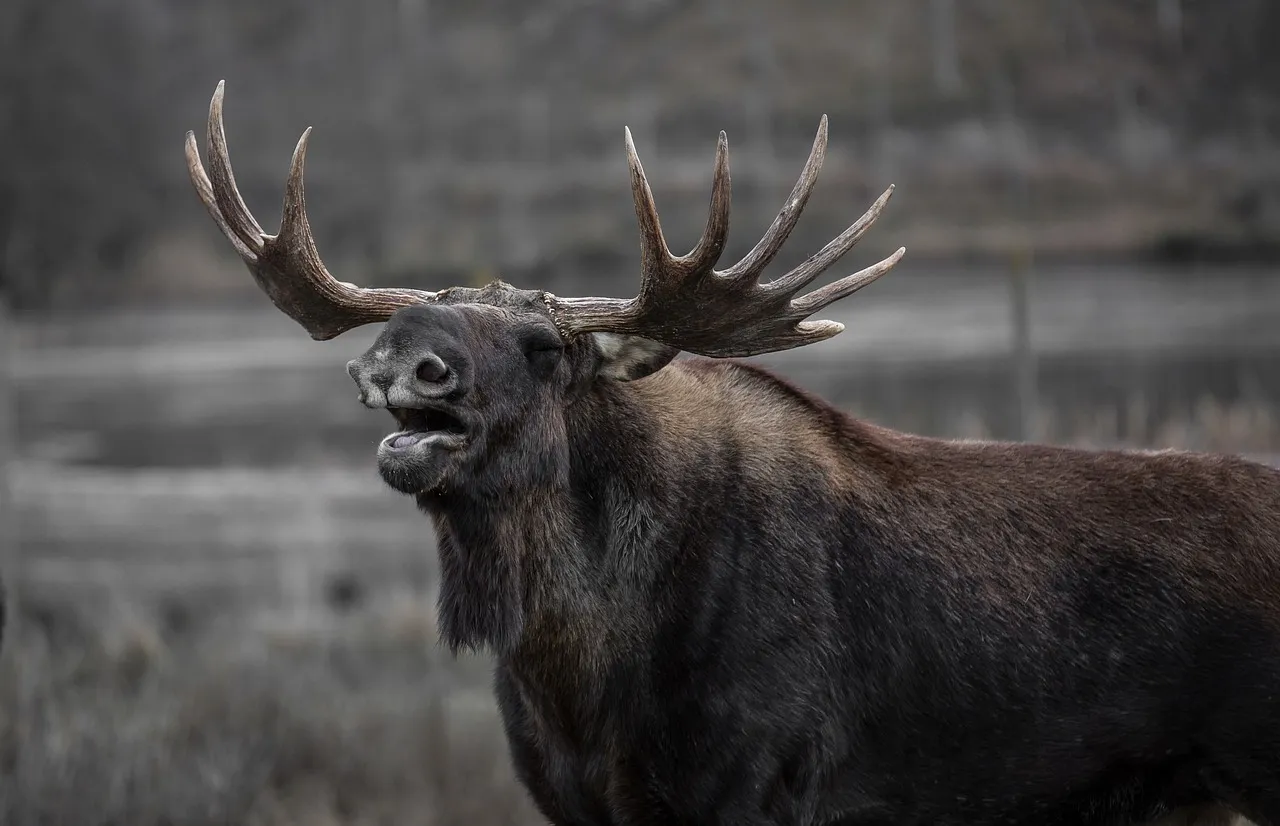
The Adirondack Park harbors an extraordinary diversity of wildlife across its vast wilderness, including iconic species such as black bears, moose, white-tailed deer, and fishers. These aren’t rare sightings either. Moose are increasingly common across the northern portions of the park.
The park serves as critical habitat for several rare and endangered species, and its interconnected wilderness corridors allow for natural wildlife movement and genetic exchange across the landscape. Conservation groups have been advocating for the return of additional native species. Species of focus include Canada lynx, cougar, moose, and wolf, as well as bird species such as Bicknell’s thrush and the American three-toed woodpecker, which are either present in low or declining numbers or formerly had breeding populations in the park.
People Actually Live Here
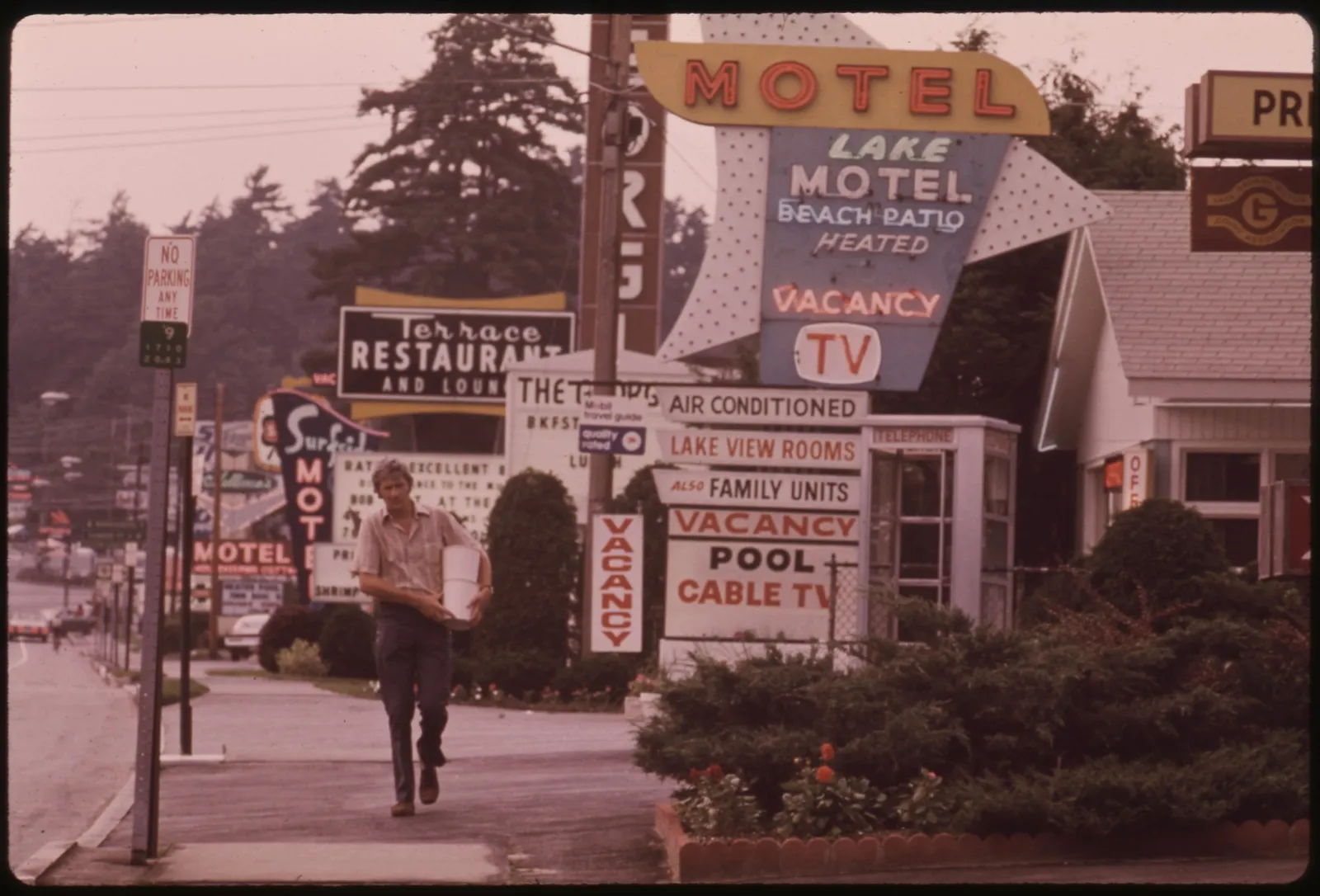
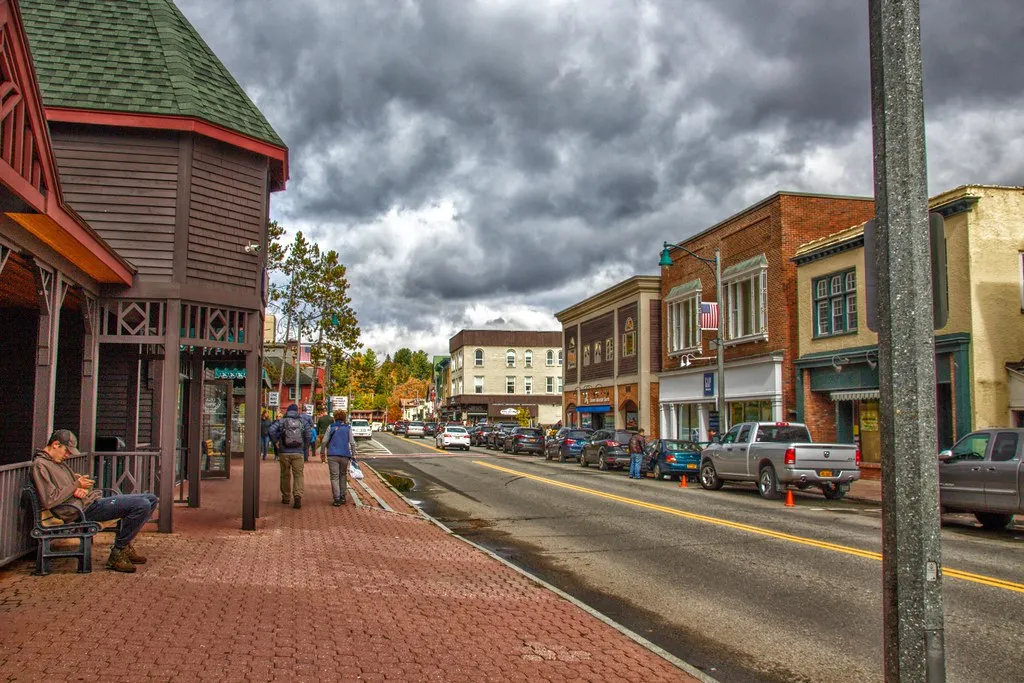
This is where Adirondack Park becomes genuinely unlike any other large protected area in North America. Inside the Blue Line boundary are 130,000 people living in 101 towns and villages, 3,000 lakes and ponds, and 85 percent of the designated Wilderness in the East.
The remaining half of the park is private land, which includes towns, farms, timber lands, businesses, homes, and camps. The inclusion of human communities has been described as one of the most successful experiments in conserving previously developed lands in the industrialized world. It is a genuinely rare model: a living, working landscape that is also a protected wilderness.
No Fee, No Gates, No Closing Time
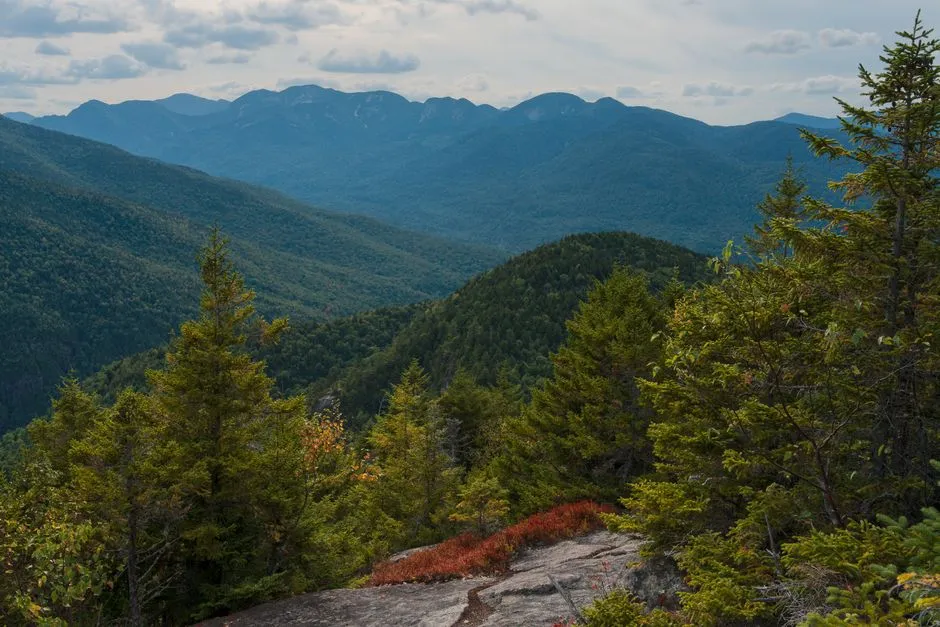
It’s massive at more than six million acres and is larger than several national parks combined, but it’s not a National Park itself. There’s no entry fee, which can range from $15 to $30 at national parks, and the “gates” don’t close at the end of the night. That openness is one of its most quietly radical features.
There are no ranger stations, entrance gates, or toll booths. You simply cross the boundaries to start your northeastern adventure in the largest state park in the US. That lack of formality does not mean the land is unprotected. It means protection here is structural rather than performative.
Active Conservation Debates in 2025 and 2026

In 2024, Protect the Adirondacks was at the forefront of advocating for the State to significantly ramp up spending and land protection efforts, including the addition of new lands to the Adirondack Forest Preserve. The organization has continued that push into 2026.
In 2026, Protect the Adirondacks is carrying on its role as the watchdog for the Adirondack Park, pursuing action through advocacy, public education and outreach, organizing, and legal proceedings to protect the natural and human communities of the park for current and future generations. Efforts include having Whitney Park added to the Adirondack Forest Preserve, a 36,000-acre expanse of largely undeveloped wilderness in the heart of the park, in Hamilton County.
Outdoor Recreation at a Scale Most Parks Can’t Match
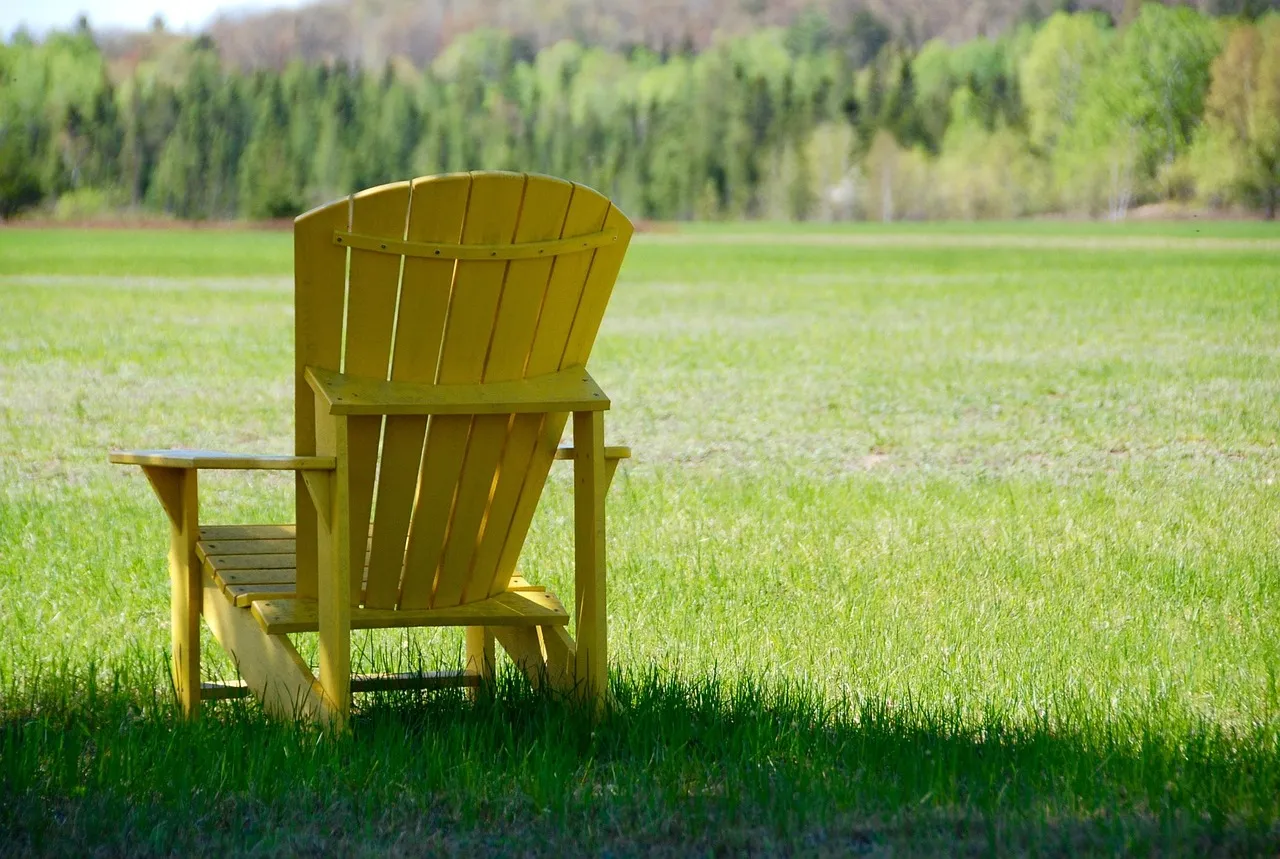
The park has a population of 130,000 permanent and 200,000 seasonal residents, and sees over 12.4 million annual visitors. That number reflects genuine, diverse, year-round use rather than a single peak-season rush.
Adirondack Park has skiing, snowboarding, snowmobiling, and snowshoeing opportunities for beginners and experts alike. West Mountain and Titus Mountain offer family tubing adventures, and Whiteface Mountain has 90 trails serviced by 12 chairlifts. Summer brings a completely different park: canoeing across pristine lakes, hiking the 46 High Peaks, and paddling rivers that see far fewer visitors than those at most national parks of comparable reputation.
A Scale That Puts the Rest in Perspective
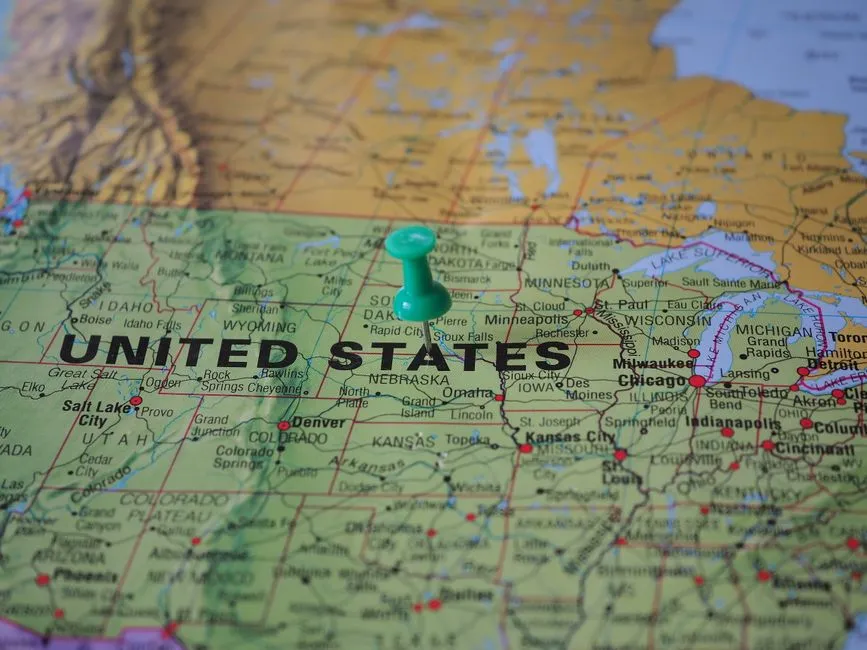
Adirondack Park is larger than all other state and national parks in the 48 contiguous United States. Only three national parks and preserves in Alaska outrank the Adirondacks in absolute size: Gates of the Arctic, Noatak National Preserve, and Wrangell-St. Elias National Park and Preserve, at 7.5, 6.6, and 13.2 million acres respectively.
Just about the only exception on any map of the Eastern United States is in northern New York, where the Adirondack Park covers an area the size of Yosemite, Yellowstone, Glacier, and Grand Canyon National Parks combined. The Adirondack Park is unlike anyplace in North America. That is not promotional language. It is simply a geographic fact that most travelers still haven’t discovered.
The Takeaway
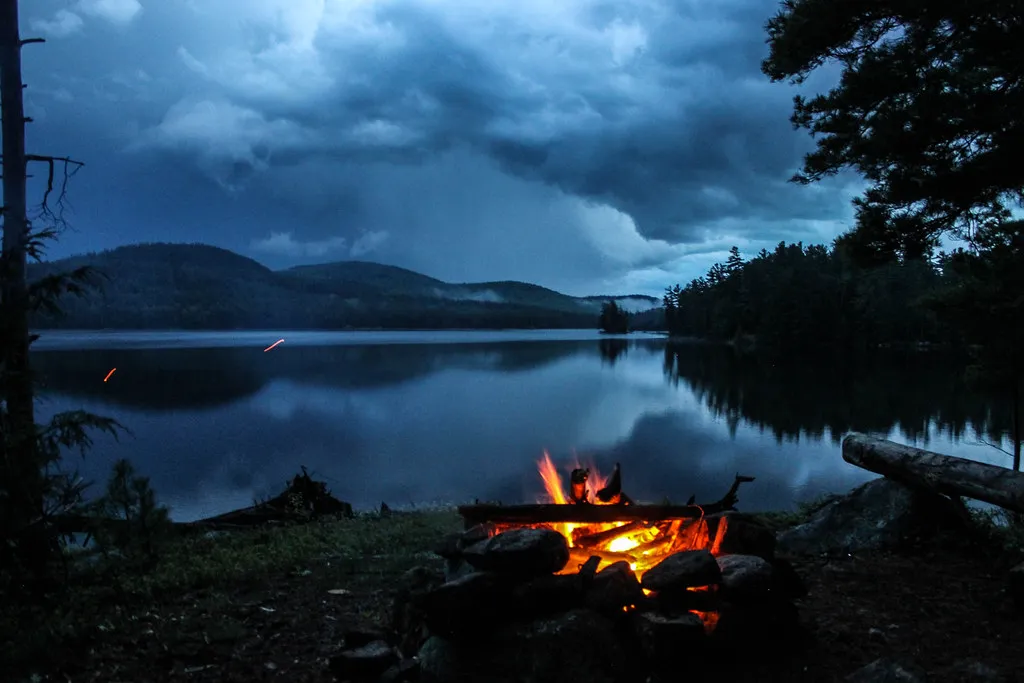
The Adirondacks ask something different of a visitor than most famous parks do. There’s no entrance ceremony, no wristband, and no crowd-timed timed-entry reservation system. You simply arrive into something large enough to hold entire ecosystems, mountain ranges, living communities, and 130 years of constitutional protection, all at once.
Efforts across the region aim to align ecological protection with economic opportunity, ensuring that the Adirondack Park thrives for generations to come. That balance, imperfect as it may sometimes be, is the park’s most enduring achievement. The Adirondacks prove that wilderness and human life don’t always have to exist on opposite sides of a fence, and that the largest protected landscape in the lower 48 states doesn’t need a famous name to be worth protecting fiercely.
AI Disclaimer: This article was created with the assistance of AI tools and reviewed by a human editor.