
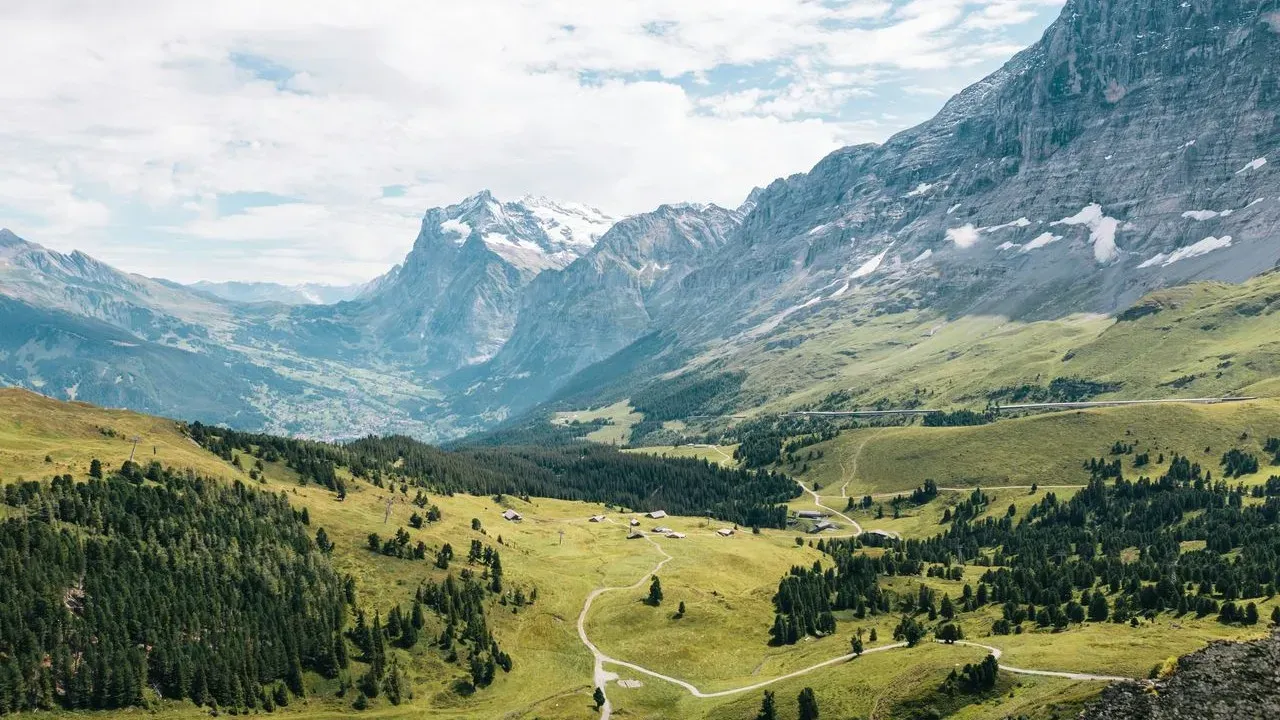

Switzerland draws visitors with its dramatic peaks and clear lakes, yet many of its most striking landscapes remain out of reach for those who stay on paved routes. A traveler who spent a full month exploring the country on foot discovered that the finest views often require leaving roads and lifts behind. This approach turns a visit into a deeper encounter with the terrain itself. The practical result is straightforward: trails that exclude vehicles preserve quieter conditions and protect fragile alpine environments from heavier traffic.
The Logic of Limited Access
Switzerland maintains an extensive network of marked paths that connect remote valleys and high passes. Many of these routes begin where roads end, a deliberate choice that keeps certain basins and ridges free of motorized traffic. The outcome benefits both the landscape and the walker. Soil stays less compacted, wildlife encounters remain more frequent, and the sense of scale becomes immediate rather than framed through a windshield. Travelers who accept the extra time required gain a clearer picture of how the mountains shape daily life in the surrounding communities.
One Month on the Ground
Spending thirty days walking through the country allowed for repeated visits to the same valleys under changing light and weather. Mornings often started in lower meadows and ended above the tree line, where the air thinned and the horizon widened. Each segment of trail revealed gradual shifts in vegetation and rock color that maps alone cannot convey. The cumulative effect was a stronger grasp of distances and elevation gains that define Swiss geography. This extended pace also aligned with local rhythms, reducing the pressure to rush between viewpoints.
Practical Steps for Thoughtful Travel
Preparation begins with checking current trail conditions through official regional offices rather than relying solely on apps. Carrying proper layers, sufficient water, and a map that shows both path and elevation changes helps maintain safety on routes that receive little maintenance beyond seasonal clearing. Staying in village guesthouses or mountain huts supports local economies directly and keeps overnight impact low. Choosing shoulder periods when possible spreads visitor numbers more evenly and leaves more room for quiet observation. These choices turn a hike into a contribution rather than a consumption of the place. The month spent walking confirmed that Switzerland’s most memorable scenery rewards those willing to meet it on its own terms. The effort required becomes part of the experience rather than an obstacle to it.
AI Disclaimer: This article was created with the assistance of AI tools and reviewed by a human editor.