
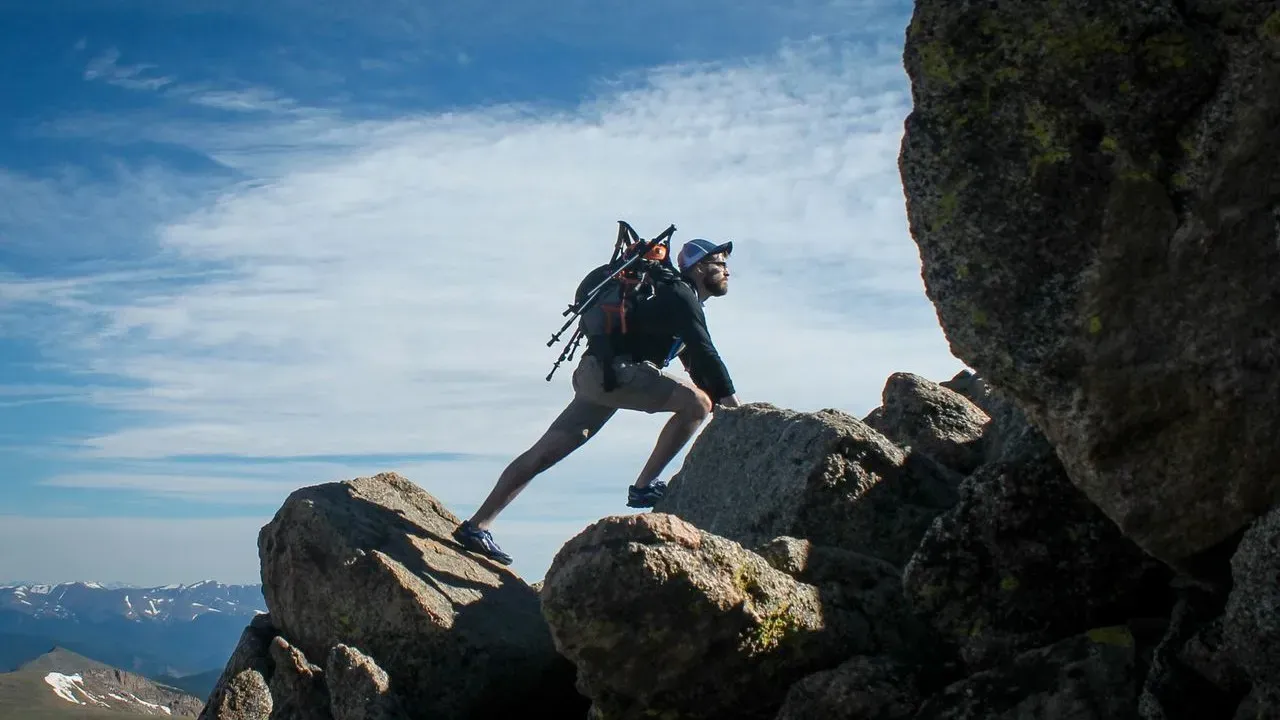

Jimmy Chin has long documented the world’s most dramatic mountain environments through both still photography and film. His latest work appears in the group exhibition “What Holds Us,” now on view in Chelsea before traveling to London and Shanghai. The show pairs his images with pieces by Alex Prager and Jack Davison, yet Chin’s contribution stands out for its intimate focus on the Bugaboos range in southeastern British Columbia. Created in collaboration with Apple, the project gave him rare freedom to pursue a purely personal vision rather than an assignment. ([1])
A Personal Project Born on Short Notice
Chin arrived in the Bugaboos with limited time and even less gear after airlines misplaced his luggage. He spent just 36 hours on the mountain, working quickly to capture sweeping vistas, textured rock faces, and quiet moments of human presence amid vast terrain. One image shows his longtime climbing partner Conrad Anker gazing toward snow-capped peaks, a composition that echoes classical landscape traditions while remaining grounded in lived experience. The constraints of the trip produced images that feel both immediate and deeply considered.
Confronting Mortality in the Mountains
Chin has spoken openly about the dual nature of these environments. They have given him profound purpose and connection, yet they have also claimed the lives of close friends. Rather than dwell on loss, he frames the experience as a steady reminder of human limits. This awareness shapes daily choices and encourages a deeper respect for the raw power of wild places. The resulting photographs convey both grandeur and humility without exaggeration.
Abstract Views and a Calligrapher’s Eye
Alongside the panoramic shots, the exhibition includes more experimental images made from a helicopter during the return journey. These close studies of glacial textures read as fluid brushstrokes in blue and white. Chin traces the approach to his Chinese heritage and early training in calligraphy, where the goal was to isolate striking forms that resist easy explanation. The works reward slow looking and highlight the unexpected creativity found in nature. Chin’s images remind viewers that meaningful encounters with remote landscapes require preparation, humility, and a willingness to accept uncertainty. The exhibition offers a quiet invitation to consider how such places continue to shape those who return to them with care.
AI Disclaimer: This article was created with the assistance of AI tools and reviewed by a human editor.