
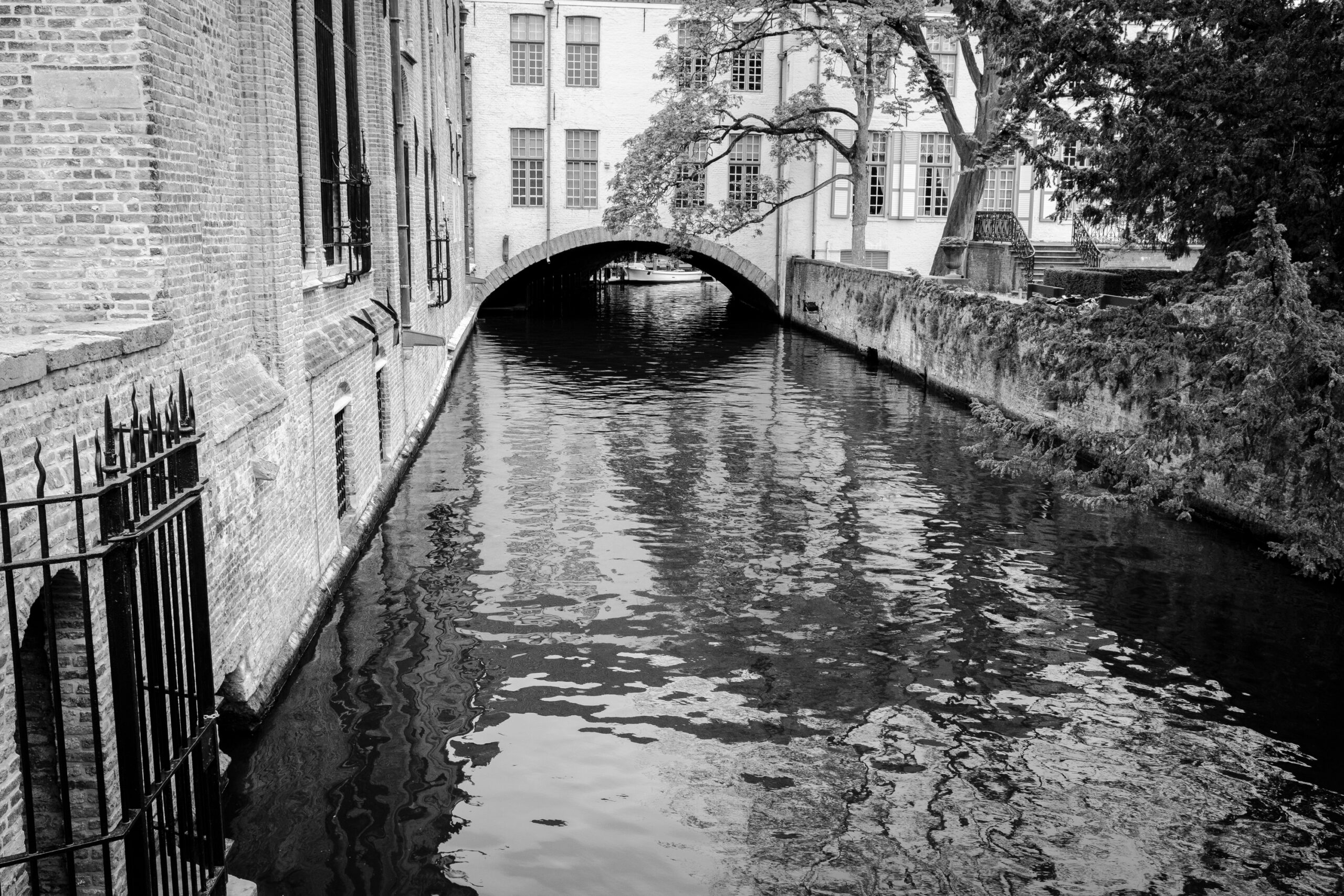

There’s a quiet irony built into most visits to Bruges. Travelers arrive, spot the flat-bottomed boats waiting at the jetties, and assume the water is the point. The boat, the guide, the slow drift past medieval facades. It’s a perfectly fine way to spend an hour. Still, the view from the water and the view from the cobblestones are two entirely different experiences, and the one on foot tends to be more intimate, more personal, and more yours.
In 2024, Bruges welcomed eight million day and overnight tourists to its historic city centre, which works out to an average of roughly 27,000 visitors every single day. Much of that crowd funnels straight toward the canal boat jetties. Stepping back, slowing down, and walking the canal banks instead puts you in a different Bruges entirely. Here are four canals that genuinely earn that approach.
Why the Canals of Bruges Reward Walkers
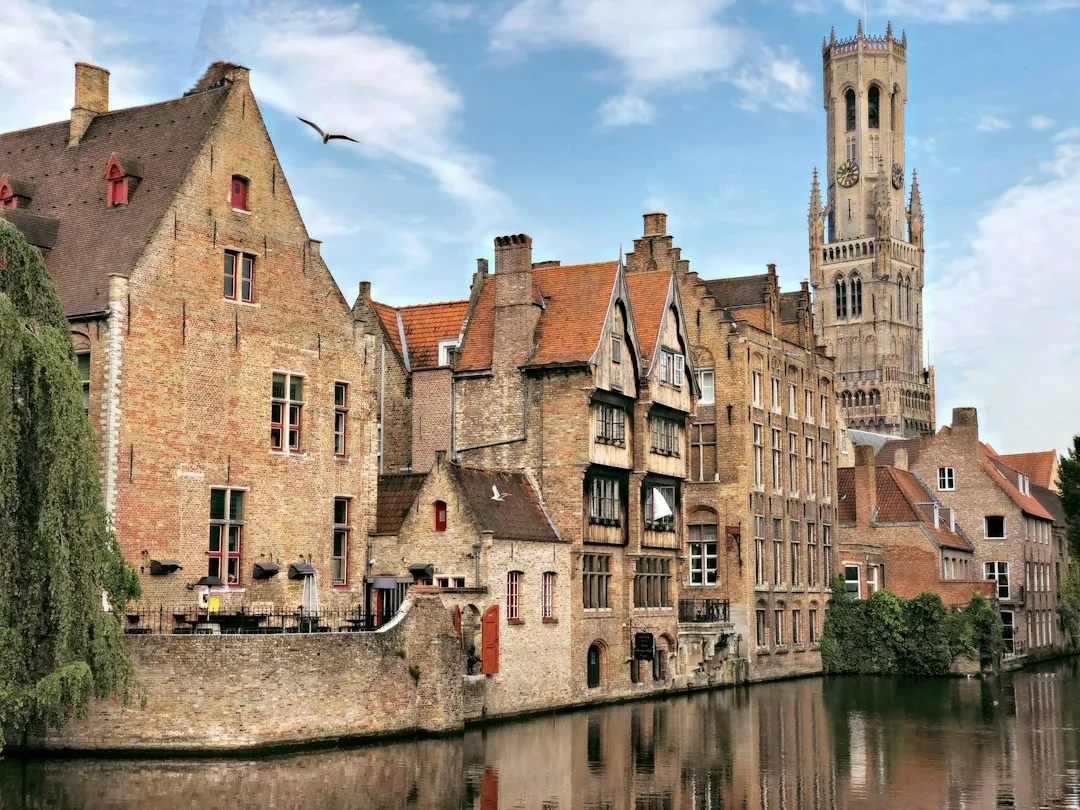
The heart of Bruges is a UNESCO World Heritage Site, and its compact layout is perfectly suited to exploration on foot. Walking the cobbled streets between canals is genuinely the way most people end up enjoying Bruges the most. It’s a city that rewards slowing down.
Walking along the canals lets you appreciate the intricate details of medieval architecture up close. You can peer into private gardens or discover quaint, historic bridges around every corner. None of that is available from a low-hulled boat moving at a steady pace with ten strangers sitting beside you.
The Challenge of Overtourism and Why It Matters for Canal Walks
Bruges is a UNESCO World Heritage City treasured for its cobbled streets, quaint canals, and medieval buildings. Its postcard-perfect scenery has, however, left it vulnerable to overtourism. A record of more than 8.3 million people visited Bruges, a city of fewer than 120,000 residents, in 2023.
Bruges is now implementing measures to balance tourism with residents’ quality of life, including banning new hotels, limiting short-term lets, restricting cruise ship arrivals, and promoting what officials call “quality tourism.” Walking the less trafficked canal banks, rather than joining the longest queues, is one of the most natural ways to travel here responsibly.
Canal 1: Groenerei, the Green Canal
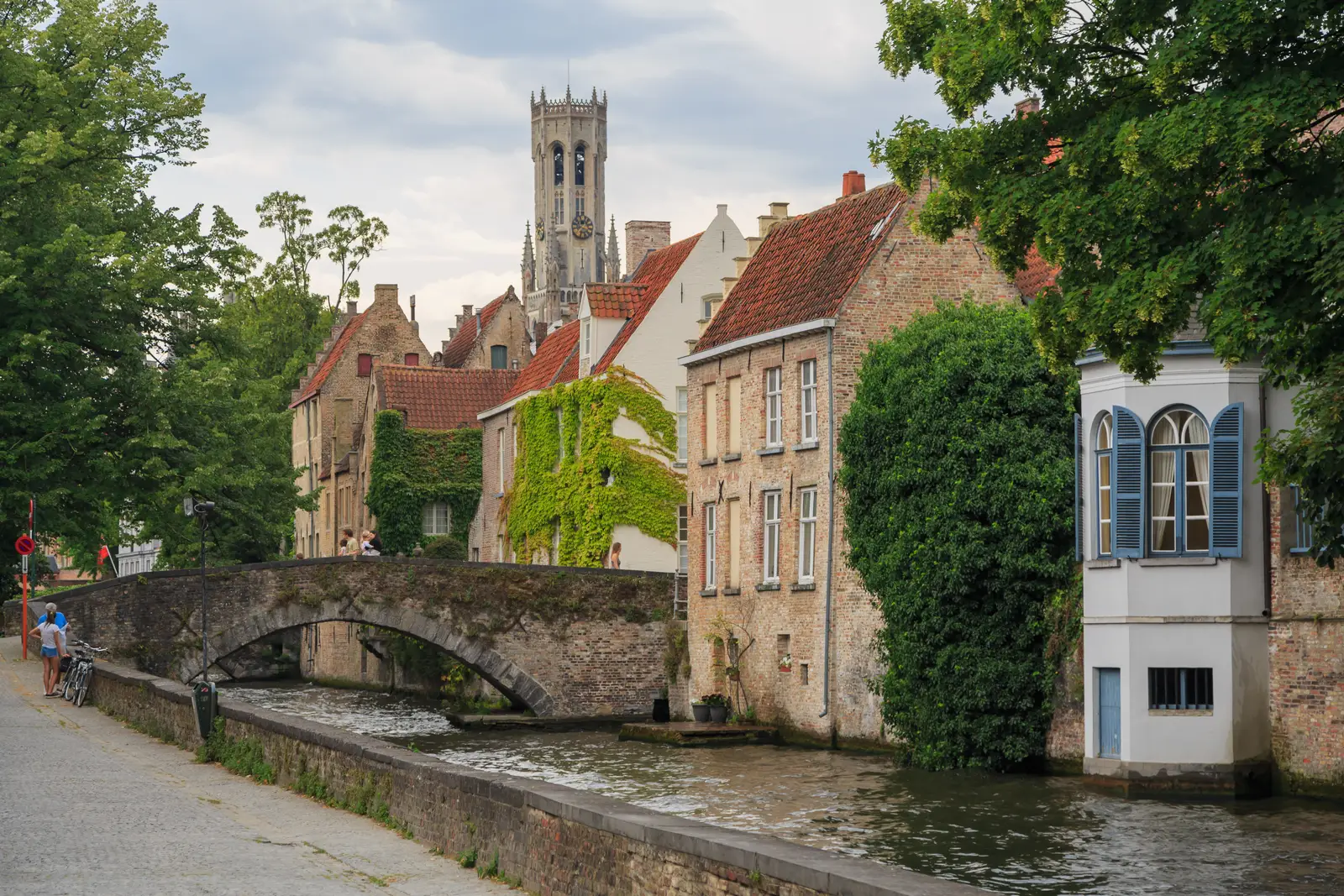
Groenerei is a beautiful stretch of canal that starts at the sharp bend in the Dijver Canal and flows around 100 metres to the northeast along Groenerei before converging with the outer canal. The short stretch passes under three delightful stone bridge crossings, and the buildings on the other side of the canal are quaint and very photogenic. It is one of the most romantic and charming canal stretches in the historic centre.
Visitors who venture out early in the morning have had the Groenerei entirely to themselves. It makes for a beautiful stroll along a silent canal. The Groenerei also leads to some of Bruges’ most iconic bridges and provides ample opportunities for photographers. The cobblestone path running alongside it, Steenhouwersdijk, is one of the most quietly affecting streets in Belgium.
Canal 2: The Dijver and the Rozenhoedkaai Viewpoint
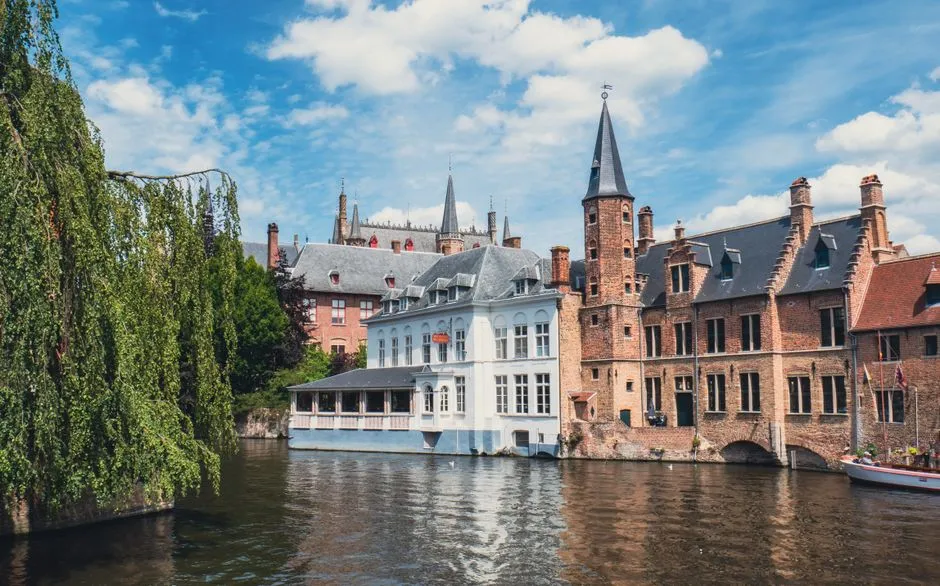
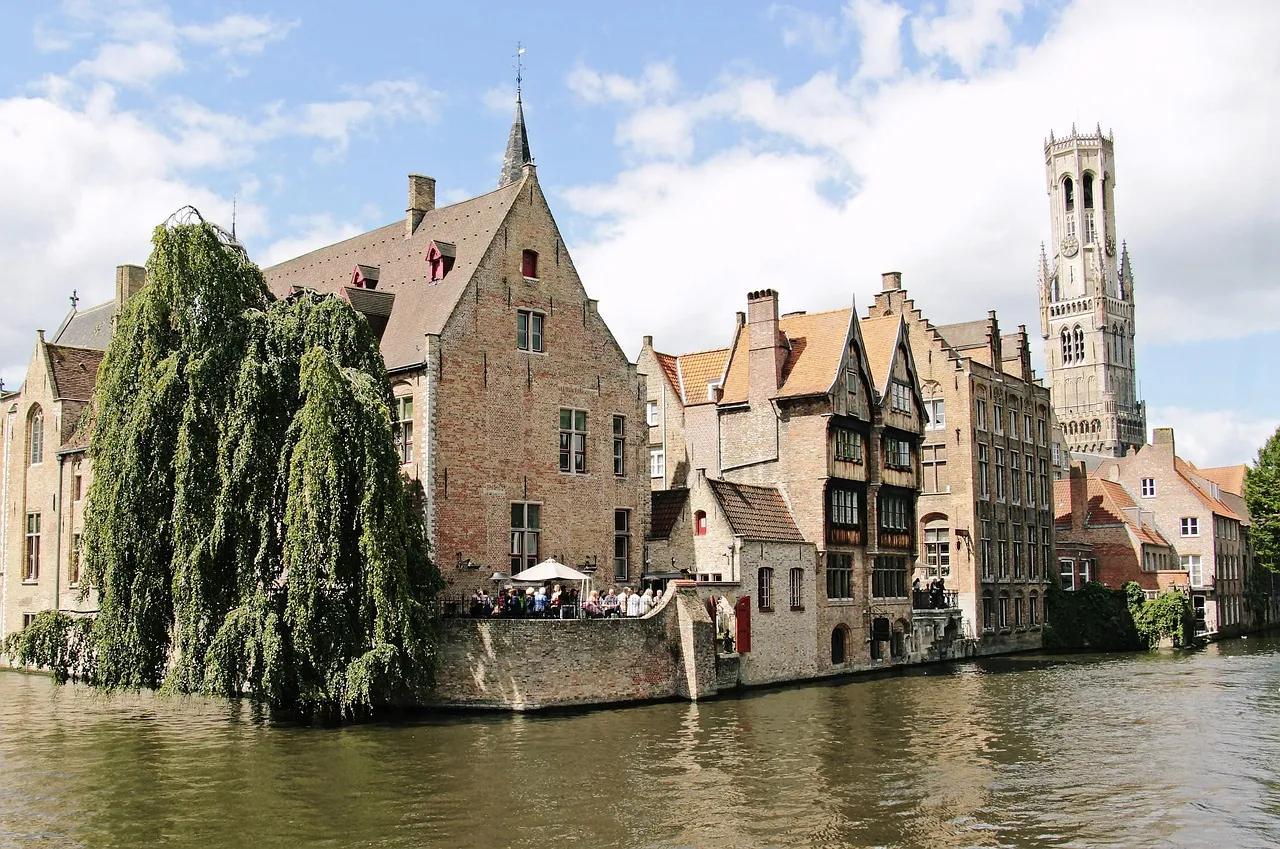
Rozenhoedkaai is widely considered the single best photo spot in Bruges, where the Dijver and Groenerei canals meet against a backdrop of medieval stepped-gable houses and church spires. The ideal time to be there is golden hour, around 7 to 8 PM in summer or 5 to 6 PM in spring, when warm low sunlight catches the brick facades and reflects clearly in the still canal water.
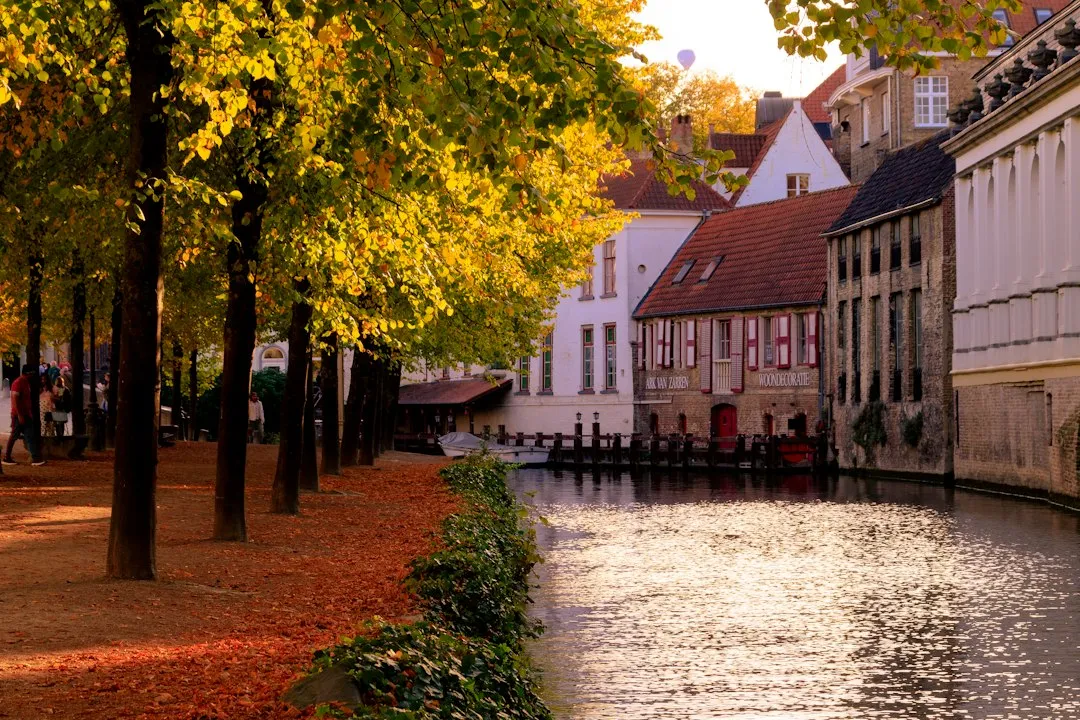
Heading southwest along the Dijver, the promenade widens to an avenue of trees and benches, a perfect spot to admire the historic details of the buildings on the opposite bank. Historians believe this area was used by trading ships to moor and unload their goods. One of the most popular commodities was salt, a precious commodity during the Middle Ages. That history sits right beneath your feet when you stand on the quayside.
Canal 3: Spinolarei, the Quiet Northern Stretch
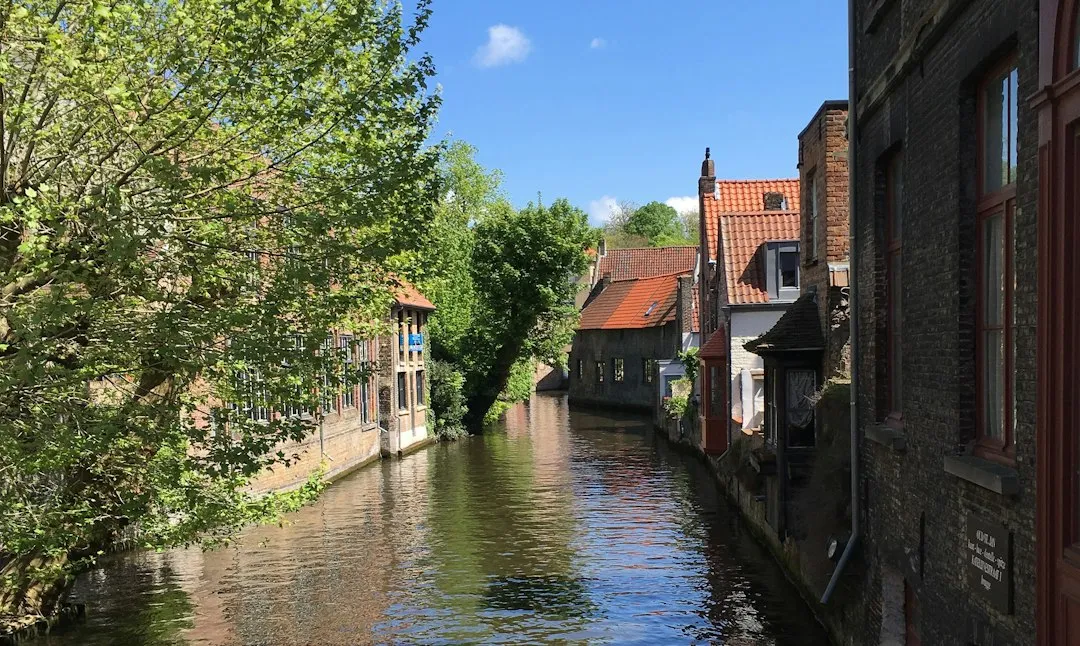
Groenerei and Spinolarei are among the most tranquil canals in Bruges, lined with ancient trees, elegant houses, and small romantic bridges. They offer a peaceful escape from the busier tourist areas. Spinolarei, in particular, winds through the northern part of the historic centre where the pace genuinely drops.
Just after crossing Jan van Eyckplein, walkers reach the first of the canals and can follow it along Spinolarei. From there, a canal walk can navigate its way along Groenerei, Predikherenrei, Verwersdijk, and Spinolarei in a single connected loop. This northern circuit is quieter than the tourist core and gives a truer sense of how Bruges actually lives beside its water.
Canal 4: Minnewater, the Lake of Love
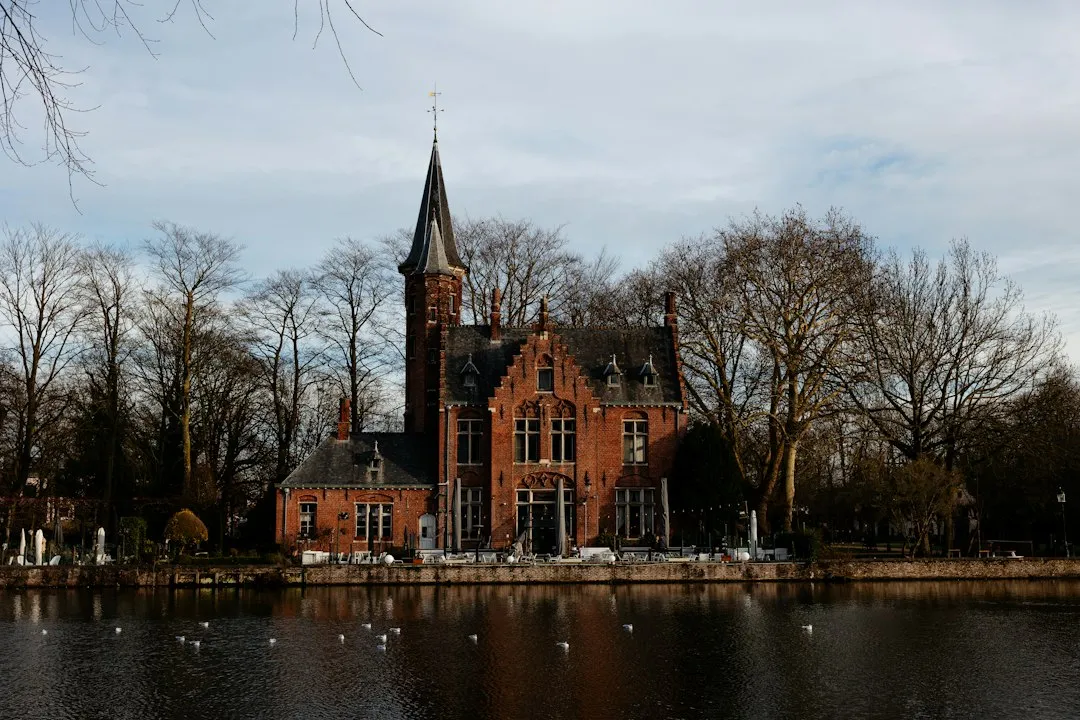
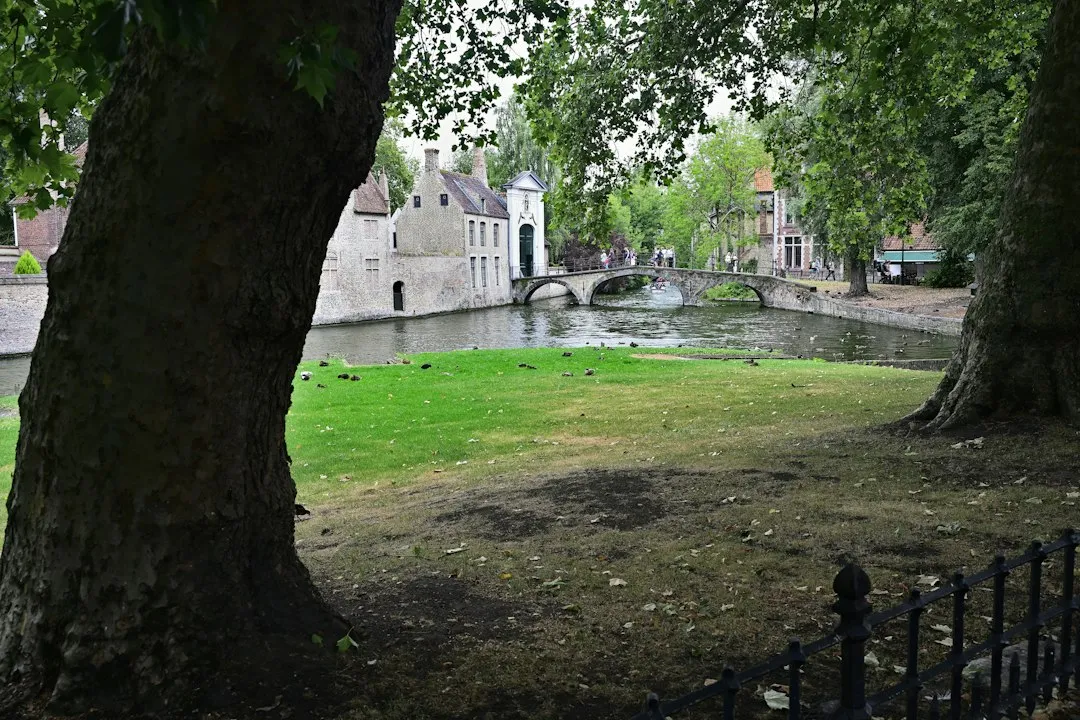
Minnewater Lake, known as the Lake of Love, is surrounded by legends and breathtaking views. The surrounding park and canal walk offer a tranquil escape, with swans gliding over water and lush greenery framing historic buildings. It sits at the southern edge of the historic centre and feels a world apart from the market square.
Minnewater is a serene lake at the southern edge of the city, surrounded by a picturesque park. Local legend says that if you cross the Minnewater bridge with your loved one, your love will be eternal. It is also home to Bruges’ famous swans. The walk around its perimeter is unhurried, genuinely lovely, and completely free.
The Best Time to Walk the Canals
Spring, from April to May, brings mild weather, blooming flowers, and fewer crowds than summer, making it ideal for both walks and boat trips. Autumn, from September to October, offers crisp air, beautiful foliage, and a romantic atmosphere. Early mornings in any season are consistently the most rewarding time to walk.
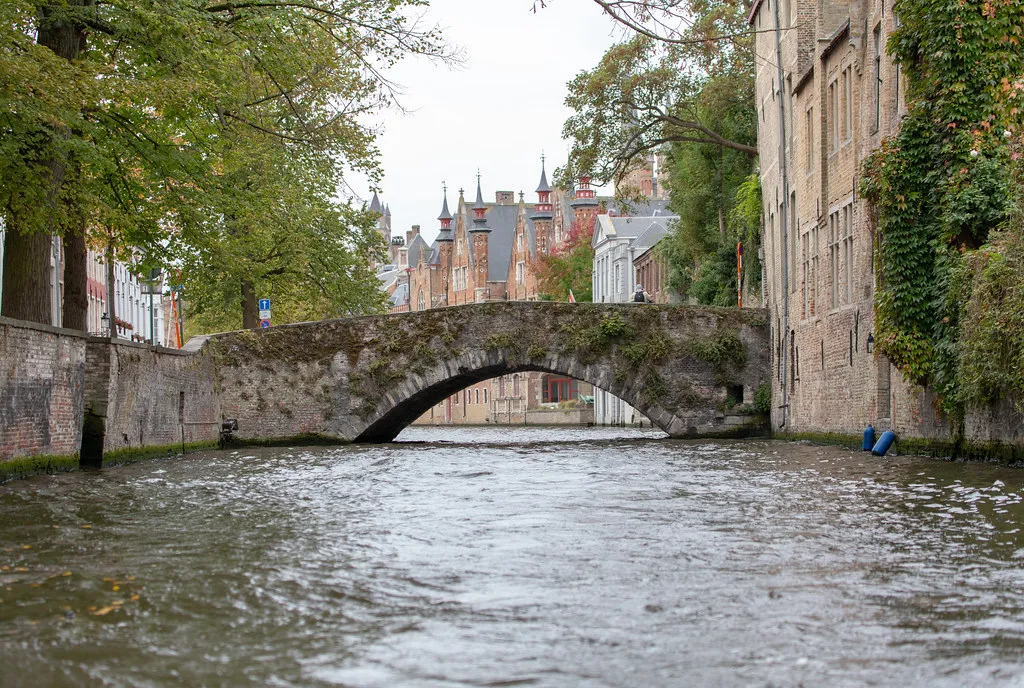
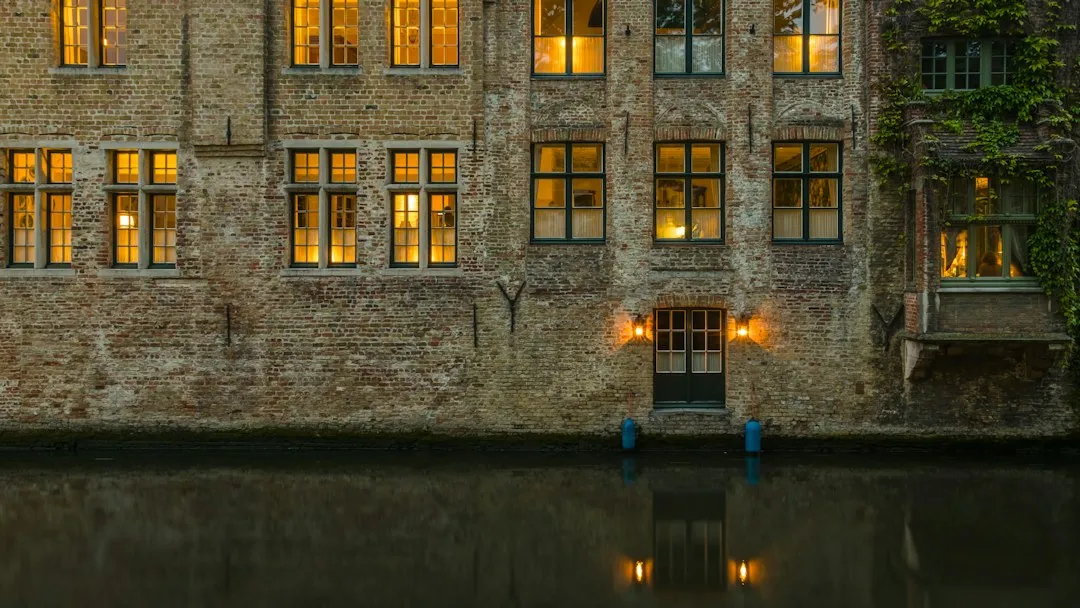
You can put together a canal walk once the crowds have gone, to take in romantic spots after dark. Starting down Meestraat reaches an ancient bridge that is one of the loveliest and quietest spots on the canals. The city changes character at dusk in a way that no boat tour schedule can accommodate.
Practical Logistics: How to Plan Your Canal Walk
The most logical approach on foot is to start at the Markt, walk down to Rozenhoedkaai, follow the Dijver Canal south toward Minnewater, then loop back north through Groenerei. That covers the main spots in about two to three hours of relaxed walking, longer if you actually stop rather than just ticking off viewpoints.
The full self-guided route runs from the Markt through the Belfry, Burg Square, Rozenhoedkaai, the Church of Our Lady, Bonifacius Bridge, the Begijnhof, and Minnewater, covering roughly three kilometres in around two to three hours without museum stops. Comfortable shoes and a willingness to wander without a fixed schedule make the whole thing considerably more enjoyable.
What You See on Foot That the Boats Miss
Almost every building, every narrow cobbled street, and every bridge over the network of canals is gorgeous and a delight to see and photograph. The boat tours pass the highlight reel. Walking lets you find the details: a carved doorway, a garden visible through a low gate, the way light falls differently on the same stretch of water at different hours.
Turning from the bridge to walk along the Groenerei canal leads to the gorgeous little square of Huidenvettersplein, with a collection of quirky historic buildings, many of them now housing restaurants and cafes. In the warmer months, it becomes a lively hub with outdoor seating filling much of the space. These are the pauses that give a city trip its texture.
Walking as a Form of Responsible Travel in Bruges
The city council is fully aware that tourism brings both benefits and challenges. Tourism is very important for Bruges’ economy and employment, with total turnover from day and residential tourism estimated at 542 million euros for 2024. It is also important to ensure a good balance between the well-being of residents and the economic importance of tourism.
Bruges is tackling overtourism by banning new hotels, limiting short-term rental platforms, and restricting cruise ships. City officials aim for “quality tourism,” with a focus on overnight stays. Choosing to explore the canals on your own terms, slowly and thoughtfully, is a small but genuine contribution to that goal.
Final Thoughts
Bruges is not a city that needs to be optimized. It doesn’t reward the traveler who moves fastest or sees the most. The canals here, Groenerei, the Dijver, Spinolarei, Minnewater, are best understood when you’re standing at their edge, watching light move across the water, with nowhere else to be for a few minutes.
The boat tour is easy. The walk is the experience. There’s a difference between being carried past a city and actually being in it, and in Bruges, that difference is worth every cobblestone.
AI Disclaimer: This article was created with the assistance of AI tools and reviewed by a human editor.