
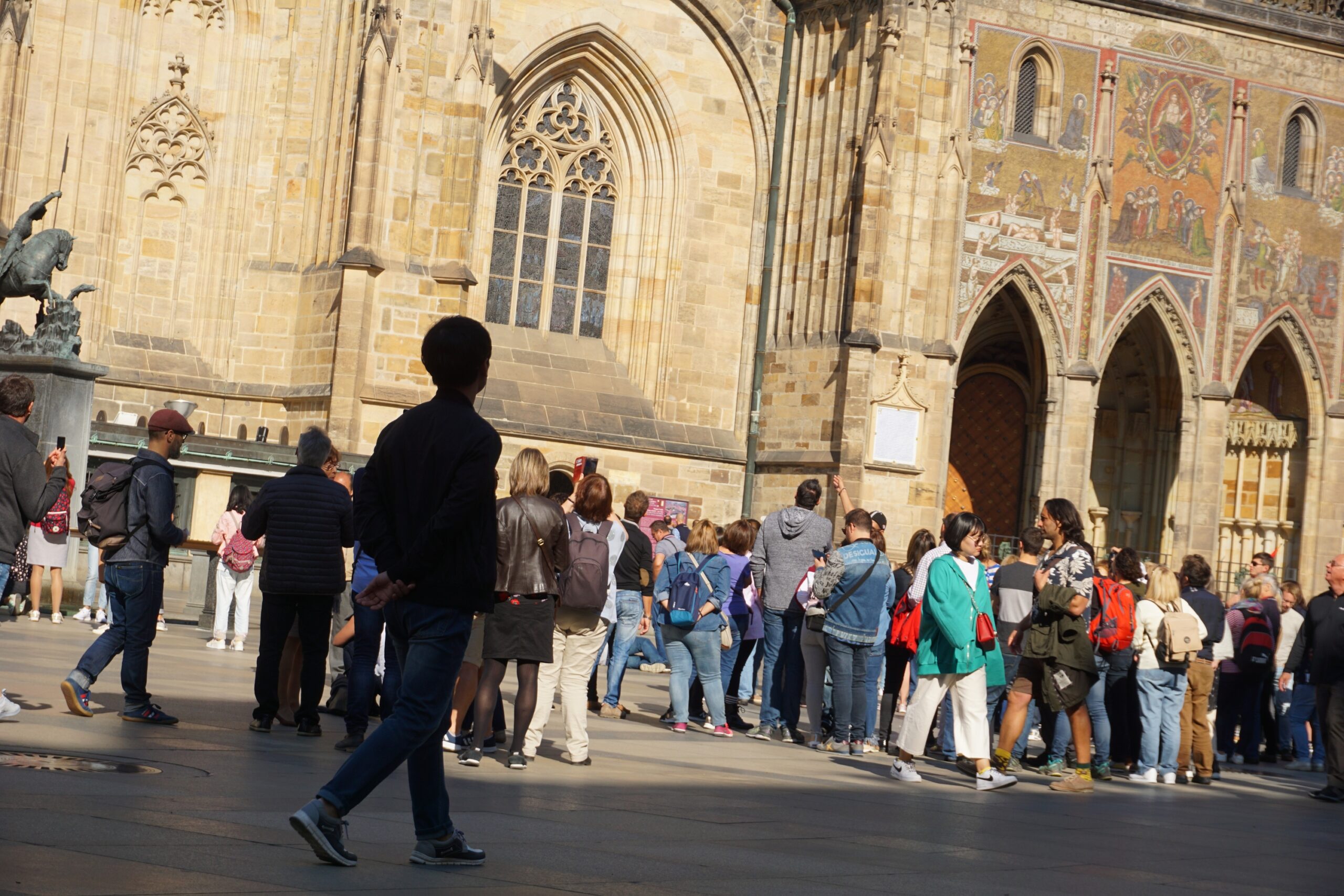

Prague moves at a specific rhythm. On the main streets, it’s trams, guided tour groups, and souvenir stands pressing up against one another. Step through an arched doorway or duck down an unmarked passage, though, and the city suddenly becomes a different place entirely.
That contrast is one of the most quietly compelling things about this city. Arcaded courtyards, small passages, and historic house entrances often hide cafés, galleries, shops, or quiet corners just metres from the busiest routes. The seven spaces below are among the most rewarding to find on foot.
1. Týn Courtyard (Ungelt): The Merchant’s World Behind the Church
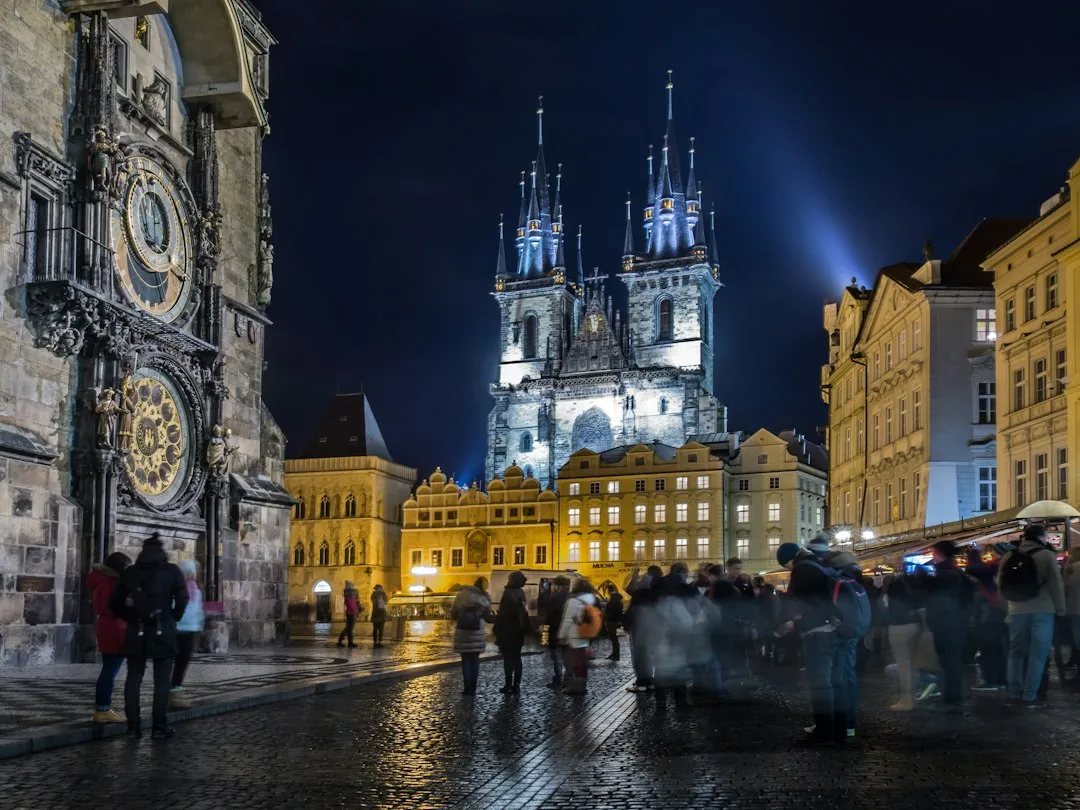
Ungelt, also known as Týn Courtyard or Týnský dvůr, is one of the most atmospheric hidden corners of Prague’s Old Town. Just behind the Church of Our Lady before Týn and only a short walk from Old Town Square, it feels like a quiet courtyard world tucked away behind the busy streets.
The complex probably dates back to the 11th century and originally served as a fortified merchants’ yard. Foreign merchants arriving in Prague could stay here, store their goods, trade, pay customs duties, and receive protection. It’s a remarkable thing to consider standing there today: centuries of international commerce happened on this exact ground.
The most important building here is the Granovský Palace with its arcaded loggia, one of Prague’s best preserved Renaissance treasures with beautiful sgraffito, and murals that depict scenes from the Bible and from Greek mythology. Between 1984 and 1996, the Ungelt area was carefully renovated. Today, it is a pedestrian courtyard with restaurants, cafés, shops, galleries, and offices, while still preserving the feeling of an old enclosed trading yard.
2. Kasárna Karlín: A Military Courtyard Transformed
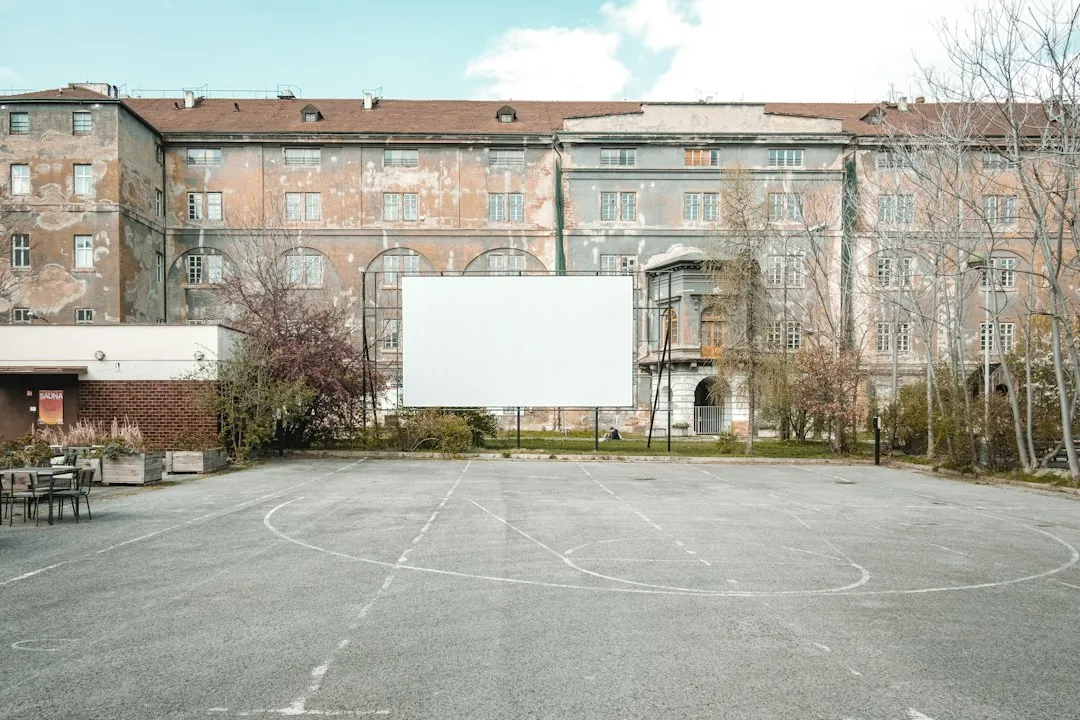
Kasárna Karlín is a former military barracks with a big open courtyard now home to bars, cafés, art installations, and outdoor seating. It sits in the Karlín district, which itself has seen significant renewal over the past two decades after flood damage in 2002.
The alternative, creative vibe there can feel reminiscent of Berlin. In summer, there’s an outdoor cinema, and locals confirm that there’s consistently something happening there. It’s one of those places that feels less like a tourist attraction and more like an actual neighbourhood gathering point.
The physical scale of the courtyard is part of its appeal. Former barracks buildings rarely become this lively or this open, and the contrast between the military architecture and the easygoing atmosphere it now hosts is genuinely striking. It’s worth checking the venue’s events calendar before you visit.
3. The Courtyards Around Haštalská Square
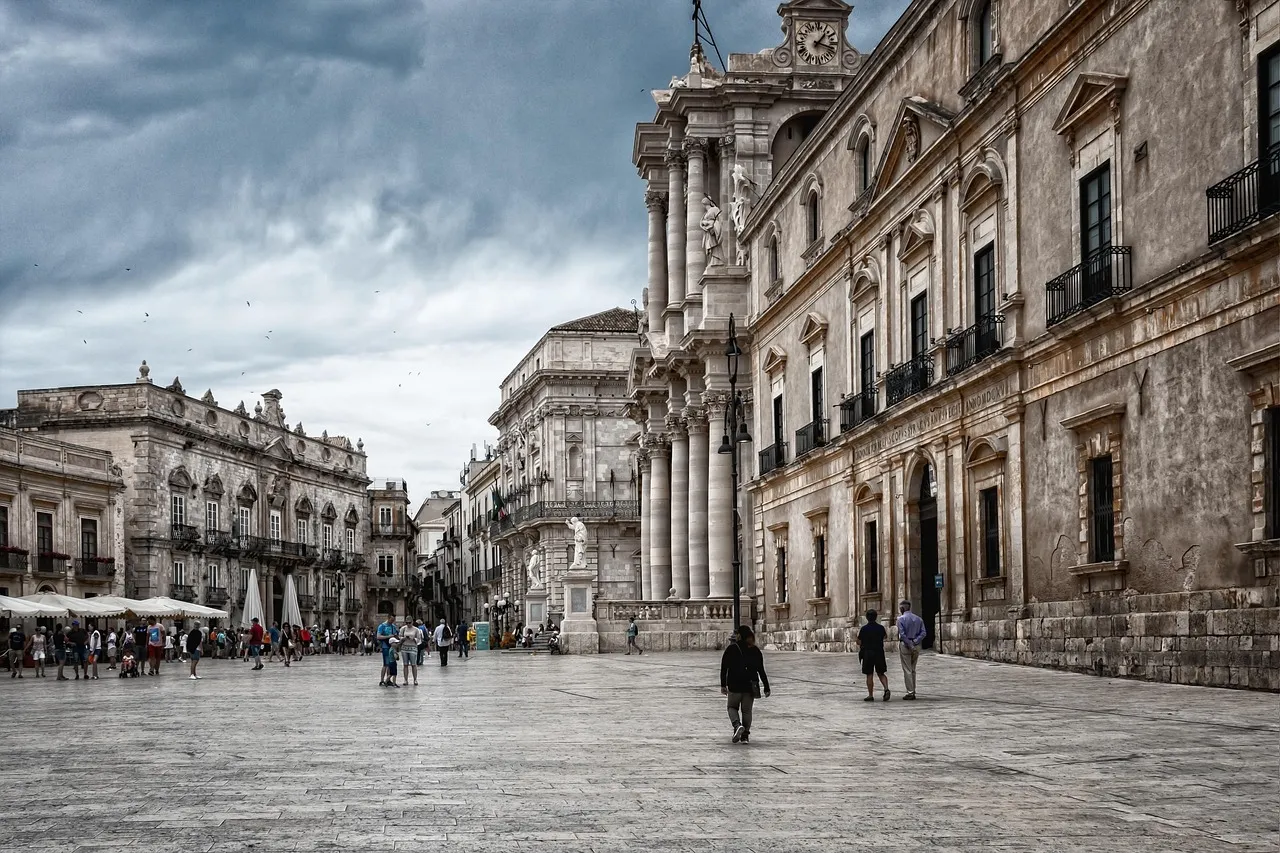
The area around Haštalská Square, Řásnovka, and the dark, narrow lanes leading toward the St. Agnes Convent is one of the more atmospheric corners of the Old Town. Many visitors walk right past it, drawn toward the Astronomical Clock or Charles Bridge instead.
When you walk through these streets, especially at dusk, they feel different. They are quieter, narrower, and the tall old houses seem to lean in towards you. It’s a place of shadows, yellow lanterns, and hidden courtyards.
One thing that makes this area genuinely special is that it’s one of the last places in the Old Town that hasn’t been fully refurbished for tourism. The worn edges and unpretentious character of this neighbourhood are precisely what make it worth seeking out. A slow walk down Řásnovka at a quiet hour costs nothing and reveals a great deal.
4. The Courtyard of Dům U Minuty
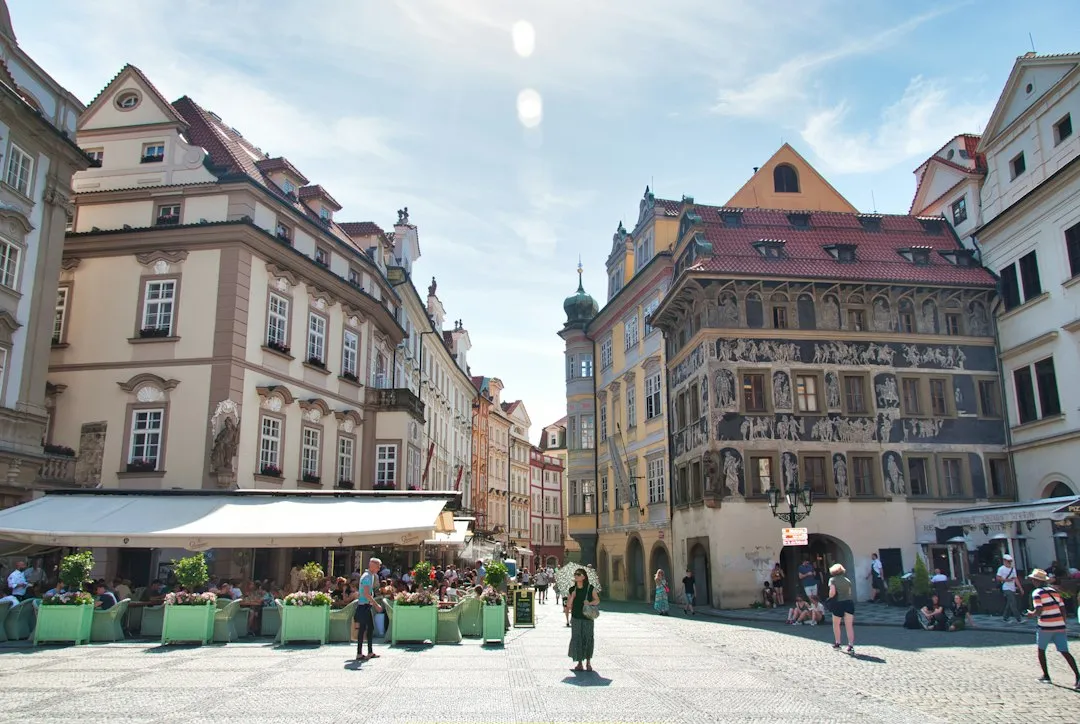
One intriguing spot is the passage in the Dům U Minuty. This house is next to the Astronomical Clock. It opens into a small, often overlooked courtyard. The irony is hard to miss: thousands of people gather just metres away every hour to watch the clock’s mechanical figures, yet almost none of them wander through this doorway.
The Dům U Minuty is decorated with remarkable Renaissance sgraffito on its exterior walls, depicting biblical and mythological scenes. The building dates to the late 16th century and was once home to Franz Kafka’s family during his childhood years. The courtyard behind it offers a moment of stillness that the surrounding square makes almost impossible to find.
It’s the kind of discovery that rewards slow walkers. If you approach Old Town Square from the south and pause to look at the building carefully before the clock strikes, you’ll likely spot the passage that most visitors miss entirely.
5. Malá Strana’s Courtyard Passages Below the Castle
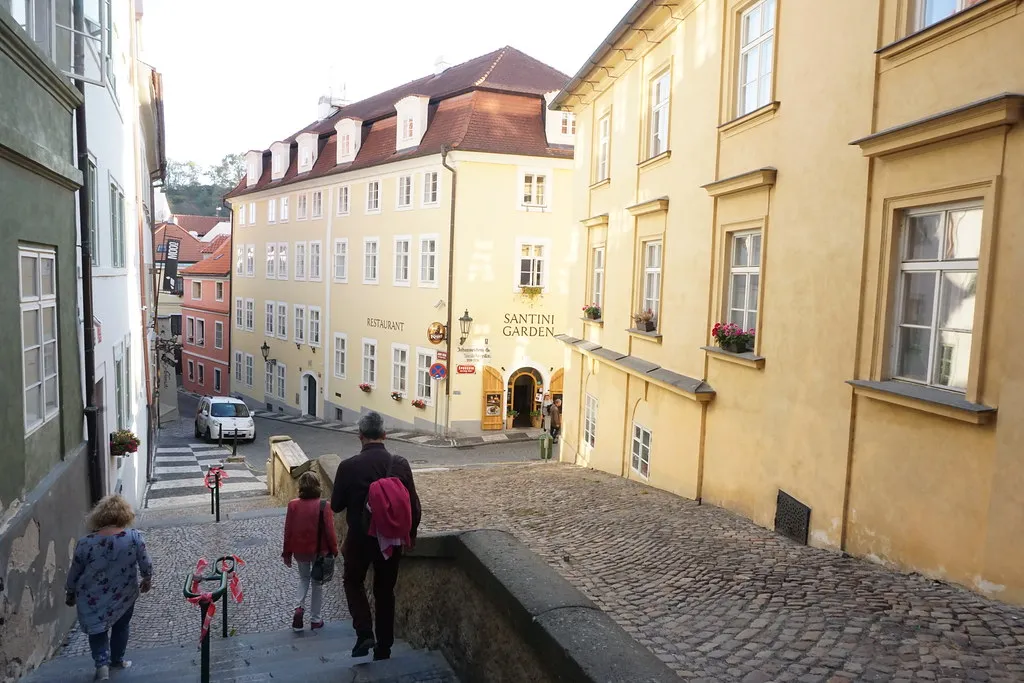
Lesser Town, known as Malá Strana, also hides many secrets. Its quieter streets below Prague Castle are worth exploring. Look for passages connecting squares and palaces. These often open into beautiful courtyards.
Prague’s hidden courtyards are nestled away from the usual hustle and bustle, offering a peaceful respite to those who discover them. These spots are not only havens of tranquility but also capsules of history, each with its own story and unique architectural elements.
Malá Strana’s courtyards tend to be attached to baroque palaces, many of which now serve as embassies or government buildings. Not all are publicly accessible, but enough open passages and semi-public gardens remain to make wandering here genuinely worthwhile. The neighbourhood’s steep cobblestone lanes and thick stone walls give this area a composed, almost secretive quality that the more-visited parts of the city rarely manage.
6. The Vinohrady District’s Literary Courtyards

The Vinohrady district, once a hub for Czech intellectuals, features beautiful architecture and hidden courtyards that whisper stories of artistic endeavour. The district developed rapidly in the late 19th and early 20th centuries, and that period of growth left behind a dense fabric of apartment buildings, many of which wrap around quiet internal courtyards.
These are not curated tourist stops. They’re working residential spaces, and that ordinariness is part of their appeal. Walking along Mánesova or Blanická streets and glancing through open archways reveals a Prague that belongs entirely to the people who live here rather than those who visit.
Prague’s rich artistic and intellectual heritage extends beyond its grand museums. Many literary figures and bohemians found inspiration in the city’s quiet corners. Vinohrady was central to that tradition, and its courtyards still carry a certain quiet dignity. A late afternoon walk through this neighbourhood, ending at one of its local wine bars, makes for one of the most genuinely local evenings in the city.
7. The New Town Arcades and Lucerna Passage
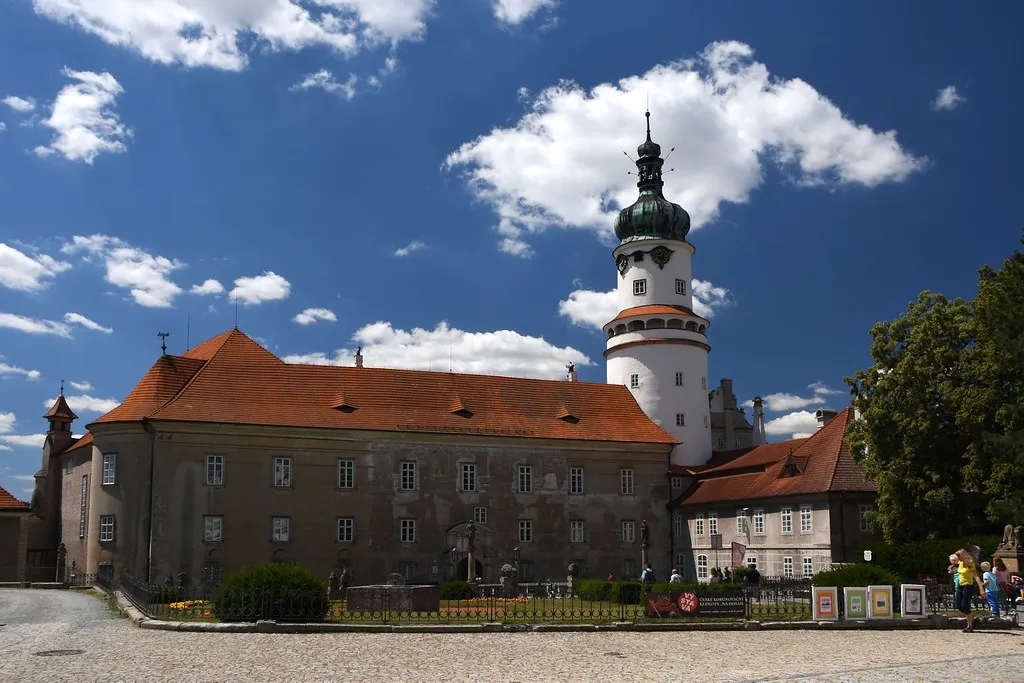
New Town, Nové Město, features more modern passages. These are often within grand arcades. They link shopping streets and cafés. The Lucerna Passage is among the most distinctive of these. Built by the Havel family in the early 20th century, Lucerna is a covered arcade connecting Štěpánská and Vodičkova streets, and it remains one of the more unusual spaces in the city centre.
At the centre of the Lucerna Passage hangs a well-known sculpture by David Černý: an upside-down St. Wenceslas riding a dead horse, a deliberate inversion of the famous equestrian statue on Wenceslas Square just steps away. The piece has been there since 1999 and continues to prompt a second look from anyone passing beneath it.
Some of Prague’s courtyards and passages host charming cafés and bistros, offering a culinary experience that is both unique and immersive. Dining in these spaces allows visitors to enjoy traditional Czech cuisine in settings that are quintessentially Bohemian. The Lucerna’s ground-floor café does exactly that, and it remains a genuinely local spot rather than a tourist facility, which at this central location is something of an achievement in itself.
How Prague’s Street Level Hides So Much
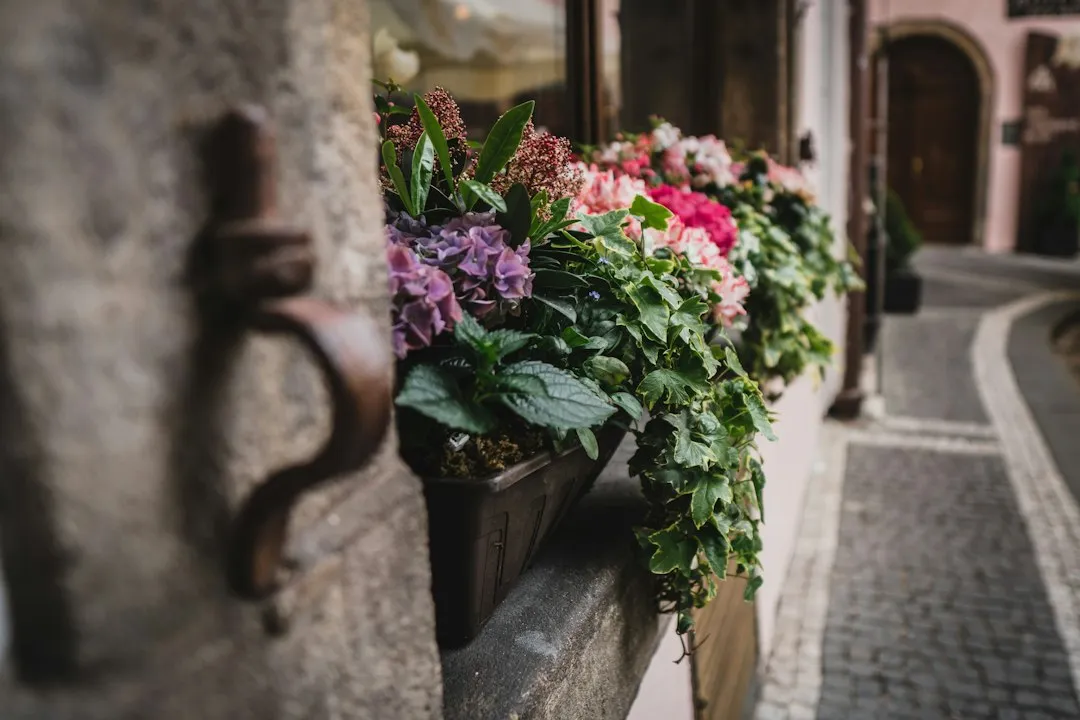
There’s a structural reason why these courtyards feel so invisible from the street. In the 13th century, the city raised its entire street level by several metres to protect against Vltava flooding, burying what had been the ground floor beneath the new city. Over subsequent centuries, new buildings were constructed on top of older ones, and courtyards were enclosed rather than opened outward.
Beyond their beauty and serenity, these courtyards serve as windows to the past, providing insights into the lives of the people who walked these grounds centuries ago. They are also vibrant cultural hotspots where art installations, small concerts, and local gatherings often take place.
The result is a city with a kind of double geography: the visible face of grand façades and busy streets, and then this interior world of enclosed spaces that operates on its own quieter terms. Discovering the relationship between the two is, in many ways, the most rewarding thing you can do in Prague.
Navigating These Spaces Responsibly
The hidden courtyards of Prague are generally safe to explore. However, like any urban area, it’s wise to stay aware of your surroundings, especially if you are visiting less crowded or more secluded spots. Keep your belongings secure, and consider visiting during daylight hours for the best experience.
For first-time visitors, it’s recommended to start with some of the more well-known courtyards, such as those in the Lesser Town or near the Castle District, to get a feel for their charm and uniqueness. Carrying a city map or using a smartphone GPS can help when navigating the maze-like streets of the Old Town.
It’s also worth remembering that some courtyards adjoin private residences or working businesses. Quiet observation, closed gates, and unhurried pace are all signs that a space warrants gentle respect rather than a full exploration. Prague’s residents share their city generously; treating these spaces with care ensures they remain open and welcoming.
When to Go and What to Bring
Early morning is consistently the best time to explore these spaces. By mid-morning, even the quieter districts see foot traffic pick up, and the Old Town becomes genuinely crowded by late morning throughout much of the year. Arriving before nine in the morning transforms the experience completely.
Comfortable walking shoes are essential. For most visitors, Old Town is the most rewarding Prague quarter to explore on foot. It is a maze of narrow streets, arcaded courtyards, churches, historic houses, small shops, restaurants, cafés, and hidden passages. Many of Prague’s best-known landmarks are found here, but the real pleasure often comes from wandering slowly between them.
Bring a camera if you like, but also consider leaving it in your pocket for at least part of the walk. Some of these courtyards communicate best when you simply sit with them for a few minutes, taking in the scale, the quiet, and the sense that something genuinely old is still alive and functioning around you. That feeling is harder to photograph than it sounds.
The Takeaway
Prague’s hidden courtyards are nestled away from the usual hustle and bustle, offering a peaceful respite to those who discover them. These spots are not only havens of tranquility but also capsules of history, each with its own story and unique architectural elements. Their appeal lies in their exclusivity and the sense of discovery they offer, each visit feeling personal and private.
The city’s most famous sights are worth seeing. There’s no argument with Charles Bridge at dawn or the view from Petřín Hill on a clear day. Still, Prague rewards the walker who pauses at an unmarked archway and decides to see what’s on the other side. That decision, repeated across a few unhurried days, adds up to something that no guided itinerary can quite replicate.
The courtyards are still there, patient as ever, just a few steps off the busiest street in the neighbourhood. You only have to look for the door.
AI Disclaimer: This article was created with the assistance of AI tools and reviewed by a human editor.