
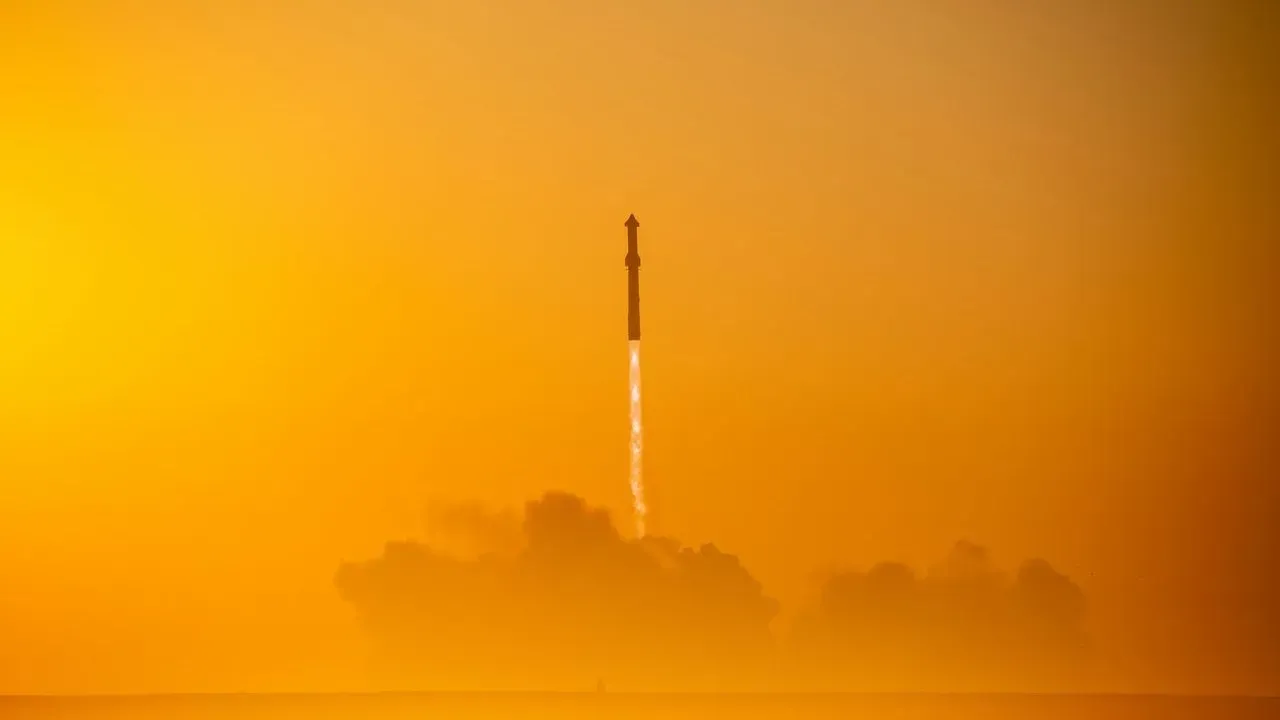

SpaceX launched its Super Heavy-Starship rocket on the 14th test flight Monday, sending the upper stage into orbit for the first time and marking a significant milestone for both the company and NASA. The event represents steady progress in developing a vehicle capable of supporting ambitious goals beyond low Earth orbit. For those who follow the evolution of human movement across new frontiers, the flight offers a grounded reminder that incremental advances can reshape what travel might eventually encompass.
A Launch That Builds on Prior Efforts
The Super Heavy booster and Starship upper stage lifted off from the Texas Gulf Coast, continuing a sequence of tests that began with earlier suborbital attempts. This particular flight stood out because it aimed to place the upper stage into a stable orbit rather than a shorter arc. Success here demonstrates that the system can achieve the energy and control needed for longer-duration missions. Engineers monitored the vehicle closely as it climbed, with the booster separating and the Starship continuing upward. The achievement reflects years of iterative work on propulsion, staging, and recovery systems. Each prior flight contributed data that informed adjustments for this attempt, showing how testing refines complex hardware over time.
Relevance to Broader Exploration Goals
NASA has identified Starship variants as key elements in its Artemis program, which seeks to return humans to the lunar surface. An orbital demonstration provides confidence that the vehicle can perform the repeated flights required for refueling operations in space. Such capabilities would allow a lander to depart for the Moon after multiple tanker missions top off its propellant tanks. The milestone also aligns with SpaceX plans for commercial satellite deployments and other payload services. Reliable access to orbit supports a wider range of activities that could one day extend to crewed missions. Observers note that consistent performance across successive flights will determine how quickly these applications mature.
What Changes for Future Journeys
Reaching orbit on this test flight brings the system closer to demonstrating autonomous refueling, a technique never attempted at the scale needed for lunar landings. Once proven, that step could enable longer-range travel by allowing vehicles to depart with full tanks after assembling resources in space. The process remains experimental, with many technical hurdles still ahead. For travelers interested in the expanding boundaries of exploration, the development underscores the value of patient, methodical progress. It highlights how public-private partnerships can accelerate capabilities while maintaining rigorous safety standards. Future missions will reveal whether the vehicle can meet the reliability thresholds required for human spaceflight certification.
Looking Forward With Measured Optimism
The orbital flight adds to a growing body of evidence that reusable heavy-lift rockets can operate more frequently and at lower cost than previous generations. This trajectory supports expanded scientific research, satellite networks, and eventually crewed voyages to the Moon and beyond. Yet the timeline for routine operations depends on continued successful tests and regulatory approvals. As the Starship program advances, it invites reflection on how new transportation technologies gradually integrate into the broader travel landscape. The focus remains on verified performance rather than speculation, ensuring that any future applications rest on solid engineering foundations.
AI Disclaimer: This article was created with the assistance of AI tools and reviewed by a human editor.