
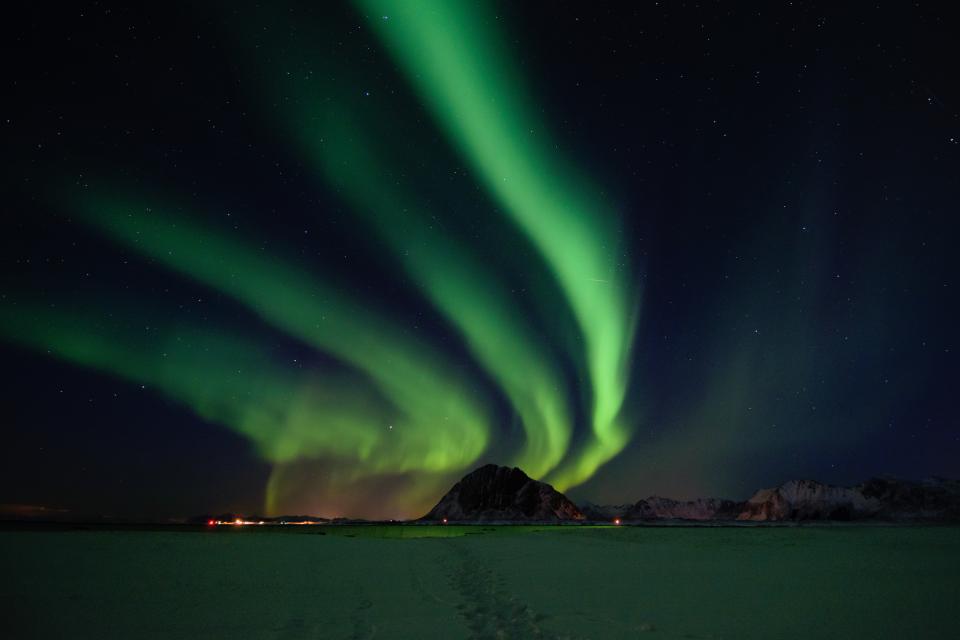

Most Americans grow up thinking the northern lights belong to Alaska, Norway, or somewhere far above the Arctic Circle. That assumption held up well enough for most of the twentieth century. What has changed in the past two years, though, is hard to ignore: millions of people across the continental United States have stepped outside on ordinary nights and watched the sky ignite in ribbons of green, red, and violet.
The science behind it is genuinely fascinating, and the timing is not a coincidence. A collision of solar physics, Earth’s magnetic architecture, and a remarkably active stretch of space weather has made aurora sightings in the Lower 48 far more common than they’ve been in a generation.
The Sun Is Near the Peak of Its 11-Year Cycle
The single biggest reason aurora sightings have surged across the continental United States is where the sun currently sits in its natural rhythm. The sun travels through roughly 11-year cycles of activity, similar to Earth’s annual transition through the seasons. The phase when activity peaks is called solar maximum, while stretches of low storm activity are called solar minimum.
On October 15, 2024, scientists from NASA and NOAA announced that the sun had reached its maximum activity for Solar Cycle 25. The sun’s magnetic field reached its solar maximum phase of its 11-year cycle in October 2024 and has continued to emit strong solar flares and geomagnetic storms, leading to an increase in aurora displays. Intense magnetic activity caused by sunspots is expected to last through 2026, according to NOAA.
Activity on the sun’s surface reached a solar maximum in October 2024 that has led to an increase in solar events ever since, and that increase is expected to continue before slowly tapering off as the sun’s 11-year cycle continues, heading toward solar minimum around 2031 and 2032. In practical terms, this window of heightened activity is still open right now, in 2026.
What Actually Creates the Northern Lights
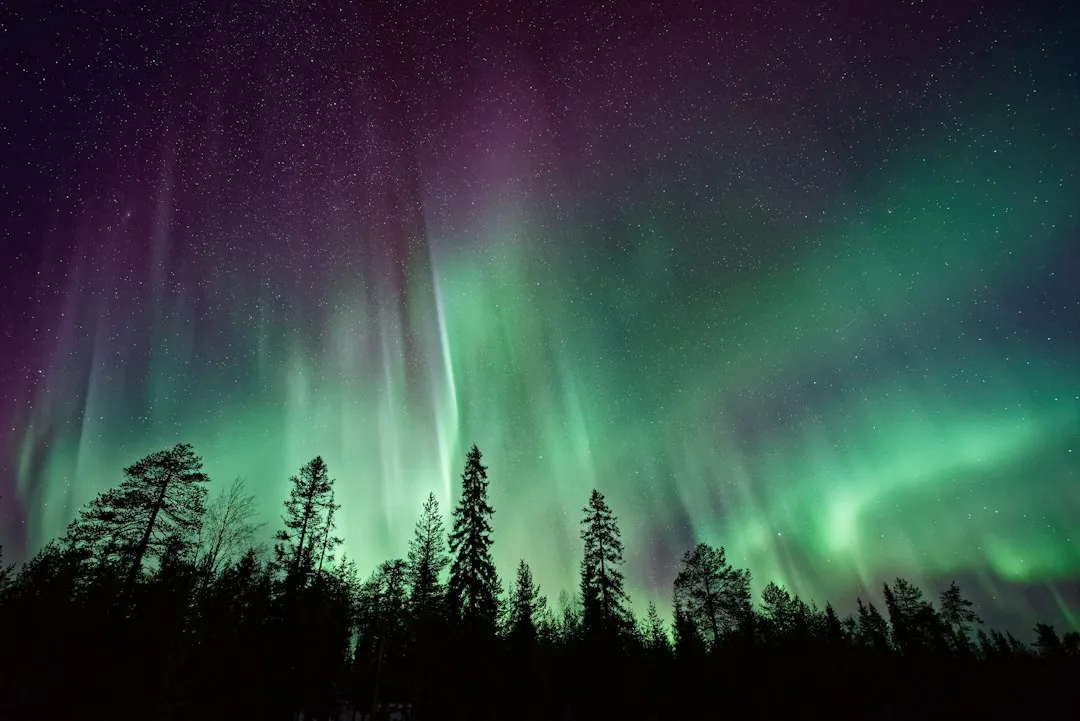
The aurora borealis is caused when the sun shoots electrically charged protons and electrons toward the Earth during a solar storm. When the energized particles from coronal mass ejections reach Earth’s magnetic field, they interact with gases in the atmosphere to create the different colored lights in the sky.
The collisions cause the electrons of atmospheric atoms to become excited, and as the electrons return to their original energy levels, these atoms emit visible light of distinct wavelengths, creating the colors of the display we see. The process is essentially a massive, slow-motion chemistry experiment happening roughly 60 to 200 miles above our heads.
The aurora borealis primarily occurs in the thermosphere, Earth’s atmospheric layer stretching from about 80 to 600 kilometers above the surface. It sounds impossibly remote, yet on the right night, the glow is vivid enough to photograph from a backyard in Indiana or Virginia.
The Role of Geomagnetic Storms and the G-Scale
The strength of geomagnetic storms will impact how far south the northern lights can reach in the United States. Geomagnetic storms are measured on a five-point scale, and at G1, the northern lights are typically visible across Alaska, Canada, and the northern portions of the Lower 48. At G5, the northern lights can reach Florida and Texas.
A severe geomagnetic storm alert is issued after an outburst from the sun is detected, and such a storm increases the chance of aurora borealis and can temporarily disrupt power and radio signals. The practical takeaway is that the stronger the storm, the further south the lights travel.
Northern tier states like Minnesota, the Michigan Upper Peninsula, Montana, Idaho, Vermont, Maine, Washington, Oregon, Wisconsin, and North Dakota regularly see aurora during KP5 events, which now occur multiple times per month. That frequency alone represents a meaningful shift from what aurora forecasters were tracking just five or six years ago.
The Historic May 2024 Storm That Shocked the Country
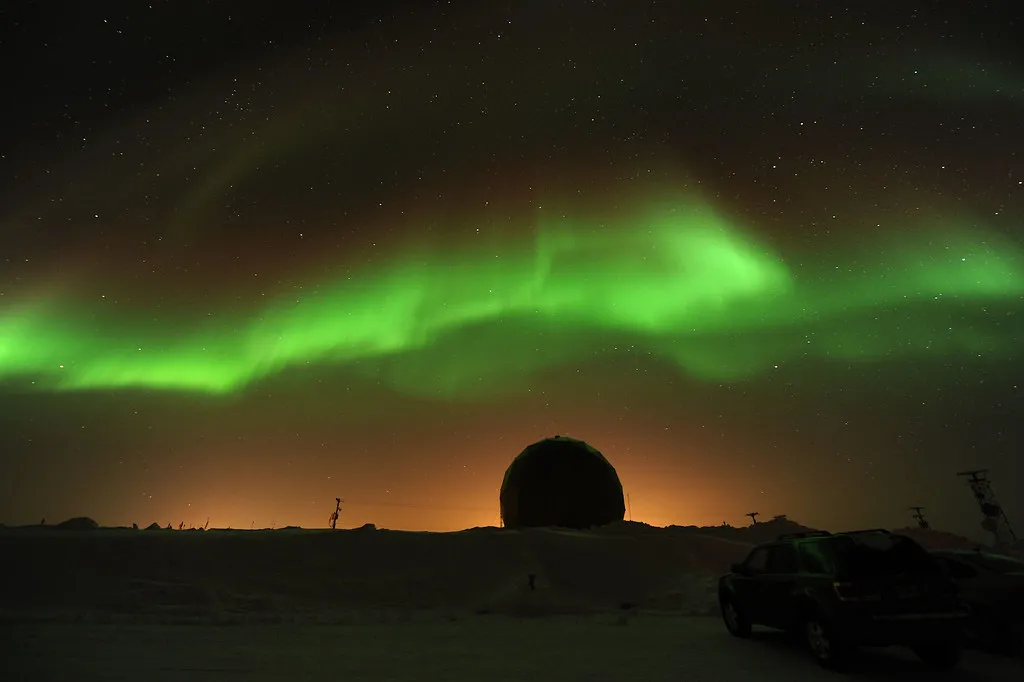
In May, NASA said it tracked the strongest geomagnetic storm to reach Earth in two decades, caused by multiple solar flares and at least seven coronal mass ejections, resulting in possibly the strongest northern lights displays in the past 500 years. That claim is not hyperbole; the data backs it up.
The Ap-index of May 11, 2024 was 271, higher than the Ap-indexes of March 13 and 14, 1989, significantly higher than the Ap-indexes of late October and November 2003, and the second-highest ever recorded, after the Ap-index of November 13, 1960, which was 280.
The most intense 2024 storm, occurring on May 10 and 11 with a KP index of 8 to 9, produced aurora visible across essentially all of the contiguous United States where skies were clear. The combination of clear skies and a waxing crescent moon likely led to the display being visible from most of the continental United States for the first time since World War II, with sightings reported in Miami, Fort Lauderdale, and Key West surprising even the best forecasters.
More Major Events Followed Throughout 2024 and Into 2025
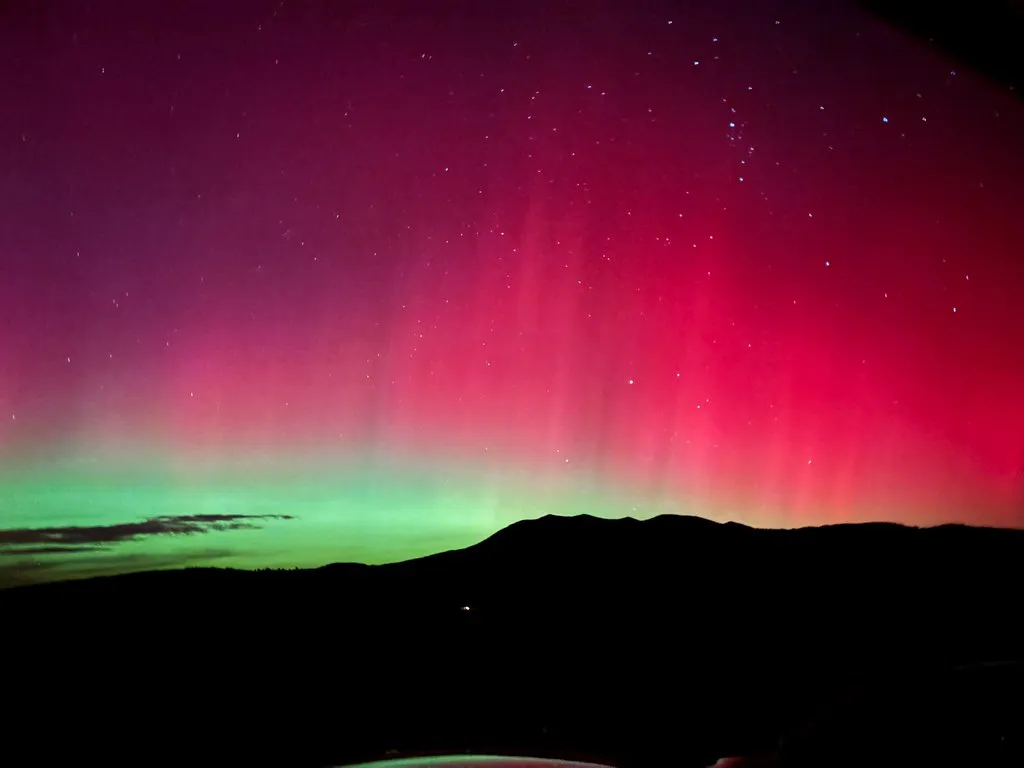
On October 11, 2024, the aurora borealis dazzled many across North America due to a severe geomagnetic storm. A G4 severe geomagnetic storm watch was issued by NOAA following a fast coronal mass ejection from a flare on October 8, with speeds of about 1,200 to 1,300 kilometers per second, and the event produced strong auroral displays and is cited as one of the most intense geomagnetic storms of 2024.
On the evening of November 11, 2025, into the early morning of the 12th, a very strong aurora borealis event was visible across much of the continental United States, with reports coming from as far south as southern Alabama. Much of the central and southeastern United States was cloud-free that night, opening up a rare opportunity for vast swaths of Americans to view the phenomenon.
These weren’t isolated novelties. A quiet display, occurring roughly two times each week during solar maximum, is more visible in northern United States states like Washington, Idaho, North Dakota, and Minnesota, with a lower likelihood in parts of South Dakota, Wisconsin, and Upper Michigan, according to NOAA.
Why Earth’s Magnetic Field Matters So Much
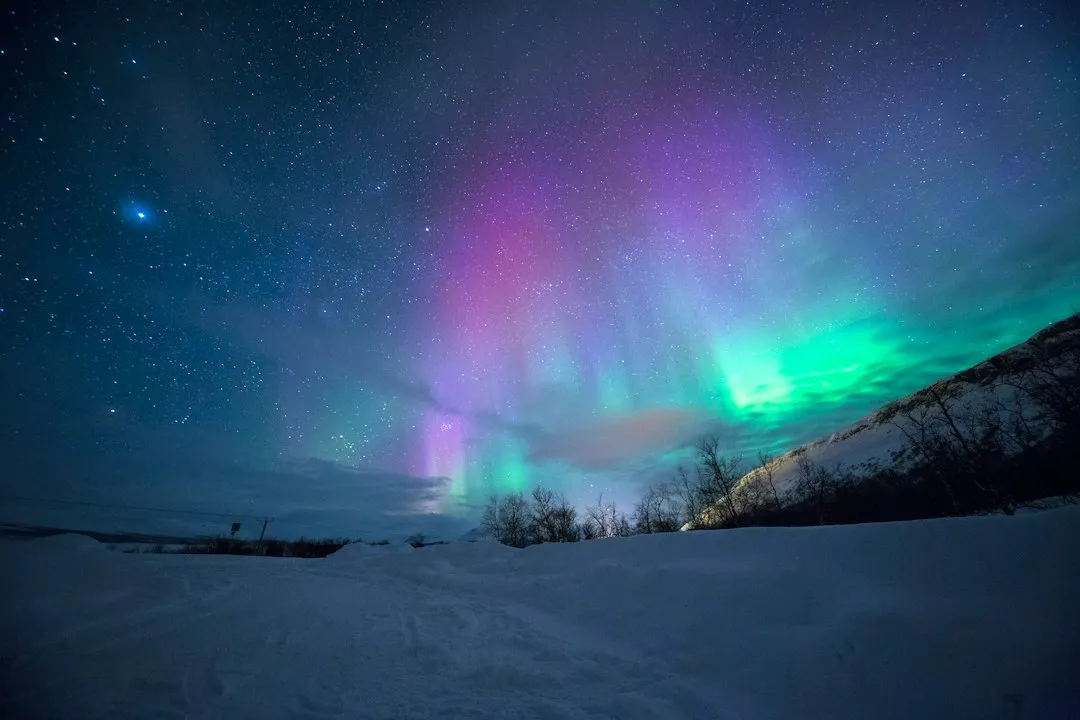
Earth’s magnetic field is the gatekeeper that decides where aurora activity can occur. Under quiet solar conditions, its funnel-like structure channels charged solar particles almost exclusively toward the polar regions, creating the auroral oval that hovers reliably over Alaska and northern Canada.
Earth’s magnetic field funnels the solar wind, which consists of electrically charged particles, toward the polar regions. When geomagnetic storms intensify, that funnel expands. During solar maximum, the auroral oval’s equatorward boundary pushes significantly south of its quiet-sun position.
Think of it like a spotlight that normally shines only on the stage but, when the power surges, spills light far into the audience. The more energetic the storm, the wider and lower that oval descends, carrying aurora sightings into latitudes that seem geographically implausible until you actually see it happen.
The Kp Index: How Scientists Measure Aurora Reach
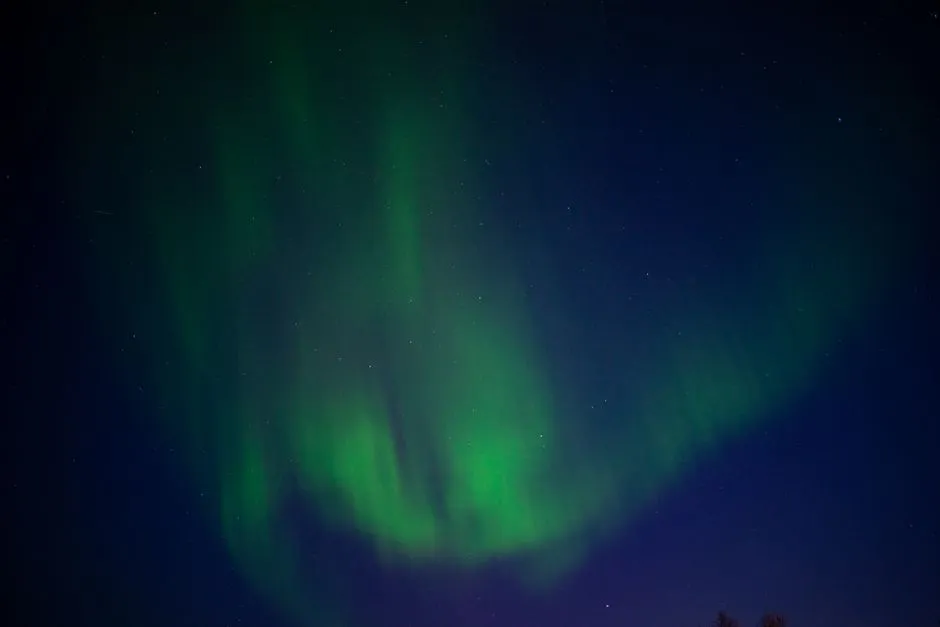
Scientists at the University of Alaska Fairbanks Geophysical Institute rank the probability of seeing the aurora borealis on a scale of zero to nine, called the Kp Index. The higher the number, the better the probability the nighttime spectacle will occur, and the larger the swath of the hemisphere that could potentially see the aurora.
Northern Minnesota, the Michigan Upper Peninsula, Montana, and Idaho typically need a KP of 4 to 5, while Vermont, Maine, Washington, and Oregon need around KP5. Colorado, Pennsylvania, and Indiana require KP6 to 7. At KP7 and above, which occurred multiple times in 2024 and 2025, aurora was photographed from Texas, Oklahoma, Alabama, and Georgia, latitudes that historically might see an aurora once per solar cycle.
NOAA forecast a Kp index at a high of 5 on one Thursday night in January 2026, 4.67 on the following Friday, and 6 in the early hours of Saturday, suggesting the northern lights could be visible in more than a dozen of the lower 48 states. Forecasts like that were nearly unthinkable a decade ago for most of those states.
The Colors You See and What They Mean
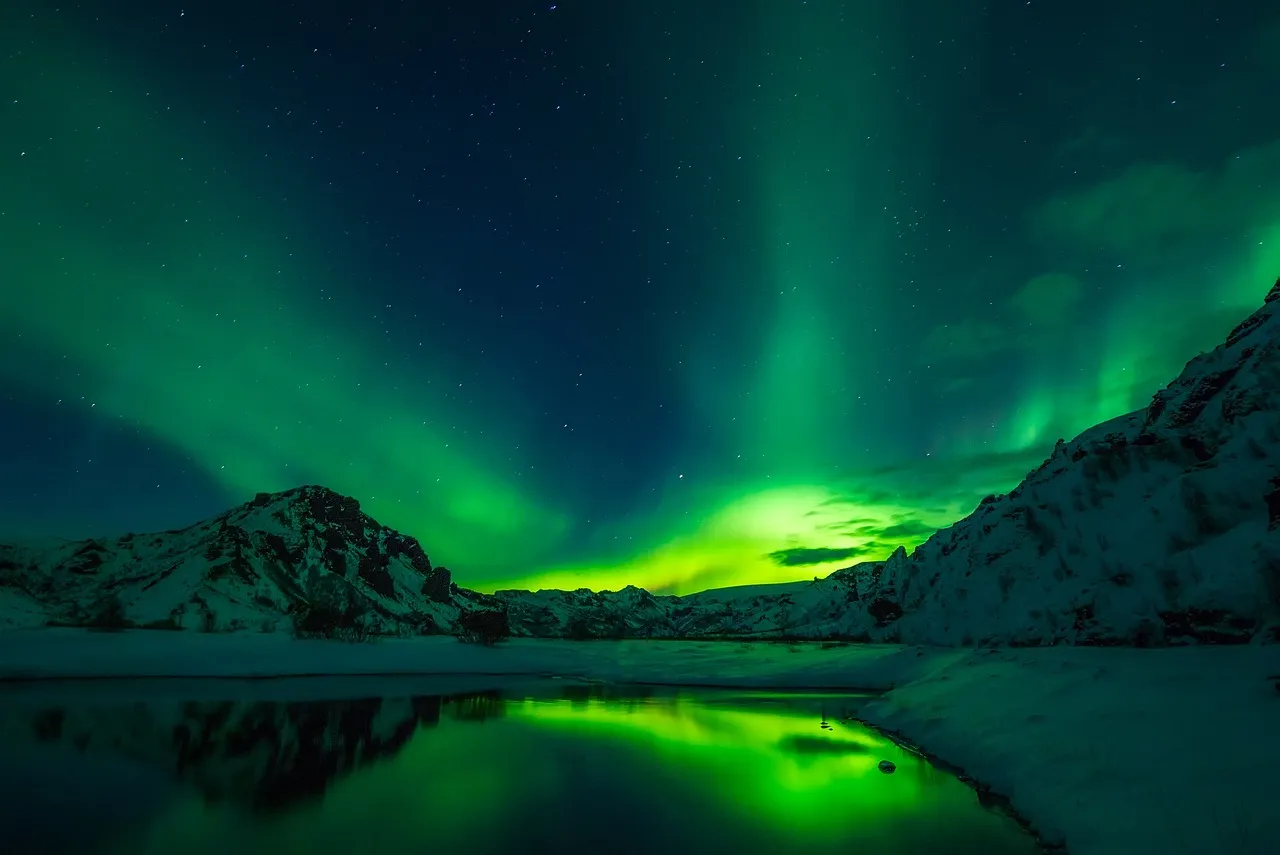
One of the most striking things about viewing the lights in the Lower 48, especially during a powerful storm, is the sheer variety of color. The palette isn’t random. Each color is a direct readout of which gas is being energized and at what altitude.
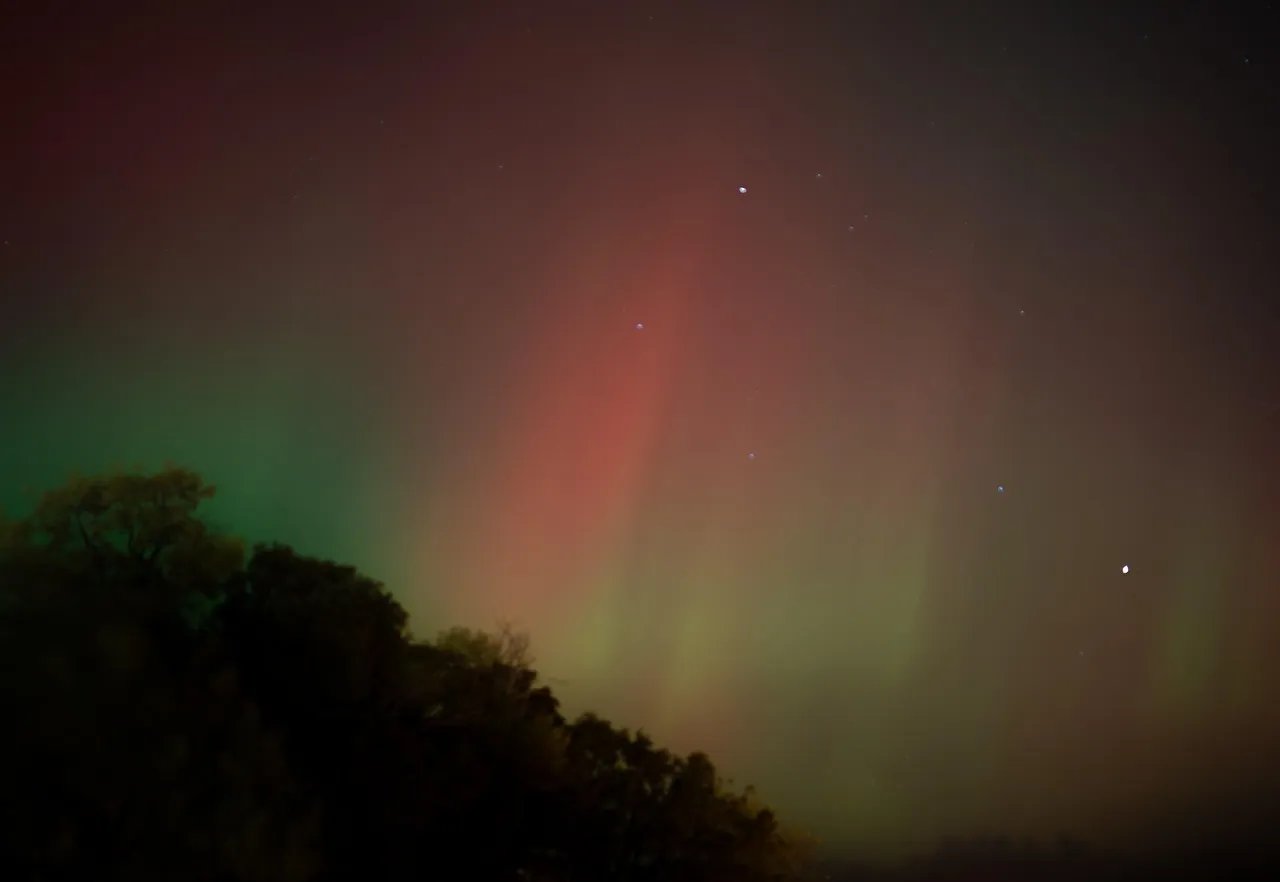
Green is the most common aurora color, caused by oxygen at 75 to 110 miles above Earth. Red auroras happen when oxygen is present at a higher altitude, above 120 miles. Pink auroras happen below 60 miles from Earth when nitrogen is present.
Nitrogen causes blue and deep red hues. On very rare occasions, perhaps once every ten years or so, the aurora can be a deep blood red color from top to bottom. Observers in the Lower 48 during the May 2024 storm reported seeing reds and purples that were well outside their normal experience of what aurora looks like, largely because they were witnessing an extraordinarily high-energy event.
The Best Conditions for Seeing Aurora in the Lower 48
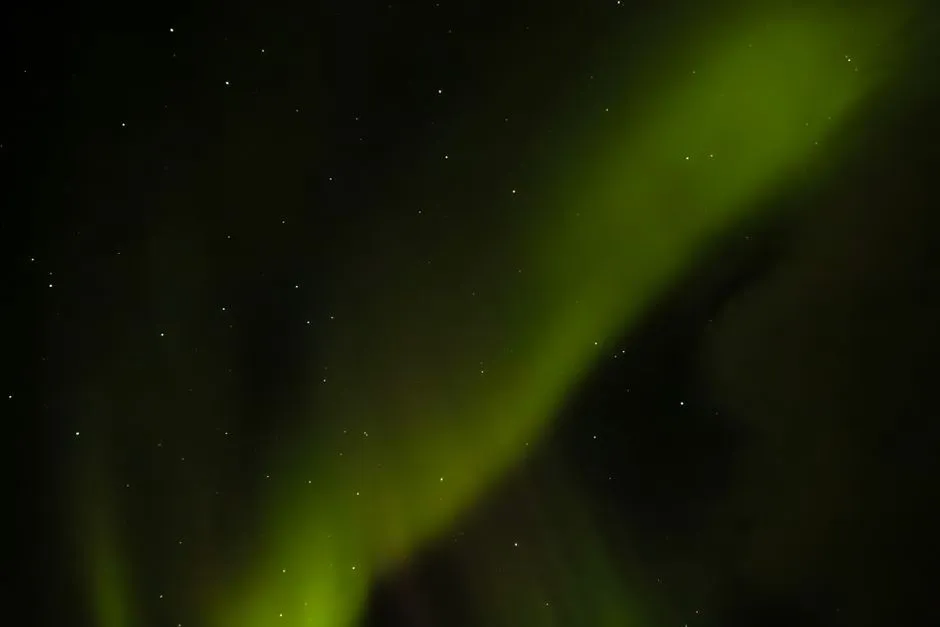
Being in the right place matters almost as much as the storm itself. The key is being in a dark location, away from city light pollution, and facing north when a storm hits. Light pollution is one of the most underestimated obstacles for would-be aurora watchers in the continental United States.
Aurora is particularly active around the spring and fall equinoxes, which annually fall around March 19 to 21 and September 22 to 23, respectively. Those seasonal windows are not folklore. They reflect real patterns in how Earth’s magnetic field aligns with the solar wind during those periods.
While it’s impossible to predict exactly when or where the northern lights will happen, they tend to occur one to three days after big solar flares. Tools like NOAA’s Space Weather Prediction Center now provide real-time aurora forecasts and KP alerts that give enthusiastic watchers a meaningful head start.
What the Historical Record Tells Us About Rare Southern Sightings
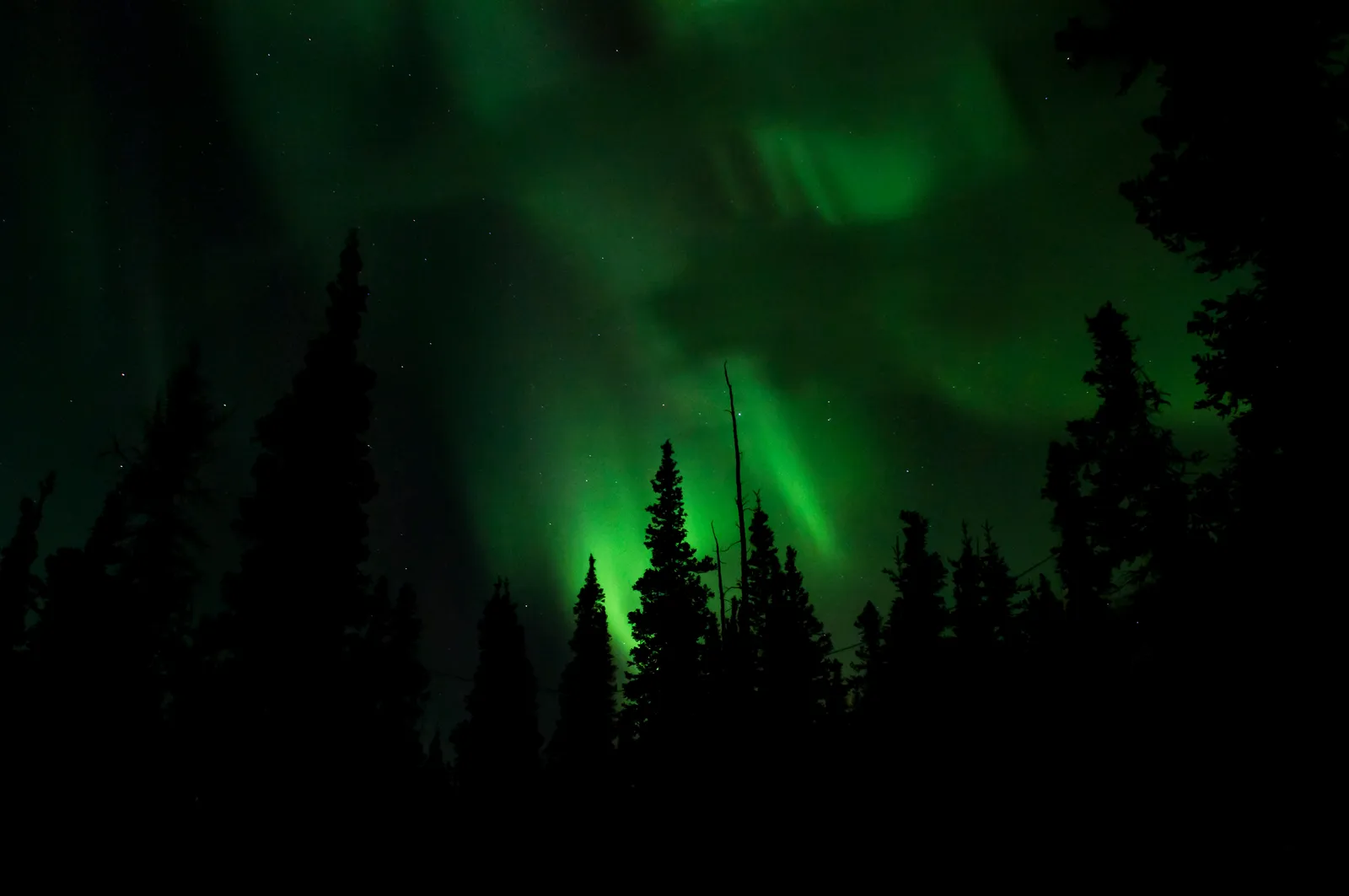
The May 2024 storm felt shocking partly because it was, but it also had historical predecessors that put it in context. In 1989, the northern lights were visible as far south as Honduras. That event, caused by a powerful geomagnetic storm, also triggered widespread power grid disruptions across North America.
The May 2024 solar storms, while being the most significant in several decades, have been shown to have a return period of roughly 12.5 years, and the event was a one-in-41-year event based on a 24-hour activity window, with only the geomagnetic storm of September 1941 having more significant activity over a comparable period.
These numbers suggest that truly extreme aurora events in the Lower 48 are rare but not once-in-a-lifetime. The current solar maximum simply compresses the odds, making sightings that might otherwise space themselves across decades more likely to cluster within a few active years.
Looking Ahead: How Long Will This Window Last?
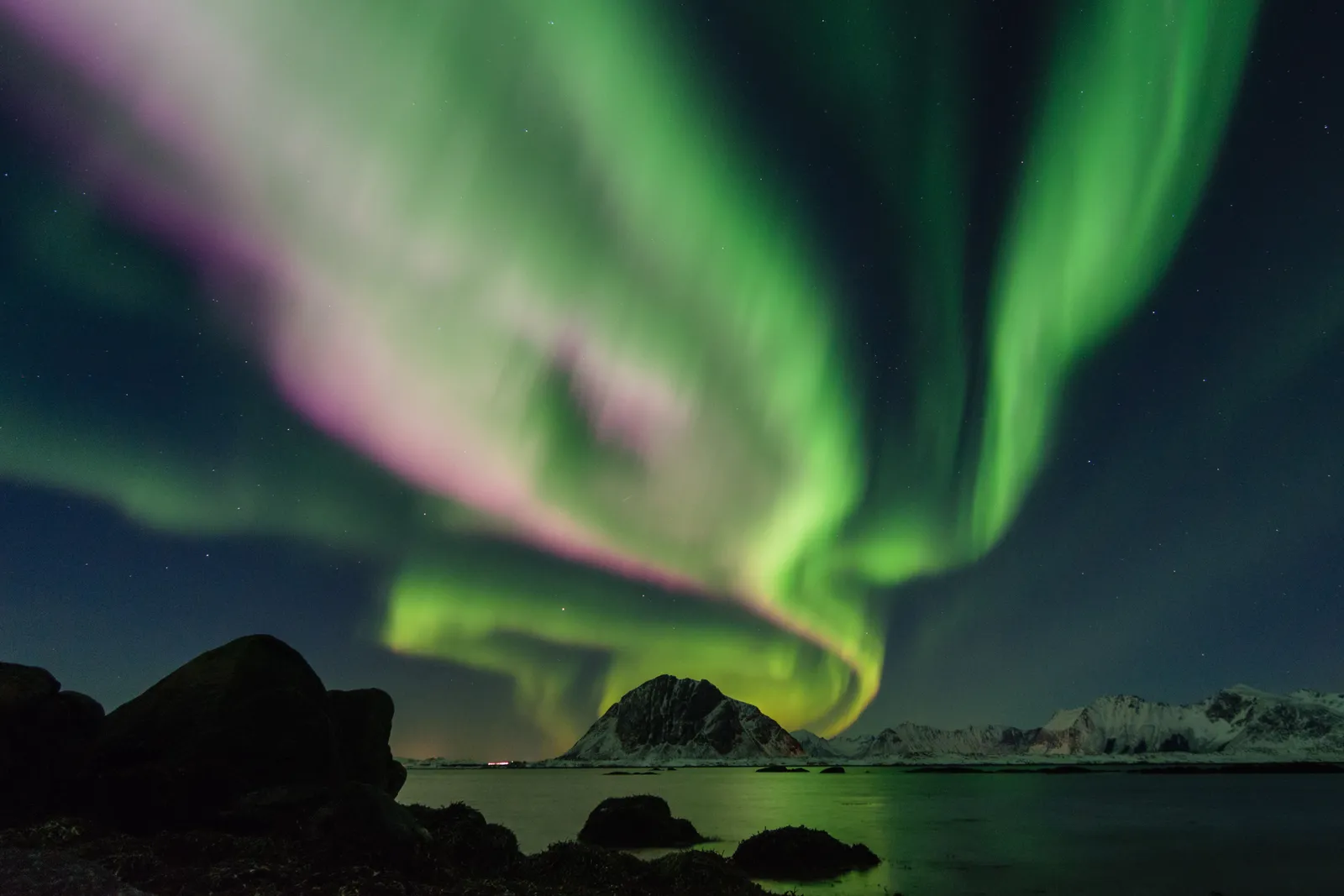
Solar activity has been at a 23-year high through 2024, a situation that extended into 2025. In October 2024, NASA and NOAA’s Solar Cycle 25 Prediction Panel announced that the sun had reached its solar maximum phase, the peak of its 11-year solar cycle.
2026 looks like a good year for northern lights sightings. Activity on the sun’s surface reached a solar maximum in October 2024 that has led to an increase in solar events ever since, and that increase is expected to continue this year before slowly tapering off as the sun’s 11-year cycle continues, heading toward solar minimum around 2031 and 2032.
The honest answer is that the window is narrowing, slowly. Solar maximums don’t end abruptly. They taper over a few years, meaning the probability of southern aurora sightings will gradually decline rather than switch off. Anyone in the Lower 48 who hasn’t yet witnessed the lights has a legitimate, science-backed reason to pay attention to the sky for the next couple of years.
A Natural Wonder That Has Come Closer to Home
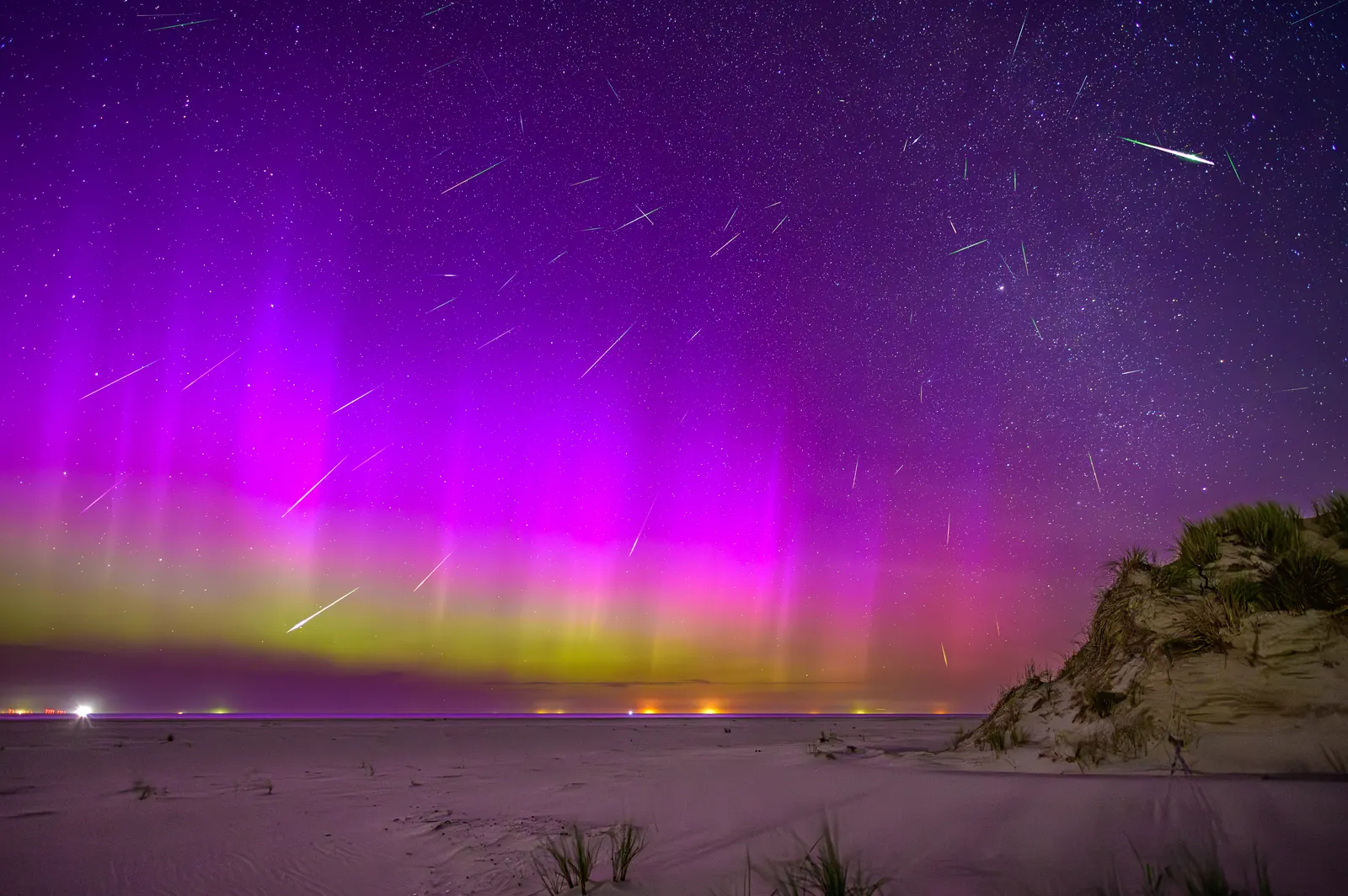
There is something quietly remarkable about a phenomenon this ancient becoming newly accessible. The northern lights have been woven into the mythology, navigation, and spiritual traditions of Arctic communities for thousands of years. For most Americans in the continental states, they existed only in photographs.
The combination of Solar Cycle 25’s unusual intensity and a stretch of historically powerful geomagnetic storms has genuinely changed that calculus, at least for this period. The science is clear, the data is documented, and the sightings are verified by NOAA satellites, NWS meteorologists, and tens of thousands of ordinary people who simply stepped outside at the right moment.
The lights don’t require a flight to Tromsø or a guided expedition across the tundra. Sometimes they require only a clear night, a dark field, and the willingness to look north. That’s not a small thing. It’s the kind of reminder that nature’s most extraordinary spectacles occasionally choose to come to you.
AI Disclaimer: This article was created with the assistance of AI tools and reviewed by a human editor.