

There is a small detail that catches almost every first-time visitor off guard. When you arrive in Porto expecting to find the famous port wine cellars, you discover they are not there at all. Cross the Douro River to the southern bank, and you find yourself in Vila Nova de Gaia, a separate city entirely, where centuries of wine history have been quietly maturing in stone warehouses.
The story of why port wine found its home on that particular stretch of riverbank is layered with geography, trade politics, colonial ambition, and a few strokes of legislative genius. It is, in the truest sense, a story shaped by the river itself.
Two Cities, One River, and a Long Rivalry
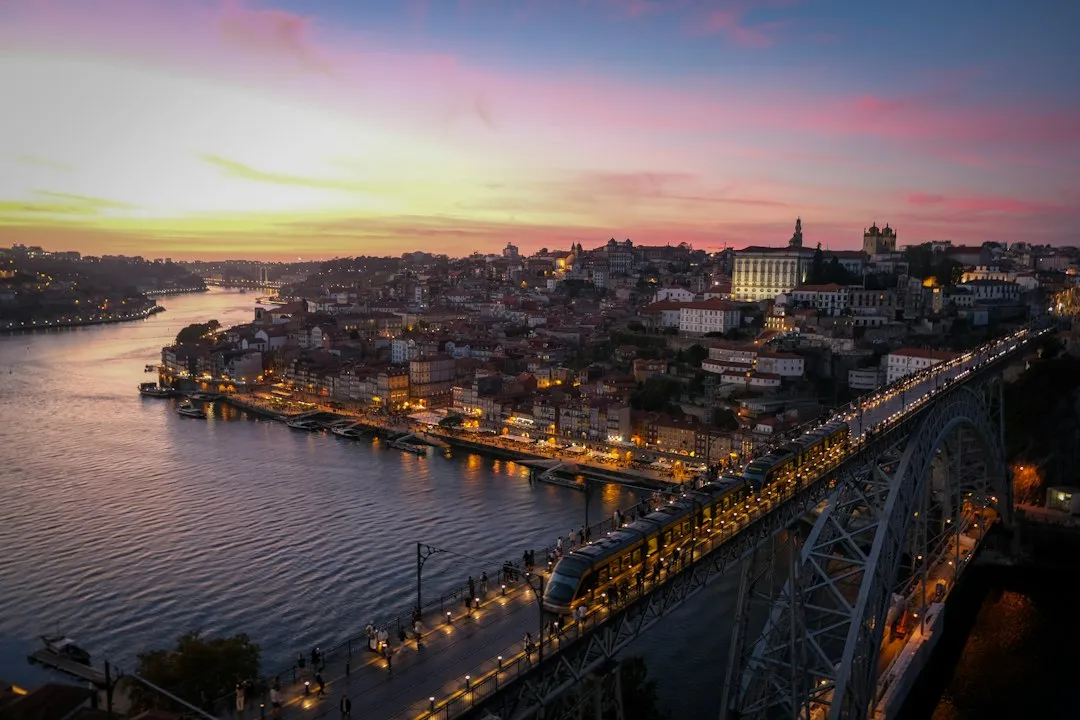
In the 12th century, the Portuguese crown granted the city of Porto to the bishop, who promptly began taxing every boat that moored in the harbour. By the 13th century, King Afonso III ordered the establishment of a second port directly across the river, on land outside the bishop’s reach, and named it Vila Nova de Gaia. The name itself translates simply as “New Town of Gaia,” though there was nothing casual about its founding. It was a deliberate political countermove. For five hundred years, the two settlements grew side by side, until in 1756, the Marquis of Pombal made the arrangement official.
Why the Wine Crossed the River
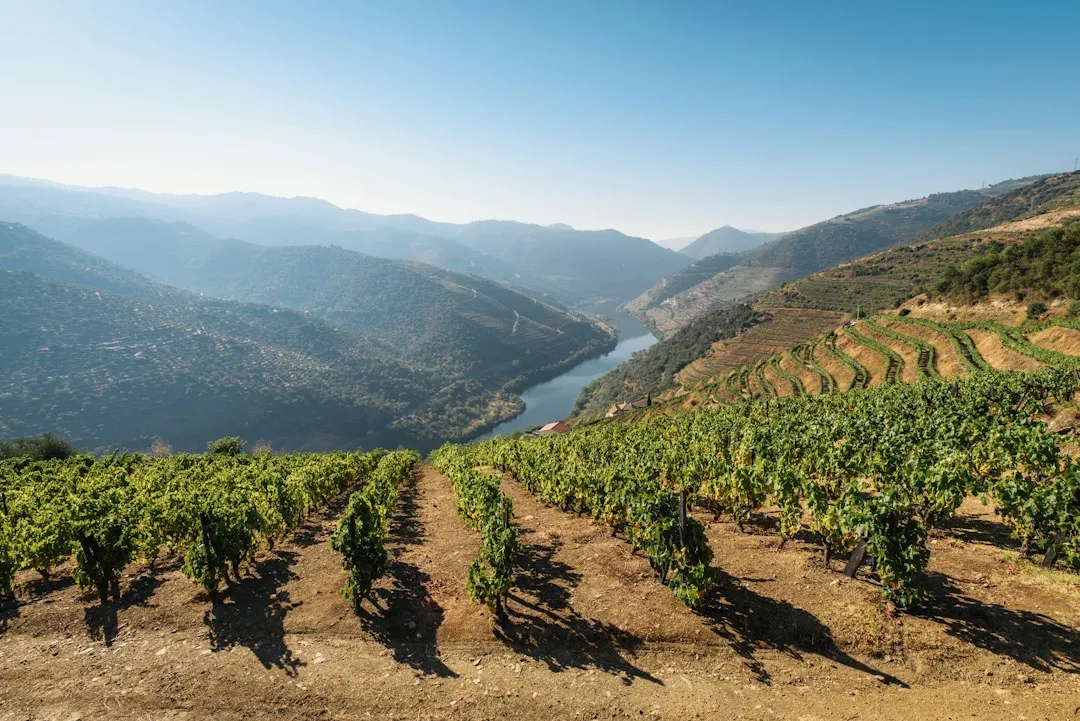
The wine is born on the slopes of the Douro Valley, where vines grow on terraces above the river. For almost three centuries, the law required every barrel to be brought down to Vila Nova de Gaia to age there, on the bank opposite the city. The reason was the microclimate: Gaia’s cool, humid warehouses were ideal for aging, while the dry climate inland was not. Gaia faces north, which means it gets significantly less direct sunlight, creating a naturally cooler and incredibly humid microclimate perfectly suited for slow, steady oak maturation.
The English Merchants Who Changed Everything
Port wine as we know it today was born out of a historical coincidence. In the 18th century, with England and France at odds, English merchants sought an alternative to French wines and found it in the Douro. To help the wine survive the long sea voyage to England, they began adding brandy, which stopped fermentation and left a sweeter, stronger wine: port. Gaia’s wine cellars preserve a winemaking tradition that dates back to the 17th century when English merchants began fortifying the wine with brandy to stabilize it for transport during their trade with Portugal. The fortification process was not originally an artistic choice; it was a practical solution to a logistics problem that happened to produce something extraordinary.
The Marquis of Pombal and the World’s First Wine Appellation
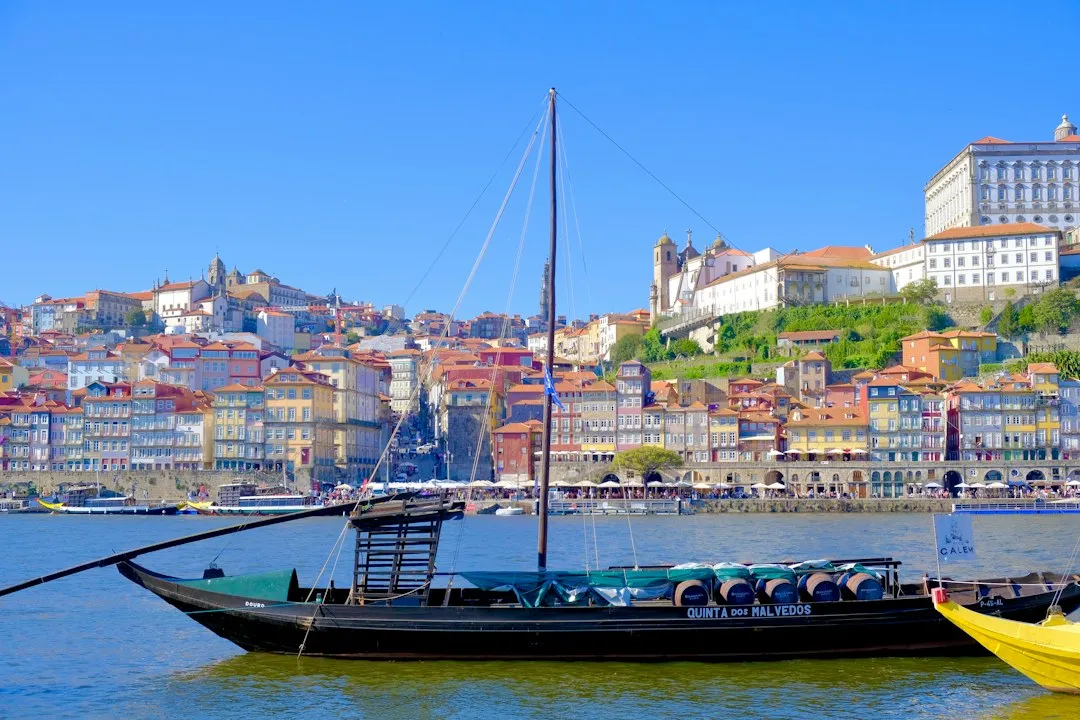
The Douro Wine Company was established by the Marquis of Pombal to regulate the trade and production of port wine. Founded in 1756, one of the first official duties of the company was the delineation of the boundaries of the Douro wine region, an act that essentially made the Douro the world’s first regional appellation. Over the following years, Pombal’s officials planted more than three hundred stone posts, the marcos pombalinos, in the hillsides of the upper Douro, defining the boundaries of the port wine region with a precision that anticipated the French appellation system by a century. Pombal’s motives were not aesthetic. He was responding to fraud, adulterated wine, inflated prices, and the systematic corruption of the trade by unscrupulous merchants, and his solution was characteristically blunt: state control, fixed prices, defined territory.
The Rabelo Boats and the River Highway
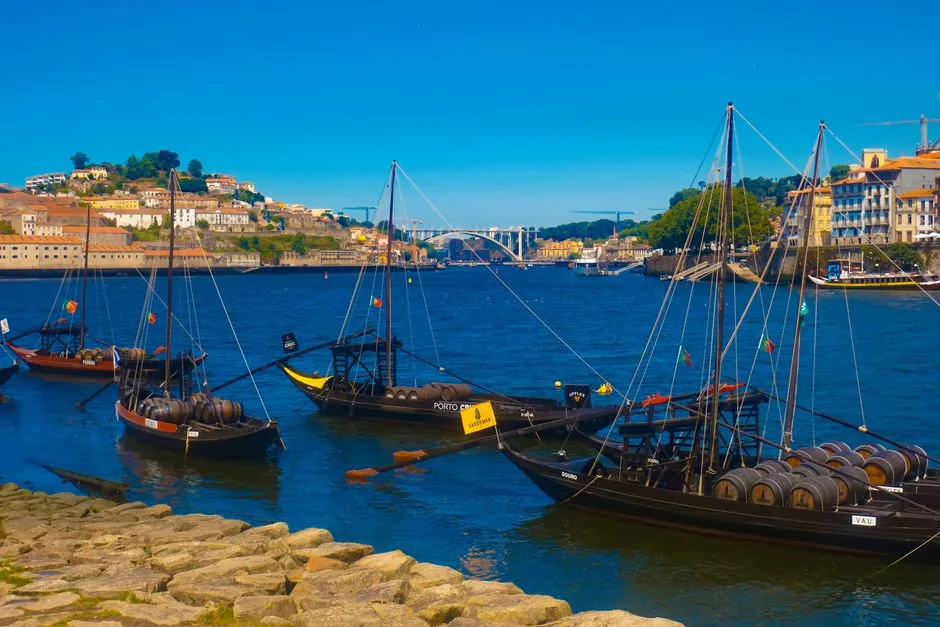
Historically, port wine was transported down the Douro River in wooden boats called Rabelos to Vila Nova de Gaia, where the cooler Atlantic climate provided ideal ageing conditions. The river has always been used to transport the wine barrels to the mouth of the Douro in boats specific for this purpose, and we can still see and admire them today on the quays of Porto and Vila Nova de Gaia, where the lodges are clustered in which the wine ages before being marketed worldwide. These days the barrels arrive by road, roughly an hour’s drive, but much of the process itself remains a steadfast tradition.
The Microclimate That Makes It All Work
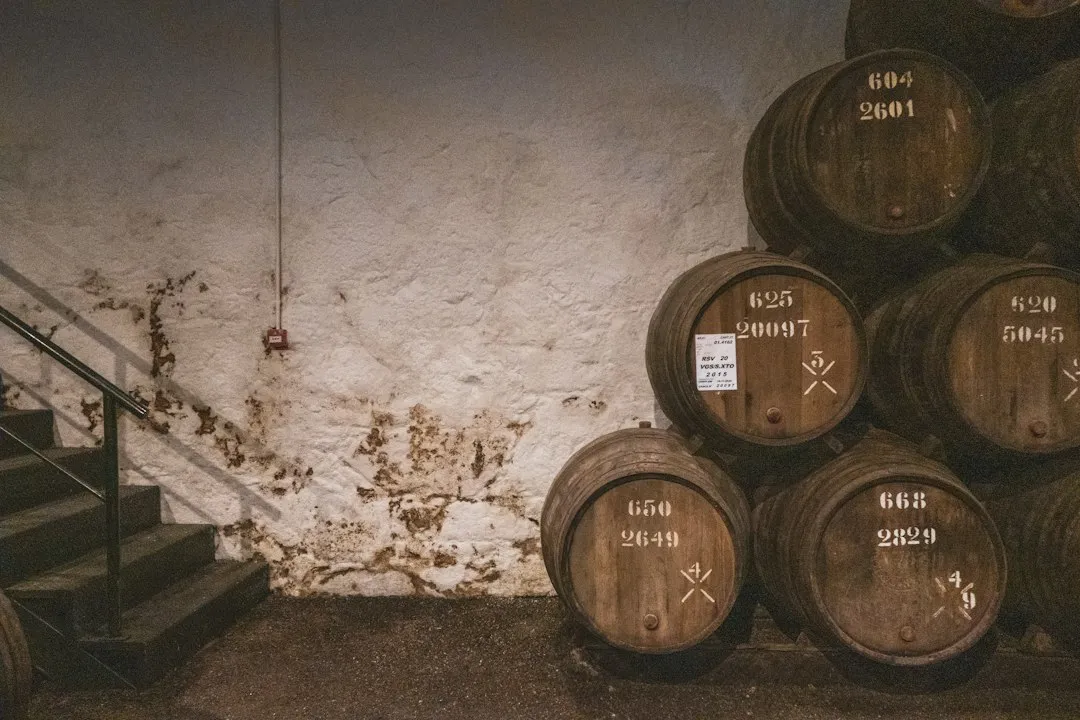
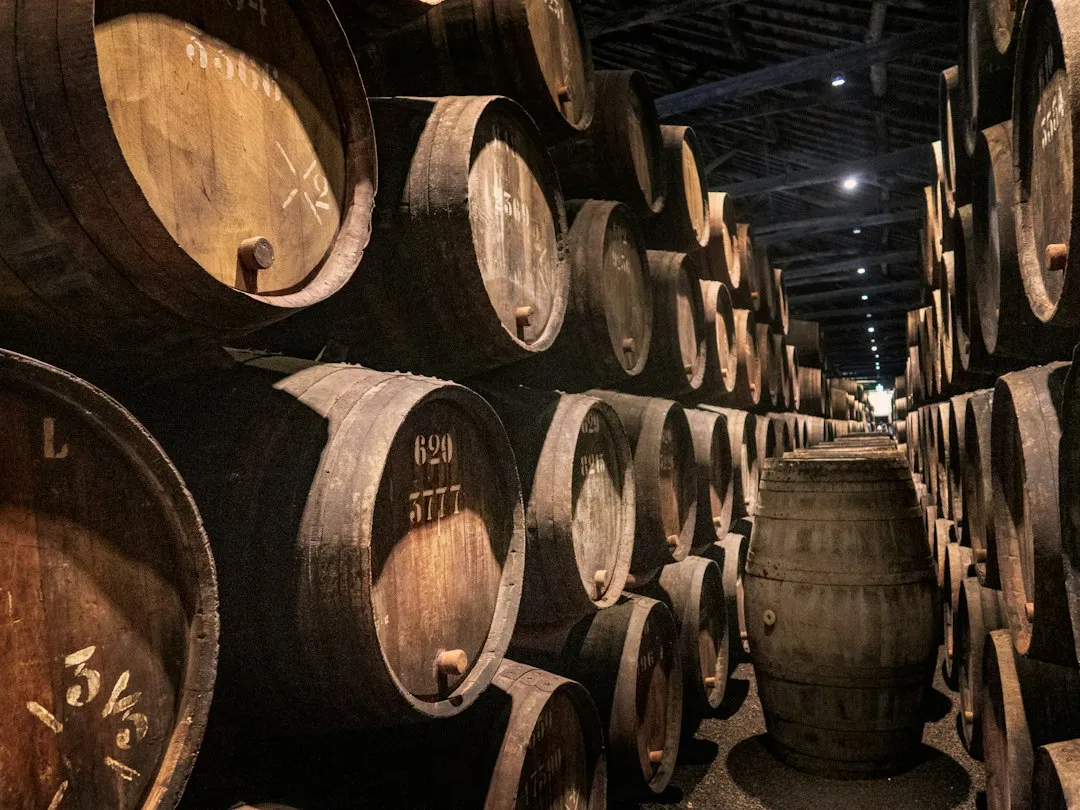
The high humidity and cool temperatures of the riverbank are essential for the slow maturation of port wine. This natural environment allows the wine to develop its complex nutty and dried fruit notes over decades of aging in oak. You’ll notice the moss-covered walls and the heavy scent of evaporating alcohol, known locally as the “angel’s share.” Since as far back as the 17th century, the city’s many cellars, locally known as caves, are where port wine is stored and aged. The combination of stone walls, river air, and consistent cool temperatures creates conditions that simply cannot be replicated elsewhere.
Around 60 Port Houses on a Single Stretch
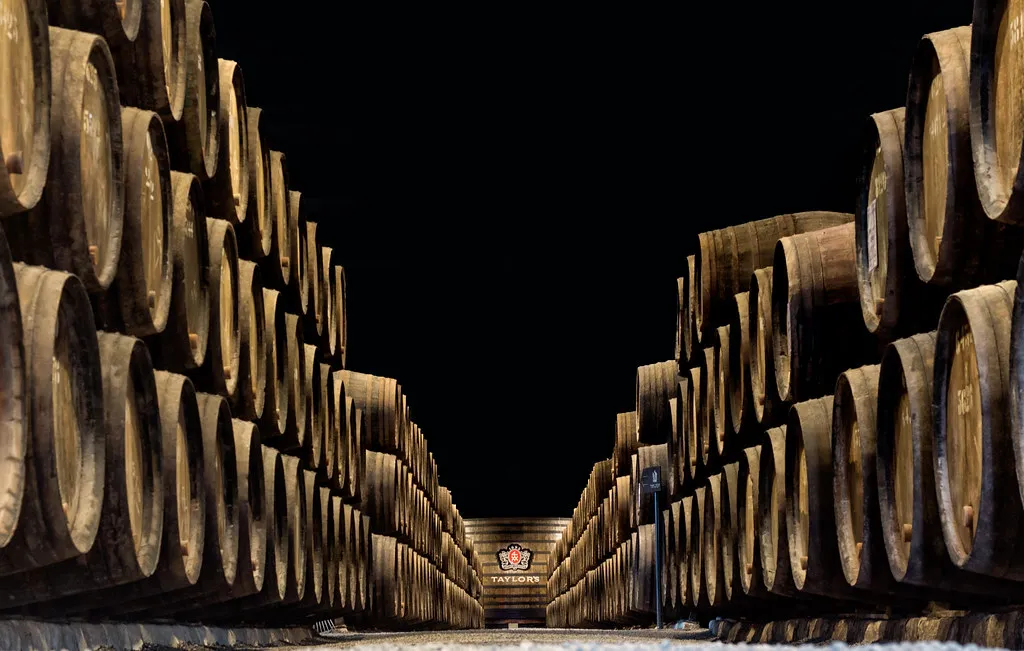
Crossing the Douro, on the opposite bank, lies Vila Nova de Gaia, and it is there, in a single square kilometer of cool stone warehouses stacked along the river, that the wine which made the city famous has aged for centuries. There are around 60 port houses in this area, some of them open for visitors to watch the process of producing port wine. The result, three centuries on, is a waterfront unlike any other in the wine world. The most famous port houses sit side by side along a single stretch of river, their names painted across the rooftops in letters tall enough to read from the Porto side. Standing on Porto’s Ribeira and looking south, you are essentially reading a living wine map.
The Houses That Shaped the Trade
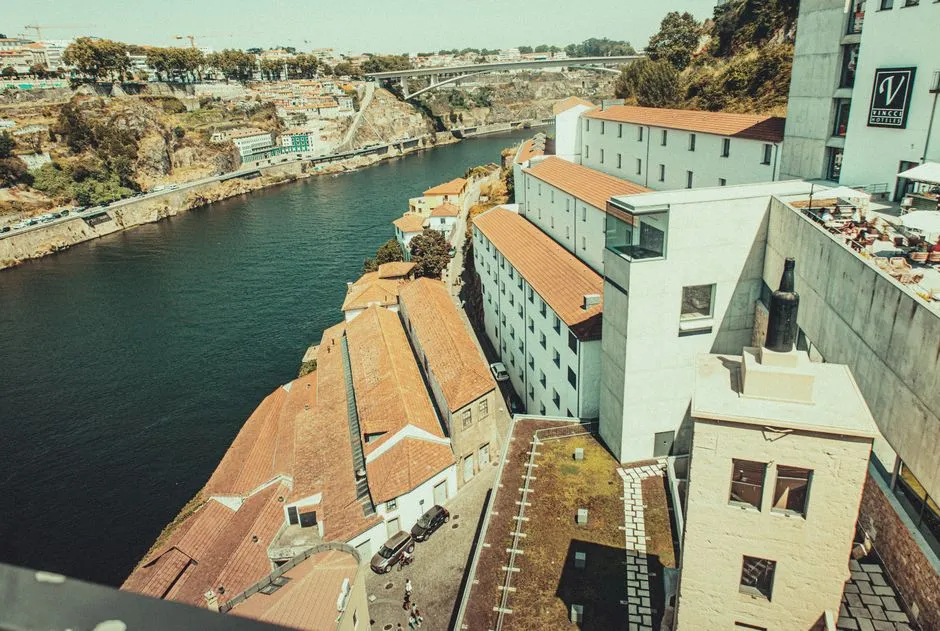
Many of Gaia’s historic port houses date to the 17th, 18th, and 19th centuries, and they are supremely charming, with old cellars and great views over the river. Taylor’s, founded in 1692, is one of the oldest of the founding port houses. Cockburn’s Lodge is home to the largest port wine cellars in Vila Nova de Gaia, boasting over 6,500 aging oak barrels; established in 1815, this historic lodge has opened its doors to the public, offering an exclusive insight into traditional port production. Houses like Sandeman, Graham’s, Niepoort, and Calém round out a riverside neighbourhood where the competition is measured in decades of oak aging rather than marketing budgets.
UNESCO Recognition and the Heritage Dimension
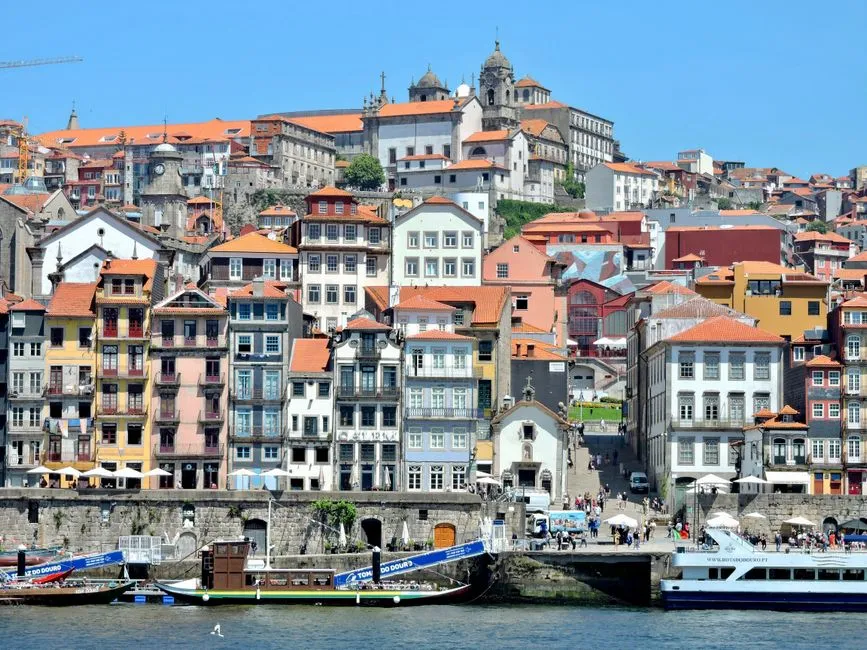
Porto’s historic centre was inscribed on the UNESCO World Heritage List in 1996. The wine is cultivated on terraces carved long ago by man on the banks of the River Douro, in an area safeguarded in 1756 by the Companhia Geral da Agricultura das Vinhas do Alto Douro, making it one of the oldest demarcated wine regions in the world. In 2001, the Alto Douro Vinhateiro region was also classified as a World Heritage site by UNESCO. That means both the river valley where the wine is grown and the city that gave port its name carry UNESCO status, an unusual distinction that reflects the depth of cultural continuity embedded in every bottle.
The Lodges Today: Living History Open to the Public
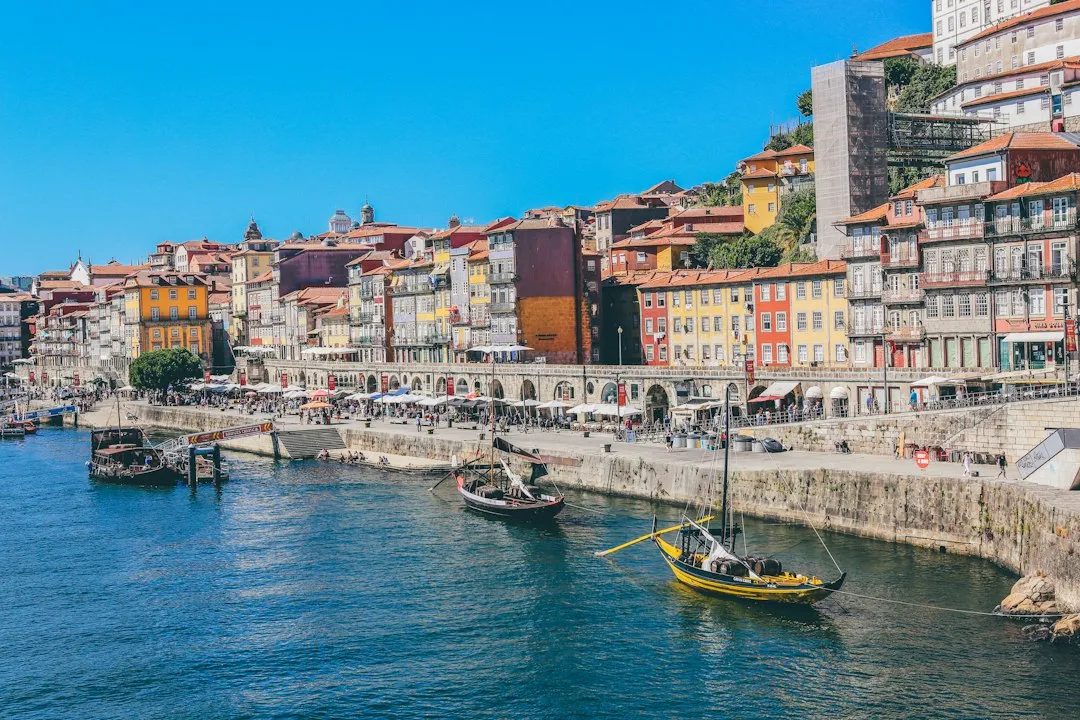
Taylor’s, now in its fourth century, recently renovated its 300-year-old cellars to incorporate a modern and innovative museum circuit, with the story of port wine told through an extensive audio-guided visit available in 13 languages. In order to spread the word about the history of port, most of the lodges are open to the public and offer guided tours and tastings. Three hundred years onward, port wine is still Vila Nova de Gaia’s biggest attraction. Tourists come to navigate the mazes of cobblestone streets, tour the numerous port lodges and caves, and sample a glass or two of port, all while relaxing with impeccable views of the old historic centre of Porto’s hillside cityscape, replete with its scaling and sun-baked, red-roofed buildings, located just across the river.
The Riverbank as a Living Archive
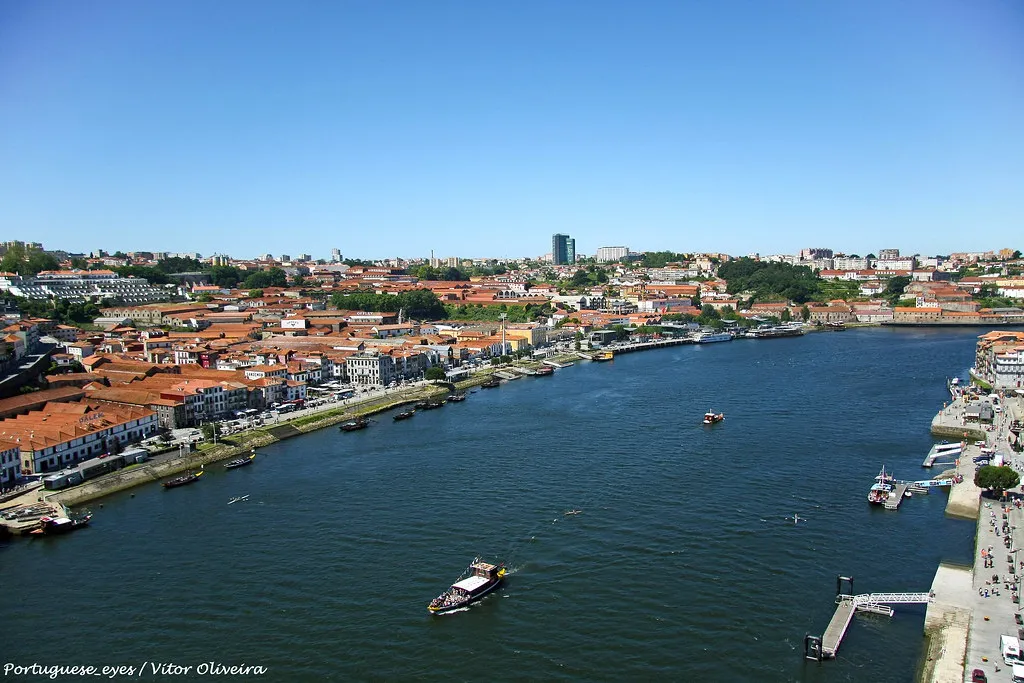
What makes the Gaia waterfront genuinely remarkable is not just the wine inside those warehouses, but the fact that the entire system, from the demarcated vineyard slopes of the Douro to the stone cellars on the river’s edge, has functioned more or less continuously for over three centuries. Every barrel coming down the Douro had to be aged on the southern bank of the river, in the cellars of Vila Nova de Gaia. The law has since been softened, but the lodges have stayed where they were. That quiet persistence says more about the character of this place than any label or trophy could.
The riverbank endures not because it is preserved in amber, but because it still works. The wine is still there. The boats still float on the Douro. And on any given afternoon, the scent of aging brandy drifts through the cool stone corridors of a lodge that was standing long before anyone thought to call it heritage.
AI Disclaimer: This article was created with the assistance of AI tools and reviewed by a human editor.