
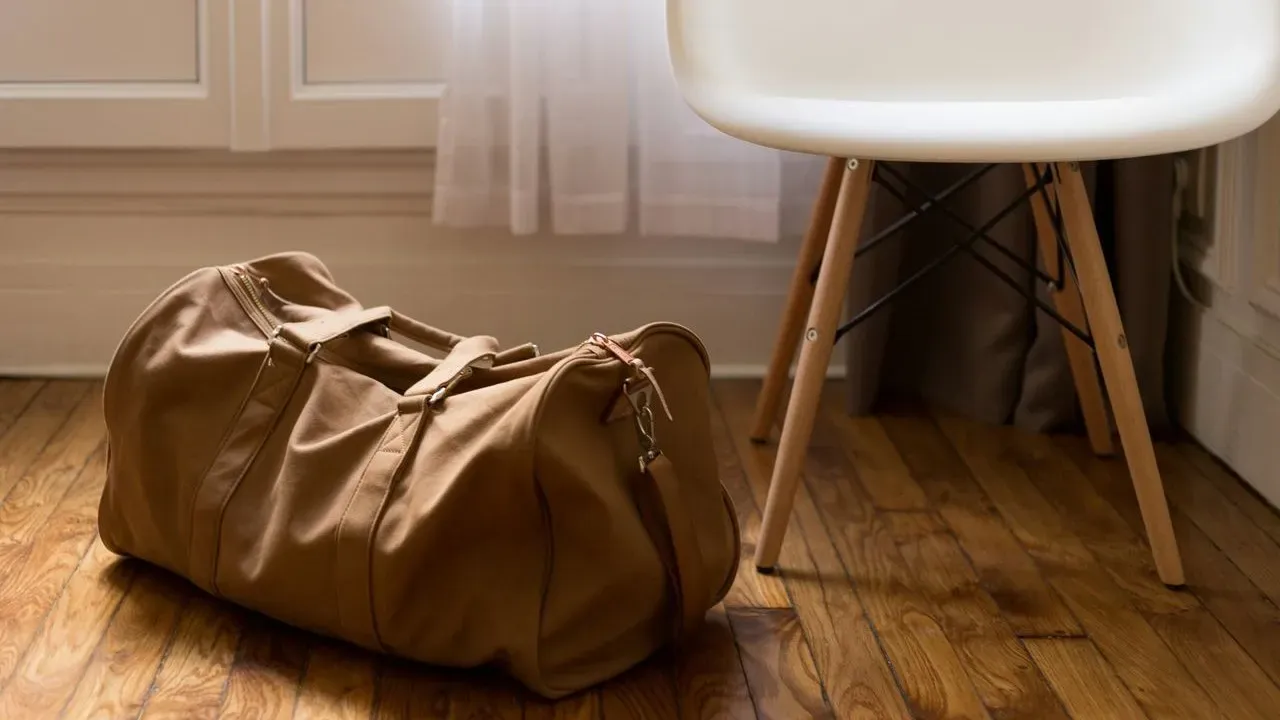

Laurence Norah has been traveling full time since 2010, and over those years a duffel has remained a steady companion in the packing rotation. Two very different examples sit in the house today: a leather Floto received as an anniversary gift and a pair of lightweight Outdoor Products duffels that compress into their own stuff sacks. Between them they illustrate the two distinct roles people often mean when they reach for a travel duffel, and the choice between those roles shapes how smoothly any journey unfolds. The distinction matters because the right bag disappears into the background of a trip while the wrong one creates friction at every stage. A soft-sided nylon option can slide under strict airline rules and shrug off rain on a platform. A leather or canvas weekender can sit comfortably in a hotel lobby or the back of a car without drawing attention to itself. Deciding which experience you need before you buy keeps the bag in active service rather than tucked away unused.
Matching the Bag to the Journey
A 40-litre nylon duffel and a leather weekender offer roughly similar capacity, yet they serve entirely different rhythms of travel. The first decision is therefore not which brand to choose but which kind of trip lies ahead. Carry-on flights on budget carriers reward a bag that meets published sizer dimensions even when full and weighs almost nothing when empty. Road trips or short domestic hops place no such constraints, allowing a sturdier, more presentable option that improves with age. Train journeys that involve walking between stations and hotels reward a duffel with a convertible harness so the weight can shift to the back. Expeditions or checked-luggage travel favor abrasion-resistant fabric that can handle wet ground or rough handling. A spare packable bag kept inside the main luggage handles last-minute shopping without adding bulk on the outbound leg. Gifts call for something built to last decades, where the material and warranty become part of the story rather than afterthoughts. Many travelers end up with one of each. The leather piece handles relaxed road travel while the packable pair covers everything else, and neither occupies meaningful storage space when not in use.
Construction Details That Determine Longevity
Soft bags share many components across brands, so durability often comes down to a handful of visible choices. The zip is usually the first point of failure; YKK hardware appears on several respected models and offers a clear benchmark. Strap attachments should run webbing under the bag or reinforce leather with additional stitching rather than relying on rivets alone. A reinforced base protects against wet platforms and gravel, whether that means ballistic nylon on a technical duffel or conditioned leather on a weekender. Water resistance follows the same logic. Coated fabrics shed rain effectively, waxed canvas requires periodic maintenance, and leather handles light moisture but not prolonged puddles. Warranties reveal the largest differences: some cover any damage for the life of the product, while others limit coverage to defects in materials and workmanship. Checking these details against the intended use prevents disappointment years later.
Practical Dimensions and Airline Realities
Duffels compress in ways hard-sided luggage cannot, which is why listed dimensions represent a worst-case, fully stuffed scenario. Leaving a little room allows most soft bags to meet overhead-bin limits on major U.S. carriers. European budget carriers impose tighter depth restrictions that reward choosing the smallest compliant option rather than hoping for leniency at the gate. Personal-item sizes open another layer of flexibility for those who prefer to travel with minimal carry-on weight. Capacity guidelines remain consistent across years of use: 25 to 35 litres suits an overnight or two-night stay, 40 litres comfortably covers a week with thoughtful packing, and anything larger moves into checked or car-based territory. The numbers serve as starting points rather than rigid rules, adjusted by individual packing style and the specific airline policies in play. Years of full-time movement have shown that the best bag is the one that matches the trip rather than the one that tries to do everything. A leather Floto and a pair of packable nylon duffels continue to cover the range of journeys without overlap or waste, each earning its place through consistent, reliable performance. The same principle applies to any traveler building a kit that supports purposeful movement rather than complicating it.
AI Disclaimer: This article was created with the assistance of AI tools and reviewed by a human editor.