
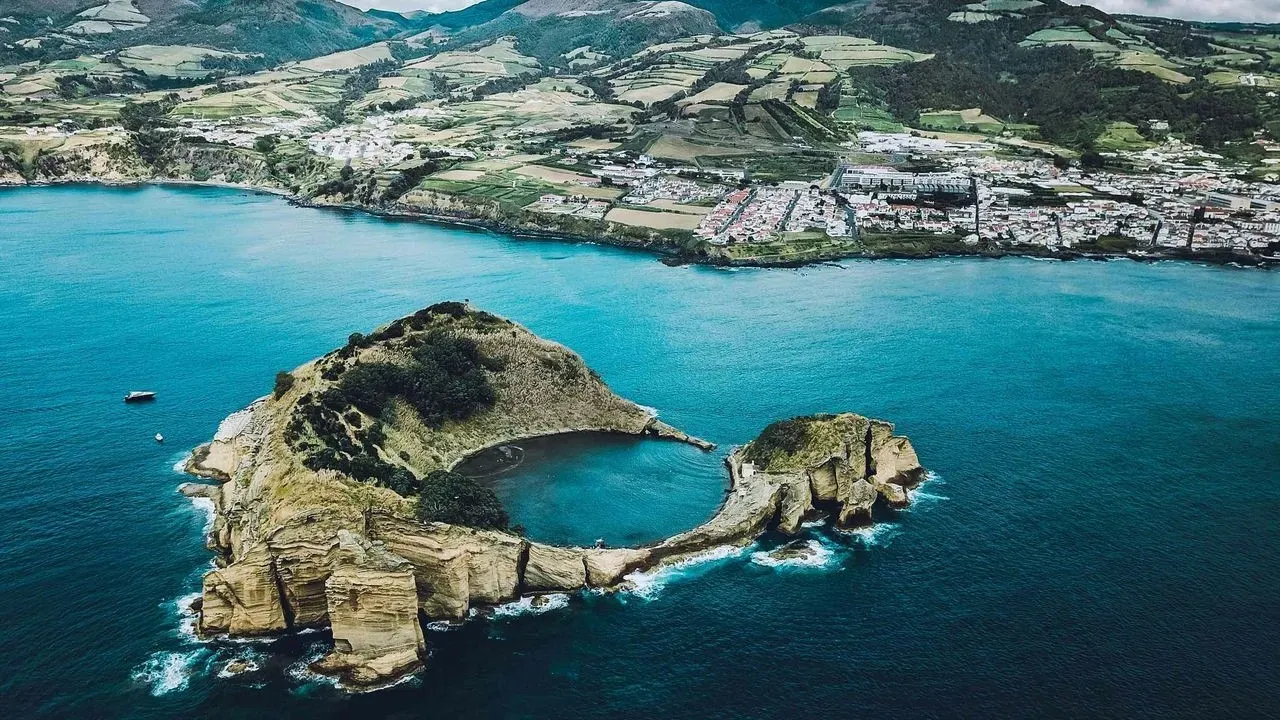

The Azores archipelago sits in the middle of the Atlantic Ocean, and São Miguel stands out as its largest island. Volcanic forces have shaped a landscape of steep calderas, mirror-like crater lakes, and steaming geothermal zones that continue to influence daily life. Travelers who arrive find a place where centuries-old fishing villages cling to cliffs and subtropical forests fill the valleys between peaks. ([1])
Volcanic Calderas and Crater Lakes
São Miguel’s interior holds dramatic evidence of its volcanic origins. The Sete Cidades caldera contains twin lakes separated by a narrow ridge, their waters reflecting the surrounding green slopes in shifting shades of blue and green. Hikers follow well-marked trails along the rim for sweeping views that change with the weather and the angle of the sun.
Further east, the Lagoa do Fogo crater lake sits within a protected reserve. Its waters remain cool even on warm days, fed by mountain streams that tumble through dense vegetation. These sites reward slow exploration, with viewpoints that invite quiet observation rather than hurried snapshots.
Geothermal Fields and Traditional Cuisine
In the Furnas valley, underground heat reaches the surface through bubbling mud pots and steaming vents. Local cooks lower pots of meat, vegetables, and beans into the ground to simmer for hours, producing a distinctive stew known as cozido das Furnas. The method relies on natural energy rather than fuel, linking the island’s geology directly to its food traditions.
Visitors can walk boardwalks that keep feet safely above the hottest ground while offering close views of the activity. Many residents still use the same thermal springs for bathing and laundry, a practice that continues alongside modern tourism. Respecting these shared resources means staying on designated paths and supporting restaurants that source ingredients locally.
Cliffside Villages and Historic Architecture
Along the coast, small harbors such as those near Ribeira Grande and Vila Franca do Campo shelter fishing boats beneath sheer cliffs. Stone houses with whitewashed walls and red-tiled roofs line narrow streets that climb away from the water. Churches and manor houses from earlier centuries stand alongside newer buildings, their facades showing the layered history of settlement and trade.
These communities maintain active ports where fresh catch arrives daily. Markets and small shops offer local cheeses, pineapples, and handicrafts made from island materials. Walking through the villages reveals details like hand-carved doorways and public fountains that still serve residents, giving a sense of continuity rather than staged heritage.
Traveling With Care
São Miguel rewards travelers who move at the island’s pace. Staying on marked trails protects fragile volcanic soils and native plants, while choosing locally owned lodges and guides keeps economic benefits within the community. Seasonal patterns matter: spring and early autumn often bring milder crowds and clearer conditions for hiking and coastal walks.
Direct flights from several North American cities reach the Azores in roughly five hours, placing the islands within reach for a focused visit. Packing layers for sudden weather shifts and carrying reusable water bottles aligns with the practical habits of residents who live closely with the elements. The result is an experience that feels both adventurous and grounded in place.
AI Disclaimer: This article was created with the assistance of AI tools and reviewed by a human editor.