

Oslo’s major art institutions are quietly reshaping how they present their holdings, creating richer encounters for travelers who arrive seeking more than a standard chronological tour. The National Museum of Norway, the MUNCH museum, and the Astrup Fearnley Museum of Modern Art each approach their permanent collections with fresh interpretive layers that connect historical works to contemporary questions of identity, belonging, and human experience. These shifts reward visitors who linger and notice how the same objects now speak across time and cultures.
National Museum Opens New Conversations
The National Museum of Norway occupies a striking waterfront building completed in 2022. Its vast holdings of roughly 400,000 objects now receive regular Monday rotations that introduce new thematic groupings. Curators foreground women’s social worlds in certain periods and place interpretive panels beside Orientalist paintings that invite viewers to consider the original context of creation. Travelers notice the difference immediately. Instead of fixed narratives, the displays feel alive and responsive. A mediation program reaches out to audiences who may not have grown up visiting museums, making the experience more welcoming for families and newcomers alike. The result is a collection that feels relevant to Norway’s increasingly diverse population while still honoring its artistic depth.
MUNCH Connects Past and Present
Across the harbor in the Tøyen district, the tall, angular MUNCH museum rises dramatically above the shoreline. Inside, Edvard Munch’s works are arranged thematically around universal human concerns such as love, loneliness, and the vulnerability of the body. These groupings create direct lines to contemporary artists including Francis Bacon and Marlene Dumas. Visitors often find the approach deeply moving. A recent exhibition titled “Lifeblood” linked Munch’s explorations of illness and the body to evolving medical histories in Norway. Another program, the MUNCH Triennale titled “Almost Unreal,” brings in twenty contemporary artists from around the world, including voices from the Global South and diaspora communities. The museum’s thematic lens helps travelers see Munch not as a distant figure but as someone whose emotional intensity still resonates today.
Astrup Fearnley Broadens Its View
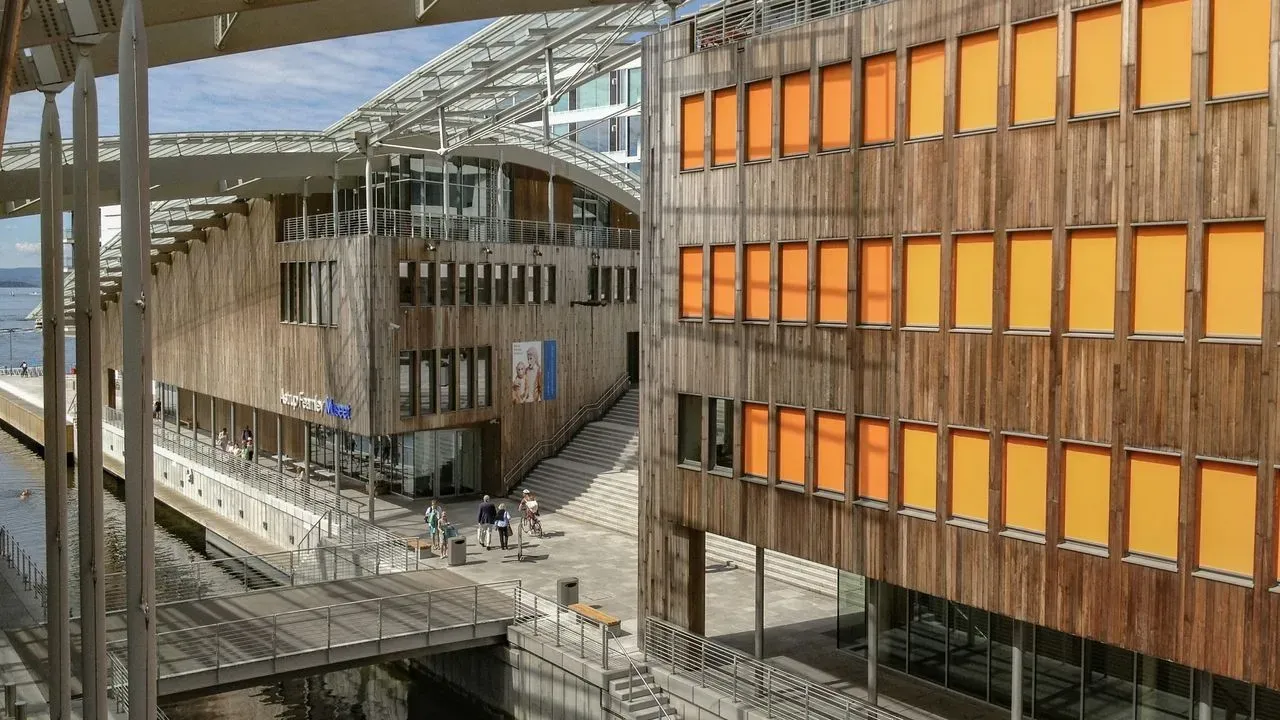
In the Tjuvholmen cultural quarter, the Astrup Fearnley Museum of Modern Art occupies a Renzo Piano building that blends boat-like forms with traditional Norwegian wood elements. Director Solveig Øvstebø has guided the institution toward greater artistic and global diversity while preserving the founder’s bold collecting spirit. Small, thoughtful rotations now place works in dialogue with one another. One recent pairing brought together Nicole Eisenman and Michal Łopresti in explorations of isolated figures, with Nan Goldin nearby adding further layers of psychological insight. Another room juxtaposed Odd Nerdrum’s figurative paintings with Jeff Koons’s gleaming ceramic sculpture, creating productive tension rather than easy harmony. Øvstebø describes the collection as organic, always open to new voices without rigid manifestos. Travelers who visit discover an institution that feels both rooted in its private origins and generous in its public role. The non-linear layout encourages slow wandering, with views of the fjord and cranes reminding visitors of the global systems that support contemporary art.
Why These Changes Matter for Visitors
Together, the three museums demonstrate how Oslo’s cultural landscape rewards repeat visits and unhurried exploration. Permanent collections no longer feel static; they evolve in response to the city’s changing population and the wider world. Travelers who plan time for each venue leave with a deeper sense of how art can bridge generations, cultures, and personal experiences. The experience feels both grounded and forward-looking, offering quiet inspiration for anyone drawn to purposeful cultural travel.
AI Disclaimer: This article was created with the assistance of AI tools and reviewed by a human editor.